

U0140 on 2005-2010 Pontiac G6: Lost Communication With Body Control Module Fixes
On a 2005-2010 Pontiac G6, code U0140 is most often caused by a poor connection at the Body Control Module (BCM) itself, located behind a panel on the passenger side of the center console. Fretting corrosion on the connector pins is a known issue. Reseating the connectors and applying dielectric grease often fixes the issue. If not, the BCM may have failed, often due to water intrusion from clogged sunroof drains, requiring a replacement that must be programmed to the car.
- Before suspecting a bad BCM, always perform the simplest fix first: disconnect the battery, then unplug, inspect, and firmly reseat the main connectors on the BCM.
- If you have a sunroof, check for wet carpets on the passenger side, as a clogged drain is a likely cause of water damage to the BCM.
- A replacement BCM, whether new or used, is not a plug-and-play part. It absolutely requires programming by a dealer or a well-equipped shop to function correctly and allow the car to start.
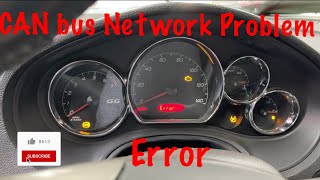
- Symptoms like 'Service ESC' and 'Power Steering' warnings are very common with this code and do not necessarily mean those specific systems have failed; they are just losing communication with the BCM.
What's Unique About the 2005-2010 Pontiac G6
The Pontiac G6, built on the GM Epsilon platform, is particularly known for electrical issues stemming from the BCM. A very common point of failure is not the module itself, but the large electrical connectors attached to it. Over time, fretting corrosion or loss of pin tension can interrupt communication, causing the U0140 code and erratic symptoms. GM has acknowledged fretting corrosion as a cause for electrical issues on similar platforms. Owners and technicians often find that simply disconnecting and reconnecting these connectors resolves the problem, at least temporarily. Water leaks from clogged sunroof drains or bad windshield seals are also a known G6 issue that can lead to BCM failure by allowing water to drip directly onto the module or its wiring.
Symptoms You May Notice
- Multiple random warning lights on the dashboard (e.g., 'Service ESC', 'Power Steering', ABS, Check Engine).
- Instrument cluster gauges dropping to zero or behaving erratically.
- Power windows, door locks, or remote keyless entry not working.
- Exterior lights (headlights, tail lights) staying on or not turning on.
- Brake lights illuminating when the pedal is not pressed, or not illuminating when it is.
- Windshield wipers operating on their own or not working at all.
- Transmission shifting harshly or defaulting to a single gear.
- Vehicle will not crank or start.
- Parasitic battery drain, causing the battery to die overnight.
- Horn honking unexpectedly.
- Cruise control may not engage.
- Replacing individual components like the power steering motor or window switches when the root cause is the BCM not commanding them to work.
- Unnecessarily replacing the BCM when the actual fault is an intermittent short in the CAN bus wiring. A BCM that is offline but comes back after a long ignition cycle is a key symptom of this.
Most Likely Causes
- Poor Connection at BCM Connectors 🔴 High Probability This is a widely documented failure point on the Pontiac G6 and related GM vehicles. Fretting corrosion, a micro-vibration that wears away the metal plating on the connector pins, is a known issue. GM issued a recall for some G6 models for this exact issue on a BCM connector causing brake light failure.
How to confirm: Visually inspect the connectors for looseness, backed-out pins, or a white/gray powder indicating corrosion. A common diagnostic step is to disconnect the battery, then disconnect and reconnect the BCM connectors several times to clean the contacts. If symptoms disappear, this was the likely cause.
Typical fix: Disconnect the battery, unplug the BCM connectors, clean them with electrical contact cleaner, apply a small amount of low-voltage (silicone-based) dielectric grease to the pins to prevent future corrosion, and securely reconnect.
Est. part cost: $5-$15 - Failed Body Control Module (BCM) 🟡 Medium Probability → Shop Body Control Module Water intrusion from known G6 leak points (sunroof drains, windshield seals) can drip onto the BCM, causing corrosion and internal shorts. Internal component failure, such as cracked solder joints from vibration and age, can also occur.
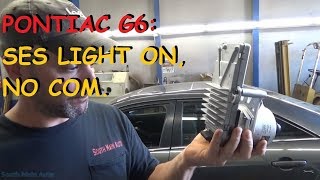
How to confirm: After confirming power, ground, and network wiring are all intact, the BCM itself is the likely culprit. A professional scan tool will be unable to communicate with the BCM. 🎬 See this walkthrough for diagnosing a no communication fault. You might smell a burnt odor from the module itself.
Typical fix: Replace the Body Control Module. The new or remanufactured BCM must be programmed to the car's VIN and specific options using a GM-specific scan tool. Some companies sell pre-programmed BCMs that require a VIN upon ordering.
Est. part cost: $150-$400 - CAN Bus Wiring or Ground Issues 🟡 Medium Probability GM TSB PIT4730B notes that intermittent shorts in the high-speed GMLAN data circuits can cause the BCM to appear offline, especially when driving over bumps. Corroded splice packs or poor ground connections under the dash or on the transmission are also potential failure points.
How to confirm: This requires advanced diagnostics, including using a multimeter to check for 60 ohms of resistance across Pin 6 (CAN High) and Pin 14 (CAN Low) at the DLC. Technicians will also check for shorts to power or ground and verify the integrity of the main ground points. A BCM that appears offline may come back online after the ignition is cycled off for up to 20 minutes, which points to an intermittent wiring fault rather than a failed module.
Typical fix: Locate and repair the damaged section of the wiring harness (circuits 2500 & 2501 are the GMLAN data circuits). Clean and re-secure corroded ground points (like G201 under the center console or G105 on the transmission 🎬 Watch: How to diagnose CAN bus wiring and ground issues.) or replace faulty splice packs/connectors.
Est. part cost: $10-$100 - Low Battery Voltage or Blown Fuse ⚪ Low Probability → Shop Vehicle Battery
How to confirm: Test the battery voltage; it should be above 12.4V with the car off. A weak battery or failing alternator can cause modules to drop off the network. Check all fuses related to the BCM in the interior and under-hood fuse panels.
Typical fix: Recharge or replace the battery. Replace any blown fuses.
Est. part cost: $5-$250
Rare But Worth Checking
- Interference from aftermarket accessories like remote starters or alarms that are improperly tapped into the CAN bus wiring.
Diagnosis Steps
- Check Battery and Fuses: Ensure the battery voltage is stable and above 12.4V. A weak battery can cause various network codes. Inspect all fuses labeled BCM, ECM, or related to body electronics in both fuse panels.
- Scan for Codes: Use a full-system scan tool to see which modules are reporting 'Lost Communication' with the BCM. Attempt to communicate directly with the BCM. If it's offline, this points to a power, ground, or module issue.
- Inspect BCM Connectors: Disconnect the negative battery terminal. Access the BCM on the passenger side of the center console by removing the side trim panel. Carefully disconnect the main electrical connectors (often gray, black, and blue) and inspect for any signs of corrosion (white/green powder), moisture, or backed-out pins.
- Reseat Connectors & Apply Dielectric Grease: Even if they look clean, firmly reconnect the BCM connectors. For a more robust fix, apply a small amount of dielectric grease to the connector pins before reseating. This is a very common fix for the G6.
- Check for Water Intrusion: Inspect the headliner and A-pillar for signs of moisture. Pour water into the sunroof tray and check if it drains properly out of the tubes in the door jambs or trunk. Clogged or disconnected drains are a frequent cause of water damage to the BCM.
- Check Power and Ground at the BCM: If the problem persists, use a multimeter to verify that the BCM is receiving proper battery voltage and has a solid ground connection at its connector pins. Refer to a vehicle-specific wiring diagram for correct pinouts.
- Test the CAN Bus Network: This is an advanced step. With the battery disconnected, measure the resistance between Pin 6 (CAN High) and Pin 14 (CAN Low) at the OBD-II port. A healthy network should read approximately 60 ohms. If it reads 120 ohms, there is an open in the circuit or a missing terminating resistor. If it reads 0 ohms, the wires are shorted together. TSB PIT4730B suggests checking for intermittent shorts on the GMLAN circuits (2500 and 2501).
- Isolate the BCM: If the wiring, power, and grounds are good, and the BCM remains offline even after a full power-down cycle (20+ minutes), the BCM is the most likely failed component.
Parts You'll Likely Need
- Body Control Module (BCM)
(OEM #25840798)— This module is the most common point of failure when wiring and connections have been ruled out. It can fail internally or from external factors like water damage. This part number is cited for 2005-2010 models.
Related Codes That Often Appear With This One
- U0073 — Control Module Communication Bus 'A' Off. This is a general high-speed CAN bus failure code that can appear alongside U0140 if the entire network is compromised. GM TSBs often list U0073 and U0140 together for network communication faults.
- U0100 — Lost Communication With ECM/PCM. If the BCM acts as a gateway, its failure can prevent other modules from talking to the engine computer.
- U0121 — Lost Communication With Anti-Lock Brake System (ABS) Control Module. This often appears with U0140 as the BCM and EBCM (Electronic Brake Control Module) are in constant communication for traction control (ESC) functions.
- U0101 — Lost Communication with Transmission Control Module (TCM). This can occur if the BCM failure disrupts the entire high-speed data bus.
Technical Service Bulletins (TSBs) & Recalls
- GM Recall 09041B / NHTSA 10029935: Addresses fretting corrosion in a BCM wiring connector causing brake light malfunction on 2005-2006 G6 models. The fix is to apply dielectric lubricant.
- GM TSB PIT4730B: Provides diagnostic advice for U0140/U0073 where the BCM appears offline intermittently. It explains that a brief short on the GMLAN bus can take the BCM offline for a full ignition cycle, and warns against replacing the BCM without diagnosing the wiring first.
- GM TSB 08-07-30-021G / NHTSA SB-10043829-6448: Lists U0140 among other codes resulting from loss of high-speed GMLAN communications, pointing to potential causes like shorts in the transmission harness connector or other module connectors.
Platform-Specific Known Issues
- The primary vehicle-specific issue is the high failure rate of the electrical connection at the BCM itself, often resolved by simply cleaning and reseating the connectors with dielectric grease.
- Pontiac G6 models equipped with a sunroof are prone to clogged or disconnected drain tubes, which can cause water to leak into the cabin and drip onto the BCM, causing failure.
Mechanic-Grade Diagnostic Values
- GMLAN Bus Resistance — expected: Approximately 60 Ω (Ohms) when measured across pins 6 and 14 of the DLC with the battery disconnected.. Failure: A reading of 120 Ω indicates an open circuit or one of the two terminating resistors is offline. A reading of 0 Ω indicates the CAN High and CAN Low wires are shorted together.
- GMLAN High (CAN+) Voltage — expected: Approximately 2.5V to 3.5V, fluctuating, measured from DLC pin 6 to chassis ground with key on.. Failure: Voltage significantly outside this range (e.g., 0V or 12V) indicates a short to ground or power. A case study on a G6 showed a bad ground causing this voltage to read over 6V.
- GMLAN Low (CAN-) Voltage — expected: Approximately 1.5V to 2.5V, fluctuating, measured from DLC pin 14 to chassis ground with key on.. Failure: Voltage significantly outside this range indicates a short to ground or power. The sum of CAN High and CAN Low voltage should be approximately 5V.
- BCM Ground Resistance — expected: Less than 0.1 Ω from the BCM ground pin(s) at the connector to a clean chassis ground point.. Failure: High resistance indicates a poor ground connection, which can cause modules to drop offline. A reading of 12V on a ground wire indicates an open ground circuit that is back-feeding voltage.
Hidden / Shadow Codes Worth Checking
- U0073 sym71: This is a GM-specific symptom code that can accompany U0140. TSB PIT4730B states this combination strongly suggests an intermittent short on the High Speed GMLAN data circuits (circuits 2500 & 2501). (see via Requires a GM dealer-level scan tool like a Tech 2 or GDS2 to view these specific symptom codes. Standard OBD-II readers will only show the primary U-code.)
Scan Tool Commands That Help
- GM Tech 2 / GDS2: Module Replacement/Setup — This function is required after installing a new or used BCM. It guides the technician through programming the vehicle's VIN, odometer, and RPO (Regular Production Option) configurations into the module.
- GM Tech 2 / GDS2: Setup SDM Part Number In BCM — After replacing the BCM, the airbag (SIR) warning light will stay on. This command must be performed to establish communication between the new BCM and the existing Sensing and Diagnostic Module (SDM) to clear the light.
- GM Tech 2 / GDS2: Bidirectional Controls — To test if the BCM is partially functional, a technician can use bidirectional commands to activate outputs like door locks, wipers, or interior lights. If the BCM can receive the command and activate the component, it confirms the BCM has power, ground, and some processing ability.
Wiring & Ground Locations
- BCM Connectors C1, C2, C3 — At the Body Control Module, located on the passenger side of the center console, accessible by removing the side trim panel. C1 and C2 are 72-pin connectors, C3 is a 40-pin.. These are the main interface for the BCM. Fretting corrosion and poor pin tension at these specific connectors are the most common cause of U0140 on the G6.
- G201 — Under the center console, on a front support bracket.. This is a primary chassis ground point located in the same area as the BCM. A loose or corroded connection here can interrupt the BCM's ground path, causing it to go offline.
- G105 / G106 — On a transmission stud on the left side/rear of the engine compartment.. This is a critical ground point shared by the Engine Control Module (ECM) and Transmission Control Module (TCM). A break in the ground wires here has been documented to cause a no-start and widespread network communication failure on a G6, which could be misdiagnosed as a BCM failure.
- DLC (Data Link Connector) Pins 6 & 14 — The standard OBD-II port under the driver's side dashboard.. Pin 6 (Tan/Black wire) is the GMLAN High (+) circuit and Pin 14 (Tan wire) is the GMLAN Low (-) circuit. All network voltage and resistance tests are performed at these pins to assess the health of the entire communication bus.
Real Owner Repair Stories
- 2CarPros Forum User (2006 Pontiac G6, previously a rental car) — Could not program a new key fob.
❌ Tried (didn't work) Attempting to program a new key fob with a dealer scan tool.
✅ What actually fixed it The BCM had been 'locked' by the rental company, preventing any reprogramming. The only solution was to replace the Body Control Module with a new one and program it to the vehicle. - YouTube video from 'How to diagnose CAN bus network problem' (2007 Pontiac G6 3.5L) — No crank, no start, no communication with multiple modules.
❌ Tried (didn't work) Initial scan showed no communication, pointing to a network-wide failure.
✅ What actually fixed it The ground wire for the ECM/TCM had broken off from the G105 ground stud on the transmission housing. Repairing the broken ground wire restored communication to all modules and allowed the car to start.
OEM Part Supersession History
15260312→25840798 (likely, but not confirmed as a direct supersession)— Part numbers often change due to hardware revisions, software updates, or manufacturer changes.
Heads up: Multiple part numbers exist for the 2005-2010 range. It is critical to match the part number from the original BCM or verify compatibility with the vehicle's VIN. Using the wrong hardware version can lead to failed programming or inoperative features.
Model Year Variations Within This Range
- 2009-2010: The 2009 model year introduced a facelift with a new front fascia, but more importantly, a revised interior. This included a new center stack with different HVAC controls and stereo, which are controlled by the BCM. Diagnostic procedures or RPO configurations for these features may differ from earlier 2005-2008 models.
- 2008-2010: For 2008, seat-mounted thorax side-impact airbags became standard. This requires the BCM to be correctly programmed to the Sensing and Diagnostic Module (SDM) using the 'Setup SDM Part Number in BCM' function after replacement to avoid a persistent airbag warning light.
Diagnostic Flowchart
Used vs. New Parts: Buying Guide for This Vehicle
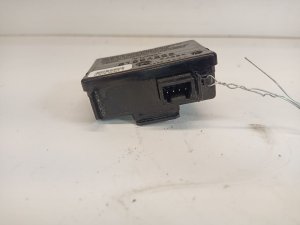
When a used part is the smart pick: A used BCM from a junkyard is a cost-effective option, especially if the original has failed due to water damage or internal faults. It can save hundreds of dollars over a new unit.
Donor-vehicle mileage cap: roughly under 150000 miles for the part to have meaningful remaining life.
What to inspect on the donor part:
- Match the OEM part number exactly (e.g., 25840798).
- Inspect the donor vehicle for signs of water leaks around the sunroof or windshield.
- Check the connectors on the used BCM for any signs of corrosion (green or white powder) or bent pins.
- If possible, get the VIN of the donor car, as some programming services may need it.
OEM-only on this vehicle (don't cheap out):
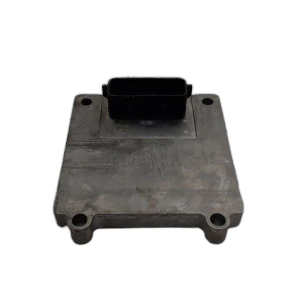
- Body Control Module (BCM) - While used OEM is an option, avoid unbranded 'new' aftermarket BCMs with no reputation. Stick to new ACDelco, remanufactured units from reputable brands (Cardone, Dorman), or a verified-good used OEM part.
Aftermarket brands forum-validated for this vehicle:
- Cardone (Remanufactured)
- Dorman OE Solutions
- ACDelco (OEM)
Brands owners have reported issues with on this vehicle:
- Unbranded, no-name modules from online marketplaces without a warranty or programming support.
Real Owner Stories
Aggregated from forums and TSBs cited above. Mileages and costs reflect what owners reported in those sources.
2006 Pontiac G6
Symptoms: The owner experienced brake light issues, such as the lights staying on or not working correctly, along with other random electrical problems.
What fixed it: The issue was resolved by addressing the fretting corrosion on a BCM connector, which is the subject of GM Recall 09041B. The fix involves applying dielectric lubricant to the connector pins.
Source hint: reddit.com/r/MechanicAdvice
Pontiac G6 with sunroof
Symptoms: The owner struggled with persistent water leaks into the cabin, which eventually led to a complete failure of the Body Control Module and a U0140 code.
What fixed it: The BCM had to be replaced due to water damage. The root cause, a clogged or disconnected sunroof drain tube, also had to be repaired to prevent the new module from failing.
Source hint: reddit.com/r/MechanicAdvice
2008 Pontiac G6
Symptoms: The owner reported water leaking onto both the driver and passenger side floorboards. This is a known precursor to BCM electrical problems.
What fixed it: The source of the water intrusion had to be located and sealed. This is a critical first step before addressing any potential damage to the BCM caused by the moisture.
Source hint: Edmunds Forums
Pontiac G6
Symptoms: The car was experiencing numerous 'electrical gremlins,' including a U0140 code, erratic gauge behavior, and random warning lights.
What fixed it: The most commonly recommended and successful fix was to access the BCM on the passenger side of the center console, disconnect its electrical connectors, clean them, and reseat them securely, often with dielectric grease.
Source hint: g6ownersclub.com
Related OBD-II Codes
Frequently Asked Questions
I heard there was a recall for my 2005-2006 G6's brake lights. Is that related to this U0140 code?
My G6 has a sunroof and I'm getting these weird electrical problems. Could the two be connected?
What is the very first thing I should check myself if my G6 shows a U0140 and has multiple warning lights on?
A mechanic says my BCM is bad, but the car sometimes works fine. Could it be something else?
What is 'fretting corrosion' and why does it affect my Pontiac G6?
My G6 won't start and is showing a U0140 code. What should I check first?
Helpful Videos
Used OEM Parts in Stock
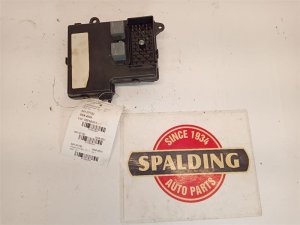
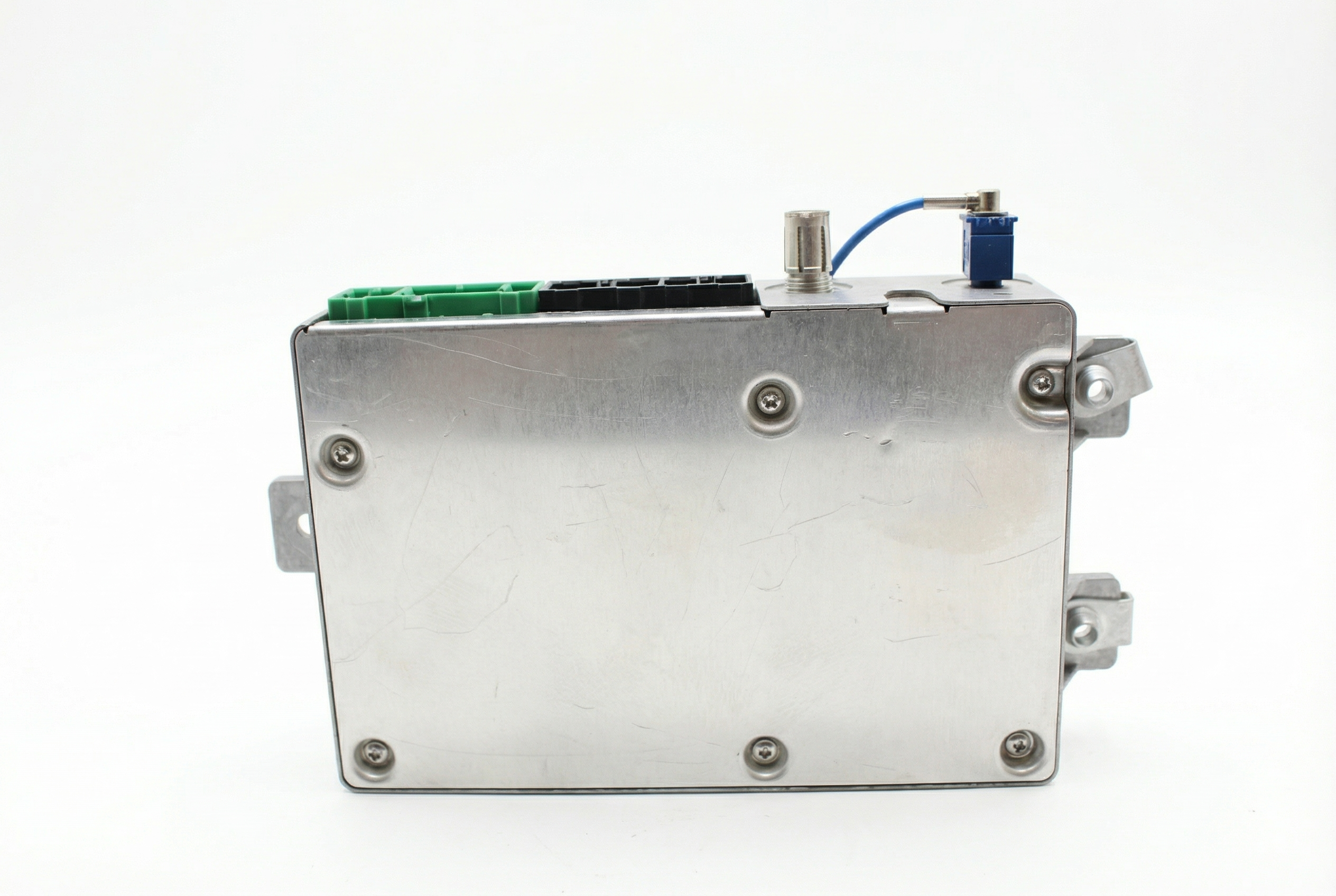
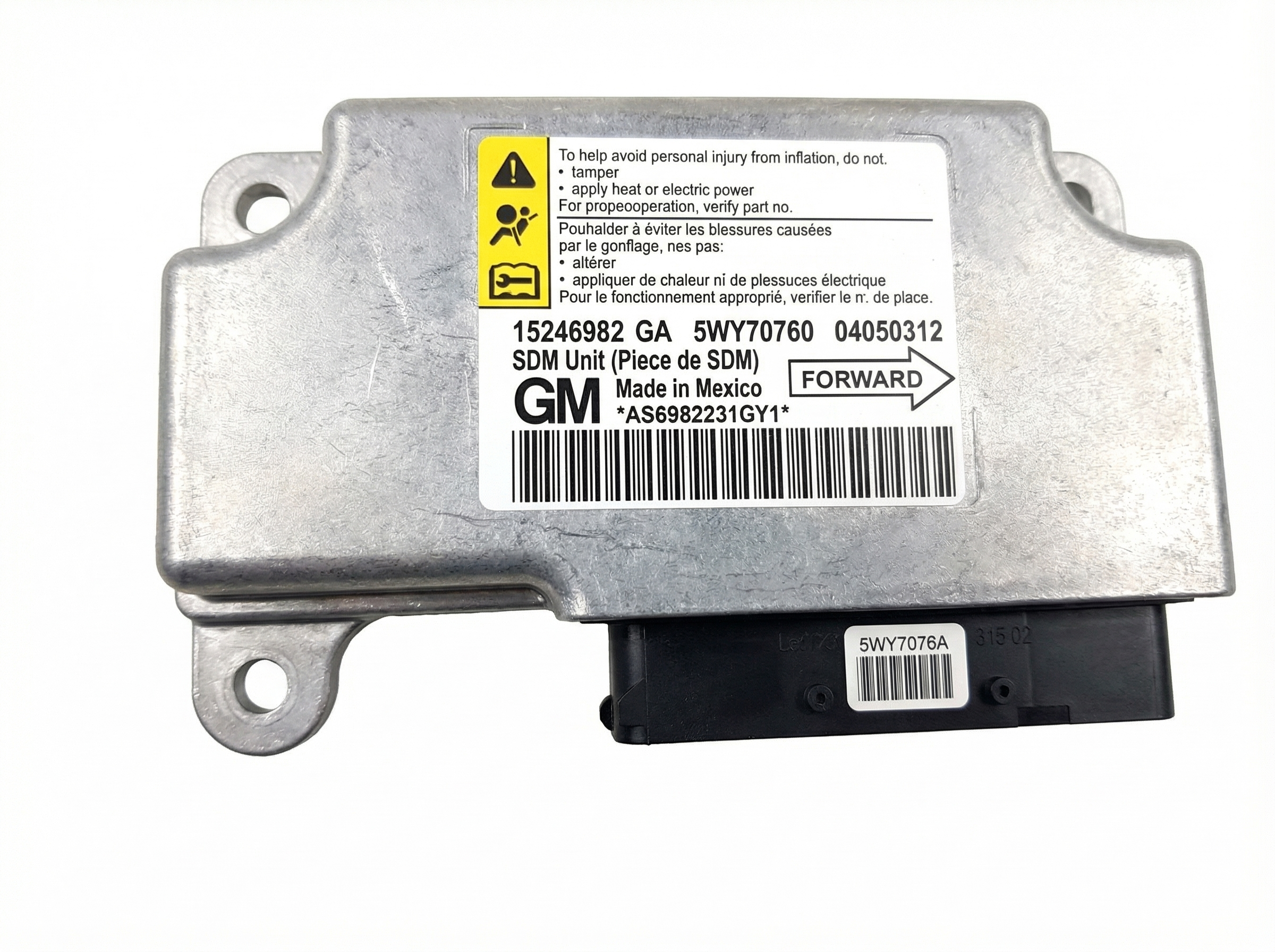
New Aftermarket Parts Available


The information in this article is provided for general reference and educational purposes only. Vehicle specifications, procedures, and part compatibility can vary by production date, trim level, and region. Always consult your vehicle's factory service manual and verify part numbers before purchasing or performing repairs. Safety-critical components such as airbags, seat belts, and braking systems should be installed by a qualified professional.
- Pontiac G6:
- 🧭 Diagnostic Flowchart
- 🎬 Helpful Videos
- 🛍️ Shop This Part
- What's Unique About the 2005-2010 Pontiac G6
- Symptoms You May Notice
- Most Likely Causes
- Rare But Worth Checking
- Diagnosis Steps
- Parts You'll Likely Need
- Related Codes That Often Appear With This One
- Technical Service Bulletins (TSBs) & Recalls
- Platform-Specific Known Issues
- Mechanic-Grade Diagnostic Values
- Hidden / Shadow Codes Worth Checking
- Scan Tool Commands That Help
- Wiring & Ground Locations
- Real Owner Repair Stories
- OEM Part Supersession History
- Model Year Variations Within This Range
- Used vs. New Parts: Buying Guide for This Vehicle
- Real Owner Stories
- 2006 Pontiac G6
- Pontiac G6 with sunroof
- 2008 Pontiac G6
- Pontiac G6
- Related OBD-II Codes
- Frequently Asked Questions
- 🎟️ Get 5% Off