

U0140 on 2015-2019 Subaru Outback: Lost Communication With Body Control Module Fixes
This code means the Body Integrated Unit (BIU) has stopped communicating. The most common causes are a weak battery, parasitic drain from the Data Communication Module (DCM), or a blown fuse. Check battery health and fuses before suspecting a bad BIU, which is an expensive repair requiring programming.
- U0140 on a 2015-2019 Outback means the Body Integrated Unit (BIU) has gone offline.
- Always check the easiest and cheapest fixes first: ensure the battery is fully charged and inspect all related fuses in the interior fuse box.
- A primary symptom can be a no-start condition, which can be mistaken for a bad starter motor.
- If the BIU module needs to be replaced, it is not a simple plug-and-play part. It MUST be programmed by a dealer or a specialized shop with the correct tools for the car to start.
What's Unique About the 2015-2019 Subaru Outback
On the 5th generation Outback, the Body Integrated Unit (BIU) is not just a convenience module; it's deeply tied into the immobilizer and network gateway functions. This means a communication failure can easily lead to a no-start condition, which might be less common for this code on other vehicles. Owners should be aware that simply swapping the BIU will not work; the new module must be professionally programmed to the car's keys and other control units. Cloning the data from the original BIU to a matching used donor unit is a common and effective alternative to dealer programming.
Symptoms You May Notice
- Multiple warning lights on the dashboard, such as Check Engine, ABS, and traction control.
- Vehicle will not start, or only clicks when trying to start.
- Power windows, door locks, and remote key fob stop working.
- Interior or exterior lights behave erratically or fail to turn on.
- Windshield wipers may not function correctly.
- Battery drains overnight or after sitting for a few days.
- Scan tool cannot communicate with the BCM/BIU.
- Replacing the starter motor when a no-start condition is present. The 'click' can be mistaken for a bad starter, but it's often just the sound of a relay engaging while the BIU fails to give the final command to crank 🎬 Watch: Troubleshooting a no-start condition on a 2017 Outback. due to the communication fault.
- Repeatedly replacing the battery without diagnosing the underlying parasitic drain. A new battery will also be drained if the root cause, such as the DCM issue, is not addressed.
Most Likely Causes
- Weak Battery or Parasitic Drain 🔴 High Probability → Shop Vehicle Battery This generation of Outback is notorious for battery issues, leading to a class-action lawsuit. The primary cause is often a parasitic drain from the Data Communication Module (DCM) for Starlink, which fails to go to sleep after the 3G network shutdown, constantly drawing power.
How to confirm: Test the battery with a multimeter; it should be ~12.6V. Perform a parasitic draw test; a draw over 50-85mA after the car has been off for 30+ minutes is excessive. Pulling the DCM fuse (often in the interior fuse panel) and seeing the draw drop significantly confirms it as the culprit.
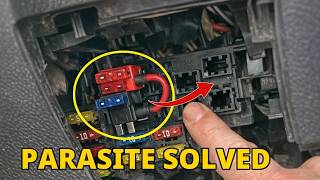
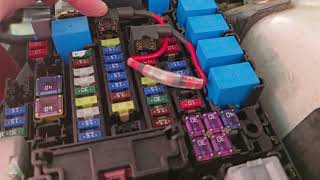
Typical fix: Recharge or replace the battery. For the DCM drain, the official fix is a dealer software update. A popular DIY fix involves using an 'add-a-fuse' to move the DCM's power to an ignition-switched circuit, physically cutting its power when the car is off. 🎬 Watch: DIY guide to fixing the DCM battery drain issue.
Est. part cost: $150-$350 for a quality battery; $15 for an 'add-a-fuse' kit. - Blown Fuse 🟡 Medium Probability The BIU is powered by several fuses in the interior panel. A short in a connected component (like a light or switch) can blow a fuse and take the BIU offline.
How to confirm: Visually inspect all fuses in the interior fuse box (located by the driver's left knee) and the main fuse box in the engine bay. Check fuses labeled 'BCM', 'BIU', or 'M.B FUSE' (Main Box Fuse).
Typical fix: Replace the blown fuse with one of the same amperage.
Est. part cost: $1-$5 - Faulty Body Integrated Unit (BIU) ⚪ Low Probability → Shop Body Control Module The BIU can fail from internal shorts, voltage spikes from improper jump-starts, or water intrusion. It is located behind the passenger-side dash/glovebox on this platform.
How to confirm: This is diagnosed by exclusion. If battery, fuses, and wiring are confirmed good, but a professional scan tool still cannot communicate with the BIU, the module itself is the likely failure point.
Typical fix: Replace the BIU. The new module must be programmed by a dealer, or the data from the original unit can be 'cloned' to a matching used donor unit, making it plug-and-play.
Est. part cost: $400-$800 for the part, plus programming/cloning service. - Damaged Wiring or Loose Connector ⚪ Low Probability
How to confirm: Visually inspect the wiring harnesses and connectors going to the BIU (located behind the passenger glove box) for any signs of corrosion, rodent damage, or loose pins. Check for poor ground connections, which can cause intermittent communication issues.
Typical fix: Repair the damaged section of the wiring harness or clean/re-seat the connector.
Est. part cost: $10-$100
Rare But Worth Checking
- Faulty Aftermarket Accessories: Improperly installed remote starters, alarms, or audio equipment that tap into the CAN bus can interfere with network communication and cause a U0140 code.
- Botched Windshield Replacement: The BIU and other modules are located near the A-pillars and dashboard. A careless windshield replacement can lead to water leaks or damaged wiring in this area, causing BIU failure.
Diagnosis Steps
- Check Battery Health & Parasitic Draw: Start with the most common cause. Test battery voltage (should be ~12.6V). Perform a parasitic draw test to check for the known DCM issue. A draw above 50-85mA after 30 minutes indicates a problem.
- Inspect Fuses: Carefully check all fuses in both the interior and engine bay fuse boxes. Pay special attention to any fuses labeled for the BCM, BIU, or DCM.
- Scan Tool Communication Check: Use a professional-grade scan tool to attempt to communicate directly with the Body Integrated Unit. If the scan tool cannot establish a connection, it confirms a problem with the BIU's power, ground, or the module itself.
- Visual Inspection: Inspect the area around the BIU (behind the passenger glove box) for any signs of water intrusion, rodent damage, or disconnected wiring harnesses.
- CAN Bus Resistance Check: With the battery disconnected, use a multimeter to measure the resistance between Pin 6 (CAN High) and Pin 14 (CAN Low) on the OBD-II port. A reading of approximately 60 ohms indicates that the main CAN bus wiring and termination resistors are likely intact.
- Verify Power and Ground at the BIU: Using a wiring diagram, check for proper power and ground signals at the BIU's main connector. If power and ground are present but the module doesn't communicate, the BIU has likely failed.
- Professional Diagnosis: If the steps above do not identify the issue, professional service is recommended for advanced network diagnostics or BIU replacement and programming.
Parts You'll Likely Need
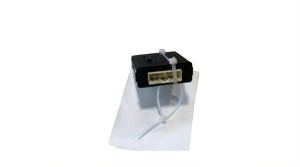
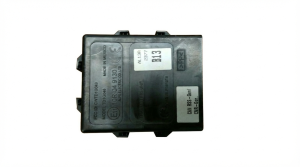
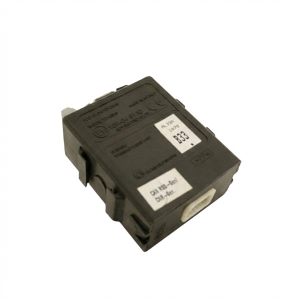
- Body Integrated Unit (BIU)
(OEM #88281AL### (Specific suffix varies by year/trim, e.g., 88281AL05A, 88281AL07B). Must match original exactly for cloning.)— If basic power issues are ruled out, the BIU itself is the most likely failed component causing the communication loss.
Trusted brands: Subaru (OEM)
OEM price range: $600-$800
Aftermarket price range: $150-$300 (Used, requires cloning) - Automotive Fuse — A blown fuse supplying power to the BIU is a common, low-cost cause of this code.
Trusted brands: Bussmann, Littlefuse
OEM price range: $1-$5
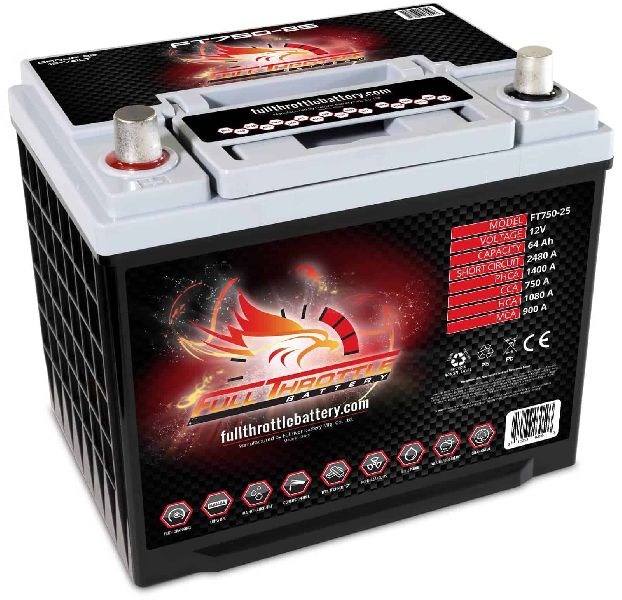
Aftermarket price range: $1-$5 - Group 25 AGM Battery — The OEM battery is notoriously undersized and prone to failure. An AGM (Absorbent Glass Mat) battery is a common and recommended upgrade for better longevity, especially if a parasitic drain has been present.
Trusted brands: Odyssey, NorthStar, Interstate
OEM price range: $200-$250
Aftermarket price range: $200-$350
Related Codes That Often Appear With This One
- U0122 — Lost Communication With Vehicle Dynamics Control Module. This often appears with U0140 because the BIU acts as a gateway for many modules, and its failure disrupts the entire network.
- U0155 — Lost Communication With Instrument Panel Cluster Control Module. The instrument cluster relies on data from the BIU, so a loss of communication will often set this code as well.
- B1572 — Immobilizer Circuit Fault. This code can be stored when the ECM loses communication with the immobilizer unit, which is integrated into the BIU. TSB 07-181-20 was issued for this generation to correct diagnostic procedures for this code, highlighting its relevance.
Technical Service Bulletins (TSBs) & Recalls
- TSB 07-181-20: While for code B1572, this TSB is highly relevant as it addresses faulty diagnostic procedures for the immobilizer system on 2017-19 Outbacks. Since the
Platform-Specific Known Issues
- The Data Communication Module (DCM) parasitic drain is the single most prevalent electrical issue for this platform, directly leading to low voltage conditions that trigger U0140.
- The BIU is located behind the passenger-side glove box, a location that can be susceptible to water damage from a poorly sealed windshield.
Mechanic-Grade Diagnostic Values
- CAN Bus Network Resistance — expected: Approximately 60 Ω. Failure: A reading of ~120 Ω indicates a missing terminating resistor or an open circuit in the bus. A reading near 0 Ω indicates a short between the CAN High and CAN Low wires.
- Parasitic Current Draw — expected: Less than 50-85 mA. Failure: A sustained draw over 150 mA (often 150-400mA) after the vehicle has been off for 30+ minutes strongly indicates the DCM has failed to enter sleep mode.
- CAN Bus Voltage (Key On, Engine Off) — expected: CAN High (Pin 6 to ground): ~2.5V to 3.5V. CAN Low (Pin 14 to ground): ~1.5V to 2.5V.. Failure: Voltages that are stuck high, low, or at battery/ground potential indicate a short or a faulty module transceiver.
Hidden / Shadow Codes Worth Checking
- B282x / B2805: These are telematics-related DTCs that can indicate internal communication or power source failures within the Data Communications Module (DCM). They may be present even if U0140 is not, but point to the DCM as a source of network instability. (see via A professional-grade scan tool or the dealer's Subaru Select Monitor (SSM) is required to read these body codes.)
Scan Tool Commands That Help
- Subaru Select Monitor (SSM3/SSM4): DCM Firmware Update — This is the official dealer fix for the parasitic drain caused by the DCM failing to sleep after the 3G network shutdown. The SSM is used to flash updated software to the module.
- Subaru Select Monitor (SSM3/SSM4): BIU/Immobilizer Registration — When a new, virgin BIU is installed, the SSM tool is required to program the vehicle's VIN and synchronize the immobilizer data with the existing keys and ECU. This function is not available on most aftermarket scanners.
Wiring & Ground Locations
- OBD-II Port Pins 6 & 14 — The diagnostic port under the driver's side dashboard.. These are the CAN High (Pin 6) and CAN Low (Pin 14) terminals for the main vehicle communication network. All network integrity tests (resistance, voltage) start here.
- ECU Main Ground — Bolted to the top of the intake manifold.. On Subarus, the ECU gets its primary ground reference from the intake manifold. A poor connection here can cause erratic sensor readings and network communication errors that may be misdiagnosed as a faulty module. This is a critical check for any 'U' code on a Subaru.
- BIU Connectors — Behind the passenger side glove box/dashboard area.. This is the direct connection point for the module. It is susceptible to water intrusion from a clogged sunroof drain or leaking windshield, which can corrode pins and cause communication loss.
Real Owner Repair Stories
- Reddit user on r/Subaru_Outback (2015 Outback Limited) — Water leaking down the inside of the driver-side A-pillar after heavy rain, especially when parked under trees.
❌ Tried (didn't work) Initial confusion about the source of the leak.
✅ What actually fixed it The issue was identified as a clogged sunroof drain tube. The drain hole in the sunroof assembly was cleared using compressed air, which resolved the blockage and stopped the water from overflowing and running down the A-pillar. - Various Subaru forums and YouTube tutorials (2016-2019 Subaru Outback) — Battery repeatedly dies overnight or after a few days of not driving. U0140 appears along with other communication codes due to low system voltage. Front speakers and Bluetooth mic stop working if DCM fuse is pulled.
❌ Tried (didn't work) Replacing the battery multiple times without addressing the drain., Pulling the DCM fuse, which caused loss of audio functions.
✅ What actually fixed it The root cause was confirmed to be a parasitic drain from the Data Communications Module (DCM) stuck in a search loop after the 3G network shutdown. The final fix was either a dealer-performed software update or a DIY bypass. The bypass involved installing a special loopback harness behind the head unit to restore audio circuits while isolating the DCM, or using an 'add-a-fuse' to move the DCM's power to an ignition-switched circuit, preventing it from drawing power when the car is off.
"I Checked Everything" — The Actual Cause
- The equivalent for this electrical code is 'wiring continuity tests pass, but the fault persists.' A prime example is the DCM parasitic drain. The CAN bus wiring itself is perfectly intact and will pass resistance and continuity checks. However, the DCM module itself has a software bug causing it to stay active, which creates low voltage on the network, triggering the U0140 code. The root cause is not a wiring fault, but a logic failure in a connected module.
OEM Part Supersession History
88281AL###→Varies— N/A
Heads up: There is no known direct supersession list, but the critical rule for replacement is that a used (donor) BIU must have a part number that EXACTLY matches the original unit to be eligible for cloning. Mismatched part numbers cannot be cloned together, and the vehicle will not start.
Model Year Variations Within This Range
- 2018-2019: The 2018 model year marked a mid-generation refresh. It introduced a new, faster infotainment system with larger screens (up to 8.0-inch) and standard Apple CarPlay/Android Auto. This change in the head unit, which interacts with the BIU and DCM, can affect diagnostics related to the Starlink system.
- 2016-2019: The parasitic drain from the Data Communications Module (DCM) is primarily an issue on 2016-2019 models equipped with the 3G telematics system. Some later 2019 models were equipped with a Generation 2 DCM capable of connecting to a 4G network, making them less likely to suffer from the battery drain issue caused by the 3G shutdown.
Diagnostic Flowchart
Other Known Issues on This Vehicle
Issues unrelated to this code that are worth knowing about as an owner of this generation:
- Parasitic Battery Drain 🔴 High → Shop Vehicle Battery — Extremely common across 2015-2020 models, leading to a class-action lawsuit. Often caused by the Data Communications Module (DCM) failing to enter sleep mode after the 3G network shutdown. (Ref: Subaru has service campaigns (e.g., WRD-24 for newer models) and a settlement program to address this.)
- CVT Transmission Reliability 🟠 Medium → Shop Transmission Assembly — Some owners experience shuddering, hesitation, or premature failure. Less common than battery issues but a significant potential expense. (Ref: Subaru extended the CVT warranty to 10 years/100,000 miles for many 2010-2018 models, including this generation.)
- STARLINK Infotainment System Glitches 🟡 Low — Widespread complaints of the head unit freezing, rebooting, having phantom touches, or being unresponsive. (Ref: Multiple TSBs, such as 15-205-16R, were released with software updates to address various bugs.)
- Cracked Windshields 🟠 Medium — Many owners report that the acoustic glass windshields are unusually prone to cracking from minor impacts. (Ref: A lawsuit was settled for 2015-2016 models, and Subaru issued TSB 12-192-15 extending the warranty for this issue on those years.)
- Failing Wheel Bearings 🟠 Medium — A humming noise at speed is a common indicator of a failing wheel bearing, which is a frequently reported repair on this generation.
Used vs. New Parts: Buying Guide for This Vehicle
When a used part is the smart pick: A used Body Integrated Unit (BIU) is an excellent, cost-effective choice, but ONLY if you send it to a specialized service to have the data from your original BIU cloned onto it. This makes the used part plug-and-play and avoids thousands in dealer programming fees.
Donor-vehicle mileage cap: roughly under 150000 miles for the part to have meaningful remaining life.
What to inspect on the donor part:
- The OEM part number on the donor BIU case MUST be an exact match to the original part number.
- Inspect the donor unit's connectors for any signs of green or white corrosion, which indicates past water damage.
- Avoid parts from vehicles that show obvious signs of being in a flood.
- Ask the seller if they can confirm the part was from a running vehicle before it was dismantled.
OEM-only on this vehicle (don't cheap out):
- Body Integrated Unit (BIU): While you can use a salvaged OEM part, there are no reliable third-party manufacturers for new BIU modules. The choice is between new OEM from a dealer or used OEM with cloning.
Aftermarket brands forum-validated for this vehicle:
- For the battery, which is a frequent failure point, upgrading to a quality AGM battery from brands like Odyssey, NorthStar, or Interstate is highly recommended by owners. [Pass 2 content]
Brands owners have reported issues with on this vehicle:
- No specific brands are consistently reported as problematic for this repair, but caution is advised with no-name electronic components.
Real Owner Stories
Aggregated from forums and TSBs cited above. Mileages and costs reflect what owners reported in those sources.
2015-2019 Subaru Outback
Symptoms: Repeatedly dead battery; owner had to deal with chronic battery drain issues that were finally traced to the DCM and alternator software.
What fixed it: Pulled the DCM fuse, had the dealer perform an alternator software update, and installed a larger battery.
Source hint: Reddit r/Subaru_Outback - 'Repeatedly DEAD BATTERY issue FINALLY SOLVED'
2015-2019 Subaru Outback
Symptoms: High dark current/parasitic drain while the vehicle was off, leading to a discharged battery.
What fixed it: Used an 'add-a-fuse' kit to move the DCM power to an ignition-switched circuit so it could not draw power when the car was off.
Cost: $10-$15
Source hint: Reddit r/Subaru_Outback - '5th Gen Parasitic Drain. Diagnosis and ~$10 fix.'
Related OBD-II Codes
Frequently Asked Questions
Is there a specific reason my 2015-2019 Outback battery keeps dying and triggering U0140?
Where is the Body Integrated Unit (BIU) located on the 2015-2019 Outback if I need to check the wiring?
Does Subaru offer any warranty extensions that might cover electrical or transmission issues related to these symptoms?
How can I confirm if the Starlink DCM is the cause of my battery drain without going to a dealer?
What is the 'add-a-fuse' fix I see mentioned for the 5th Gen Outback?
Does TSB 07-181-20 apply to my U0140 communication issue?
Helpful Videos
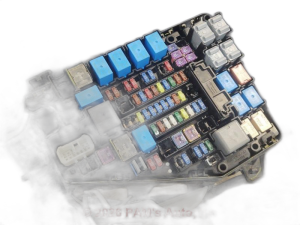
Used OEM Parts in Stock
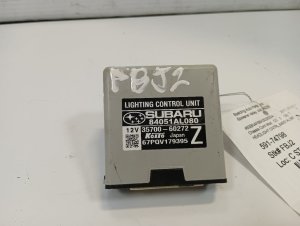
New Aftermarket Parts Available



The information in this article is provided for general reference and educational purposes only. Vehicle specifications, procedures, and part compatibility can vary by production date, trim level, and region. Always consult your vehicle's factory service manual and verify part numbers before purchasing or performing repairs. Safety-critical components such as airbags, seat belts, and braking systems should be installed by a qualified professional.
- Subaru Outback:
- 🧭 Diagnostic Flowchart
- 🎬 Helpful Videos
- 🛍️ Shop This Part
- What's Unique About the 2015-2019 Subaru Outback
- Symptoms You May Notice
- Most Likely Causes
- Rare But Worth Checking
- Diagnosis Steps
- Parts You'll Likely Need
- Related Codes That Often Appear With This One
- Technical Service Bulletins (TSBs) & Recalls
- Platform-Specific Known Issues
- Mechanic-Grade Diagnostic Values
- Hidden / Shadow Codes Worth Checking
- Scan Tool Commands That Help
- Wiring & Ground Locations
- Real Owner Repair Stories
- "I Checked Everything" — The Actual Cause
- OEM Part Supersession History
- Model Year Variations Within This Range
- Other Known Issues on This Vehicle
- Used vs. New Parts: Buying Guide for This Vehicle
- Real Owner Stories
- 2015-2019 Subaru Outback
- 2015-2019 Subaru Outback
- Related OBD-II Codes
- Frequently Asked Questions
- 🎟️ Get 5% Off