

U0140 on 2007-2021 Toyota Tundra: Lost Communication With Body Control Module Fixes
On a Toyota Tundra, code U0140 often indicates a wiring problem, not a failed Body Control Module (BCM). The most common cause is a shorted sensor on the 5-volt reference circuit, such as a secondary air injection valve or power steering pressure sensor, which can cause a no-start condition and a loss of communication with multiple modules.
- U0140 on a Tundra, especially with a no-start, strongly points to a short on the 5-volt reference circuit.
- Before suspecting an expensive computer module, always check the battery, fuses, and grounds.
- The most likely culprits to test by unplugging are the secondary air injection valves and the power steering pressure sensor.
- Do not replace the Main Body ECU or ECM unless a thorough electrical diagnosis has ruled out all other possibilities.
- This is a complex electrical issue; professional diagnosis is recommended if you are not comfortable using a multimeter and reading wiring diagrams.
What's Unique About the 2007-2021 Toyota Tundra
On the 2007-2021 Tundra, particularly those with the 5.7L V8 engine, a U0140 code accompanied by a no-start condition is frequently not a fault of the Main Body ECU itself. Instead, the issue is often a short circuit in an unrelated sensor that shares the same 5-volt reference line from the main computer. This short drags down the entire data network, causing a communication loss that appears to be a Body Control Module failure but is actually a symptom of a different component's failure. A YouTube video by 'TAdvanced' specifically documents a 2007 Tundra with a 4.0L V6 where a shorted secondary air switching valve caused a crank-no-start and U0140 code.
Symptoms You May Notice
- Engine cranks but will not start.
- No communication with the ECM/PCM when using a scan tool.
- Check Engine Light is on, or does not illuminate at all during the initial key-on bulb check.
- Multiple other warning lights may appear on the dashboard (ABS, VSC, Traction Control).
- Power windows, radio, and climate controls (A/C) do not work.
- Remote keyless entry and power locks are inoperative.
- Parasitic battery drain that kills the battery over a couple of days.
- Vehicle enters 'limp-home' mode with severely reduced power.
- Replacing the Main Body ECU or Engine Control Module (ECM) without first diagnosing the electrical system. The root cause is often an external wiring problem or a shorted sensor, not the module itself. One owner reported a dealership incorrectly diagnosed a shorted PCM when the actual cause was a faulty air switching valve.
Most Likely Causes
- Shorted Component on 5-Volt Reference Circuit 🔴 High Probability On the 5.7L V8 (3UR-FE) and 4.0L V6 (1GR-FE), the secondary air injection switching valves have a known tendency to short out internally due to moisture intrusion. This pulls down the 5V reference line for multiple modules, causing a network failure and a no-start condition.
How to confirm: With the key on, use a multimeter to check for 5 volts at a known-good sensor. If the voltage is low (e.g., 0-3V), begin unplugging suspect components one by one. The most common culprits are the secondary air injection switching valves (Bank 1 and Bank 2) and the power steering pressure sensor. When the faulty component is disconnected, the 5-volt reference should return to normal on the other sensors, and the engine may start.
Typical fix: Replace the shorted component. For the secondary air valve, some owners replace the single faulty valve, while others replace the entire assembly with both valves. Aftermarket bypass kits from companies like Hewitt Tech are also a popular, though not emissions-compliant, alternative.
Est. part cost: $150-$400 - Poor Power or Ground Connection 🟡 Medium Probability Corrosion on battery terminals, main chassis grounds, or fuse box connections can create voltage drops that cause network modules to malfunction.
How to confirm: Check that the battery voltage is above 12.4V with the engine off and around 13.5V-14.5V when running. Inspect and clean all battery terminals and main ground straps to the chassis and engine block. Check fuses related to the ECU-B, MPX-B, and other BCM power sources for integrity.
Typical fix: Clean or tighten corroded or loose ground connections. Replace a weak battery or failing alternator.
Est. part cost: $0-$500 - Damaged Wiring Harness 🟡 Medium Probability Rodent damage, chafing from vibration, or improper installation of aftermarket accessories like remote starters can damage the CAN bus wires, causing a short or open circuit. A user on Tundras.com noted that unplugging dash components can trip numerous communication codes if not done carefully.
How to confirm: Visually inspect wiring harnesses, especially around the engine bay, under the dashboard, and any areas where aftermarket components were installed. Look for chewed wires, melted insulation, or poorly spliced connections. A wiggle test on the harness while monitoring scan tool communication can sometimes isolate the fault location.
Typical fix: Repair the damaged section of the wiring harness.
Est. part cost: $5-$200 - Faulty Main Body ECU (BCM) ⚪ Low Probability While the module itself can fail, it is less common than wiring or external component issues. Water intrusion from a leaking windshield or cowl, or internal hardware failure can occur but should be considered only after ruling out other causes.
How to confirm: This is a process of elimination. If power, ground, and the CAN bus network wiring are all confirmed to be good, and no external components are shorting the network, the Main Body ECU is likely the culprit. A professional may need to use an oscilloscope to verify CAN signals at the module.
Typical fix: Replace the Main Body ECU. This part is often VIN-specific and requires programming by the dealer or a specialized shop.
Est. part cost: $400-$800
Rare But Worth Checking
- Reversed Battery Polarity: → Shop Vehicle Battery A user on a Tundra forum reported that accidentally connecting a battery backward resulted in a no-communication issue and a non-functional fuse box section, mimicking a U0140 fault.
- Faulty Aftermarket Electronics: Poorly installed remote starters or alarm systems can interfere with the CAN bus network, causing intermittent communication loss codes.
Diagnosis Steps
- Check Battery Health: Ensure the battery has a full charge (at least 12.4V). Low voltage is a common cause of communication codes.
- Scan for All Codes: Use a high-quality scan tool to check for codes in all vehicle modules, not just the engine computer. Note if the tool fails to communicate with the ECM or BCM. Pay close attention to any secondary air injection codes (P244x, P041x).
- Inspect Fuses: Check all fuses in both the under-hood and in-dash fuse panels, paying close attention to those labeled ECU, BCM, or MPX-B.
- Test the 5-Volt Reference Circuit: If you have a no-start condition, this is a critical step. Back-probe a known-good sensor's 5V reference wire. If the voltage is low or zero, begin unplugging suspect components one by one, starting with the secondary air injection switching valves (on 5.7L and 4.0L engines) and the power steering pressure sensor. Re-check the voltage after unplugging each one. If voltage returns to 5V, you have found the shorted component.
- Inspect Wiring: Perform a thorough visual inspection of the main wiring harnesses for any signs of rodent damage, chafing, or poor connections from aftermarket accessories. Pay special attention to the harness near the secondary air valves, as it can be tight and prone to damage.
- Check Power and Ground at the Main Body ECU: If all else fails, obtain a wiring diagram for your specific year. Unplug the Main Body ECU and test for proper battery voltage and good ground connections at the connector pins. Ground resistance should be less than 0.1 Ω.
- Condemn the Main Body ECU: If all wiring, power, grounds, and external components test good, the Main Body ECU is the likely point of failure.
Parts You'll Likely Need
- Secondary Air Injection Switching Valve
(OEM #25710-31012 (replaces 25710-31010, 25710-31011 for 4.0L V6) or 25720-50011 (for 5.7L V8))— A very common source of a 5V reference short circuit on Tundra engines, leading to a U0140 code and a no-start condition. Failure is often due to moisture getting into the valve.
Trusted brands: Toyota (OEM), Dorman, Aisin
OEM price range: $290-$430
Aftermarket price range: $150-$250 - Main Body ECU (Body Control Module) — This is the part to replace if all wiring and external components have been ruled out as the cause. Part number varies by year and trim level.
Trusted brands: Toyota (OEM)
OEM price range: $400-$800
Related Codes That Often Appear With This One
- U0100 — Lost Communication with ECM/PCM. If a sensor short brings down the network, communication can be lost with multiple modules simultaneously, including the ECM and BCM.
- U0073 — Control Module Communication Bus 'A' Off. This is a general network failure code that indicates the entire CAN bus is down, which can be triggered by the same faults that cause U0140.
- P2440, P2442, P0418 — These codes are specific to the Secondary Air Injection System. If one of these is present with U0140, it strongly points to a failure in the air injection valves or pumps as the root cause of the network issue.
Technical Service Bulletins (TSBs) & Recalls
- T-SB-0160-11: This TSB relates to the Secondary Air Injection System and may be relevant if codes like P244x are present alongside U0140.
- Limited Service Campaign (LSC) DOE: Covered 2012-2013 Tundra and Sequoia models for an ECM calibration update to prevent air injection pump failure, which could lead to 'Limp-Home' mode.
Platform-Specific Known Issues
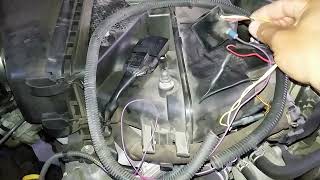
- 2007 Tundra 4.0L V6 No-Start: A well-documented case on YouTube shows a 2007 Tundra with the 4.0L V6 experiencing a crank-no-start and U0140 due to an internally shorted Bank 1 secondary air switching valve. Disconnecting the valve restored the 5V reference and allowed the truck to start.
- Secondary Air Injection System Warranty Enhancement: Toyota issued a warranty enhancement program (Customer Support Program) for the air injection pumps and switching valves on 2007-2010 Tundras, extending coverage to 10 years or 150,000 miles due to high failure rates. This acknowledges the widespread nature of the problem that can lead to network codes like U0140.
Mechanic-Grade Diagnostic Values
- CAN Bus Network Resistance — expected: Approximately 60 Ω. Failure: A reading of ~120 Ω indicates an open circuit or one of the two terminating resistors is offline. A reading near 0 Ω indicates a short circuit between the CAN High and CAN Low wires.
- CAN Bus Voltage (Key On, Engine Off) — expected: CAN High (Pin 6) should be ~2.6V. CAN Low (Pin 14) should be ~2.4V.. Failure: Voltages that are the same (e.g., both 2.5V or both 0V) can indicate a short between the wires or a short to ground.
- Main Body ECU Ground Resistance — expected: Less than 1.0 Ω. Failure: Higher resistance indicates a poor ground connection, which can cause the module to malfunction.
Scan Tool Commands That Help
- Toyota Techstream: Communication Bus Check — This function polls all expected control modules on the network and displays a list of which ones are communicating and which are not. For a U0140, this provides a high-level view of the network's health and confirms if the Main Body ECU is truly offline.
- Professional Bidirectional Scan Tool: Fuel Pump Command (On/Off) — If a U0140 is accompanied by a crank-no-start symptom, this command helps determine if the fuel delivery system is capable of functioning. If the pump can be commanded on but doesn't run during cranking, it points towards a control issue rather than a failed pump itself.
Wiring & Ground Locations
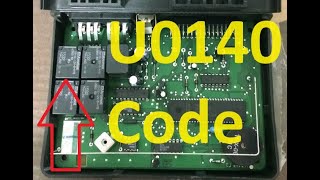
- Main Body ECU — Located on the left side of the dashboard, typically accessible by removing lower dash panels.. This is the module that has lost communication. Checking for power, ground, and clean connections directly at this module is a critical diagnostic step.
- Ground Points: IE, IF — Located in the left kick panel area.. These are primary grounding points for many instrument panel and body-related electronics. A loose or corroded ground here can cause intermittent communication issues for the Main Body ECU.
- Ground Points: EA, EB — Located in the engine compartment, on the front left fender and near the cylinder heads.. Engine compartment grounds are crucial for the ECM and other engine-related sensors. A bad ground here can cause network-wide issues, including pulling down the 5V reference circuit that leads to a U0140.
- OBD-II Port Pins 6 & 14 — The diagnostic port under the driver's side dashboard.. Pin 6 is CAN High and Pin 14 is CAN Low. These are the direct access points for testing the resistance and voltage of the main communication network without having to access individual modules.
Real Owner Repair Stories
- Toyota Tundra Forum user 'brandostundra' (2016 Tundra 5.7 4x4 Limited) — Crank no start.
❌ Tried (didn't work) Unplugging and replugging the fuel control module.
✅ What actually fixed it The problem was poor pin tension on the center ground wire in the female harness connector for the fuel control module. The pin was too loose, causing a bad connection. Tightening the pin terminal resolved the crank-no-start issue.
OEM Part Supersession History
25710-31010, 25710-31011→25710-31012— Revision of the Secondary Air Injection Pump Check Valve for the 4.0L V6 engine.
Model Year Variations Within This Range
- 2014-2021: The 2014 model year introduced a significant interior and exterior refresh. While the core powertrain and CAN bus architecture remained largely the same as the 2007-2013 models, the dashboard, instrument cluster, and some electronic features (like available Blind Spot Monitoring) were changed. This means that while the root causes of U0140 (like a shorted SAI valve) are consistent, the physical process of accessing the Main Body ECU or related dash components may differ slightly.
Diagnostic Flowchart
Other Known Issues on This Vehicle
Issues unrelated to this code that are worth knowing about as an owner of this generation:
- Secondary Air Injection System Failure 🔴 High — Very common across 2007-2013 models, especially with 4.6L and 5.7L engines. Can occur from 60k miles onward. Leads to expensive repairs and 'limp mode'. (Ref: Warranty Enhancement Program (10yr/150k miles) for 2007-2010 models; LSC DOE for 2012-2013 models.)
- Cam Tower Leak 🟠 Medium — A well-known issue on the 5.7L (3UR-FE) engine across all model years (2007-2021). It's a slow oil seep from the sealant between the cam housing and cylinder head. Most are minor seeps, but significant leaks require a very labor-intensive repair.
- Frame Rust/Corrosion 🔴 High — Primarily affected early 2nd gen models (2007-2008) operated in cold-weather states, but owners of later models also report issues. Can lead to structural failure. (Ref: Warranty Enhancement Program ZH7 covered 2007-2008 Tundras for frame inspection and replacement if perforation criteria were met. A similar recall affected 1st gen (2000-2003) Tundras.)
- Water Pump Failure 🟠 Medium — The water pump on the 5.7L engine is a common failure point, often identified by a coolant leak from the weep hole or bearing noise.
- Cracked Exhaust Manifolds 🟡 Low — Some owners report a ticking noise on cold starts, which is often traced to a cracked exhaust manifold. It's more of an annoyance than a critical failure.
Used vs. New Parts: Buying Guide for This Vehicle
When a used part is the smart pick: For structural or cosmetic parts, used is often fine. For the specific electronic parts related to U0140, used parts are generally risky. A used Main Body ECU can be an option if the part number is an exact match, but it may require dealer programming. A used Secondary Air Injection valve assembly is not recommended due to the high failure rate of the original part.
Donor-vehicle mileage cap: roughly under 80000 miles for the part to have meaningful remaining life.
What to inspect on the donor part:
- For a Main Body ECU, ensure the part number on the sticker is an exact match to the original.
- Check for any signs of water damage, corrosion on the pins, or cracks in the casing.
- If possible, get a part from a vehicle that was not involved in a front-end collision or flood.
OEM-only on this vehicle (don't cheap out):
- Main Body ECU (Body Control Module) - While refurbished units from specialists are available, cheap aftermarket clones are not recommended due to programming and compatibility issues.
Aftermarket brands forum-validated for this vehicle:
- Hewitt Technologies: For the Secondary Air Injection system, their bypass kits are a well-documented and popular alternative to replacing the OEM valves and pumps, especially in regions without emissions testing.
Brands owners have reported issues with on this vehicle:
- Unbranded or 'white box' Secondary Air Injection valves from online marketplaces often have a very high failure rate shortly after installation.
Real Owner Stories
Aggregated from forums and TSBs cited above. Mileages and costs reflect what owners reported in those sources.
2007 Toyota Tundra 4.0L V6
Symptoms: The engine would crank but not start, and there was a total loss of communication with the vehicle modules (U0140).
What fixed it: The Bank 1 secondary air switching valve was found to be internally shorted. Disconnecting this valve restored the 5V reference circuit and allowed the truck to start.
Source hint: YouTube: '(Toyota Tundra) Shorted 5v Reference Circuit' by TAdvanced
2023 Toyota Tundra SR5 CrewMax
Symptoms: Multiple communication codes appeared, specifically 'U014087 Lost Communication with Body Control Module: missing message'.
What fixed it: The owner noted the network's sensitivity after disconnecting dash harnesses, highlighting that improper handling of dash components can trigger these codes.
Source hint: Tundras.com: '23 SR5 CM with U014087 Lost Communication with Body Control Module: missing message'
2008 Toyota Tundra — ~150000 miles
Symptoms: The vehicle entered limp mode and threw a P2440 code related to the secondary air injection valve.
What fixed it: The owner used a temporary fix by back-pressuring the valve to get the vehicle out of limp mode, confirming a mechanical failure in the valve assembly.
Source hint: Tundras.com: '2008 Secondary Air Injection valve cheat'
Documented NHTSA Reports
Cross-Manufacturer Network Failure Reference
Symptoms: An owner reported a cluster of network and stability system failures, including ABS warning lights, TPMS malfunctions, and DTCs such as U1117, U0140, and U0115.
Observations: NHTSA ODI #11665292 describes these communication faults occurring alongside mechanical symptoms like sudden clunks from the rear suspension and irregular tire wear.
Source hint: NHTSA ODI #11665292
Related OBD-II Codes
Frequently Asked Questions
Is there a warranty extension for the secondary air injection system on my 2008 Tundra?
Does T-SB-0160-11 apply to my U0140 code?
Can I use a bypass kit to fix the secondary air valve issue causing my U0140 code?
Why does my 5.7L V8 Tundra have a U0140 code and a no-start condition?
Will an ECM calibration update fix my 2012 Tundra's limp-home mode?
Can disconnecting my dashboard components cause a U0140 code?
Helpful Videos
We Have This Part in Stock
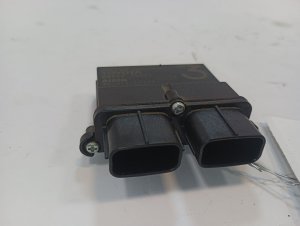
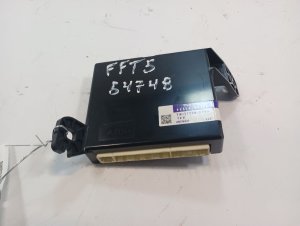

The information in this article is provided for general reference and educational purposes only. Vehicle specifications, procedures, and part compatibility can vary by production date, trim level, and region. Always consult your vehicle's factory service manual and verify part numbers before purchasing or performing repairs. Safety-critical components such as airbags, seat belts, and braking systems should be installed by a qualified professional.
- Toyota Tundra:
- 🧭 Diagnostic Flowchart
- 🎬 Helpful Videos
- 🛍️ Shop This Part
- What's Unique About the 2007-2021 Toyota Tundra
- Symptoms You May Notice
- Most Likely Causes
- Rare But Worth Checking
- Diagnosis Steps
- Parts You'll Likely Need
- Related Codes That Often Appear With This One
- Technical Service Bulletins (TSBs) & Recalls
- Platform-Specific Known Issues
- Mechanic-Grade Diagnostic Values
- Scan Tool Commands That Help
- Wiring & Ground Locations
- Real Owner Repair Stories
- OEM Part Supersession History
- Model Year Variations Within This Range
- Other Known Issues on This Vehicle
- Used vs. New Parts: Buying Guide for This Vehicle
- Real Owner Stories
- 2007 Toyota Tundra 4.0L V6
- 2023 Toyota Tundra SR5 CrewMax
- 2008 Toyota Tundra — ~150000 miles
- Documented NHTSA Reports
- Cross-Manufacturer Network Failure Reference
- Related OBD-II Codes
- Frequently Asked Questions
- 🎟️ Get 5% Off