

U0141 on 2011-2017 Hyundai Elantra: Lost Communication with Body Control Module Fixes
This code means the Body Control Module (BCM) has gone offline. On the 2011-2017 Elantra, start by checking the battery and all BCM-related fuses. The most likely cause is a wiring or connector issue, followed by a failed BCM which requires programming upon replacement. The BCM is located behind the driver's side dashboard, often integrated with the interior fuse box.
- U0141 means the Body Control Module (BCM) is offline, causing widespread electrical issues.
- Before suspecting a bad BCM on a 2011-2017 Elantra, always check the battery, fuses, and wiring first, as these are more common and cheaper fixes.
- Symptoms include failing lights, locks, windows, a dead battery, or a no-start condition.
- Replacing the BCM is not a DIY job. The new module, whether new or used, must be professionally programmed to the car's VIN to function.
What's Unique About the 2011-2017 Hyundai Elantra
For the 2011-2017 Hyundai Elantra and its platform-mate, the Kia Forte, the U0141 code is frequently caused by corroded wiring or damaged connectors located in the engine bay or under the dashboard, rather than an outright failure of the Body Control Module itself. Owners should be particularly suspicious of wiring and ground integrity before condemning the expensive BCM. Furthermore, like many modern vehicles, replacing the BCM is not a simple plug-and-play job; it must be programmed by a dealer or a properly equipped independent shop to recognize the vehicle's keys and function correctly. Third-party services that offer mail-in BCM cloning are also a viable option.
Generation note: The 2011-2017 year range covers two Hyundai Elantra generations: the 5th generation (MD/UD, 2011-2016) and the first model year of the 6th generation (AD, 2017). No significant differences in the diagnosis or common causes for code U0141 have been noted between these generations; the electrical architecture, BCM location, and likely failure points are similar. However, part numbers for the BCM/SJB are different between the MD/UD and AD generations and are not interchangeable.
Symptoms You May Notice
- Erratic or non-functioning headlights, taillights, or interior lights.
- Power windows and/or door locks do not work or operate randomly.
- Key fob is unresponsive, and/or the factory alarm system acts erratically.
- A parasitic battery drain that causes the battery to die, often overnight.
- Vehicle will not start and may not crank (no-start condition) due to the BCM's role in the immobilizer system.
- Multiple, unrelated warning lights appearing on the instrument cluster (a 'Christmas tree' effect).
- Wipers or HVAC (climate control) systems behaving erratically or not working.
- Turn signals or hazard lights may not function.
- Replacing the BCM without first testing the battery and checking for wiring damage. A weak battery is a very common trigger for this code and is a much cheaper fix.
Most Likely Causes
- Low Battery Voltage or Failing Alternator 🔴 High Probability → Shop Vehicle Battery Modern Hyundai electronics are sensitive to voltage. A weak or failing battery providing less than 12.4 volts can cause modules to drop off the communication network unexpectedly, making this a primary trigger for U-codes.
How to confirm: Test the battery voltage with a multimeter. A healthy, fully charged battery should read approximately 12.6 volts with the engine off and above 13.5 volts with the engine running. Many auto parts stores will test your battery and charging system for free.
Typical fix: Recharge or replace the battery. If the charging voltage is low, the alternator may need replacement.
Est. part cost: $120-$300 - Corroded or Damaged Wiring/Connectors 🔴 High Probability Sources indicate this is a particularly common issue on this platform, more so than the BCM itself failing. Wires can chafe against sharp metal edges under the dash, and connectors can suffer from moisture intrusion. Poor ground connections are also a frequent culprit.
How to confirm: Perform a thorough visual inspection of the wiring harnesses leading to the BCM, which is behind the driver's side dash. Look for chafed wires, corrosion on connector pins, or loose connections. Pay close attention to the main BCM connector, nearby ground points bolted to the chassis, and any junction blocks under the dash.
Typical fix: Repair the damaged section of the harness or clean/replace the corroded connector. Ensure ground connections are clean and tight. Apply dielectric grease to protect the connection.
Est. part cost: $10-$100 - Blown BCM Fuse(s) 🟡 Medium Probability A simple electrical short or overload can blow the fuse that supplies power to the BCM, causing it to go offline.
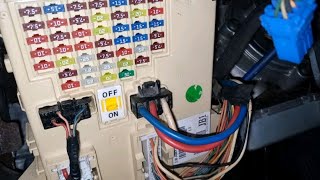
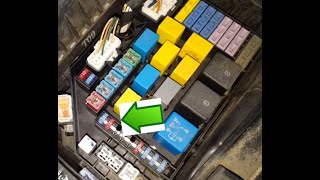
How to confirm: Locate the fuse boxes (one in the engine bay and one inside the cabin, on the driver's side). Consult the owner's manual or fuse panel cover to identify all fuses related to the 'BCM', 'MODULE', or 'MEMORY'. Visually inspect the fuses or test them for continuity with a multimeter.
Typical fix: Replace the blown fuse with one of the exact same amperage rating. 🎬 See how to access and change your Elantra's fuse box If the fuse blows again immediately, there is a short circuit that must be diagnosed.
Est. part cost: $1-$5 - Faulty Body Control Module (BCM) ⚪ Low Probability → Shop Body Control Module While less common than wiring issues on this car, the BCM can fail internally from age, vibration, or moisture damage.
How to confirm: This is typically a process of elimination. If the battery, fuses, wiring, power, and ground to the BCM have all been verified as good using a multimeter, but communication cannot be established with a professional scan tool, the BCM itself is the likely culprit.
Typical fix: Replace the Body Control Module. The new module MUST be programmed to the vehicle's VIN by a Hyundai dealer or a qualified locksmith/mechanic with appropriate tools.
Est. part cost: $400-$700
Rare But Worth Checking
- Poorly Installed Aftermarket Electronics: If a remote starter, alarm, or stereo was recently installed, it's a prime suspect. Improperly tapping into CAN bus wires can disrupt the entire network and cause communication codes.
- CAN Bus Termination Issue: The CAN bus network requires a 120-ohm resistor at each end, resulting in a total network resistance of about 60 ohms. If one of these resistors (often located within the ECM or Instrument Cluster) fails, it can disrupt communication and trigger U-codes. This requires advanced diagnostics to confirm.
- Faulty MDPS (Motor Driven Power Steering) Module: The power steering control module is also on the CAN network. A failure within this module, or damage to its wiring (sometimes occurring during steering coupler replacement), can disrupt the entire network, causing other modules like the BCM to drop out and log a U0141 code.
Diagnosis Steps
- Check Battery and Charging System: Ensure battery voltage is above 12.4V with the engine off. Start the engine and confirm the alternator is charging (typically 13.5V-14.5V). A weak battery is the most common cause.
- Scan for All Codes: Use an OBD-II scanner capable of reading 'U' codes from all modules. Note all present codes and their freeze-frame data to see which module reported the fault.
- Inspect Fuses: Check all fuses related to the BCM, both in the interior fuse panel (driver's side dash) and the under-hood fuse panel. Look for fuses labeled 'BCM', 'Module', or 'Memory'.
- Visual Inspection of BCM Area: Access the BCM by removing the lower driver-side dash trim. Thoroughly inspect the wiring harness and connectors for the BCM. Look for any signs of physical damage, chafing, or corrosion. Check the BCM's main ground connection to ensure it is clean and tight.
- Check Power and Ground at BCM: If you have a multimeter and wiring diagram, back-probe the BCM connector to verify it is receiving proper battery voltage on the correct pins and has a solid ground connection (less than 0.1V drop).
- Check CAN Bus Voltages: With the key on, engine off, check the CAN High and CAN Low wire voltages at the OBD-II port or BCM connector. CAN High should be ~2.5-3.5V and CAN Low should be ~1.5-2.5V.
- Isolate the Module: If all power, ground, and wiring appear intact, the BCM itself is the most likely point of failure.
- Professional Diagnosis: For network resistance testing (should be ~60 ohms with battery disconnected) or BCM replacement and programming, professional service is recommended.
Parts You'll Likely Need
- Body Control Module (BCM)
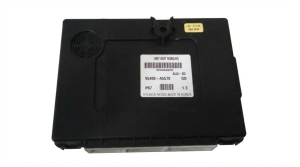
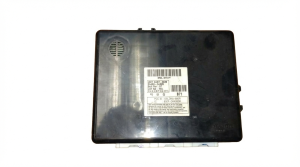
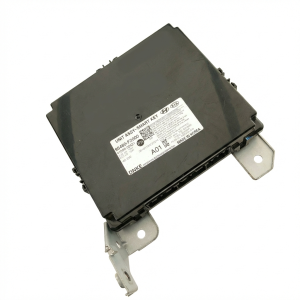
(OEM #95400-3X201, 95400-3X101, 95400-3X860, 95400-3X530, 95400-F2100 (Varies by year/trim, must verify with VIN))— This is the part to replace if all wiring, power, and ground inputs are confirmed to be good, but the module remains offline. Replacement requires professional programming.
Trusted brands: Hyundai (OEM)
OEM price range: $400-$700
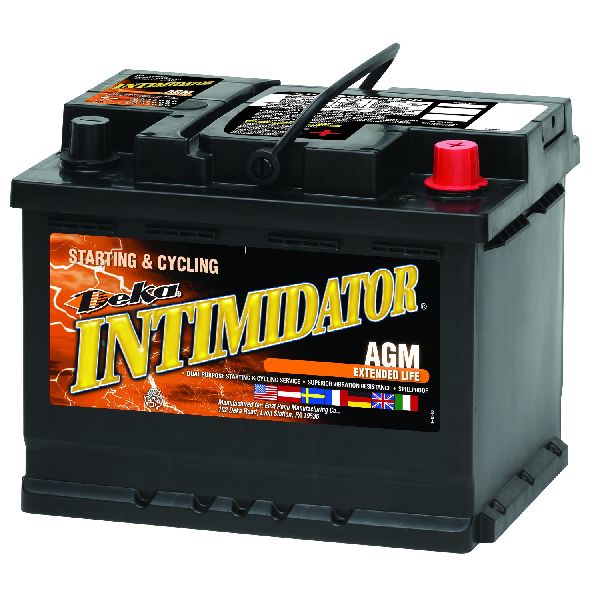
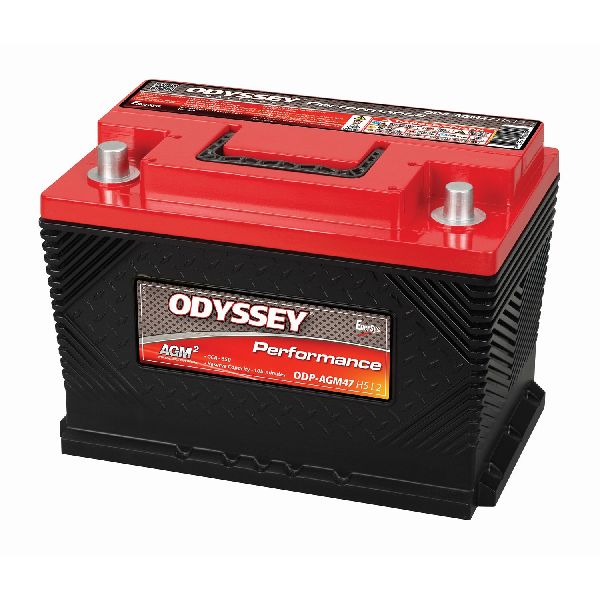
Aftermarket price range: $250-$500 - Automotive Battery — A weak or failing battery is a leading cause of communication codes in modern vehicles.
Trusted brands: Various
OEM price range: $200-$350
Aftermarket price range: $120-$250
Related Codes That Often Appear With This One
- U0073 — U0141 means one module (the BCM) is offline. U0073 means the entire communication bus is down. Seeing them together points to a more severe network-wide wiring or power supply problem.
- U0100 — This code means 'Lost Communication with ECM/PCM'. If you see U0141 but not U0100, it suggests the ECM is online but can't see the BCM. If you see both, it could point to a shared power or ground issue affecting multiple modules.
- U0155 — This indicates 'Lost Communication With Instrument Panel Cluster'. On many vehicles, the instrument cluster acts as a gateway between other modules. A failing cluster can interrupt the signal between the ECM and BCM, triggering U0141 as a secondary code.
- C1616 — This code indicates a CAN Bus Off error, often logged by the ABS or Power Steering modules. It signifies that the module has detected a severe network problem and has stopped trying to transmit messages. It strongly points to a physical layer problem like a shorted wire, rather than a single faulty module.
Technical Service Bulletins (TSBs) & Recalls
- TSB 13-BE-004: This technical service bulletin provides general diagnostic procedures for CAN system issues, which is relevant for troubleshooting network codes like U0141.
Mechanic-Grade Diagnostic Values
- CAN Bus Network Resistance — expected: ~60 Ohms. Failure: A reading of ~120 Ohms indicates an open circuit or a missing terminating resistor in one of the main modules (like the ECM or Instrument Cluster). A reading significantly less than 60 Ohms suggests a short between the CAN High and CAN Low wires.
- CAN High Voltage (Key On, Engine Off) — expected: ~2.5V to 3.5V. Failure: Voltage outside this range, or voltage that doesn't mirror the CAN Low signal, indicates a bus problem. A short to power will pull it high; a short to ground will pull it low.
- CAN Low Voltage (Key On, Engine Off) — expected: ~1.5V to 2.5V. Failure: Voltage outside this range indicates a bus problem. A short to power will pull it high; a short to ground will pull it low.
- BCM Ground Resistance — expected: < 5 mΩ (milliohms). Failure: Higher resistance indicates a poor ground connection, which can cause the module to drop offline intermittently.
Scan Tool Commands That Help
- Hyundai GDS (Global Diagnostic System): Current Data — To monitor live input/output values from the BCM, such as switch statuses (doors, lights, locks) and power supply voltage. This helps confirm if the BCM is receiving inputs correctly even if it can't control outputs.
- Hyundai GDS (Global Diagnostic System): Actuation Test — To force-activate outputs controlled by the BCM, such as headlights, wipers, or door lock relays. If the actuation test works but the component doesn't respond to its normal switch, it points to an input signal problem rather than a faulty BCM or output circuit.
- Hyundai GDS (Global Diagnostic System): User Option / Variant Coding — After installing a new or used BCM, this function is used to configure the module for the specific options on the vehicle (e.g., auto headlights, keyless entry type). Incorrect coding can cause features to not work.
- Hyundai GDS or advanced aftermarket tool (e.g., Autel): BCM Programming / Key Registration — This is a mandatory procedure when replacing the BCM. It codes the new module to the vehicle's VIN and registers the keys with the immobilizer system. The vehicle will not start without this step.
Wiring & Ground Locations
- Smart Junction Box (SJB) — Integrated into the main interior fuse panel, located under the left side of the dashboard, near the driver's kick panel.. This is the physical housing for the Body Control Module on this Elantra. All power, ground, and communication wires for the BCM connect to this unit.
- GM01 — Bolted to the chassis on the left top side of the dash panel structure, behind the instrument cluster area.. This is a primary ground point for multiple dashboard modules. A loose or corroded connection here can cause intermittent communication issues for the BCM and other components.
- I/P-B Connector — A large multi-pin connector at the Smart Junction Box (BCM).. This is one of the main connectors for the BCM. Checking for power, ground, and CAN signals at this connector is a key diagnostic step. Wiring diagrams are needed to identify specific pin functions.
- OBD-II Port Pins 6 & 14 — Under the driver's side dashboard.. Pin 6 is CAN High and Pin 14 is CAN Low. These are the primary points for testing network voltage and resistance for the entire vehicle, including the BCM communication circuit.
OEM Part Supersession History
95400-3Xxxx series (e.g., 95400-3X201)→Varies, often by a newer part number in the same series.— Internal revisions for reliability or component updates.
Heads up: BCM part numbers for the 5th Gen (2011-2016, MD/UD) are NOT compatible with the 6th Gen (2017+, AD). For example, a 95400-3X... part will not work in a vehicle requiring a 95400-F2... part. Always match the part number exactly or verify with a VIN.
Model Year Variations Within This Range
- 2011-2016 (5th Gen, MD/UD) vs. 2017 (6th Gen, AD): The Body Control Module (BCM), while functionally similar and located in the same general area, uses completely different part number series between these two generations. A 5th gen BCM (e.g., 95400-3X...) is not interchangeable with a 6th gen BCM (e.g., 95400-F2...).
- 2011-2017: The specific BCM part number also varies based on trim level and options, such as conventional key ignition versus a push-button start system with a smart key. The correct part must be selected for all features to function after programming.
Diagnostic Flowchart
Other Known Issues on This Vehicle
Issues unrelated to this code that are worth knowing about as an owner of this generation:
- Engine Failure (Nu/Theta II Engines) 🔴 High — Widespread issue affecting 1.8L Nu and 2.0L Nu/Theta II GDI engines. Often presents as a knocking sound. Failures can occur at various mileages, often under 100k miles. (Ref: Subject to multiple class-action lawsuits, recalls (e.g., NHTSA 23V651000), and warranty extensions. Hyundai introduced a Knock Sensor Detection System (KSDS) software update to detect early signs of failure.)
- Steering Coupler Failure 🟠 Medium — Extremely common. Owners report a distinct clicking or ticking noise from the steering column when turning the wheel. Typically occurs between 50,000 and 100,000 miles. (Ref: Hyundai addressed this with TSB #14-ST-002-1. The replacement part is a small, inexpensive flexible rubber coupler (OEM Part # 56315-2K000-FFF).)
- Peeling Exterior Paint 🟡 Low — Very common, especially on vehicles with white or pearl white paint. Paint can begin to delaminate and peel in large sheets, often starting on the roof or hood. (Ref: Hyundai has acknowledged the issue and offered warranty extensions for the paint on affected vehicles in some cases.)
- Brake Light Switch Failure 🟠 Medium — Common issue that can prevent the vehicle from shifting out of park, cause the ESC warning light to illuminate, and make the brake lights inoperative. (Ref: This was the subject of a safety recall (e.g., NHTSA 13V113000).)
- Suspension Noises 🟡 Low — Owners frequently report clunking or knocking sounds from the suspension when going over bumps. This is often caused by worn sway bar end links or control arm bushings.
Used vs. New Parts: Buying Guide for This Vehicle
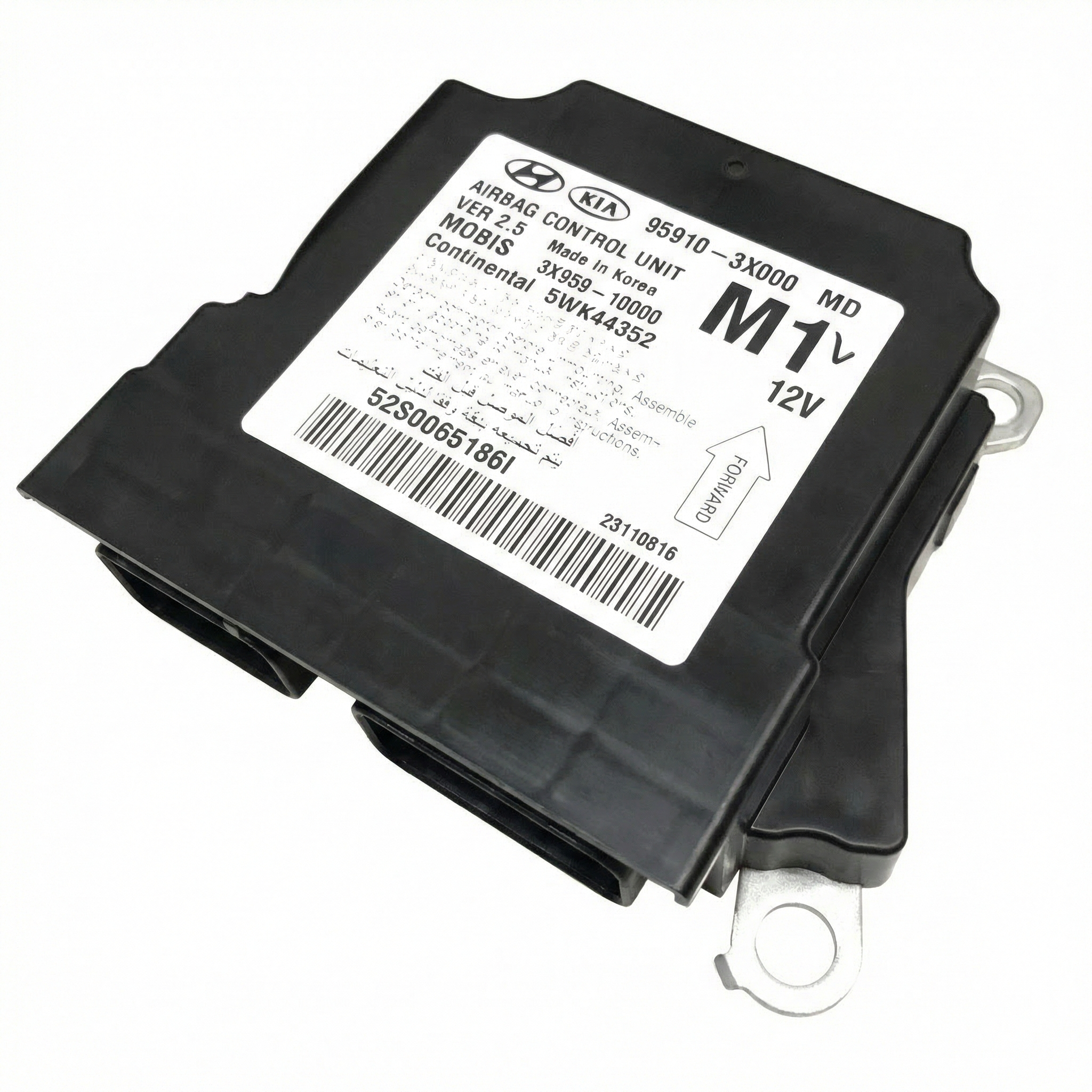
When a used part is the smart pick: A used BCM from a junkyard is a viable, cost-effective option ONLY if you have confirmed access to a Hyundai dealer or a well-equipped independent shop/locksmith who can reprogram the used module to your vehicle's VIN and keys. The physical installation is straightforward, but the car will not start without programming.
Donor-vehicle mileage cap: roughly under 150000 miles for the part to have meaningful remaining life.
What to inspect on the donor part:
- Match the OEM part number on the used BCM EXACTLY to your original module.
- Inspect the donor vehicle for signs of flood or water damage, as moisture is a primary cause of electronic module failure.
- Ensure all connector pins on the used BCM are straight, clean, and free of corrosion.
- Purchase from a reputable salvage yard that offers at least a 30-day warranty.
OEM-only on this vehicle (don't cheap out):
- Body Control Module (BCM): While used OEM is an option, there are no reliable aftermarket 'new' BCMs. You must use either a new Hyundai part, a used Hyundai part, or a service that rebuilds/clones your original unit.
Aftermarket brands forum-validated for this vehicle:
- For BCM repair, mail-in cloning/programming services like Karman Auto are reported to be effective alternatives to dealer replacement.
Brands owners have reported issues with on this vehicle:
- Avoid any 'new' aftermarket BCMs from unknown brands, as they are unlikely to be programmable or function correctly with the vehicle's complex systems.
Real Owner Stories
Aggregated from forums and TSBs cited above. Mileages and costs reflect what owners reported in those sources.
2013 Hyundai Elantra GT
Symptoms: The vehicle experienced a no-start condition and the OBD-II scanner returned code U0141 (Lost communication with BCM).
What fixed it: The owner performed a diagnostic process checking fuses and battery voltage, eventually identifying the BCM as the point of failure after verifying all other electrical inputs.
Source hint: Hyundai-Forums.com: 2013 Elantra GT won't start, U0141 Lost communication with BCM
Related OBD-II Codes
Frequently Asked Questions
My 2013 Elantra GT won't start and shows code U0141. Is there a specific TSB I should look at?
I'm hearing a clicking noise in my steering column along with electrical issues; are they related to U0141?
Could a weak battery really cause a 'Lost Communication' code on my Elantra?
Where is the Body Control Module located in the 2011-2017 Elantra for inspection?
If I need to replace the BCM to fix U0141, can I just plug in a used one?
Which fuses should I check if my BCM seems to be offline?
Helpful Videos
Used OEM Parts in Stock
New Aftermarket Parts Available


The information in this article is provided for general reference and educational purposes only. Vehicle specifications, procedures, and part compatibility can vary by production date, trim level, and region. Always consult your vehicle's factory service manual and verify part numbers before purchasing or performing repairs. Safety-critical components such as airbags, seat belts, and braking systems should be installed by a qualified professional.
- Hyundai Elantra:
- 🧭 Diagnostic Flowchart
- 🎬 Helpful Videos
- 🛍️ Shop This Part
- What's Unique About the 2011-2017 Hyundai Elantra
- Symptoms You May Notice
- Most Likely Causes
- Rare But Worth Checking
- Diagnosis Steps
- Parts You'll Likely Need
- Related Codes That Often Appear With This One
- Technical Service Bulletins (TSBs) & Recalls
- Mechanic-Grade Diagnostic Values
- Scan Tool Commands That Help
- Wiring & Ground Locations
- OEM Part Supersession History
- Model Year Variations Within This Range
- Other Known Issues on This Vehicle
- Used vs. New Parts: Buying Guide for This Vehicle
- Real Owner Stories
- 2013 Hyundai Elantra GT
- Related OBD-II Codes
- Frequently Asked Questions
- 🎟️ Get 5% Off