

U0141 on 2006-2024 Hyundai Santa Fe: Lost Communication With BCM Causes and Fixes
This code means the Body Control Module (BCM) is offline. The most common causes are simple electrical issues like a weak battery, a blown fuse, or a bad ground connection. Always check these basics before assuming the expensive BCM has failed. On many Santa Fe models, the BCM is integrated into the interior fuse box, called the Smart Junction Box (SJB).
- U0141 means the Body Control Module (BCM) is offline.
- Before suspecting an expensive BCM failure, always check the simplest things first: the battery's health and charge, and all related fuses.
- Inspect the BCM/SJB connectors and nearby wiring for any signs of corrosion, water damage, or physical damage.
- Replacing the BCM is not a simple plug-and-play fix; it requires professional programming to your vehicle's VIN.
- Driving with this code can be a safety risk as essential systems like lights and wipers may fail without warning.
What's Unique About the 2006-2024 Hyundai Santa Fe
On many modern Hyundai Santa Fe models, particularly the third generation (2013-2018) and newer, the Body Control Module is not a standalone black box. Instead, it is often integrated directly into the interior fuse panel, which Hyundai may call the Smart Junction Box (SJB) or Instrument Panel Junction Block. This is important because it means you won't be looking for a separate module; the fuse box itself is the control unit. This integration can simplify wiring but also means that a failure may require replacing the entire junction box assembly, which then needs to be programmed to the vehicle.
Generation note: This guide covers the 2nd (2006-2012), 3rd (2013-2018), 4th (2019-2023), and 5th (2024+) generations of the Hyundai Santa Fe. While the code's meaning is the same, the location of the BCM/SJB, fuse layouts, and common wiring failure points can differ. For example, on 3rd generation models (DM), the BCM is commonly part of the Smart Junction Box (interior fuse panel). On 4th generation (TM) models, this is also the case, with specific part numbers like 91950-S2100 for 2019-2020 models. Always verify the BCM location for your specific year.
Symptoms You May Notice
- Interior or exterior lights not working (headlights, dome lights, etc.)
- Power windows and door locks inoperative
- Windshield wipers not working
- Instrument cluster gauges behaving erratically or going dark
- Remote keyless entry or push-button start failure
- Warning lights on the dashboard, especially for systems controlled by the BCM
- Engine will not start or stalls (if BCM is tied to the immobilizer)
- Parasitic battery drain that kills the battery overnight
- Replacing the BCM without first testing the battery, fuses, and ground connections. These simple checks are the most common fixes and are often overlooked.
- Replacing other components like light bulbs or switches when the root cause is the BCM not providing power or a signal.
Most Likely Causes
- Low Battery Voltage or Failing Battery 🔴 High Probability → Shop Vehicle Battery Modern vehicles with numerous electronic modules are highly sensitive to voltage. The BCM can be one of the first modules to drop offline during a low voltage event, such as when starting the engine with a weak battery. A voltage drop below 12.4V is a leading cause.
How to confirm: Test the battery with a multimeter. A healthy, resting battery should be at or above 12.4 volts. Check the voltage during engine cranking; if it drops below 10 volts, the battery is weak or failing.
Typical fix: Recharge or replace the vehicle's 12V battery.
Est. part cost: $150-$300 - Blown Fuse(s) for the BCM 🔴 High Probability The BCM/SJB controls many different circuits, and a short in any one of them (like a faulty window motor) can blow a fuse, cutting power to the module and causing it to lose communication.
How to confirm: Locate the interior and under-hood fuse boxes. Check all fuses labeled 'BCM,' 'SJB,' 'Module,' or 'Memory.' Visually inspect the fuse element or use a multimeter to test for continuity.
Typical fix: Replace the blown fuse. If it blows again immediately, there is a short circuit that must be diagnosed.
Est. part cost: $1-$10 - Poor BCM Ground Connection 🟡 Medium Probability Ground straps and connections can corrode or loosen over time, especially in areas with high humidity or road salt. The BCM requires a solid ground to function; without it, it cannot communicate.
How to confirm: Locate the main ground wire for the BCM/SJB (consult a service manual for the exact location, often a black wire bolted to the chassis under the dashboard). Ensure it is tight and free of corrosion. Test for low resistance (less than 1 ohm) between the ground pin at the BCM connector and a clean chassis point.
Typical fix: Clean the ground point and terminal with a wire brush and re-secure the connection.
Est. part cost: $0-$5 - Damaged Wiring or Corroded Connector 🟡 Medium Probability Wiring harnesses can be damaged from previous repairs, aftermarket accessory installations, or chafing against sharp metal edges under the dash. Water intrusion from a leaking windshield or clogged sunroof drain can also lead to corrosion in the BCM connectors.
How to confirm: Visually inspect the wiring harness and connectors going to the BCM/SJB for any signs of damage, corrosion (especially green or white powder), or pushed-out pins. Wiggle the harness while monitoring communication with a scan tool to see if the connection is intermittent.
Typical fix: Repair the damaged section of wire or clean/replace the affected connector pigtail. If water damage is found, the source of the leak must be addressed.
Est. part cost: $10-$150 - Failed Body Control Module (BCM) / Smart Junction Box (SJB) ⚪ Low Probability → Shop Body Control Module While less common, the BCM/SJB itself can fail due to internal electronic faults or damage from water intrusion. A recall for improperly bonded windshields on some models (NHTSA 20V-703) increases the risk of water dripping onto under-dash electronics.
How to confirm: This is a process of elimination. If the battery is good, all fuses and grounds are verified, and the wiring appears intact, the BCM is the likely culprit. An advanced scan tool that can't communicate with the BCM (while being able to communicate with other modules) points to a failed BCM.
Typical fix: Replace the Body Control Module or Smart Junction Box. This new module MUST be programmed ('variant coded') to the vehicle by a dealer or qualified shop with a high-level scanner.
Est. part cost: $400-$900
Rare But Worth Checking
- CAN Bus Network Fault: The issue might not be with the BCM or its wiring, but with the network itself. A short circuit in the CAN wiring anywhere in the vehicle (e.g., from a chafed wire or a fault in another module) can bring down communication for multiple modules, including the BCM.
- Improperly Installed Aftermarket Accessories: Poorly installed remote starters, alarms, or stereos that are improperly tapped into the vehicle's wiring can interfere with the CAN bus network and cause communication codes like U0141.
Diagnosis Steps
- Check Battery Health: Verify the battery is fully charged (12.4V+ resting) and provides adequate voltage during cranking (10V+). A weak battery is the most common cause.
- Scan for All Codes: Use an OBD-II scanner capable of reading codes from ALL modules (Body, Chassis, Network), not just the engine computer. Note all 'U' codes and their status (active or stored).
- Check BCM Fuses: Locate the interior and engine compartment fuse boxes. Inspect all fuses related to the BCM, Smart Junction Box, and memory functions (often labeled 'BCM', 'SJB', 'Module', 'Memory').
- Visual Inspection: Carefully inspect the BCM/SJB and its connectors for any signs of physical damage, corrosion, or water intrusion. Look for signs of water stains on the headliner or floor, which could indicate a leak from a sunroof or windshield.
- Check Power and Ground: Using a multimeter and a wiring diagram, confirm the BCM/SJB connector has consistent battery voltage on the power pins and good continuity to ground (less than 1 ohm) on the ground pins.
- Test CAN Bus: With the battery disconnected, check the resistance between the CAN High (Pin 6) and CAN Low (Pin 14) pins at the OBD-II port. It should be approximately 60 ohms. A reading of 120 ohms suggests a break in the wiring or a missing termination resistor. A reading near 0 ohms indicates a short between the two CAN wires.
- Isolate the BCM: If all power, ground, and network tests seem okay, the BCM itself is the most likely point of failure. Confirm this by attempting to communicate directly with the BCM with a professional scan tool. If it's the only module not responding, it has likely failed.
Parts You'll Likely Need
- 12V Battery — A weak or failing battery is a leading cause of communication codes in modern vehicles.
Trusted brands: Interstate, DieHard, Duralast
OEM price range: $250-$400
Aftermarket price range: $150-$300 - Body Control Module (BCM) / Smart Junction Box (SJB)
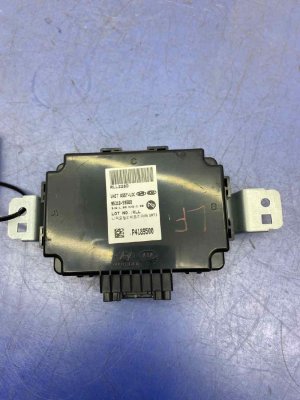
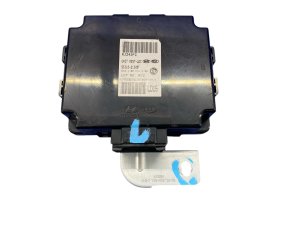
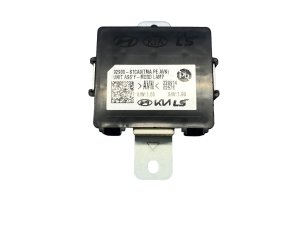
(OEM #Varies by year/trim. Ex: 91950-B8600 (2017-2019 Santa Fe), 91950-S2100 (2019-2020 Santa Fe))— This is the part to replace if all electrical checks (power, ground, wiring) pass and the module is confirmed to be faulty. It is the brain for the vehicle's body electronics.
Trusted brands: Genuine Hyundai
Related Codes That Often Appear With This One
- U0xxx (various) — Multiple 'U' codes (e.g., U0100, U0155) indicate a widespread network communication problem, pointing towards a systemic issue like a main CAN bus short or a faulty gateway module, rather than just a problem with the BCM itself.
Technical Service Bulletins (TSBs) & Recalls
- TSB 17-ST-001: Addresses a clicking or thud noise from the steering column on 2013-2016 Santa Fe models due to a worn flexible steering coupler. While not directly related to U0141, it is a very common repair that involves disassembling parts of the dash near the BCM/SJB, and improper reassembly could potentially damage wiring and cause a U0141 code.
Platform-Specific Known Issues
- Water Intrusion from Windshield/Sunroof: On models with panoramic sunroofs, clogged drain tubes can cause water to overflow and run down the A-pillars into the dashboard. Additionally, a recall for improperly bonded windshields (NHTSA 20V-703) on some models can allow water to leak directly onto the Smart Junction Box and other electronics, causing corrosion and failure.
Mechanic-Grade Diagnostic Values
- CAN Bus Resistance — expected: ~60 Ω between CAN High (Pin 6) and CAN Low (Pin 14) at the OBD-II port with the battery disconnected.. Failure: A reading of ~120 Ω indicates an open circuit or a module/terminating resistor is offline. A reading near 0 Ω indicates a short between the CAN High and CAN Low wires. A reading like 45 Ω could indicate a third resistor on the network or a failing transceiver.
- CAN Bus Voltage (Key On, Engine Off) — expected: CAN High (Pin 6): ~2.5V to 3.5V. CAN Low (Pin 14): ~1.5V to 2.5V. The two voltages should be a mirror image of each other and swing during data traffic.. Failure: A voltage stuck at 0V or 5V on either line indicates a short to ground or power. A significant difference (>0.5V) between the two lines at rest suggests a bus fault.
- BCM Ground Circuit Resistance — expected: Less than 1.0 Ω between the BCM ground pin and a clean chassis ground point.. Failure: Resistance higher than 1.0 Ω indicates a poor ground connection, which can cause the module to drop offline intermittently.
- BCM Dark Current — expected: Keyless type: ~5.5 mA. Non-keyless type: ~3.0 mA.. Failure: A significantly higher reading indicates a potential parasitic draw from the BCM or a circuit it controls, which can drain the battery and cause low-voltage communication faults.
Scan Tool Commands That Help
- Hyundai GDS (Global Diagnostic System): Variant Coding — This procedure is mandatory after replacing the BCM or Smart Junction Box (SJB). It introduces the new module to the vehicle and configures it for the specific options (e.g., smart key, sunroof) installed on that VIN. Failure to perform variant coding will result in a non-functional or partially functional module and may set a specific DTC for coding error.
- Hyundai GDS (Global Diagnostic System): Fault Code Searching (All Systems) — When diagnosing a U0141, it's critical to scan all vehicle systems (Engine, ABS, Airbag, BCM, etc.) simultaneously. This helps determine if only the BCM is offline or if multiple modules are not communicating, which would point to a network-wide issue rather than a single module failure.
- Hyundai GDS (Global Diagnostic System): Actuation Test — If communication with the BCM is possible but certain features don't work, use actuation tests to command specific outputs (e.g., 'Turn on Headlights,' 'Lock Doors'). If the command works via the scan tool but not the switch, it confirms the BCM and wiring to the component are likely okay, pointing to a problem with the input switch itself.
- Generic: Hard Reset — As a simple first step for intermittent electrical issues, a hard reset can resolve temporary glitches. Disconnect both battery terminals and touch them together for 30 seconds to drain residual power from all modules, forcing them to reboot.
Wiring & Ground Locations
- Smart Junction Block (SJB) — On many 3rd (2013-2018) and 4th (2019-2023) generation models, the BCM is integrated into the interior fuse box, located under the driver's side dashboard to the left of the steering column.. This is the physical location of the BCM itself. Diagnosis involves checking power, ground, and communication wires at the connectors on the back of this unit.
- Standalone BCM (Older/Specific Models) — On some models, particularly 2nd gen (2006-2012) and some 3rd gen (e.g., 2017-2018), the BCM is a separate module located deep in the center console, behind the radio and HVAC controls.. Access requires significant disassembly of the center dash, making diagnosis and replacement more labor-intensive. It's important not to confuse it with the Smart Key module or the fuse box in these applications.
- Joint Connector (JF01, JF03, etc.) — These are junction points for the CAN bus wiring. For example, on a 2017 Santa Fe, joint connectors are used to branch the C-CAN network to various modules like the 4WD ECM, Smart Cruise Control, and the SJB itself. Their physical location is typically under the dash or in kick panels.. A loose connection or corrosion within one of these joint connectors can disrupt communication for multiple modules on the network, causing codes like U0141.
- Ground Point (GE02, GI02) — Hyundai uses specific designators for ground points. For example, on a 2010 Santa Fe, GE02 is behind the right side of the front bumper, and GI02 is on the right side of the center fascia. The primary ground for the BCM/SJB is typically bolted to the chassis under the driver's side dash.. A corroded or loose ground connection is a common cause for a module to lose power and communication. Verifying the integrity of the specific ground point for the BCM is a critical diagnostic step.
Real Owner Repair Stories
- Hyundai Forums user (2014 Hyundai Santa Fe) — Blind Spot Detection (BSD) system not working, scan tool could not communicate with either the left or right BSD modules.
❌ Tried (didn't work) Checking fuses.
✅ What actually fixed it The technician found a corroded power wire in a harness connector located in the driver's side kick panel. The corrosion was caused by water intrusion. After repairing the wire and ensuring a solid 11+ volts at the module, communication was restored, and the system could be calibrated.
OEM Part Supersession History
91950-B8600→N/A— Part for specific model years.
Heads up: This Smart Junction Box is listed for 2017-2019 Santa Fe models. It is critical to match the OEM part number exactly when replacing, as different numbers correspond to different vehicle options and are not interchangeable.91940-2W540→N/A— Part for specific model years.
Heads up: This Fuse & Relay Junction Box is listed for 2013-2016 Santa Fe models. Compatibility is strict; do not interchange with different part numbers.
Model Year Variations Within This Range
- 2013-2018 (Third Generation 'DM'): This generation commonly integrates the BCM into the Smart Junction Box (SJB) in the driver's side dash. However, some higher-trim 2017-2018 models may have a separate BCM located deep behind the center console/radio, requiring extensive dash disassembly for access. The CAN bus speed is typically 500k.
- 2019-2023 (Fourth Generation 'TM'): Continues the trend of the BCM being integrated into the Smart Junction Box (SJB). It is critical to note that fuse boxes for gasoline and hybrid models are NOT interchangeable due to significant differences in their electrical systems. Replacement always requires 'variant coding' with a dealer-level scan tool.
Diagnostic Flowchart
Other Known Issues on This Vehicle
Issues unrelated to this code that are worth knowing about as an owner of this generation:
- Theta II Engine Failure 🔴 High — Widespread on 2011-2019 models with 2.0L and 2.4L GDI engines. Can occur at various mileages, often before 100,000 miles. (Ref: Multiple recalls and a class-action lawsuit settlement led to a lifetime warranty extension for the engine short block for affected vehicles that received a required software update.)
- Worn Steering Coupler 🟠 Medium — Very common on 2011-2016 models, causing a distinct clicking or clunking noise when turning the steering wheel. (Ref: TSB 17-ST-001 describes the replacement procedure for the flexible coupler (Part No. 56315-2K000-FFF).)
- Peeling Paint 🟡 Low — Common on various model years, particularly with white and other light-colored paints. Paint tends to delaminate and peel off in large sheets, especially on the hood and roof.
- Faulty Crankshaft Position Sensor 🟠 Medium — Affects many model years, including the 2nd (2007-2012) and 3rd (2013-2018) generations, causing engine stalling or no-start conditions, often when the engine is hot.
- ABS Module Fire Risk 🔴 High — Affects 2013-2018 models. The ABS module can malfunction and short circuit, potentially causing an engine compartment fire even when the vehicle is parked and turned off. (Ref: NHTSA Recall 20V-520, 21V-303)
- Tow Hitch Harness Fire Risk 🔴 High — Affects 2019-2023 models equipped with a tow hitch harness. Water can enter the harness module, causing a short circuit and fire risk while parked or driving. (Ref: NHTSA Recall 23V-123 (Hyundai Recall 244))
Used vs. New Parts: Buying Guide for This Vehicle
When a used part is the smart pick: A used BCM/SJB can be a cost-effective option if the original part number is matched exactly. It makes sense when the original module has a confirmed internal failure (e.g., water damage, burnt board) and the cost of a new unit is prohibitive. However, the cost of professional programming must be factored in.
Donor-vehicle mileage cap: roughly under 120000 miles for the part to have meaningful remaining life.
What to inspect on the donor part:
- Match the OEM part number on the module's label EXACTLY. Do not rely on vehicle year/model lists.
- Visually inspect all connector pins on the used module for corrosion (green/white powder), bent pins, or signs of melting/heat damage.
- Source the part from a vehicle with a similar trim level and options if possible, although programming is still required.
- Ensure the salvage yard has a return policy in case the unit is faulty.
- Avoid units from flood-damaged vehicles at all costs.
OEM-only on this vehicle (don't cheap out):
- Body Control Module (BCM) / Smart Junction Box (SJB)
Aftermarket brands forum-validated for this vehicle:
- Genuine Hyundai (New)
- Used OEM (from a reputable salvage source)
Brands owners have reported issues with on this vehicle:
- There are no known third-party manufacturers of new BCM/SJB modules for these vehicles. The only options are new Genuine Hyundai or used OEM parts. Be wary of services that claim to sell 'remanufactured' units without a clear warranty and programming support.
Real Owner Stories
Aggregated from forums and TSBs cited above. Mileages and costs reflect what owners reported in those sources.
2013-2016 Hyundai Santa Fe
Symptoms: Clicking or thud noise from the steering column; subsequent communication issues after dash disassembly.
What fixed it: Ensuring proper reassembly of dashboard components and wiring harnesses near the BCM/SJB following a steering coupler repair.
Source hint: TSB 17-ST-001
2024 Hyundai Santa Fe
Symptoms: Water leak on the passenger floorboard.
What fixed it: Addressing the source of the water leak to prevent damage to the electronics under the dash.
Source hint: Reddit r/HyundaiSantaFe thread titled 'Water leak.....'
2011-2019 Hyundai Santa Fe 2.4L GDI — ~95000 miles
Symptoms: Engine will not start or stalls; BCM tied to immobilizer failure.
What fixed it: Process of elimination starting with battery health (12.4V+) and checking BCM/SJB fuses.
Source hint: Known Issues: Theta II Engine Failure / BCM immobilizer context
Related OBD-II Codes
Frequently Asked Questions
Could a water leak in my Santa Fe cause the U0141 code?
Does the steering column noise TSB 17-ST-001 relate to my BCM communication error?
Is the U0141 code related to the Theta II engine failure issues on 2011-2019 models?
Why is my Santa Fe's battery dying overnight along with this code?
Do I need to program a new BCM if I replace it myself?
Helpful Videos


We Have This Part in Stock

The information in this article is provided for general reference and educational purposes only. Vehicle specifications, procedures, and part compatibility can vary by production date, trim level, and region. Always consult your vehicle's factory service manual and verify part numbers before purchasing or performing repairs. Safety-critical components such as airbags, seat belts, and braking systems should be installed by a qualified professional.
- Hyundai Santa Fe:
- 🧭 Diagnostic Flowchart
- 🎬 Helpful Videos
- 🛍️ Shop This Part
- What's Unique About the 2006-2024 Hyundai Santa Fe
- Symptoms You May Notice
- Most Likely Causes
- Rare But Worth Checking
- Diagnosis Steps
- Parts You'll Likely Need
- Related Codes That Often Appear With This One
- Technical Service Bulletins (TSBs) & Recalls
- Platform-Specific Known Issues
- Mechanic-Grade Diagnostic Values
- Scan Tool Commands That Help
- Wiring & Ground Locations
- Real Owner Repair Stories
- OEM Part Supersession History
- Model Year Variations Within This Range
- Other Known Issues on This Vehicle
- Used vs. New Parts: Buying Guide for This Vehicle
- Real Owner Stories
- 2013-2016 Hyundai Santa Fe
- 2024 Hyundai Santa Fe
- 2011-2019 Hyundai Santa Fe 2.4L GDI — ~95000 miles
- Related OBD-II Codes
- Frequently Asked Questions
- 🎟️ Get 5% Off