

U1000 on 2008-2016 Audi A4: Understanding Network Communication Faults
The code U1000 on a 2008-2016 Audi A4 is a generic network communication error. It rarely appears on its own and usually means a specific control module has failed. The most common cause is a faulty ABS module, which can cost $200-$500 to have rebuilt. A full diagnostic scan with a tool like VCDS is required to find the true source of the problem.
- U1000 is a generic code; you MUST use an Audi-specific scanner like VCDS to find the real problem.
- The most likely cause on a 2008-2016 A4 is a failed ABS control module, which will disable your ABS and ESP systems.
- Before suspecting expensive modules, always test the battery and charging system, as low voltage is a common cause of electronic issues.
- Do not replace the battery without properly coding the new one to the car's Battery Energy Management (BEM) system.
- Fixing this issue is not a simple DIY task and typically requires professional-level tools and expertise.
What's Unique About the 2008-2016 Audi A4
On the Audi A4 B8 platform, a generic U1000 code often points towards a few well-documented failure points. Unlike some brands where this code might indicate a simple ground issue, on the B8 A4 it frequently signals an internal failure of the ABS control module. This platform's modules are interconnected, and the ABS module acts as a critical hub. When it fails, it can trigger a cascade of warning lights for the brakes, stability control, and parking brake, all stemming from that single communication loss.
Generation note: The 2008-2016 range covers the Audi A4 B8 generation. This includes the pre-facelift (2008-2012) and facelift (B8.5, 2013-2016) models. The underlying electronic architecture and common failure points like the ABS module are largely the same across this entire generation.
Symptoms You May Notice
- Multiple warning lights on the dashboard, often including ABS, ESP/ESC (traction control), and the parking brake light.
- Check Engine Light may be on.
- Loss of certain features controlled by the failed module, such as the speedometer if the ABS module fails.
- In rare cases, intermittent no-start conditions if the Engine Control Module (ECM) or Gateway communication is affected.
- In cases of a failing CAN Gateway module, a sudden and complete shutdown of all vehicle electronics while driving is possible.
- Replacing individual wheel speed sensors when the actual fault lies within the ABS control module itself.
- Replacing the battery without properly coding the new one to the car, which can lead to continued electrical and communication faults.
- Condemning the instrument cluster when a faulty ABS module stops sending it speed and status signals, causing gauges to fail.
Most Likely Causes
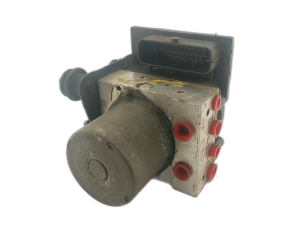
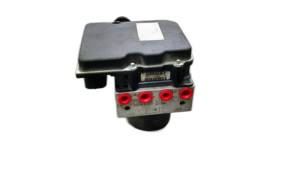
- Faulty ABS Control Module 🔴 High Probability → Shop ABS Control Module The electronic portion of the Bosch ABS module is a known failure point on the B8 platform. Internal solder joints or the internal brake pressure sensor (G201) can fail, causing the module to go offline.
How to confirm: Perform a full system scan with VCDS. Look for a "No Communication" error from the ABS module (Address 03). You may also find specific fault codes like01435 - Brake Pressure Sensor 1 (G201),01421 - High Pressure Switch Valve, or codes for ABS valves (00265,00274,00275) stored before the module failed completely.
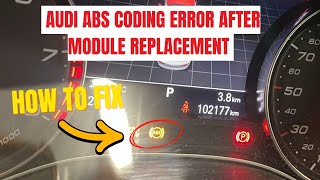
Typical fix: The ABS module must be replaced or, more commonly, removed and sent to a specialist for rebuilding. A rebuilt module is a cost-effective and reliable repair. The replacement/rebuilt module will need to be coded to the vehicle using VCDS.
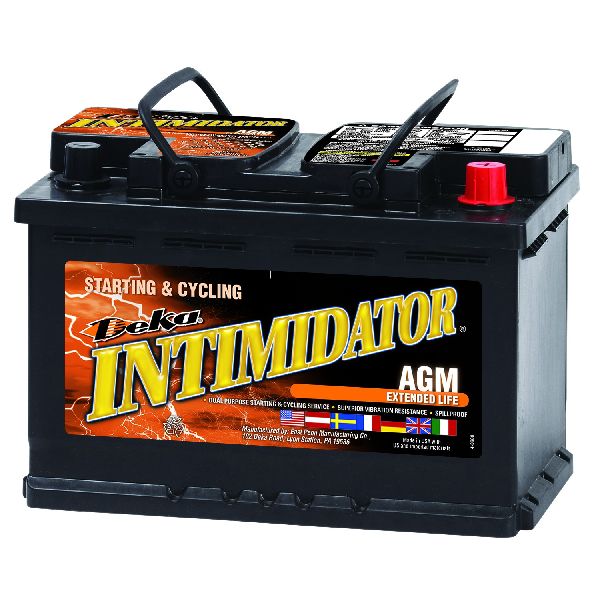
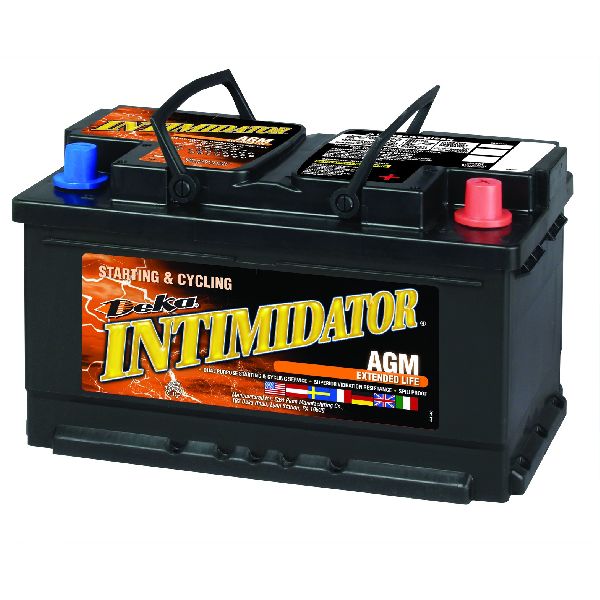
Est. part cost: $200-$500 for a rebuild service, $800-$2000+ for a new OEM module. - Weak or Failing Battery / Charging System 🟡 Medium Probability → Shop Vehicle Battery Modern Audis are very sensitive to voltage. A weak battery, failing alternator, or faulty voltage regulator can cause modules to drop off the network sporadically, especially during startup.
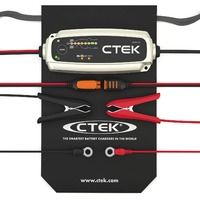
How to confirm: Test the battery voltage at rest (should be >12.4V) and with the engine running (should be 13.8V-14.4V). Check for related fault codes in the CAN Gateway (Address 19) like03041 - Energy Management Activeor codes related to the generator/alternator such as02252 - Generator: No Signal/Communication.
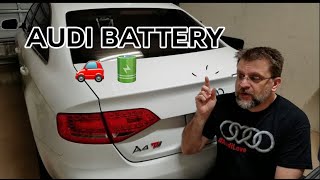
Typical fix: Replace the vehicle's battery. If replacing, it must be 'coded' to the vehicle using a diagnostic tool to inform the battery management system. 🎬 See this step-by-step battery replacement and coding guide If the charging system is at fault, replace the alternator or voltage regulator.
Est. part cost: $200-$400 for a quality AGM battery. - Faulty CAN Gateway Module (J533) ⚪ Low Probability The CAN Gateway (Address 19) is the central traffic controller for all module communications. While robust, it can fail internally, sometimes leading to a complete and sudden vehicle shutdown at speed.
How to confirm: A VCDS scan will show multiple modules as 'unreachable'. If the gateway itself is faulty, it may be impossible to communicate with most of the car. Check the gateway's installation list to ensure it is correctly coded for the vehicle's options.
Typical fix: Replace and recode the CAN Gateway module. This requires a new or used part with the exact same part number. Replacement often requires online coding with dealer tools due to 'Component Protection'.
Est. part cost: $100-$300 for a used module, $400+ for new.
Rare But Worth Checking
- Faulty ECM Power Relay: A forum user reported intermittent no-start and communication issues that were ultimately traced to a simple, inexpensive relay that powers the engine control module (ECM). If you experience starting problems along with communication faults, this is worth investigating.
- Damaged Wiring or Connectors: While less common than module failure, wiring damage can cause a U1000 code. Check harnesses for chafing, corrosion, or rodent damage, particularly around the ABS module, ECU box in the plenum, and under the carpets if water ingress is suspected.
- Water Ingress in Plenum Chamber: The plenum chamber (under the windshield wipers) houses the Engine Control Module (ECM) in an 'e-box'. If the plenum drains become clogged with leaves and debris, this area can fill with water, submerging and corroding the ECM and its connectors, leading to widespread communication failures.
Diagnosis Steps
- Connect an Audi-specific scan tool (like Ross-Tech VCDS). A generic scanner is not sufficient.
- Perform a full Auto-Scan of all control modules.
- Review the scan log. Identify which module(s) are reporting "Cannot be reached" or have communication-related fault codes.
- If the ABS module (Address 03) is unreachable and multiple other modules report no communication with it, it is the primary suspect.
- If multiple, unrelated modules are unreachable, check the battery and charging system voltage first.
- Inspect the fuses for the non-communicating modules, both in the dash-end fuse box and the plenum E-box. The ABS module has dedicated fuses, often a 40A fuse labeled S123 or S124.
- Check plenum drains under the cowl for clogging. Inspect the ECM and its connectors for any signs of water damage or corrosion.
- If voltage is good and fuses are intact, inspect the wiring and connectors for the suspect module for any visible damage or corrosion.
- If the ABS module is the confirmed fault, remove it and send it to a reputable electronics rebuilder. A DIY removal guide can be found on forums like AudiWorld.
Parts You'll Likely Need
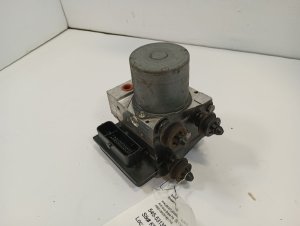
- ABS Control Module Rebuild Service
(OEM #8K0907379AF, 8K0907379P, 8K0907379AK, 8K0907379AQ, 8K0907379CG, 8K0907379CH)— This is the most common cause of widespread communication faults and associated warning lights on the B8 platform. Rebuilding is more cost-effective than replacement.
Trusted brands: Bosch (Original Manufacturer), ModuleMaster (Rebuilder), ECU Testing (Rebuilder)
OEM price range: $800-$2000+ (New)
Aftermarket price range: $200-$500 (Rebuild Service) - AGM Battery — A weak battery can cause numerous, difficult-to-diagnose communication errors.
Trusted brands: Varta, Bosch, Interstate
OEM price range: $300-$450
Aftermarket price range: $200-$350
Related Codes That Often Appear With This One
- 01314 — No Communication with Engine Control Module (ECM)
- 01316 — No Communication with ABS Control Module
- 01435 — Brake Pressure Sensor 1 (G201) - This fault is internal to the ABS module and is a strong indicator that the module itself is failing.
- U0121 — Lost Communication With Anti-Lock Brake System (ABS) Control Module - This is the standardized SAE equivalent of Audi's 01316 code.
Technical Service Bulletins (TSBs) & Recalls
- No specific TSB is widely cited for a U1000 code or general CAN bus failure on this platform. The issue is typically rooted in component failure (like the ABS module) rather than a software issue that a TSB would address. TSBs for this platform often relate to more specific system faults like telematics or MMI behavior.
- A cross-manufacturer service bulletin, TSB NTB06-009, was applied in a case involving a U1000 CAN communication circuit fault and a C1132 ABS code, as noted in NHTSA ODI #10150585.
Platform-Specific Known Issues
- The ABS module is located in the driver's side front wheel well, behind the fender liner, making it susceptible to moisture and requiring removal of the wheel and liner to access.
- Some replacement ABS modules may have 'Component Protection' active, which requires an online connection to Audi servers (typically at a dealer or specialized shop) to code the module to the car, preventing a simple DIY swap with a used part.
- While the U1000 code on an Audi often points to the ABS module, cross-manufacturer records such as NHTSA ODI #11461728 suggest that in some electronic architectures, U1000 can indicate lost communication with the Transmission Control Module (TCM) due to overheating.
Mechanic-Grade Diagnostic Values
- CAN Bus Network Resistance — expected: Approximately 60 Ohms. Failure: A reading of ~120 Ohms indicates one of the two terminating resistors (often in the Gateway or ABS module) is offline or the bus is broken. A reading near 0 Ohms indicates a short between CAN High and CAN Low wires.
- CAN Bus Voltage (Key On, Engine Off) — expected: CAN High: ~2.5V to 3.5V. CAN Low: ~1.5V to 2.5V. Both lines should mirror each other.. Failure: A line stuck at 0V or 5V, or a line that is not showing a fluctuating signal, indicates a short to ground or power, or a faulty transceiver in a module.
- Engine-to-Chassis Ground Voltage Drop — expected: Less than 0.15 Volts at idle.. Failure: Higher voltage readings indicate a degraded engine ground strap, a common issue that can cause sporadic module communication problems due to unstable ground reference. In some vehicles, U1000 is explicitly documented as a ground harness problem (NHTSA ODI #10681194).
Scan Tool Commands That Help
- VCDS (Ross-Tech): Gateway Installation List — This is the first step in diagnosing a U1000. It quickly polls the CAN Gateway (Address 19) to see which modules are communicating correctly ('OK'), which have faults ('Malfunction'), and which are completely offline ('Cannot be reached'). This immediately narrows down the search.
- VCDS (Ross-Tech): Coding (Function 07) — After replacing a module like the ABS unit or CAN Gateway, the new module must be 'coded' with a long string of numbers that tells it the vehicle's specific configuration (e.g., engine, transmission, options). VCDS can read the coding from the old module (if accessible) and write it to the new one.
- VCDS (Ross-Tech): Basic Settings (Function 04) - Steering Angle Sensor (G85) Calibration — After replacing the ABS module or if the Steering Angle Sensor itself is suspected, its zero position must be calibrated. An uncalibrated G85 can prevent the ABS/ESP system from initializing and may cause communication faults.
- ODIS (Dealer Tool): Component Protection Removal — If a used or new module (like ABS, Gateway, or Radio) is installed, it may trigger 'Component Protection,' disabling its function. This is an anti-theft measure. Only dealer tools like ODIS with an online connection to Audi's servers (GEKO access) can officially remove Component Protection and adapt the module to the vehicle.
Wiring & Ground Locations
- CAN Gateway (J533) — Located behind the glove box, towards the center of the dashboard.. As the central hub for all CAN bus networks, a failure or poor connection here can cause a total loss of communication between multiple systems, mimicking a U1000 fault.
- Ground Point 764 — In the front left wheel housing.. This is a primary ground point for components in the area, including potentially the ABS module. Corrosion here can lead to intermittent communication issues with the ABS system.
- Ground Point 32 / 33 — Located behind the instrument panel on the left (32) and right (33) sides, near the A-pillars.. These are major interior ground points for various control modules. A loose or corroded connection here can cause widespread, difficult-to-diagnose electronic issues, including network faults.
- Engine Ground Strap — Primary strap often connects the engine block or transmission bellhousing to the firewall or chassis rail.. A degraded engine ground strap is a common failure point that creates an unstable ground reference for all engine-bay modules, including the ECM and ABS module, leading to intermittent communication dropouts.
- CAN Bus Wires — Twisted pair of wires, typically Orange/Black (CAN High) and Orange/Brown (CAN Low), routed throughout the vehicle.. These are the physical network wires. Damage, chafing, or corrosion anywhere along their path can bring down the entire network or isolate a single module.
Real Owner Repair Stories
- Ross-Tech Forums (2012 Audi A4) — ESP/ABS lights on, fault codes for no communication with Steering Angle Sensor (G85).
❌ Tried (didn't work) Clearing codes (they came back immediately)., Attempting to recalibrate the G85 sensor via VCDS (failed with 'ERROR Group 001 Not available')., Swapping in a known-good, second steering angle sensor (same problem persisted).
✅ What actually fixed it The owner had recently installed a piggyback fuse for another accessory. This piggyback fuse was interfering with the power supply to the Steering Angle Sensor module. Removing the piggyback fuse immediately resolved all communication faults and allowed the system to calibrate itself. - Ross-Tech Forums (2008 Audi A4 2.0TDI (CAGA)) — Battery not charging properly, voltage at 12.5V at idle but rising to 14.3V with RPM increase. Fault codes for 'Generator: No Signal/Communication' (02252) and 'Electrical Fault in Circuit' in the CAN Gateway.
❌ Tried (didn't work) Replacing the battery and coding it., Checking wiring continuity between the Gateway (J533), Battery Management Module (J367), and Alternator (all checked out OK)., Replacing the alternator's voltage regulator with an aftermarket part, which fixed some faults but the 'No Communication' code remained.
✅ What actually fixed it The root cause was a faulty voltage regulator on the alternator, which was disrupting the LIN bus it shares with the Gateway and Battery Management module. The initial aftermarket regulator was incompatible or faulty. The final fix required sourcing the correct OEM Valeo voltage regulator, which restored proper communication on the LIN bus and cleared the faults. - NHTSA ODI #10171770 — An owner reported that when their vehicle stalled, it lost ignition input. Scan checks revealed U1000 along with codes U1016, U1152, B1372, and U1088; the issue was resolved by replacing the ignition switch.
- NHTSA ODI #10970695 — A report describes a U1000 code where the instrument cluster had no communication despite power and ground being present, and the CAN system diagnosis failed because the cluster could not retrieve mileage.
OEM Part Supersession History
8K0907379AF, 8K0907379P, 8K0907379AB→8K0907379AK, 8K0907379AQ, 8K0907379CG, etc.— Revisions to address internal component failures and software updates.
Heads up: When replacing an ABS module, it is critical to use a part from a vehicle with the same drivetrain (Quattro vs. FWD) and ideally the same or a compatible superseding part number. Using an incorrect module can make coding impossible. Some used modules will have Component Protection active, requiring dealer tools to resolve.8T0907468 (various suffixes)→Later suffixes (e.g., AB to AC)— Revisions to support additional features like Extended CAN for driver assistance systems.
Heads up: When replacing a CAN Gateway (J533), the part number must match exactly or be a confirmed compatible replacement. A gateway from a car with different options may not have the correct hardware or firmware, making it impossible to code correctly. Component Protection is a major factor, often requiring a dealer visit.
Model Year Variations Within This Range
- 2013-2016 (B8.5 Facelift): While the fundamental architecture is the same, facelift models may have CAN Gateways with different software versions or hardware to support newer MMI systems and driver aids. Some modules, like those for side assist, connect to an 'Extended CAN' bus that requires a specific gateway version to function.
Diagnostic Flowchart
Other Known Issues on This Vehicle
Issues unrelated to this code that are worth knowing about as an owner of this generation:
- 2.0T TFSI Timing Chain Tensioner Failure 🔴 High — Very common on earlier models (approx. 2008-2012) with the original tensioner design. Failure can occur without warning and cause catastrophic engine damage. (Ref: A class-action lawsuit was filed regarding this issue. Visual inspection or checking cam phase adaptation via scan tool is required to verify the tensioner version and chain stretch.)
- 2.0T TFSI Excessive Oil Consumption 🔴 High — Plagues early B8 models (2009-2011.5) with the CAEB 2.0T engine. Caused by defective piston rings, leading to consumption as high as 1 quart every 500 miles. (Ref: Subject of a major class-action lawsuit which led to a settlement offering warranty extensions and reimbursements for piston/ring replacement.)
- Plastic Water Pump / Thermostat Housing Failure 🟠 Medium — The water pump assembly is made of plastic and is prone to developing cracks and leaking coolant, typically after 60,000-80,000 miles. (Ref: A recall was issued for some models due to an auxiliary coolant pump overheating, but the main water pump failure is a separate, common wear item.)
- Intake Valve Carbon Buildup 🟠 Medium — As a direct-injection engine, the 2.0T does not have fuel washing over the intake valves. This leads to significant carbon accumulation over 50,000-70,000 miles, causing misfires, rough idle, and power loss.
- Multitronic (CVT) Transmission Failure 🔴 High → Shop Transmission Assembly — Affects front-wheel-drive models equipped with the CVT. Prone to jerking, hesitation, or complete failure, particularly in pre-2011 models, often occurring around 100,000-150,000 miles.
Used vs. New Parts: Buying Guide for This Vehicle
When a used part is the smart pick: A used part can be a cost-effective option for the ABS Control Module or CAN Gateway, but ONLY if you have access to advanced tools (VCDS, ODIS) and understand the risks. It makes the most sense if the part number is an exact match and the seller can confirm it came from a running vehicle with no related faults.
Donor-vehicle mileage cap: roughly under 80000 miles for the part to have meaningful remaining life.
What to inspect on the donor part:
- Verify the part number AND suffix (e.g., 8K0907379'AF') match your original part exactly.
- For ABS modules, ensure the donor vehicle had the same drivetrain (FWD or Quattro).
- Inspect connectors for any signs of corrosion, bent pins, or heat damage.
- Ask the seller if the part has 'Component Protection' active. Many sellers won't know, so assume it might be active.
- Avoid parts from flood-damaged or heavily wrecked vehicles, as internal damage is likely.
OEM-only on this vehicle (don't cheap out):
- CAN Gateway (J533): While used parts can work, the high likelihood of Component Protection issues makes a new OEM part (or a specialized cloning service) a much safer bet to avoid a car that won't start.
- Steering Angle Sensor (J527/G85): These are sensitive and prone to internal failure. A used part is a gamble, and a new OEM part is recommended for reliability.
Aftermarket brands forum-validated for this vehicle:
- For the ABS module, a professional rebuild service (e.g., ModuleMaster, ECU Testing) is often superior to buying a used part. They repair the known internal flaws and typically offer a lifetime warranty.
Brands owners have reported issues with on this vehicle:
- Unknown/unbranded ABS modules or CAN Gateways from online marketplaces. These often have compatibility issues, are incorrectly coded, or have Component Protection active with no support.
Real Owner Stories
Aggregated from forums and TSBs cited above. Mileages and costs reflect what owners reported in those sources.
2011 Audi A4 B8
Symptoms: Total instrument cluster failure.
What fixed it: Replacement of the ABS module.
Cost: $5,500-$5,500
Source hint: Reddit (r/AudiA4B8): 2011 a4 b8 abs module
2009 Audi A4 B8
Symptoms: Multiple warning lights and internal G201 sensor fault.
What fixed it: Replacement and coding of the ABS module using a second-hand unit.
Source hint: Ross-Tech Forums: 2009 A4 B8 ABS Module Coding after 2nd hand one installed
2008 Audi A4 B8 3.0TDI
Symptoms: Intermittent ABS and communication faults with loads of faults stored.
What fixed it: Repair of internal module fault.
Source hint: Ross-Tech Forums: ABS problems with loads of faults A4 B8 3.0tdi q auto
2008 Audi A4 B8
Symptoms: Multiple warning lights and communication fault codes including U0121 and 01316.
What fixed it: Repair of the ABS module or instrument cluster.
Source hint: Audi Owners Club (UK) Forums: ABS pump throwing up faults
Related OBD-II Codes
Frequently Asked Questions
Is there a specific TSB for the U1000 code on my 2008-2016 Audi A4?
Can I just swap in a used ABS module to fix the communication error?
Where is the ABS control module located on the B8 A4?
Why did my Audi A4 electronics suddenly shut down while I was driving?
Do I need to do anything special if I replace my battery to clear voltage-related U1000 codes?
Could a faulty brake pressure sensor cause my ABS module to go offline?
Helpful Videos
Used OEM Parts in Stock
New Aftermarket Parts Available


The information in this article is provided for general reference and educational purposes only. Vehicle specifications, procedures, and part compatibility can vary by production date, trim level, and region. Always consult your vehicle's factory service manual and verify part numbers before purchasing or performing repairs. Safety-critical components such as airbags, seat belts, and braking systems should be installed by a qualified professional.
- Audi A4:
- 🧭 Diagnostic Flowchart
- 🎬 Helpful Videos
- 🛍️ Shop This Part
- What's Unique About the 2008-2016 Audi A4
- Symptoms You May Notice
- Most Likely Causes
- Rare But Worth Checking
- Diagnosis Steps
- Parts You'll Likely Need
- Related Codes That Often Appear With This One
- Technical Service Bulletins (TSBs) & Recalls
- Platform-Specific Known Issues
- Mechanic-Grade Diagnostic Values
- Scan Tool Commands That Help
- Wiring & Ground Locations
- Real Owner Repair Stories
- OEM Part Supersession History
- Model Year Variations Within This Range
- Other Known Issues on This Vehicle
- Used vs. New Parts: Buying Guide for This Vehicle
- Real Owner Stories
- 2011 Audi A4 B8
- 2009 Audi A4 B8
- 2008 Audi A4 B8 3.0TDI
- 2008 Audi A4 B8
- Related OBD-II Codes
- Frequently Asked Questions
- 🎟️ Get 5% Off