

U1000 on 2010-2017 BMW 5 Series: Understanding a Phantom Communication Code
On a 2010-2017 BMW 5 Series, U1000 is often a 'phantom code' triggered by generic OBD-II scanners that can't properly interpret BMW's complex data networks. Before attempting any repairs, clear the code and rescan with a professional, BMW-specific tool like ISTA or a high-end scanner (Foxwell, Autel). It rarely indicates a real fault and almost never requires parts replacement on its own.
- U1000 on a 2010-2017 BMW 5 Series is most likely a 'phantom code' from a generic scanner and not a real fault.
- Do not replace any parts based on a U1000 code alone.
- The first step in any diagnosis should be to clear the code and re-scan with a professional, BMW-specific tool.
- If communication codes persist, test the battery and charging system, as low voltage is a primary cause of electronic issues on this platform.
- True CAN bus faults are complex and best left to a professional with the right diagnostic equipment.
What's Unique About the 2010-2017 BMW 5 Series
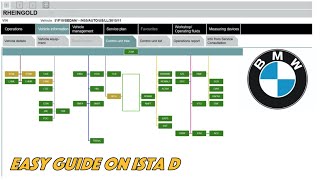
Unlike many manufacturers where U1000 points to a specific, though difficult, CAN bus fault, on modern BMWs it's widely considered in the enthusiast and repair community to be an artifact of using generic scan tools. BMW's proprietary diagnostic software (ISTA) often 🎬 Watch: How to use ISTA diagnostic software does not show a U1000 code when generic scanners do. The vehicle's complex web of control modules and multiple bus systems can easily confuse scanners not designed specifically for them. Therefore, a U1000 code on its own, without other accompanying codes, is highly suspect and should be verified with a capable scanner before any diagnosis begins.
Generation note: The 2010-2017 BMW 5 Series includes the F10 (Sedan), F11 (Touring/Wagon), and F07 (Gran Turismo) chassis. All share a similar complex F-chassis electronic architecture, making them equally susceptible to generating this phantom code when scanned with generic tools.
Symptoms You May Notice
- The only consistent symptom is the presence of the U1000 code when read by a generic OBD-II scanner.
- No noticeable drivability issues (if this is the only code present).
- Check Engine Light may or may not be illuminated.
- If the underlying cause is a weak battery, other intermittent electronic gremlins may be present, such as iDrive reboots, 'Increased Battery Discharge' warnings, or Comfort Access malfunctions.
- In rare cases of a true underlying network fault, symptoms can include a cluster of warning lights (ABS, DSC, Brake), limp mode, or a no-start condition.
- Replacing control modules (DME, EGS, BCM) based solely on a U1000 code from a generic scanner. This is the most common and expensive mistake made when diagnosing this code.
- Chasing wiring issues when the root cause is simply the scan tool being used or a weak battery.
- Replacing a module damaged by water without first identifying and fixing the source of the water leak (e.g., clogged sunroof drains).
- Replacing the battery multiple times without diagnosing a faulty Intelligent Battery Sensor (IBS) that is causing the drain.
Most Likely Causes
- Using a Generic OBD-II Scan Tool 🔴 High Probability BMW uses multiple, complex, and high-speed data bus systems (CAN, FlexRay, MOST) that generic scanners cannot properly interpret, leading to communication errors that are logged as U1000. The scanner essentially reports its own failure to communicate as a vehicle fault.
How to confirm: Clear the code. Rescan the vehicle with a BMW-specific diagnostic tool (e.g., ISTA, Foxwell for BMW, high-end Autel/Launch with BMW software). If the U1000 code does not reappear, the cause was the scanner.
Typical fix: Disregard the code from the generic scanner. Use a proper diagnostic tool for any future analysis.
Est. part cost: $0 - Weak or Failing Battery 🟡 Medium Probability → Shop Vehicle Battery Modern BMWs are extremely sensitive to battery voltage due to the Intelligent Battery Sensor (IBS) system. A weak battery can cause voltage drops during startup or when the vehicle is off, leading to temporary communication glitches between modules that can be logged as a U-code.
How to confirm: Test the battery voltage with a multimeter. A healthy battery should show approximately 12.6V with the engine off and over 14V with the engine running. Perform a load test to check its true health. Check for 'Increased Battery Discharge' warnings on the iDrive screen.
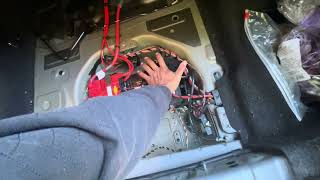
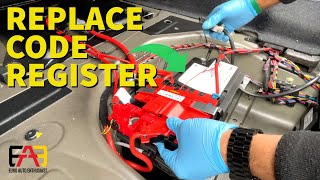
Typical fix: Charge or replace the battery. The new battery must be 'registered' to the vehicle using a diagnostic tool. This resets the vehicle's charging strategy and informs the Intelligent Battery Sensor 🎬 Watch: How to register a new BMW battery (IBS) that a new battery is installed, preventing overcharging and ensuring longevity.
Est. part cost: $200-$400
Rare But Worth Checking
- Corroded Ground Strap or Poor Connection: → Shop Engine Ground Strap While less common, a poor ground can cause a host of electrical issues, including intermittent communication faults. The main engine-to-chassis ground strap can corrode over time, causing slow cranking and bizarre electrical behavior.
- Faulty Control Module: In the very rare event that a U1000 code is legitimate and appears with a professional scan tool, it would point to a failing module. However, this would almost certainly be accompanied by other, more specific codes like U0100 (Lost Communication with ECM). Never replace a module based only on a U1000 code.
- Water Intrusion in Trunk: The F10/F11/F07 chassis is known for water leaks into the trunk area, often from clogged sunroof drains or failed taillight seals. Several critical electronic modules, including the battery management system and fuel pump control unit (EKPS), are located in the trunk floor well. Water damage to these modules or their wiring can cause widespread communication faults.
- Faulty Intelligent Battery Sensor (IBS): → Shop Vehicle Battery The IBS is a small computer on the negative battery terminal that monitors battery health. If the IBS itself fails or has a corroded connection, it can send erroneous data, stop communicating, or cause significant battery drain, potentially triggering network fault codes.
Diagnosis Steps
- Note the scan tool being used. If it is a basic, generic OBD-II reader, be highly skeptical of the U1000 code.
- Check and record any other codes present. Address these other codes first, as they are likely the source of any real problem.
- Clear all diagnostic trouble codes.
- Inspect the trunk area for any signs of moisture or corrosion, particularly in the battery well and around the various control modules like the EKPS (fuel pump controller).
- Test the vehicle's battery. Ensure it has a static charge of at least 12.4V and that the charging system is functioning correctly (14.0V+ with engine running). Perform a load test for a definitive assessment.
- Perform a drive cycle, letting the vehicle run for at least 10-15 minutes.
- Rescan the vehicle using a high-quality, BMW-specific diagnostic tool (ISTA, Foxwell NT510/NT530, Autel with BMW software).
- If the U1000 code does not return, the problem was the generic scanner. No further action is needed.
- If the U1000 code *does* return along with other specific communication codes, begin diagnosis on the CAN bus system, checking for faulty modules, wiring, or ground issues as indicated by the other codes.
Parts You'll Likely Need
- No Parts Typically Needed — This code is most often an error from the scan tool itself and does not indicate a faulty part on the vehicle.
OEM price range: $0
Aftermarket price range: $0 - AGM Battery
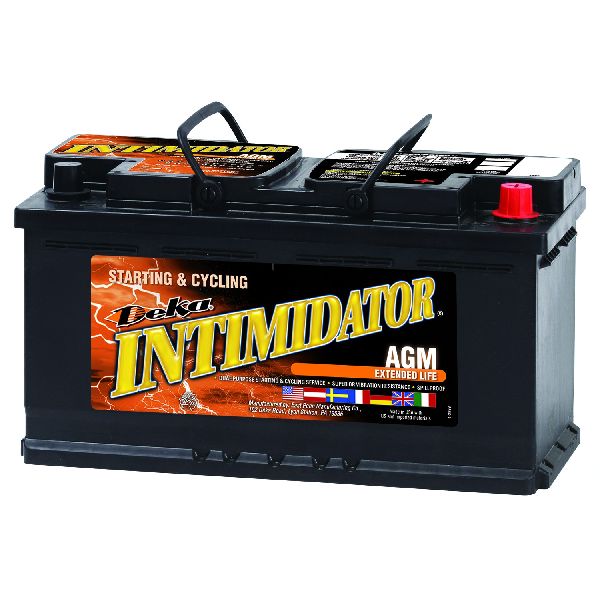
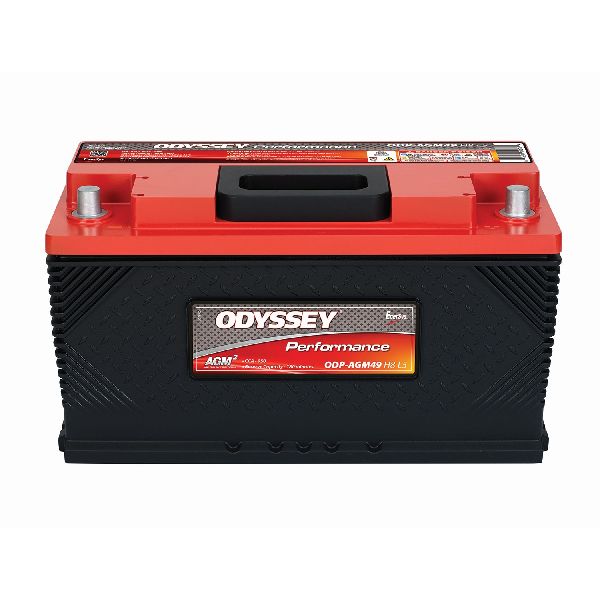
(OEM #e.g., 61212353812 (90Ah AGM))— If the code is caused by low voltage, a new battery is the fix. BMWs require a high-quality Absorbent Glass Mat (AGM) battery that must be registered with the vehicle's computer to ensure the charging system and Intelligent Battery Sensor (IBS) work correctly.
Trusted brands: Varta, Bosch, Exide, Interstate
OEM price range: $300-$500
Aftermarket price range: $200-$350
Related Codes That Often Appear With This One
- None — The most common scenario for a phantom U1000 is for it to appear by itself.
- U0100, U0101, U0121 — If there is a true communication issue (often stemming from low battery voltage or water damage), you will likely see specific 'lost communication' codes for major modules like the Engine (DME), Transmission (EGS), or Stability Control (DSC) alongside the generic U1000.
- Multiple seemingly unrelated fault codes — A failing battery or a significant network problem can cause a cascade of faults across various systems. If you see codes from the audio system, lighting module, and engine simultaneously, suspect a core electrical issue like voltage supply.
- CD840A (PT-CAN: Communication fault) — This is a BMW-specific code indicating a fault on the Powertrain CAN bus. If you see this on a professional scanner, it points to a real hardware or wiring issue, unlike the generic U1000.
Technical Service Bulletins (TSBs) & Recalls
- While no TSB directly addresses a phantom U1000 code, there are numerous bulletins related to communication failures that can be underlying causes. For example, SIB 61 09 26 mentions that an error in Battery Management Electronics can lead to an interruption in communication. SIB 65 16 23 discusses diagnosing communication failures with the Receiver Audio Module (RAM) by checking Ethernet signals and performing battery resets. These illustrate the complexity of the network and the diagnostic procedures required for genuine faults.
Platform-Specific Known Issues
- Trunk Water Leaks Damaging Electronics: A well-documented issue on the F10/F11/F07 platform is water ingress into the trunk. Common sources are clogged sunroof drains, which can get blocked with debris and overflow, and degraded taillight housing seals. The water pools in the battery compartment, submerging and shorting out expensive control modules like the fuel pump controller (EKPS), parking sensor module, and battery management electronics, leading to a host of communication errors.
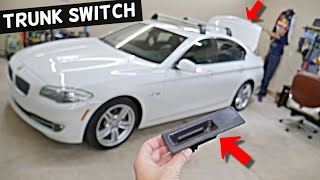
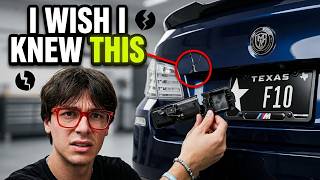
- Trunk Lid Wiring Harness Chafe: → Shop Body Wiring Harness The wiring harness that runs along the trunk hinge is a known failure point on F10 sedans. After many open/close cycles, the wires can fatigue, break, or chafe through their insulation, causing shorts. This can lead to failures of the trunk lights, trunk release, and other systems, potentially causing communication faults if CAN bus wires are affected.
Mechanic-Grade Diagnostic Values
- CAN Bus Total Resistance — expected: Approximately 60 Ohms. Failure: A reading of 120 Ohms indicates a break in the circuit or a missing terminating resistor in a module. A reading near 0 Ohms indicates a short between CAN High and CAN Low wires.
- CAN High Voltage to Ground — expected: Approximately 2.6V (with ignition on). Failure: Significant deviation from this voltage suggests a fault on the CAN High line.
- CAN Low Voltage to Ground — expected: Approximately 2.4V (with ignition on). Failure: Significant deviation from this voltage suggests a fault on the CAN Low line.
- Engine Ground Strap Resistance — expected: Less than 0.5 milliOhms (mΩ). Failure: Higher resistance indicates corrosion or a poor connection, which can cause a host of electrical issues, including slow cranking and communication faults.
Hidden / Shadow Codes Worth Checking
- CD840A: DME, PT-CAN: Communication fault. This is a BMW-specific code that indicates a genuine communication problem on the powertrain CAN bus, often logged alongside a generic U1000 on non-specific scanners. (see via BMW-specific scan tools like ISTA, Autel, or Foxwell.)
Scan Tool Commands That Help
- ISTA (Rheingold): Calculate Test Plan — After an initial vehicle test (scan), ISTA can generate a guided diagnostic plan based on the stored faults. For communication issues, it will suggest steps to test specific modules and bus systems.
- ISTA (Rheingold): Display Fault Memory / Delete Fault Memory — This is the first step to confirm if a U1000 is a persistent or phantom code. Clearing the memory and re-scanning after a drive cycle is crucial. A true fault will return immediately.
- E-Sys / Autel MaxiSys: ECU Coding/Programming — If a control module (like ZGW, EKPS, or FRM) is replaced, especially with a used part, it must be coded to the vehicle's specific configuration (VIN and vehicle order). Tools like E-Sys or advanced aftermarket scanners are required for this.
Wiring & Ground Locations
- Engine Ground Strap — On the N20 engine, it is located near the passenger-side engine mount. On other engines, it is typically a braided cable connecting the engine block to the chassis frame rail.. A corroded or loose engine ground strap is a common cause of intermittent and widespread electrical faults, including communication errors. The starter and alternator ground through this strap, and high resistance can cause voltage instability across the entire vehicle.
- ZGW (Zentrales Gateway) Module — Located behind the glove compartment. It serves as the central hub connecting the various bus systems (CAN, MOST, FlexRay, Ethernet).. A failure of the ZGW itself is rare but catastrophic for communication. More commonly, a fault on one bus can cause the ZGW to log errors. It is the central point for advanced network diagnosis.
- EKPS (Elektronische Kraftstoffpumpensteuerung) Module — Located in the trunk, typically in the well on the right side near the battery.. This module controls the fuel pump and is on the PT-CAN (Powertrain CAN). It is highly susceptible to water damage from clogged sunroof drains or leaking taillight seals, which can short the module and disrupt the entire PT-CAN network.
- Trunk Lid Wiring Harness — Runs along the right-side gooseneck hinge for the trunk lid.. This harness is known to chafe and break wires from repeated opening and closing of the trunk. While often causing light or lock failures, it can also affect CAN bus wires routed within, leading to communication faults.
Real Owner Repair Stories
- Reddit user on r/BmwTech (2014 BMW 535d F10) — Sudden onset of multiple dash warnings (ABS, DSC, Restraint system), wipers going crazy, limp mode, no power to OBD port. After replacing a fuse, car would run but CAN bus resistance was shorted (1.8 ohms).
❌ Tried (didn't work) Initial diagnosis was confusing as the car started working after a fuse replacement, but the underlying short on the D-CAN bus remained.
✅ What actually fixed it The user was advised that the short was likely within a module. The story highlights the diagnostic process of measuring resistance at the OBD port and isolating modules to find the source of the short. - Reddit user on r/BmwTech (2014 BMW 535i F10) — Intermittent no-start, 'Auto Hold' and 'Brake System' warnings, random drivetrain errors, oil level reading failure, multiple CAN timeout codes across DME, DSC, KOMBI, etc.
❌ Tried (didn't work) The owner was chasing what appeared to be multiple failing modules (DSC, ICM, DME).
✅ What actually fixed it A physical inspection revealed a CAN wire in the engine harness had worn through and was shorting to ground on the cylinder head. Repairing and rerouting the single wire resolved all communication errors across the vehicle. - Bimmerpost Forum User (2015 BMW F10) — Car lost EPS (Electronic Power Steering) and other modules after a dealer attempted to replace the ZGW (Central Gateway) module.
❌ Tried (didn't work) The new ZGW module provided by the dealer, even after being VIN-coded, caused communication loss with multiple modules.
✅ What actually fixed it The issue was a mismatch in the hardware/software version of the ZGW module. The user fixed it by sourcing a used ZGW module with the correct part number from eBay and coding it themselves. This highlights the critical need for correct part versions.
OEM Part Supersession History
Multiple, e.g., 16147218339→16147276073— The Fuel Pump Control Module (EKPS) has had numerous part number revisions over the years for improved reliability.
Heads up: When replacing the EKPS, it is critical to use a part number compatible with the vehicle's production date and software level. A new module always requires coding/programming to the vehicle.Multiple, e.g., 61359247397→Multiple, e.g., 61359384201— The Central Gateway Module (ZGW) hardware was updated throughout the F10's production run to support new features and improve stability.
Heads up: Installing a ZGW from a different model year or with different options can cause major communication failures (e.g., loss of power steering). The part must match the car's hardware and feature set, and always requires coding.
Model Year Variations Within This Range
- 2014-2017 (LCI): The Life Cycle Impulse (LCI) or facelift model introduced in 2014 brought significant electronic updates. This included the NBT iDrive system (replacing CIC), a new touch-sensitive iDrive controller, and updated module hardware. While the U1000 phantom code issue remains, the specific modules and software versions involved in a real network fault may differ from pre-LCI cars.
- 2010-2013 (Pre-LCI): Pre-LCI models use the CIC iDrive system and have different hardware for many control modules compared to later cars. When sourcing used parts, it is critical to match them to the pre-LCI era to ensure compatibility.
Diagnostic Flowchart
Other Known Issues on This Vehicle
Issues unrelated to this code that are worth knowing about as an owner of this generation:
- N20 Engine Timing Chain Failure 🔴 High — Common on 2012-2015 528i models. The plastic timing chain guides can fail prematurely, often starting around 60,000-100,000 miles, leading to catastrophic engine damage if not addressed. (Ref: While no formal recall, BMW faced a class-action lawsuit over this issue and extended warranty coverage for some vehicles.)
- N55 Engine Oil Filter Housing Gasket (OFHG) Leak 🟠 Medium — Extremely common on 535i models, typically occurring every 60,000-80,000 miles. The gasket hardens and leaks oil onto the serpentine belt, which can cause the belt to slip off and be ingested by the front main seal, leading to catastrophic engine failure.
- N63 Engine High Oil Consumption & Valve Stem Seal Failure 🔴 High — Prevalent in pre-LCI 550i models (2010-2013). The valve stem seals harden from heat, causing significant oil consumption (e.g., 1 quart every 1,000 miles) and blue smoke from the exhaust, especially after idling. (Ref: BMW initiated a 'Customer Care Package' (N63 CCP) which addressed some issues, but the underlying valve stem seal problem often requires a very expensive repair.)
- Water Intrusion in Trunk / Battery Well 🟠 Medium → Shop Vehicle Battery — Common across all F10/F11/F07 models, caused by clogged sunroof drains or failed taillight seals. Water damages electronic modules located in the trunk, causing a wide range of electrical failures. (Ref: A class-action lawsuit was settled regarding this defect.)
- N55/N52 Electric Water Pump Failure 🔴 High — Common on inline-six models (535i, 528i pre-2012). The electric water pump can fail without warning, typically between 60,000 and 100,000 miles, causing rapid overheating and leaving the driver stranded.
Used vs. New Parts: Buying Guide for This Vehicle
When a used part is the smart pick: For expensive electronic modules like the ZGW (Gateway), EKPS (Fuel Pump Controller), or FRM (Footwell Module) that may be damaged by water or electrical surges. A used part from a reputable dismantler can be a fraction of the OEM new price.
Donor-vehicle mileage cap: roughly under 50000 miles for the part to have meaningful remaining life.
What to inspect on the donor part:
- Verify the part number EXACTLY matches the original or is a confirmed superseded part number for your VIN.
- Inspect for any signs of water damage, corrosion on the pins, or physical damage to the casing.
- Source from a vehicle with a known history if possible, avoiding parts from major flood or fire-damaged cars.
- Ensure the seller has a return policy in case the module is faulty or incompatible.
OEM-only on this vehicle (don't cheap out):
- Intelligent Battery Sensor (IBS): Aftermarket versions are notoriously unreliable and can cause more electrical problems than they solve.
- Ground Straps: The OEM braided straps are designed for specific flexibility and conductivity; generic replacements may fail prematurely.
Brands owners have reported issues with on this vehicle:
- Any non-OEM Intelligent Battery Sensor (IBS).
Real Owner Stories
Aggregated from forums and TSBs cited above. Mileages and costs reflect what owners reported in those sources.
2011-2013 BMW 550iX (N63)
Symptoms: Water ingress in the trunk caused the battery to short out and damaged multiple electronic modules.
What fixed it: Replacement of the battery and damaged modules following a class-action settlement regarding water leaks.
Source hint: Bimmerpost - A thread titled 'WATER IN THE TRUNK - BATTERY SHORTENING 550iX'
2012-2016 BMW M5 (S63) — ~75000 miles
Symptoms: The battery compartment filled with water, leading to the failure of two electronic modules.
What fixed it: Replacement of the battery and two modules, and clearing of clogged sunroof drains.
Cost: $1600-$1600
Source hint: Bimmerpost - A user on the M5 forum reported having to replace their battery and two modules
2010-2017 BMW 5 Series (F10)
Symptoms: U1000 code present along with multiple electrical module failures and complex CAN bus issues.
What fixed it: Diagnosis of the CAN bus system to identify specific faulty modules and wiring issues.
Source hint: Bimmerpost - A forum thread discusses a user experiencing a U1000 code along with multiple electrical module failures
Related OBD-II Codes
Frequently Asked Questions
Why is my generic OBD-II scanner showing a U1000 code on my F10 5 Series when there are no drivability issues?
Can a weak battery cause U1000 and 'Increased Battery Discharge' warnings on my 2010-2017 5 Series?
Do I need to do anything special after replacing the battery to clear communication codes?
Could water in my trunk be related to the U1000 network code?
Is there a specific TSB for communication failures in the audio system of these models?
Does the trunk lid wiring harness issue on the F10 sedan cause communication codes?
Helpful Videos
We Have This Part in Stock


The information in this article is provided for general reference and educational purposes only. Vehicle specifications, procedures, and part compatibility can vary by production date, trim level, and region. Always consult your vehicle's factory service manual and verify part numbers before purchasing or performing repairs. Safety-critical components such as airbags, seat belts, and braking systems should be installed by a qualified professional.
- BMW 5 Series:
- 🧭 Diagnostic Flowchart
- 🎬 Helpful Videos
- 🛍️ Shop This Part
- What's Unique About the 2010-2017 BMW 5 Series
- Symptoms You May Notice
- Most Likely Causes
- Rare But Worth Checking
- Diagnosis Steps
- Parts You'll Likely Need
- Related Codes That Often Appear With This One
- Technical Service Bulletins (TSBs) & Recalls
- Platform-Specific Known Issues
- Mechanic-Grade Diagnostic Values
- Hidden / Shadow Codes Worth Checking
- Scan Tool Commands That Help
- Wiring & Ground Locations
- Real Owner Repair Stories
- OEM Part Supersession History
- Model Year Variations Within This Range
- Other Known Issues on This Vehicle
- Used vs. New Parts: Buying Guide for This Vehicle
- Real Owner Stories
- 2011-2013 BMW 550iX (N63)
- 2012-2016 BMW M5 (S63) — ~75000 miles
- 2010-2017 BMW 5 Series (F10)
- Related OBD-II Codes
- Frequently Asked Questions
- 🎟️ Get 5% Off