

U1000 on 2013-2018 Hyundai Santa Fe: Network Communication Failure Causes and Fixes
Code U1000 on a 2013-2018 Santa Fe means there's a communication breakdown between the vehicle's computers. This is often caused by a faulty module (like the ABS module or a camera), corroded wiring connectors, or poor grounds. Diagnosis is complex and usually requires professional tools to isolate the non-communicating component.
- U1000 is a network code, not a part code. It means a computer on the vehicle has stopped communicating.
- On the 2013-2018 Santa Fe, suspect modules exposed to the elements first: the rear camera, blind spot sensors, and radar sensors.
- Check for the ABS module recall (Recall 218) if you have a 2016-2018 model, as a faulty ABS module is a likely cause and a fire hazard.
- Diagnosis is complex and best left to a professional. Do not replace modules without first verifying their power, ground, and wiring connections are intact.
- A weak battery can cause intermittent communication codes; test it before starting expensive repairs.
What's Unique About the 2013-2018 Hyundai Santa Fe
On this generation of Santa Fe, network failures are not uncommon and can be triggered by seemingly unrelated components. There are documented cases where a faulty rearview camera or blind spot detection sensor has shorted internally, bringing down the entire vehicle network. Additionally, a major safety recall for the ABS module on 2016-2018 models highlights its potential to short-circuit, which is a prime cause for CAN bus failures and a significant fire risk. The location of modules in bumpers and the tailgate makes them highly susceptible to water intrusion and corrosion.
Generation note: The 2013-2018 model years cover the entire third generation (DM) of the Hyundai Santa Fe. This includes both the 5-seat 'Santa Fe Sport' and the longer, 7-seat 'Santa Fe' (also known as the Santa Fe XL). Causes can differ slightly, as the 7-seat model has additional components (like rear HVAC) that could potentially cause a network issue.
Symptoms You May Notice
- Check Engine Light is on
- Multiple other warning lights on the dashboard (ABS, ESC, TPMS, etc.)
- Vehicle will not shift out of Park
- Gauges on the instrument cluster stop working (e.g., speedometer or tachometer at zero)
- Loss of features like power windows, climate control, or the radio
- Blind Spot Detection (BSD) system warning or inoperability
- In severe cases, a no-crank, no-start condition
- Backup camera shows a blue or black screen.
- Replacing the ECM (Engine Control Module) first. The U1000 code is a network-wide code, and the ECM is often just one of many modules reporting the problem, not the cause.
- Replacing a module without checking its power, ground, and connectors first. The problem is frequently the wiring leading to the module, not the module itself.
Most Likely Causes
- Faulty ABS Control Module 🔴 High Probability → Shop ABS Control Module A major safety recall (NHTSA #22V-056, Hyundai #218) was issued for 2016-2018 models because the ABS module can allow moisture intrusion, leading to an internal short-circuit. This short can cause a fire and will disrupt CAN bus communication, triggering a U1000 code. The recall remedy involves installing a new multi-fuse to mitigate the fire risk.
How to confirm: With a professional scan tool, check for communication with the ABS module. If it's the only module that won't respond and its power and grounds are good, the module is likely faulty. Check VIN for 🎬 Watch: Troubleshooting ABS and traction control light issues recall applicability on Hyundai's website.
Typical fix: For recalled vehicles, the dealer will install a revised ABS multi-fuse. If the module has already failed, it requires replacement and programming. This is typically a job for a dealer or qualified independent shop.
Est. part cost: $500-$1200 - Corroded or Damaged Wiring/Connectors 🔴 High Probability Modules like rear cameras, blind spot sensors, and radar cruise sensors are located in bumpers and the tailgate, where their connectors are exposed to water, salt, and mud, leading to corrosion that can short the CAN bus. A common failure point is the main body harness connector located behind the driver-side kick panel, which can get wet from water leaks.
How to confirm: Visually inspect the connectors and wiring harnesses of any non-communicating modules, especially those in exposed locations. Look for green/white corrosion, bent pins, or physical damage. Pay close attention to connectors in the rear bumper and tailgate area.
Typical fix: Clean the connector terminals with a specialized contact cleaner or replace the damaged connector pigtail and/or section of wiring harness.
Est. part cost: $20-$300 - Faulty Peripheral Module (Camera, Radar, etc.) 🟡 Medium Probability There are multiple owner reports of a faulty rearview camera causing a total network shutdown. Moisture enters the camera housing, causing it to short-circuit and bring down the C-CAN network. The Blind Spot Detection (BSD) modules, located in the rear bumper corners, are also highly susceptible to water damage 🎬 See how to diagnose a failing blind spot detection sensor and failure.
How to confirm: Using a scan tool, identify which modules are offline. Disconnect the suspect module (e.g., the rearview camera connector in the tailgate) and see if communication with other modules is restored. If it is, the disconnected module is the culprit.
Typical fix: Replace the faulty module. Some modules, like blind spot sensors, may require calibration after installation.
Est. part cost: $150-$800 - Poor Ground Connection ⚪ Low Probability While not specific to this platform, corroded or loose main chassis or module ground straps are a common cause of intermittent and difficult-to-diagnose network issues on all modern vehicles. Key grounds are located in the engine bay near the strut towers and under the driver's side dash.
How to confirm: Locate the main engine and body ground points (GND). Disassemble, clean all contact surfaces to bare metal, and re-secure them. Perform a voltage drop test on the ground circuit of the non-communicating module.
Typical fix: Clean and tighten ground connections.
Est. part cost: $0-$5
Rare But Worth Checking
- Weak or Failing Battery: → Shop Vehicle Battery A battery with low voltage can cause random communication codes during startup. Before beginning complex diagnostics, ensure the battery is fully charged (12.4V+ with engine off) and passes a load test.
- Aftermarket Electronics: Improperly installed aftermarket devices like remote starters, alarms, or audio equipment can tap into CAN bus wires incorrectly, causing interference and communication faults. If such devices are present, they should be the first thing you disconnect during diagnosis.
Diagnosis Steps
- Connect a professional-grade scan tool and perform a full system scan. Note all 'U' codes and which modules are reporting them.
- Attempt to communicate with each module individually. Create a list of all modules that are 'offline' or not responding.
- Check the battery. Ensure it has a full charge (12.4V+ with engine off) and passes a load test.
- Inspect all fuses related to the non-communicating modules in both the interior and under-hood fuse panels.
- If a specific module is not communicating (e.g., ABS, Rear Camera, BSD), locate it and visually inspect its electrical connector for corrosion, moisture, or damage.
- Using a multimeter and a wiring diagram, verify the non-communicating module is receiving proper power and has a good ground connection.
- If power and ground are good, disconnect the suspect module. Clear the codes and re-scan the vehicle. If communication with other modules is restored, the module you disconnected is faulty and needs replacement.
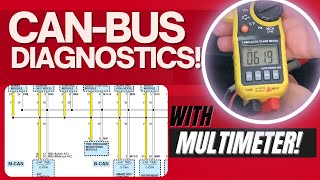
- If multiple modules are offline, the issue may be in the wiring harness at a junction point where the CAN bus splits. This requires advanced probing with a multimeter or oscilloscope to find the short or open circuit. Check the resistance between CAN High and CAN Low at the OBD-II port (should be ~60 ohms with battery disconnected). 🎬 Watch: How to test CAN bus resistance and voltage
- Check for applicable recalls, especially the ABS module recall (Hyundai #218), by entering the VIN on the manufacturer's website.
Parts You'll Likely Need
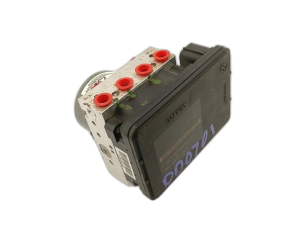
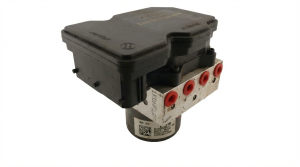
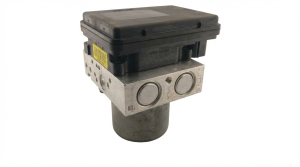
- ABS Control Module / HECU
(OEM #58920-B8700 (For 2016 3.3L), 58920-4Z200 (For 2014-16 Sport). Part number is highly VIN-specific.)— A known failure point, subject to a safety recall for some model years. An internal short will take down the CAN network.
Trusted brands: Hyundai (OEM), Mando
OEM price range: $700-$2300
Aftermarket price range: $400-$800 (Remanufactured) - Rear View Camera
(OEM #95760-2W650 (2017-2018), 95760-2W150 (2013-2016 w/o Nav), 95760-2W000 (2013-2016 w/ Nav). Always verify by VIN.)— Located in the tailgate, it's exposed to moisture. Documented to fail and short out the CAN bus on this platform.
Trusted brands: Hyundai (OEM), Master Tailgaters, GreenYi
OEM price range: $250-$450
Aftermarket price range: $50-$250 - Wiring Harness Connector Pigtail — Often the fix is not the module but the connector attached to it, which has corroded due to water intrusion. Replacing the pigtail is a common repair for modules in exposed areas like the bumpers or tailgate.
Related Codes That Often Appear With This One
- U0100 — Lost Communication With ECM/PCM. This often appears with U1000 when the engine computer is affected by the network failure.
- U0121 — Lost Communication With Anti-Lock Brake System (ABS) Control Module. This is a strong indicator that the ABS module itself or its wiring is the source of the problem.
- U0155 — Lost Communication With Instrument Panel Cluster (IPC) Control Module. This often accompanies symptoms of dead gauges or a blank information display.
- U0232 — Lost Communication With Side Obstacle Detection Control Module Left. This points directly to a failure of the Blind Spot Detection (BSD) system, a known issue.
Technical Service Bulletins (TSBs) & Recalls
- Hyundai TSB 17-ST-001: Details the replacement procedure for the MDPS (Motor Driven Power Steering) flexible coupler. While not a direct cause of U1000, the procedure requires disconnecting and reconnecting multiple electrical systems and clearing DTCs with a GDS tool, showing the interconnectedness of the vehicle's electronics.
- Hyundai Recall 218 (NHTSA 22V-056): Addresses the ABS module fire risk. The recall documentation confirms the module can short circuit, which is a primary cause for CAN bus communication failure and the U1000 code.
Documented NHTSA Reports
While the following reports involve different manufacturers, they provide critical cross-platform insight into how the U1000 code manifests in modern electrical networks:
- TCM Communication: An owner reported DTC U1000 alongside delayed shifting and ATF lights, noting that the Transmission Control Module (TCM) can lose communication when it overheats due to its physical location (NHTSA ODI #11461728).
- Grounding Issues: NHTSA ODI #10681194 describes U1000 as a ground harness problem, where even cleaning battery terminals may not resolve the communication failure.
- Network Jams: A report in NHTSA ODI #11727548 highlights a "systemic U1000 Electrical Network Jam" caused by unconfigured or obsolete telematics units, which can even lead to disabled airbags.
- Instrument Cluster & BCM: NHTSA ODI #10970695 notes a CAN system diagnosis failure where the instrument cluster could not communicate or provide mileage data, leading to a U1000 code and subsequent BCM testing.
- Ignition Input Loss: In some cases, a U1000 code has appeared when a vehicle stalls due to a loss of ignition input, often requiring an ignition switch replacement (NHTSA ODI #10171770).
Platform-Specific Known Issues
- Safety Recall 218 (NHTSA 21V750): Affects 2016-2018 Santa Fe models. The ABS module can malfunction and cause an electrical short, increasing the risk of an engine compartment fire. This short is a direct cause of CAN communication failures.
Mechanic-Grade Diagnostic Values
- CAN Bus Resistance at OBD-II Port (Pins 6 & 14) — expected: ~60 Ω (with battery disconnected and vehicle asleep). Failure: A reading of ~120 Ω indicates an open circuit or a module/terminating resistor is offline. A reading near 0 Ω indicates a short between the CAN High and CAN Low wires.
- C-CAN (High-Speed) Voltage at OBD-II Port (Key On, Engine Off) — expected: CAN High (Pin 6) and CAN Low (Pin 14) should both hover around 2.5V relative to ground. During communication, CAN High will pulse to 3.5V and CAN Low will pulse to 1.5V.. Failure: A line stuck at 0V, 5V, or battery voltage indicates a short to ground or power.
- B-CAN (Body) Voltage (Key On, Engine Off) — expected: Unlike C-CAN, B-CAN (Low-Speed) operates differently. CAN Low idles high (~5V) and CAN High idles low (~0V).. Failure: Deviations from the 0V/5V idle state when measured with a multimeter can indicate a fault on the body network.
Scan Tool Commands That Help
- Hyundai GDS (Global Diagnostic System): Variant Coding — This function is required after replacing certain modules, such as the Instrument Cluster, Blind Spot Detection (BSD) radars, or forward-facing cameras. It introduces the new part to the vehicle's network. Failure to perform variant coding will result in the new part not functioning and may set its own specific DTCs.
- Hyundai GDS (Global Diagnostic System): ECU Programming / Initialization — When replacing a major control unit like the ECM or BCM, the new module must be programmed with the vehicle's VIN and security information. A used module will not be plug-and-play and will prevent the vehicle from starting until programmed.
- Professional Scan Tool (e.g., GDS): Radar Calibration — After replacing a Blind Spot Detection (BSD) radar module, a calibration procedure must be performed. The scan tool initiates the process, which may require driving the vehicle under specific conditions to complete.
Wiring & Ground Locations
- OBD-II Port Pins 6 & 14 — Data Link Connector under the driver's side dashboard.. This is the primary access point for testing the main C-CAN bus. Measuring resistance and voltage here is the first step in network diagnostics.
- Joint Connector (JF01) — Wiring diagrams suggest this is a major junction for the C-CAN network, connecting multiple modules. Its physical location is typically within the main dash harness.. A fault or corrosion at this central connector can take down multiple modules at once, causing a widespread communication failure.
- Joint Connector (JF04) — Wiring diagrams show this connector links the Blind Spot Detection modules (Left and Right) and the Electric Parking Brake module to the C-CAN network.. Since the BSD modules are a common failure point, this connector is a key place to check for corrosion or wiring issues when diagnosing codes related to those systems.
- Ground (GF01, GF05) — These are primary floor harness ground points, likely located under the carpet near the seats or center console.. A loose or corroded main ground for the floor harness can cause intermittent communication issues with multiple modules located inside the cabin.
- Smart Junction Block — Located in the driver's side kick panel area.. This block acts as a gateway and power distribution center for many modules. It contains fuses for modules like 'MODULE 1' and 'MODULE 4' and is a central point for CAN bus signals.
Real Owner Repair Stories
- YouTube - Advanced Level Automotive (2014 Hyundai Santa Fe V6) — Blind Spot Detection (BSD) system not working. Scan tool could not communicate with either the left or right BSD modules.
❌ Tried (didn't work) The shop was initially going to replace both BSD modules without further diagnosis.
✅ What actually fixed it The technician diagnosed a lack of power at the modules. The power wire was shared by both modules. The technician found a loose harness connector for the BSD system. After properly securing the connector, power was restored, communication was re-established, and the system worked after a calibration was performed. - Reddit - r/HyundaiSantaFe (2017 Hyundai Santa Fe 3.3L) — No-crank, no-start condition. A single click is heard when trying to start. All lights and accessories worked.
❌ Tried (didn't work) Replacing the battery., Attempting a starter relay bypass.
✅ What actually fixed it The problem was a failed starter motor. Replacing the starter resolved the no-start condition.
Model Year Variations Within This Range
- 2017-2018: The 2017 model year was a significant refresh. It introduced new available safety features like automatic emergency braking, a multi-view camera system, and dynamic bending headlights, all of which add more modules to the CAN network. New packages like the 'Value Package' bundled features like a larger touchscreen and Android Auto/Apple CarPlay, which were not available on earlier models. These additional electronic modules create more potential points of failure for a U1000 code compared to the 2013-2016 models.
- 2013-2016: These pre-refresh models have a slightly simpler electronics architecture, with fewer standard ADAS (Advanced Driver-Assistance Systems) modules on the network. While still prone to the same core issues (ABS module, wiring corrosion), there are fewer peripheral modules like lane departure or forward collision avoidance that could be the source of a network failure.
Diagnostic Flowchart
Other Known Issues on This Vehicle
Issues unrelated to this code that are worth knowing about as an owner of this generation:
- Theta II Engine Seizure and Failure 🔴 High — Widespread across 2.0L Turbo and 2.4L GDI engines. Can occur at various mileages, often below 100,000 miles. Led to multiple class-action lawsuits and recalls. (Ref: NHTSA Campaign 17V578000 (Crankshaft pin surface); Lifetime Warranty extension for engine short block under settlement terms for vehicles that received the KSDS update.)
- Motor Driven Power Steering (MDPS) Coupler Wear 🟡 Low — Extremely common. Owners typically notice a clicking or clunking sound from the steering column between 60,000 and 100,000 miles. The part is inexpensive but labor can be significant. (Ref: Hyundai TSB 17-ST-001; Warranty Extension TXX7 (extends coverage to 10 years/100,000 miles).)
- Peeling Exterior Paint (Especially White) 🟠 Medium — Very common on vehicles with white and pearl white paint finishes, often starting after only a few years. Paint flakes off in large sheets from the hood, roof, and fenders. (Ref: Hyundai Warranty Extension Z05 extends paint coverage to 10 years/unlimited miles for this issue on affected models.)
- ABS Module Internal Short / Fire Risk 🔴 High → Shop ABS Control Module — Significant enough to trigger a major safety recall. The module can short internally, creating a fire risk even when the vehicle is parked and turned off. (Ref: NHTSA Recall 22V-056 / Hyundai Recall 218.)
- Crankshaft Position Sensor Failure 🟠 Medium — A common cause of sudden engine stalling, particularly noted on 2014 models. The sensor can fail intermittently when hot.
Used vs. New Parts: Buying Guide for This Vehicle
When a used part is the smart pick: Used control modules (ABS, ECM, BCM, BSD radars) from a reputable salvage yard are a viable, cost-effective option, but ONLY if you have a definitive plan for programming. A used module will not work without being programmed to your vehicle's VIN and security system by a dealer or a specialized shop with a Hyundai GDS tool.
Donor-vehicle mileage cap: roughly under 100000 miles for the part to have meaningful remaining life.
What to inspect on the donor part:
- Verify the donor vehicle was not in a flood.
- Inspect the part for any signs of physical damage, especially cracks in the housing or bent connector pins.
- Match the OEM part number on the sticker EXACTLY. A number that is off by one digit may not be compatible.
- Obtain the VIN of the donor vehicle if possible, as it can sometimes help with programming.
OEM-only on this vehicle (don't cheap out):
- ABS Control Module / HECU: Due to the safety-critical nature and the existing recall, using a new OEM or OEM-remanufactured part is strongly recommended to ensure you have the latest revisions.
- Wiring Harness Pigtails: While the connector shell is plastic, the internal pins and wires are critical. Use high-quality, new pigtails with proper seals to prevent a repeat failure from moisture intrusion.
Aftermarket brands forum-validated for this vehicle:
- Mando (For ABS components, as they are often the original equipment manufacturer for Hyundai).
Brands owners have reported issues with on this vehicle:
- Unknown/no-name rear view cameras: While significantly cheaper, very cheap aftermarket cameras often have poor image quality and may lack the proper internal electronics to communicate correctly with the vehicle, potentially causing network issues themselves.
Real Owner Stories
Aggregated from forums and TSBs cited above. Mileages and costs reflect what owners reported in those sources.
2017 Hyundai Santa Fe Sport Ultimate
Symptoms: Multiple warning lights on the dashboard including U1000, U0121, and U0155 codes.
What fixed it: Diagnosis of CAN bus communication issues, often pointing toward faulty modules or network interference.
Source hint: https://www.hyundai-forums.com/threads/2017-santa-fe-sport-ultimate-multiple-warning-lights-u1000-u0121-u0155.689123/
2017 Hyundai Santa Fe Sport 2.4L AWD
Symptoms: Vehicle will not shift out of Park; linked to network failures.
What fixed it: Addressing network communication failures that prevent the shift interlock from releasing.
Source hint: https://www.reddit.com/r/MechanicAdvice/comments/10zxi3b/2017_hyundai_santa_fe_sport_24_awd_wont_shift/
Related OBD-II Codes
Frequently Asked Questions
My 2017 Santa Fe Sport has a U1000 code and won't shift out of Park. Is there a recall for this?
Can a faulty backup camera really cause a U1000 code on my Santa Fe?
I have a U1000 code and my Blind Spot Detection isn't working. Where are these modules located?
Does TSB 17-ST-001 for the steering coupler cause the U1000 communication code?
Where should I check for wiring corrosion if I have a U1000 on my 2013-2018 Santa Fe?
Is the U1000 code related to the Theta II engine failure issues?
Helpful Videos

We Have This Part in Stock


The information in this article is provided for general reference and educational purposes only. Vehicle specifications, procedures, and part compatibility can vary by production date, trim level, and region. Always consult your vehicle's factory service manual and verify part numbers before purchasing or performing repairs. Safety-critical components such as airbags, seat belts, and braking systems should be installed by a qualified professional.
- Hyundai Santa Fe:
- 🧭 Diagnostic Flowchart
- 🎬 Helpful Videos
- 🛍️ Shop This Part
- What's Unique About the 2013-2018 Hyundai Santa Fe
- Symptoms You May Notice
- Most Likely Causes
- Rare But Worth Checking
- Diagnosis Steps
- Parts You'll Likely Need
- Related Codes That Often Appear With This One
- Technical Service Bulletins (TSBs) & Recalls
- Documented NHTSA Reports
- Platform-Specific Known Issues
- Mechanic-Grade Diagnostic Values
- Scan Tool Commands That Help
- Wiring & Ground Locations
- Real Owner Repair Stories
- Model Year Variations Within This Range
- Other Known Issues on This Vehicle
- Used vs. New Parts: Buying Guide for This Vehicle
- Real Owner Stories
- 2017 Hyundai Santa Fe Sport Ultimate
- 2017 Hyundai Santa Fe Sport 2.4L AWD
- Related OBD-II Codes
- Frequently Asked Questions
- 🎟️ Get 5% Off