

U1000 on 2010-2018 Volvo S60: Causes and Network Communication Fixes
U1000 on a Volvo S60 indicates a general network communication failure. It's often caused by a weak battery or bad ground connections. If those are fine, suspect a failing Central Electronic Module (CEM), which is located under the glovebox and is a known failure point, often due to water leaks. Diagnosis requires Volvo-specific software (VIDA) to pinpoint the offline module.
- U1000 is a generic network error on a Volvo; the real cause is hidden in more specific codes only a professional scanner can read.
- Before suspecting expensive modules, always test your battery and inspect all main ground connections. This fixes a surprising number of communication issues.
- The Central Electronic Module (CEM) is a likely culprit if the battery and grounds are good. Check for signs of water leaks around the driver's side dashboard and floor.
- Do not replace any modules based on a U1000 code alone. Professional diagnosis is required to avoid wasting money on parts.
What's Unique About the 2010-2018 Volvo S60
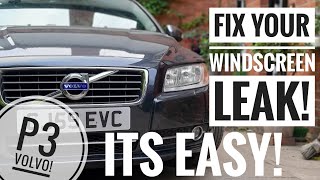
The 2010-2018 Volvo S60 (P3 platform) uses a complex CAN bus network with high-speed and low-speed buses. The Central Electronic Module (CEM), located under the passenger-side dashboard/glovebox, acts as a primary network gateway. Many network issues on this platform are not due to a specific sensor but rather systemic problems like low battery voltage, poor grounds, or failure of the CEM itself. The CEM is notoriously susceptible to water damage from a poorly sealed windscreen or clogged sunroof drains, which can drip 🎬 Watch: How to fix a leaking windscreen on your Volvo directly onto the module, causing corrosion and catastrophic electrical failures.
Symptoms You May Notice
- Check Engine Light is on
- Multiple other warning lights may appear simultaneously (e.g., 'Brake Failure, Stop Safely', ABS, Airbag/SRS)
- Engine may stall, hesitate, or fail to start (cranks but no start)
- Electrical glitches, such as windows, locks, sunroof, or the radio not working
- Transmission may not shift correctly, shift harshly, or may enter a 'limp mode'
- Instrument cluster gauges behaving erratically or going completely dark while driving
- Wipers or headlights turning on by themselves or not working at all
- Parasitic battery drain that kills the battery overnight
- Replacing the Engine Control Module (ECM) or Transmission Control Module (TCM) without confirmation. A U1000 code indicates a network problem, not necessarily a failure of one specific module. The fault is often in the power supply (battery), grounds, or a gateway module like the CEM.
Most Likely Causes
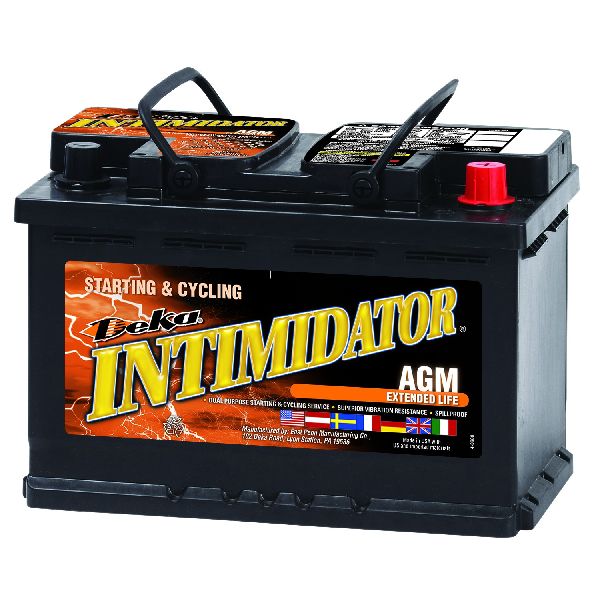
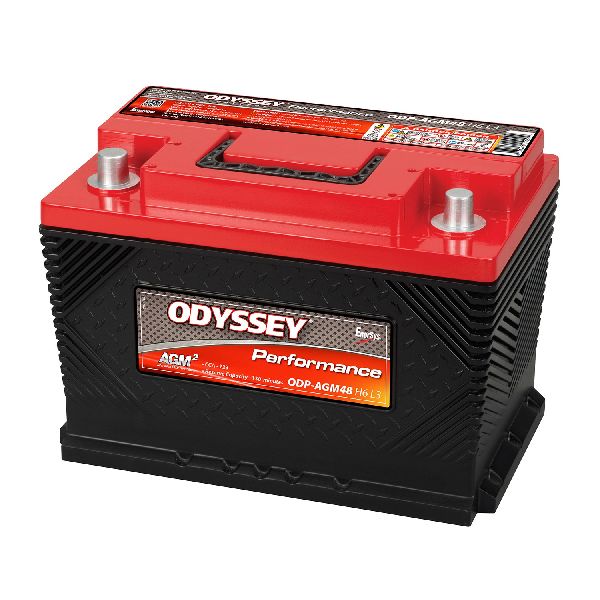
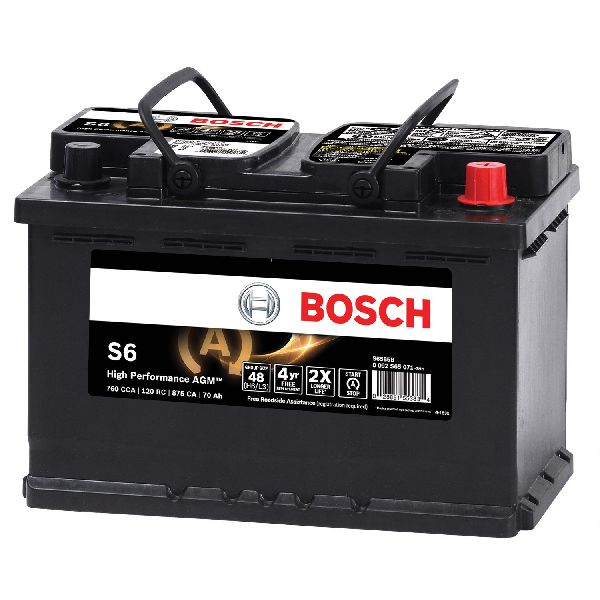
- Weak or Failing Battery 🔴 High Probability → Shop Vehicle Battery Modern Volvos have many electronic modules that are very sensitive to voltage. A drop below 12.0V during startup can cause communication dropouts across the network, triggering a U1000 code.
How to confirm: Test the battery voltage with a multimeter. A healthy, resting battery should be at or above 12.4V. Perform a load test to check its ability to hold a charge under load. Check the battery age; if it's over 4-5 years old, it's a prime suspect.
Typical fix: Replace the vehicle's 12V battery. The new battery may need to be registered with the Battery Management System (BMS) using a capable scan tool.
Est. part cost: $200-$400 - Corroded or Loose Battery Terminals / Ground Straps 🟡 Medium Probability → Shop Engine Ground Strap Corrosion on battery terminals or failure of main engine/chassis ground straps creates high resistance in the electrical system, leading to voltage drops that mimic a failing battery. The main engine-to-chassis ground strap is a common failure point. In a cross-manufacturer reference, NHTSA ODI #10681194 notes that U1000 can specifically indicate a ground harness problem, where cleaning terminals may not be enough to restore the connection.
How to confirm: Visually inspect the battery terminals for corrosion. Inspect the main ground straps (from battery to chassis, and chassis to engine block) for corrosion, tightness, and physical damage. A voltage drop test across the ground strap can confirm high resistance.
Typical fix: Disconnect the battery (negative first), thoroughly clean the terminals and posts with a wire brush, and re-tighten. Replace corroded or broken ground straps.
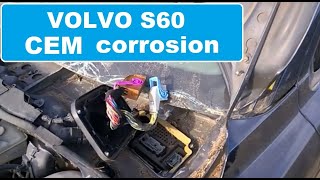
Est. part cost: $10-$50 - Failing Central Electronic Module (CEM) 🟡 Medium Probability The CEM is the network gateway. On P3 Volvos, a known design flaw is the potential for water to leak from a poorly sealed windscreen or clogged sunroof drains, dripping directly onto the CEM located under the passenger-side glovebox, causing corrosion and failure.
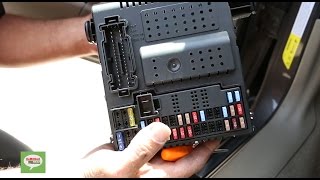
How to confirm: This is difficult without a professional scan tool. A technician using VIDA can see if the CEM is offline. A physical inspection requires removing the glovebox and may reveal 🎬 See this step-by-step CEM removal walkthrough signs of water damage (white/green corrosion on connectors) or a burnt smell on or around the module.
Typical fix: The CEM must be removed and either repaired/rebuilt by a specialist service (like XeMODeX or Volvo Diagnostic) or replaced with a used unit. In either case, the software from the original CEM must be cloned to the replacement unit. A new CEM from a dealer is very expensive and a used one cannot be programmed by a dealer.
Est. part cost: $400-$800 for a rebuild/cloning service, $1000+ for a new unit - Damaged Wiring Harness or Connectors ⚪ Low Probability
How to confirm: Visually inspect the main wiring harnesses for signs of rodent damage, chafing, or corrosion, particularly at the connectors for the ECM, CEM, and TCM. A multimeter can be used to check for continuity and shorts in the CAN bus wires (an advanced procedure).
Typical fix: Repair the damaged section of wiring or replace the affected connector. This can be very labor-intensive.
Est. part cost: $20-$1000+
Diagnosis Steps
- Check Battery Health: Start with the basics. Ensure your battery is fully charged (12.4V+ at rest). Use a multimeter to check the voltage during engine cranking; if it drops below 11.5-12.0V, the battery is weak. If the battery is more than 4-5 years old or fails a load test, replace it. Low voltage is the leading cause of network communication codes.
- Inspect Terminals and Grounds: Disconnect the battery (negative terminal first). Thoroughly clean the battery posts and terminals. Inspect the main chassis and engine ground straps for corrosion, tightness, and damage. The primary engine-to-frame ground is a common culprit and should be removed, cleaned, and re-secured.
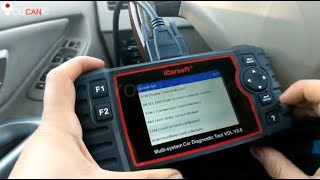
- Scan with a Professional Tool: A generic OBD-II scanner will only show the U1000 code. You need a high-level scanner or, ideally, Volvo's VIDA software to perform a 'network roll call'. This will show which specific modules are not responding and retrieve manufacturer-specific DTCs from 🎬 Watch: How to use Volvo's VIDA software all systems.
- Check for Water Ingress at the CEM: Remove the passenger side under-dash panel and glovebox. Feel the carpet for dampness. Carefully inspect the Central Electronic Module (CEM) and its large electrical connectors for any signs of blue or green corrosion, water stains, or a burnt smell. This is a very common failure point.
- Check Fuses: Inspect all fuses in both the engine bay fuse box (CJB) and the CEM itself. Check for any fuses related to the ECM, TCM, and CEM.
- Professional Inspection: If the battery and grounds are good and there's no visible damage to the CEM, the problem is likely an internal CEM failure or a wiring fault in the CAN bus. At this point, professional diagnosis is required to trace the CAN bus wiring and test individual modules without causing further damage.
Parts You'll Likely Need
- Vehicle Battery — A weak or failing battery is the most common cause of network communication faults on modern, electronically-dense vehicles.
Trusted brands: Bosch, Interstate, DieHard, Volvo (OEM)
OEM price range: $250-$400
Aftermarket price range: $200-$300 - Central Electronic Module (CEM)
(OEM #31314511, 31254838 (Part numbers vary by year and options, must be matched exactly or confirmed with VIN))— The CEM is the central hub for the vehicle's network. It is a known failure point, often due to water damage, and its failure will cause a total communication breakdown.
Trusted brands: Volvo (OEM), XeMODeX (Rebuilder), Volvo Diagnostic (Rebuilder)
OEM price range: $1200+
Aftermarket price range: $400-$800 (for a rebuild/cloning service) - Battery Ground Strap — A corroded or broken ground strap can cause intermittent and widespread electrical issues that mimic a failing battery or module.
Trusted brands: Volvo (OEM)
OEM price range: $30-$70
Aftermarket price range: $15-$40
Related Codes That Often Appear With This One
- U0100 — Lost Communication with ECM/PCM. This is a more specific version of U1000 that points directly to a communication loss with the engine computer, often triggered by the same root causes.
- U0140 — Lost Communication With Body Control Module. On a Volvo, this would point to a problem communicating with the CEM, which acts as the body control module.
- Various ABS/BCM codes (e.g., BCM-U042268) — When the CEM fails, it often loses its 'wake-up' signal to other modules like the Brake Control Module (BCM), causing a cascade of communication faults in related systems.
Technical Service Bulletins (TSBs) & Recalls
- Volvo Technical Journal TJ 25723: While not a public TSB, this internal document reportedly discusses procedures related to diagnosing and replacing the CEM due to water damage and other failures, highlighting it as a known issue to technicians.
Platform-Specific Known Issues
- Windscreen Leaks: A known issue on the P3 platform is an improper bond on the factory windscreen, which can allow water to leak into the cabin. This water often drips directly onto the Central Electronic Module (CEM), causing corrosion and leading to severe network communication failures.
- Sunroof Drains: Clogged sunroof drain tubes can also cause water to overflow from the A-pillar and drip onto the CEM and other electronics in the footwell area, leading to the same communication failures.
Documented NHTSA Reports
While the following reports originate from other manufacturers, they provide critical insight into how the U1000 code behaves across complex electrical networks. NHTSA ODI #11461728 describes a "systemic U1000 Electrical Network Jam" that can be caused by obsolete or unconfigured modules, leading to critical failures like disabled airbags. Another report, NHTSA ODI #10970695, highlights cases where the CAN system diagnosis fails because the instrument cluster cannot retrieve mileage due to a U1000 communication loss. Additionally, NHTSA ODI #10171770 notes that when a vehicle stalls and loses ignition input, a scan can reveal U1000 alongside multiple other communication codes, suggesting a failure in the ignition switch or power supply.
Mechanic-Grade Diagnostic Values
- CAN Bus Network Termination Resistance — expected: ~60 Ohms. Failure: A reading of 120 Ohms indicates a missing termination resistor or a break in one of the CAN wires. A reading significantly lower than 60 Ohms (e.g., 40 Ohms or less) suggests an extra termination resistor is present or there's a short circuit between the CAN High and CAN Low wires.
- CAN Bus Voltage (Key On, Engine Off) — expected: CAN High (CAN-H) should be ~2.5-3.5V. CAN Low (CAN-L) should be ~1.5-2.5V. Both voltages should be relative to a good chassis ground.. Failure: Voltages that are stuck high, stuck low, or equal to each other indicate a short to power, short to ground, or a short between the two CAN lines.
- CEM Power Supply and Ground Pin Voltage — expected: With the key on, specific pins on the CEM connectors should show battery voltage (~12.6V). Ground pins should show near 0V.. Failure: Absence of voltage on power pins or presence of voltage on ground pins indicates a wiring fault, blown fuse, or bad ground connection supplying the CEM.
Scan Tool Commands That Help
- Volvo VIDA (Vehicle Information & Diagnostics for Aftersales): Network Health / Communication Status Check — This is the primary function in VIDA for a U1000 code. It performs a 'roll call' of all modules on the network. The software displays a color-coded graph or list showing which modules are communicating (green), which are not responding (red), and which have stored DTCs (yellow). This immediately pinpoints the source of the communication loss.
- Volvo VIDA: Read out DTCs from all modules — After identifying a non-communicating module, a technician can attempt to read its specific DTCs. Even if the module is offline on the main network, VIDA can sometimes establish a direct connection to pull codes that explain why it failed (e.g., internal fault, power supply issue).
- Volvo VIDA: CEM Reload / Software Download — This function is used when installing a *new* CEM from a dealer. It requires an active subscription and connects to Volvo's servers to download the vehicle-specific software, VIN, and security keys to the new module. This function will NOT work on a used CEM.
Wiring & Ground Locations
- Main Engine Ground Strap — Typically runs from the engine block to the chassis frame rail or strut tower area. The P3 platform has multiple key grounding points on the strut towers.. A corroded or loose main engine ground can cause unstable voltage and electrical noise throughout the vehicle's electrical system, disrupting CAN bus communication between critical modules like the ECM and CEM.
- CEM Ground Point — The CEM is grounded through its wiring harness to one or more chassis ground points. Wiring diagrams for the specific model year are needed to trace the exact pin and ground location (e.g., ground point 31/XX in Volvo diagrams).. A dedicated poor ground for the CEM itself will cause it to malfunction and drop off the network, triggering a U1000 code and a cascade of other communication failures.
- CAN Bus Terminating Resistors — The high-speed CAN bus has two 120-Ohm terminating resistors. On the P3 platform, these are typically integrated within the two modules at the physical ends of the bus, often the Engine Control Module (ECM) and the Central Electronic Module (CEM).. If one of the modules containing a terminating resistor fails (like the CEM), the network's resistance changes from 60 Ohms to 120 Ohms, which can corrupt data signals and cause widespread communication loss.
Real Owner Repair Stories
- Volvo Forums user (2012 S60 T5) — Car would not start, displayed an 'immobilizer issue' message.
❌ Tried (didn't work) Initial checks of the CEM module.
✅ What actually fixed it The owner had accidentally reversed the terminals when using a booster pack on a dead battery. This blew a fuse in the small fuse box located under the hood next to the battery, which cut power to a critical module. Replacing the blown fuse restored communication and resolved the no-start condition. - NHTSA ODI #11461728 — An owner reported that U1000 appeared alongside lost communication with the TCM, causing delayed shifting and check engine lights. In this instance, the TCM was found to be overheating due to its physical placement under the battery.
OEM Part Supersession History
31314511→Part numbers are frequently updated. A dealer or specialist must verify the latest compatible part number using the vehicle's VIN. Other numbers seen for this platform include 30659618 and 31327994.— Revisions often include minor hardware updates or fixes for known issues.
Heads up: The physical part number on the used CEM MUST match the original. Even with a matching number, the module is useless without having the original vehicle's software cloned onto it.
Model Year Variations Within This Range
- 2014-2018: The S60 received a facelift for the 2014 model year, which included updates to the infotainment system (Sensus Connected Touch) and driver display (a digital instrument cluster became available). While the core P3 network architecture remained similar, these changes introduced new modules and potential points of failure on the CAN bus.
Diagnostic Flowchart
Other Known Issues on This Vehicle
Issues unrelated to this code that are worth knowing about as an owner of this generation:
- Excessive Oil Consumption 🔴 High — Common on 2.0L 4-cylinder, 2.5L 5-cylinder, and some 3.0L/3.2L 6-cylinder engines, particularly in pre-2013 models. Often caused by stuck/clogged piston rings.
- PCV System Clogging 🟠 Medium — The PCV breather box and its passages can become clogged with carbon and sludge, leading to high crankcase pressure, oil leaks from seals, and sometimes a whistling noise.
- Powershift Transmission (MPS6) Problems 🔴 High → Shop Transmission Assembly — Applies to models equipped with the Powershift dual-clutch transmission. Known for shuttering, hesitation at low speeds, and mechatronic unit failures.
- Broken Rear Coil Springs 🟡 Low — The rear coil springs have a tendency to snap, typically on the lowest coil. It's a common wear item and relatively easy to diagnose and replace.
- Front Fender Rust 🟡 Low — Debris and moisture can get trapped behind the front fender liners, causing rust to form from the inside out.
Used vs. New Parts: Buying Guide for This Vehicle
When a used part is the smart pick: A used CEM is the most cost-effective solution, but ONLY if you send it along with your original, failed CEM to a specialist service for data cloning. This makes the used module 'plug-and-play'.
Donor-vehicle mileage cap: roughly under 150000 miles for the part to have meaningful remaining life.
What to inspect on the donor part:
- The part number on the donor CEM must EXACTLY match your original module's part number.
- Thoroughly inspect all connector pins on the used module for any signs of green or white powdery corrosion, which indicates past water damage. Reject any unit with visible corrosion.
- Source the part from a reputable recycler that guarantees the part is functional, as internal electronic failure is common even without visible damage.
OEM-only on this vehicle (don't cheap out):
- New Central Electronic Module (CEM). A new CEM must be purchased from and programmed by a Volvo dealer using a live VIDA subscription.
Aftermarket brands forum-validated for this vehicle:
- XeMODeX (for CEM repair/cloning services)
- Volvo Diagnostic (for CEM repair/cloning services)
Brands owners have reported issues with on this vehicle:
- No-name programming services without a strong track record or warranty should be avoided, as a failed data transfer can render both the original and donor modules useless.
Real Owner Stories
Aggregated from forums and TSBs cited above. Mileages and costs reflect what owners reported in those sources.
2010-2016 Volvo S60
Symptoms: Intermittent no-start and dashboard failure symptoms.
What fixed it: Checking battery voltage during cranking before condemning the CEM; ensuring the battery is not dropping below 12.0V.
Source hint: volvoXC.com - CEM Failure?
2004 Volvo S60
Symptoms: Getting 'ABS/Anti Skid Service Required' and 'Brake Failure' messages.
What fixed it: Addressing bad solder joints inside the CEM that were preventing the 'wake-up' signal from reaching the Brake Control Module (BCM).
Source hint: Reddit r/Volvo - Could it be anything other than CEM?
2010-2016 Volvo S60
Symptoms: Water damage, immobilizer errors, and CAN bus communication issues.
What fixed it: CEM data transferring/cloning service to a replacement unit due to water damage from the glovebox area.
Cost: $400-$800
Source hint: datatransferring.com - CEM P3 2010-2016
NHTSA ODI #11727548
Symptoms: Systemic U1000 Electrical Network Jam and airbags disabled.
What fixed it: Investigation revealed a non-conforming testing asset running in Factory Debug Mode and an obsolete/unconfigured TCU causing the network failures.
Related OBD-II Codes
Frequently Asked Questions
Does Volvo Technical Journal TJ 25723 apply to my S60's communication issues?
Why would a leaky windshield cause a U1000 code on my S60?
Can I just buy a used CEM from a scrapyard to fix my U1000 code?
Is it true that my sunroof could be the reason my S60 won't start?
Do I need to do anything special after replacing the battery to clear network codes?
My S60 dashboard went dark and showed 'Brake Failure'. Is this related to U1000?
Helpful Videos

We Have This Part in Stock



The information in this article is provided for general reference and educational purposes only. Vehicle specifications, procedures, and part compatibility can vary by production date, trim level, and region. Always consult your vehicle's factory service manual and verify part numbers before purchasing or performing repairs. Safety-critical components such as airbags, seat belts, and braking systems should be installed by a qualified professional.
- Volvo S60:
- 🧭 Diagnostic Flowchart
- 🎬 Helpful Videos
- 🛍️ Shop This Part
- What's Unique About the 2010-2018 Volvo S60
- Symptoms You May Notice
- Most Likely Causes
- Diagnosis Steps
- Parts You'll Likely Need
- Related Codes That Often Appear With This One
- Technical Service Bulletins (TSBs) & Recalls
- Platform-Specific Known Issues
- Documented NHTSA Reports
- Mechanic-Grade Diagnostic Values
- Scan Tool Commands That Help
- Wiring & Ground Locations
- Real Owner Repair Stories
- OEM Part Supersession History
- Model Year Variations Within This Range
- Other Known Issues on This Vehicle
- Used vs. New Parts: Buying Guide for This Vehicle
- Real Owner Stories
- 2010-2016 Volvo S60
- 2004 Volvo S60
- 2010-2016 Volvo S60
- NHTSA ODI #11727548
- Related OBD-II Codes
- Frequently Asked Questions
- 🎟️ Get 5% Off