

U1500 on 2014-2018 Subaru Forester: Understanding an Undefined Network Code
Code U1500 on a 2014-2018 Forester does not have a clear, manufacturer-defined meaning. It generally indicates a communication failure on a sub-network (LIN bus). Before replacing parts, verify the code with a professional scanner, as it may be a misread B1500 code, which points to the keyless entry system. If U1500 is confirmed, the most likely cause is a faulty oil level sensor, a very common failure on this platform.
- U1500 has no confirmed definition for the 2014-2018 Forester; it is a generic network fault code that often points to a Local Interconnect Network (LIN) bus failure.
- Before attempting any repairs, use a professional scan tool to confirm the code is not a misread B1500, which points to a different issue (keyless entry).
- The most probable cause for a legitimate U1500 is a faulty oil level sensor, a well-documented failure on this platform that communicates via the LIN bus.
- Advanced diagnostics, including using an oscilloscope to check the LIN bus signal and isolating components one-by-one, are required for a definitive diagnosis.
What's Unique About the 2014-2018 Subaru Forester
The main challenge with U1500 on this Forester is the lack of a specific definition from Subaru. While other manufacturers use U1500 for specific issues like a failed OnStar module (GM) or Active Grille Shutter (Ford), Subaru's own service bulletins point to a different code (B1500) for a common communication fault on this vehicle. Therefore, seeing a U1500 code often leads to diagnostic confusion. The high failure rate of the LIN-based oil level sensor on this platform makes it the most probable, yet unconfirmed, culprit for a legitimate U1500 code.
Symptoms You May Notice
- Check Engine Light is on
- Warning lights on the instrument cluster may illuminate, such as the low oil level indicator (yellow oil can with wavy lines)
- Features related to the failing component may stop working (e.g., inaccurate oil level reading, erratic charging if alternator is involved)
- Keyless entry system may malfunction (though this is more commonly associated with code B1500)
- Assuming the code has a single, clear meaning. The most critical step is to verify the code with a high-quality scan tool and check for other accompanying codes. The issue may actually be a B1500 fault, which could point to a faulty fuel level sensor or a keyless entry module problem, both of which are documented issues for this vehicle.
Most Likely Causes
- Faulty Oil Level / Temperature Sensor 🟡 Medium Probability The oil level sensor on many Subaru models, including the Forester with the FB25 engine, is a widely documented failure point. It communicates over the LIN bus, a sub-network of the main CAN bus. A failure in this sensor's internal electronics can disrupt the LIN bus, potentially triggering a generic communication code like U1500.
How to confirm: Manually check the engine oil level with the dipstick. If the level is correct but the yellow low oil level light is on, the sensor is highly suspect. A professional scan tool can attempt to communicate directly with the sensor; a failure to do so points to a bad sensor or wiring.
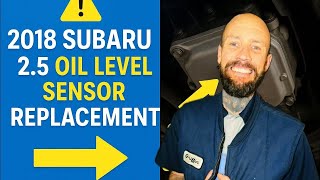
Typical fix: Replace the oil level sensor. It is located on the side of the engine oil pan and is held in by two bolts. 🎬 Watch: Step-by-step Subaru oil level sensor replacement
Est. part cost: $70-$150 - Wiring Harness or Connector Issue 🟡 Medium Probability
How to confirm: Visually inspect the wiring and connectors for any components on the LIN bus (e.g., alternator, oil level sensor) for signs of damage, corrosion, or looseness. Test for continuity and shorts in the LIN bus circuit with a multimeter, which requires a vehicle-specific wiring diagram.
Typical fix: Repair the damaged section of the wiring harness or clean/replace the faulty connector.
Est. part cost: $5-$50 for repair materials
Rare But Worth Checking
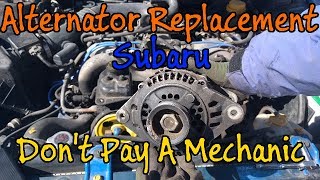
- Faulty Alternator: → Shop Alternator Modern alternators, like those in the Forester, communicate with the ECU/BIU over a LIN bus to control charging voltage. A failure in the alternator's internal communication circuit could disrupt the network and potentially set a U-code.
- Body Integrated Unit (BIU) or Combination Meter Fault: → Shop Body Control Module The master module controlling the LIN bus (likely the BIU or Combination Meter in this architecture) could be at fault. This is a rare and expensive failure that should only be considered after all other possibilities, including wiring and slave modules, have been exhaustively ruled out.
Diagnosis Steps
- Confirm the Code: Re-scan the vehicle with a professional-grade tool (like the Subaru Select Monitor) to confirm U1500 is the correct and only code. Note any other codes present. Generic scanners are known to misinterpret Subaru codes.
- Research TSBs: Check for any Technical Service Bulletins that apply to your specific vehicle's year and symptoms. Specifically, TSB 07-83-14 clarifies that for a 'Keyless UART Communication Malfunction' on a 2014-15 Forester, the code should be B1500, not U1500.
- Check Oil Level Manually: If the yellow low oil level light is on, immediately check the oil level using the dipstick to rule out 🎬 Watch: How to properly check your Forester's oil level an actual low oil condition. A correct level with an active light strongly points to a sensor issue.
- Inspect LIN Bus Component Wiring: Visually inspect the wiring and connectors going to the most likely LIN bus components: the oil level sensor (on the oil pan) and the alternator. Look for chafing, corrosion, or rodent damage.
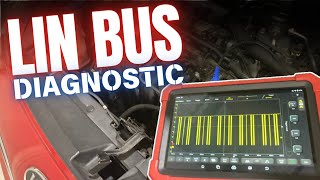
- Test LIN Bus Circuit: Using a multimeter and an oscilloscope, check the LIN bus wire for continuity, shorts to ground, and shorts to power. The LIN bus should show a ~12V signal when idle (pulled up) and drop to near 0V during communication. This requires a wiring diagram for your specific vehicle. 🎬 Watch: Understanding LIN bus diagnostics and waveforms
- Isolate Components: If the bus wiring seems intact, the next step is to disconnect LIN bus components one by one to see if communication is restored. Start with the most likely suspect, the oil level sensor, followed by the alternator.
- Component Replacement: If a specific component is identified as the source of the network failure (e.g., disconnecting the oil level sensor resolves the code), replace that component.
Parts You'll Likely Need
- Engine Oil Level Sensor
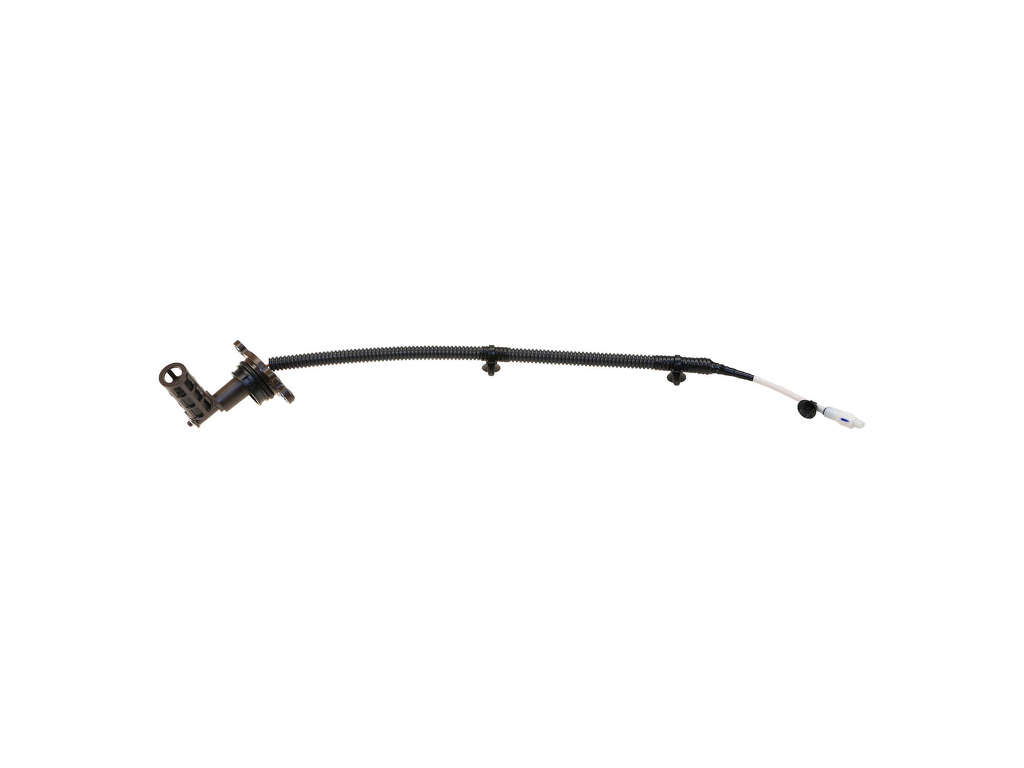
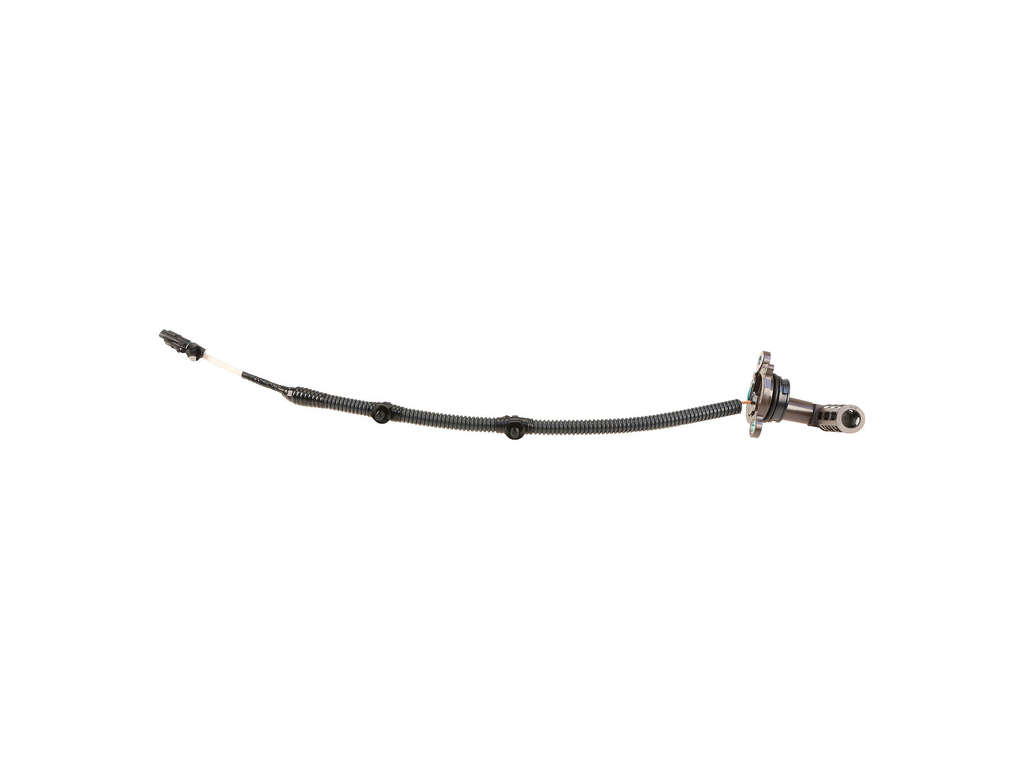
(OEM #21167AA010 (Verify with VIN, may vary))— This is a very common failure item on Subarus that communicates over the LIN bus. A fault here is a plausible, though unconfirmed, cause for a generic LIN bus code like U1500. Its failure is well-documented in owner forums.
Trusted brands: Subaru (OEM)
OEM price range: $90-$150
Aftermarket price range: $70-$120
Related Codes That Often Appear With This One
- B1500 — A generic scanner might incorrectly display U1500 when the actual code stored is B1500. Subaru TSB 07-83-14 links B1500 to keyless entry communication issues on this platform.
Technical Service Bulletins (TSBs) & Recalls
- 07-83-14: Addresses diagnostics for DTC B1500 and U1500. Crucially, it states that for the 2014-15 Forester, the relevant code for a 'Keyless UART Communication Malfunction' is B1500, and that U1500 is for 2015 WRX/STI models in this context.
Platform-Specific Known Issues
- The primary vehicle-specific issue is the ambiguity of the U1500 code itself. Subaru's own technical service bulletin (07-83-14) directs technicians to look for B1500 for keyless entry faults on the Forester, leaving U1500 undefined in that context. This leads to diagnostic confusion where the true fault is likely on the LIN bus, with the oil level sensor being the most frequent, well-documented failure point on this specific vehicle generation that uses a LIN connection.
Mechanic-Grade Diagnostic Values
- LIN Bus Signal Voltage (Oscilloscope) — expected: A toggling signal with a peak/max voltage of approximately 11-12V (battery voltage) and a minimum/low voltage of around 1V during communication. At rest, the bus should show a steady ~12V.. Failure: A flat line near 0V indicates the bus is shorted to ground or a slave module is pulling it down. A steady line at battery voltage could indicate an open circuit or that no modules are communicating.
- Alternator 'C' Terminal Voltage (LIN Communication) — expected: Normal charging voltage should be around 14.2-14.4V. The ECU controls this via the LIN bus 'C' terminal.. Failure: If the ECU detects a 'no load' situation, it may pull the 'C' terminal to ground, causing the alternator output to drop to around 12.9V, which is insufficient to properly charge the battery. This can indicate a communication or control issue.
Scan Tool Commands That Help
- Subaru Select Monitor (SSMIII or SSM4): All Systems Diagnosis / Each System Check — This is the initial step to perform a full vehicle scan. It checks all control modules for current and past Diagnostic Trouble Codes (DTCs), which is critical because a fault in one system (like Telematics) can cause communication codes in another.
- Subaru Select Monitor (SSMIII or SSM4): Current Data Display / Save — After selecting a specific system (e.g., Body Integrated Unit, Engine Control System), this function allows a technician to view live data from sensors and modules on the LIN bus. A failure to display data from a specific component (like the oil level sensor) points to a communication breakdown.
- Subaru Select Monitor (SSMIII or SSM4): Immobilizer Registration / BIU Replacement Functions — If the Body Integrated Unit (BIU) is determined to be the fault, it must be replaced. After physical replacement, the SSM tool is required to register the new immobilizer and configure the new BIU to the vehicle's options.
Wiring & Ground Locations
- Body Integrated Unit (BIU) — Located next to the fuse box under the driver's side dash, behind the knee guard panel.. The BIU is the likely 'master' module for the LIN bus that communicates with the oil level sensor and alternator. A fault in the BIU itself, or its power/ground connections, can bring down the entire sub-network.
- Engine Control Unit (ECU) Grounds — The ECU grounds are critically located on the top of the intake manifold.. Subaru ECUs receive their ground reference from the intake manifold. A poor connection here can cause a wide range of bizarre electrical issues and fault codes as the ECU's reference voltage fluctuates. Ensuring this ground is clean and tight is a key diagnostic step for any network code.
- Main Chassis Ground — The primary ground strap runs from the negative battery terminal to the chassis, often on the fender or strut tower near the battery.. All modules ultimately ground to the chassis. Corrosion or looseness at this main point can create a voltage drop across the entire vehicle's electrical system, disrupting sensitive network communications like the LIN bus.
- Oil Level Sensor Connector (E11) — On the side of the engine oil pan.. This is the direct connection point for the most likely failed component. The connector itself can suffer from corrosion, oil contamination, or damaged pins, interrupting the LIN bus signal and causing the U1500 code.
OEM Part Supersession History
11136AA110→11136AA111— Unknown, likely an internal revision for reliability or manufacturing improvement.Pass 2's 21167AA010→Unknown— Research indicates 21167AA010 may not be the correct part number for this specific Forester. Verified part numbers for the 2.5L Forester in this range include 11136AA150 and 11136AA111. VIN verification is critical.
Heads up: Using the wrong oil level sensor, even if it physically fits, will result in communication failure and a persistent code. Always verify the part number with the vehicle's VIN.
Diagnostic Flowchart
Other Known Issues on This Vehicle
Issues unrelated to this code that are worth knowing about as an owner of this generation:
- Excessive Oil Consumption (FB25 Engine) 🔴 High — Common in early models (especially 2014), often appearing between 40k-90k miles. Caused by piston ring design issues. A class-action lawsuit was filed regarding this issue. (Ref: TSB 02-157-14R revised the repair from piston ring replacement to a full short block replacement for confirmed cases.)
- Lineartronic CVT Reliability (TR580) 🔴 High — Failures can occur, often manifesting as shuddering, hesitation, or stalling. Valve body solenoid failures are a common point of failure, typically around 100k-150k miles. Subaru extended the CVT warranty for many vehicles to 10 years/100,000 miles due to these issues. (Ref: Multiple TSBs exist, including 16-90-13R for torque converter issues and warranty extension programs.)
- Rear Suspension Coil Spring Failure 🟠 Medium — Prone to cracking or breaking, particularly on 2014 models, but affects the entire generation. (Ref: A recall was issued for faulty rear suspension springs on Foresters manufactured between March 2013 and October 2018.)
- CAN System Parasitic Battery Drain 🟠 Medium → Shop Vehicle Battery — Many owners report batteries dying unexpectedly. This can be caused by various modules failing to 'sleep' properly, with the Power Rear Gate (PRG) control module being one known culprit. (Ref: TSB 07-150-19R provides updated logic for the PRG module to prevent excessive dark draw. TSB 07-85-14 provides general diagnostics for dark current.)
- Failing Wheel Bearings 🟡 Low — Wheel bearings may fail prematurely, causing a droning or humming noise that increases with speed.
Used vs. New Parts: Buying Guide for This Vehicle
When a used part is the smart pick: For this repair, a used OEM alternator from a low-mileage donor vehicle can be a cost-effective choice, as OEM units have better compatibility with the ECU's LIN bus communication than many aftermarket options. A used Body Integrated Unit (BIU) is also a possibility, but it will require reprogramming by a dealer or a specialist with a Subaru Select Monitor.
Donor-vehicle mileage cap: roughly under 80000 miles for the part to have meaningful remaining life.
What to inspect on the donor part:
- For an alternator, check for smooth bearing rotation with no grinding or noise. Ensure the pulley is in good condition and the electrical connectors are clean and free of corrosion.
- For a BIU or other electronic module, inspect for any signs of water intrusion or corrosion on the case and pins. Avoid parts from vehicles with flood damage.
- Check the donor vehicle's history if possible to avoid parts from a vehicle that had extensive electrical problems.
OEM-only on this vehicle (don't cheap out):
- Oil Level Sensor: While some aftermarket sensors may work, the risk of communication errors is high. Given the moderate labor to replace it, using an OEM sensor is strongly recommended to ensure it communicates correctly with the BIU over the LIN bus.
- Alternator: Many owner and dealer experiences suggest that aftermarket alternators can cause communication issues with the Subaru ECU, leading to improper charging. A rebuilt OEM unit or a new OEM unit is the safest choice.
Brands owners have reported issues with on this vehicle:
- Generic/unbranded alternators and oil level sensors from online marketplaces are frequently cited as problematic for modern Subarus due to LIN bus communication incompatibility.
Real Owner Stories
Aggregated from forums and TSBs cited above. Mileages and costs reflect what owners reported in those sources.
2014 Subaru Forester FB25 — ~65000 miles
Symptoms: The yellow low oil level light (oil can with wavy lines) illuminated on the dashboard even though the manual dipstick check showed the oil level was correct.
What fixed it: Replacement of the oil level sensor located on the side of the oil pan.
Source hint: subaruforester.org forum discussions regarding FB25 oil level sensor failures
2014-2015 Subaru Forester
Symptoms: Diagnostic trouble code U1500 appeared during a scan for a Keyless UART Communication Malfunction.
What fixed it: Technicians are directed to treat the fault as code B1500 per manufacturer guidance.
Source hint: TSB 07-83-14
2013-2019 Subaru Outback FB25
Symptoms: Yellow warning light active with a known correct oil level; identical electrical architecture to the Forester.
What fixed it: Replacement of the oil level sensor which communicates via the LIN bus.
Source hint: subaruoutback.org forum reports on FB25 sensor failures
Related OBD-II Codes
Frequently Asked Questions
My 2014 Forester shows a yellow oil can light with wavy lines, but the dipstick is full. Is this related to U1500?
Does TSB 07-83-14 apply to my 2015 Forester regarding code U1500?
Where is the sensor located if I need to replace it to fix a LIN bus communication error?
Can a faulty alternator cause a U1500 code on a 2014-2018 Forester?
Is there a recall for the oil consumption issues that might be confusing my oil level sensor diagnostics?
Could my keyless entry malfunction be the cause of the U1500 code?
Helpful Videos


We Have This Part in Stock


The information in this article is provided for general reference and educational purposes only. Vehicle specifications, procedures, and part compatibility can vary by production date, trim level, and region. Always consult your vehicle's factory service manual and verify part numbers before purchasing or performing repairs. Safety-critical components such as airbags, seat belts, and braking systems should be installed by a qualified professional.
- Subaru Forester:
- 🧭 Diagnostic Flowchart
- 🎬 Helpful Videos
- 🛍️ Shop This Part
- What's Unique About the 2014-2018 Subaru Forester
- Symptoms You May Notice
- Most Likely Causes
- Rare But Worth Checking
- Diagnosis Steps
- Parts You'll Likely Need
- Related Codes That Often Appear With This One
- Technical Service Bulletins (TSBs) & Recalls
- Platform-Specific Known Issues
- Mechanic-Grade Diagnostic Values
- Scan Tool Commands That Help
- Wiring & Ground Locations
- OEM Part Supersession History
- Other Known Issues on This Vehicle
- Used vs. New Parts: Buying Guide for This Vehicle
- Real Owner Stories
- 2014 Subaru Forester FB25 — ~65000 miles
- 2014-2015 Subaru Forester
- 2013-2019 Subaru Outback FB25
- Related OBD-II Codes
- Frequently Asked Questions
- 🎟️ Get 5% Off