

U2101 on 2012-2015 Chevrolet Spark: Incompatible Module Causes and Fixes
On a 2012-2015 Spark, code U2101 usually points to a faulty Transmission Control Module (TCM) or Body Control Module (BCM). A failing TCM is more common and may be caused by moisture damage. A used TCM can often be installed without reprogramming, costing around $70-$150 for the part. If the BCM is the cause, it will require programming.
- U2101 on a Spark is a serious network error, most often caused by a faulty Transmission Control Module (TCM) or Body Control Module (BCM).
- Symptoms are severe and include stalling, loss of power, and being stuck in gear. Do not drive the vehicle.
- Before replacing parts, always check the battery and charging system, as low voltage can mimic module failure.
- A faulty TCM is the most likely cause. A used TCM may be a plug-and-play fix without needing expensive programming.
- If the BCM is at fault, it MUST be programmed or have its data cloned from the original module to the replacement.
What's Unique About the 2012-2015 Chevrolet Spark
While on most GM vehicles U2101 is strictly a programming issue after a module swap, the 2012-2015 Spark has a known pattern where the code is often triggered by an internally failing Transmission Control Module (TCM), sometimes due to moisture. Uniquely, owner and mechanic experiences show that a used TCM can sometimes be swapped into a Spark without needing the expensive dealer reprogramming that is mandatory on other GM models, making for a much cheaper repair. This has been documented by multiple owners on forums like chevysparkforum.com. However, if the Body Control Module (BCM) is the cause, it will always require programming or data cloning to function.
Symptoms You May Notice
- Check Engine Light is on
- Vehicle stalls or has a loss of power
- Transmission gets stuck in one gear (limp mode) 🎬 Watch: How to diagnose and fix transmission limp mode
- Harsh or erratic shifting
- Gas pedal is unresponsive
- Multiple warning lights on the dashboard (ABS, Traction Control, etc.)
- Gear indicator on the dash may disappear or show incorrect information
- Intermittent no-start or engine won't turn over
- Replacing the Engine Control Module (ECM) when the fault lies with the TCM or BCM.
- Replacing transmission speed sensors or solenoids when the issue is a complete loss of communication with the TCM itself.
- Replacing the starter for a no-start condition when the root cause is the anti-theft system being triggered by a module communication failure.
Most Likely Causes
- Faulty Transmission Control Module (TCM) 🔴 High Probability → Shop Transmission Assembly The TCM is located inside the passenger cabin and can be susceptible to moisture or condensation, leading to corrosion and internal failure. This is the most widely reported cause for U2101 and related communication codes on this platform.
How to confirm: With a professional scan tool, check if the U2101 code is accompanied by U0101 (Lost Communication with TCM). Visually inspect the TCM and its connectors for signs of corrosion or water damage. The TCM is located inside the car, behind the glove box and to the right, mounted vertically to the A-pillar with two 10mm nuts. 🎬 Watch: Diagnosing multiple lost communication codes on a Spark
Typical fix: Replace the Transmission Control Module. A used module from a salvage yard with a matching part number may work without reprogramming. If a new module is used, it will require programming.
Est. part cost: $70-$150 for a used module, $250-$400 for a new one. - Faulty or Unprogrammed Body Control Module (BCM) 🟡 Medium Probability → Shop Body Control Module Like other GM vehicles, the BCM manages many electrical systems and can fail, causing network-wide issues. Water intrusion from a clogged sunroof drain or windshield leak is a common cause of failure.
How to confirm: A professional scan tool will show U0140 (Lost Communication with BCM) along with U2101. Ask about recent repairs; if the BCM was just replaced, it's the cause. Visually inspect the BCM for corrosion. On the Spark, it is typically located at the base of the driver's side A-pillar, sometimes integrated with the interior fuse panel.
Typical fix: Replace the BCM. The new or used module MUST be programmed to the vehicle's VIN. This can be done by a dealer or a mail-in cloning service that transfers data from your old BCM to the replacement, making it plug-and-play.
Est. part cost: $100-$200 for a used module plus $100-$150 for a cloning service. - Damaged Wiring or Poor Grounds ⚪ Low Probability Vibrations and exposure can cause wiring to chafe or ground connections to corrode, interrupting communication between modules. The CAN bus wiring is particularly sensitive to damage.
How to confirm: Visually inspect the wiring harnesses going to the TCM and BCM for any signs of damage, chafing, or pinching. Check and clean the main battery and chassis ground points to ensure they are tight and free of corrosion. A multimeter can be used to check for continuity and proper resistance (around 60 ohms) across the CAN bus terminals at the OBD-II port.
Typical fix: Repair the damaged section of the wiring harness or clean/replace the corroded ground terminals.
Est. part cost: $5-$50 for wiring repair supplies.
Rare But Worth Checking
- Low Battery Voltage or Failing Alternator: → Shop Vehicle Battery Control modules require a stable voltage to communicate properly. Before condemning an expensive module, always test the battery and charging system. A weak battery can cause a host of random communication codes, including U0101 and U2101.
Diagnosis Steps
- Perform a full vehicle scan with a professional scan tool capable of reading manufacturer-specific codes from all modules.
- Identify which module is logging the U2101 code. Note any 'Lost Communication' (U0xxx) codes in other modules, as they point to the faulty component (e.g., U0101 points to the TCM).
- Check Battery Health: Ensure battery voltage is above 12.4V with the engine off. Start the engine and verify the alternator is charging correctly (13.5V-14.5V). A weak power supply can cause network errors.
- Inspect the Suspect Module: Based on the codes, locate the primary suspect (most often the TCM). The TCM is behind the glove box, mounted to the right A-pillar. Disconnect its connectors and inspect for corrosion, moisture, or bent pins.
- Check Power and Ground: Using a multimeter and wiring diagram, verify the suspect module is receiving proper power and has a solid ground connection.
- Check CAN Bus Integrity: With the battery disconnected, measure the resistance between pins 6 (CAN High) and 14 (CAN Low) at the OBD-II port. A healthy network should read approximately 60 Ohms.
- If a module was recently replaced, it is the cause. It needs to be programmed.
- If the original TCM is suspect, consider replacing it. For the 2012-2015 Spark, a used TCM with a matching part number is often a plug-and-play solution.
- If the BCM is the suspect, it must be replaced and then programmed by a dealer or cloned via a mail-in service.
Parts You'll Likely Need
- Transmission Control Module (TCM)
(OEM #24265789, 24268164, 24287249, 24291306 (Part numbers supersede; match the number on your original unit or verify by VIN))— This is the most common point of failure on the Spark for this code, often due to internal faults from moisture. A used replacement may not require programming, making it a cost-effective fix.
Trusted brands: ACDelco (OEM), Used OEM
OEM price range: $250-$400 (New)
Aftermarket price range: $70-$150 (Used) - Body Control Module (BCM)
(OEM #13578458, 13580696, 13598325, 95182094 (Varies by year and options, always verify by VIN))— The second most likely cause. If the BCM fails or is replaced, it will set a U2101 until it is programmed or the original data is cloned to it.
Trusted brands: ACDelco (OEM), Used OEM
OEM price range: $200-$300 (New)
Aftermarket price range: $50-$100 (Used, requires cloning service)
Related Codes That Often Appear With This One
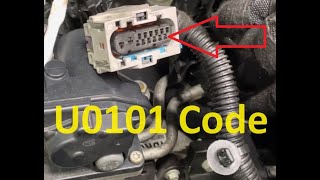
- U0101 — This code means 'Lost Communication with TCM'. It will appear in other modules when the TCM is faulty or unprogrammed, causing the U2101. 🎬 See this guide on TCM communication failure causes and fixes
- U0140 — This code means 'Lost Communication with BCM'. It will appear in other modules if the BCM is the source of the U2101 fault.
- U0100 — This code means 'Lost Communication with ECM/PCM'. It can be set when a primary module like the TCM or BCM disrupts the entire network.
- P0700 — This code is a general 'Transmission Control System Malfunction' request from the TCM to the ECM to turn on the Check Engine Light. It often accompanies more specific transmission-related codes.
Technical Service Bulletins (TSBs) & Recalls
- N192268880: Emission Recall for 2016-2018 Spark to reprogram the TCM.
- 15282: Safety Recall for 2014-2015 Spark to reprogram the radio.
- 14456: Safety Recall for 2013-2015 Spark for secondary hood latch corrosion.
Platform-Specific Known Issues
- There is an emissions recall (N192268880) for 2016-2018 Spark models to reprogram the TCM for an issue where it may not set a trouble code when a fault occurs. While for a later year, this highlights the TCM as a known issue area for GM.
- A safety recall (GM #15282 / NHTSA #15V-421) exists for 2014-2015 Sparks to reprogram the radio module, which could lock up and cause a loss of safety chimes. This is another example of module software issues on this platform.
- A safety recall (GM #14456) for 2013-2015 Sparks addresses a corroding secondary hood latch that could fail to engage.
Mechanic-Grade Diagnostic Values
- CAN Bus Network Resistance — expected: Approximately 60 Ω. Failure: A reading of 120 Ω indicates one of the two terminating resistors is offline or there's an open circuit in the wiring. A reading near 0 Ω indicates a short between the CAN High and CAN Low wires.
- CAN High Voltage — expected: 2.5V - 3.0V DC. Failure: Voltage outside this range indicates a potential short to power/ground or a faulty module driver.
- CAN Low Voltage — expected: 2.0V - 2.5V DC. Failure: Voltage outside this range indicates a potential short to power/ground or a faulty module driver.
- Module CAN Port Internal Resistance — expected: 28kΩ - 50kΩ. Failure: A reading significantly lower, especially under 10kΩ, suggests the module's CAN transceiver is damaged, often from a voltage spike or short circuit.
Hidden / Shadow Codes Worth Checking
- Symptom Code 71: On GM vehicles, a two-digit hexadecimal code can be appended to the main DTC. Symptom code '71' indicates 'Invalid Serial Data Received'. For a U2101 code, this would mean the BCM or another primary module has determined that a module on the network is sending corrupt or nonsensical data, reinforcing the 'incompatible configuration' diagnosis. (see via This sub-code is typically only visible using a dealer-level scan tool like the GM GDS2 or a high-end professional scanner with manufacturer-specific software.)
Scan Tool Commands That Help
- GM GDS2: Module Programming / Setup — This is the primary function required to fix a U2101 code after a new BCM or TCM has been installed. The procedure writes the vehicle's VIN and specific configuration data to the new module, allowing it to be recognized by the network.
- GM GDS2: Setup SDM Primary Key in BCM — This specific function is required after programming a new BCM. It establishes the security handshake between the new BCM and the existing SDM (airbag module). Failing to perform this can result in additional codes, such as B1001 (Option Configuration Error), being set in the SDM.
Wiring & Ground Locations
- G103 — Located in the engine compartment, typically behind the battery on the firewall or inner fender.. Wiring diagrams for similar GM platforms indicate G103 is a primary ground point for the Body Control Module (BCM). A corroded or loose G103 can starve the BCM of a stable ground, causing a host of network communication errors including U2101.
- G105 — Located in the engine compartment, often on the transmission casing or a nearby engine stud.. On similar GM vehicles, G105 serves as a critical ground for the Transmission Control Module (TCM) and Engine Control Module (ECM). A fault at this location can directly cause U0101 (Lost Communication with TCM) and subsequently trigger a U2101 in other modules.
- G201 — Located inside the vehicle, on the right side of the dash structure, often accessible by removing the glove box.. This is an instrument panel ground point. As the TCM is located behind the glove box on the A-pillar, this ground point is in close proximity and could be part of the TCM's grounding circuit. A poor connection here could contribute to module communication issues.
Documented NHTSA Reports
While U2101 is a manufacturer-specific configuration code for GM, cross-manufacturer records provide insight into how this fault manifests. For instance, NHTSA ODI #11581420 describes a scenario where U2101 appeared alongside U0140 and other communication codes, accompanied by a strange beeping noise or warning chime without corresponding dashboard lights. Additionally, NHTSA ODI #10694215 notes that U2101 can be present during steering system failures, where a dealer may recommend hardware replacement like an electronic steering rack after finding the code.
Real Owner Repair Stories
- Synthesized from multiple threads on chevysparkforum.com (2014 Chevrolet Spark (CVT)) — Car suddenly stalled while driving. After restart, Check Engine Light was on, gear indicator on dash was gone, and car was stuck in 'limp mode' (stuck in a high gear, very slow to accelerate). Scan tool showed U2101 and U0101.
❌ Tried (didn't work) Clearing the codes (they returned immediately)., Checking battery and alternator (both tested good).
✅ What actually fixed it Based on forum advice, the owner purchased a used Transmission Control Module (TCM) from a salvage yard with the exact same part number as their original. They disconnected the battery, removed the glove box, swapped the TCM, and reconnected the battery. The car started normally, all symptoms were gone, and the codes did not return. No dealer programming was required.
OEM Part Supersession History
Gen 1 6T30/6T40 TCM (e.g., 24256524, 24260820)→Gen 2 6T30/6T40 TCM (e.g., 24265789, 24268164)— Internal hardware and software architecture change between transmission controller generations.
Heads up: Generation 1 and Generation 2 TCMs are NOT interchangeable. Installing a Gen 1 TCM in a vehicle that requires a Gen 2 (like the Spark) will result in a no-communication state and likely a U2101 code. Always match the part number from the original unit or verify compatibility by VIN.
Model Year Variations Within This Range
- 2013 vs. 2014-2015: The 2013 model year for the Spark used a conventional 4-speed automatic transmission (similar to the one in the Chevrolet Aveo). Starting in 2014, the Spark was equipped with a Jatco Continuously Variable Transmission (CVT). This means the TCM is different between these years. While both can suffer failures leading to U2101, the specific part numbers and internal workings of the TCM and transmission are not the same.
- 2014: Early 2014 models with the CVT had a TCM software calibration that could cause premature transmission wear. A technical service bulletin (PI1309) was issued to update the TCM firmware to correct the shifting logic. 2015 models were factory-equipped with this updated software.
Diagnostic Flowchart
Other Known Issues on This Vehicle
Issues unrelated to this code that are worth knowing about as an owner of this generation:
- CVT Transmission Failure 🔴 High → Shop Transmission Assembly — Common on 2014-2015 models, often occurring before 100,000 miles. Symptoms include buckling, whining, and slipping. (Ref: Special Coverage N192271110 extended the warranty to 10 years/120,000 miles for this issue.)
- Excessive Oil Consumption 🔴 High — Particularly noted on the 2013 model year with the 1.2L engine. Can lead to stalling and potential engine damage if not monitored closely. (Ref: GM issued Recall 14110 for this problem on 2013-2014 models.)
- Coolant Leaks from Water Pump or Thermostat Housing 🟠 Medium — A known issue across this generation that can lead to overheating if not addressed.
- Corrosion of Negative Battery Cable Terminal 🟡 Low → Shop Vehicle Battery — Commonly reported issue that can cause intermittent starting problems or strange electrical behavior due to a poor ground connection.
- Front Lower Control Arm Bolt Loosening 🔴 High — Specific to a batch of 2014 models, but extremely dangerous. (Ref: Safety Recall 14453 (NHTSA #14V-412) was issued for affected vehicles.)
Used vs. New Parts: Buying Guide for This Vehicle
When a used part is the smart pick: For the Chevrolet Spark with code U2101, a used part is a very smart choice for the two most common causes. A used Transmission Control Module (TCM) with a matching part number often works without reprogramming. A used Body Control Module (BCM) is also viable but ONLY if you use a mail-in cloning service.
Donor-vehicle mileage cap: roughly under 100000 miles for the part to have meaningful remaining life.
What to inspect on the donor part:
- Verify the part number on the used module EXACTLY matches the original.
- Inspect connectors for any green or white crust (corrosion) or bent pins.
- Ask the salvage yard if the donor vehicle had any signs of water damage or flooding.
- If possible, get a module from a vehicle that was a collision-loss, not one junked for engine or transmission failure.
Aftermarket brands forum-validated for this vehicle:
- For BCM replacement, services like 'Karman Auto' or 'Odo-Pro' offer mail-in cloning that makes a used BCM plug-and-play.
Brands owners have reported issues with on this vehicle:
- Avoid generic, unbranded TCMs or BCMs from online marketplaces that do not show a clear OEM part number or brand like ACDelco.
Real Owner Stories
Aggregated from forums and TSBs cited above. Mileages and costs reflect what owners reported in those sources.
2014 Chevrolet Spark — ~95000 miles
Symptoms: Transmission gets stuck in one gear (limp mode), harsh or erratic shifting, and the gear indicator on the dash disappeared.
What fixed it: Replacement of the Transmission Control Module (TCM) with a used module with a matching part number.
Source hint: Common causes and symptoms section
2013 Chevrolet Spark 1.2L — ~110000 miles
Symptoms: Vehicle stalls and has a loss of power; gas pedal is unresponsive.
What fixed it: Repaired damaged section of the wiring harness and cleaned corroded ground terminals.
Source hint: Common causes and symptoms section
Related OBD-II Codes
Frequently Asked Questions
Where is the Transmission Control Module (TCM) located on the 2012-2015 Chevrolet Spark?
Does the TCM on my 2012-2015 Spark require programming if I replace it to fix U2101?
My 2014 Spark is stalling and the gas pedal is unresponsive; could this be related to a recall?
Can a bad Body Control Module (BCM) cause the U2101 code on this vehicle?
Is there a specific TSB for the TCM on the 2012-2015 Spark?
How can I check if my Spark's CAN bus wiring is causing the communication error?
Helpful Videos

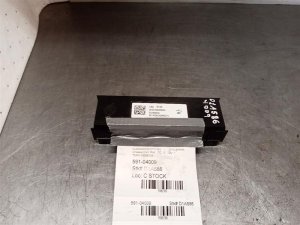
Used OEM Parts in Stock
New Aftermarket Parts Available

The information in this article is provided for general reference and educational purposes only. Vehicle specifications, procedures, and part compatibility can vary by production date, trim level, and region. Always consult your vehicle's factory service manual and verify part numbers before purchasing or performing repairs. Safety-critical components such as airbags, seat belts, and braking systems should be installed by a qualified professional.
- Chevrolet Spark:
- 🧭 Diagnostic Flowchart
- 🎬 Helpful Videos
- 🛍️ Shop This Part
- What's Unique About the 2012-2015 Chevrolet Spark
- Symptoms You May Notice
- Most Likely Causes
- Rare But Worth Checking
- Diagnosis Steps
- Parts You'll Likely Need
- Related Codes That Often Appear With This One
- Technical Service Bulletins (TSBs) & Recalls
- Platform-Specific Known Issues
- Mechanic-Grade Diagnostic Values
- Hidden / Shadow Codes Worth Checking
- Scan Tool Commands That Help
- Wiring & Ground Locations
- Documented NHTSA Reports
- Real Owner Repair Stories
- OEM Part Supersession History
- Model Year Variations Within This Range
- Other Known Issues on This Vehicle
- Used vs. New Parts: Buying Guide for This Vehicle
- Real Owner Stories
- 2014 Chevrolet Spark — ~95000 miles
- 2013 Chevrolet Spark 1.2L — ~110000 miles
- Related OBD-II Codes
- Frequently Asked Questions
- 🎟️ Get 5% Off