

U2101 on 2012-2018 Hyundai Santa Fe: Causes of Control Module Incompatibility and Fixes
Code U2101 on a 2012-2018 Santa Fe means a major computer (like the ABS, Body, or Engine control module) was replaced but not programmed. The fix is not another part, but professional programming of the new module to match your vehicle's VIN. This process is often called 'Variant Coding' by Hyundai. Expect to pay a dealership or specialized shop with a GDS or equivalent scan tool for 1-2 hours of labor.
- U2101 means 'Configuration Incompatible' and is a programming issue, not a broken part.
- The code appears after a major electronic module (like the BCM, ECM, or ABS module) has been replaced without being programmed to your car's VIN.
- Do not replace the part again. The solution is to have the newly installed module professionally programmed.
- This repair requires dealer-level tools (Hyundai GDS) and cannot be done with a basic code reader.
- Check for open recalls, especially Safety Recall 251 related to the ABS module, as this could be the root context for the repair.
What's Unique About the 2012-2018 Hyundai Santa Fe
For the 2012-2018 Santa Fe, this code is not a sign of a common random failure, but a direct consequence of a prior repair. Key modules like the Body Control Module (BCM), Engine Control Module (ECM), and especially the ABS module require programming after installation. Given the major safety recall on ABS modules for this generation (Recall 251), which can lead to module replacement, encountering a U2101 code post-repair is a distinct possibility if the programming step is skipped. The programming procedure introduces the new module to the vehicle's network and ensures it has the correct configuration for your specific options and VIN.
Generation note: This range covers the last year of the second generation (CM, 2012) and the entire third generation (DM, 2013-2018), which includes the Santa Fe Sport (AN) and 3-row Santa Fe/Santa Fe XL (NC). Module programming, or 'Variant Coding', is required for both generations. A key ABS module safety recall (Recall 251) specifically affects certain 2013-2015 third-generation models, making U2101 more likely on these vehicles after the recall service.
Symptoms You May Notice
- Warning light on the dashboard (e.g., ABS, Airbag, or Check Engine Light)
- Features controlled by the specific module will not function (e.g., no ABS, power locks/windows not working)
- Vehicle may not start if the BCM or ECM is the unprogrammed module
- Multiple other 'U-prefix' communication codes may be stored
- Error message on the instrument cluster display related to the malfunctioning system
- Replacing the module again. The problem is rarely a defective replacement part; it is the lack of programming. Replacing it again without programming will not solve the issue.
- Replacing other modules. The U2101 code will often be accompanied by a flood of 'lost communication' codes (e.g., U0100, U0121). The U2101 is the root cause; fixing it by programming the module will resolve the other communication codes.
- Chasing wiring faults. While CAN bus wiring issues can cause communication codes, U2101 specifically points to a software/configuration mismatch within a module, not a physical wiring problem between modules.
Most Likely Causes
- Replaced Control Module Not Programmed 🔴 High Probability Many critical modules on this platform, such as the ECM, BCM, and ABS module, are tied to the vehicle's VIN and immobilizer system and require 'Variant Coding' after replacement to be recognized by the vehicle network.
How to confirm: Determine if a control module was recently replaced. Use an advanced scan tool to identify which module is logging the U2101 code; it will be the one that was just installed.
Typical fix: Program the newly installed module using the Hyundai GDS or equivalent professional tool. The module must be configured with the vehicle's specific 'As-Built' data and VIN through the 'Variant Coding' procedure.
Est. part cost: $0 - Incorrect Control Module Installed 🟡 Medium Probability Using a module from a vehicle with different options (e.g., FWD vs. AWD, different trim level, or from its platform-mate, the Kia Sorento) can create an incompatibility that even programming cannot resolve.
How to confirm: Physically inspect the part number on the installed module and verify with a Hyundai parts catalog that it is correct for your vehicle's specific VIN and feature set.
Typical fix: Replace the incorrect module with the correct part number, followed by programming.
Est. part cost: $150-$800 - Failed Software Update ⚪ Low Probability A software update (flash) performed at a dealership could be interrupted or fail, leaving the module's memory in a corrupted or unconfigured state. This can happen with a weak battery during the procedure or a tool communication error.
How to confirm: This is difficult to confirm without a dealer-level tool. The code would appear immediately after a service visit where software updates were attempted.
Typical fix: The dealership must re-flash or reprogram the module to correctly install the software. In rare cases of corruption, the module may need to be replaced.
Est. part cost: $0
Diagnosis Steps
- Question the vehicle owner: 'Was a computer module recently replaced?' This is the most important first step, as U2101 is almost always caused by a recent repair.
- Connect a professional-grade scan tool (like Hyundai GDS, Autel MaxiSYS, or Launch X431) capable of reading manufacturer-specific codes from all modules.
- Identify which specific module is storing the U2101 code. This is the source of the problem.
- Verify the part number on the suspect module is correct for the vehicle's VIN and options. Cross-reference with a Hyundai parts database.
- Using a Hyundai GDS or J-2534 pass-thru device, navigate to the special functions for the identified module and select 'Variant Coding' or 'Module Programming'.
- Follow the on-screen prompts to write the vehicle's configuration data to the new module. This may require a specific 4-digit code for some modules like the airbag system (ACU).
- If programming is successful, clear all codes from all modules and re-scan to confirm the U2101 and any related U-codes are gone.
- If programming fails, double-check that the part number is correct. If it is, the replacement module may be faulty or internally incompatible (common with used parts from different vehicle configurations).
- After a successful ABS module programming, it may be necessary to perform a Steering Angle Sensor calibration. 🎬 See how to calibrate the steering angle sensor after programming.
Parts You'll Likely Need
- Module Programming Service — This is not a physical part, but the labor required to configure the new module using specialized tools. This is the most common and direct fix for code U2101.
OEM price range: $150-$350
Aftermarket price range: $100-$300 - Body Control Module (BCM)
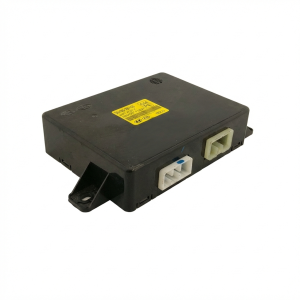
(OEM #95400-4Z310)— If the original BCM failed and was replaced, the new one must be programmed. A U2101 code indicates this step was missed. The BCM controls many body functions like lights, locks, and windows.
Trusted brands: Hyundai (OEM)
OEM price range: $400-$600
Aftermarket price range: $150-$350 (Used/Remanufactured) - ABS Control Module / Hydraulic Unit
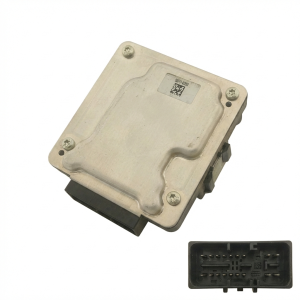
(OEM #58920-B8700, 58920-4R000)— A common point of failure and subject to a recall. If the ABS unit is replaced, the new module requires programming to communicate with the vehicle. Failure to program it is a primary cause of U2101 on this platform.
Trusted brands: Hyundai (OEM), Mando
OEM price range: $800-$1200
Aftermarket price range: $250-$500 (Used/Remanufactured)
Related Codes That Often Appear With This One
- P0630 — This code means 'VIN Not Programmed or Incompatible - ECM/PCM'. It will often appear with U2101 if the Engine Control Module was replaced and not programmed.
- U0100-U0500 — These are generic 'Lost Communication' codes. When the module with the U2101 fault cannot talk on the network, other modules will log codes indicating they can no longer hear from it.
- B1762 — This code for 'ACU Coding Error' is specific to the Airbag Control Unit (ACU/SRS module). If the airbag module was replaced and not coded, B1762 will appear alongside U2101.
- C1702 — This code indicates 'Variant Coding Required' for the ABS/ESC module. It is a direct pointer that the ABS module needs to be programmed and will be present with U2101 if the ABS module is the source of the fault.
Technical Service Bulletins (TSBs) & Recalls
- Safety Recall 251 / TSB 24-01-027H: Pertains to the ABS module electrical short risk and remedy procedure for certain Santa Fe models. Multiple revisions exist.
- TSB 17-ST-001: Details the replacement procedure for the flexible steering coupler, a common wear item. The procedure requires removal of the steering column and subsequent calibration of the Absolute Steering Position (ASP) sensor, which communicates with the ABS module.
Platform-Specific Known Issues
- Safety Recall 251 (NHTSA 24V-125 / TSB 24-01-027H): Affects certain 2013-2015 Santa Fe and Santa Fe Sport models. An electrical short can develop in the ABS module, increasing fire risk even when parked. The initial remedy involves replacing a fuse, but if the module itself is found to be faulty and is replaced, it will require 'Variant Coding'. A failure to perform this coding step after the module replacement will trigger code U2101.
Documented NHTSA Reports
While U2101 is a manufacturer-specific configuration code for Hyundai, cross-manufacturer records illustrate its impact on critical systems. NHTSA ODI #10694215 describes a scenario where U2101 was present alongside a steering position fault, leading to a recommendation for a steering rack replacement. Additionally, NHTSA ODI #11581420 notes U2101 appearing with a cluster of communication codes (U0121, U0140) and audible warning chimes without corresponding dashboard lights.
Scan Tool Commands That Help
- Hyundai GDS (or equivalent Autel/Launch): Variant Coding — This is the primary function used to configure a newly installed module (ABS, BCM, etc.) to the vehicle's specifications. It writes the correct software options based on the car's equipment.
- Hyundai GDS (or equivalent): ACU Variant Coding — Specifically for replacing the Airbag Control Unit (ACU/SRSCM). This process often requires obtaining a 4-digit, VIN-specific code from a Hyundai dealer portal and inputting it via the scan tool to properly configure the new airbag module.
- Hyundai GDS: Auto Configuration — This function can be used to automatically detect and set up a module's configuration. It's an alternative to manual variant coding and is often part of an ECU software update procedure.
- Hyundai GDS: Vehicle S/W Management — This is the menu within the GDS software where all ECU-related reprogramming and option settings, including Variant Coding and software updates, are located.
Wiring & Ground Locations
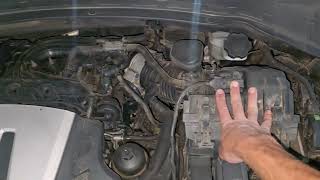
- ABS Control Module — Typically located at the left rear of the engine compartment, below the brake master cylinder. However, there are two possible suppliers: Mando units are often found behind the engine, while Bosch units may be located under the air filter box.. This is one of the most common modules to be replaced, triggering a U2101 if not programmed. Knowing its location is the first step in verifying part numbers.
- Smart Junction Box (SJB / BCM) — Located at the left end of the instrument panel dash, often accessible by removing the driver's side dash end panel.. The SJB is the Body Control Module. If replaced without programming, it will cause a U2101 and multiple body function failures. It also communicates with the immobilizer system.
- G07 — A main ground point located behind the left front kick panel.. While U2101 is a software code, a poor ground to a critical module like the BCM could potentially cause memory corruption or communication errors that mimic a configuration issue, making it a last-resort check if programming fails repeatedly.
Model Year Variations Within This Range
- 2012-2018: The ABS module may be supplied by either Mando or Bosch. The physical location differs between the two. Mando units are typically located behind the engine, while Bosch units are often found under the airbox. This is critical for locating the module to verify part numbers before ordering a replacement.
Diagnostic Flowchart
Other Known Issues on This Vehicle
Issues unrelated to this code that are worth knowing about as an owner of this generation:
- Theta II Engine Failure 🔴 High — Widespread across 2012-2018 models with the 2.4L and 2.0T engines. Failures often occur between 60,000 and 100,000 miles due to connecting rod bearing wear from manufacturing debris. (Ref: Multiple recalls (e.g., NHTSA 15V-568, 17V-226) and class-action lawsuits led to extended 'lifetime' warranties for the engine short block for qualifying owners.)
- Flexible Steering Coupler Wear 🟠 Medium — Extremely common on 2013-2018 models. Owners report a distinct clicking or clunking noise from the steering column when turning the wheel. The rubber coupler inside the power steering motor assembly disintegrates over time. (Ref: Hyundai TSB 17-ST-001 and Warranty Extension TXX7 address this issue, extending coverage to 10 years/100,000 miles. The replacement part is an improved, more durable coupler (P/N 56315-2K000-FFF).)
- Excessive Oil Consumption 🟠 Medium — Common on models with the 2.4L GDI and 2.0T GDI Theta II engines, often preceding engine failure but can also be a standalone issue requiring frequent top-offs. (Ref: Related to the broader Theta II engine issues, but often treated separately by dealers with oil consumption tests. No specific recall just for consumption.)
- Panoramic Sunroof Rattle/Creaking 🟡 Low — Frequently reported by owners of models equipped with the panoramic sunroof. The noise is often described as a rattle, creak, or tapping sound coming from the roof assembly, especially over bumps or when the chassis flexes. (Ref: No specific recall, but dealers address it on a case-by-case basis, often involving lubrication, adjustment, or complete replacement of the sunroof track assembly.)
- ABS Module Fire Risk 🔴 High → Shop ABS Control Module — Affects 2013-2015 models. An internal electrical short can occur in the ABS module, creating a risk of an engine compartment fire, even when the vehicle is turned off. (Ref: Recall 251 (NHTSA 24V-125) was issued to address this. The fix involves replacing a multi-fuse to protect the circuit. Hyundai advises parking these vehicles outside and away from structures until the repair is done.)
- No Sound from Speakers 🟡 Low — Reported on 2012-2017 models, particularly those with factory navigation. The audio system may suddenly go silent, though the head unit display continues to function. Affects radio, media, and navigation prompts. (Ref: No recall. The common fix is a 'hard reset' of the infotainment system, which can sometimes be done by the owner or requires a dealer visit to perform. In some cases, the internal amplifier fails.)
Used vs. New Parts: Buying Guide for This Vehicle
When a used part is the smart pick: A used control module (ABS, BCM, ACU) is a viable, cost-effective option ONLY if you have confirmed access to a professional-grade scan tool (like Hyundai GDS, Autel MaxiSYS, Launch X431) and a technician experienced in reprogramming used Hyundai modules. Dealers will often refuse to program used parts, so an independent specialist is required.
Donor-vehicle mileage cap: roughly under 120000 miles for the part to have meaningful remaining life.
What to inspect on the donor part:
- Verify the part number on the used module EXACTLY matches your original module.
- Obtain the VIN of the donor vehicle if possible. This can sometimes help in sourcing configuration data.
- For ABS modules, ensure the donor vehicle has the same drivetrain (FWD vs. AWD) as yours.
- Inspect connectors for any signs of corrosion, bent pins, or heat damage from a potential fire (especially for recalled ABS modules).
OEM-only on this vehicle (don't cheap out):
- While used OEM parts are an option, it is critical to avoid new aftermarket modules that claim to be 'plug-and-play'. For this vehicle, all replacement modules require programming; there are no true plug-and-play aftermarket alternatives for the BCM, ECM, or ABS module.
Brands owners have reported issues with on this vehicle:
- Any brand claiming their module is 'pre-programmed' or does not require coding. This is not feasible as programming must be done while the module is installed and communicating on the vehicle's CAN bus network.
Real Owner Stories
Aggregated from forums and TSBs cited above. Mileages and costs reflect what owners reported in those sources.
2013-2015 Hyundai Santa Fe
Symptoms: The ABS module was replaced due to an internal electrical short risk (Recall 251), but the dashboard warning lights remained on afterward.
What fixed it: The technician had to perform 'Variant Coding' to configure the new module to the vehicle's specific VIN and options.
Source hint: Safety Recall 251 (NHTSA 24V-125 / TSB 24-01-027H)
2012-2018 Hyundai Santa Fe (Generic Platform Issue)
Symptoms: A user attempted to change vehicle settings using a basic ELM tool, which resulted in a U2101 code across the BCM and Airbag modules.
What fixed it: A dealer had to download the original configuration and reprogram the modules using professional diagnostics.
Source hint: Ford Club Serbia - kod: U2101 - Control Module Configuration Incompatible
Related OBD-II Codes
Frequently Asked Questions
I just replaced the ABS module on my 2014 Santa Fe due to the fire risk recall; why is the U2101 code appearing now?
Can I use a used control module from a Kia Sorento to fix my Santa Fe?
Does TSB 17-ST-001 for the steering clunk involve the U2101 code?
What tool is needed to clear U2101 on a 2015 Hyundai Santa Fe Sport?
Is there a specific code needed for programming the Airbag Control Unit (ACU)?
Will a weak battery cause this code during a dealership service visit?
Helpful Videos

We Have This Part in Stock
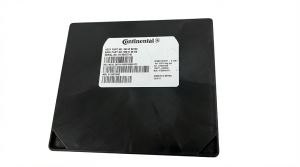
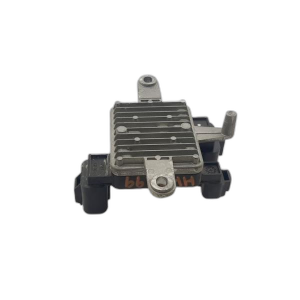
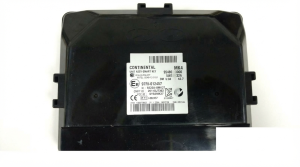

The information in this article is provided for general reference and educational purposes only. Vehicle specifications, procedures, and part compatibility can vary by production date, trim level, and region. Always consult your vehicle's factory service manual and verify part numbers before purchasing or performing repairs. Safety-critical components such as airbags, seat belts, and braking systems should be installed by a qualified professional.
- Hyundai Santa Fe:
- 🧭 Diagnostic Flowchart
- 🎬 Helpful Videos
- 🛍️ Shop This Part
- What's Unique About the 2012-2018 Hyundai Santa Fe
- Symptoms You May Notice
- Most Likely Causes
- Diagnosis Steps
- Parts You'll Likely Need
- Related Codes That Often Appear With This One
- Technical Service Bulletins (TSBs) & Recalls
- Platform-Specific Known Issues
- Documented NHTSA Reports
- Scan Tool Commands That Help
- Wiring & Ground Locations
- Model Year Variations Within This Range
- Other Known Issues on This Vehicle
- Used vs. New Parts: Buying Guide for This Vehicle
- Real Owner Stories
- 2013-2015 Hyundai Santa Fe
- 2012-2018 Hyundai Santa Fe (Generic Platform Issue)
- Related OBD-II Codes
- Frequently Asked Questions
- 🎟️ Get 5% Off