

U2101 on 2005-2010 Jeep Grand Cherokee: Control Module Incompatible Causes and Fixes
Code U2101 on a 2005-2010 Jeep Grand Cherokee means a module like the TIPM or ABS module has been replaced but not programmed to your vehicle's VIN. The fix is not to replace more parts, but to have the incompatible module professionally programmed with a Chrysler-specific scan tool (wiTECH).
- U2101 is a programming issue, not a broken part. It means a module's software configuration is incorrect for the vehicle.
- The most common cause is replacing a module (especially TIPM or ABS) with a used part and not having it programmed to the vehicle's VIN.
- The fix requires a professional-grade scan tool (like Chrysler's wiTECH) to perform a module configuration procedure.
- Do not replace more parts to fix this code; the solution is software-based.
What's Unique About the 2005-2010 Jeep Grand Cherokee
On the WK generation Grand Cherokee (2005-2010), this code often appears as a secondary issue. These Jeeps are known for several common module failures, particularly the Totally Integrated Power Module (TIPM) and the ABS module. When owners or shops replace these faulty units, often with used parts to save money, they inadvertently introduce a module from another vehicle with a different configuration. Without the required VIN-specific programming using dealership tools, the network flags the mismatch and sets the U2101 code.
Symptoms You May Notice
- Check Engine Light is on
- ABS and/or Traction Control light is on
- Airbag light is on
- The system related to the replaced module does not work (e.g., no ABS, 4WD system faults)
- Multiple other 'U' codes for 'Lost Communication' may be present
- ESP/BAS warning light illuminated
- Replacing the module that set the U2101 code. The code is usually set by a *different* module that is detecting the mismatch. For example, the Central Gateway module might set U2101 because the ABS module is improperly configured.
- Attempting to fix the U2101 code by replacing more parts. The problem is almost always software/programming, not a broken part.
Most Likely Causes
- Improperly Programmed Replacement Module 🔴 High Probability This is the direct cause of the code. It's common because other modules on this platform fail frequently, leading to replacement.
How to confirm: Check the vehicle's recent repair history for any module replacement. Use a high-end scan tool to identify which module is reporting an incorrect VIN or configuration.
Typical fix: The module must be programmed with the correct vehicle configuration and VIN using a Chrysler-specific wiTECH diagnostic tool. This is typically a dealer or specialty shop service.
Est. part cost: $0 - Replaced with an Incorrect or Used Totally Integrated Power Module (TIPM) 🟡 Medium Probability → Shop Fuse Box The TIPM is a very common failure point on this generation of Jeep/Chrysler products, causing a wide array of electrical issues. Swapping it with a used unit without reprogramming is a frequent trigger for U2101.
How to confirm: If the vehicle has a history of strange electrical problems (horn honking, wipers activating randomly, fuel pump issues) and the TIPM was recently replaced, it is the likely source of the configuration mismatch.
Typical fix: The replacement TIPM must be correctly configured for the vehicle's VIN and equipment list. Example part numbers include 04692166 and 4692113 for 2008 models, but always verify by VIN. 🎬 See this walkthrough on how to replace the TIPM
Est. part cost: $300-$800 - Replaced with an Incorrect or Used ABS Module 🟡 Medium Probability → Shop ABS Control Module ABS modules can fail, leading to a persistent ABS light and loss of anti-lock brake function. A used replacement will carry the donor vehicle's configuration, causing the U2101 code.
How to confirm: If the ABS light is on and the scan tool shows communication errors with the ABS module alongside the U2101, it's the prime suspect. A diagnostic tool can check the VIN programmed into the ABS module. 🎬 Watch: How to reset and program a used ABS module
Typical fix: Program the replacement ABS module to the vehicle's VIN. If programming fails, the module may be the wrong part number or internally faulty, requiring a correct replacement part. Example part numbers include 52089968AE (2005-2007) and 5179776AA (2006), but many variations exist.
Est. part cost: $350-$700
Rare But Worth Checking
- Replaced Drivetrain Control Module (DTCM) or Final Drive Control Module (FDCM): If the vehicle has 4WD system issues, such as binding in turns, and the DTCM/FDCM was replaced, it could be the source of the incompatible configuration if not programmed correctly.
- Damaged CAN Bus Wiring or Connectors: While less common than a programming issue, corrosion or physical damage to the network wiring can sometimes corrupt messages between modules, leading to configuration-related fault codes. This would typically be accompanied by multiple 'Lost Communication' codes. A poor pin connection at a module connector is a potential cause.
Diagnosis Steps
- Connect a professional, bi-directional scan tool capable of reading manufacturer-specific codes and viewing module data.
- Check the vehicle's repair history. Ask the owner if any electronic modules (TIPM, ABS, PCM, Radio, etc.) have been replaced recently.
- Scan all modules for Diagnostic Trouble Codes (DTCs). Note which module is setting the U2101 code.
- Check other modules for 'Lost Communication' codes (e.g., U0121). This will often point to the module that is offline or misconfigured.
- Access the data for the suspected module (e.g., the ABS module if a U0121 is present) and check its programmed VIN. If it doesn't match the vehicle's VIN, you have found the problem.
- If no VIN mismatch is obvious, suspect the most recently replaced module as the cause.
- The final step is to perform a 'Module Configuration' or 'Programmable Module Installation' procedure using a tool like Chrysler's wiTECH to align the module's software with the vehicle's factory build.
Parts You'll Likely Need
- Module Programming Service — This is not a physical part, but the service required to fix the software mismatch. The U2101 code indicates a programming error, not a failed part.
OEM price range: $150-$300 - Totally Integrated Power Module (TIPM)
(OEM #04692166, 4692113 (Varies by year/engine, verify with VIN))— If the original TIPM has failed and is the reason for the repair attempt that led to the U2101 code. TIPM failure is a very common root problem on this platform.
Trusted brands: Mopar, Dorman (remanufactured), MAKS TIPM Rebuilders
OEM price range: $500-$900
Aftermarket price range: $250-$500 (rebuilt) - ABS Control Module/Pump
(OEM #52089968AE, 5179776AA (Varies by year/drivetrain, verify with VIN))— If the original ABS module has failed, triggering the replacement that caused the U2101 code.
Trusted brands: Mopar, Bosch
OEM price range: $600-$1200
Aftermarket price range: $200-$600 (used/rebuilt)
Related Codes That Often Appear With This One
- U0121 — Lost Communication With Anti-Lock Brake System (ABS) Control Module. This often appears with U2101 if the ABS module is the unprogrammed part.
- U0141 — Lost Communication With Front Control Module (TIPM). This can be logged if the TIPM has been replaced incorrectly or is failing.
- U0100 — Lost Communication With ECM/PCM. This and other U0xxx codes are common side effects of a misconfigured module disrupting the entire network.
- U2100 — Initial Configuration Not Complete. This code often accompanies U2101 and directly indicates that a module has been installed but its setup procedure has not been finished.
Technical Service Bulletins (TSBs) & Recalls
- No specific Technical Service Bulletin (TSB) for code U2101 on the 2005-2010 Grand Cherokee is widely documented. The fix is a procedural one (programming) rather than a software update to correct a bug, so a TSB is not expected.
Platform-Specific Known Issues
- The Totally Integrated Power Module (TIPM) on 2005-2010 Grand Cherokees is a well-documented weak point, leading to frequent replacement. An improperly installed used TIPM is a very common reason for the U2101 code to appear. Failures can manifest as fuel pump issues, engine stalling, or other random electrical behavior.
Mechanic-Grade Diagnostic Values
- CAN Bus Network Resistance — expected: Approximately 60 Ohms. Failure: A reading of 120 Ohms indicates a missing terminating resistor or a break in one of the CAN lines. A reading significantly lower than 60 Ohms (e.g., 40-45 Ohms) could indicate an extra terminating resistor or a partially shorted module.
- CAN Bus Voltage (Key On, Engine Off) — expected: CAN High (Pin 6): ~2.5-3.5V. CAN Low (Pin 14): ~1.5-2.5V. Both voltages should be active and mirroring each other.. Failure: A line stuck high or low (e.g., 0V or 5V) indicates a short to ground or power. If CAN High voltage is lower than CAN Low, the wires may be reversed.
Scan Tool Commands That Help
- Chrysler wiTECH: Restore Vehicle Configuration — This is the primary function used to resolve a U2101 code. After installing a replacement module (new or used), this routine downloads the vehicle's correct configuration data from FCA's servers and writes it to all modules on the network, aligning the new part with the rest of the vehicle.
- Chrysler wiTECH: Proxy Configuration Alignment — This is another term for the configuration process. If a module is replaced, the Body Control Module (BCM) detects a mismatch in the network's 'proxy' list. This function realigns the modules so they all recognize each other. A flashing odometer is a classic symptom that a Proxy Alignment is needed.
- Chrysler wiTECH: WIN Replaced — This specific function is used when the Wireless Ignition Node (WIN) module is replaced. It is necessary to program the new WIN to the vehicle's VIN and security keys.
- AlfaOBD / JScan (Advanced DIY): Proxy Alignment — For advanced DIY users with a compatible OBD adapter (like OBDLink MX+), these software tools can perform the Proxy Alignment procedure, which can resolve the U2101 code after a module swap. This is a more accessible alternative to the dealer's wiTECH system.
Wiring & Ground Locations
- Star Connector (CAN Bus Junction) — On the WK Grand Cherokee, there are typically two main access points. One is on the passenger side, behind the kick panel or by pulling back the carpet in the footwell. Another may be located at the driver's side edge of the dash, accessible when the door is open.. This is the central hub where CAN bus wiring from various modules connects. A poor connection or corrosion here can disrupt the entire network, potentially causing communication codes. It's also a key access point for network diagnostics without having to access individual modules.
- G108 - Body Ground — On the passenger side inner fender, near the back of the power distribution block (TIPM).. This ground point is critical as it serves the Body Control Module (BCM) and the Transmission Control Module (TCM). A poor ground at G108 can cause erratic behavior from the BCM, which is the central gateway for the network and often the module that reports the U2101 code.
- G300 / G301 - Interior Grounds — Located under the front seats. G300 is under the passenger seat, and G301 is under the driver's seat. Access requires removing the seat trim or the seat itself.. These grounds serve various interior modules, including door modules and, on some configurations, the radio amplifier and Park Neutral Switch. A replacement radio or a fault in the door modules can sometimes trigger a U2101 if the network configuration is disturbed.
- G107 - ABS Ground — Located on the driver's side inner fender, often sharing a bolt with G106, behind the airbox.. This is the dedicated ground for the Anti-Lock Brake System. Since the ABS module is a common cause of the U2101 code when replaced, ensuring its ground connection is clean and tight is a crucial diagnostic step if communication issues are present.
- ABS Module Connector — The ABS module is located on the driver's side of the engine bay, below the brake master cylinder. The main electrical connector is a large, multi-pin plug.. The CAN bus wires (typically a twisted pair, e.g., white/dark green and white/light blue) run directly to this connector. Checking for voltage, resistance, and pin integrity here is essential when diagnosing a U2101 suspected to be from the ABS module.
Real Owner Repair Stories
- Go-Parts Forum Summary (Mazda (similar CAN bus architecture)) — ABS and Traction Control warning lights on, persistent U2101:55-8A code in the ABS module.
❌ Tried (didn't work) Replacing the ABS module with a used part from a salvage yard., Attempting to program the used module with advanced DIY tools (like FORScan).
✅ What actually fixed it The issue was only resolved by installing a brand new OEM ABS module and having a dealership program it to the vehicle using the official dealer scan tool (IDS). The used module was likely incompatible or locked.
Documented NHTSA Reports
- An owner reported that their vehicle displayed U2101 alongside codes P219A, U0121, U0140, U0256, and U0452, accompanied by a strange warning chime without any dashboard lights (NHTSA ODI #11581420).
- NHTSA ODI #10694215 describes a situation where U2101 and C1B00 were present, and the owner was informed that the electronic steering rack required replacement.
Model Year Variations Within This Range
- 2005-2007 vs 2008-2010: The 2008 model year marked a mid-cycle refresh for the WK Grand Cherokee. While the fundamental electrical architecture remained similar, engine options were updated, and some interior electronics, like the radio and navigation systems, were changed. When sourcing used modules, it is critical to match parts from the correct year range (pre- or post-refresh) as internal hardware and software can be incompatible. The 3.0L CRD diesel engine was a key offering during this generation, particularly from 2005 onwards.
Diagnostic Flowchart
Other Known Issues on This Vehicle
Issues unrelated to this code that are worth knowing about as an owner of this generation:
- 5.7L HEMI MDS Lifter/Cam Failure 🔴 High — Common, especially on vehicles with extended oil change intervals or high mileage. Often presents as a distinct 'Hemi tick'. (Ref: While no recall exists, numerous technical discussions and owner complaints detail the failure of the Multi-Displacement System (MDS) lifters, where the roller can seize and damage the camshaft.)
- Front Differential Mount Failure 🟠 Medium — Extremely common. The rubber bushings, particularly the rear-most one, degrade and fail, causing a loud 'clunk' when shifting between Drive and Reverse or during acceleration.
- Electronic Sway Bar Disconnect Failure 🟠 Medium — Common on models equipped with this feature (primarily Trail-Rated or Overland packages). The housing seals fail, allowing water intrusion that damages the internal circuit board, often leaving the sway bar stuck in the disconnected position. (Ref: Subject of a class-action lawsuit due to the alleged design flaw.)
- Ignition Switch Malfunction 🔴 High — Primarily affected 2005-2007 models. The ignition switch could be bumped or move on its own, shifting the key out of the 'ON' position while driving, which would disable airbags, power steering, and power brakes. (Ref: This was subject to a major recall (NHTSA Recall No. 14V-373).)
Used vs. New Parts: Buying Guide for This Vehicle
When a used part is the smart pick: For modules like the TIPM or ABS module, a used part can be a cost-effective option, BUT ONLY if you have a confirmed method to program it. The part itself is often functional, but it carries the donor vehicle's VIN and configuration. A used part makes sense if the cost of the part plus the $150-$300 programming fee is significantly less than a new or remanufactured module.
Donor-vehicle mileage cap: roughly under 120000 miles for the part to have meaningful remaining life.
What to inspect on the donor part:
- Verify the part number EXACTLY matches the original. Even a single letter difference can indicate an incompatible hardware version.
- Source the part from a vehicle with the same model year, engine, and drivetrain (2WD vs 4WD).
- Inspect the connector pins for any signs of corrosion, moisture, or damage. This is especially critical for ABS modules, which can be exposed to water.
- If possible, get the VIN of the donor vehicle to cross-reference its original equipment list against yours.
OEM-only on this vehicle (don't cheap out):
- While not strictly 'OEM-only', programming is the critical factor. If you cannot find a local independent shop with wiTECH, AlfaOBD, or JScan capabilities, you may be forced to go to a dealer who will likely prefer to install and program a new OEM part they provide.
Aftermarket brands forum-validated for this vehicle:
- MAKS TIPM Rebuilders: A known rebuilder of TIPMs that can often provide pre-programmed units.
- All Computer Resources: Another company that offers remanufactured and pre-programmed TIPMs.
- Dorman: Offers remanufactured TIPMs, but programming will still be required after installation.
Brands owners have reported issues with on this vehicle:
- Unknown eBay/Amazon sellers offering 'plug-and-play' modules without requiring your VIN. These are often just used modules that have not been properly reset or configured and will still result in a U2101 code.
Real Owner Stories
Aggregated from forums and TSBs cited above. Mileages and costs reflect what owners reported in those sources.
2009 Jeep Grand Cherokee 5.7L HEMI
Symptoms: Owner was troubleshooting MDS-related codes. After replacing MDS solenoids, the codes persisted. A battery disconnect was performed during the process.
What fixed it: The technician discussed the need for proper module communication and configuration, noting that the U2101 code is a universal network code resulting from configuration mismatches.
Source hint: BAT Auto Technical / Jeep 5.7 HEMI MDS control
Related OBD-II Codes
Frequently Asked Questions
I just replaced the TIPM on my 2008 Grand Cherokee and now I have a U2101 code. Is the part defective?
My 2006 Grand Cherokee is stalling and the fuel pump is acting up; could this be related to U2101?
Is there a recall for the U2101 code on 2005-2007 Grand Cherokees?
Can I use an ABS module from a Jeep Commander to fix my Grand Cherokee?
Why is my ESP/BAS light on along with the U2101 code?
Do I need to replace my 5.7L HEMI MDS solenoids if I see U2101?
Helpful Videos

![TIPM [Dodge, Chrysler, Jeep] Removal and Solution](https://img.youtube.com/vi/qea1H85HBwU/mqdefault.jpg)
We Have This Part in Stock
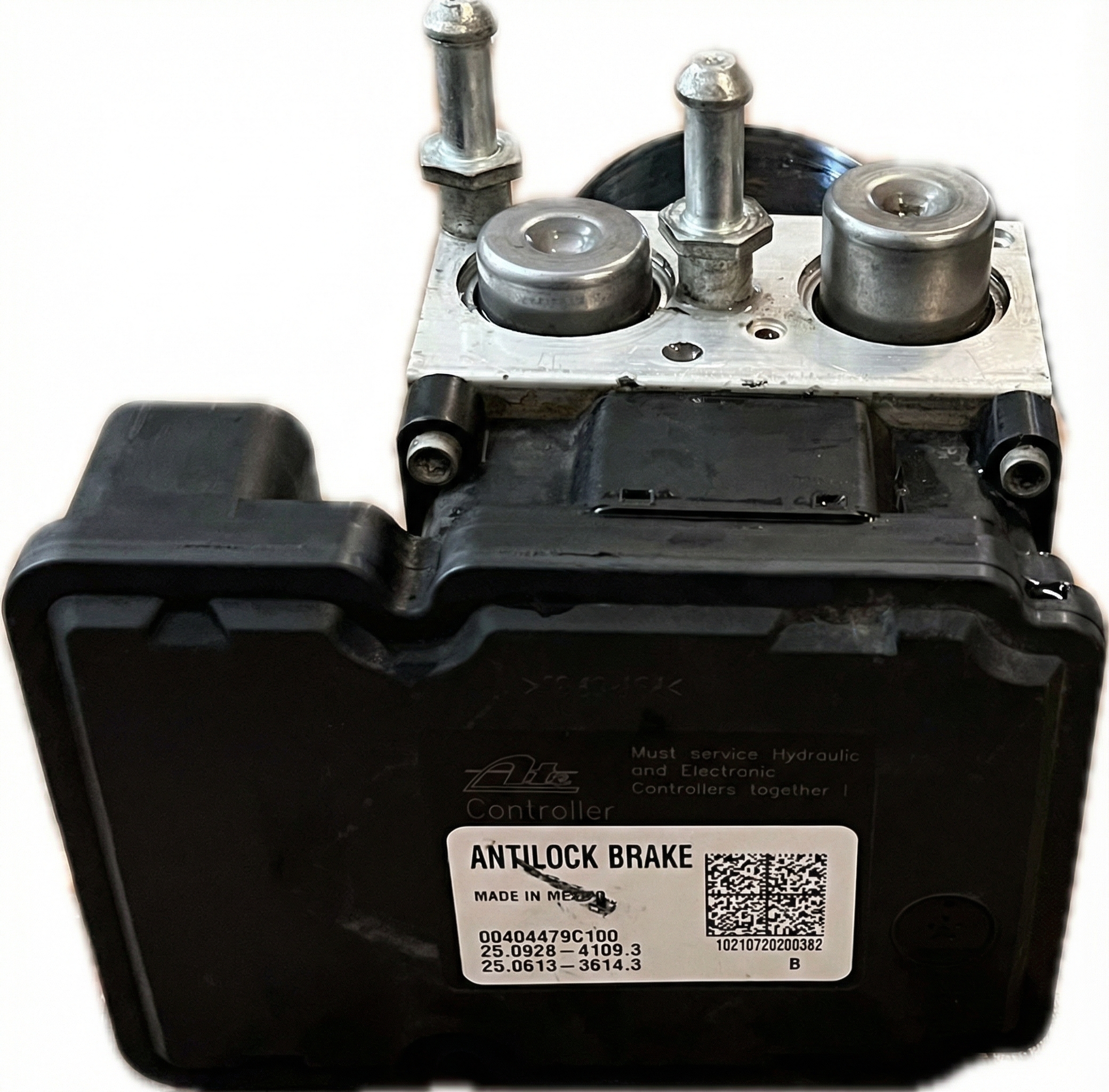

The information in this article is provided for general reference and educational purposes only. Vehicle specifications, procedures, and part compatibility can vary by production date, trim level, and region. Always consult your vehicle's factory service manual and verify part numbers before purchasing or performing repairs. Safety-critical components such as airbags, seat belts, and braking systems should be installed by a qualified professional.
- Jeep Grand Cherokee:
- 🧭 Diagnostic Flowchart
- 🎬 Helpful Videos
- 🛍️ Shop This Part
- What's Unique About the 2005-2010 Jeep Grand Cherokee
- Symptoms You May Notice
- Most Likely Causes
- Rare But Worth Checking
- Diagnosis Steps
- Parts You'll Likely Need
- Related Codes That Often Appear With This One
- Technical Service Bulletins (TSBs) & Recalls
- Platform-Specific Known Issues
- Mechanic-Grade Diagnostic Values
- Scan Tool Commands That Help
- Wiring & Ground Locations
- Real Owner Repair Stories
- Documented NHTSA Reports
- Model Year Variations Within This Range
- Other Known Issues on This Vehicle
- Used vs. New Parts: Buying Guide for This Vehicle
- Real Owner Stories
- 2009 Jeep Grand Cherokee 5.7L HEMI
- Related OBD-II Codes
- Frequently Asked Questions
- 🎟️ Get 5% Off