

U2101 on 2014-2020 Kia Sorento: Control Module Configuration Incompatible Causes and Fixes
Code U2101 on a 2014-2020 Kia Sorento means a major electronic control module was replaced but not programmed to your vehicle's VIN. The fix is not another part, but a professional programming service (called 'Variant Coding') which typically costs $150-$350 at a dealer or qualified shop.
- U2101 is a programming issue, not a broken part. It means a module was replaced without being configured for your Sorento.
- Do not replace the module again. The fix is a programming service called 'Variant Coding' that requires a dealer or specialized shop.
- This code almost always appears immediately after a repair involving a major electronic module (ECM, BCM, ABS, etc.).
- Address U2101 before chasing any other 'Lost Communication' (U0xxx) codes, as the configuration error is the root cause of them.
- Using a used part from a donor vehicle is risky unless it is the exact correct part number and is properly programmed after installation.
What's Unique About the 2014-2020 Kia Sorento
The Kia Sorento shares its electronic architecture with the Hyundai Santa Fe, and they experience identical U2101 issues. On these vehicles, the procedure to fix the mismatch is called 'Variant Coding'. This code is almost never a random failure; it is a direct consequence of a recent repair where a control module was swapped. The vehicle's network is sensitive to modules from donor cars, even from another Sorento, if the trim level or options (e.g., AWD vs. FWD) are different. A critical issue for 2013-2015 models is a fire risk recall (NHTSA 20V519) for the ABS module; if this part is replaced to perform the recall but not programmed, it will immediately trigger code U2101.
Generation note: This range covers the end of the second generation (XM; 2014-2015) and the entire third generation (UM; 2016-2020) Sorento. The cause and repair process for U2101 are consistent across both generations as they rely on the same network programming principles. The 2016 model year marked a significant redesign with a longer wheelbase and different interior/exterior styling, but the underlying electronic systems and the requirement for 'Variant Coding' remained the same.
Symptoms You May Notice
- Check Engine Light is on
- Multiple warning lights on the dashboard (ABS, Airbag, Traction Control)
- Vehicle will not start (if the ECM or BCM is the misconfigured module)
- Loss of function for systems controlled by the new module (e.g., power windows, radio, climate control)
- A large number of 'Lost Communication' codes (U0100, U0121, etc.) stored along with U2101.
- ABS pump motor runs constantly if the ABS module is the source.
- Unexplained warning chimes or beeping noises without accompanying dashboard lights, as noted in similar network configuration failures (NHTSA ODI #11581420).
- Replacing the control module again. The problem is almost never a defective replacement part; it is the lack of programming.
- Diagnosing other 'Lost Communication' (U0xxx) codes first. These codes are symptoms caused by the U2101 error. The module that is improperly configured cannot talk on the network, causing other modules to report they can't hear it. Resolve U2101 first.
- Searching for a wiring fault. While CAN bus wiring issues can cause communication codes, U2101 specifically points to a software mismatch within a module, not a physical wiring problem between them.
Most Likely Causes
- Replaced Control Module Not Programmed 🔴 High Probability Modern Kia vehicles require most major control modules to be electronically coded to the specific VIN and options list of the vehicle they are installed in. This process, called 'Variant Coding', is a required final step of the repair.
How to confirm: Determine if any electronic module (ECM, BCM/Smart Junction Box, ABS, Airbag, etc.) was recently replaced. The U2101 code will appear immediately after the installation if programming was skipped.
Typical fix: Program the newly installed module using the Kia GDS (Global Diagnostic System) or an equivalent J2534 pass-thru tool. This service must be performed by a dealership or a properly equipped independent repair shop.
Est. part cost: $0 - Incorrect Control Module Installed 🟡 Medium Probability Using a salvaged module from a donor vehicle is common, but if the donor had different features (e.g., different engine, FWD vs. AWD, different trim level), the module's internal configuration may be incompatible and cannot be correctly programmed. The ABS/HECU module is particularly sensitive to drivetrain configuration.
How to confirm: Physically inspect the part number on the installed module. Cross-reference it with a Kia parts catalog to verify it is the correct part for your vehicle's exact VIN.
Typical fix: Replace the incorrect module with the correct OEM part number for the vehicle, then perform the 'Variant Coding' programming procedure.
Est. part cost: $150-$800
Rare But Worth Checking
- Failed Software Update: A software update (flash) at a dealership could be interrupted by a weak battery or tool failure, leaving the module's memory corrupted. This can trigger a U2101 code.
- Poor Ground to a Control Module: While U2101 is a software code, a poor ground connection to a critical module like the BCM could potentially cause memory corruption or communication errors that mimic a configuration issue. This is a last-resort check if programming fails repeatedly.
- Electronic Steering Rack Issues: In some cross-manufacturer instances, such as described in NHTSA ODI #10694215, U2101 has been documented alongside steering position errors, suggesting that configuration mismatches can affect electronic steering components.
Diagnosis Steps
- Confirm the presence of code U2101 using an advanced scan tool.
- Ask the vehicle owner or check service records: Was an electronic control module recently replaced? This is the most critical diagnostic question.
- Using a bidirectional scan tool, identify which specific module is reporting the 'Configuration Incompatible' status.
- Verify the part number on the installed module is correct for the vehicle's VIN and options.
- If the part is correct, perform the 'Variant Coding' or 'Module Setup' procedure using a Kia GDS or equivalent professional tool.
- After programming, perform any necessary recalibrations, such as for the steering angle sensor if the ABS module was replaced.
- If programming is successful, clear all codes. The U2101 and associated U0xxx codes should not return.
- If programming fails, re-verify the part number is correct. If it is, suspect a faulty (though new) module or a rare wiring/ground issue to that module.
Parts You'll Likely Need
- Module Programming Service — This is not a physical part, but the labor required to configure the new module. It is the most common and direct fix for code U2101.
OEM price range: $150-$350
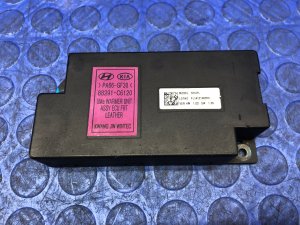
Aftermarket price range: $100-$300 - Body Control Module (BCM) / Smart Junction Box (SJB) — If the original BCM failed and was replaced with an incorrect or un-programmed unit, it is a primary cause of U2101. The BCM controls lights, locks, windows, and communicates with the immobilizer.
Trusted brands: Kia (OEM)
OEM price range: $400-$600
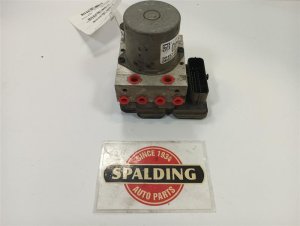
Aftermarket price range: $150-$350 - ABS Control Module / HECU
(OEM #58920-B8700 (example for platform-mate))— A common failure point and subject to a fire-risk recall on 2013-15 models. Replacing this unit without performing 'Variant Coding' is a guaranteed cause of U2101.
Trusted brands: Kia (OEM), Mando
OEM price range: $500-$800
Aftermarket price range: $200-$450
Related Codes That Often Appear With This One
- U0100-U0500 — These 'Lost Communication' codes are symptoms. The module setting the U2101 cannot communicate on the network, so other modules log codes saying they cannot hear from it.
- C1702 — This is a Hyundai/Kia specific code that explicitly means 'Variant Coding is required' for the ABS/ESP module. It will often appear with U2101 if the ABS module was replaced without being programmed.
- B1762 — This code means 'ACU Coding Error' and is the equivalent of C1702 but for the Airbag Control Unit (ACU/SRS module). It will appear with U2101 if the airbag module is replaced and not programmed. 🎬 Watch: How to perform airbag module variant coding
Technical Service Bulletins (TSBs) & Recalls
- NHTSA Recall 20V519 (Kia SC200): While not for U2101 itself, this urgent fire risk recall for the ABS module on 2013-2015 Sorentos often necessitates the module's replacement. Failure to program the new module during this repair is a direct cause of code U2101.
Platform-Specific Known Issues
- 2015 Sorento ABS Module Replacement Inquiry: → Shop ABS Control Module An owner on the r/mechanic subreddit reported their 2015 Sorento had ABS and TCS lights on, accompanied by a constant whirring noise from the ABS control module. They sourced a used module with a matching part number and inquired if programming was necessary, which it is. This is a classic real-world scenario leading to a U2101 code if programming is skipped.
Mechanic-Grade Diagnostic Values
- CAN Bus Network Resistance — expected: Approximately 60 Ω. Failure: A reading of 120 Ω indicates a missing terminating resistor (or an open in the bus). A reading near 0 Ω indicates a short between CAN High and CAN Low wires.
- CAN High Voltage (Key On, Engine Off) — expected: Approximately 2.5V to 3.5V. Failure: Voltage significantly outside this range, or matching CAN Low voltage, indicates a bus problem.
- CAN Low Voltage (Key On, Engine Off) — expected: Approximately 1.5V to 2.5V. Failure: Voltage significantly outside this range, or matching CAN High voltage, indicates a bus problem.
Hidden / Shadow Codes Worth Checking
- C1702: 'Variant Coding Required' for the ABS/ESP control module. This code is a direct command to perform the programming procedure and will accompany U2101 when the ABS module is the source. (see via Kia GDS or advanced bidirectional scan tools (Autel, Launch, etc.).)
- B1762: 'ACU Coding Error' for the Airbag Control Unit (SRS Module). This code is the equivalent of C1702 for the airbag system and indicates the module needs to be programmed. (see via Kia GDS or advanced bidirectional scan tools.)
Scan Tool Commands That Help
- Kia GDS (Global Diagnostic System): Variant Coding — This is the primary function used after installing a new or used control module (ABS, BCM, SRS, etc.). It writes the vehicle's specific configuration data to the module, resolving the U2101 mismatch.
- Kia GDS (Global Diagnostic System): Vehicle S/W Management — This is the menu within the GDS where 'Variant Coding' and other special functions like VIN writing and adaptive resets are located.
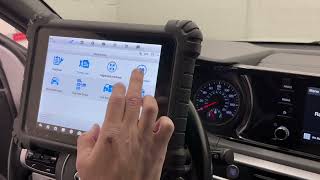
- Advanced Aftermarket Scanners (e.g., Autel): ACU Variant Coding / Special Function — Used to program the Airbag (ACU/SRS) module. It will prompt the user to enter a 4-digit code retrieved from the Kia technical website or the old module to complete programming.
Wiring & Ground Locations
- BCM (Body Control Module) — Located behind the fuse panel on the driver's side, under the dashboard. The fuse panel cover must be removed for access.. The BCM is a central hub for CAN communication. If it is replaced without programming, it is a primary cause of U2101. A poor ground to the BCM can also cause erratic communication issues that could be misdiagnosed.
- Instrument Panel Fuse Box — Located on the driver's side of the dashboard, behind a cover below the steering wheel.. This panel contains fuses for the BCM, Instrument Cluster, and other modules on the CAN bus. A blown fuse here (e.g., 'MODULE3', 'CLUSTER') can cause communication loss that might be investigated alongside a U2101.
- ABS/HECU Module — In the engine bay, typically on the driver's side near the firewall, integrated with the hydraulic pump and brake lines.. This module is frequently replaced due to failure or recall. It is a common source of U2101 and the related C1702 code if not programmed after installation.
Real Owner Repair Stories
- YouTube video by Automotive Circuit Solutions (2016 Hyundai Veloster (shares electronics with Kia)) — Airbag light was on after the SRS module was reset (cleared of crash data).
❌ Tried (didn't work) Resetting the module cleared crash data but did not resolve the configuration issue.
✅ What actually fixed it The scan tool showed code B1762 'ACU Coding Error'. The technician used an Autel scanner to perform the 'ACU Variant Coding' special function, entering a 4-digit code specific to the vehicle. This successfully programmed the module and cleared the code and the airbag light.
OEM Part Supersession History
58920-1U000→N/A— ABS Pump/Module Assembly
Heads up: This part number is specific to the 2014-2015 Sorento (XM generation). It is not compatible with the 2016+ (UM generation) models.95400-C6000 / 95400-C6020→N/A— Body Control Module (BCM)
Heads up: These part numbers are for the third generation (UM) Sorento. Note the differences in description: C6000 is for models 'Without auto light. Without park assist', while C6020 is for models 'With auto light. With park assist'. Using the wrong one will cause a U2101 even if programming is attempted, as the hardware does not support the vehicle's features.
Model Year Variations Within This Range
- 2014-2015 (XM Generation): These models were subject to NHTSA Recall 20V519 for a fire risk in the ABS module (HECU). A replacement module installed during this recall is a very common trigger for U2101 if the dealer fails to perform the subsequent 'Variant Coding'. Part numbers for modules like the ABS and BCM are specific to this generation.
- 2016-2020 (UM Generation): This generation was a complete redesign. While the principles of CAN bus and Variant Coding are the same, the specific control modules (BCM, ABS, etc.) and their part numbers are different from the previous generation. The cluster also acts as a gateway between the powertrain CAN and body CAN lines.
Diagnostic Flowchart
Other Known Issues on This Vehicle
Issues unrelated to this code that are worth knowing about as an owner of this generation:
- Theta II GDI Engine Failure 🔴 High — Widespread across 2012-2019 models with 2.4L GDI & 2.0L T-GDI engines. Caused by metallic debris from manufacturing leading to connecting rod bearing failure, engine knocking, seizing, and potential fires. (Ref: Multiple recalls (e.g., SC147) and a class-action lawsuit resulted in a lifetime warranty for the engine short block, contingent on receiving the Knock Sensor Detection System (KSDS) software update.)
- Excessive Oil Consumption 🔴 High — Very common, especially on the 2.4L GDI engine, with onset often noted between 60k-100k miles. Owners report consumption rates exceeding 1 quart per 1,000 miles. (Ref: Related to the Theta II engine defect. Dealers perform a multi-step oil consumption test to verify the issue before approving warranty repairs, which can range from cleaning procedures (TSB ENG222) to engine replacement.)
- ABS Module Fire Risk 🔴 High → Shop ABS Control Module — Affects 2013-2015 Sorento models. The Hydraulic Electronic Control Unit (HECU) can leak brake fluid internally, causing an electrical short and engine compartment fire, even when parked. (Ref: NHTSA Recall 20V519 (Kia SC200). Owners are advised to park their vehicles outside and away from structures until the recall repair is performed.)
- Peeling Exterior Paint (Snow White Pearl) 🟠 Medium — Commonly reported on vehicles with 'Snow White Pearl' paint. The clear coat and paint bubble and peel, typically on the hood, roof, and around the liftgate. (Ref: While no specific recall exists, Kia and Hyundai have issued warranty extensions for this issue on other models (e.g., Hyundai TSB 22-BD-010H), acknowledging a manufacturing defect.)
Used vs. New Parts: Buying Guide for This Vehicle
When a used part is the smart pick: A used control module (BCM, ABS, etc.) can be a cost-effective option ONLY if you can find one from a donor vehicle with the exact same year, model, engine, drivetrain (AWD vs FWD), and trim level. The part number must be an exact match. Even with a perfect match, you MUST still have it professionally programmed ('Variant Coding') to your car's VIN.
Donor-vehicle mileage cap: roughly under 100000 miles for the part to have meaningful remaining life.
What to inspect on the donor part:
- Verify the part number on the used module matches your original part EXACTLY.
- Obtain the VIN of the donor vehicle to cross-reference its options (AWD, trim, etc.) and confirm it's a true match.
- Inspect the connector pins for any signs of corrosion, damage, or burning, especially on ABS modules which can fail from fluid intrusion.
- Avoid modules from flood-damaged or heavy-impact vehicles, as internal damage is likely.
OEM-only on this vehicle (don't cheap out):
- For this repair, the critical component is the 'Variant Coding' service, not necessarily the part brand. However, using an OEM module (new or correctly matched used) is highly recommended because aftermarket 'remanufactured' modules can have a higher failure rate during the programming process.
Brands owners have reported issues with on this vehicle:
- Be cautious of non-branded, generic 'rebuilt' or 'remanufactured' modules from online marketplaces without a strong warranty and return policy. Programming failure is common if the internal hardware is not perfectly restored to OEM specification.
Real Owner Stories
Aggregated from forums and TSBs cited above. Mileages and costs reflect what owners reported in those sources.
2015 Kia Sorento
Symptoms: ABS and TCS lights were illuminated on the dashboard, accompanied by a constant whirring noise coming from the ABS control module motor.
What fixed it: The owner sourced a used module with a matching part number, but noted that the 'Variant Coding' programming procedure is required to complete the installation and clear configuration errors.
Source hint: reddit.com/r/mechanic/comments/1dklj3c/2015_kia_sorento_abs_module/
Documented Network Failures
Symptoms: An owner reported that their vehicle would make a strange beeping noise or warning chime without any dashboard lights appearing, alongside codes U0121 and U2101 (NHTSA ODI #11581420).
Diagnostic Note: In another case involving steering issues, a technician found U2101 present when the electronic steering rack required replacement (NHTSA ODI #10694215).
Related OBD-II Codes
Frequently Asked Questions
Does the ABS recall for the 2013-2015 Sorento (NHTSA 20V519) cause the U2101 code?
I just installed a used ABS module in my 2015 Sorento; why are my ABS and TCS lights still on?
Can I use a module from a front-wheel drive Sorento in my AWD model?
Is the U2101 code related to the Theta II engine failure or oil consumption issues?
Do I need a special tool to fix the U2101 code on my Kia?
Helpful Videos

We Have This Part in Stock

The information in this article is provided for general reference and educational purposes only. Vehicle specifications, procedures, and part compatibility can vary by production date, trim level, and region. Always consult your vehicle's factory service manual and verify part numbers before purchasing or performing repairs. Safety-critical components such as airbags, seat belts, and braking systems should be installed by a qualified professional.
- Kia Sorento:
- 🧭 Diagnostic Flowchart
- 🎬 Helpful Videos
- 🛍️ Shop This Part
- What's Unique About the 2014-2020 Kia Sorento
- Symptoms You May Notice
- Most Likely Causes
- Rare But Worth Checking
- Diagnosis Steps
- Parts You'll Likely Need
- Related Codes That Often Appear With This One
- Technical Service Bulletins (TSBs) & Recalls
- Platform-Specific Known Issues
- Mechanic-Grade Diagnostic Values
- Hidden / Shadow Codes Worth Checking
- Scan Tool Commands That Help
- Wiring & Ground Locations
- Real Owner Repair Stories
- OEM Part Supersession History
- Model Year Variations Within This Range
- Other Known Issues on This Vehicle
- Used vs. New Parts: Buying Guide for This Vehicle
- Real Owner Stories
- 2015 Kia Sorento
- Documented Network Failures
- Related OBD-II Codes
- Frequently Asked Questions
- 🎟️ Get 5% Off