

U3000 on 2014-2019 Hyundai Sonata: Control Module Fault and Power Steering Fixes
Code U3000 on a 2014-2019 Sonata indicates a generic control module fault. On 2015-2017 models, this is very often caused by an internal failure of the Motor Driven Power Steering (MDPS) module, which may be covered by a warranty extension (Campaign TXXO). Always check for a weak battery first, as low voltage can trigger this and other communication codes across the vehicle's network.
- U3000 is a generic code; you MUST use an advanced scanner to find out which module is at fault.
- For 2015-2019 Sonatas, the most likely culprit for a U3000 code accompanied by steering issues is the Motor Driven Power Steering (MDPS) module.
- Before condemning any expensive parts, always test the battery and charging system thoroughly, as low voltage is a common trigger for this code.
- If you own a 2015-2017 Sonata, check with a Hyundai dealer if your vehicle is covered by the 15-year/150,000-mile MDPS warranty extension before paying for repairs.
What's Unique About the 2014-2019 Hyundai Sonata
For the seventh-generation Sonata (LF; 2015-2019), the U3000 code is frequently associated with a known issue in the Motor Driven Power Steering (MDPS) system. Hyundai acknowledged widespread problems by issuing a warranty extension (Campaign TXXO, detailed in TSB 23-ST-003H) for the MDPS on certain 2015-2017 models, covering failures for up to 15 years or 150,000 miles. This means a loss of power steering assist accompanied by a U3000 code often points directly to a faulty steering column/module assembly, which may be a no-cost repair at a dealership if the vehicle is eligible.
Generation note: This range covers the end of the sixth generation (YF; 2014) and the full seventh generation (LF; 2015-2019). The most well-documented issue related to this code, a failing Motor Driven Power Steering (MDPS) module, primarily affects the LF generation, with a specific warranty extension for 2015-2017 models. The 2014 YF model had a different, but also common, steering issue related to a flexible rubber coupler that caused a clicking noise, which was covered by a separate warranty extension (TXX7) and does not typically cause a U3000 code.
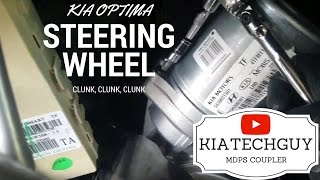
🎬 Watch: How to replace the clicking rubber steering coupler.Symptoms You May Notice
- Power steering warning light illuminated on the dash
- Sudden loss of power steering assist, making the wheel very heavy to turn
- Steering feels heavy or locks up intermittently, especially at low speeds
- Other warning lights, such as ABS or traction control, may also illuminate
- Clicking or motor noises from the steering column area
- No noticeable symptoms in some cases, with only the code stored
- Replacing the battery without properly testing it first. While a weak battery is a common cause, it's important to confirm its condition before replacement.
- Assuming any steering stiffness is the flexible steering coupler. The rubber coupler was a common failure on the previous generation (YF, including the 2014 model) causing a clicking noise, but it does not cause an electronic fault code like U3000 or a total loss of assist. The U3000 issue is an electronic failure within the MDPS unit itself.
Most Likely Causes
- Internal Failure of the Motor Driven Power Steering (MDPS) Module 🔴 High Probability → Shop Power Steering Control Module This is a known, widespread issue on the LF generation (2015-2017), leading Hyundai to issue a 15-year/150,000-mile warranty extension (Campaign TXXO / TSB 23-ST-003H) for the MDPS assembly. The extension covers certain vehicles produced from January 30, 2014, to June 19, 2017.
How to confirm: Use a professional scan tool to confirm the U3000 code originates from the MDPS module. Other steering-specific codes like C1260 (Steering Angle Sensor Circuit) or C1688 (MDPS Module Internal Fault) are often present simultaneously. A dealer can check the VIN for eligibility under the TXXO campaign.
Typical fix: Replacement of the entire steering column assembly, which includes the MDPS motor and control module. The new unit requires VIN programming and steering angle sensor calibration. 🎬 See how to perform a steering angle sensor calibration. If covered by the warranty extension, this is performed at a Hyundai dealer at no cost. 🎬 Watch: A walkthrough of the MDPS module replacement process.
Est. part cost: $1500-$2500 - Low Battery Voltage or Failing Alternator 🟡 Medium Probability → Shop Vehicle Battery Like all modern cars with multiple control modules, the Sonata is sensitive to system voltage. A voltage drop during cranking or driving can cause modules, especially the power-hungry MDPS, to temporarily fail their self-tests and log a U3000 code.
How to confirm: Test the battery with a multimeter or electronic battery tester. Voltage should be ~12.6V with the engine off and 13.7V-14.7V with the engine running. Check for corroded terminals or loose connections. Many owners report that seemingly random electrical issues are the first sign of a failing battery.
Typical fix: Recharge or replace the battery. Clean the battery terminals and cable ends. If the alternator is failing, it will need to be replaced.
Est. part cost: $150-$400 - Faulty Wiring or Poor Connection ⚪ Low Probability A recall (NHTSA 14V434000) was issued for some early-production 2015 Sonatas for a poor wiring harness connection that could cause a loss of power steering. While not the same part as the main MDPS failure, it points to potential vulnerabilities in wiring integrity. The MDPS TSB also instructs technicians to check connectors for corrosion or damage.
How to confirm: Visually inspect the wiring harness and connectors going to the affected module (especially the large connectors at the base of the steering column for the MDPS) for any signs of damage, corrosion, or loose pins. Perform a wiggle test on the harness while monitoring communication status with a scan tool.
Typical fix: Repair the damaged section of wiring or clean/replace the faulty connector.
Est. part cost: $10-$100
Rare But Worth Checking
- Steering Angle Sensor Failure: While less common than a full MDPS module failure, a faulty steering angle sensor can disrupt the power steering system and may log communication faults. It is often replaced as part of the steering column assembly and is frequently flagged by code C1260.
Diagnosis Steps
- Connect a professional-grade OBD-II scanner capable of reading manufacturer-specific codes from all vehicle modules (e.g., GDS/GDS-M as used by dealers).
- Perform a full system scan and identify which control module has logged the U3000 fault. Note if it is from the 'MDPS' or 'Steering' module.
- Check for any other associated Diagnostic Trouble Codes (DTCs) that can provide more context (e.g., C1260, C1688).
- Check and record the freeze frame data to see the vehicle's state when the code was set.
- Test the battery and charging system. Ensure battery voltage is above 12.4V with the engine off and within 13.7-14.7V while running. Low voltage during startup is a common trigger.
- Inspect the battery terminals and main ground connections for cleanliness and tightness.
- If the fault points to the MDPS module, check your vehicle's VIN for eligibility for Hyundai's MDPS Warranty Extension (Campaign TXXO). This can be done on the Hyundai dealer portal or by calling a service center.
- Visually inspect the wiring harness and connectors leading to the identified module for any signs of corrosion, water intrusion, or physical damage, paying close attention to the connectors at the steering column.
- If all wiring and power/ground sources are good, and the vehicle is not covered by warranty, the fault is likely internal to the control module itself, which will require replacement.
Parts You'll Likely Need
- Steering Column Assembly
(OEM #56310-C1500, 56310-C2500 (Varies by trim/year, verify by VIN))— This is the most common fix when the U3000 code is traced to an internal failure of the Motor Driven Power Steering (MDPS) module. The module is typically integrated into the column assembly.
Trusted brands: Hyundai (Genuine OEM)
OEM price range: $1500-$2500
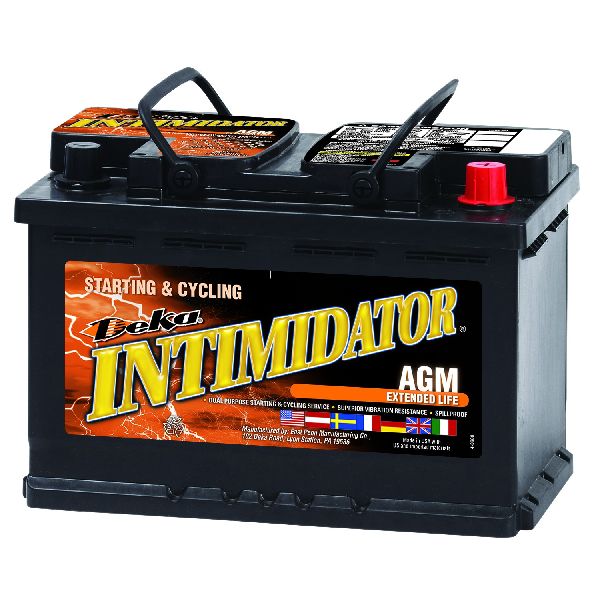
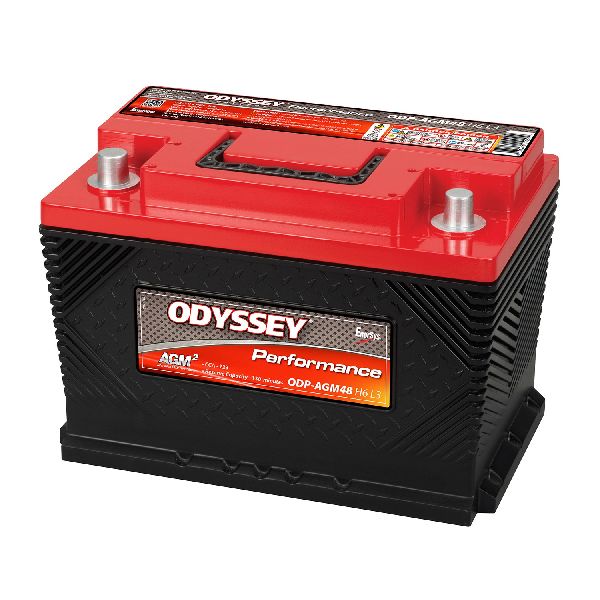
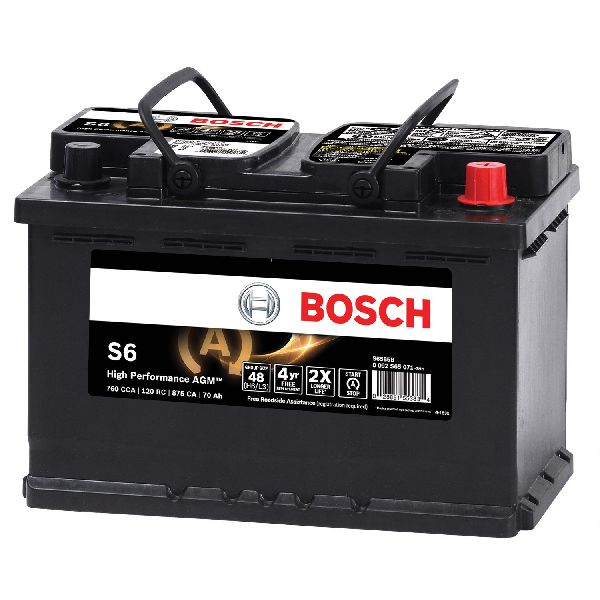
Aftermarket price range: $800-$1500 (Remanufactured) - Automotive Battery (AGM Type Recommended) — A weak or failing battery is a frequent cause of spurious communication codes like U3000 due to low voltage during self-tests.
Trusted brands: Interstate, DieHard, Duralast
OEM price range: $250-$350
Aftermarket price range: $150-$250
Related Codes That Often Appear With This One
- C1260 — This code indicates a fault with the Steering Angle Sensor circuit, which is integral to the MDPS system.
- C1688 — This code points to an issue within the Motor Driven Power Steering (MDPS) module itself, often appearing alongside U3000 when the steering system is the root cause.
Technical Service Bulletins (TSBs) & Recalls
- 23-ST-003H: Describes the diagnostic and repair procedure for the MDPS warranty extension on 2015-2017 Sonata models.
- 17-ST-002: Describes the repair for the separate, noise-related flexible steering coupler issue on 2011-2014 Sonatas.
Platform-Specific Known Issues
- MDPS Warranty Extension (TSB 23-ST-003H / Campaign TXXO): Hyundai extended the warranty on the MDPS for certain 2015-2017 Sonata models to 15 years or 150,000 miles. If your vehicle is eligible, a diagnosed MDPS failure may be repaired by a dealer at no cost. This covers vehicles produced between Jan 2014 and June 2017.
- Wiring Harness Recall (NHTSA 14V434000): A recall was issued for some early-production 2015 Sonatas due to a poor wiring harness connection that could cause a loss of power steering. While the pass-1 article mentioned this, searches clarify it was for a shift cable detaching from the shift lever, not the MDPS harness. It is not directly related to the U3000 MDPS failure but shows a history of connection-related issues for the model.
Documented NHTSA Reports
While U3000 is a common communication code for Hyundai steering modules, cross-manufacturer records such as NHTSA ODI Investigation #PE14030 highlight that this code, when accompanied by various sub-faults (like U3000-46 or U3000-96), often results in a full replacement of the electronic power steering system at no charge to the owner when covered by specific manufacturer campaigns.
Mechanic-Grade Diagnostic Values
- C-CAN Bus Resistance — expected: Approximately 60 Ω. Failure: A reading of 120 Ω indicates one of the two terminating resistors is missing or faulty. A reading significantly lower than 60 Ω (e.g., 40-45 Ω) could indicate a third, unintended resistor on the network or a shorted module.
- C-CAN Bus Voltage (Key On, Engine Off) — expected: CAN High (Pin 6 at OBD-II) ≈ 2.5V, CAN Low (Pin 14 at OBD-II) ≈ 2.5V (recessive state, bus idle).. Failure: During communication (dominant state), CAN High should go to ~3.5V and CAN Low to ~1.5V. Voltages stuck high or low, or shorted to ground/power, indicate a wiring fault.
- Steering Angle Sensor (SAS) Value at Center — expected: 0° (within +/- 5° before calibration). Failure: A non-zero value when the steering wheel is perfectly straight indicates the need for SAS calibration.
Scan Tool Commands That Help
- Hyundai GDS / GDS-M or equivalent professional scanner: ASP (Absolute Steering Position) Calibration — Required after replacing the steering column, MDPS module, or steering angle sensor to set the zero-degree straight-ahead position. Failure to calibrate can cause the ESC light to illuminate and may store steering-related faults.
- Hyundai GDS / GDS-M or equivalent professional scanner: Variant Coding (or MDPS Type Recognition) — Required when a brand new MDPS assembly is installed. This function tells the vehicle's network which type of steering system is present, ensuring correct operation and steering effort. A used module may not require this if it came from an identical vehicle, but a new one will.
Wiring & Ground Locations
- MDPS Unit Main Power — The MDPS module receives main power via an 80A fuse (F1) in the engine room junction block.. Loss of this main power supply will cause a total failure of the power steering assist and will log communication codes.
- MDPS Unit Control Power — Control power for the module comes from 10A fuses in the instrument panel junction block (e.g., F8, F16).. Loss of the 'key-on' control power will prevent the module from waking up and communicating, triggering a U3000 code.
- GE05 (Ground) — Located on the left side of the dash.. This is a potential ground point for the MDPS unit. A poor ground connection at this location can cause intermittent power loss, communication errors, and the U3000 code.
- M24 (Connector) — This is the main connector for the MDPS unit itself, located at the base of the steering column.. This is the primary connection point to check for loose pins, corrosion, or damage when diagnosing MDPS-related communication faults.
Real Owner Repair Stories
- Reddit user in r/Hyundai (2017 Hyundai Sonata, 63k miles) — Electric power steering warning light and electronic stability control light on. Steering wheel would lock up while driving. Codes C126002, C168808, C1290 present.
❌ Tried (didn't work) An independent shop quoted $3600 for a complete steering column replacement based on the codes.
✅ What actually fixed it The owner took the car to a Hyundai dealership. The dealer diagnosed the issue as a faulty torque cable within the steering column. The repair was covered under the MDPS warranty extension (Campaign TXXO) at no cost to the owner. - Reddit user in r/sonata (2015 Hyundai Sonata Sport) — Power steering failure in extreme cold weather (-40°C/-40°F).
❌ Tried (didn't work) Initial diagnosis pointed towards a full power steering rack replacement.
✅ What actually fixed it The owner found a temporary workaround. After driving for about 30 minutes to let the car warm up, turning the ignition off and restarting would restore power steering function. This suggests a temperature-sensitive component or connection was the root cause, though a permanent repair was not identified. - YouTube user Ronnie Bates (2015 Hyundai Sonata) — Intermittent loss of power steering.
❌ Tried (didn't work) Dealer quoted $500-$1800 for a complete steering column replacement, claiming the motor was bad.
✅ What actually fixed it The owner found a broken wire in the harness connector going to the MDPS module. He believed the wire was too short from the factory and would break from the stress of the tilt/telescoping steering column movement. He repaired the broken wire, which fixed the problem.
OEM Part Supersession History
56310-C1500, 56310-C2500→56310-C2700, and others depending on specific vehicle options.— Part revisions to address failure modes or manufacturing changes.
Heads up: It is critical to verify the correct part number by VIN. There are different columns for vehicles with and without smart key, and for different steering system types (Column-MDPS vs. Rack-MDPS). Using the wrong column can result in failed programming or incorrect steering feel.
Model Year Variations Within This Range
- 2014: The 2014 model (YF generation) features a Driver Selectable Steering Mode (DSSM) button on the steering wheel to cycle through 'Comfort', 'Normal', and 'Sport' modes. This is different from the earlier 2011-2013 models which required a GDS scan tool to change steering feel.
- 2015-2019: The primary cause of U3000 is the widespread MDPS module failure, which is most prevalent in the 2015-2017 LF generation models and is covered by a specific warranty extension. While later 2018-2019 models can still experience module failures, they are not part of the same widespread campaign.
Diagnostic Flowchart
Other Known Issues on This Vehicle
Issues unrelated to this code that are worth knowing about as an owner of this generation:
- Theta II GDI Engine Failure 🔴 High — Widespread across 2.0L and 2.4L GDI engines, particularly in 2011-2019 models. Can occur at various mileages, often preceded by knocking noises and increased oil consumption. (Ref: Subject of multiple recalls, a lifetime warranty extension, and a major class-action lawsuit settlement (Hyundai Theta II Engine Settlement).)
- Excessive Oil Consumption 🟠 Medium — Common on 2.4L GDI engines. Owners report needing to add a quart of oil every 1,000-2,000 miles. Often a precursor to engine failure. (Ref: TSB 21-EM-003H and its successors provide a procedure for dealers to perform an oil consumption test and combustion chamber cleaning.)
- Door Lock Actuator Failure 🟡 Low — Very common across all model years. Typically presents as a single door failing to lock or unlock with the key fob or interior switch, often accompanied by a buzzing/grinding noise from the door. (Ref: No specific TSB, but it is a widely documented failure among owners on forums.)
- Peeling Paint 🟡 Low — Common issue, especially on white-painted vehicles. Paint tends to delaminate and peel from the roof, hood, and trunk areas after several years. (Ref: No recall, but many owner complaints exist.)
- Flexible Steering Coupler Wear (2014 YF Model) 🟠 Medium — Extremely common on the 2011-2014 (YF) generation. Causes a distinct clicking or clunking noise in the steering wheel when turning. Does not cause loss of steering assist. (Ref: Warranty Extension TXX7 (detailed in TSB 17-ST-002) extended coverage to 10 years/100,000 miles for this specific part.)
Used vs. New Parts: Buying Guide for This Vehicle
When a used part is the smart pick: A used steering column assembly can be a cost-effective option if the vehicle is outside the 15-year/150,000-mile warranty extension for the MDPS. Since the failure is electronic, it's a gamble, but can save thousands over a new OEM part.
Donor-vehicle mileage cap: roughly under 60000 miles for the part to have meaningful remaining life.
What to inspect on the donor part:
- Verify the part number from the donor vehicle matches the required part for your VIN exactly.
- Choose a donor vehicle from a later model year (e.g., 2018-2019) if possible, as they may have revised components.
- Inspect the wiring harness and all connectors for any cuts, corrosion, or bent pins.
- Ensure the donor vehicle was not in a major front-end collision, which could have damaged the column.
- Ask for a short warranty (e.g., 30-90 days) from the salvage yard to protect against a dead-on-arrival part.
OEM-only on this vehicle (don't cheap out):
- Steering Column Assembly: While a used OEM part is an option, aftermarket remanufactured units have a mixed reputation. A new Genuine Hyundai part is the most reliable, albeit most expensive, choice. The integrated nature of the module makes aftermarket replication difficult.
Brands owners have reported issues with on this vehicle:
- Unbranded or 'white-box' remanufactured steering columns from online marketplaces should be approached with extreme caution due to the complexity of the electronics and the need for proper calibration.
Real Owner Stories
Aggregated from forums and TSBs cited above. Mileages and costs reflect what owners reported in those sources.
2015 Hyundai Sonata
Symptoms: No power steering and the presence of codes C1260 and C1688.
What fixed it: Replacement of the steering column assembly.
Source hint: ScannerDanner Forum thread titled 'Hyundai Sonata 2015 Steering'
2017 Hyundai Sonata
Symptoms: The steering wheel felt very heavy and a power steering warning light was displayed on the dashboard.
What fixed it: Replacement of the MDPS module as advised by a service manager.
Source hint: Reddit (r/Hyundai) thread 'my_sonata_2017_wheel_is_very_heavy_and_it_shows'
Related OBD-II Codes
Frequently Asked Questions
Is there a warranty extension for the power steering failure on my 2015-2017 Sonata?
What does TSB 23-ST-003H involve for a U3000 code?
Could my 2015 Sonata's steering issue be related to a wiring recall?
My steering wheel feels heavy and the warning light is on; is this covered if I'm over 100,000 miles?
Can a weak battery cause the U3000 code in a 2014-2019 Sonata?
Does the Kia Optima have the same U3000 steering issues as the Sonata?
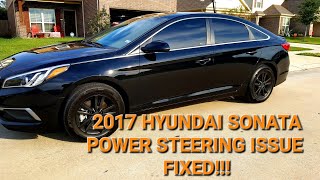
Helpful Videos

Used OEM Parts in Stock
New Aftermarket Parts Available


The information in this article is provided for general reference and educational purposes only. Vehicle specifications, procedures, and part compatibility can vary by production date, trim level, and region. Always consult your vehicle's factory service manual and verify part numbers before purchasing or performing repairs. Safety-critical components such as airbags, seat belts, and braking systems should be installed by a qualified professional.
- Hyundai Sonata:
- 🧭 Diagnostic Flowchart
- 🎬 Helpful Videos
- 🛍️ Shop This Part
- What's Unique About the 2014-2019 Hyundai Sonata
- Symptoms You May Notice
- Most Likely Causes
- Rare But Worth Checking
- Diagnosis Steps
- Parts You'll Likely Need
- Related Codes That Often Appear With This One
- Technical Service Bulletins (TSBs) & Recalls
- Platform-Specific Known Issues
- Documented NHTSA Reports
- Mechanic-Grade Diagnostic Values
- Scan Tool Commands That Help
- Wiring & Ground Locations
- Real Owner Repair Stories
- OEM Part Supersession History
- Model Year Variations Within This Range
- Other Known Issues on This Vehicle
- Used vs. New Parts: Buying Guide for This Vehicle
- Real Owner Stories
- 2015 Hyundai Sonata
- 2017 Hyundai Sonata
- Related OBD-II Codes
- Frequently Asked Questions
- 🎟️ Get 5% Off