

U3003 on 2017-2021 Ford F-450 Super Duty: Battery Voltage Causes and Fixes
On a 2017-2021 F-450, code U3003 is most often caused by either a weak battery or water leaking into the under-hood fuse box (Battery Junction Box). Always test the battery first, but a thorough inspection of the fuse box for moisture is critical for this specific truck, as it is a well-documented factory issue.
- U3003 means a module detected low or high battery voltage.
- On a 2017-2021 F-450, immediately suspect either a weak battery or water in the under-hood fuse box (BJB).
- Always perform a battery load test, not just a voltage check, before replacing parts.
- If you replace the battery, you MUST perform a BMS reset with a proper scan tool.
- Do not replace any control modules unless you have definitively ruled out the battery, charging system, and BJB water intrusion.
What's Unique About the 2017-2021 Ford F-450 Super Duty
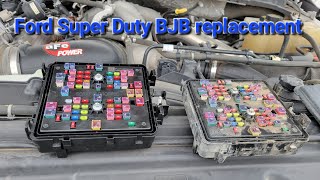
For the 2017-2021 Super Duty (P558 platform), this code has a very specific and common cause beyond just a weak battery. These trucks are known for a design issue where water can leak into the under-hood Battery Junction Box (BJB), or fuse box. This happens because the BJB cover may be improperly seated, have broken locking tabs, or was disturbed during service, allowing water from rain or car washes to drip directly into it. This water intrusion leads to corrosion and widespread electrical faults, frequently triggering a U3003 code, often in the ABS module. While a bad battery is always a possibility, investigating the BJB for water damage is a mandatory diagnostic step 🎬 Watch: Diagnosing a water-damaged F-450 fuse box on this particular vehicle, as documented in multiple Ford TSBs.
Symptoms You May Notice
- Check engine light or wrench light on the dashboard
- Warning messages like 'Check Brake System', 'Blind Spot Fault', or 'Cross Track System Fault'
- Electrical accessories behaving erratically (e.g., power running boards not deploying/stowing, horn staying on)
- Engine does not shut off immediately when the button is pressed
- Dimming or flickering interior or exterior lights
- Sluggish or slow engine cranking
- Sudden no-start condition or dead battery
- Replacing control modules (like the ABS or Body Control Module) without first confirming battery health and checking the BJB for water damage. The module is usually just reporting the voltage problem, it is not the cause of it.
Most Likely Causes
- Water Intrusion in Battery Junction Box (BJB) 🔴 High Probability → Shop Vehicle Battery This is a well-documented issue on the P558 Super Duty platform where the BJB cover may not seal properly, allowing moisture from the cowl area to enter and corrode connections. Ford has released multiple TSBs (e.g., 23-2133, 20-2298) addressing this exact problem. TSB Bulletin #TSB 23-2133 notes that water/moisture intrusion into the BJB can result in a no-crank/no-start condition and an illuminated ABS indicator. Sometimes aftermarket installations, like a dash cam hardwire kit, can prevent the cover from seating correctly, leading to the leak.
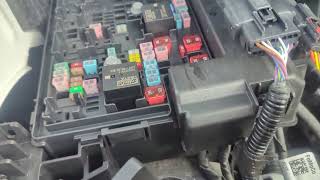
How to confirm: Open the hood and remove the cover from the main fuse box (BJB). Look for any signs of moisture, white or green corrosion on the fuses, relays, or the box itself. Check that all locking tabs on the cover are intact and fully seated.
Typical fix: If corrosion is minor, the BJB can be disconnected, cleaned with an electronic cleaner, and treated with dielectric grease. If damage is severe, the BJB and its cover must be replaced. The source of the water leak (e.g., misaligned cover) must be identified and corrected.
Est. part cost: $150-$500 - Weak or Failing Battery 🔴 High Probability → Shop Vehicle Battery Super Duty trucks, especially diesel models with dual batteries, have a high electrical demand. An aging battery that can no longer hold a sufficient charge or deliver adequate cranking amps is a very common cause for low voltage codes. Manufacturer Bulletin #SSM 52594 highlights that a "Check Brake System" message and U3003:16 in the ABS module may be due to the state of charge of the battery.
How to confirm: Perform a load test on the battery (or both batteries on diesel models). A simple voltage check is not enough. The voltage should not drop below 9.6V while cranking the engine. Many auto parts stores will perform this test for free.
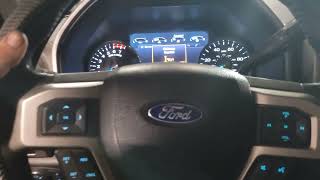
Typical fix: Replace the battery (or both batteries on diesel models, always replace in pairs). It is critical to perform a Battery Management System (BMS) reset with a capable scan tool (like FORScan) or via a specific manual procedure after replacement to ensure the new battery is charged correctly and to reset the 'Battery Age' parameter. The manual reset often involves a sequence of flashing the high beams 🎬 Watch: How to perform a manual BMS reset and pressing the brake pedal.
Est. part cost: $200-$450 (per battery) - Failing Alternator 🟡 Medium Probability → Shop Alternator On dual-alternator diesel models, failure of either the primary or secondary alternator can cause charging system warnings and voltage-related codes.
How to confirm: With the engine running, measure the voltage at the battery terminals. A healthy charging system should show a voltage between 13.8V and 14.5V. If it's lower, the alternator is likely not charging the battery sufficiently. On dual-alternator systems, both may need to be checked for proper output.
Typical fix: Replace the faulty alternator.
Est. part cost: $400-$800 - Loose or Corroded Battery Terminals/Grounds ⚪ Low Probability → Shop Vehicle Battery
How to confirm: Visually inspect the battery terminals for corrosion. Physically attempt to twist the terminals; they should not move. Check the main body and engine block ground straps for tightness and corrosion. Pay attention to the BMS sensor on the negative terminal, as corrosion can affect its readings.
Typical fix: Clean the battery terminals and cable ends with a wire brush until they are bright metal. Ensure all connections are tight.
Est. part cost: $5-$15
Diagnosis Steps
- Read the codes with a scan tool capable of reading manufacturer-specific codes (like FORScan) to see if a suffix (:16 or :17) is present and which module(s) stored the code (e.g., ABS, BCM, SECM).
- Perform a battery load test. Voltage should not drop below 9.6V during cranking. If it fails, replace the battery (or both on diesel models) and perform a BMS reset. If it passes, proceed to the next step.
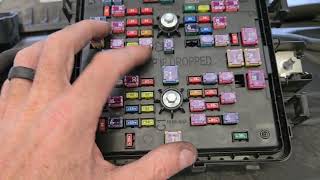
- CRITICAL STEP: Open the hood and remove the cover from the under-hood Battery Junction Box (BJB). Meticulously inspect for any signs of water intrusion, condensation, or corrosion on the fuses, relays, and connectors. Check for broken cover tabs.
- If the BJB is wet or corroded, it must be cleaned or replaced (along with the cover), and the leak source addressed. This is the most common fix according to Ford TSBs.
- If the battery and BJB are fine, start the engine and measure charging system voltage at the battery terminals. It should be between 13.8V and 14.5V. If not, diagnose the alternator(s) and charging system.
- Inspect all battery cables and major ground straps for tightness and corrosion. Ensure the BMS sensor on the negative terminal is clean and connected properly.
- If all of the above check out, the issue may be a high-resistance wire or a failing module, which would require more in-depth diagnostics with wiring diagrams.
Parts You'll Likely Need
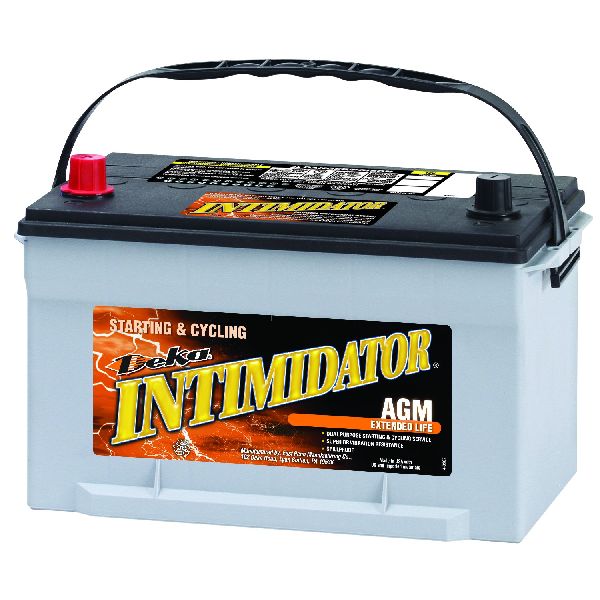
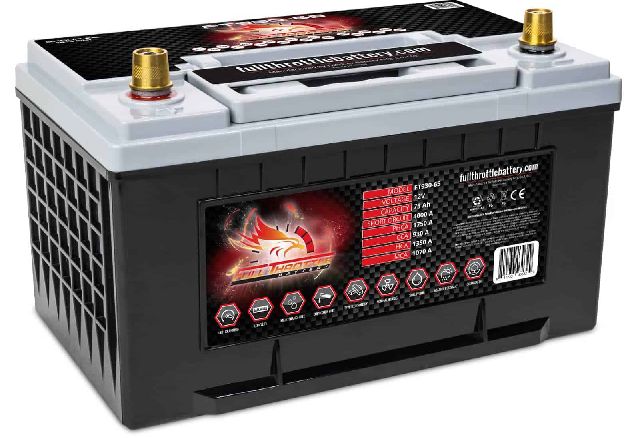
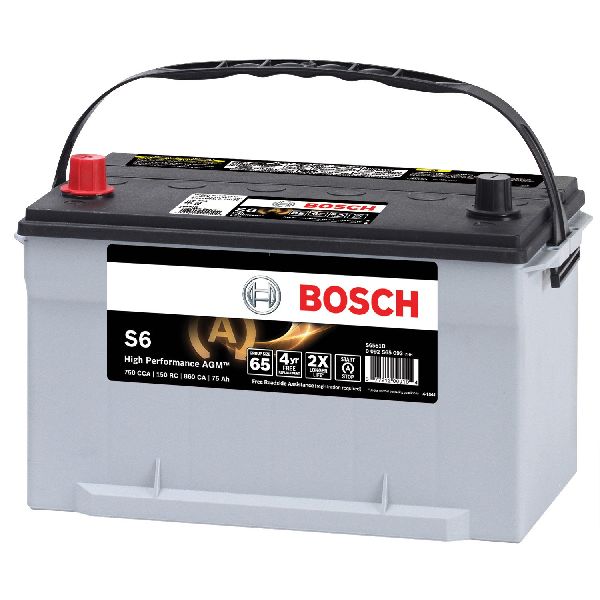
- AGM Battery
(OEM #Motorcraft BAGM-48H6-760 (confirm for specific application))— An aging or weak battery is a primary cause of low voltage codes. These trucks require a high-quality Absorbent Glass Mat (AGM) battery. Diesel models require two.
Trusted brands: Motorcraft, Northstar
OEM price range: $250-$450
Aftermarket price range: $200-$350 - Battery Junction Box (BJB)
(OEM #LC3Z-14A068-D (part number varies by VIN, confirm with dealer))— This under-hood fuse box is prone to water intrusion on this specific vehicle, leading to corrosion that causes this code. Replacement is necessary if cleaning is not possible or does not resolve the issue. The cover (e.g., LC3Z-14A003-D) should also be replaced. 🎬 See this step-by-step BJB replacement walkthrough
Trusted brands: Motorcraft
OEM price range: $200-$500
Aftermarket price range: $150-$400
Related Codes That Often Appear With This One
- U3003:16 — This is the specific sub-type of U3003 that indicates 'Circuit Voltage Below Threshold,' confirming the issue is low voltage. It's commonly found in the SECM or RBM (Running Board Module).
- C0020 — This code for 'ABS Pump Motor Control' can appear with U3003 when water intrusion in the BJB specifically disrupts the power supply to the ABS module, as noted in TSB 23-2133.
- P163C — This code for 'Generator B Field Terminal Circuit Low' can appear alongside charging system warnings when an alternator is failing.
Technical Service Bulletins (TSBs) & Recalls
- TSB 23-2133: Supersedes several earlier versions. Addresses a no-start, dead battery, horn staying on, and engine not turning off. It specifically calls out DTCs C0020 and U3003 in the ABS module resulting from water in the BJB due to a poorly seated or broken cover. The fix is to inspect and, if corroded, replace the BJB and its cover.
- TSB 20-2298: An earlier TSB also covering the engine not turning off and other electrical symptoms due to water intrusion in the BJB.
- SSM 50154: Notes that DTC U3003:16 in the Running Board Control Module (RBM) is often caused by a low battery state of charge, which disables the power running boards to conserve power.
- Bulletin #SSM 52594: States that a "Check Brake System" message or "12V Battery State Of Charge Low" message in the IPC with DTC U3003:16 stored in the ABS module may be due to the battery's state of charge.
Platform-Specific Known Issues
- A known issue for the 2017-2021 Super Duty platform is the susceptibility of the under-hood Battery Junction Box (BJB) to water intrusion, which can cause this code and other widespread electrical problems. Ford TSB 23-2133 directly addresses this.
- A Battery Management System (BMS) reset is required after battery replacement to ensure proper charging and prevent premature failure of the new battery. This can be done with a scan tool or a manual procedure.
Mechanic-Grade Diagnostic Values
- BCM Voltage Supply (U3003:16) — expected: > 9.0 Volts. Failure: Code sets when voltage drops below 9.0V.
- RCM Voltage Supply (U3003:16) — expected: > 9.5 Volts. Failure: Code sets when voltage drops below 9.5V.
- C-CM Voltage Supply (U3003:16) — expected: > 9.5 Volts. Failure: Code sets when voltage drops below 9.5V for more than 500ms.
- Module Ground Circuit Resistance — expected: < 5.0 Ohms. Failure: Resistance greater than 5.0 ohms indicates a poor ground connection, which can cause voltage drop issues at the module.
- Battery Voltage During Cranking — expected: > 9.6 Volts. Failure: Voltage dropping below 9.6V indicates a weak battery that cannot sustain the load from the starter, causing low voltage for all modules.
Hidden / Shadow Codes Worth Checking
- U3003:68: Event Information. This sub-code indicates the module has stored information about a voltage event that may not have been severe enough to trigger a hard fault but is logged for diagnostic purposes. (see via Advanced scan tools like FORScan or Ford IDS are required to view these specific event-based sub-codes.)
Scan Tool Commands That Help
- FORScan / Ford IDS: BMS Reset — This is a mandatory step after replacing the vehicle's battery (or batteries). It resets the 'Battery Age' parameter, ensuring the charging system uses the correct strategy for the new battery to prevent undercharging or overcharging.
- FORScan / Ford IDS: Module Self-Test (e.g., BCM, ABS, PSCM) — Use this to command a specific module to check its own internal health and connections. This can help isolate whether the U3003 code is originating from a single module or is a vehicle-wide issue.
- FORScan: Read PID: BATTERY_AGE / BMS_LIFEDAY — To verify if a BMS reset was performed after a battery replacement. If the battery is new but the PID shows a high number of days, the reset was missed and must be performed.
Wiring & Ground Locations
- Passenger Side Fender Ground — Located on the passenger side inner fender, between the battery box and the firewall. The passenger side battery and battery tray must be removed to access it.. This is a primary chassis ground connection for the passenger side of the vehicle, including the battery. A poor connection here can cause widespread voltage and charging issues, mimicking a bad battery or alternator.
- Driver Side Fender Ground — A visible ground stud located in the driver's side engine bay, typically near the main fuse box or battery.. This is a main grounding point for components on the driver's side. While less commonly reported as a problem, it should be checked for corrosion and tightness as part of a comprehensive electrical diagnosis.
Documented NHTSA Reports
- NHTSA ODI #11533082 describes a situation where a vehicle verified a lack of power steering and showed DTCs C1B00, U0415, and U3003.
- NHTSA ODI #10937177 reports multiple voltage-related codes including U3003:13 in the PSCM and U3003:16 in the BECM and BCM, noting limited manufacturer coverage after 36,000 miles.
- NHTSA ODI #10905479 notes that a "Terrain Management System Fault" light came on alongside a check engine light, throwing codes P0756, P2701, and U3003, which the dealer associated with mechanical failure.
Real Owner Repair Stories
- Ford Truck Enthusiasts Forum user 'Robbgt' and 'ford390gashog' (2018 Ford Super Duty, 10k-20k miles) — A 'silent' U3003 code found in the Power Steering Control Module (PSCM) using FORScan, with no check engine light. The truck saw infrequent use and short trips.
❌ Tried (didn't work) Considering a trickle charger, but the underlying issue was the battery's health.
✅ What actually fixed it The user 'ford390gashog' reported their 2018 battery was 'junk' at 20k miles. They replaced the OEM battery with a higher quality Northstar AGM battery and performed a BMS reset, which resolved the issue. The consensus was that the OEM batteries can fail prematurely, especially with short trip usage patterns. - Ford Truck Enthusiasts Forum user (2017-2022 Super Duty) — Strange electrical faults after a car wash, which later cleared, then returned as a major failure.
❌ Tried (didn't work) Greasing trailer plugs, thinking water got in there.
✅ What actually fixed it The root cause was an aftermarket dash cam hardwire kit that was routed into the Battery Junction Box (BJB), preventing the lid from sealing. Over time, water dripped from the cowl onto the BJB, causing corrosion and eventually requiring BJB replacement. The fix was a new BJB and correctly routing the accessory wiring to a different power source.
OEM Part Supersession History
LC3Z-14A068-C→LC3Z-14A068-D— Part revision by the manufacturer, likely to address internal component issues or improve durability. This is the main Battery Junction Box assembly.PC3Z-14A003-A→PC3Z-14A003-B— Revision to the BJB cover design. TSB 23-2133 later specifies replacing the cover with an even newer part number (LC3Z-14A003-D) when replacing the BJB, suggesting multiple attempts to fix the sealing issue.
Heads up: Always use the latest specified cover (LC3Z-14A003-D) when replacing the BJB to ensure the best possible seal against water intrusion.
Model Year Variations Within This Range
- 2017-2022: The flawed Battery Junction Box (BJB) cover design is common to this entire generation. Forum reports suggest that 2023+ models may have received a redesigned, domed cover to improve water runoff, highlighting the issue with the 2017-2022 flat-top design.
Diagnostic Flowchart
Other Known Issues on This Vehicle
Issues unrelated to this code that are worth knowing about as an owner of this generation:
- Steering Oscillation ('Death Wobble') 🔴 High — Common enough to trigger a class-action lawsuit and customer satisfaction programs. Can occur at relatively low mileage, often after hitting a bump at speeds over 45 mph. (Ref: Ford Customer Satisfaction Program 20N04, which involves replacing the steering linkage damper with a redesigned, beefier part (e.g., KC3Z-3E651-G).)
- CP4 High-Pressure Fuel Pump Failure (6.7L Power Stroke) 🔴 High — A known failure point on 2011-2022 Power Stroke engines. When the pump fails, it can send metal debris throughout the entire fuel system, leading to catastrophic and expensive repairs ($10,000+). (Ref: Recall 22S77 / NHTSA 22V-780 for 2020-2022 models addresses this, though some argue the fix (a software update) is insufficient. Many owners proactively install 'disaster prevention kits'.)
- Unintended Power Tailgate Opening 🟠 Medium — Affects 2017-2020 models with the power tailgate option. Water intrusion into the wiring harness can cause a short, making the tailgate open unexpectedly while driving. (Ref: Recall 19S48 / NHTSA 19V-864 was issued to modify the wiring harness and replace the handle switch. A subsequent Customer Satisfaction Program (21M05) was also issued for an enhanced repair.)
Used vs. New Parts: Buying Guide for This Vehicle
When a used part is the smart pick: For this repair, buying a used Battery Junction Box (BJB) from a junkyard is NOT recommended. The risk of acquiring a part that already has internal corrosion from water damage is extremely high, as it's a known widespread issue. The failure is often not visible from the outside. A used battery is never a smart choice.
What to inspect on the donor part:
- Not applicable for BJB due to high risk of latent water damage.
OEM-only on this vehicle (don't cheap out):
- Battery Junction Box (BJB)
- BJB Cover
Aftermarket brands forum-validated for this vehicle:
- For batteries, brands like Northstar (as cited in forums) or other premium AGM batteries from reputable manufacturers are considered good upgrades over the OEM battery.
Brands owners have reported issues with on this vehicle:
- Avoid non-AGM (flooded) batteries, as the vehicle's charging system is designed for AGM.
- There are no widely trusted aftermarket manufacturers for the Battery Junction Box itself; Motorcraft (OEM) is the only reliable choice.
Real Owner Stories
Aggregated from forums and TSBs cited above. Mileages and costs reflect what owners reported in those sources.
2017-2021 Ford Super Duty
Symptoms: Water intrusion in the Battery Junction Box (BJB) caused by an improperly routed dash cam wire that prevented the cover from sealing, leading to a no-start condition.
What fixed it: Correcting the wire routing to allow the BJB cover to seal properly and addressing the water intrusion.
Source hint: Ford Truck Enthusiasts (ford-trucks.com) thread titled 'Battery Junction Box and H2O. A cautionary tale (Pic Heavy)'
2017-2021 Ford Super Duty
Symptoms: DTC U3003 found in the PSCM module via FORScan, linked to aging batteries.
What fixed it: Battery replacement followed by a Battery Management System (BMS) reset to update the 'Battery Age' parameter.
Source hint: Ford Truck Enthusiasts (ford-trucks.com) thread titled 'Silent DTC U3003?'
2017-2021 Ford F-450 Super Duty
Symptoms: No-start, dead battery, horn staying on, and engine not turning off; DTCs C0020 and U3003 present in the ABS module.
What fixed it: Inspection of the Battery Junction Box (BJB) for corrosion and replacement of the BJB and its cover as per TSB 23-2133.
Source hint: TSB 23-2133
Related OBD-II Codes
Frequently Asked Questions
My F-450's engine won't shut off when I press the button and the horn is stuck on. Does TSB 23-2133 apply to this?
Why are my power running boards on my Super Duty not deploying and showing a U3003:16 code?
I just replaced both batteries in my diesel F-450; do I really need to do a BMS reset?
Can an aftermarket dash cam installation cause a U3003 code on my 2017-2021 F-450?
What should I look for in the Battery Junction Box (BJB) to confirm the common water intrusion issue?
Is a simple voltage check enough to rule out battery issues on my F-450?
Helpful Videos
We Have This Part in Stock

The information in this article is provided for general reference and educational purposes only. Vehicle specifications, procedures, and part compatibility can vary by production date, trim level, and region. Always consult your vehicle's factory service manual and verify part numbers before purchasing or performing repairs. Safety-critical components such as airbags, seat belts, and braking systems should be installed by a qualified professional.
- Ford F-450 Super Duty:
- 🧭 Diagnostic Flowchart
- 🎬 Helpful Videos
- 🛍️ Shop This Part
- What's Unique About the 2017-2021 Ford F-450 Super Duty
- Symptoms You May Notice
- Most Likely Causes
- Diagnosis Steps
- Parts You'll Likely Need
- Related Codes That Often Appear With This One
- Technical Service Bulletins (TSBs) & Recalls
- Platform-Specific Known Issues
- Mechanic-Grade Diagnostic Values
- Hidden / Shadow Codes Worth Checking
- Scan Tool Commands That Help
- Wiring & Ground Locations
- Documented NHTSA Reports
- Real Owner Repair Stories
- OEM Part Supersession History
- Model Year Variations Within This Range
- Other Known Issues on This Vehicle
- Used vs. New Parts: Buying Guide for This Vehicle
- Real Owner Stories
- 2017-2021 Ford Super Duty
- 2017-2021 Ford Super Duty
- 2017-2021 Ford F-450 Super Duty
- Related OBD-II Codes
- Frequently Asked Questions
- 🎟️ Get 5% Off