

U3003 on 2013-2024 Ford Transit 2.2L: Battery Voltage Fault Causes and Fixes
On a 2013-2024 Ford Transit, code U3003 almost always points to a weak or failing 12V battery or a faulty alternator. Before replacing any parts, fully test the battery and charging system. If you replace the battery, you MUST perform a Battery Management System (BMS) reset, otherwise the code will return and the new battery will be damaged.
- U3003 on your Transit means there's a battery voltage problem, not necessarily a failed module.
- Always start by professionally load-testing your battery/batteries. This is the most common fix.
- If you replace the battery, you MUST perform a BMS reset. Skipping this step will cause the new battery to fail.
- If the battery is good, test the alternator's output voltage while the engine is running to check the charging system.
- Check simple things first: clean and tighten battery terminals and ground connections before buying expensive parts.
What's Unique About the 2013-2024 Ford Transit
The Ford Transit of this generation uses a 'Smart Charge' system controlled by a Battery Management System (BMS) with a sensor on the negative battery terminal. This system monitors the battery's health and state of charge to adjust the alternator's output, aiming to improve fuel economy and battery life. This makes the U3003 code particularly common as a battery ages or if the vehicle sits for extended periods. Crucially, if the battery is replaced, the BMS must be reset to 're-learn' the characteristics of the new battery. Failing to do so will cause the system to continue using the charging profile for the old, degraded battery, which can lead to undercharging the new one, causing its premature failure and the return of the U3003 code.
Generation note: The 2013-2024 year range covers the fourth generation of the Ford Transit (V363), which launched for the 2014 model year. The 2.2L Duratorq TDCi engine and the associated electrical system, including the Battery Management System (BMS), are consistent features of this generation, making the diagnosis for U3003 uniform across these years.
Symptoms You May Notice
- Battery warning light illuminated on the dashboard.
- Slow or sluggish engine cranking.
- Dimming or flickering headlights and interior lights, especially at idle.
- Warning lights for other systems (ABS, Airbag, Traction Control) may appear, as low voltage can cause communication errors between modules.
- Electrical accessories (radio, power windows) may work slowly, reset intermittently, or display messages like 'System Off To Save Battery'.
- "Service Engine Now" or "Immobiliser Fault" message may appear on the instrument cluster.
- Auto Start-Stop system stops working.
- "Check Brake System" or "12V Battery State Of Charge Low" messages may appear in the instrument cluster, as noted in manufacturer service records.
- Replacing the alternator when the battery was the actual cause.
- Replacing the battery but failing to reset the BMS, leading to the code returning and ruining the new battery.
- Replacing control modules (PCM, BCM) when the root cause is simply a poor power supply from the battery, alternator, or a bad ground.
Most Likely Causes
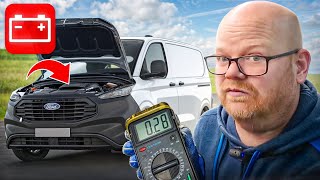
- Weak or Failing 12V Battery 🔴 High Probability → Shop Vehicle Battery The Transit's heavy electrical load and common commercial use patterns (frequent starts, short trips, idling) can wear out batteries quickly. An aging battery is the most frequent trigger for a U3003:16 low voltage condition. Owners report premature battery failure even on newer models with low mileage. 🎬 Watch: Diagnosing a Ford Transit battery issue Manufacturer bulletin SSM 52594 confirms that U3003:16 stored in the ABS module is often due to the battery's state of charge.
How to confirm: Perform a load test on the battery (or batteries, if equipped with a dual-battery system). A simple voltage check is insufficient; a healthy battery should read ~12.6V at rest but, more importantly, must not drop below ~9.6V during engine cranking. Many auto parts stores offer free battery load testing.
Typical fix: Replace the battery (or batteries), typically with an AGM (Absorbed Glass Mat) type. CRITICAL: The Battery Management System (BMS) must be reset after replacement.
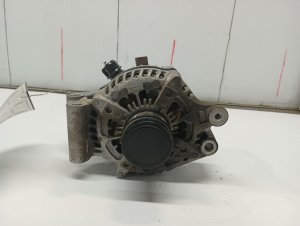
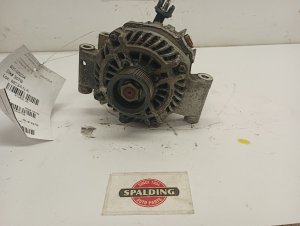
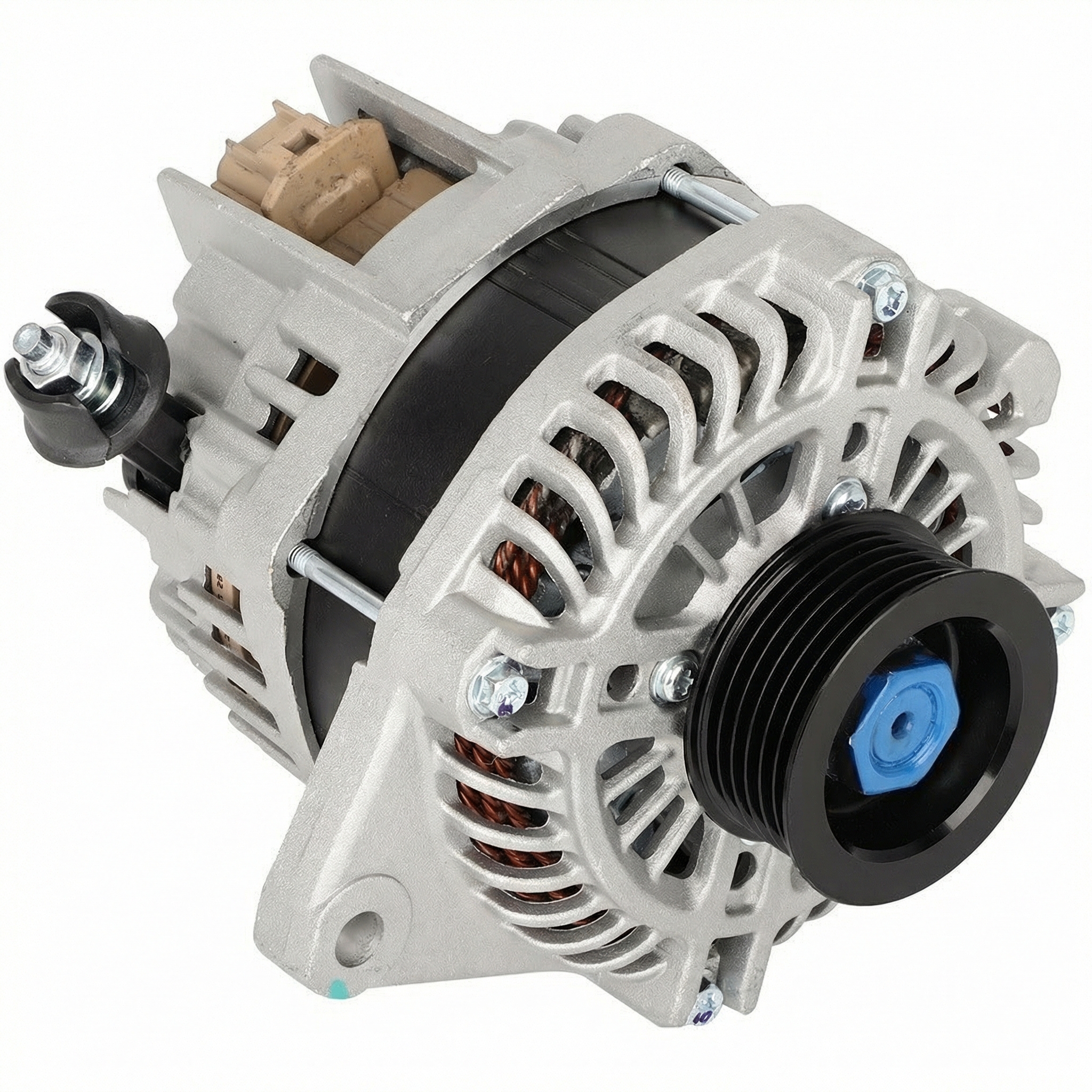
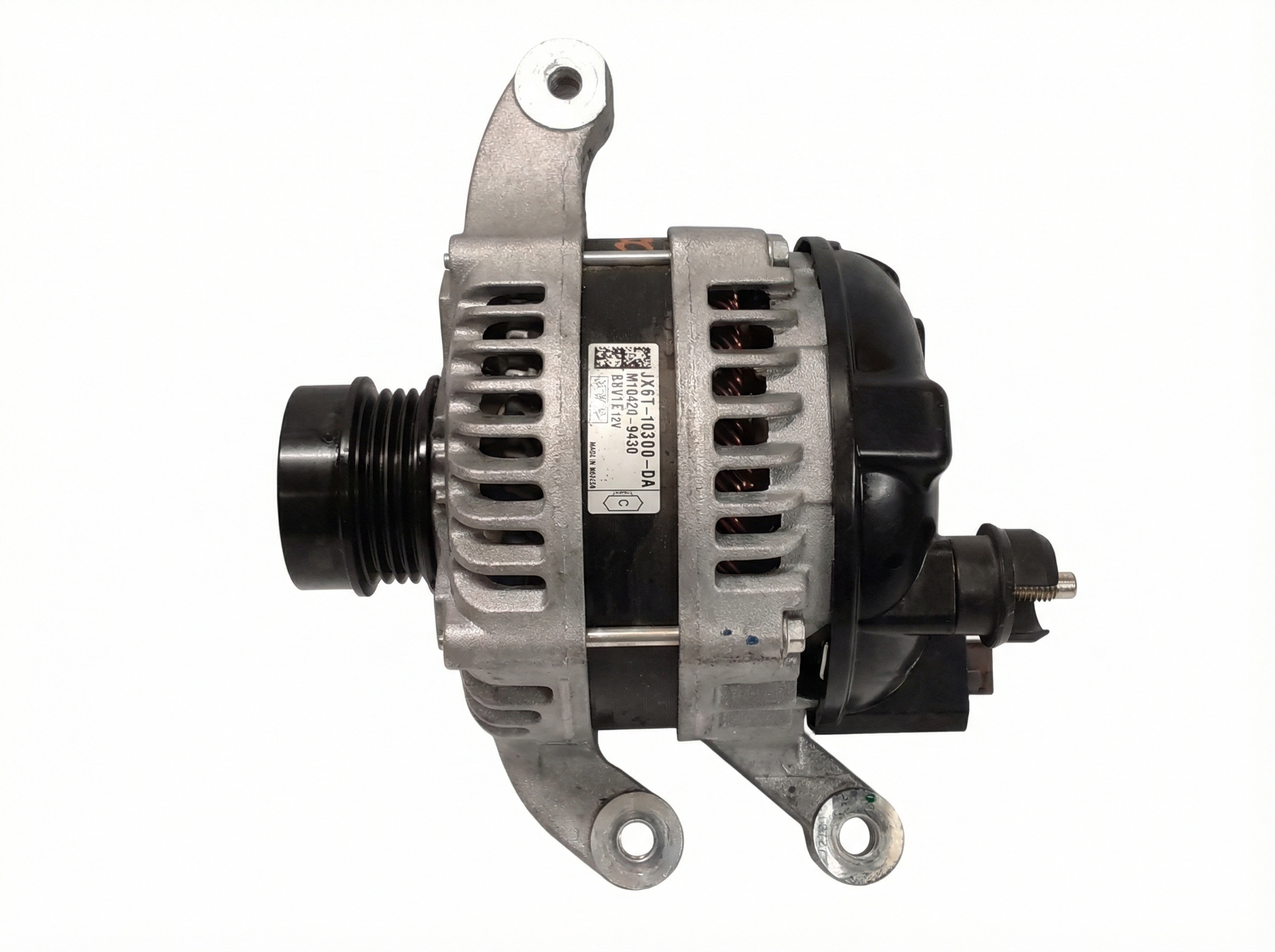
Est. part cost: $180-$400 - Faulty Alternator 🟡 Medium Probability → Shop Alternator Alternator failure is a documented issue on this platform. It can fail to produce adequate voltage (causing U3003:16) or its internal voltage regulator can fail, causing an overcharge condition (U3003:17).
How to confirm: With the engine running, measure the voltage at the battery terminals. A healthy alternator controlled by the Smart Charge system should typically output between 13.5V and 14.8V, though it can vary. If the voltage is consistently low (e.g., at or below battery voltage of ~12.5V) and does not increase with RPM, the alternator is likely faulty. If voltage is consistently above 15.0V, the regulator has likely failed.
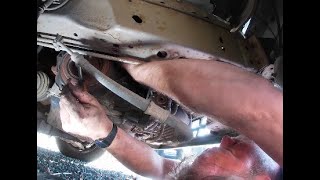
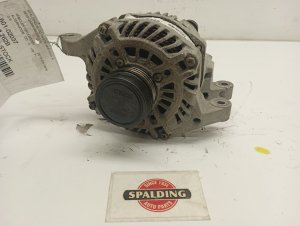
Typical fix: Replace the alternator. OEM part numbers for the 150A alternator include CC1T-10300-CB. 🎬 See this alternator replacement walkthrough
Est. part cost: $250-$600 - Battery Management System (BMS) Reset Not Performed 🟡 Medium Probability → Shop Vehicle Battery This is a common procedural error. If the U3003 code appears shortly after a battery replacement, it's highly likely the BMS was not reset. The system is still using the charging logic for the old battery, which will undercharge the new one. It can take as little as a few months to damage a new battery this way.
How to confirm: Check service history to see if the code appeared after a recent battery change. A diagnostic scan tool like FORScan can verify the BMS status and 'BATTERY_AGE' or 'BMS_LIFEDAY' PID. A manual reset procedure exists and its success is confirmed by the battery light flashing three times.
Typical fix: Perform the BMS reset procedure. This can be done with a compatible scan tool or a manual sequence. No parts are required.
Est. part cost: $0 - Loose or Corroded Battery Terminals / Ground Straps ⚪ Low Probability → Shop Engine Ground Strap Vibration and exposure to the elements can cause battery terminals and main ground connections to loosen or corrode, creating high resistance. Key ground points are from the battery to the chassis (often under the driver's seat) and from the gearbox to the inner wing.
How to confirm: Visually inspect the battery terminals for white or blue-green corrosion. Physically check that the terminal clamps are tight. Follow the main negative cable to the chassis and engine block to ensure the ground connections are clean, free of paint/rust, and secure.
Typical fix: Clean the battery terminals and cable ends with a wire brush. Secure all connections. Apply a dielectric grease to prevent future corrosion.
Est. part cost: $5-$15
Rare But Worth Checking
- Faulty Body Control Module (BCM) due to Water Ingress: A well-documented issue on Transits and Transit Customs is water leaking into the cab and dripping onto the BCM, which is located under the steering column/behind the glovebox. This causes corrosion on the BCM's circuit board, leading to a host of bizarre electrical faults, including U3003, non-starting, and lighting problems. Leaks often originate from poorly sealed windshields, roof seams, or roof rack mounting points.
- Water Intrusion into the Battery Junction Box (BJB): → Shop Vehicle Battery Similar to BCM issues, manufacturer bulletin TSB 23-2133 notes that water or moisture intrusion into the under-hood BJB can result in a no-crank/no-start condition and U3003 in the ABS module.
- Blown Main Fuse or Fusible Link: A high-amperage mega fuse, sometimes as high as 300A, connects the alternator to the battery/BJB. While uncommon, if this fuse blows, it will completely cut off the charging circuit. This should be checked if a new alternator is installed but there is still no charge.
- Parasitic Battery Drain: → Shop Vehicle Battery If the battery, alternator, and connections are good, a parasitic draw may be draining the battery overnight. This occurs when a module or component fails to enter 'sleep mode'. On some Fords, seat modules or aftermarket accessories have been found to be culprits. Diagnosis requires measuring current draw with a multimeter after the vehicle has been off for at least 45 minutes; a draw over 50-80mA is problematic.
Diagnosis Steps
- Read the full code, including any suffixes (:16 for low voltage, :17 for high voltage) from ALL modules using a capable scanner like FORScan.
- Visually inspect the battery terminals for corrosion and ensure they are tight. Inspect the main ground straps from the battery to the chassis and engine/gearbox to the chassis for corrosion and tightness.
- With the engine off, measure the battery's static voltage. It should be ~12.4V-12.8V. If it's lower, the battery is discharged or failing.
- Perform a battery load test. This is the most crucial step. A weak battery can show good voltage at rest but fail under load. If it drops below 9.6V during cranking, it is bad and must be replaced.
- If the battery is good, start the engine. Measure the voltage at the battery terminals. It should be between 13.5V and 14.8V.
- If voltage is above 15.0V, the alternator's voltage regulator has likely failed, causing an overcharge condition.
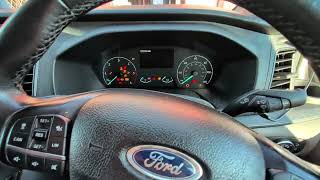
- If a battery was recently replaced, perform the BMS reset procedure. The most common manual sequence is: Ignition ON 🎬 Watch: How to reset the BMS manually (engine off), flash high beams 5 times, then press the brake pedal 3 times. Watch for the battery light on the dash to flash 3 times to confirm the reset.
- If all of the above check out, investigate for a parasitic draw that could be draining the battery when the vehicle is off. A draw should be under 50-80mA after the vehicle has been shut off and undisturbed for at least 45 minutes.
- As a final, less common check, inspect the area around the BCM and the Battery Junction Box (BJB) for signs of water ingress, such as staining or corrosion on the connectors.
Parts You'll Likely Need
- 12V AGM Battery
(OEM #BAGM-48H6-760 (Motorcraft H6 AGM))— This is the most common failure item causing low voltage conditions and the U3003:16 code. The platform requires an AGM battery.
Trusted brands: Motorcraft, Bosch, Deka, Duralast
OEM price range: $210-$250
Aftermarket price range: $180-$300 - Alternator
(OEM #CC1T-10300-CB (150A))— The second most common cause, responsible for the battery not receiving a charge (low voltage) or overcharging the system (high voltage).
Trusted brands: Motorcraft (OEM), Bosch, Denso
OEM price range: $400-$600
Aftermarket price range: $250-$450
Related Codes That Often Appear With This One
- P0620 — Generator Control Circuit Malfunction. This code often appears with U3003 when the PCM detects a problem with the alternator's control circuit.
- U0101 — Lost Communication With TCM. Severe low voltage can disrupt the CAN bus network, causing modules to lose communication with each other. This is a symptom of the voltage problem, not a separate transmission issue.
- C0020 — ABS Pump Motor Control. As noted in TSB 23-2133, this code can appear alongside U3003 in the ABS module due to electrical system faults.
- Multiple B- and C-prefix codes — Low system voltage can cause communication faults with various modules, and ABS/Traction Control/Body modules are very sensitive to voltage drops, often logging codes as a side effect.
Platform-Specific Known Issues
- Failure to reset the Battery Management System (BMS) after a battery replacement is a very common procedural error on this platform that will cause the U3003 code to return.
- Some models are equipped with a dual-battery system from the factory, and both batteries must be in good health for the system to operate correctly.
Mechanic-Grade Diagnostic Values
- RCM (Restraints Control Module) Voltage Supply — expected: 9.5 - 16.0 volts. Failure: DTC U3003:16 sets below 9.5V; U3003:17 sets above 16.0V.
- BCM (Body Control Module) Voltage Supply — expected: 9.0 - 16.0 volts. Failure: DTC U3003:16 sets below 9.0V; U3003:17 sets above 15.9V.
- ABS Module Voltage Supply — expected: 10.0 - 17.0 volts. Failure: U3003:16 sets below 10.0V; U3003:17 sets above 17.0V.
- FORScan PID: Battery State of Charge (BDI_SOC) — expected: Typically maintained around 80% by the BMS.. Failure: A consistently low value (<60%) after charging, or a value that drops rapidly with the engine off, indicates a failing battery.
- FORScan PID: Battery Days in Service (BMS_LIFEDAY) — expected: Number of days since the last BMS reset.. Failure: If a new battery was installed but this value is high (e.g., >1000 days), it confirms the BMS reset was not performed.
- Parasitic Current Draw — expected: Below 50-80mA. Failure: A reading higher than 80mA after all modules have entered sleep mode (approx. 45 minutes) indicates a parasitic drain.
- Alternator LIN Bus Signal — expected: A sweeping square wave signal visible on an oscilloscope, typically between ~1V and battery voltage.. Failure: A flat line or absent signal indicates a communication breakdown between the PCM and alternator, preventing it from charging.
Hidden / Shadow Codes Worth Checking
- U3003:16-08: A more specific variant of the low voltage code, often logged in multiple modules simultaneously. The '-08' suffix indicates a bus signal/message failure, pointing towards a communication or wiring issue in addition to the low voltage. (see via A capable scanner like FORScan is required to see the full code with suffixes.)
- U3003:68: 'Event Information' - This variant is often logged in the BCM or other modules and indicates the module has stored data about a voltage event. It's less of a hard fault and more of a historical record, but its presence confirms a past voltage fluctuation. (see via Advanced dealer-level scanners or FORScan.)
Scan Tool Commands That Help
- FORScan: BdyCM Battery Monitoring System Reset — This service function must be run immediately after installing a new battery. It clears the old battery's learned data and aging parameters, allowing the Smart Charge system to correctly charge the new battery.
- FORScan: PCM Module Reset — In some cases where charging is inhibited by the PCM after a voltage event or part replacement, performing a module reset can force the system to re-learn and restore normal alternator function.
Wiring & Ground Locations
- BCM (Body Control Module) — Located behind the glovebox / under the steering column area.. This module is highly susceptible to water ingress from windshield or roof leaks, causing corrosion and a multitude of electrical faults, including U3003.
- Alternator LIN Bus Wire — A single wire in a small plug connected to the alternator.. The Smart Charge system uses this LIN bus digital signal from the PCM to control the alternator's output. Damage to this wire or corrosion at the connector will prevent the alternator from charging, even if the alternator itself is good.
- Main Chassis Ground — A primary ground point is typically located under the driver's seat where the negative battery cable attaches to the body.. Corrosion or looseness at this critical point can create high resistance for the entire vehicle's electrical system, causing voltage drops and triggering U3003.
- Gearbox to Chassis Ground Strap — A braided strap connecting the transmission/gearbox housing to the vehicle's inner wing or chassis.. This strap provides a crucial ground path for the engine and alternator. If it's broken, corroded, or missing, the alternator may not charge correctly and starter performance will be poor.
Real Owner Repair Stories
- Ford Transit Forum user (2016 Ford Transit Custom) — Drops of water in the driver's side footwell, followed by the van dying. AA diagnosed water damage to the BCM.
❌ Tried (didn't work) Initial diagnosis was just to replace the BCM.
✅ What actually fixed it The user traced the water leak to the seam where the high-top roof was joined to the van body, above the driver's door. Applying silicone sealant to the leaking join solved the root cause of the water ingress that was destroying the BCM. - Ford Transit Forum user (2015 Ford Transit Custom) — Immobiliser warning, no-start condition, multiple error codes for airbags and brakes, intermittent dashboard function. FORScan showed many BCM issues.
❌ Tried (didn't work) Cleaning the wet, corroded BCM provided a temporary fix for a day before the van became completely immobilized and the OBD port stopped communicating.
✅ What actually fixed it The user's problem was severe BCM failure due to water ingress. The final solution required replacing the BCM and cloning the data from the old one (if possible). The story highlights that once communication with the BCM is lost, cloning may not be possible, necessitating a more complex programming procedure with a new module. - AMS Ltd (YouTube) (Ford Transit Custom) — Charging system fault, multiple low-voltage codes across various systems.
❌ Tried (didn't work) Simply replacing the alternator without full diagnosis.
✅ What actually fixed it Diagnostics revealed the alternator's LIN bus signal was good and the PCM was commanding a charge, but no output was being produced. A visual inspection while running showed the alternator pulley was slipping. The cause was a failed alternator overrun (clutch) pulley. Replacing just the pulley restored proper charging. This is a mechanical failure of a component on the alternator, not an internal electrical failure of the alternator itself.
Model Year Variations Within This Range
- 2016+: Starting around 2016 with the introduction of the 2.0L EcoBlue engine, the Smart Charge system became more complex, often using higher amperage alternators (180-250A) to support Stop-Start technology. While the U3003 diagnosis is similar, these alternators are more likely to be coded to the BCM, meaning a replacement may require programming, not just a BMS reset.
Diagnostic Flowchart
Documented NHTSA Reports
- A manufacturer service bulletin, SSM 52594, notes that a "Check Brake System" message and/or "12V Battery State Of Charge Low" message may appear in the instrument panel cluster with DTC U3003:16 stored in the ABS module.
- TSB Bulletin #TSB 23-2133 describes a no-crank/no-start condition and an illuminated ABS indicator with DTCs C0020 and U3003 in the ABS module, which may result from water/moisture intrusion into the battery junction box (BJB).
- An owner reported in NHTSA ODI #11533082 a lack of power steering accompanied by DTCs C1B00, U0415, and U3003.
- NHTSA ODI #10937177 describes a vehicle with multiple codes including U3003:13 and U3003:16 stored in the PSCM, BECM, and BCM.
- NHTSA ODI #10905479 reports a "Terrain Management System Fault" light and a check engine light with codes P0756, P2701, and U3003, which the dealer associated with a mechanical failure.
Other Known Issues on This Vehicle
Issues unrelated to this code that are worth knowing about as an owner of this generation:
- 2.2L Duratorq Oil Pump/Timing Chain Failure 🔴 High — A known weak point. Failure can occur around 100,000 km (60,000 miles), often due to oil starvation or contamination. Lack of oil pressure can cause timing chain tensioner failure, leading to catastrophic engine damage.
- Injector Over-fueling / Cracked Pistons 🔴 High — A widely discussed problem where an ECU fault (not the injector itself) causes over-fueling, washing oil from cylinder bores and potentially cracking or melting pistons. This was more common on earlier (pre-2012) versions of the engine but can still occur.
- EGR Valve and DPF Issues 🟠 Medium — Like many modern diesels, the 2.2L TDCi can suffer from EGR valves sticking or failing, and DPFs becoming clogged, especially with short-trip usage. This can lead to poor performance, black smoke, and warning lights.
- Water Ingress into Cab/BCM 🟠 Medium — Commonly reported on Transit and Transit Custom models. Poor sealing from the factory around the windshield, roof rack mounts, or body seams allows water to drip onto the Body Control Module (BCM), causing severe and difficult-to-diagnose electrical problems. (Ref: Internal service instructions exist, such as one for the 2020 model year detailing resealing procedures.)
- Driveshaft/Propshaft Center Bearing Failure 🟡 Low — On rear-wheel-drive models, the center support bearing for the propshaft is a known wear item and can cause noise and vibration from under the vehicle. (Ref: Recalls were issued for potential driveshaft detachment on some models.)
Used vs. New Parts: Buying Guide for This Vehicle
When a used part is the smart pick: A used alternator from a low-mileage, accident-damaged vehicle can be a cost-effective option. Other electronic modules like a BCM can be sourced used, but this is only advisable if you have access to a specialist who can clone the original module's data, as a straight swap will not work due to immobilizer and vehicle-specific programming.
Donor-vehicle mileage cap: roughly under 60000 miles for the part to have meaningful remaining life.
What to inspect on the donor part:
- For an alternator, check that the pulley spins freely and smoothly with no grinding noises.
- Inspect the electrical connectors for any signs of corrosion, melting, or damage.
- Look for a vehicle with a documented front-end collision, as the powertrain components are often undamaged.
- Avoid parts from flood-damaged vehicles at all costs.
OEM-only on this vehicle (don't cheap out):
- Battery: Always buy a new battery. It must be the correct type (AGM is common) and capacity for the vehicle. A used battery is never a good value.
- BCM: While a used BCM can be reprogrammed, the labor and complexity involved often make a new, pre-programmed unit from a specialist a more reliable, albeit more expensive, choice.
Aftermarket brands forum-validated for this vehicle:
- Alternators: Denso and Bosch are highly reputable and are often the original equipment manufacturer.
- Batteries: Varta, Bosch, and Yuasa are well-regarded brands that meet or exceed OEM specifications.
Brands owners have reported issues with on this vehicle:
- Avoid unbranded, 'white-box' alternators and electronic modules from major online marketplaces. These often have high failure rates, inconsistent quality, and can cause more complex diagnostic headaches.
Real Owner Stories
Aggregated from forums and TSBs cited above. Mileages and costs reflect what owners reported in those sources.
2014 Ford Transit Custom 2.2L Duratorq
Symptoms: Water leaking into the cab, damaging the BCM, and causing widespread electrical chaos, including non-start and lighting faults.
What fixed it: Investigating and repairing water ingress around the BCM area and addressing connector corrosion.
Source hint: Ford Transit Forum - Water ingress, BCM failure
2013-2023 Ford Transit (V363 Platform)
Symptoms: U3003 code appeared shortly after a battery replacement; system was still using charging logic for the old battery.
What fixed it: Performing the BMS reset procedure (manual sequence or via FORScan) to update the 'BATTERY_AGE' or 'BMS_LIFEDAY' PID.
Source hint: Ford Transit Forum - Earth Strap/s location and vehicle_specific_issues
Ford F-Series (BMS Architecture platform-mate)
Symptoms: Silent DTC U3003 found during a scan despite no immediate dashboard symptoms; linked to impending battery failure.
What fixed it: Battery replacement and BMS reset.
Source hint: Ford Truck Enthusiasts Forum - Silent DTC U3003?
Related OBD-II Codes
Frequently Asked Questions
I just replaced the battery in my 2018 Ford Transit and now I have a U3003 code. Did I get a bad battery?
How can I tell if my U3003 code is for low or high voltage?
My Transit has two batteries under the seat. Do I need to test both for a U3003 fault?
Is there a manual way to reset the BMS on my Transit without a scan tool?
Can a U3003 code cause my Ford Transit's Auto Start-Stop to stop working?
I'm seeing 'Immobiliser Fault' and 'Service Engine Now' along with U3003. Are these separate mechanical issues?
Helpful Videos
We Have This Part in Stock

The information in this article is provided for general reference and educational purposes only. Vehicle specifications, procedures, and part compatibility can vary by production date, trim level, and region. Always consult your vehicle's factory service manual and verify part numbers before purchasing or performing repairs. Safety-critical components such as airbags, seat belts, and braking systems should be installed by a qualified professional.
- Ford Transit:
- 🧭 Diagnostic Flowchart
- 🎬 Helpful Videos
- 🛍️ Shop This Part
- What's Unique About the 2013-2024 Ford Transit
- Symptoms You May Notice
- Most Likely Causes
- Rare But Worth Checking
- Diagnosis Steps
- Parts You'll Likely Need
- Related Codes That Often Appear With This One
- Platform-Specific Known Issues
- Mechanic-Grade Diagnostic Values
- Hidden / Shadow Codes Worth Checking
- Scan Tool Commands That Help
- Wiring & Ground Locations
- Real Owner Repair Stories
- Model Year Variations Within This Range
- Documented NHTSA Reports
- Other Known Issues on This Vehicle
- Used vs. New Parts: Buying Guide for This Vehicle
- Real Owner Stories
- 2014 Ford Transit Custom 2.2L Duratorq
- 2013-2023 Ford Transit (V363 Platform)
- Ford F-Series (BMS Architecture platform-mate)
- Related OBD-II Codes
- Frequently Asked Questions
- 🎟️ Get 5% Off