

Ford Custom 500 Universal Joint Guide for 1964-1969 Models
Keep your classic Ford running smoothly by understanding when and how to replace your U-joints.
- Your Custom 500 has two U-joints; it's best to replace them in pairs.
- A clunking noise when shifting or a vibration at speed are the most common signs of failure.
- High-quality aftermarket brands like Dana Spicer are the industry standard for these classic vehicles and are considered a top-tier choice.
- Failure to replace a worn U-joint can lead to the driveshaft falling off, which is extremely dangerous and can cause major damage.
Signs of a Failing Universal Joint
A worn or failing U-joint will give you clear warning signs. Ignoring them can lead to a driveshaft separating from the vehicle, causing a loss of power and potentially serious damage. Listen and feel for these symptoms:
- Clunking Noise: A loud "clunk" or "ping" when you shift from Park into Drive or Reverse is a classic sign of a worn U-joint. This is caused by excessive play in the joint.
- Vibration at Speed: A vibration that you can feel through the floor or seats of the car while driving is a common symptom. This vibration is different from a wheel imbalance and will get worse as the U-joint wears out.
- Squeaking Sound: A squeaking noise that gets faster as you drive faster often points to a U-joint that has lost its grease and is running dry. The needle bearings inside are creating friction.
Critical Failure Warning
If a U-joint fails completely, the driveshaft can fall. This will cause you to lose all power to the wheels and can cause the driveshaft to hit the road, potentially flipping the vehicle or causing extensive damage to the undercarriage, transmission, and fuel tank. At the first sign of U-joint trouble, get your vehicle inspected.
Choosing the Right Aftermarket U-Joint
For a classic car like the 1964-1969 Custom 500, genuine Ford "OEM" parts are no longer in production. You might find New Old Stock (NOS) parts, but they are rare and expensive. Modern aftermarket parts are the standard for these vehicles, and a high-quality replacement can be superior to the original 60-year-old technology.
Dana Spicer Chassis: A Top-Tier Choice
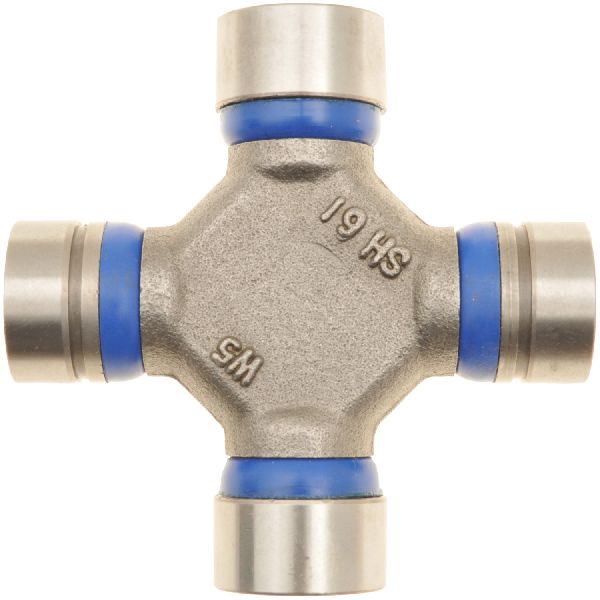
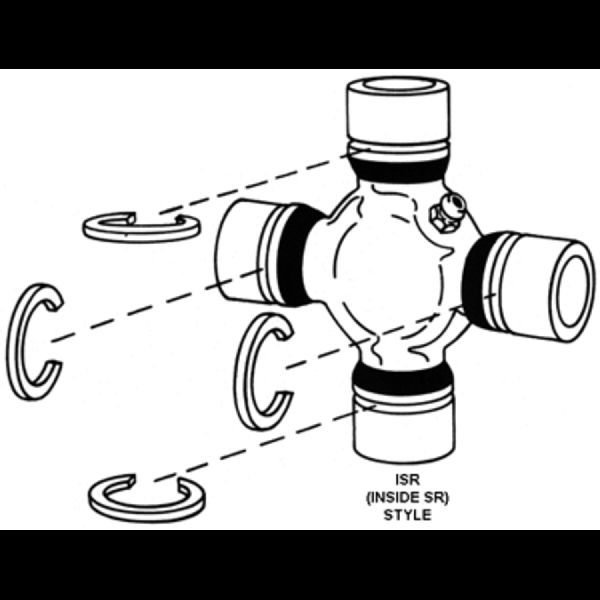
Dana is a well-respected manufacturer that has been an original equipment supplier for many car brands, including Ford. Their Spicer brand U-joints are widely considered to be a top-quality, durable replacement part. Forum discussions among classic car and truck owners frequently recommend Spicer for their strength and reliability. They are often available in both greasable and non-greasable (sealed) versions.
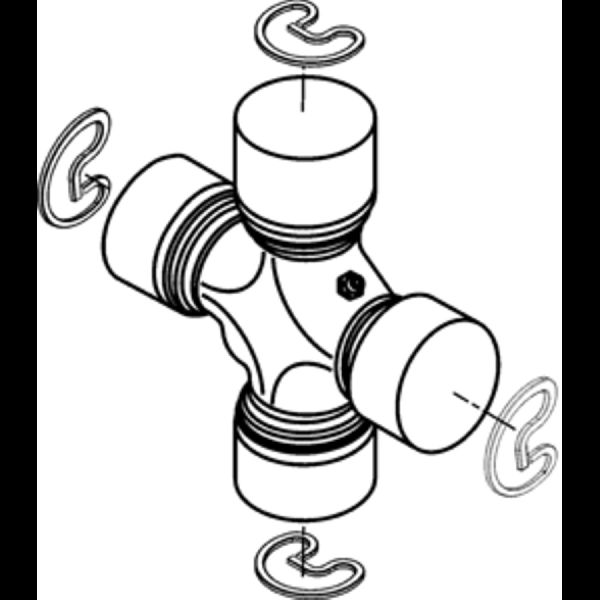
- Greasable Joints: These have a zerk fitting that allows you to add fresh grease periodically as part of your regular maintenance. This can extend the life of the joint if done correctly.
- Non-Greasable (Sealed) Joints: These are sealed from the factory and require no maintenance. Many mechanics and enthusiasts prefer these because they are stronger (the cross isn't hollowed out for a grease channel) and you don't have to worry about forgetting to grease them.
Pro Tip: Your Custom 500 will have two U-joints on the driveshaft. It is highly recommended to replace both at the same time. If one has failed due to age and mileage, the other is likely not far behind.
Known Issues, Recalls, and TSBs
For vehicles of this age, official NHTSA recalls and Technical Service Bulletins (TSBs) are rare and difficult to find in modern databases. Searches for U-joint or driveshaft-specific recalls and TSBs for the 1964-1969 Ford Custom 500 did not return any specific results. Any issues today are overwhelmingly due to the age and wear of the original or older replacement components.
Frequently Asked Questions (FAQ)
How many U-joints does my 1964-1969 Custom 500 have?
Standard models have a one-piece driveshaft with two universal joints: one at the transmission end (front) and one at the rear axle end (rear).
Should I choose a greasable or non-greasable U-joint?
This is a matter of preference. Non-greasable (sealed) joints, like the Spicer Life Series®, are often considered stronger and are maintenance-free. Greasable joints can last a very long time if you are diligent about regular maintenance. For most owners, a high-quality sealed joint is a great "fit and forget" option.
Do I need to balance my driveshaft after replacing the U-joints?
It's a good practice. While simply replacing the joints may not throw it out of balance, it's possible. If you experience any vibration after the replacement, you should have the driveshaft professionally balanced. Mark the driveshaft's orientation to the axle yoke before removal so you can reinstall it in the same position, which helps maintain the original balance.
Is replacing a U-joint a DIY job?
This job can be done by an experienced DIY mechanic. It requires safely lifting the vehicle, removing the driveshaft, and using a bench vise, a ball joint press, or a hammer and sockets to press the old joints out and the new ones in. It can be difficult without the right tools, and care must be taken not to damage the driveshaft yokes.
Technical Specifications
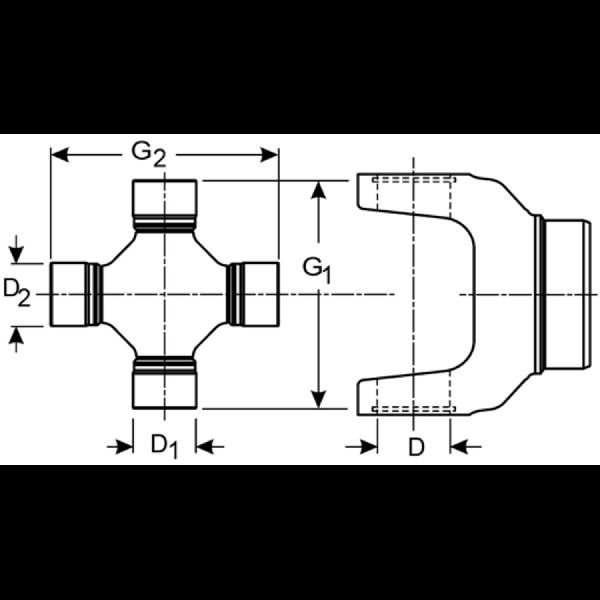
The 1964-1969 Ford full-size cars like the Custom 500 and Galaxie commonly used the 1310 or 1330 series U-joints. It is critical to measure your existing U-joint caps and width or consult a parts catalog to ensure you purchase the correct size. A common high-quality part number for this application is the Spicer 5-153X (1310 series) or similar, but always verify fitment for your specific vehicle.
We Have This Part in Stock

The information in this article is provided for general reference and educational purposes only. Vehicle specifications, procedures, and part compatibility can vary by production date, trim level, and region. Always consult your vehicle's factory service manual and verify part numbers before purchasing or performing repairs. Safety-critical components such as airbags, seat belts, and braking systems should be installed by a qualified professional.