

BMW M3 (1988-1995) Engine Coolant Temperature Sensor Guide
Understanding the two different coolant sensors in your E30 or E36 M3 and how to choose the right replacement.
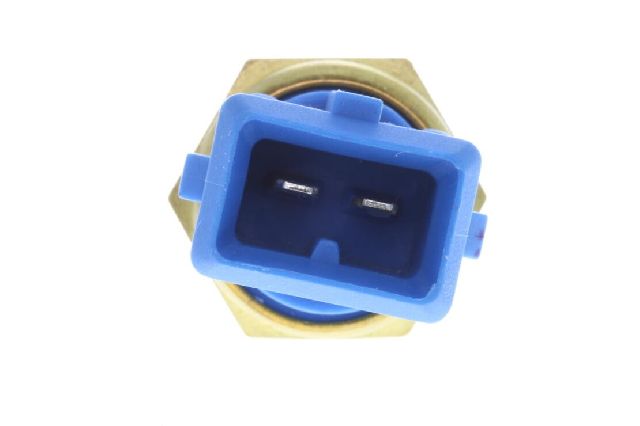
- Your M3 has two sensors: a blue one for the engine computer (DME) and a brown/black one for the gauge.
- Match your symptoms: poor running points to the blue DME sensor, while a bad gauge reading points to the brown/black sender.
- Bosch is the OEM supplier and the most recommended aftermarket choice for this part.
- Replacement is simple and can be done in under an hour with basic tools.
Understanding Your M3's Coolant Temp Sensors
When dealing with coolant temperature issues on an E30 M3 (1988-1991) or the first-generation E36 M3 (1995), it's important to know that the car uses two distinct sensors. A common mistake is replacing the wrong one. One sensor feeds information to the engine computer (DME), affecting how the car runs, while the other simply operates your dashboard gauge. Identifying your symptoms is the key to buying the right part.
Symptoms of a Failing DME/ECU Sensor (Blue Connector)
This is the sensor that impacts engine performance. If it fails, it sends incorrect data to the engine's computer, leading to noticeable problems. The computer might think the engine is cold when it's hot, or vice-versa.
- Poor Fuel Economy: The computer may enrich the fuel mixture, thinking the engine is cold, which wastes gas.
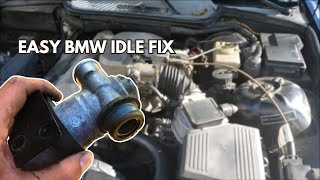
- Rough Idle or Stalling: The engine may idle poorly, shake, or stall because the air-fuel mixture is incorrect for the actual engine temperature. 🎬 Watch this video to diagnose rough idle and stalling issues.
- Black Smoke from Exhaust: A very rich fuel mixture can result in unburnt fuel burning in the exhaust, creating black smoke.
- Hard Starting: The car may be difficult to start, especially when the engine is already warm.
- Check Engine Light: A faulty sensor will often trigger a Check Engine Light.
Symptoms of a Failing Gauge Sender (Brown/Black Connector)
If this single-pin sender fails, the only symptom will be on your dashboard. Your engine will continue to run normally because the DME is getting its reading from the other sensor.
- Inaccurate Gauge Reading: The temperature gauge may read too high, too low, not at all, or fluctuate wildly.
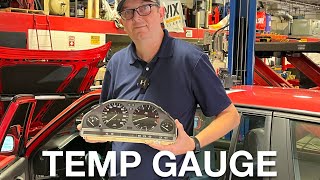
- Gauge Pinned to Hot or Cold: The needle might immediately go to the hottest or coldest reading, regardless of the actual engine temperature. 🎬 See this guide for full temperature gauge diagnostics and repair.
Pro Tip: Which Sensor Do I Need?
If your car runs poorly but the temp gauge seems fine, you likely need the DME/ECU sensor (blue). If your car runs perfectly but the temp gauge is acting up, you need the gauge sender (brown/black).
Choosing the Right Aftermarket Sensor
For a critical part like the DME coolant sensor, quality matters. While many budget options exist, sticking with an OEM-supplier brand is a safe bet for reliability and accurate readings.
- Tier 1 (OEM Supplier): Bosch is the original equipment manufacturer for BMW for these sensors. Choosing a Bosch sensor is the closest you can get to a Genuine BMW part without the higher price tag. They are built to the original specifications for performance and longevity.
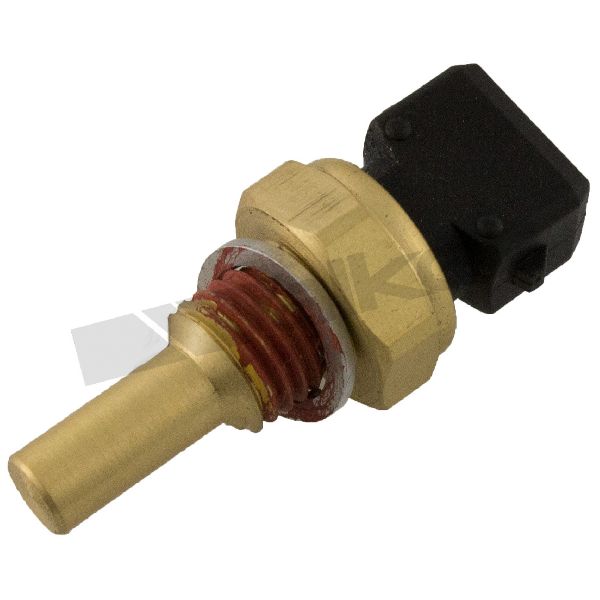
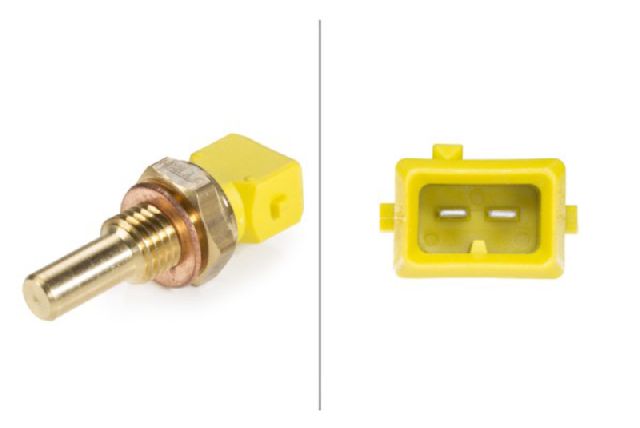
- Tier 2 (Reputable Aftermarket): Brands like Hella, Vemo, and Facet are well-known in the European parts world. Hella is often considered an OEM-quality equivalent. These brands offer a good balance of quality and price.
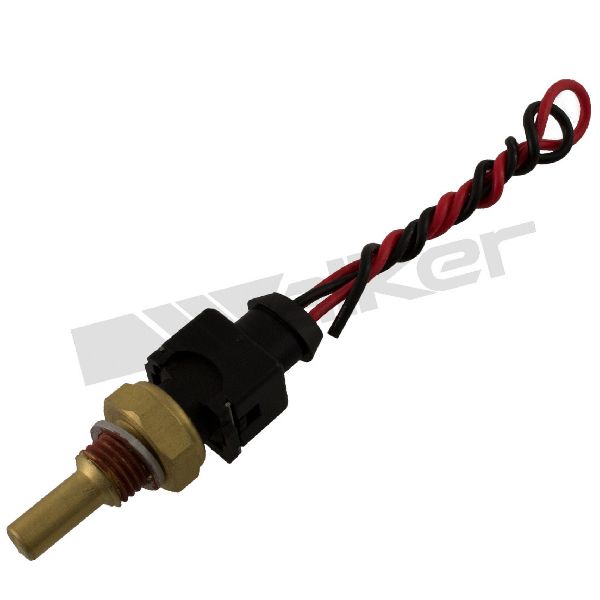
- Tier 3 (Budget-Friendly): Brands like Standard Ignition, True Tech, and Global Parts are typically more affordable. They can be a viable option, but may not offer the same long-term durability or precise temperature readings as higher-tier brands.
A Note on OEM vs. Aftermarket
For the main DME (blue) sensor, using a Tier 1 or Tier 2 brand is highly recommended. The engine's performance depends on accurate readings from this sensor. For the gauge sender, the risk of using a budget brand is lower, as a failure will only affect the gauge reading and not how the engine runs.
Known Issues, Recalls, or TSBs
Searches of the National Highway Traffic Safety Administration (NHTSA) database and other technical resources show no specific recalls or Technical Service Bulletins (TSBs) for the engine coolant temperature sensors on the 1988-1995 BMW M3 models.
Frequently Asked Questions (FAQ)
Where are these sensors located on my M3?
Both sensors are typically located on the engine's cylinder head, near the thermostat housing. They are screwed directly into the engine head or thermostat assembly and are close to each other, distinguishable by their connector color (blue for DME, brown/black for gauge).
Is this a difficult part to replace myself?
No, this is a DIY-friendly job for most home mechanics. The difficulty is low, requiring basic hand tools. You will need to drain a small amount of coolant, unplug the electrical connector, unscrew the old sensor, and install the new one. The estimated time is about 30-60 minutes.
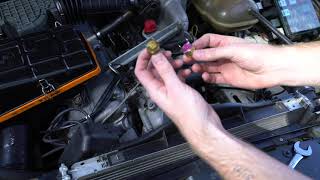
🎬 Watch a walkthrough of the sensor removal and installation process.Do I need to drain all my coolant to change a sensor?
You do not need to drain the entire system. If you are quick, you will only lose a small amount of coolant when you swap the sensor. However, to do the job cleanly, it's best to drain a quart or two from the radiator's drain plug before starting. Always have some BMW-approved coolant on hand to top off the system afterward.
My 1996+ M3 has a different sensor, right?
Yes. Starting in late 1995, BMW began phasing in a single, four-pin sensor that combines the DME and gauge functions into one unit. This guide is specific to the two-sensor setup used on the E30 M3 and the 1995 E36 M3.
Helpful Videos

Technical Specifications
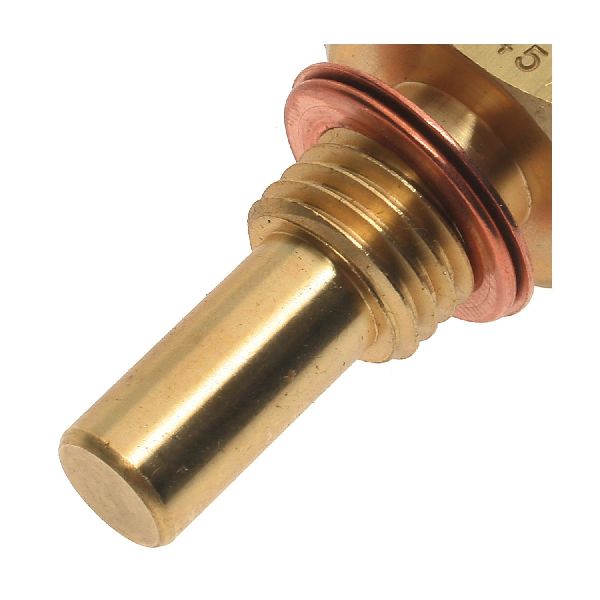
OEM Part Numbers: 13621709967 (DME/ECU Sensor, Blue) 13621284397 (DME/ECU Sensor, Blue) 13621709966 (DME/ECU Sensor, Blue) 12621710511 (Gauge Sender, Brown/Black)
DME Sensor: 2-pin blue connector. Gauge Sender: 1-pin brown or black connector.
We Have This Part in Stock


The information in this article is provided for general reference and educational purposes only. Vehicle specifications, procedures, and part compatibility can vary by production date, trim level, and region. Always consult your vehicle's factory service manual and verify part numbers before purchasing or performing repairs. Safety-critical components such as airbags, seat belts, and braking systems should be installed by a qualified professional.
- BMW M3:
- 🎬 Helpful Videos
- 🛍️ Shop This Part
- Understanding Your M3's Coolant Temp Sensors
- Symptoms of a Failing DME/ECU Sensor (Blue Connector)
- Symptoms of a Failing Gauge Sender (Brown/Black Connector)
- Pro Tip: Which Sensor Do I Need?
- Choosing the Right Aftermarket Sensor
- A Note on OEM vs. Aftermarket
- Known Issues, Recalls, or TSBs
- Frequently Asked Questions (FAQ)
- 🎟️ Get 5% Off