

Guide to Air/Fuel Ratio Sensors for the 2007-2012 Lexus RX350
Fix your check engine light and restore fuel economy by choosing the right sensor for your V6 engine.
- Denso is the original equipment (OEM) supplier for Lexus; choosing an aftermarket Denso sensor provides identical quality to a dealer part for less money.
- Your RX350 has two upstream A/F sensors. You must identify the correct bank (Bank 1 is rear/firewall, Bank 2 is front/radiator) before ordering.
- Ignoring a bad A/F sensor will lead to poor fuel economy, a failed emissions test, and can eventually cause expensive damage to the catalytic converter.
- The Bank 1 sensor (rear) is much more difficult to access and replace than the Bank 2 sensor (front), which will be reflected in higher labor costs.
Is Your RX350 Showing These Symptoms?
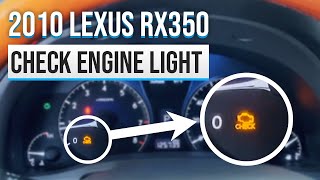
A failing air/fuel ratio sensor is a common issue that almost always triggers a warning. The most obvious sign is the Check Engine Light appearing on your dashboard, often along with the VSC 🎬 Watch: Diagnosing a check engine light on an RX350 (Vehicle Stability Control) light. Other symptoms to watch for include:
- Worse Fuel Economy: The sensor's main job is to help the engine run efficiently. When it fails, the computer may use more gas than necessary.
- Rough Idle: Incorrect data from the sensor can lead to a poor fuel mixture, causing an unstable or rough idle.
- Rotten Egg Smell: A very rich fuel mixture can overwhelm the catalytic converter, producing a sulfur-like smell from the exhaust.
- Failed Emissions Test: A bad A/F sensor will cause your vehicle to fail an emissions inspection.
Choosing the Right Aftermarket A/F Sensor
When replacing a sensor on a Lexus, quality is key. Using a low-quality part can lead to persistent check engine lights and performance issues. For the 2007-2012 RX350, you have excellent aftermarket options that meet or exceed original factory quality.
Brand Quality Tiers
| Brand | Quality Assessment |
|---|---|
| Denso | Denso is the Original Equipment (OEM) manufacturer for Lexus. An aftermarket Denso sensor is identical to the part you would buy from a Lexus dealer, offering a guaranteed first-time fit and long-term reliability. This is the most recommended choice. |
| NGK / NTK | NGK (which sells sensors under the NTK brand) is another top-tier OEM supplier for many automakers. Their sensors are considered equal in quality and performance to Denso and are an excellent, trustworthy alternative. |
Avoid Universal Sensors
It is highly recommended to avoid "universal" sensors. These require you to cut and splice wires, which creates a potential point of failure. A direct-fit sensor from Denso or NGK/NTK costs a bit more but is far more reliable and easier to install correctly.
Common Ordering Mistakes
Your RX350's V6 engine has four sensors in total: two upstream A/F sensors and two downstream oxygen sensors. Before ordering, you must identify the exact location of the failed sensor.
- Bank 1 vs. Bank 2: Bank 1 is the cylinder bank at the rear of the engine, against the firewall. Bank 2 is at the front, near the radiator. The Bank 1 sensor is significantly harder to access.
- Upstream vs. Downstream: This guide is for the upstream Air/Fuel Ratio Sensor (also called Sensor 1). Do not confuse it with the downstream Oxygen Sensor (Sensor 2), which serves a different purpose.
- Vehicle Build Location: Some parts may differ between models built in Japan (VIN starts with 'J') and those built in North America (VIN starts with '2'). Always verify the part fits your specific VIN.
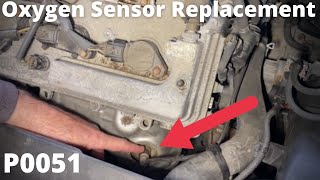
Pro Tip: The diagnostic trouble code (DTC) from an OBD2 scanner will tell you exactly which sensor has failed. For example, code P0051 points to Bank 2, Sensor 1, while P2195 points to Bank 1, Sensor 1.
🎬 See how to troubleshoot and fix a P2195 codeFrequently Asked Questions (FAQ)
How many A/F sensors does my 2007-2012 RX350 have?
Your RX350 has two upstream Air/Fuel Ratio sensors and two downstream oxygen sensors, for a total of four. The V6 engine has two cylinder banks, and each bank has one of each type of sensor.
What is the difference between an Air/Fuel Ratio Sensor and an Oxygen Sensor?
Air/Fuel Ratio (A/F) sensors are a more advanced, wide-band type of sensor used upstream (before the catalytic converter) to provide precise, real-time data for adjusting the fuel mixture. The simpler, narrow-band Oxygen (O2) sensors are used downstream (after the catalytic converter) primarily to monitor the converter's efficiency.
Which sensor is Bank 1 and which is Bank 2?
On the transversely mounted V6 in your RX350, Bank 1 is the cylinder bank located toward the rear of the engine bay, against the firewall. Bank 2 is the cylinder bank at the front, just behind the radiator. This is critical information for ordering the correct part and for estimating labor costs, as the Bank 1 sensor is much harder to replace.
🎬 Watch this walkthrough for replacing the difficult Bank 1 sensorCan I replace just one sensor?
Yes. You only need to replace the specific sensor that has failed. The sensors are not typically replaced in pairs or sets.
Are there any recalls or TSBs for this part?
There are no major recalls for A/F sensors on the 2007-2012 RX350. Lexus did issue a Technical Service Bulletin (TSB) L-SB-0109-09 for some 2007-2010 models, but this was for the downstream oxygen sensors (codes P0138/P0158), not the upstream A/F sensors.
Helpful Videos


Technical Specifications
OEM Part Numbers: 89467-48100 89467-48130 89465-48110
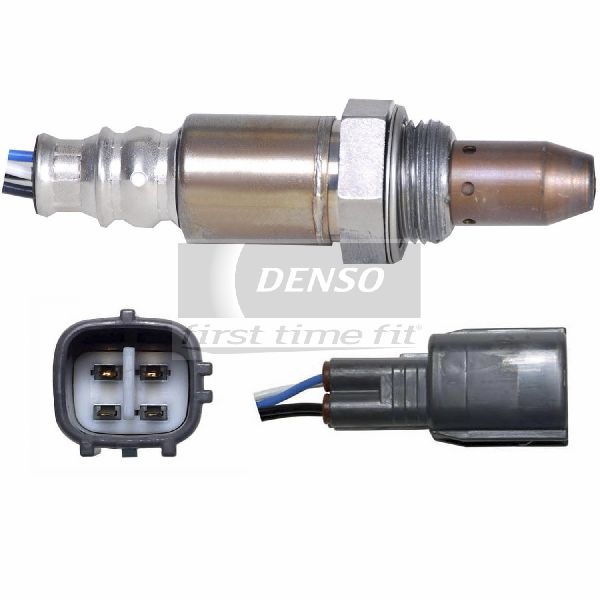
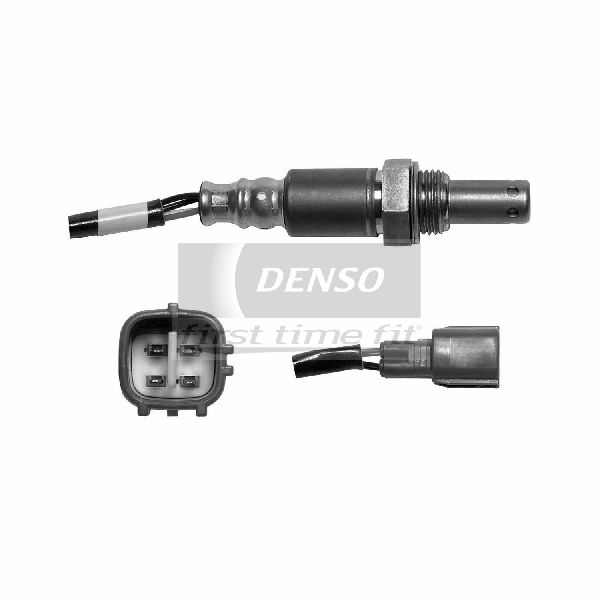
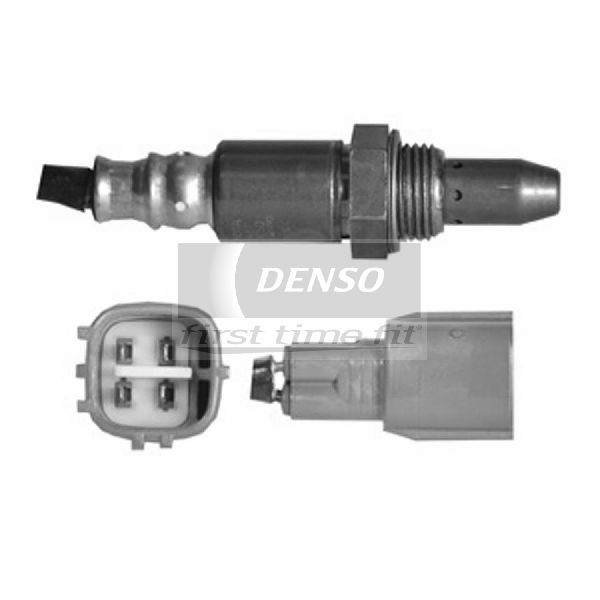
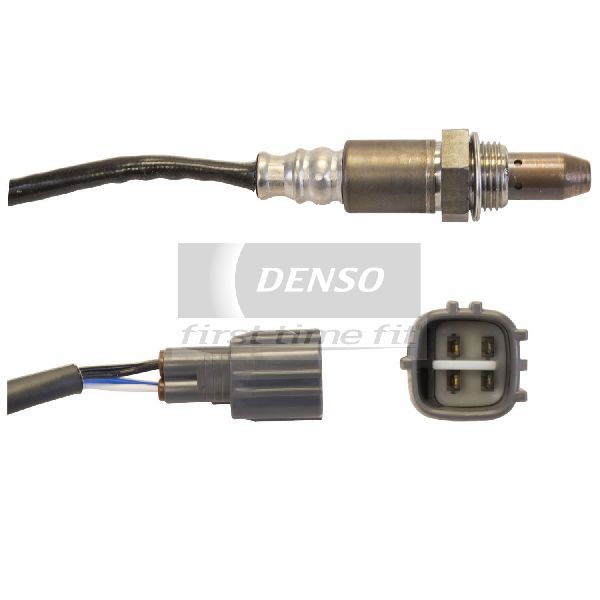
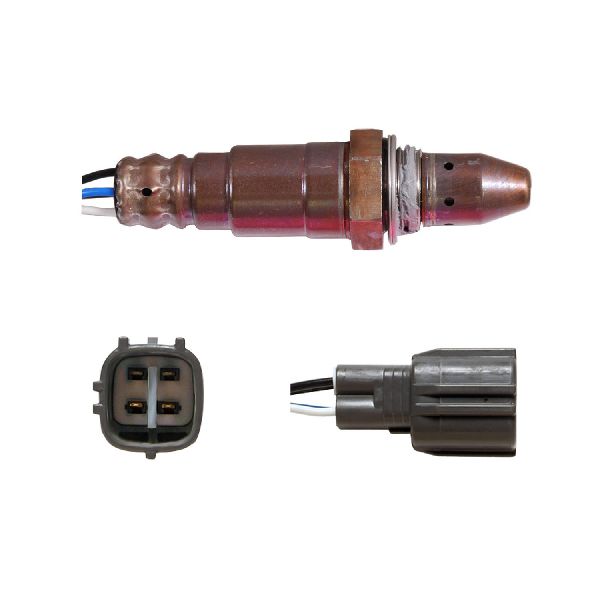
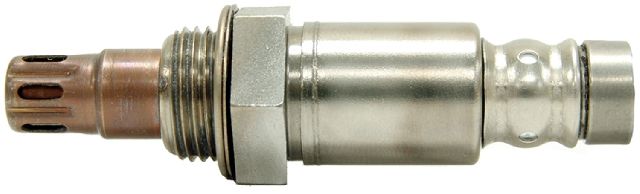
The 2007-2012 Lexus RX350 uses two upstream, wide-band, 4-wire Air/Fuel Ratio sensors. One is for Bank 1 (rear, by firewall) and one for Bank 2 (front, by radiator). The specific Denso or NGK part number varies by location and exact model year, so confirm fitment before purchase.
We Have This Part in Stock

The information in this article is provided for general reference and educational purposes only. Vehicle specifications, procedures, and part compatibility can vary by production date, trim level, and region. Always consult your vehicle's factory service manual and verify part numbers before purchasing or performing repairs. Safety-critical components such as airbags, seat belts, and braking systems should be installed by a qualified professional.
- Lexus RX350: