

C0035 on 2000-2005 Cadillac Deville: Left Front Wheel Speed Sensor Fault Causes and Fixes
This code means there's a problem with the left front wheel speed sensor circuit. On a 2000-2005 Deville, this is most often a broken wire inside the sensor's flexible harness near the lower control arm. A failed wheel hub assembly, which contains the sensor, is the second most likely cause. Expect to replace either the wiring pigtail or the entire front hub assembly.
- Code C0035 on a 2000-2005 Deville means a fault with the Left Front Wheel Speed Sensor circuit.
- The most likely cause is a broken wire inside the flexible part of the sensor's harness, a known issue on this GM platform.
- Thoroughly inspect and test the wiring with a 'wiggle test' before replacing the more expensive wheel hub assembly.
- Driving with this code is possible but not recommended, as the ABS and Traction Control safety systems are disabled.
- Ensure you purchase the correct wheel hub for your model year, as there was a design change after 2000.
What's Unique About the 2000-2005 Cadillac Deville
The 2000-2005 Deville (eighth generation) integrates the wheel speed sensor directly into the wheel hub and bearing assembly. Unlike some newer vehicles where an external magnetic ring can be cleaned, the sensor on this Deville is a sealed unit. The most common point of failure on this specific platform is not the hub itself, but the wiring harness that connects the hub to the car's main wiring. This wire is subject to constant flexing and movement with the steering and suspension, often leading to an internal break that isn't always visible. This issue is so common that GM issued a Technical Service Bulletin (PIC5992) for related platforms, advising technicians to check for wires broken inside the insulation.
Symptoms You May Notice
- ABS warning light is on
- Traction Control (TCS) warning light is on
- "SERVICE STABILITY SYSTEM" message on the driver information center
- Traction control and ABS are non-functional
- Cruise control may be disabled
- A humming, rumbling, or growling noise from the front wheel that increases with speed (indicates a failing wheel bearing/hub).
- Replacing the wheel hub assembly when the actual problem is a simple break in the wiring harness. Always test the harness thoroughly before buying an expensive hub. The 'wiggle test' is the most important diagnostic step for this specific vehicle.
Most Likely Causes
- Broken or Damaged Wheel Speed Sensor Wiring Harness 🔴 High Probability → Shop ABS Wheel Speed Sensor The wiring harness is subject to constant stress and flexing from suspension travel and steering. Over time, the internal copper wires fatigue and break, usually inside the insulation where the harness makes a loop near the lower control arm. This failure mode is common across many GM platforms from this era.
How to confirm: Perform a 'wiggle test' on the harness while monitoring live sensor data with a scan tool. A signal that cuts in and out when you flex the wire indicates a break. GM TSB PIC5992 notes the condition is often duplicated while turning the steering wheel. You can also pull gently on the wires at the connector; a broken wire may stretch or pull out completely. A multimeter check for continuity may not always find an intermittent break.
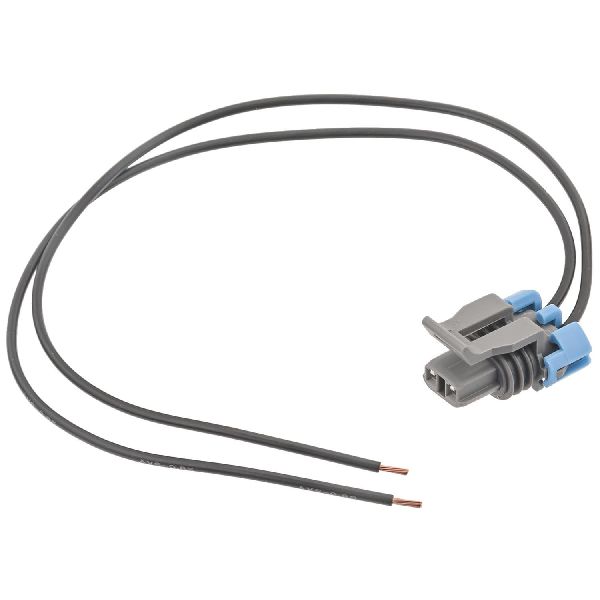
Typical fix: Splice in a new wheel speed sensor harness pigtail. This is sold as a repair kit.
Est. part cost: $20-$50 - Failed Front Wheel Hub & Bearing Assembly 🟡 Medium Probability → Shop Hub Assembly The wheel speed sensor is integrated into the hub assembly. Internal failure of the sensor element or corrosion within the sealed unit requires replacement of the entire assembly. A failing bearing will often cause the C0035 code before it becomes audibly loud.
How to confirm: If the wiring harness and its connector are confirmed to be good through electrical testing and a thorough wiggle test, the fault lies within the hub assembly itself. A grinding, humming, or growling noise from the wheel area that changes with speed or while turning is a strong indicator of a bad wheel bearing.
Typical fix: Replace the entire left front wheel hub and bearing assembly.
Est. part cost: $80-$250 - Corrosion or Damage at the Sensor Connector ⚪ Low Probability The connector is located in the wheel well, where it is exposed to water, salt, and road debris. In some cases, the plastic retaining clip can break, allowing the connector to come loose or unplug entirely.
How to confirm: Visually inspect the connector pins for green or white corrosion, bent pins, or physical damage after disconnecting it. Ensure the connector is fully seated and the locking tab is engaged.
Typical fix: Clean the connector pins with an electrical contact cleaner. If damage is severe, the connector pigtail must be replaced. If the connector is simply unplugged, reconnect it and secure the harness away from moving parts.
Est. part cost: $5-$50
Rare But Worth Checking
- Faulty Electronic Brake Control Module (EBCM): → Shop ABS Control Module This is an expensive and uncommon cause. It should only be considered after all other possibilities (wiring, hub) have been definitively ruled out. A failed EBCM will typically set multiple wheel speed sensor codes (e.g., C0035, C0040, C0045) or communication codes, not just C0035 in isolation.
Diagnosis Steps
- Connect an OBD-II scanner capable of reading ABS/Chassis codes to confirm C0035 is present.
- Access the live data stream on the scanner and monitor the speeds of all four wheels while driving slowly or with the front wheels raised and spinning. Confirm that the Left Front wheel speed reads 0 mph or is erratic compared to the other three.
- Perform a 'wiggle test'. With the live data graph visible, raise the vehicle, and aggressively wiggle, flex, and pull on the wiring harness for the left front sensor, especially where it loops near the control arm. If the speed signal appears or disappears, the harness is faulty.
- If the wiggle test is inconclusive, raise and safely support the front of the vehicle. Remove the left front wheel.
- Visually inspect the entire length of the wheel speed sensor wiring harness from the hub to where it enters the main body harness. Look for chafing, melting, or obvious breaks.
- Disconnect the harness connector. Inspect the pins on both the hub side and the harness side for any signs of corrosion, moisture, or damage. Ensure the connector wasn't simply unplugged.
- If a visual fault is found in the wiring or it failed the wiggle test, replace the harness pigtail (Dorman 970-040 or equivalent).
- If the wiring and connector are confirmed to be good, the fault is with the sensor inside the wheel hub assembly.
- Replace the left front wheel hub and bearing assembly. Be aware of the 2000 vs. 2001-2005 design change.
- After repairs, clear the code with the scanner and perform a test drive, including some turns, to ensure the ABS and TCS lights do not return.
Parts You'll Likely Need
- ABS Wheel Speed Sensor Wiring Harness Pigtail — This is used to repair the most common point of failure: a broken wire in the harness. It allows you to replace just the damaged connector and a short section of wire.
Trusted brands: Dorman 970-040, ACDelco (GM Genuine Parts), Standard Motor Products
OEM price range: $30-$60
Aftermarket price range: $15-$40 - Front Wheel Hub and Bearing Assembly
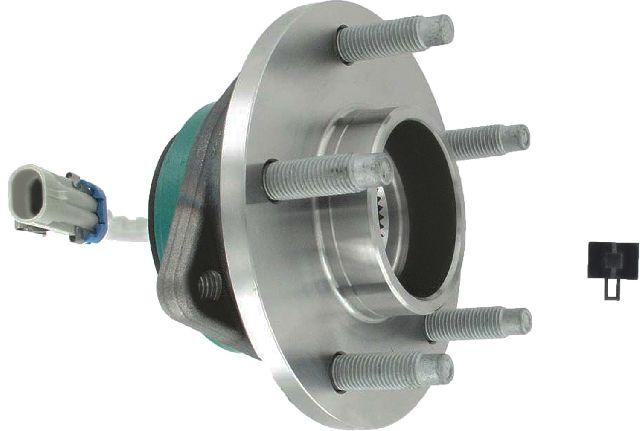
(OEM #GM cross-references include 88967189. Aftermarket equivalents are more common.)— This part contains the integrated wheel speed sensor. If the sensor itself has failed internally, the entire hub must be replaced.
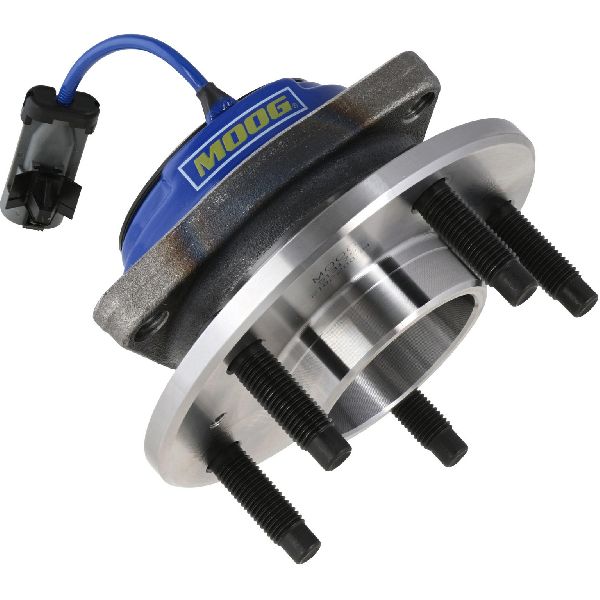
Trusted brands: ACDelco (Professional Grade: FW241), MOOG 513179, Timken 513179, SKF BR930428
OEM price range: $200-$300
Aftermarket price range: $80-$180
Related Codes That Often Appear With This One
- C0040 — This code is for the Right Front Wheel Speed Sensor. It's common to see both front sensor codes if there are issues with the EBCM or if both wiring harnesses fail around the same time due to age and mileage, as they are subjected to the same conditions.
- C0561 — This code indicates 'ABS System Disabled' and is often stored as a secondary, informational code alongside a primary fault like C0035.
Technical Service Bulletins (TSBs) & Recalls
- GM TSB PIC5992: While written for later Impala/Lacrosse models, it directly addresses the C0035/C0040 codes caused by an internal break in the front wheel speed sensor jumper harness. It advises technicians that the condition is more likely to occur while turning and that a simple resistance check with a multimeter may not be sufficient to find the fault.
- GM TSB Bulletin #PIC5428G: This bulletin notes that the Electronic Brake Control Module may store codes C0035-C0050 with specific symptom bytes 18, 5A, or 0F, indicating the need for technicians to gain access to the correct wheel bearing per the set code.
Platform-Specific Known Issues
- Internal Wiring Break at Flex Point: The most common failure is not visible externally. The wires for the sensor break *inside* the insulation at the point where the harness flexes with suspension and steering movement, typically in the 'S' curve of the harness near the lower control arm. A wiggle test is the best way to confirm this.
- Hub Design Change (2000 vs. 2001-2005): There are two different designs for the front wheel hub assembly. The 2000 model year uses a '1st design', while 2001-2005 models use a '2nd design' which is often noted by suppliers as having a 'plastic wire clip'. It is critical to verify the correct part for your specific year before purchasing a new hub.
Mechanic-Grade Diagnostic Values
- Wheel Speed Sensor Internal Resistance — expected: 1000 - 2000 Ohms (1.0k - 2.0k Ω). Failure: An open circuit (infinite resistance) or a reading significantly outside the expected range indicates a failed sensor coil.
- Wheel Speed Sensor AC Voltage Output — expected: At least 200 millivolts (0.2 VAC) when spinning the wheel at approximately one revolution per second.. Failure: A reading below 200mV AC, or no voltage at all, points to a failed sensor, excessive air gap between the sensor and tone ring, or a damaged tone ring.
Hidden / Shadow Codes Worth Checking
- C0035 06: Indicates the Left Front Wheel Speed Sensor circuit has low voltage or is open. This symptom byte strongly points towards a wiring issue like a broken wire or corroded connector. (see via GM Tech 2, VXDIAG VCX Nano, or other high-end scan tool capable of reading manufacturer-specific symptom bytes.)
- C0035 5A: Indicates the signal from the Left Front Wheel Speed Sensor is not plausible compared to other vehicle sensors (like the other wheel speeds). This points to an intermittent signal or a failing bearing causing erratic readings. (see via GM Tech 2, VXDIAG VCX Nano, or other high-end scan tool capable of reading manufacturer-specific symptom bytes.)
Scan Tool Commands That Help
- GM Tech 2: Live Data Display (Wheel Speed Sensors) — This is the primary function used to diagnose C0035. It allows you to view the reported speed from all four wheels in real-time to confirm the left front sensor is the one dropping out or reporting 0 MPH.
- GM Tech 2: Snapshot — This function can capture Freeze Frame and Failure Records when the DTC was set. This is useful for seeing vehicle conditions (like if the wheel was turned) when the fault occurred, which can help differentiate a wiring break (fails on turns) from a hub failure.
- GM Tech 2: Automated Test / Actuator Test — While not directly for the sensor, this command can cycle the ABS pump and solenoids after a repair (like EBCM replacement) to ensure the system is functioning and to help bleed the system if necessary.
Wiring & Ground Locations
- EBCM (Electronic Brake Control Module) — Located in the left front of the engine compartment, mounted to the Brake Pressure Modulator Valve (BPMV), typically below and behind the headlamp assembly.. This module receives the signal from the left front wheel speed sensor. All wiring tests will ultimately lead back to the EBCM connector.
- EBCM Ground (Splice Pack SP101) — The EBCM is grounded through Splice Pack SP101, which connects to ground point G110. G110 is located on the left side of the radiator support.. A poor ground at G110 or corrosion within SP101 can cause a floating ground for the EBCM, leading to erratic behavior and potentially setting false wheel speed sensor codes. This should be checked if the sensor and wiring test good.
- EBCM Connector Pins — At the 38-pin EBCM connector.. The Left Front Wheel Speed Sensor signal wire (Dark Green) is on Pin 32, and the return/ground wire (Light Green with Black tracer) is on Pin 33. These are the specific pins to use for continuity and voltage tests back to the sensor harness connector.
Real Owner Repair Stories
- CadillacForums.com user (2003 Cadillac Deville) — ABS and Traction Control lights on, code C0035 present.
❌ Tried (didn't work) Initial assumption was a bad wheel hub/bearing assembly.
✅ What actually fixed it The user performed a 'wiggle test' on the sensor wiring harness and found the signal would cut in and out on the scan tool. The problem was a broken wire inside the insulation. Splicing in a new pigtail harness (Dorman 970-040) resolved the issue without needing to replace the expensive hub assembly.
OEM Part Supersession History
GM 88952843 (example pigtail)→Dorman 970-040 (aftermarket equivalent)— The Dorman part is a widely available aftermarket replacement for the OEM wiring pigtail that is prone to failure.
Model Year Variations Within This Range
- 2000 vs 2001-2005: The front wheel hub assembly has a '1st design' for 2000 and a '2nd design' for 2001-2005. The primary functional difference noted by parts suppliers is the design of the clip that holds the sensor wire. The '1st design' often has a steel wire clip, while the '2nd design' uses a plastic clip. Forum users report they are functionally interchangeable, but it is best practice to order the correct design for the vehicle's year.
Diagnostic Flowchart
Used vs. New Parts: Buying Guide for This Vehicle
When a used part is the smart pick: A used part is generally NOT recommended for this repair. The two primary failure items are a wear component (wheel hub/bearing) and a fatigue-prone wiring harness. A used part carries a high risk of having the same issue or a very short remaining service life.
Donor-vehicle mileage cap: roughly under 40000 miles for the part to have meaningful remaining life.
What to inspect on the donor part:
- For a hub assembly, check for any signs of rotational roughness, noise, or lateral play (wobble). Avoid any part with visible corrosion on the ABS sensor housing.
- For a wiring pigtail, inspect the insulation for any signs of cracking, brittleness, or previous repairs. Gently flex the wire; if it feels overly stiff, it is likely to fail soon.
Aftermarket brands forum-validated for this vehicle:
- For Hub Assemblies: Timken, SKF, MOOG, and ACDelco (Professional line) are consistently cited as high-quality, reliable brands by mechanics.
- For Wiring Harness Pigtail: Dorman is the most common and widely available aftermarket solution.
Brands owners have reported issues with on this vehicle:
- Unbranded, 'white box' hub assemblies from online marketplaces should be avoided. They often use lower-quality bearings and seals, and the integrated ABS sensors may not meet OE specifications, leading to premature failure or persistent ABS/TCS issues.
Real Owner Stories
Aggregated from forums and TSBs cited above. Mileages and costs reflect what owners reported in those sources.
2003 Cadillac Deville
Symptoms: The ABS and 'SERVICE STABILITY SYSTEM' lights would come on, especially during turns. A wiggle test on the driver's side front wheel speed sensor wire made the signal on the scan tool cut in and out.
What fixed it: The wires inside the sensor harness were broken internally at the 'S' curve near the lower control arm, even though the outside insulation looked fine. Splicing in a new harness pigtail resolved the issue.
Source hint: Vehicle Specific Issue: Internal Wiring Break at Flex Point
2006 Chevrolet Impala
Symptoms: The ABS and Traction Control warning lights were on. The problem was more likely to occur while turning the steering wheel.
What fixed it: The problem was diagnosed as an internal break in the front wheel speed sensor jumper harness, which is a known issue.
Source hint: GM TSB PIC5992
2004 Chevrolet Monte Carlo
Symptoms: ABS and Traction Control lights were on, disabling both systems.
What fixed it: The cause was the common internal wire break in the wheel speed sensor pigtail. The fix was to replace the harness with part Dorman 970-040.
Source hint: YouTube - Chris Arnau / 'C0035 FIX!! C0040 FIX!!! ABS and Traction Control FIX fo'
Related OBD-II Codes
Frequently Asked Questions
I'm replacing the front wheel hub on my 2002 Deville for a C0035 code. Is there anything special I need to know?
My mechanic says the whole wheel hub needs to be replaced, but I don't hear any grinding or humming noise. Is this correct?
Why do my ABS and Traction Control lights only come on when I'm turning the steering wheel?
What is the most likely cause of code C0035 on my Cadillac Deville?
I tested the sensor harness with my multimeter and it showed good continuity, but the code persists. Could the harness still be bad?
What is the part number for the replacement wiring harness pigtail?
Do other GM cars like the Buick LeSabre or Chevy Impala have this same C0035 wiring problem?
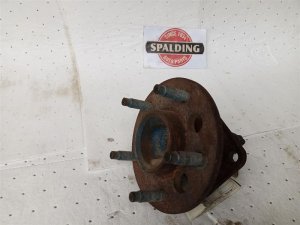
Used OEM Parts in Stock
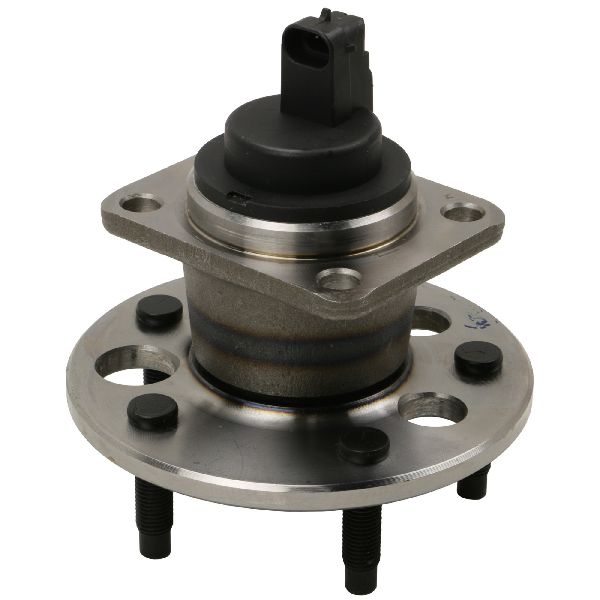
New Aftermarket Parts Available


The information in this article is provided for general reference and educational purposes only. Vehicle specifications, procedures, and part compatibility can vary by production date, trim level, and region. Always consult your vehicle's factory service manual and verify part numbers before purchasing or performing repairs. Safety-critical components such as airbags, seat belts, and braking systems should be installed by a qualified professional.
- Cadillac Deville:
- 🧭 Diagnostic Flowchart
- 🛍️ Shop This Part
- What's Unique About the 2000-2005 Cadillac Deville
- Symptoms You May Notice
- Most Likely Causes
- Rare But Worth Checking
- Diagnosis Steps
- Parts You'll Likely Need
- Related Codes That Often Appear With This One
- Technical Service Bulletins (TSBs) & Recalls
- Platform-Specific Known Issues
- Mechanic-Grade Diagnostic Values
- Hidden / Shadow Codes Worth Checking
- Scan Tool Commands That Help
- Wiring & Ground Locations
- Real Owner Repair Stories
- OEM Part Supersession History
- Model Year Variations Within This Range
- Used vs. New Parts: Buying Guide for This Vehicle
- Real Owner Stories
- 2003 Cadillac Deville
- 2006 Chevrolet Impala
- 2004 Chevrolet Monte Carlo
- Related OBD-II Codes
- Frequently Asked Questions
- 🎟️ Get 5% Off