

C0035 on 2006-2011 Cadillac DTS: Left Front Wheel Speed Sensor Fault Causes and Fixes
On a 2006-2011 Cadillac DTS, code C0035 is most often caused by a faulty front left wheel hub and bearing assembly. The integrated magnetic sensor ring fails or gets contaminated with metallic debris. Per GM TSB PIC5428, cleaning the ring is a first step, but replacing the entire hub assembly is the common permanent fix, costing around $150-$250 for the part.
- C0035 on a 2006-2011 DTS means a problem with the Left Front Wheel Speed Sensor circuit, which will disable your ABS and StabiliTrak.
- The most likely cause is a faulty wheel hub and bearing assembly, which contains the sensor's magnetic ring. This ring can get contaminated with metallic debris.
- Before replacing parts, always perform a thorough visual inspection of the wiring harness for damage or corrosion, and inspect and clean the magnetic ring on the hub per GM TSB PIC5428G.
- A scan tool that can read ABS live data and manufacturer-specific symptom bytes is extremely helpful for confirming which wheel is at fault and the nature of the failure.
- Due to the safety-critical nature of the ABS, professional diagnosis and repair are strongly recommended if you are not experienced with brake system work.
What's Unique About the 2006-2011 Cadillac DTS
For this generation of Cadillac DTS, which is based on the GM W-Body platform, the wheel speed sensor and the magnetic encoder ring (reluctor) are integrated into the wheel hub and bearing assembly. While wiring issues can occur, the hub assembly itself is a very common point of failure. The magnetic ring can become contaminated with metallic debris or the bearing can develop play, both of which disrupt the sensor signal and trigger the C0035 code. Owners often find that replacing the entire hub is a more permanent fix than just addressing wiring.
Symptoms You May Notice
- ABS warning light is illuminated
- StabiliTrak or Traction Control warning light is illuminated
- "Service Stability System" or "Service Brakes" message on the Driver Information Center (DIC)
- Cruise control may be disabled
- In some GM vehicles, a heavier steering feel at low speeds may be noticed as the power steering system can use this data.
- Replacing only the external ABS sensor when it is sold separately from the hub. On the DTS, the problem is almost always the integrated magnetic ring or the bearing itself, making hub assembly replacement necessary.
- Replacing the hub assembly without first inspecting and cleaning the magnetic encoder ring, which can sometimes be a no-cost fix.
- Replacing the hub assembly when the actual fault is a simple wiring break or corroded connector.
Most Likely Causes
- Faulty Left Front Wheel Hub and Bearing Assembly (Contaminated or Failed Magnetic Ring) 🔴 High Probability → Shop Hub Assembly The magnetic encoder ring is integrated into the hub's seal. This ring can crack or, more commonly, accumulate metallic brake dust and road grime. GM issued TSB PIC5428 for many models, including platform mates, noting this exact issue. Wear in the bearing itself can also cause excessive movement (play), leading to an erratic reading.
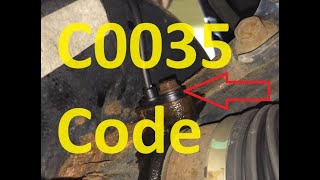
How to confirm: With the vehicle raised, check for any play in the wheel bearing by rocking the tire at the 12 and 6 o'clock positions. Use a scan tool to monitor live data from the left front wheel speed sensor; if the reading is erratic, jumping, or zero while the other wheels show speed, the hub is the likely cause. 🎬 Watch this video to understand the causes and fixes for C0035. A visual inspection of the hub's inboard side may reveal a build-up of metallic 'fuzz' on the brown magnetic ring.
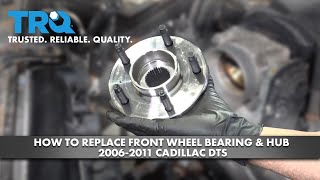
Typical fix: Per TSB PIC5428, the first step is to clean the magnetic encoder ring with a soft, non-magnetic brush and mild soap or brake cleaner. If this does not resolve the issue or if the bearing has play, replace the entire left front wheel hub and bearing assembly. 🎬 Watch: Step-by-step guide to replacing the front wheel hub assembly.
Est. part cost: $120-$250 - Damaged Wheel Speed Sensor Wiring or Connector 🟡 Medium Probability → Shop ABS Wheel Speed Sensor The wiring harness is located in a harsh environment near the wheel and suspension, making it susceptible to corrosion, chafing from contact with suspension components, or breaking internally from the repeated flexing of steering and suspension movement. This can cause an open or shorted circuit.
How to confirm: Perform a close visual inspection of the wiring from the sensor up into the wheel well. Look for green corrosion inside the connector pins, chafed insulation, or stretched/broken wires. Use a multimeter to check for continuity and shorts in the circuit between the sensor connector and the EBCM. An open circuit will often trigger a C0035 with symptom byte '06'.
Typical fix: Repair the damaged section of wire or replace the sensor pigtail connector. Ensure the repair is sealed against moisture.
Est. part cost: $15-$40
Rare But Worth Checking
- Faulty Electronic Brake Control Module (EBCM): → Shop ABS Control Module This is uncommon. Before condemning the EBCM, all other possibilities (hub, wiring) must be exhaustively ruled out. An EBCM failure typically presents with multiple wheel speed sensor codes (e.g., C0035, C0040, C0045) or communication errors, not just a single code.
Diagnosis Steps
- Connect an ABS-capable scan tool to the OBD-II port and confirm C0035 is the active code. Note any other codes or specific symptom bytes (e.g., 06, 0F, 18, 5A) present.
- Use the scan tool to view live data for all four wheel speed sensors. Drive the vehicle slowly (above 5 mph) and observe if the Left Front sensor reading is erratic, lagging, or stuck at zero compared to the others.
- Raise and safely support the front of the vehicle.
- Visually inspect the entire length of the left front wheel speed sensor wiring harness for any signs of damage, corrosion, or improper routing. Unplug the connector and check for corroded or bent pins.
- Remove the wheel. Inspect the wheel hub and bearing assembly. Check for any side-to-side or up-and-down play by rocking the tire, which would indicate a bad bearing.
- Following GM TSB PIC5428, inspect the inboard side of the hub for metallic debris or rust buildup on the brown magnetic encoder ring. If debris is present, clean it thoroughly with a soft brush and brake cleaner, then re-test.
- If wiring and the hub appear visually okay, use a multimeter to test the sensor circuit for proper voltage, ground, and continuity back to the EBCM connector.
- If the wiring tests good and cleaning the ring does not fix the issue, the most likely remaining cause is a faulty magnetic encoder or bearing within the hub assembly, requiring hub replacement.
Parts You'll Likely Need
- Front Wheel Hub and Bearing Assembly
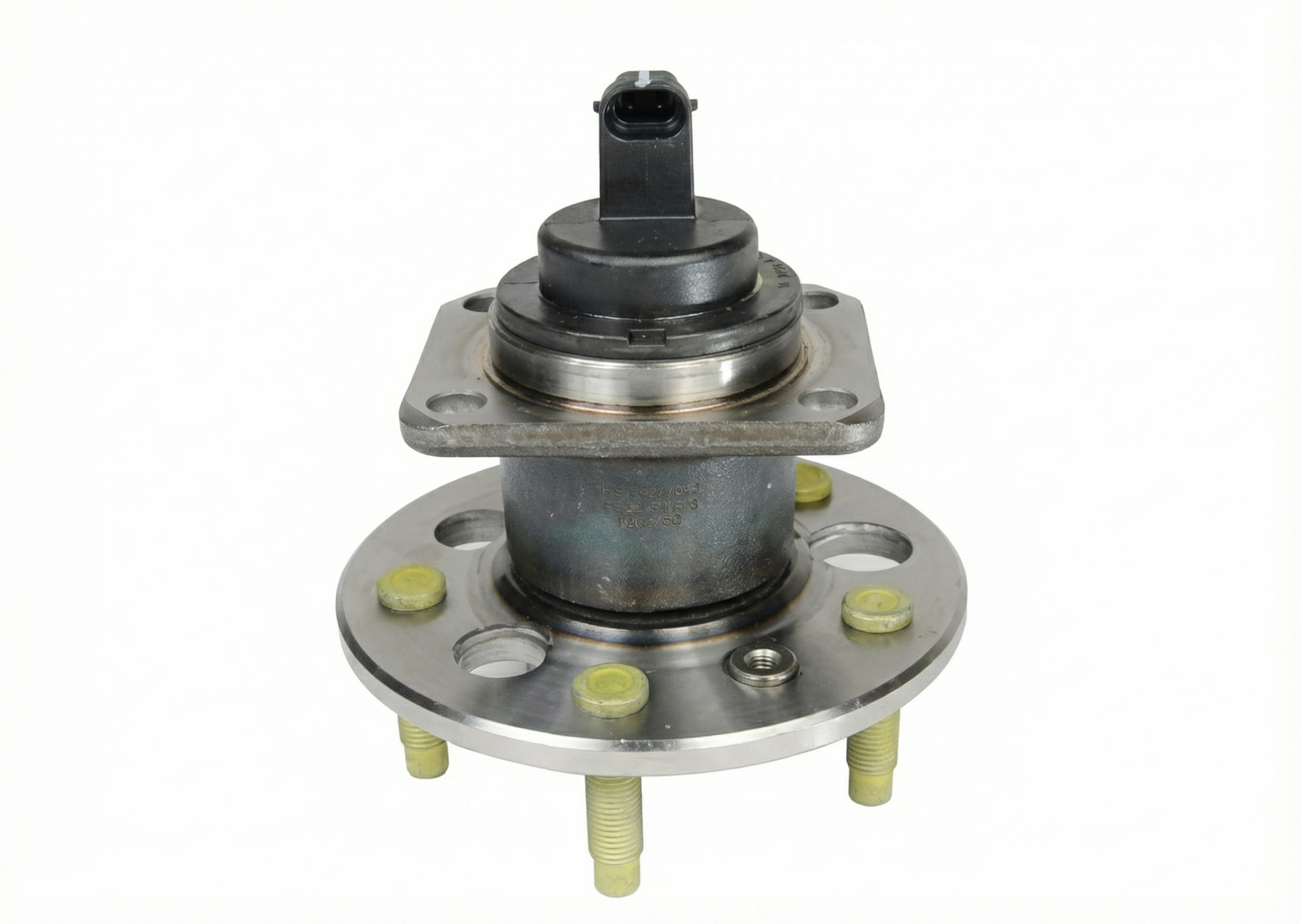
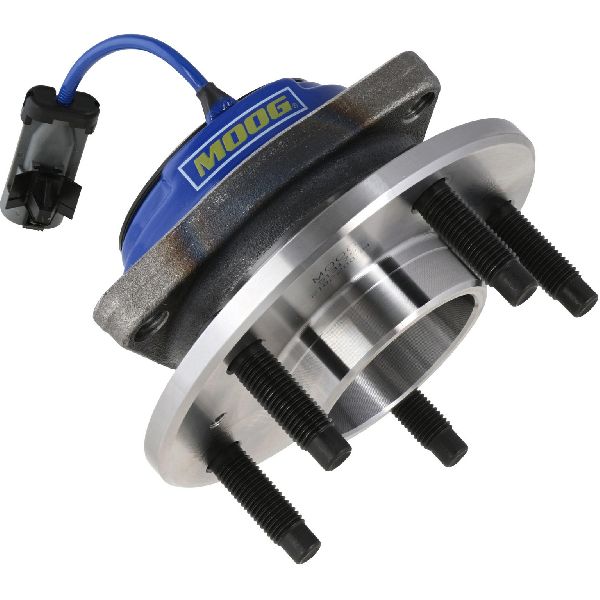
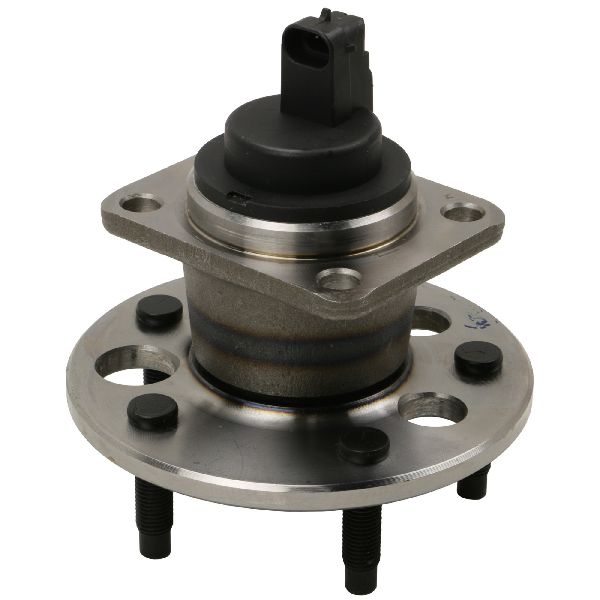
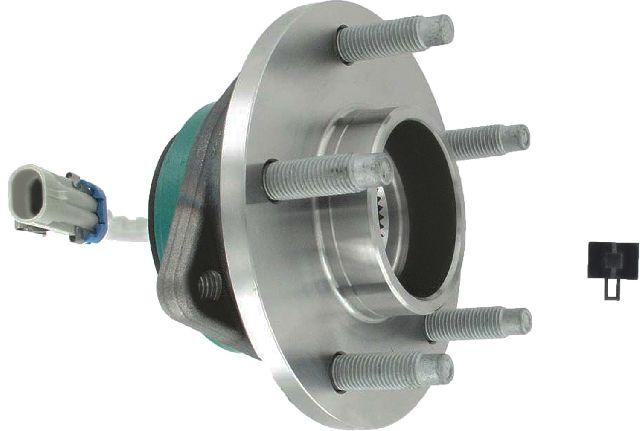
(OEM #25918329 (supersedes 19181883))— This is the most common failure. The assembly contains the wheel bearing, the mounting hub, and the integrated magnetic reluctor ring that the ABS sensor reads. Failure of the bearing or contamination/damage of the ring causes code C0035.
Trusted brands: ACDelco (OEM), Timken, MOOG, SKF
OEM price range: $200-$300
Aftermarket price range: $120-$200 - ABS Wheel Speed Sensor Connector Pigtail
(OEM #ACDelco PT1521 (GM 88953306))— If the diagnostic process points to a corroded or damaged connector, replacing the pigtail is the standard repair. The harness is exposed and prone to damage.
Trusted brands: ACDelco, Dorman (e.g., 645-134)
OEM price range: $30-$50
Aftermarket price range: $15-$30
Related Codes That Often Appear With This One
- C0040 — C0040 is the code for the Right Front Wheel Speed Sensor. Seeing both codes together could indicate a systemic issue, like a problem with the EBCM, a wiring harness that affects both sides, or simply that both front hubs are failing around the same time due to similar age and wear.
- U0415 — Indicates 'Invalid Data Received From EBCM'. On some GM vehicles, this code may set in the Power Steering Control Module because it relies on wheel speed data from the EBCM. Loss of a wheel speed signal can cause the PSCM to default to a reduced-assistance mode.
Technical Service Bulletins (TSBs) & Recalls
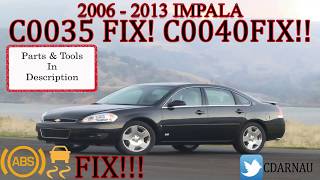
- GM PIC5428G: This Preliminary Information bulletin addresses DTCs C0035, C0040, C0045, or C0050 with symptom bytes 18, 5A, or 0F. It instructs technicians to inspect and clean metallic debris from the wheel bearing's magnetic encoder ring before replacing any parts. It applies to a wide range of GM vehicles from the era, including platform mates of the DTS. 🎬 See how to fix C0035 and C0040 codes on this platform.
- Manufacturer TSB Bulletin #PIC5428G notes that the Electronic Brake Control Module may trigger C0035 through C0050 specifically with symptoms 18, 5A, or 0F, and directs technicians to gain access to the wheel bearing corresponding to the set code.
Platform-Specific Known Issues
- Per GM Preliminary Information bulletin PIC5428G, accumulation of metallic debris on the magnetic encoder ring of the hub is a well-documented cause for this code on many GM platforms of this era. The bulletin advises inspection and cleaning before component replacement.
Mechanic-Grade Diagnostic Values
- Wheel Speed Sensor Signal (Digital Current) — expected: Switches between 7mA (Low) and 14mA (High) DC current as the wheel rotates.. Failure: Signal that is stuck high, low, or does not switch cleanly indicates a sensor or ring fault.
- Wheel Speed Sensor Supply Voltage (at sensor connector) — expected: 4.5–5.5 V (DC) with key on, engine off.. Failure: Voltage below 4.5V suggests a wiring issue or a problem with the EBCM's internal voltage regulator.
- Wheel Speed Sensor Resistance — expected: 1000 to 2000 ohms (for older analog sensors, not directly applicable to the DTS's active sensor but a useful general reference).. Failure: A reading outside this range on an analog sensor would indicate a fault. For the DTS's active sensor, voltage and current tests are more definitive.
Hidden / Shadow Codes Worth Checking
- C0035 06: Low Voltage/Open Circuit. This strongly points to a broken wire, unplugged connector, or severe corrosion in the sensor circuit. (see via GM-specific scan tool (Tech2, GDS2, or high-end equivalent).)
- C0035 0F: Erratic Signal. The EBCM sees a signal that is choppy or intermittent. This is a classic symptom of metallic debris on the magnetic encoder ring or a failing bearing causing inconsistent sensor readings. (see via GM-specific scan tool (Tech2, GDS2, or high-end equivalent).)
- C0035 18: Signal Amplitude Less Than Minimum. The signal from the sensor is too weak. This is often caused by an excessive air gap (from a loose bearing) or a heavy layer of metallic debris insulating the magnetic ring. (see via GM-specific scan tool (Tech2, GDS2, or high-end equivalent).)
- C0035 5A: Signal Plausibility Failure. The sensor is producing a signal, but it's illogical compared to other vehicle data (e.g., other wheels). This points to a failing sensor/encoder providing incorrect speed data. (see via GM-specific scan tool (Tech2, GDS2, or high-end equivalent).)
Scan Tool Commands That Help
- GM Tech2 / GDS2: Live Data > EBCM > Wheel Speed Sensors — This is the primary diagnostic function. It allows a technician to view and graph the speed of all four wheels in real-time while driving. An erratic, lagging, or zero-reading from the left front sensor while others report speed confirms the fault location instantly.
Wiring & Ground Locations
- EBCM (Electronic Brake Control Module) — Located under the air cleaner housing in the engine compartment, mounted to the ABS hydraulic block.. This module receives the signal from the left front wheel speed sensor. All wiring tests for the sensor circuit terminate at this module's main connector.
- EBCM Connector Pin 21 — At the main EBCM harness connector.. This is the 12V reference circuit for the left front wheel speed sensor. Testing here can confirm if the EBCM is supplying power.
- EBCM Connector Pin 11 — At the main EBCM harness connector.. This is the signal return circuit for the left front wheel speed sensor. Testing for continuity and shorts between this pin and the sensor connector can isolate a wiring fault.
- G101 — On the left front of the engine compartment, on the left side of the radiator support.. This is a major chassis ground point for components in the front left of the vehicle. A poor ground here can cause various electrical issues, though the EBCM has its own dedicated ground wires in the harness.
- G110 / G111 — Located on the right side of the engine compartment.. These are primary grounds for the engine compartment, including the Underhood Fuse Block which powers the EBCM. A problem here could affect the entire ABS system.
Real Owner Repair Stories
- YouTube video by 'Chris Fixes' (Chevrolet Impala (similar GM W-body platform)) — ABS and Traction Control lights on, with codes C0035 and C0040 stored.
❌ Tried (didn't work) The owner likely suspected the hub assembly first, as is common.
✅ What actually fixed it The root cause was a broken wire inside the insulation of the wheel speed sensor pigtail harness, right where it flexes near the lower control arm. The wire would make intermittent contact, causing the erratic signal. The fix was to splice in a new pigtail harness.
OEM Part Supersession History
19181883→25918329— Standard part number update by GM for the front wheel hub and bearing assembly.
Model Year Variations Within This Range
- 2006-2011: There are no significant documented variations within the 2006-2011 DTS model range regarding the cause or diagnosis of code C0035. The integrated hub design and susceptibility to debris (TSB PIC5428) apply to the entire generation. Some vehicles may have a 'Heavy Duty Brakes' option which may use a different hub part number, but the failure mechanism is the same.
Diagnostic Flowchart
Used vs. New Parts: Buying Guide for This Vehicle
When a used part is the smart pick: For this repair, a used part is generally not recommended. The wheel hub assembly is a wear-and-tear item with a finite lifespan. The primary failure modes (bearing wear, seal failure leading to contamination) mean that a used part from a salvage yard has unknown remaining life and could fail shortly after installation, forcing you to do the labor twice.
Donor-vehicle mileage cap: roughly under 30000 miles for the part to have meaningful remaining life.
What to inspect on the donor part:
- Verify the donor vehicle had a low-mileage front-end collision (indicating the hub was likely good before the accident).
- Inspect the magnetic encoder ring on the inboard side for any cracks, rust, or damage.
- Spin the hub by hand. It should be perfectly smooth with no noise or roughness.
- Attempt to rock the hub flange. There should be absolutely zero play or wobble.
Aftermarket brands forum-validated for this vehicle:
- Timken
- SKF
- MOOG
- National
- F.A.G.
Brands owners have reported issues with on this vehicle:
- Unbranded 'white box' or store-brand economy parts are frequently reported to have a short lifespan, sometimes failing within a year. While the initial cost is low, the risk of repeat labor often makes them a poor value.
Real Owner Stories
Aggregated from forums and TSBs cited above. Mileages and costs reflect what owners reported in those sources.
2008 Cadillac DTS
Symptoms: Owner needed to replace the front right wheel bearing.
What fixed it: The owner replaced the front right wheel bearing, choosing an AC Delco OEM part.
Source hint: reddit.com/r/Cartalk - Thread 'What wheel bearing brand do I want?'
2009 Cadillac DTS
Symptoms: Owners reported that the C0035 code was present, often with ABS and traction control lights illuminated.
What fixed it: Forum discussions indicate that replacing the entire wheel hub assembly is the most frequent and permanent fix for the C0035 code.
Source hint: cadillacforums.com
GM Vehicle (similar platform to DTS)
Symptoms: Vehicle was diagnosed with a C0035 code.
What fixed it: The owner cleaned the magnetic sensor ring and installed a new wheel speed sensor to resolve the code.
Source hint: tahoeyukonforum.com - Thread 'C0035 - Diagnosed and Fixed'
Related OBD-II Codes
Frequently Asked Questions
My 2008 DTS has the ABS and StabiliTrak lights on with code C0035. What's the most likely problem?
I saw TSB PIC5428G mentioned. What does it say I should do for a C0035 code on my Cadillac?
Can I just clean the magnetic ring on the hub to fix the C0035 code permanently?
If I need to replace the front wheel hub on my DTS, what are some good aftermarket brands?
Besides the ABS light, can a C0035 code cause any other issues on my DTS?
How can I tell if the problem is the wheel hub or the wiring for the C0035 code?
Helpful Videos
Used OEM Parts in Stock
New Aftermarket Parts Available


The information in this article is provided for general reference and educational purposes only. Vehicle specifications, procedures, and part compatibility can vary by production date, trim level, and region. Always consult your vehicle's factory service manual and verify part numbers before purchasing or performing repairs. Safety-critical components such as airbags, seat belts, and braking systems should be installed by a qualified professional.
- Cadillac DTS:
- 🧭 Diagnostic Flowchart
- 🎬 Helpful Videos
- 🛍️ Shop This Part
- What's Unique About the 2006-2011 Cadillac DTS
- Symptoms You May Notice
- Most Likely Causes
- Rare But Worth Checking
- Diagnosis Steps
- Parts You'll Likely Need
- Related Codes That Often Appear With This One
- Technical Service Bulletins (TSBs) & Recalls
- Platform-Specific Known Issues
- Mechanic-Grade Diagnostic Values
- Hidden / Shadow Codes Worth Checking
- Scan Tool Commands That Help
- Wiring & Ground Locations
- Real Owner Repair Stories
- OEM Part Supersession History
- Model Year Variations Within This Range
- Used vs. New Parts: Buying Guide for This Vehicle
- Real Owner Stories
- 2008 Cadillac DTS
- 2009 Cadillac DTS
- GM Vehicle (similar platform to DTS)
- Related OBD-II Codes
- Frequently Asked Questions
- 🎟️ Get 5% Off