

C0035 on 2013-2016 Dodge Dart: Left Front Wheel Speed Sensor Fault Causes and Fixes
Code C0035 on a 2013-2016 Dodge Dart almost always means the left front wheel speed sensor has failed or its wiring is damaged. The wiring harness is a known weak point. Expect to pay $25-$65 for an aftermarket sensor and about one hour of labor if you take it to a shop.
- C0035 on your Dart means there's a problem with the left front wheel speed sensor circuit, which disables your ABS and traction control.
- The most likely fix is replacing the left front wheel speed sensor (Part #68082092AC).
- Before buying parts, always inspect the sensor's wiring harness for any visible damage, as a simple wire repair could fix the issue. The harness is a known weak point.
- If a new sensor doesn't solve the problem, check the wheel bearing for excessive play, as a bad hub assembly is the next most likely cause.
- Driving with this code is risky; your car's primary safety systems for braking and stability are offline.
What's Unique About the 2013-2016 Dodge Dart
For the Dodge Dart, the C0035 code is straightforward and consistently points to the left front wheel. The underlying cause is typically a standard failure of the sensor itself or its exposed wiring, rather than a complex platform-specific issue. The sensor reads a magnetic reluctor ring (tone ring) that is integrated into the wheel hub and bearing assembly, meaning a failing wheel bearing can also trigger this code. Forum discussions frequently mention the wiring harness being stretched too tightly or chafing against suspension components, making a thorough visual inspection critical before replacing parts.
Symptoms You May Notice
- ABS warning light is on
- Traction Control or Electronic Stability Control (ESC) warning light is on
- "Service ABS System" or similar message on the dashboard
- Loss of anti-lock braking function during hard stops (wheels may lock and skid)
- Brake pedal may feel different or harder during stops
- Cruise control may be disabled
- Replacing the ABS module when the fault is a simple broken wire or corroded connector.
- Replacing the wheel speed sensor when the actual problem is a bad wheel bearing causing an erratic signal.
Most Likely Causes
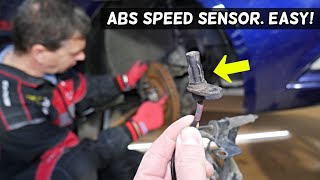
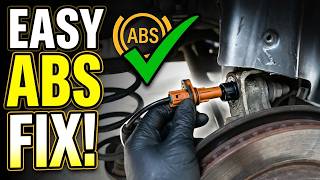
- Failed Left Front Wheel Speed Sensor 🔴 High Probability → Shop ABS Wheel Speed Sensor Wheel speed sensors are exposed to harsh conditions (water, road salt, debris) and contain sensitive electronics that can fail over time. They are a very common failure point.
How to confirm: Test the sensor's resistance with a multimeter; an open circuit (infinite resistance) confirms failure. A scan tool capable of reading ABS live data can monitor the signal from the sensor while spinning the wheel; dropouts or a '0' reading while other wheels show speed indicates a bad sensor.
Typical fix: Replace the left front wheel speed sensor.
Est. part cost: $25-$65 - Damaged Wiring or Connector 🟡 Medium Probability The wiring harness runs down the suspension and is vulnerable to being stretched, chafed by moving parts, or damaged by road debris. Owners on forums frequently report the harness being too short or poorly routed from the factory, causing stress and eventual wire failure near the connector.
How to confirm: Visually inspect the entire length of the wiring from the sensor to the main harness for breaks, chafing, melting, or corrosion. Pay close attention to the area where the wire flexes with steering and suspension movement. Perform a continuity test on the wires between the sensor connector and the ABS module connector.
Typical fix: Repair the damaged section of wire or replace the pigtail connector. Secure the harness away from moving parts to prevent repeat failure.
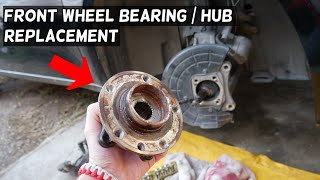
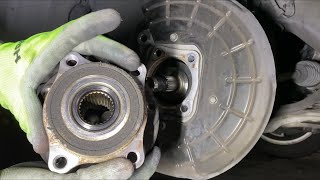
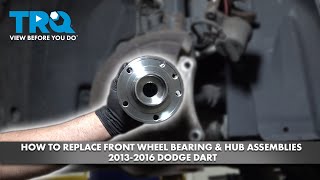
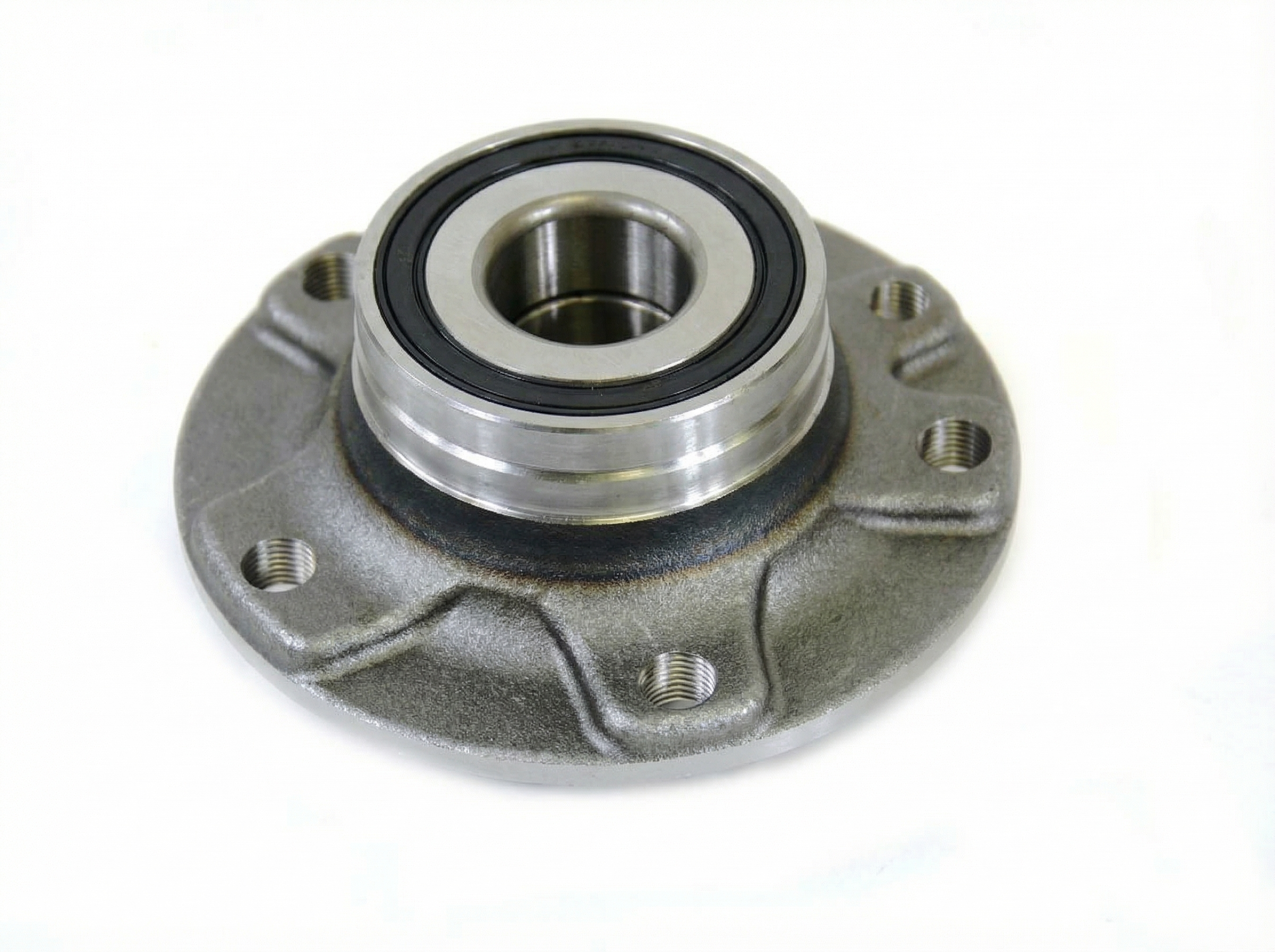
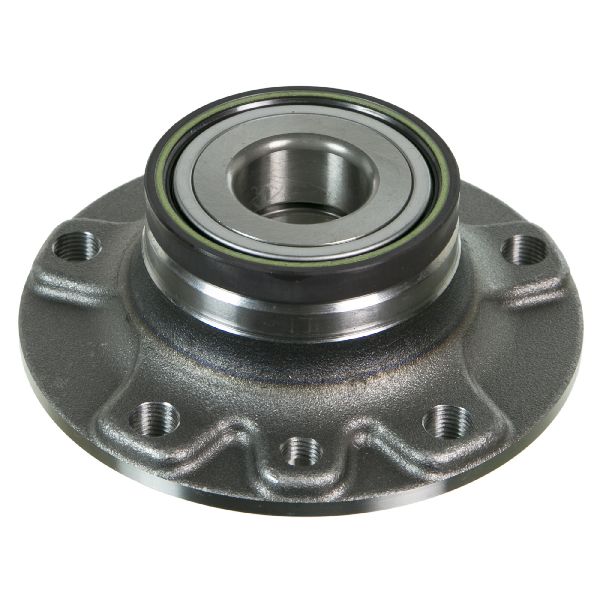
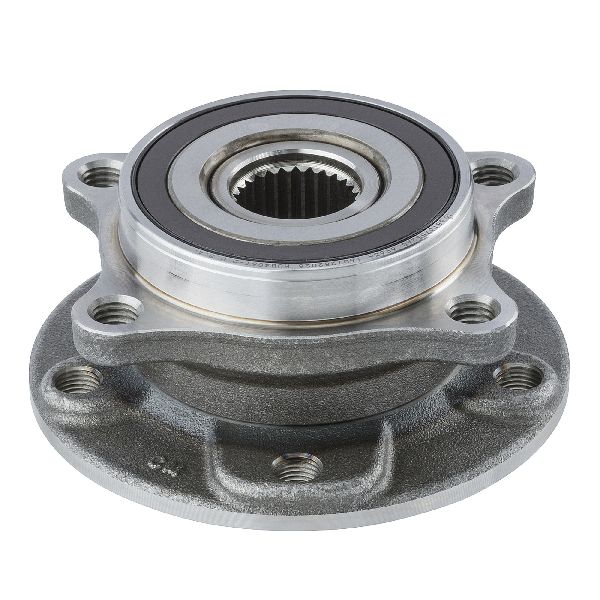
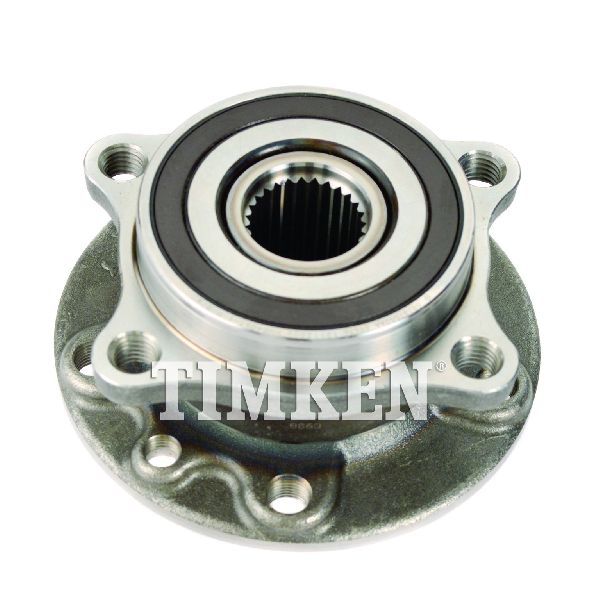
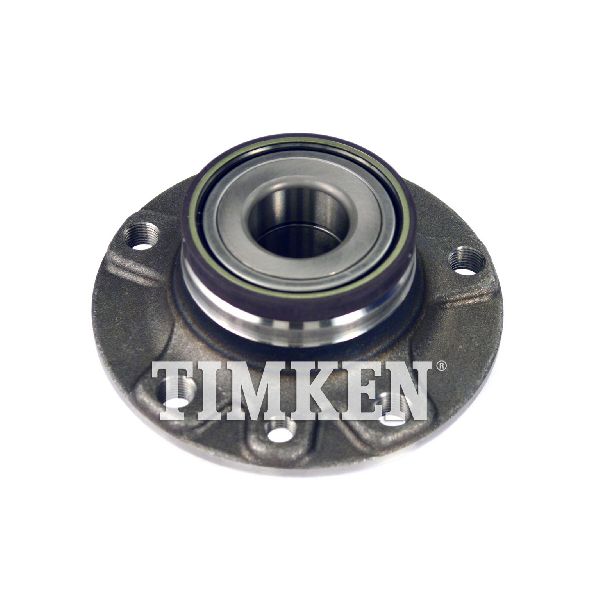
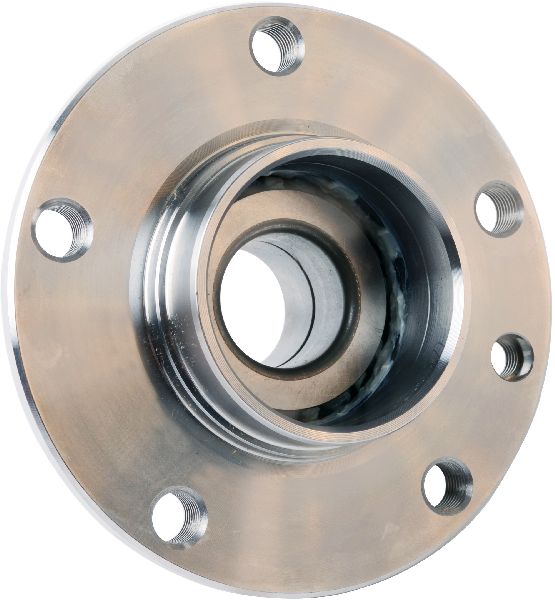
Est. part cost: $10-$30 - Failing Wheel Hub / Bearing Assembly ⚪ Low Probability → Shop Hub Assembly The magnetic reluctor ring (tone ring) is integrated into the wheel hub. If the bearing wears out, it can create excessive play ('wobble'), causing an inconsistent gap between the sensor and the ring, which corrupts the signal.
How to confirm: Safely raise the vehicle and check for any play or roughness when wiggling the wheel from top-to-bottom and side-to-side. Listen for grinding or humming noises while driving that change with speed or when turning.
Typical fix: Replace the entire front wheel hub and bearing assembly.
Est. part cost: $80-$150
Rare But Worth Checking
- Faulty ABS Control Module: → Shop ABS Control Module This is rare and should only be considered after all other possibilities (sensor, wiring, hub) have been definitively ruled out. It is an expensive part and often requires programming.
Diagnosis Steps
- Read the code with an OBD-II scanner capable of accessing the ABS module to confirm C0035 is present. Note any other ABS-related codes.
- Safely raise and support the front of the vehicle.
- Visually inspect the left front wheel speed sensor and its wiring harness. Look for obvious signs of damage, such as cut wires, chafing, tight-looking wires, or a loose connector.
- Disconnect the sensor and inspect the connector terminals for corrosion or damage. Clean as necessary.
- If a capable scan tool is available (e.g., Autel, AlfaOBD), monitor the live data for the left front wheel speed while spinning the wheel by hand. Compare the reading to the other wheels. A reading that is erratic, lagging, or absent points to a problem in the sensor or its circuit.
- If no scan tool is available, use a multimeter to test the resistance of the sensor itself. An open circuit or a reading far from the manufacturer's specification indicates a failed sensor.
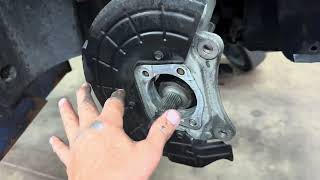
- Check the wheel bearing for excessive play or roughness by grabbing the tire at 12 and 6 o'clock and attempting to wiggle it. Any significant movement or grinding noise indicates a failing hub assembly is the likely root cause.
- If the sensor and hub seem okay, perform a continuity check on the wiring harness between the sensor connector and the ABS control module to find any hidden breaks or shorts.
- If all other components test good, the ABS control module may be at fault, but this is the least likely cause and should be the last item to be diagnosed.
Parts You'll Likely Need
- Front Wheel Speed Sensor
(OEM #68082092AC)— This is the most common component to fail, triggering the C0035 code. The part number 68082092AC supersedes the older 68082092AB.
Trusted brands: Mopar, Dorman, NTK, Standard Motor Products (SMP), Delphi
OEM price range: $45-$75
Aftermarket price range: $25-$65 - Front Wheel Hub and Bearing Assembly
(OEM #68137552AB)— Replaced if a worn wheel bearing is causing the integrated reluctor ring to send an erratic signal to the sensor.
Trusted brands: Mopar, Timken, MOOG, SKF, Detroit Axle
OEM price range: $160-$240
Aftermarket price range: $80-$150
Technical Service Bulletins (TSBs) & Recalls
- This Technical Service Bulletin is for the well-known 2.4L Tigershark engine's excessive oil consumption problem. While not directly related to code C0035, it's a critical issue for any Dart owner with this engine to be aware of, as severe oil loss can cause a host of other electrical and mechanical failures.
- A manufacturer service bulletin, #PIT3460N, notes that the ABS and/or brake light may illuminate at times with EBCM DTCs including C0035, C0040, and C0220 (NHTSA ODI #10273914).
Platform-Specific Known Issues
- Real-World Repair: Sensor Replaced, but Hub Was the Cause: A user on the ScannerDanner forum shared an experience with a 2013 Dart showing a rear wheel speed sensor code (C0037, similar principle). After replacing the sensor did not fix the issue, further diagnosis revealed the problem was the tone wheel integrated into the wheel bearing/hub assembly. Replacing the entire hub assembly resolved the ABS light, traction control light, and restored cruise control functionality. This serves as a strong reminder to check for wheel bearing play if a new sensor doesn't solve the C0035 code.
Mechanic-Grade Diagnostic Values
- Sensor Supply Voltage — expected: Approximately 12V (battery voltage) on one pin of the harness-side connector with Key On, Engine Off.. Failure: Significantly lower or no voltage indicates a wiring or ABS module supply issue.
- Sensor Ground — expected: Near 0V and good continuity to chassis ground on the other pin of the harness-side connector.. Failure: Voltage present on the ground pin or high resistance to ground indicates a bad ground connection.
- Live Data on Scan Tool — expected: The wheel speed reading for the left front wheel should match the other wheels when driving straight at a steady speed.. Failure: A reading of '0' or a signal that is erratic or doesn't match the other wheels while moving indicates a fault in the sensor, hub, or wiring.
Scan Tool Commands That Help
- AlfaOBD / wiTECH: Live Data Monitoring (All Wheel Speeds) — This is the primary diagnostic step. Graphing all four wheel speeds simultaneously makes it easy to spot a single sensor that is dropping out, reading erratically, or not reading at all.
- AlfaOBD / wiTECH: Proxy Alignment — This procedure is mandatory if the ABS control module is replaced. It syncs the new module with the other computers on the vehicle's network. Failure to perform a proxy alignment will result in a flashing odometer and persistent warning lights.
Wiring & Ground Locations
- ABS Control Module — In the engine compartment, attached to the hydraulic control unit, which is a metal block with multiple brake lines connected to it.. This is the computer that receives the signal from the wheel speed sensor. All circuit testing ultimately leads back to this module's connector.
- G105 — On the driver's side front corner of the engine compartment, on the inner fender or frame rail near the strut tower.. This is a major chassis ground point for front-end electronics. A corroded or loose G105 ground can cause a host of electrical issues, including erratic signals from the wheel speed sensor circuit.
- Left Front WSS Connector — In the driver's side wheel well, connected directly to the sensor body or via a short pigtail. The harness is routed along the suspension.. This connector and its associated wiring are the most common points of failure due to constant movement and exposure to the elements. The two pins are for signal and ground.
Real Owner Repair Stories
- ScannerDanner Forum (2013 Dodge Dart 2.0L) — ABS light, traction control light, and no cruise control. Codes C0037 (rear sensor, but same principle) and C0037-1.
❌ Tried (didn't work) Replacing the wheel speed sensor did not fix the issue.
✅ What actually fixed it The problem was the tone wheel integrated into the wheel bearing/hub assembly. Replacing the entire left rear wheel hub assembly resolved all symptoms and codes. - Dodge-Dart.org Forum User (2015 Dodge Dart) — ABS and traction control lights on, code C0035.
❌ Tried (didn't work) Replacing the left front wheel speed sensor.
✅ What actually fixed it After the new sensor didn't work, a closer inspection of the wiring revealed the wires were broken internally right at the pigtail connector that plugs into the sensor. Replacing the pigtail connector and splicing it into the harness was the final fix. - NHTSA ODI #10442197 — An owner reported that their vehicle displayed C0035 for the left front sensor and C00220; the dealer estimated the cost for a new sensor and hub at $762.00.
- NHTSA ODI #10287028 — An owner experienced an ABS fault while driving and found a bad wheel hub on the left side; replacing the hub and ABS sensor was required to address codes C0035, C0040, and C0220.
- NHTSA ODI #10440851 — A report describes the ABS and brake lights illuminating on the dashboard with diagnostic codes C0035 and C0040 indicating a left front wheel speed sensor circuit malfunction.
Documented NHTSA Reports
While the following reports originate from other manufacturers, they confirm the diagnostic behavior of the C0035 code across similar ABS architectures. NHTSA ODI #11228687 describes a scenario where ABS indicators illuminated and a scan revealed C0035 alongside multiple communication codes like U0126 and U0415. These records reinforce that C0035 is a critical trigger for disabling stability and braking assistance systems.
OEM Part Supersession History
68082092AB→68082092AC— Standard part revision by the manufacturer, likely for improved durability or minor design changes.
Diagnostic Flowchart
Other Known Issues on This Vehicle
Issues unrelated to this code that are worth knowing about as an owner of this generation:
- Excessive Oil Consumption (2.4L Tigershark) 🔴 High — Very common. A class-action lawsuit was filed alleging defective piston rings cause oil to burn at a rate of approximately 1 quart per 1,000 miles. This can lead to low oil levels, engine stalling, and eventual engine failure. (Ref: TSB 09-003-23 (supersedes 09-006-20) details an official oil consumption test. A warranty extension (XB1) may cover engine replacement for qualifying vehicles.)
- Dual-Clutch (DDCT) Transmission Failure 🔴 High — Common on 1.4L Turbo models. Symptoms include messages like "Service Transmission" and "Gear Unavailable," loss of power, and failure to shift. Problems can stem from a failed TCM, hydraulic pump, or internal sensors that are not sold separately, often leading to expensive transmission replacement recommendations. (Ref: Multiple recalls and TSBs exist for transmission issues. A common owner-discovered fix for "Gear Unavailable" errors is replacing the 'smart drive unit'.)
- Manual Transmission Clutch Failure 🟠 Medium — Affects 2013-2015 models with the Fiat C635 manual transmission. A lawsuit alleged that the clutch pedal sticks to the floor, preventing gear changes due to a faulty clutch master cylinder and contaminated hydraulic fluid. (Ref: FCA issued an extended warranty to replace the hydraulic clutch master cylinder and reservoir hose.)
- General Electrical Problems 🟡 Low — Owners report various electrical gremlins, including issues with the Bluetooth module, flickering lights, and random stalling, sometimes traced back to a weak battery or poor fuse box connections.
- Stalling and Drivability Issues 🟠 Medium — Particularly noted on 2014 models, sudden engine stalling can occur. This has been linked to low oil pressure (from the consumption issue), faulty sensors, or wiring problems. (Ref: TSB 18-023-16 involves a PCM reprogram to address various powertrain diagnostic improvements for the 2.4L engine.)
Used vs. New Parts: Buying Guide for This Vehicle
When a used part is the smart pick: A used wiring pigtail from a junkyard is a smart choice if your connector is physically damaged. A used ABS module can be a cost-effective last resort, but it absolutely requires a 'Proxy Alignment' to function.
Donor-vehicle mileage cap: roughly under 100000 miles for the part to have meaningful remaining life.
What to inspect on the donor part:
- For a wiring pigtail, inspect for any signs of corrosion (green crust) on the pins.
- Check that the plastic connector is not brittle and the locking tab is intact.
- Ensure there's at least 6-8 inches of wire attached for easier splicing.
OEM-only on this vehicle (don't cheap out):
- ABS Control Module: While a used OEM module can work, it requires special programming (Proxy Alignment). Aftermarket modules are not widely available or recommended for this specific vehicle.
Aftermarket brands forum-validated for this vehicle:
- Wheel Speed Sensors: NTK, Delphi, Standard Motor Products (SMP).
- Wheel Hub Assemblies: Timken, SKF, MOOG, FAG.
Brands owners have reported issues with on this vehicle:
- Unbranded 'white box' wheel speed sensors and hub assemblies from online marketplaces are frequently reported by forum users to have high premature failure rates.
Real Owner Stories
Aggregated from forums and TSBs cited above. Mileages and costs reflect what owners reported in those sources.
2013 Dodge Dart 2.0L
Symptoms: ABS light and traction control light were illuminated. A new wheel speed sensor was installed but did not resolve the issue.
What fixed it: Replacing the entire wheel hub/bearing assembly because the integrated tone wheel was the actual cause of the signal failure.
Source hint: ScannerDanner Forum: 2013 Dodge Dart ABS Light Fix
2013-2015 Dodge Dart (Manual Transmission)
Symptoms: The clutch pedal sticks to the floor, making it difficult to shift gears.
What fixed it: This is a known issue involving the Fiat C635 manual transmission, often requiring service to the clutch system components.
Source hint: known_issues section regarding Manual Transmission Clutch Failure
Related OBD-II Codes
Frequently Asked Questions
Does TSB 09-003-23 for the 2.4L Tigershark engine relate to my C0035 ABS code?
I replaced the left front sensor on my Dart but the ABS light is still on. What else could it be?
Is it true that the wiring harness on the Dodge Dart is a common failure point for this code?
Can a bad wheel speed sensor on my Dart disable my cruise control?
Does the C0035 code mean the same thing on a Chrysler 200 as it does on my Dodge Dart?
Helpful Videos
Used OEM Parts in Stock
New Aftermarket Parts Available


The information in this article is provided for general reference and educational purposes only. Vehicle specifications, procedures, and part compatibility can vary by production date, trim level, and region. Always consult your vehicle's factory service manual and verify part numbers before purchasing or performing repairs. Safety-critical components such as airbags, seat belts, and braking systems should be installed by a qualified professional.
- Dodge Dart:
- 🧭 Diagnostic Flowchart
- 🎬 Helpful Videos
- 🛍️ Shop This Part
- What's Unique About the 2013-2016 Dodge Dart
- Symptoms You May Notice
- Most Likely Causes
- Rare But Worth Checking
- Diagnosis Steps
- Parts You'll Likely Need
- Technical Service Bulletins (TSBs) & Recalls
- Platform-Specific Known Issues
- Mechanic-Grade Diagnostic Values
- Scan Tool Commands That Help
- Wiring & Ground Locations
- Real Owner Repair Stories
- Documented NHTSA Reports
- OEM Part Supersession History
- Other Known Issues on This Vehicle
- Used vs. New Parts: Buying Guide for This Vehicle
- Real Owner Stories
- 2013 Dodge Dart 2.0L
- 2013-2015 Dodge Dart (Manual Transmission)
- Related OBD-II Codes
- Frequently Asked Questions
- 🎟️ Get 5% Off