

C0035 on 2007-2011 Toyota Camry: Left Front Wheel Speed Sensor Fault Causes and Fixes
This code indicates a problem with the Left Front Wheel Speed Sensor or its wiring. The most common fix is replacing the sensor itself, which is a relatively inexpensive part. Expect warning lights for ABS, VSC, and traction control. The issue is almost always the sensor or its wiring harness.
- C0035 on your Camry means there's a fault with the driver's side front wheel speed sensor circuit.
- The most likely cause is a failed sensor, followed by damaged wiring.
- Driving with this code is possible, but your ABS and stability control will not work, increasing risk.
- A DIY replacement of the sensor is manageable for those with basic tools and involves removing the wheel and a single bolt.
- Always confirm the problem with a scan tool or multimeter before buying parts. A good sensor should have a resistance of around 1.1k-1.3k Ohms.
What's Unique About the 2007-2011 Toyota Camry
For the XV40 generation Camry, the C0035 code is consistently interpreted as a fault with the left front wheel speed sensor circuit. While some manufacturers (notably GM) may use this code for the right side, Toyota's usage is standard. The issue is almost always the sensor or its connecting wire, which is exposed to harsh conditions behind the wheel. The tone ring is integrated into the wheel hub assembly, so damage to it requires a more involved repair.
Symptoms You May Notice
- ABS warning light is on
- Traction Control (TRAC) or Vehicle Stability Control (VSC) warning light is on
- Brake warning light may be illuminated
- Loss of anti-lock braking function during hard stops
- Cruise control may be disabled
- Unusual grinding or pulsing from the brakes at low speeds as the system may activate incorrectly before failing completely.
- Replacing the right front wheel speed sensor. Many generic code definitions are ambiguous, but for Toyota, C0035 definitively points to the left side.
- Replacing the sensor when the actual fault is a broken wire further up the harness or a corroded connector pin.
Most Likely Causes
- Failed Left Front Wheel Speed Sensor 🔴 High Probability → Shop ABS Wheel Speed Sensor The sensor is located in the wheel well, where it is exposed to water, road salt, and debris, leading to internal failure or corrosion over time. The internal windings of the sensor can break, creating an open circuit.
How to confirm: Use a multimeter to check the sensor's resistance. A healthy sensor should have a resistance in the range of 1.1k to 1.3k Ohms. An open circuit (infinite resistance) or a value far outside this range indicates failure. A more specific service manual value is 1.4k to 1.8k Ohms. Alternatively, use a scan tool like Toyota Techstream to monitor live data from all four wheel sensors while driving; the left front will show an erratic or zero MPH reading compared to the others.
Typical fix: Replace the left front wheel speed sensor. It is typically held in by a single 10mm bolt on the steering knuckle.
Est. part cost: $25-$75 - Damaged Wiring or Connector 🟡 Medium Probability The wiring harness runs along suspension components and can be damaged by road debris, improper servicing, or repeated flexing from steering and suspension travel, leading to breaks or shorts. Connectors can also corrode internally, causing a poor connection.
How to confirm: Visually inspect the entire length of the sensor's wiring harness from the wheel to the main body connection. Look for chafed insulation, broken wires, or green/white corrosion inside the connector plug. Sometimes the clip holding the harness breaks, allowing it to unplug.
Typical fix: Repair the damaged section of wire with solder and heat-shrink tubing or replace the pigtail connector if it is corroded. In severe cases, the entire sensor harness may need replacement.
Est. part cost: $10-$50 - Damaged or Debris-Covered Tone Ring ⚪ Low Probability The tone ring, which the sensor reads, is integrated into the wheel bearing/hub assembly. While durable, heavy rust buildup or metallic debris from a failing bearing can stick to the magnetic ring, disrupting the sensor's reading.
How to confirm: Remove the wheel speed sensor and visually inspect the magnetic encoder ring on the hub through the mounting hole. Look for heavy rust, metallic debris, or physical damage. Spin the hub to check the entire circumference.
Typical fix: Clean the tone ring with a brush and brake cleaner. If the ring is damaged or part of a failed wheel bearing, the entire front wheel hub and bearing assembly must be replaced.
Est. part cost: $100-$250
Rare But Worth Checking
- Faulty ABS Control Module: → Shop ABS Control Module This is uncommon. Before condemning the module, you must exhaustively rule out any possibility of a bad sensor, wiring, or tone ring. This is typically a last resort diagnosis.
- Failed Wheel Hub/Bearing Assembly: → Shop Hub Assembly Since the tone ring (magnetic encoder) is an integral part of the hub assembly on this Camry, a failure of the bearing itself can cause excessive runout or wobble, leading to an erratic signal. If the bearing is noisy or has play, it's the likely culprit and the entire hub must be replaced.
Diagnosis Steps
- Connect an OBD-II scanner capable of reading ABS codes to confirm C0035 is the active code.
- Use the scanner's live data function to monitor the speed of all four wheels while driving. Confirm that the 'Front Left' reading is erratic, stuck at zero, or does not match the other wheels.
- Raise and secure the front of the vehicle. Remove the left front wheel.
- Visually inspect the wheel speed sensor and its wiring harness for any obvious signs of damage, such as cut wires, melted plastic, or corrosion on the connector.
- Disconnect the sensor and use a multimeter set to Ohms to test its internal resistance. A good sensor should read between 1.4k and 1.8k Ohms. An open circuit (OL) or short (near zero Ohms) indicates a faulty sensor.
- If the sensor tests good, inspect the wiring harness continuity from the sensor connector back to the ABS module. Check for voltage and ground at the connector if it's an active sensor type.
- Remove the sensor (one 10mm bolt) and inspect the magnetic tone ring on the wheel hub for damage, rust, or debris. Clean as necessary.
- If the sensor, wiring, and tone ring are all confirmed to be good, the fault may lie with the wheel bearing (excessive play) or, rarely, the ABS control module, which requires advanced diagnostics.
Parts You'll Likely Need
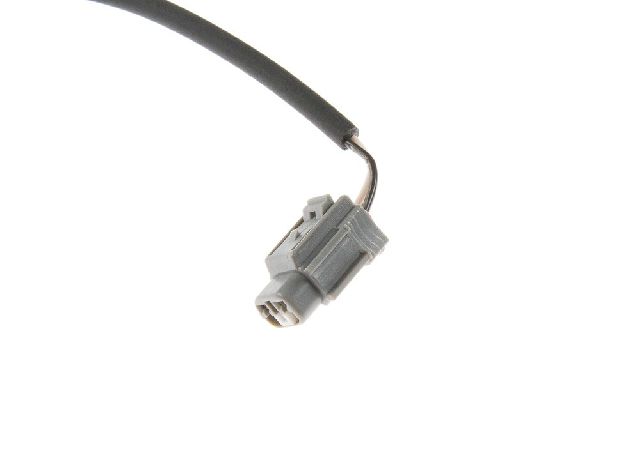
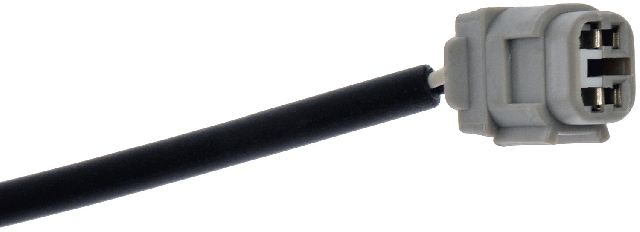
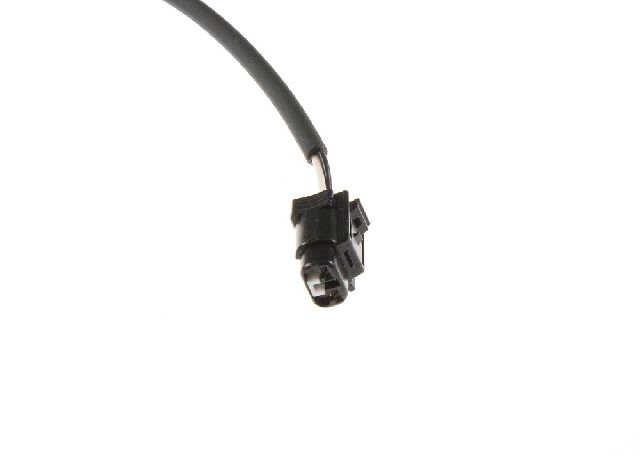
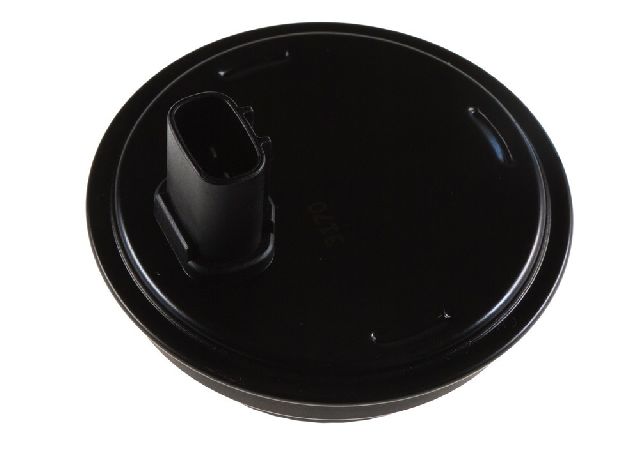
- Left Front ABS Wheel Speed Sensor
(OEM #89543-33080)— This is the most frequent failure point for the C0035 code due to its exposed location and electronic nature.
Trusted brands: Denso, NTK, Bosch, Standard Motor Products (ALS2318)
OEM price range: $120-$235
Aftermarket price range: $25-$75
Technical Service Bulletins (TSBs) & Recalls
- T-SB-0094-11: Documents the excessive oil consumption issue with the 2AZ-FE engine used in 2007-2009 Camry models, outlining the repair procedure involving piston and ring replacement.
Platform-Specific Known Issues
- The wiring harness for the sensor is known to become brittle and break where it is clipped to the suspension components. Careful inspection of the harness, especially around bends and clip points, is crucial.
Mechanic-Grade Diagnostic Values
- Front Wheel Speed Sensor Resistance — expected: 1.4k to 1.8k Ohms. Failure: An open circuit (OL) or a reading significantly outside the specified range.
- Front Wheel Speed Sensor AC Voltage (while spinning wheel) — expected: Voltage should generate and increase with wheel speed.. Failure: No voltage or no change in voltage while the wheel is spinning indicates a bad sensor.
Hidden / Shadow Codes Worth Checking
- INF 32: This is a detail code or "information code" that can be retrieved with a professional scan tool like Techstream. It often accompanies C0035 and specifically means 'Front Speed Sensor LH Circuit Malfunction', providing more granular confirmation of the fault location. (see via Toyota Techstream software or an equivalent high-level diagnostic scanner.)
Scan Tool Commands That Help
- Toyota Techstream: Live Data Monitoring (Data List) — Use this to view the real-time speed signal from all four wheels simultaneously while driving. A reading of zero or one that doesn't match the others from the Left Front sensor confirms the fault location without any disassembly.
- Toyota Techstream: Active Test - ABS Motor — While not a direct test for the sensor, this allows a technician to command the ABS pump motor to run. This can help verify the integrity of the ABS module and its power/ground circuits after ruling out the sensor and wiring.
Wiring & Ground Locations
- Sensor Connector — Located in the driver's side front wheel well, clipped to the inner fender liner.. This is the primary connection point to test the sensor's resistance and inspect for corrosion or damage. It is a 2-pin female connector.
- Harness Mounting Brackets — The sensor wire is held by a 12mm bolt to a bracket on the strut, and a 10mm bolt to a bracket on the body.. These are common chafe points. A broken clip or loose bolt can allow the wire to rub against suspension components or the tire, causing damage.
- ABS Module Ground — The main electrical wiring diagrams for the 2007 Camry show ground points for the chassis systems under the dash and in the engine bay near the fenders. A common ground point is located in the left kick panel area (driver's side).. While a rare cause, a corroded or loose main ground for the ABS system could cause various erratic faults, including a C0035 code.
Real Owner Repair Stories
- YouTube user 'Reggie Curtis' (Vehicle make/model not specified, but demonstrating a typical C0035 repair.) — ABS light on, code C0035 stored.
✅ What actually fixed it The clip holding the sensor's wiring harness had broken, allowing the connector to come unplugged. Plugging the sensor back in and securing the harness cleared the fault. - AliExpress Blog/User Story (2008 Toyota Camry 2.4L) — ABS light came on permanently during heavy rain. OBD-II scanner pulled codes C0035 (left-front) and C0040 (right-rear).
✅ What actually fixed it The owner replaced both the left-front and right-rear wheel speed sensors, which resolved the codes. The story emphasizes the importance of using the correct part number for the specific wheel location.
OEM Part Supersession History
89543-33080→89543-33080 (current)— This part number appears to be stable for the specified vehicle range with no major supersessions noted in common parts catalogs.
Heads up: While the part number is consistent, there are differences between sensors for Japan-built vs. US-built Camrys. Always verify fitment with the vehicle's VIN.
Diagnostic Flowchart
Other Known Issues on This Vehicle
Issues unrelated to this code that are worth knowing about as an owner of this generation:
- Excessive Oil Consumption (2AZ-FE Engine) 🔴 High — Very common on 2007-2009 2.4L 4-cylinder models. Owners report adding a quart of oil every 1,000-1,500 miles. The issue stems from a design flaw in the piston rings. (Ref: T-SB-0094-11)
- Melting / Sticky Dashboard 🟠 Medium — Widespread across 2007-2011 models, especially in warmer climates. The dashboard surface becomes shiny, sticky, and can crack or melt from heat and humidity. (Ref: Warranty Enhancement Program ZE6)
- Transmission Hesitation or Jerking 🟠 Medium — Reported in both 4-cylinder and V6 models. Can manifest as a delay when shifting from Park to Drive, or a noticeable jerk/clunk during gear changes. Often related to aging fluid or control solenoids.
- Unintended Acceleration Concerns (Resolved) 🔴 High — This was part of a major series of recalls and customer support programs around 2009-2011 affecting multiple Toyota models. The issue was attributed to a combination of sticking accelerator pedals and floor mat interference. (Ref: Customer Support Program POL13-03)
Used vs. New Parts: Buying Guide for This Vehicle
When a used part is the smart pick: A used wiring harness pigtail from a junkyard is a viable option if only the connector is damaged and the rest of your sensor is good. Buying a used sensor itself is not recommended as its remaining lifespan is unknown and it's an inexpensive new part.
Donor-vehicle mileage cap: roughly under 80000 miles for the part to have meaningful remaining life.
What to inspect on the donor part:
- For a wiring pigtail, inspect for any brittleness, cracking, or cut wires.
- Ensure the connector pins are clean, straight, and free of corrosion.
- Check that the connector's locking tab is intact and functional.
Aftermarket brands forum-validated for this vehicle:
- Denso (often the OEM supplier)
- NTK
- Bosch
- Standard Motor Products (SMP)
- WVE
Brands owners have reported issues with on this vehicle:
- Unnamed, no-brand sensors from online marketplaces should be avoided, as they may have incorrect resistance values or poor durability, leading to a repeat failure.
Real Owner Stories
Aggregated from forums and TSBs cited above. Mileages and costs reflect what owners reported in those sources.
2007 Camry LE — 142000 miles
Symptoms: Intermittent ABS activation during city driving; ABS warning light and code C0035 present.
What fixed it: Replacing the sensor with the OEM-equivalent 89543-33080.
Source hint: AliExpress Product Page owner report
2007 Camry
Symptoms: C0035 and C1223 codes present with warning lights illuminated.
What fixed it: Replaced the left front ABS sensor (part 89543-33080).
Source hint: ToyotaNation Forums - C0035 and C1223
2007 Camry
Symptoms: Testing wheel speed sensors with a multimeter; found resistance values around 1.1k Ohms.
What fixed it: Diagnostic confirmation of sensor resistance to identify the faulty unit.
Source hint: Reddit - /r/AskAMechanic - 2007 Camry ABS Rear speed sensor
Related OBD-II Codes
Frequently Asked Questions
What is the specific resistance range I should look for when testing the front left wheel speed sensor on my 2007 Camry?
Is there a specific part number I should use to fix code C0035 on my 2007-2011 Camry?
My 2008 Camry has C0035 and is also burning a lot of oil. Is there a TSB for the oil issue?
Can I just clean the sensor, or do I have to replace it?
Why did my cruise control stop working at the same time the ABS light came on?
Is the sticky dashboard in my 2010 Camry related to the ABS failure?
Helpful Videos


We Have This Part in Stock


The information in this article is provided for general reference and educational purposes only. Vehicle specifications, procedures, and part compatibility can vary by production date, trim level, and region. Always consult your vehicle's factory service manual and verify part numbers before purchasing or performing repairs. Safety-critical components such as airbags, seat belts, and braking systems should be installed by a qualified professional.
- Toyota Camry:
- 🧭 Diagnostic Flowchart
- 🎬 Helpful Videos
- 🛍️ Shop This Part
- What's Unique About the 2007-2011 Toyota Camry
- Symptoms You May Notice
- Most Likely Causes
- Rare But Worth Checking
- Diagnosis Steps
- Parts You'll Likely Need
- Technical Service Bulletins (TSBs) & Recalls
- Platform-Specific Known Issues
- Mechanic-Grade Diagnostic Values
- Hidden / Shadow Codes Worth Checking
- Scan Tool Commands That Help
- Wiring & Ground Locations
- Real Owner Repair Stories
- OEM Part Supersession History
- Other Known Issues on This Vehicle
- Used vs. New Parts: Buying Guide for This Vehicle
- Real Owner Stories
- 2007 Camry LE — 142000 miles
- 2007 Camry
- 2007 Camry
- Related OBD-II Codes
- Frequently Asked Questions
- 🎟️ Get 5% Off