

C0040 on 2005-2010 Jeep Grand Cherokee: Right Front Wheel Speed Sensor Fault Explained
This code indicates a problem with the right front wheel speed sensor or its wiring. The most common fix is replacing the sensor itself, which is a relatively inexpensive part. Expect to pay around $20-$50 for an aftermarket sensor and $60-$100 for an OEM part. Before replacing the sensor, always inspect the wiring harness for damage, as this is a common failure point on this platform.
- C0040 means there's a fault with the right front wheel speed sensor circuit, which will disable your ABS and traction control.
- The most likely cause is a failed wheel speed sensor, followed by damaged wiring to that sensor.
- Before buying a new sensor, always perform a thorough visual inspection of the wiring harness for any chafing, breaks, or corrosion.
- A bad wheel bearing can also cause this code, so check for any play or noise from the right front wheel.
- Driving is possible, but with reduced safety features. The repair should be addressed promptly.
What's Unique About the 2005-2010 Jeep Grand Cherokee
For the 2005-2010 Grand Cherokee (WK generation), the wheel speed sensor wiring is exposed to the elements and constant suspension movement. Off-road use, which these vehicles are capable of, can significantly increase the chances of damage to the sensor or its harness from debris and articulation. While the sensor itself can fail, it's crucial to inspect the wiring harness leading to the sensor for any chafing, breaks, or corrosion before replacing parts. Forum users frequently report that the wiring fails before the sensor itself. Additionally, the tone ring is integrated into the wheel hub bearing assembly; excessive bearing play can damage the sensor or disrupt the signal, sometimes requiring a full hub replacement to resolve the code.
Symptoms You May Notice
- ABS warning light is on
- Traction Control or Electronic Stability Control (ESC/ESP) warning light is on
- ABS and stability control systems are disabled
- Brake warning light may be illuminated
- Replacing the wheel speed sensor without first inspecting the wiring harness for damage. A broken wire will cause the new sensor to not work, leading to wasted time and money.
- Replacing the wrong side sensor. While C0040 specifies the right front, some generic scan tools may misinterpret codes. Always confirm with live data which sensor is failing. 🎬 Watch: C0040 code causes and fixes explained
Most Likely Causes
- Failed Right Front Wheel Speed Sensor 🔴 High Probability → Shop ABS Wheel Speed Sensor The sensor is an electronic component located in a harsh environment behind the wheel, exposed to water, dirt, salt, and vibrations, leading to eventual failure.
How to confirm: Use a scan tool to monitor live data from all four wheel speed sensors while driving. The right front sensor will likely show an erratic, incorrect, or zero mph reading compared to the others. You can also test the sensor's internal resistance with a multimeter; a typical reading for this type of sensor is between 800-2500 Ω. An open circuit (OL) or zero resistance indicates a failed sensor. Another test is to measure the AC voltage output while spinning the wheel by hand; a good sensor should generate at least 100-200mV AC.
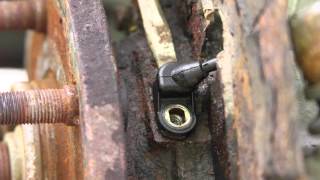
Typical fix: Replace the right front wheel speed sensor. This involves removing the wheel and brake caliper to access and unbolt the sensor from the steering knuckle. 🎬 Watch: How to replace the front ABS sensor
Est. part cost: $20-$100 - Damaged Wiring or Connector 🟡 Medium Probability The wiring harness is routed near moving suspension parts and is exposed to road debris, which can cause wires to chafe, break, or corrode over time. This is a very common point of failure on the WK platform.
How to confirm: Visually inspect the entire length of the wiring from the sensor to the main harness in the engine bay. Look for any signs of physical damage, corrosion in the connector, or melted plastic. Perform a 'wiggle test' on the harness while watching live data to see if the signal cuts out. Check for reference voltage at the connector with the ignition on; depending on the system (active vs. passive sensor), you may see 5V or battery voltage (10-12V).
Typical fix: Repair the damaged section of wire or replace the pigtail connector. Ensure the repaired harness is properly secured away from moving parts.
Est. part cost: $15-$40 - Failing Wheel Hub Bearing Assembly ⚪ Low Probability → Shop Hub Assembly The tone ring (or reluctor ring), which the sensor reads, is integrated into the wheel hub bearing. If the bearing develops excessive play, it can damage the sensor or create an incorrect air gap, leading to a faulty signal. Debris can also accumulate on the magnetic ring, disrupting the signal.
How to confirm: With the vehicle safely raised, grasp the right front wheel at the top and bottom (12 and 6 o'clock positions) and try to rock it. Any noticeable play or a grinding/humming noise while driving indicates a bad wheel bearing. Also, inspect the tone ring for damage or debris if visible after removing the sensor.
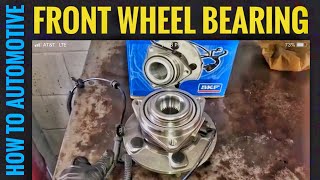
Typical fix: Replace the entire wheel hub bearing assembly. 🎬 See this front wheel hub replacement walkthrough The wheel speed sensor should also be inspected for damage and replaced if necessary.
Est. part cost: $100-$250
Rare But Worth Checking
- Faulty ABS Control Module: → Shop ABS Control Module This is the least likely cause and should only be considered after the sensor, wiring, and wheel bearing have been thoroughly checked and ruled out. A faulty module will typically set multiple wheel speed sensor codes, not just one.
Diagnosis Steps
- Connect an OBD-II scanner capable of reading ABS codes to confirm C0040 is present.
- Use the scanner's live data function to view the wheel speed readings from all four sensors while driving. Confirm that the right front sensor's reading is erratic, absent, or does not match the other sensors.
- Raise and secure the front of the vehicle on jack stands.
- Visually inspect the right front wheel speed sensor and its wiring harness for any obvious signs of damage, such as cracks, chafing, or corrosion.
- Check the wheel bearing for excessive play by attempting to rock the wheel from the top and bottom.
- If the visual inspection passes, disconnect the sensor and test its resistance with a multimeter. Compare the reading to the factory specification (typically 800-2500 Ohms). An open circuit (OL) or zero resistance indicates a failed sensor.
- Check for reference voltage at the sensor connector (should be around 5V or battery voltage with key on) and for continuity to ground.
- If the sensor tests good, inspect the wiring harness for continuity and shorts to ground/power from the sensor connector to the ABS module connector. The Right Front Wheel Speed Sensor (+) signal is typically a Dark Green/Violet wire at Pin B7 of the ABS module connector, and the (-) signal is a Dark Green/White wire at Pin B6.
- If the sensor and wiring are confirmed to be good, the issue may lie with the wheel hub's tone ring or, in rare cases, the ABS module itself.
Parts You'll Likely Need
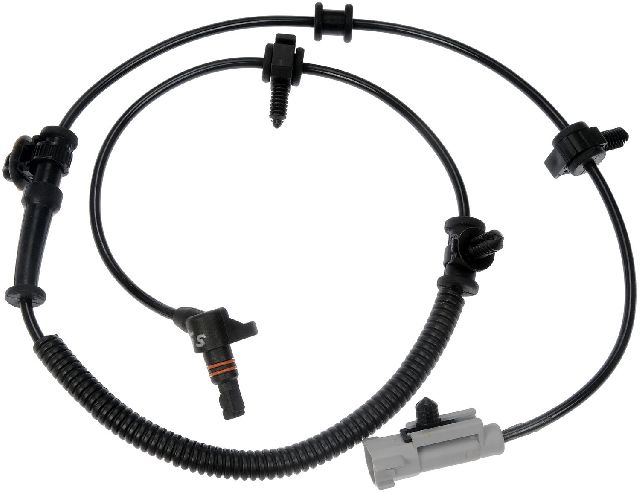
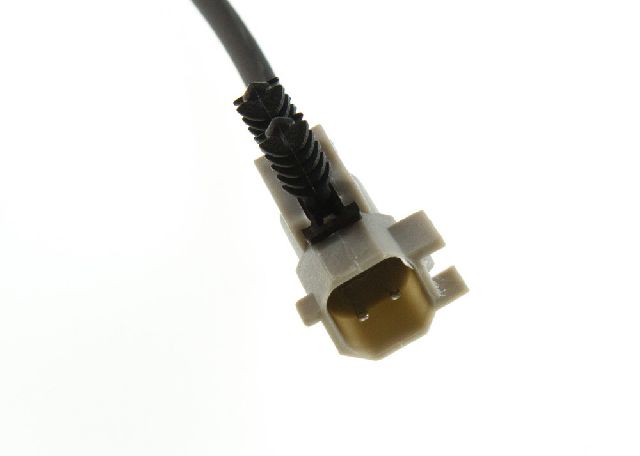
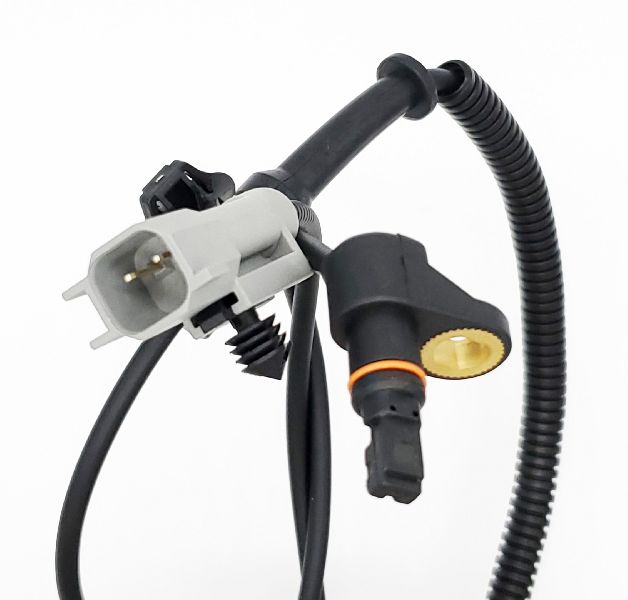
- Front ABS Wheel Speed Sensor
(OEM #56044144AF)— This sensor is the most frequent point of failure in the circuit due to its exposure to the elements and constant operation. The front sensors fit either the left or right side. This part number supersedes 56044144AB, 56044144AC, and 56044144AD.
Trusted brands: Mopar, Standard Motor Products (SMP), Dorman, Bosch, NTK
OEM price range: $60-$100
Aftermarket price range: $20-$50 - Front ABS Wheel Speed Sensor Harness Pigtail — If the wiring is damaged near the sensor connector, replacing the pigtail is often easier and more reliable than attempting a wire repair in a tight space. Aftermarket pigtails are widely available.
Trusted brands: Mopar, Dorman, Standard Motor Products (e.g., HP3945), Duralast (e.g., 1633)
OEM price range: $30-$50
Aftermarket price range: $15-$30
Related Codes That Often Appear With This One
- C0035 — This is the identical fault for the Left Front Wheel Speed Sensor. If both C0035 and C0040 appear together, it points towards a common issue like a wiring problem shared between the two sensors or a potential ABS module fault, rather than two sensors failing at once.
Platform-Specific Known Issues
- Owner Experience: Sensor vs. Wiring: A common narrative on forums for the WK Grand Cherokee is chasing the C0040 code by replacing the sensor, only to find the issue persists. Many owners report that the actual culprit was a small break or chafe in the wiring harness several inches up from the connector, often hidden by the plastic loom. A 'wiggle test' of the harness while monitoring live data is highly recommended before purchasing parts.
Mechanic-Grade Diagnostic Values
- Wheel Speed Sensor Resistance — expected: 800 - 2,500 Ω. Failure: An open circuit (OL) or zero resistance indicates a failed sensor.
- Wheel Speed Sensor AC Voltage Output — expected: Minimum of 100-200mV AC when spinning the wheel by hand at ~1 revolution per second.. Failure: Zero or very low voltage suggests a failed sensor, excessive air gap, or a damaged tone ring.
- Sensor Supply Voltage (at connector) — expected: 10-12V (Battery Voltage) for active sensors.. Failure: Low or no voltage points to a wiring issue between the ABS module and the sensor connector.
Hidden / Shadow Codes Worth Checking
- C0040 with sub-codes (e.g., 02, 05, 0F, 18): These sub-codes, visible on more advanced scan tools, provide specific fault details. 02: Short to ground. 05: Short to power or open circuit. 0F: Erratic signal. 18: Signal amplitude below minimum. (see via A professional-grade scan tool or dealer-level tool like wiTECH is typically required to view these sub-codes.)
Scan Tool Commands That Help
- wiTECH or equivalent professional scanner: Live Data Monitoring — This is the primary diagnostic step to compare the signal from the right front wheel speed sensor against the other three wheels in real-time while driving. A discrepancy immediately isolates the problem corner.
- wiTECH: ABS Initialization / Restore Vehicle Configuration — This function is used after replacing the ABS control module to ensure it is properly configured to the vehicle's VIN and options. It is not typically required for just a sensor replacement.
- wiTECH: ABS Module Flash/Reprogram — Used to update the ABS module's software to the latest version, which can resolve certain software-related glitches or improve system performance. This is only performed if a Technical Service Bulletin (TSB) specifically calls for it.
Wiring & Ground Locations
- ABS Module Connector — Typically located on the ABS hydraulic control unit in the engine bay, often near the master cylinder.. This is the termination point for the wheel speed sensor wiring. Testing for signal, power, and ground at this connector can confirm if the wiring harness is intact or if the fault lies with the module itself.
- Right Front WSS Signal Wires — Pin B7 (Dark Green/Violet for Signal +) and Pin B6 (Dark Green/White for Signal -) at the ABS module connector.. Knowing these specific pin locations allows for precise continuity and short-to-ground/power testing of the sensor circuit, bypassing the need to trace the entire harness visually.
Real Owner Repair Stories
- Jeep Club Forum User (2004 Jeep Grand Cherokee (WJ, but demonstrates identical wiring issue)) — ABS light on, code for 'Right Front Sensor Circuit Failure' and 'System Under Voltage'.
❌ Tried (didn't work) Replacing the right front wheel speed sensor., Replacing the ABS module (CAB).
✅ What actually fixed it The user identified a break in the wiring harness between the ABS module and the sensor connector. The plan was to bypass the damaged section by running new twisted-pair wires directly from the module to the sensor pigtail to restore the connection.
OEM Part Supersession History
56044144AB, 56044144AC, 56044144AD→56044144AF— Standard part revisions for improved durability, material changes, or manufacturing process updates.
Heads up: All listed part numbers are interchangeable for the front axle of the 2005-2010 Grand Cherokee (WK) and 2006-2010 Commander (XK).
Model Year Variations Within This Range
- 2005 only: Some early 2005 models had different part numbers for the brake booster and master cylinder depending on whether the vehicle was equipped with the Electronic Stability Program (ESP). While this doesn't directly affect the C0040 code, it's an important distinction for related brake system components on the first model year.
Diagnostic Flowchart
Other Known Issues on This Vehicle
Issues unrelated to this code that are worth knowing about as an owner of this generation:
- TIPM (Totally Integrated Power Module) Failure 🔴 High — Common across this generation and other Chrysler products of the era. Can occur at any mileage. (Ref: While recalls existed for some model years (e.g., 2011), the 2005-2010 models are known to have widespread issues. Symptoms include engine stalling, fuel pump issues, erratic lights/horn, and no-start conditions.)
- 5.7L HEMI MDS Lifter Failure 🔴 High — A well-documented issue, often presenting as a 'Hemi tick'. Can occur especially if oil change intervals are extended. Failures can happen from 70,000 miles onward.
- Front Differential Bushing Failure 🟠 Medium — Very common. The soft factory rubber bushings wear out, causing a distinct 'clunk' when shifting from Park to Drive/Reverse or during acceleration.
- Electronic Shifter Module (ESM) Failure 🟠 Medium — Common issue causing the transmission to get stuck in a gear (limp mode), inability to shift, or multiple gear indicator lights illuminating. Often caused by dirt/grime on the circuit board.
- Transfer Case Shifting to Neutral (Recall) 🔴 High — Subject to recall (NHTSA #13V175000). An electrical failure in the transfer case could cause it to unintentionally shift into neutral, resulting in a loss of motive power. (Ref: 13V175000)
- Wireless Ignition Node (WIN) Module Failure (Recall) 🔴 High — Subject to recall (NHTSA #10V200000). The key could be removed from the ignition before the vehicle is in Park, creating a rollaway risk. (Ref: 10V200000)
Used vs. New Parts: Buying Guide for This Vehicle
When a used part is the smart pick: A used wiring harness pigtail from a junkyard can be a cost-effective solution if the connector itself is damaged and you can find a donor vehicle with a clean, corrosion-free harness section. Buying a used sensor or ABS module is generally not recommended due to the high failure rate of the sensor and the electronic complexity of the module.
Donor-vehicle mileage cap: roughly under 80000 miles for the part to have meaningful remaining life.
What to inspect on the donor part:
- For a pigtail, inspect for any signs of cracking, brittleness, or corrosion on the pins.
- Ensure the locking tab on the connector is intact.
- Check that the donor vehicle is from a dry, salt-free climate if possible to minimize corrosion risk.
OEM-only on this vehicle (don't cheap out):
- ABS Control Module - Due to the need for potential programming and the critical safety function, a new or professionally remanufactured OEM unit is the only reliable choice if the module is condemned.
Aftermarket brands forum-validated for this vehicle:
- Mopar (OEM)
- Standard Motor Products (SMP)
- NTK
- Bosch
Brands owners have reported issues with on this vehicle:
- Ultra-low-cost, unbranded sensors from online marketplaces often have higher failure rates and may not provide an accurate signal, leading to the code returning.
Real Owner Stories
Aggregated from forums and TSBs cited above. Mileages and costs reflect what owners reported in those sources.
2005-2010 Jeep Grand Cherokee (WK)
Symptoms: ABS warning light and Traction Control/ESC lights are on; chasing the C0040 code by replacing the sensor did not fix the problem.
What fixed it: Repairing a small break or chafe in the wiring harness several inches up from the connector that was hidden by the plastic loom.
Source hint: vehicle_specific_issues: Owner Experience: Sensor vs. Wiring
2005-2010 Jeep Grand Cherokee (WK)
Symptoms: C0040 code present; ABS and stability control systems are disabled.
What fixed it: Replacing the pigtail connector for the wheel speed sensor to ensure a more durable fix for a corroded or damaged harness.
Source hint: JeepsUnleashed.com forum citation
Related OBD-II Codes
Frequently Asked Questions
Is there a recall for the ABS system on my 2005-2010 Jeep Grand Cherokee causing the C0040 code?
I replaced the right front sensor on my WK Grand Cherokee but the C0040 code is still there. What should I check next?
What are the specific wire colors for the right front wheel speed sensor at the ABS module?
Can a bad wheel bearing cause the C0040 code on a Jeep Grand Cherokee?
What resistance should I see when testing the front wheel speed sensor with a multimeter?
Does the Jeep Commander share this same ABS sensor issue?
Helpful Videos

We Have This Part in Stock


The information in this article is provided for general reference and educational purposes only. Vehicle specifications, procedures, and part compatibility can vary by production date, trim level, and region. Always consult your vehicle's factory service manual and verify part numbers before purchasing or performing repairs. Safety-critical components such as airbags, seat belts, and braking systems should be installed by a qualified professional.
- Jeep Grand Cherokee:
- 🧭 Diagnostic Flowchart
- 🎬 Helpful Videos
- 🛍️ Shop This Part
- What's Unique About the 2005-2010 Jeep Grand Cherokee
- Symptoms You May Notice
- Most Likely Causes
- Rare But Worth Checking
- Diagnosis Steps
- Parts You'll Likely Need
- Related Codes That Often Appear With This One
- Platform-Specific Known Issues
- Mechanic-Grade Diagnostic Values
- Hidden / Shadow Codes Worth Checking
- Scan Tool Commands That Help
- Wiring & Ground Locations
- Real Owner Repair Stories
- OEM Part Supersession History
- Model Year Variations Within This Range
- Other Known Issues on This Vehicle
- Used vs. New Parts: Buying Guide for This Vehicle
- Real Owner Stories
- 2005-2010 Jeep Grand Cherokee (WK)
- 2005-2010 Jeep Grand Cherokee (WK)
- Related OBD-II Codes
- Frequently Asked Questions
- 🎟️ Get 5% Off