

C0045 on 2010-2017 BMW 5 Series: Left Rear Wheel Speed Sensor Circuit Malfunction Causes & Fixes
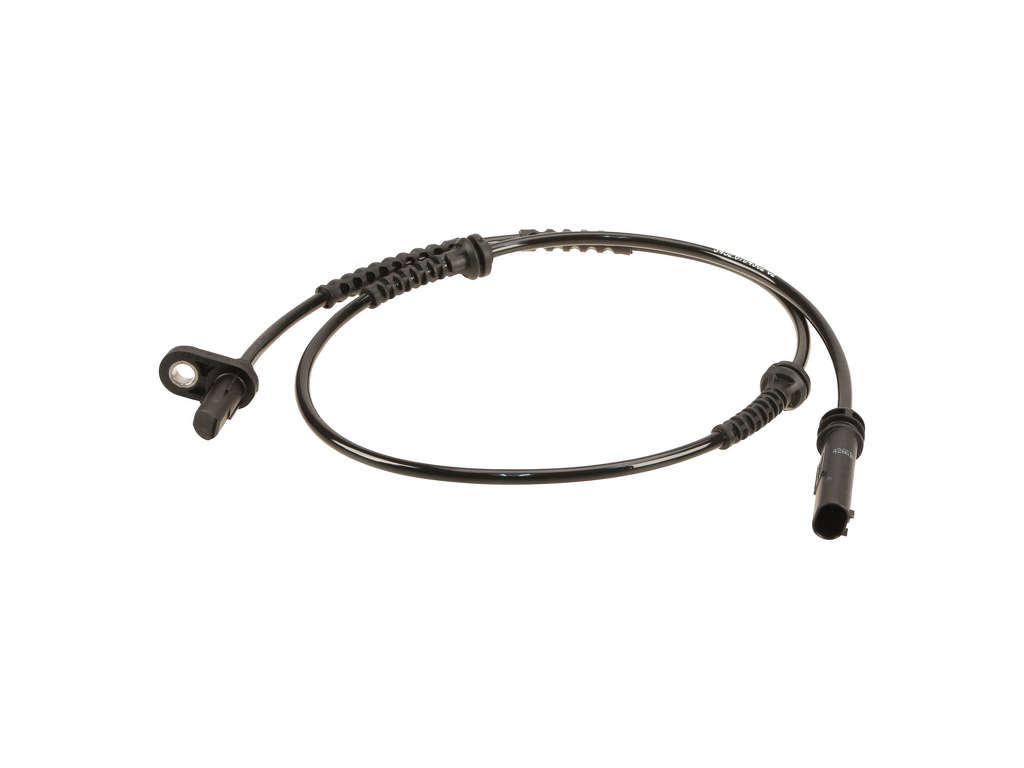
On a 2010-2017 BMW 5 Series (F10/F07), code C0045 almost always points to a failed left rear wheel speed sensor or its wiring. This will disable the ABS and stability control systems. A new sensor is the most common fix. The OEM part number for the rear sensor is typically 34526784901.
- C0045 on a 2010-2017 BMW 5 Series means there's a fault in the left rear wheel speed sensor circuit, which will disable your ABS and stability control.
- The most likely cause is a failed wheel speed sensor itself, which is a common wear item on these cars.
- Before buying parts, use a scan tool to confirm the left rear wheel speed signal is absent or erratic in the live data.
- Always inspect the wiring and connector for damage or corrosion, as this is another common and cheaper fix.
- Driving with this code is possible but risky, as critical safety systems are offline. Get it repaired promptly.
What's Unique About the 2010-2017 BMW 5 Series
For the F10/F07/F11 generation of the BMW 5 Series, the wheel speed sensors (also called ABS sensors) are a known common failure item. They are exposed to harsh conditions like water, road salt, and vibrations, which leads to internal failure or corrosion of the wiring connectors over time. While the issue is not unique to BMW, the frequency of this specific failure makes it a top suspect whenever ABS-related warning lights appear on this platform. The rear sensors are the same for left and right sides.
Generation note: The 2010-2017 range primarily covers the F10 (sedan), F11 (wagon), and F07 (Gran Turismo) generation. Some very early 2010 models could be the previous E60 generation. The cause and fix are very similar for both generations, as they both rely on wheel speed sensors located at the hub, though part numbers will differ. This guide focuses on the more common F10/F11/F07 platform.
Symptoms You May Notice
- ABS warning light illuminated
- Traction Control (DSC/DTC) warning light illuminated
- Brake warning light illuminated (often yellow or red)
- "Chassis Stabilization Malfunction" message on iDrive screen 🎬 Watch: See how this chassis stabilization error appears on your dash.
- Loss of anti-lock braking function (wheels may lock up under hard braking)
- Disabled stability and traction control systems
- Cruise control may be disabled
- In some cases, the speedometer may read incorrectly if it relies on the rear wheel speed average.
- Replacing the DSC/ABS module when the fault is a simple wiring break or failed sensor.
- Replacing the wheel bearing when the issue is only a contaminated tone ring that could be cleaned.
- Replacing the sensor when the actual fault is a broken wire further up the harness or a blown fuse.
Most Likely Causes
- Failed Left Rear Wheel Speed Sensor 🔴 High Probability → Shop ABS Wheel Speed Sensor The sensors are exposed to harsh environmental conditions at the wheel hub, leading to internal electronic failure or corrosion over time. This is a very common failure point on many modern BMWs, including the F10 platform.
How to confirm: Use a BMW-capable scan tool to monitor live data from all four wheel speed sensors while driving or spinning the wheel. The left rear sensor will show 0 MPH or an erratic reading compared to the others. A resistance test is not reliable on these active sensors; voltage and signal waveform analysis are the correct electrical tests.
Typical fix: Replace the left rear wheel speed sensor. The sensor is held in by a single 5mm Allen bolt and its wiring is routed up the suspension to a connector in the wheel well. The connector is typically housed in a small black box for protection.
Est. part cost: $40-$150 - Damaged Wiring or Corroded Connector 🟡 Medium Probability The wiring harness runs down the suspension and is exposed to road debris, flexing, and moisture. The connector housing in the wheel well can also trap moisture, leading to corroded pins. Wires can become brittle and break internally with no visible external damage.
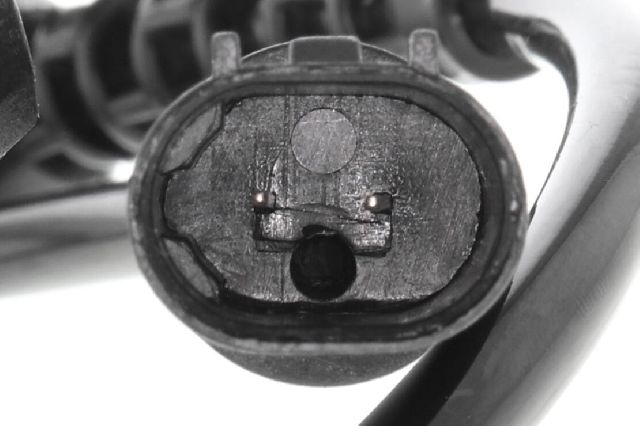
How to confirm: Visually inspect the entire length of the sensor wire from the hub to the connector for any signs of chafing, breaks, or heat damage. Unplug the connector and check for green or white corrosion on the pins. Use a multimeter to test for supply voltage (approx. 12V) from the harness side with the key on.
Typical fix: Repair the damaged section of wire or replace the connector pigtail. In severe cases, the sensor and its integrated harness must be replaced. Cleaning corroded pins with electrical contact cleaner may be a temporary fix.
Est. part cost: $10-$50 - Damaged or Debris-Covered Tone Ring ⚪ Low Probability The tone ring (or magnetic encoder) is integrated into the wheel bearing or axle shaft. While durable, heavy corrosion or metallic debris (from brake wear or a torn CV boot) can stick to it, interfering with the sensor's magnetic reading.
How to confirm: After removing the wheel speed sensor, visually inspect the magnetic encoder ring through the sensor mounting hole while slowly rotating the wheel hub. Look for rust buildup, cracks, or metallic debris stuck to the ring. A borescope can be very helpful for a clear view.
Typical fix: Clean the tone ring carefully with a brush and brake cleaner. If the ring is physically damaged or part of the wheel bearing, the entire wheel bearing/hub assembly must be replaced.
Est. part cost: $150-$400
Rare But Worth Checking
- Faulty DSC/ABS Control Module: → Shop ABS Control Module This is rare and should only be considered after definitively ruling out the sensor, wiring, and tone ring. A module failure often presents with multiple wheel speed sensor codes, communication errors, or codes that immediately return after clearing, even with a new sensor.
- Worn Wheel Bearing: Excessive play in a worn wheel bearing can cause the distance between the sensor and the tone ring to fluctuate, leading to an erratic signal. This would typically be accompanied by a humming or grinding noise from that corner of the car that changes with speed.
- Blown Fuse for DSC Module: A shorting component, such as a faulty Comfort Access door handle, can blow a fuse that powers the DSC module, leading to wheel speed sensor codes. In the F10, fuse #2 in the glove box fuse panel is a common culprit. 🎬 See this video to find the exact DSC fuse location.
Diagnosis Steps
- Connect a BMW-compatible OBD-II scanner and confirm the presence of code C0045 and any related BMW-specific codes.
- Access the live data stream for the DSC/ABS module.
- Observe the wheel speed readings for all four wheels while driving slowly (or with the vehicle safely on jack stands, spinning the wheel by hand).
- Confirm that the left rear wheel speed reads 0 or is erratic while the others read correctly.
- Raise and safely support the rear of the vehicle and remove the left rear wheel.
- Perform a thorough visual inspection of the left rear wheel speed sensor, its wiring harness along the suspension, and the connector in the wheel well. Look for any damage, corrosion, or loose connections. The connector is often inside a plastic box behind the wheel well liner.
- If visual inspection is inconclusive, remove the sensor (typically one 5mm Allen bolt) and inspect the sensor tip and the tone ring inside the hub for debris or damage. The sensor can sometimes seize in the hub and require careful persuasion to remove.
- If the sensor, wiring, and tone ring appear fine, test the wiring for correct voltage supply back to the DSC module. Do not perform a resistance test on the sensor itself as it is an active sensor.
- Replace the component identified as faulty. Most often, this will be the wheel speed sensor itself.
- After replacement, clear the fault codes and perform a test drive to ensure the warning lights do not return. 🎬 Watch this step-by-step walkthrough of the wheel speed sensor repair.
Parts You'll Likely Need
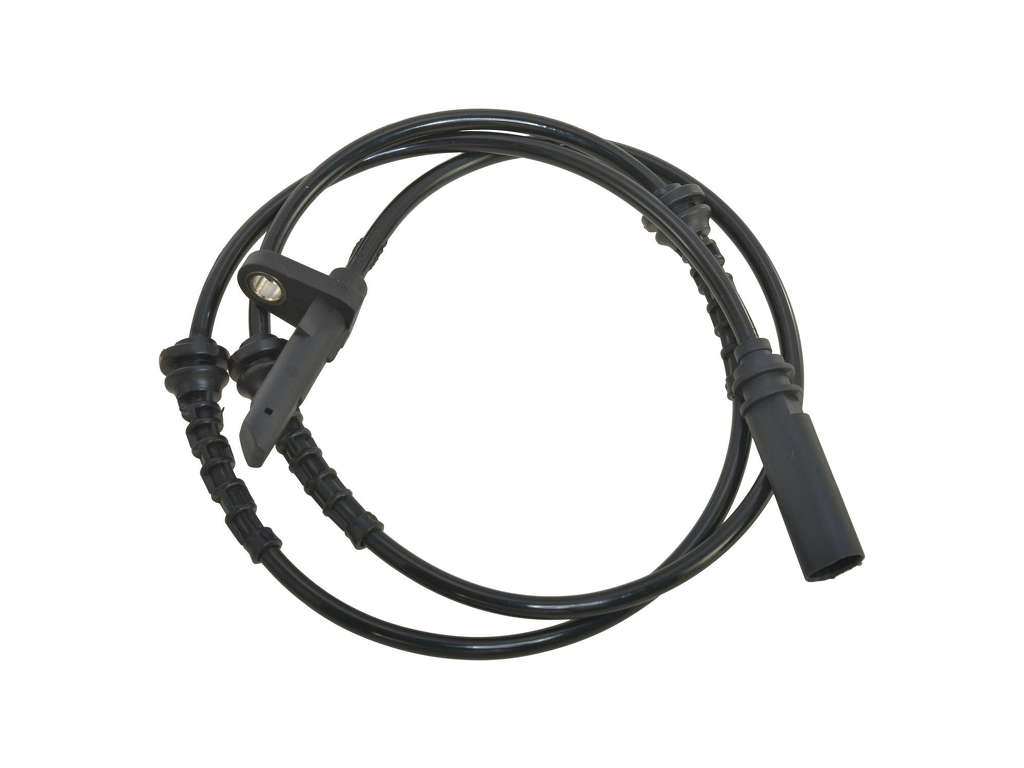
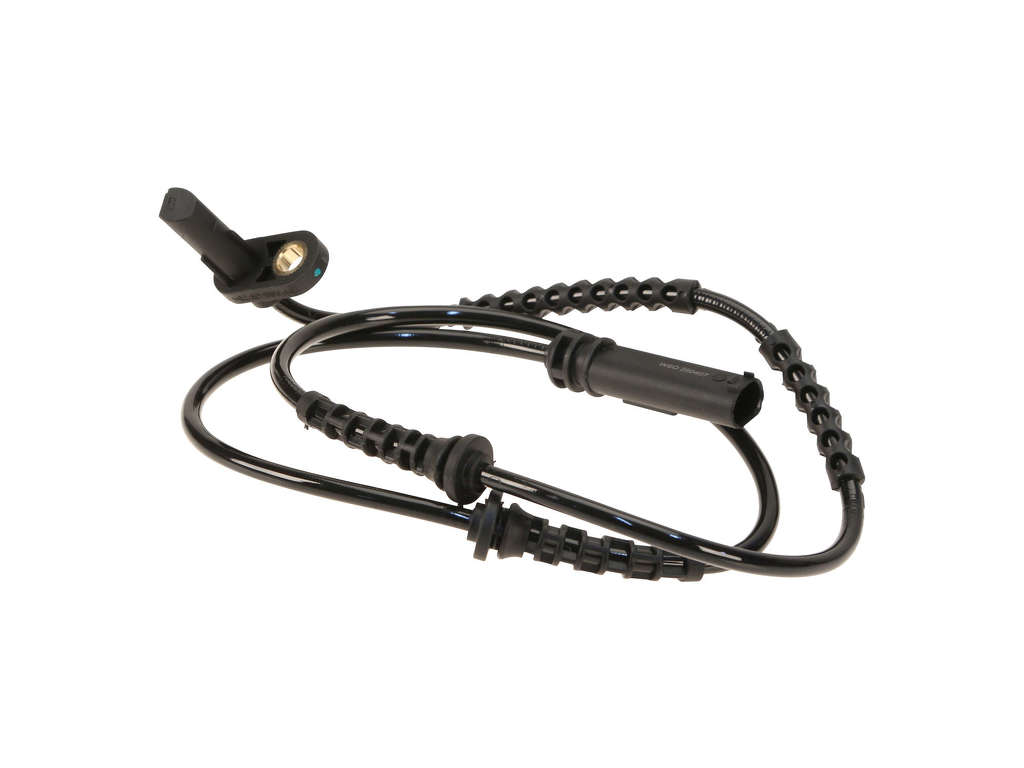
- Rear Wheel Speed Sensor
(OEM #34526784901)— This is the most common failure point for code C0045 due to its exposed location and electronic nature. The same part number is used for both left and right rear positions.
Trusted brands: Bosch, ATE, VDO, Delphi, Meyle
OEM price range: $120-$185
Aftermarket price range: $40-$90
Related Codes That Often Appear With This One
- C0050 — This is the code for the right rear wheel. If both appear together, it strongly suggests a problem common to both, like a wiring harness issue or a faulty DSC module, rather than two failed sensors at once.
- 5DEC — This is a BMW-specific fault code that often accompanies the generic C-code, pointing to the same wheel speed sensor issue. You may also see codes like 480A, 4809, or D35A.
Platform-Specific Known Issues
- Seized Sensor: Due to corrosion in the aluminum wheel carrier, the plastic body of the wheel speed sensor can become seized. Removal may require destroying the old sensor and carefully cleaning the bore before installing the new one. Applying a small amount of silicone grease to the new sensor's body can help prevent this in the future.
Mechanic-Grade Diagnostic Values
- Supply voltage at sensor harness connector — expected: Approximately 10.5V - 12V with ignition on. Failure: No voltage or significantly low voltage indicates a wiring or DSC module power supply issue.
- Sensor signal output (using an oscilloscope) — expected: A digital square wave or 'teardrop' signal that changes frequency as the wheel is spun.. Failure: No signal, a flat line, or a very noisy/erratic signal indicates a failed sensor or a problem with the magnetic encoder ring.
Hidden / Shadow Codes Worth Checking
- 480A9A: A BMW-specific fault code that often translates to the generic C0045. It points directly to a fault in the wheel speed sensor circuit. (see via BMW-specific diagnostic software like ISTA, or advanced scanners like Autel or Foxwell.)
- D35A: Another BMW-specific code indicating a signal fault from the left rear wheel speed sensor. (see via BMW-specific diagnostic software like ISTA or BimmerLink/BimmerCode apps.)
Scan Tool Commands That Help
- ISTA (BMW Dealer Software): Vehicle Test / Test Plan — After reading initial fault codes, ISTA will generate a specific 'test plan' for the C0045/related BMW code. It guides the technician through component checks, including live data, wiring checks, and final confirmation of the fault.
- ISTA (BMW Dealer Software): DSC: encode and program control unit — This function is required only if the DSC control module itself is replaced. It involves writing the vehicle's VIN and configuration data to the new (or used) module.
- Autel MaxiSys (or similar): Programming/Coding for DSC module — Similar to ISTA, this is used to program a replacement DSC module. It reads the vehicle order (FA) and codes the new module to match the car's specifications.
Wiring & Ground Locations
- DSC Control Module (A65) — Located in the engine bay, on the driver's side (LHD vehicles), underneath the brake fluid reservoir and plastic scuttles. It is the hydraulic block with the electronic module attached.. This is the module that receives the signal from the left rear wheel speed sensor. All wiring for the sensor ultimately terminates here. A corroded connector at the module itself is a rare but possible cause.
- Rear Wheel Speed Sensor Connector (X175 for Left Rear) — Inside a small black plastic box located behind the wheel arch liner in the left rear wheel well.. This is the primary point of failure for wiring issues. It's a common place for water intrusion and corrosion, which can interrupt the sensor signal.
- Fuse F2 (Glove Box) — In the fuse panel located behind a cover in the glove box. It is typically a 5-amp fuse.. This fuse can supply power to the DSC module. A short in another system on the same circuit (like Comfort Access door handles) can blow this fuse, causing the DSC module to lose power and log wheel speed sensor faults.
- Fuse F107, F178, F180 (Trunk) — In the rear fuse panel, located behind the right-side trunk trim panel.. These fuses are also related to the Dynamic Stability Control system and should be checked if there are power-related issues or multiple DSC faults.
Real Owner Repair Stories
- YouTube user 'Just The Drip' (2011-2016 BMW F10 5-Series) — Nearly every warning light on the dashboard was illuminated, including ABS, DSC, and Brake.
❌ Tried (didn't work) Replacing both front wheel speed sensors., Replacing axles, brakes, and rotors (done for other reasons, but did not fix the lights).
✅ What actually fixed it The actual cause was a blown 5-amp fuse (Fuse #2) located in the glove box fuse panel. The fuse was blowing because of a short in the faulty Comfort Access door handle, which shares a circuit with the DSC module. Replacing the fuse and disconnecting the faulty handle resolved all the warning lights. - Reddit user Samsonlp (2011 BMW 535i (F10 N55)) — Sudden jerk while driving, followed by ABS/DTC errors, transmission error message, and limp mode. Scan tool showed open circuit codes for all four wheel speed sensors.
❌ Tried (didn't work) Restarting the car temporarily cleared the issue., Initial thought was a bad ABS module connector.
✅ What actually fixed it The root cause was a failing alternator that was overcharging the electrical system, with voltage spiking to 17V. The over-voltage condition caused multiple control modules, including the DSC, to malfunction and report sensor circuit faults.
When the Usual Fixes Don't Work
- In one documented case, a user replaced the wheel speed sensor to fix a C0045 code, but the problem persisted. The ultimate fix was not the sensor or wiring, but a blown 5-amp fuse in the glovebox. This fuse, which powered the DSC module, was being repeatedly blown by a short-circuiting Comfort Access door handle. This highlights the importance of checking fuses and considering seemingly unrelated components that may share a power circuit before condemning expensive modules.
Documented NHTSA Reports
- NHTSA ODI #11219167: An owner reported an ABS stability code C0045 where the left rear wheel speed sensor encoder ring was broken. The repair required replacing both the speed sensor and the rear hub assembly.
- NHTSA ODI #11165895: A report describes a service center identifying code C0045 and recommending the replacement of the left rear hub bearing assembly, noting that the duration of the warning message varied from seconds to minutes.
- NHTSA ODI #10382746: A report mentions code C0045 appearing alongside other codes (C0057, C0231, C0232, C0282). In this instance, the manufacturer instructed the dealer to erase the codes and re-program the software.
- NHTSA ODI #11399819: A report notes that despite installing multiple fuel level sensors, codes P0463, P069E, and C0045 returned, suggesting that on some vehicle platforms, this code may be part of a broader electrical or communication fault.
OEM Part Supersession History
34526784901→This part number is still current for many applications but may have been superseded by other numbers for specific models or production dates. Always check with a dealer using the VIN.— N/A
Heads up: While many aftermarket sensors are available, brands like ATE, Bosch, and VDO are OEM suppliers and generally offer the highest compatibility and longevity.
Model Year Variations Within This Range
- 2010-2013 (Pre-LCI) vs 2014-2017 (LCI): While the fundamental cause (wheel speed sensor) is the same, there were minor changes to wiring and module software. The LCI (Life Cycle Impulse) refresh in 2014 introduced updated electronic modules. However, for this specific fault, the diagnostic process and part numbers for the sensor remained largely consistent. Always verify part numbers with a VIN.
Diagnostic Flowchart
Other Known Issues on This Vehicle
Issues unrelated to this code that are worth knowing about as an owner of this generation:
- N20 Engine Timing Chain Guide Failure 🔴 High — Common on models produced between 2012 and early 2015. Failure can be catastrophic, leading to engine destruction. A class-action lawsuit and warranty extension were issued for this problem. (Ref: SIB 11 03 17 - Limited Warranty Extension)
- N55/N52 Electric Water Pump Failure 🔴 High — Common failure item, typically between 60,000-100,000 miles. Failure can cause rapid overheating and potential engine damage. Often fails without warning.
- Oil Filter Housing Gasket Leak 🟠 Medium — Very common leak on N55, N52, and N57 engines. The gasket hardens over time, leaking oil onto the serpentine belt, which can cause the belt to fail and potentially be ingested by the engine's front main seal, causing catastrophic damage.
- Thrust Arm / Control Arm Bushing Failure 🟠 Medium — The front thrust arm (tension strut) bushings are fluid-filled and prone to cracking and leaking, typically around 60,000-80,000 miles. Causes clunking noises, steering wheel vibration, and poor handling.
- N63 V8 Engine Issues (Pre-LCI 550i) 🔴 High — Early (2010-2013) N63 engines are known for excessive oil consumption, failing valve stem seals, injector problems, and timing chain issues. BMW initiated a 'Customer Care Package' to address some problems. (Ref: N63 Customer Care Package (Not a formal recall))
- Trunk Water Leaks 🟡 Low — Water can leak into the trunk/battery area due to clogged sunroof drains or failed taillight seals, potentially damaging sensitive electronic modules located in the trunk floor.
Used vs. New Parts: Buying Guide for This Vehicle
When a used part is the smart pick: A used part is NOT recommended for the wheel speed sensor itself. It's a high-failure, wear-and-tear electronic part, and a used one has unknown life left and offers minimal cost savings compared to a new aftermarket part. A used DSC/ABS module could be a cost-effective option if the module is confirmed faulty, but it will require professional coding to the vehicle.
Donor-vehicle mileage cap: roughly under 60000 miles for the part to have meaningful remaining life.
What to inspect on the donor part:
- For a DSC Module: Ensure the part numbers match exactly. Check the electrical connector pins for any signs of corrosion, bent pins, or water damage. Ask for the donor vehicle's VIN to verify compatibility.
- Avoid any parts from flood-damaged or heavy-impact vehicles.
OEM-only on this vehicle (don't cheap out):
- While not strictly 'OEM-only', using an OEM or OEM-supplier (ATE, Bosch) wheel speed sensor is highly recommended for reliability. Cheap, unbranded aftermarket sensors have a high rate of premature failure or 'dead-on-arrival' issues.
Aftermarket brands forum-validated for this vehicle:
- ATE (often the original OEM supplier)
- Bosch
- VDO
- Delphi
Brands owners have reported issues with on this vehicle:
- Unbranded, 'no-name' sensors from online marketplaces are a gamble and often cause repeat failures.
Real Owner Stories
Aggregated from forums and TSBs cited above. Mileages and costs reflect what owners reported in those sources.
2014 BMW M3 (F80)
Symptoms: ABS/DSC light on, wheel speed sensor error detected via Bimmerlink.
What fixed it: Successfully resolved the error by replacing the wheel speed sensor.
Source hint: Bimmerpost: ABS/DSC light on, wheel speed sensor error
2015 BMW 5 Series (F10)
Symptoms: Chassis Stabilization Malfunction message, ABS and Traction Control lights illuminated, and cruise control disabled.
What fixed it: Replacement of the rear wheel speed sensor. The sensor is held by a 5mm Allen bolt and the connector is located in a black plastic box behind the wheel well liner.
Source hint: Bimmerfest: Discussion on wheel speed sensor replacement
Related OBD-II Codes
Frequently Asked Questions
My iDrive is showing a 'Chassis Stabilization Malfunction' message on my F10 5 Series; is this related to code C0045?
Can I just clean the sensor, or do I need to buy part number 34526784901?
Why is the sensor stuck in my wheel carrier, and how should I install the new one?
Is there a TSB for the timing chain issue mentioned in the known issues for my 2013 528i?
Will a standard multimeter resistance test tell me if my BMW rear speed sensor is bad?
Helpful Videos
We Have This Part in Stock


The information in this article is provided for general reference and educational purposes only. Vehicle specifications, procedures, and part compatibility can vary by production date, trim level, and region. Always consult your vehicle's factory service manual and verify part numbers before purchasing or performing repairs. Safety-critical components such as airbags, seat belts, and braking systems should be installed by a qualified professional.
- BMW 5 Series:
- 🧭 Diagnostic Flowchart
- 🎬 Helpful Videos
- 🛍️ Shop This Part
- What's Unique About the 2010-2017 BMW 5 Series
- Symptoms You May Notice
- Most Likely Causes
- Rare But Worth Checking
- Diagnosis Steps
- Parts You'll Likely Need
- Related Codes That Often Appear With This One
- Platform-Specific Known Issues
- Mechanic-Grade Diagnostic Values
- Hidden / Shadow Codes Worth Checking
- Scan Tool Commands That Help
- Wiring & Ground Locations
- Real Owner Repair Stories
- When the Usual Fixes Don't Work
- Documented NHTSA Reports
- OEM Part Supersession History
- Model Year Variations Within This Range
- Other Known Issues on This Vehicle
- Used vs. New Parts: Buying Guide for This Vehicle
- Real Owner Stories
- 2014 BMW M3 (F80)
- 2015 BMW 5 Series (F10)
- Related OBD-II Codes
- Frequently Asked Questions
- 🎟️ Get 5% Off