

C0045 on 2008-2014 Dodge Avenger: Left Rear Wheel Speed Sensor Circuit Fixes
Code C0045 on a 2008-2014 Dodge Avenger most often means the left rear wheel speed sensor has failed or its wiring is damaged. A replacement sensor costs about $40-$80. If the magnetic ring on the wheel hub is damaged, the entire hub assembly will need replacement, costing $100-$200 for the part.
- Code C0045 on a Dodge Avenger points to a fault in the left rear wheel speed sensor circuit, which disables ABS and traction control.
- The most common cause is a failed wheel speed sensor itself, followed by damaged wiring.
- A critical and frequent misdiagnosis is overlooking a damaged or rusted magnetic encoder ring, which is integrated into the wheel hub. If the ring is faulty, the entire hub assembly must be replaced.
- Always inspect the wiring and the hub's magnetic ring before spending money on a new sensor.
- This issue is also common on the Dodge Avenger's platform mates: the Chrysler 200/Sebring and the Dodge Journey.
What's Unique About the 2008-2014 Dodge Avenger
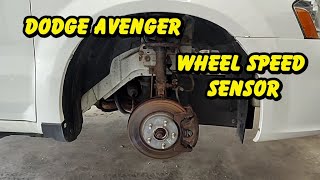
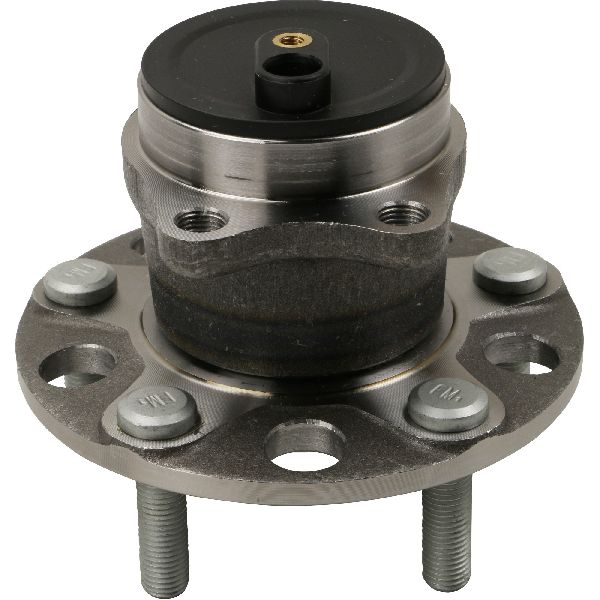
On the 2008-2014 Dodge Avenger, the wheel speed sensor is a separate component, but the magnetic ring it reads (called a tone or reluctor ring) is integrated into the rear wheel hub and bearing assembly. This is a critical distinction because if the ring is damaged, rusted, or has collected metallic debris, you must replace the entire wheel hub assembly, not just the sensor. Visually inspecting this ring is a key diagnostic step before replacing the sensor itself, a fact confirmed by owners in forums who replaced the sensor only to have the code return.
Symptoms You May Notice
- ABS warning light is on
- Traction Control or Electronic Stability Control (ESC) light is on
- ABS, traction, and stability control systems are disabled
- Replacing the wheel speed sensor when the actual fault is a broken wire a few inches up the harness.
- Replacing the wheel speed sensor when the magnetic encoder ring on the wheel hub assembly is cracked, rusted, or contaminated with metallic debris.
Most Likely Causes
- Failed Left Rear Wheel Speed Sensor 🔴 High Probability → Shop ABS Wheel Speed Sensor The sensor is exposed to harsh conditions like water, road salt, and debris, leading to internal corrosion or electrical failure over time.
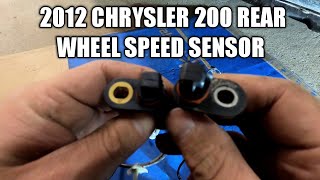
How to confirm: After a visual inspection, test the sensor's internal resistance with a multimeter; an open or shorted reading indicates failure. A scan tool showing 0 MPH from the left rear wheel while others show speed also points to a bad sensor. 🎬 Watch: A step-by-step guide to diagnosing wheel speed sensor issues.
Typical fix: Replace the left rear wheel speed sensor. The sensor is typically held in by a single bolt. 🎬 See this quick walkthrough on replacing the wheel speed sensor.
Est. part cost: $40-$80 - Damaged Wiring or Connector 🟡 Medium Probability The wiring harness runs from the sensor, along the suspension, and then inside the vehicle under the sill plates to the ABS module in the engine bay. It is vulnerable to chafing against suspension components, breaking from repeated movement, or corrosion at the connector pins.
How to confirm: Visually inspect the entire length of the harness from the sensor to the chassis for breaks, chafing, or green/white corrosion in the connector. Perform a continuity test on the wires with a multimeter from the sensor plug to the ABS module connector.
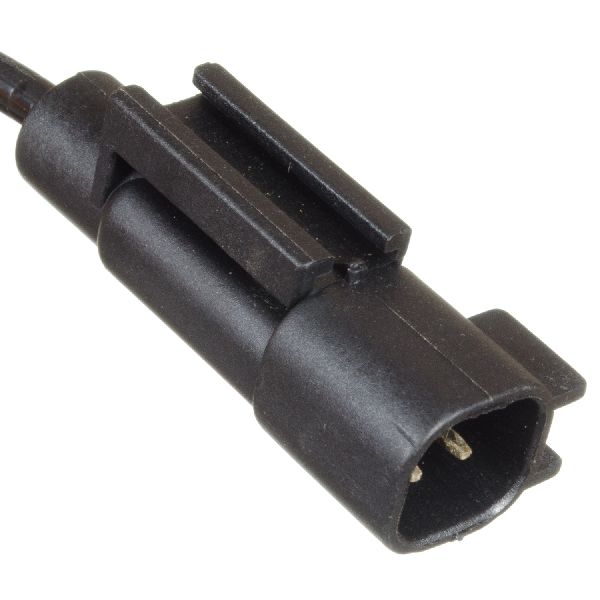
Typical fix: Repair the broken section of wire or replace the pigtail connector. In severe cases, the entire sensor harness may need replacement.
Est. part cost: $15-$50 for a pigtail, more for a full harness - Damaged or Failed Wheel Hub/Bearing Assembly 🟡 Medium Probability → Shop Hub Assembly The magnetic encoder ring integrated into the hub can crack, rust, or accumulate metallic debris, causing an erratic or missing signal. This is a common failure mode for this type of design, as described by an owner of a 2012 Avenger who fixed the issue by replacing the wheel bearing after a new sensor didn't work.
How to confirm: With the wheel removed, visually inspect the magnetic ring on the inboard side of the hub for cracks, missing chunks, or heavy rust/debris. An erratic but present signal on a scan tool often points to this issue.
Typical fix: Replace the entire left rear wheel hub and bearing assembly.
Est. part cost: $100-$200
Rare But Worth Checking
- Faulty ABS Control Module: → Shop ABS Control Module This is the least likely cause. Only consider this after definitively proving the sensor, wiring, and hub assembly are all in perfect working order. A faulty module will often trigger multiple wheel speed sensor codes or communication codes like U0121. Sometimes, a missing fuse for the ABS module can be the simple culprit.
- Software Glitches: In some cross-manufacturer instances, such as described in NHTSA ODI #10382746 for a Subaru, dealers have been instructed to erase codes and re-program software when C0045 appears alongside other chassis codes.
Diagnosis Steps
- Connect an ABS-capable OBD-II scanner to confirm the C0045 code is present and check for any other related codes.
- Use the scanner's live data function to monitor the speed of all four wheels while driving slowly or spinning the wheel by hand. Confirm the left rear wheel reads 0 or an erratic speed compared to the others.
- Safely raise and support the vehicle and remove the left rear wheel.
- Visually inspect the wheel speed sensor and its wiring harness for any obvious signs of damage, such as cracks, chafing, or loose connections.
- Inspect the connector for corrosion or pushed-out pins.
- Carefully inspect the magnetic encoder ring on the back of the wheel hub assembly for cracks, rust buildup, or metallic debris stuck to it.
- If no visual faults are found, disconnect the sensor and test its resistance with a multimeter. Compare the reading to the manufacturer's specification (typically in the range of 500-1500 Ω for passive sensors). An open circuit (infinite resistance) or a dead short (zero resistance) indicates a failed sensor.
- If the sensor tests good, test the wiring harness for continuity and check for shorts to ground or power between the sensor connector and the ABS module connector.
- If the sensor and wiring are confirmed to be good, the fault most likely lies with the wheel hub's integrated magnetic ring, requiring hub replacement.
Parts You'll Likely Need
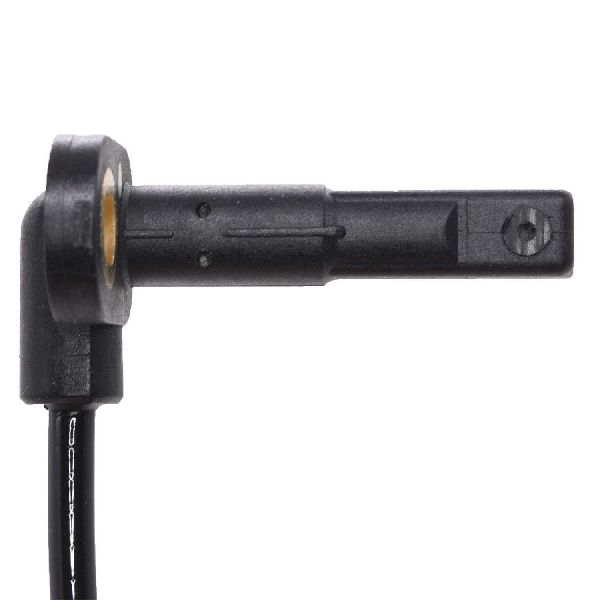
- Left Rear Wheel Speed Sensor
(OEM #68003281AC (superseded by 68003281AF))— This is the most common failure point for a C0045 code due to its exposure to the elements. Note that this part number may also fit front applications on other Chrysler vehicles like the Jeep Wrangler.
Trusted brands: Mopar, Standard Motor Products (SMP), Delphi, A-Premium
OEM price range: $60-$100
Aftermarket price range: $30-$70 - Rear Wheel Hub and Bearing Assembly
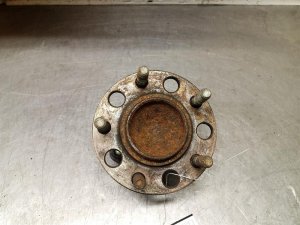
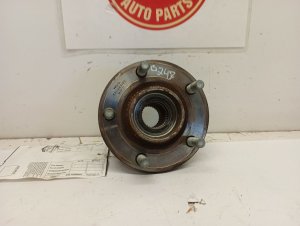
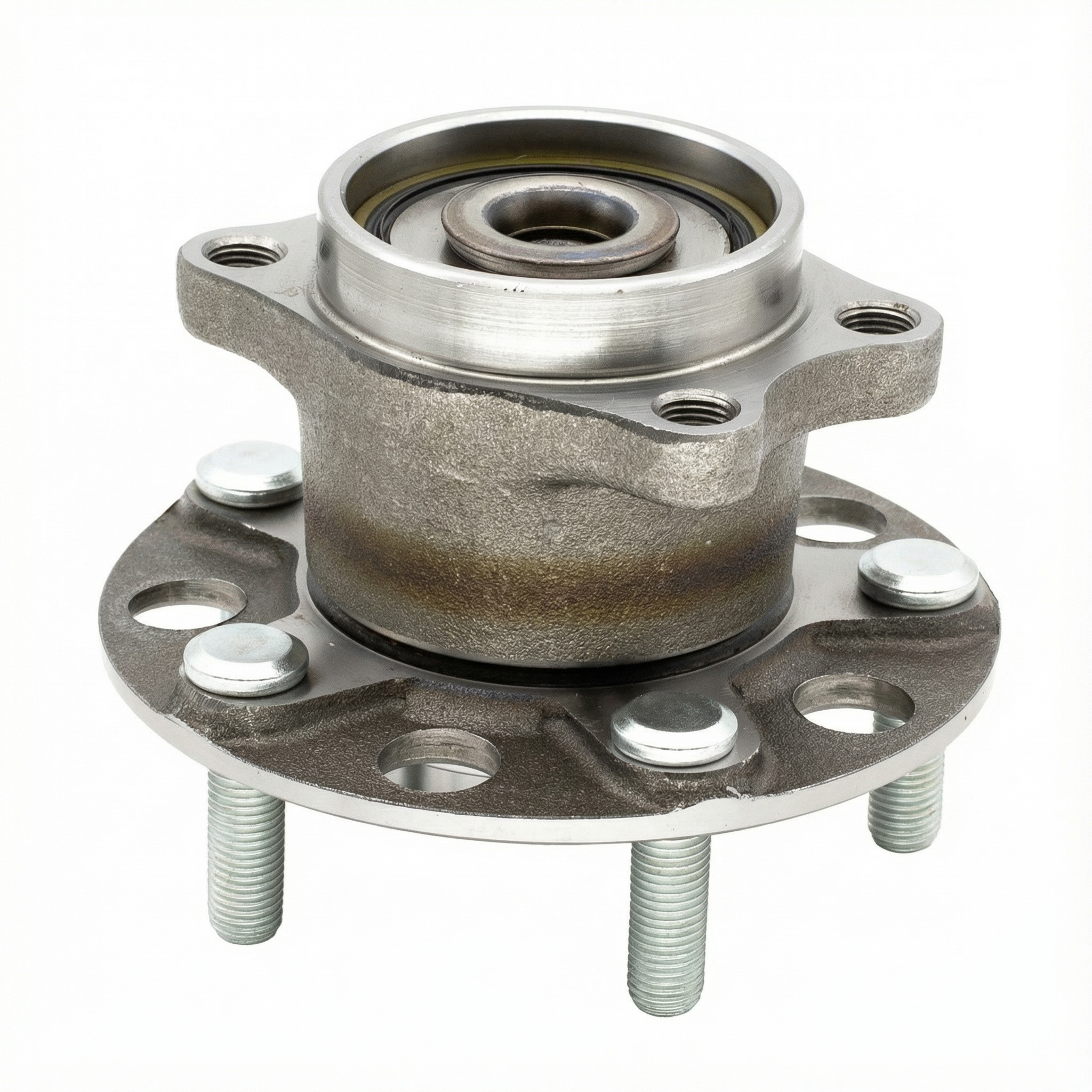
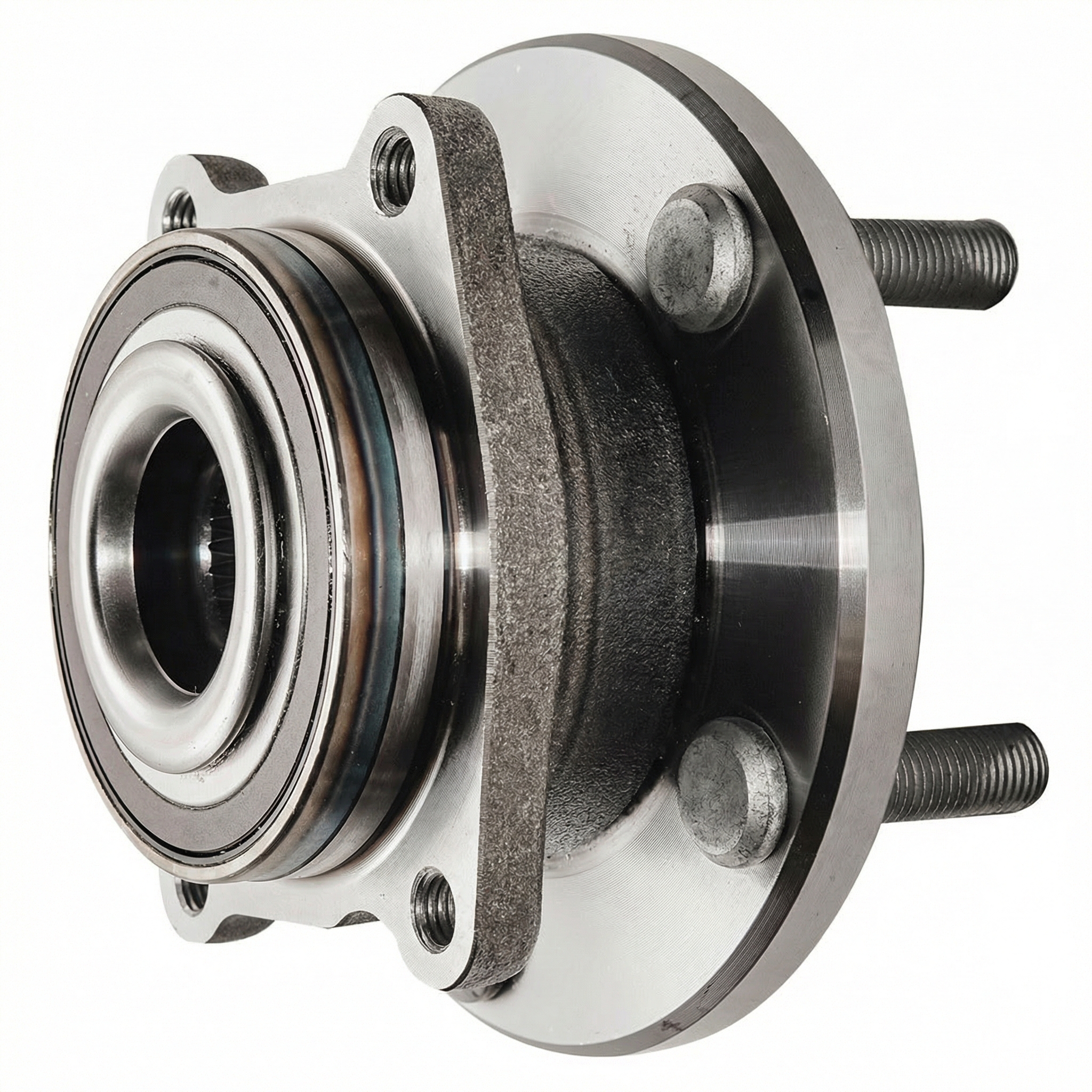
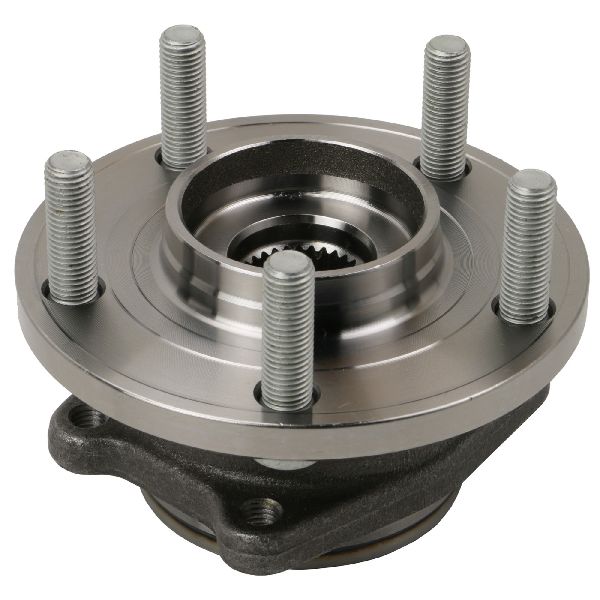
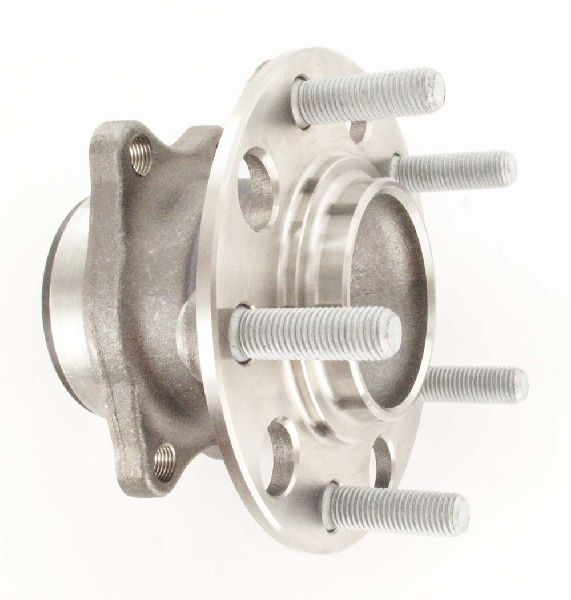
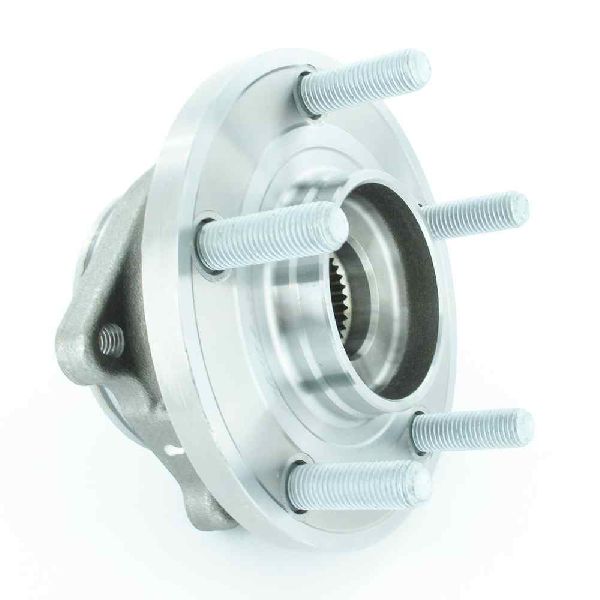
(OEM #5105719AA)— Required if the integrated magnetic encoder ring is damaged, which is the second most likely component failure after the sensor itself. A common aftermarket part number is 512332. 🎬 Watch: How to replace the rear wheel hub and bearing assembly.
Trusted brands: Mopar, MOOG, Timken, Detroit Axle
OEM price range: $180-$250
Aftermarket price range: $100-$180
Related Codes That Often Appear With This One
- C0046 — This code indicates an erratic signal from the same sensor, often pointing to a damaged tone ring on the hub or excessive bearing play, whereas C0045 usually indicates a complete circuit failure (open/short).
- U1412 — This is a related network code indicating implausible wheel speed data was received, often logged alongside the specific sensor circuit fault code like C0045.
- U0121 — Indicates a loss of communication with the ABS module. This points towards a module failure, a power/ground issue to the module, or a CAN bus wiring problem, rather than a single sensor circuit.
- P0463 / P069E — While primarily seen on other makes like Chevrolet (NHTSA ODI #11399819), C0045 has occasionally been documented alongside fuel system codes during complex electrical faults.
Technical Service Bulletins (TSBs) & Recalls
- While not for C0045 specifically, a TSB exists for an overly sensitive Electronic Stability Program (ESP)/Traction Control system that activates unnecessarily during tight turns. An available software update for the ABS control module can correct this, highlighting the link between wheel speed inputs and stability control behavior.
Platform-Specific Known Issues
- A user on the r/dodgeavenger subreddit with a 2012 model reported that their ABS and traction control lights were on. The fix was replacing the wheel bearing because the integrated magnetic strip had rusted away and become unreadable by the sensor. They confirmed the fix by replacing both the bearing and the ABS wire.
Mechanic-Grade Diagnostic Values
- Wheel Speed Sensor Internal Resistance — expected: 1200 - 2700 Ω (general value for passive sensors). Failure: A reading of infinite resistance (open circuit) or near-zero resistance (short circuit).
- Wheel Speed Sensor AC Voltage Output — expected: Minimum of 0.25 Volts AC (250 mV AC). Failure: Voltage below 0.25 VAC when spinning the wheel by hand at about half a revolution per second.
Hidden / Shadow Codes Worth Checking
- Symptom Byte / Sub-code: Advanced scanners may display a specific byte with C0045 that defines the fault type, such as '06' for an open circuit, '0F' for an erratic signal, or '5A' for a 'not plausible' signal. This helps narrow down whether the issue is a broken wire, a damaged tone ring, or an internal sensor failure. (see via Professional level scan tools like Autel MaxiCOM or the dealer wiTECH tool.)
Scan Tool Commands That Help
- wiTECH (Dodge/Chrysler Dealer Tool): ABS Initialization — This function, found under 'Miscellaneous Functions', is critical after replacing the ABS control module. It may be required to make the vehicle recognize the new or used module and clear persistent communication-related faults, even if a direct VIN write function fails.
- wiTECH (Dodge/Chrysler Dealer Tool): Flash ABS Module — Used to update the ABS module's software to the latest version. This can resolve software-related glitches or improve system performance as outlined in technical service bulletins. A stable power supply (battery charger) is required during this process.
Wiring & Ground Locations
- ABS Module — In the engine bay, typically near the driver's side shock tower, behind the headlight assembly.. This is the termination point for the wheel speed sensor harness. The module's connector (C4) is where continuity tests from the sensor plug end.
- Left Rear Sensor Harness Route — The harness runs from the left rear wheel well, enters the cabin, runs forward under the driver's side sill plate trim, and passes through the firewall into the engine bay to reach the ABS module.. This long path offers multiple points for potential chafing or damage, especially under the interior trim and where it passes through the floor pan.
- Left Rear Sensor Wire Colors — In the harness running from the sensor to the ABS module.. The two wires for the left rear sensor are typically Green with a Blue stripe and Green with a Black stripe, twisted together. This helps identify the correct wires at the ABS module connector for testing.
- Ground G302 — Located behind the driver's side kick panel.. A poor ground at this location can affect various components in the driver's side dash area and could potentially impact circuits passing through this area.
- Ground G321 / G309 — Located on the left side of the engine compartment.. This is a primary ground point in the engine bay and is critical for the proper function of the ABS module and other nearby components. A corroded or loose ground here can cause various electrical faults.
Real Owner Repair Stories
- CorvetteForum user (Corvette (similar failure pattern)) — Service ABS/Traction Control lights with code C0045, even after replacing the entire wheel hub assembly.
❌ Tried (didn't work) Cleaning sensor connections, Replacing the entire wheel hub/sensor assembly
✅ What actually fixed it The ultimate cause was a broken wire within the main wiring harness where it flexes and runs through the transmission tunnel area. The wire break was not visible at the wheel well and required significant disassembly to access and repair, highlighting how a circuit fault can exist far from the component itself. - NHTSA ODI #11219167 (Cadillac (similar failure pattern)) — An owner reported the ABS Stability Code (C0045) was caused by a broken left rear wheel speed sensor encoder ring at 96,020 miles. The repair required replacing both the speed sensor and the rear hub assembly.
- NHTSA ODI #11165895 (Chevrolet (similar failure pattern)) — A service center reported code C0045 and recommended replacing the left rear hub bearing assembly to resolve intermittent warning lights that would extinguish after several seconds or minutes.
OEM Part Supersession History
68003281AA→68003281AB, 68003281AC, 68003281AD, 68003281AE, and finally 68003281AF.— Standard part revisions for improved durability, material changes, or supplier updates.
Heads up: All versions are generally interchangeable. However, it is always best to use the latest available part number (68003281AF) to benefit from the most recent design improvements.
Model Year Variations Within This Range
- 2008-2010 vs 2011-2014: A major vehicle refresh occurred for the 2011 model year, which included a completely new interior, revised suspension, and the introduction of the more reliable 3.6L Pentastar V6. Pre-refresh models (2008-2010) are known for having more widespread electrical issues, which could increase the probability of the C0045 code being caused by a wiring harness or module fault rather than just the sensor itself.
Diagnostic Flowchart
Other Known Issues on This Vehicle
Issues unrelated to this code that are worth knowing about as an owner of this generation:
- Electronic Throttle Body (ETB) Failure 🔴 High — Common across all model years, often appearing after 60,000 miles. Can cause the vehicle to enter 'limp mode' or stall unexpectedly.
- Front Subframe (Engine Cradle) Rust/Corrosion 🔴 High — A serious safety issue, particularly for vehicles in the salt belt. The subframe can rust from the inside out, leading to structural failure. The design can trap moisture, accelerating the process. (Ref: No official recall, but widely documented by owners. Chrysler has been known to deny claims.)
- Alternator Failure 🟠 Medium — The alternator can fail, leading to a no-charge condition, battery drain, and eventual stalling. The PCM controls voltage regulation, which can sometimes complicate diagnosis.
- Engine Stalling / Won't Start 🟠 Medium — Complaints are common for the 2008-2014 models. Causes vary from the aforementioned ETB and alternator issues to problems with the wireless control module or fuel pump. (Ref: NHTSA Campaign 13V142000 for potential engine failure on some 2013 2.4L models.)
- HVAC Blend Door Actuator Failure 🟡 Low — A very common annoyance where the actuators for the HVAC system fail, causing a loud, repetitive clicking or knocking sound from the dashboard.
Used vs. New Parts: Buying Guide for This Vehicle
When a used part is the smart pick: A used wiring harness pigtail from a junkyard is a cost-effective solution for a damaged connector. A used wheel hub assembly can also be an option if it's from a low-mileage donor.
Donor-vehicle mileage cap: roughly under 60000 miles for the part to have meaningful remaining life.
What to inspect on the donor part:
- For a hub assembly: Spin the bearing by hand to ensure it is smooth with zero noise or play. Visually inspect the magnetic encoder ring on the back to ensure it is clean, intact, and free of cracks or heavy rust.
- For a wiring pigtail: Check that the plastic is not brittle, the wire insulation is flexible and uncracked, and the connector pins are clean and free of corrosion.
OEM-only on this vehicle (don't cheap out):
- ABS Control Module: Due to the requirement for vehicle-specific programming and initialization with dealer-level tools like wiTECH, using a new Mopar module or a professionally remanufactured unit is strongly recommended to avoid compatibility and programming headaches.
Aftermarket brands forum-validated for this vehicle:
- Wheel Hub Assembly: MOOG, Timken
- Wheel Speed Sensor: Standard Motor Products (SMP), Delphi
Real Owner Stories
Aggregated from forums and TSBs cited above. Mileages and costs reflect what owners reported in those sources.
2012 Dodge Avenger
Symptoms: ABS light and brake light and traction control off.
What fixed it: Replaced both the wheel bearing and the ABS wires because the magnetic strip inside the wheel bearing had rusted away and become unreadable to the sensor.
Source hint: r/dodgeavenger - 'Abs light and brake light and traction control off. Please help'
Related OBD-II Codes
Frequently Asked Questions
My 2012 Avenger has the ABS and Traction Control lights on; could it be the wheel bearing even if the sensor is new?
Is there a TSB for the Traction Control system activating unnecessarily on my Dodge Avenger?
Where is the wiring for the left rear wheel speed sensor most likely to fail on a 2008-2014 Avenger?
What resistance should I look for when testing the left rear wheel speed sensor on my Avenger?
Are there any major safety concerns like subframe rust that I should check while I'm under my Avenger fixing the C0045 code?
Can a bad alternator cause the ABS and stability control systems to disable on this vehicle?
Helpful Videos
Used OEM Parts in Stock
New Aftermarket Parts Available

The information in this article is provided for general reference and educational purposes only. Vehicle specifications, procedures, and part compatibility can vary by production date, trim level, and region. Always consult your vehicle's factory service manual and verify part numbers before purchasing or performing repairs. Safety-critical components such as airbags, seat belts, and braking systems should be installed by a qualified professional.
- Dodge Avenger:
- 🧭 Diagnostic Flowchart
- 🎬 Helpful Videos
- 🛍️ Shop This Part
- What's Unique About the 2008-2014 Dodge Avenger
- Symptoms You May Notice
- Most Likely Causes
- Rare But Worth Checking
- Diagnosis Steps
- Parts You'll Likely Need
- Related Codes That Often Appear With This One
- Technical Service Bulletins (TSBs) & Recalls
- Platform-Specific Known Issues
- Mechanic-Grade Diagnostic Values
- Hidden / Shadow Codes Worth Checking
- Scan Tool Commands That Help
- Wiring & Ground Locations
- Real Owner Repair Stories
- OEM Part Supersession History
- Model Year Variations Within This Range
- Other Known Issues on This Vehicle
- Used vs. New Parts: Buying Guide for This Vehicle
- Real Owner Stories
- 2012 Dodge Avenger
- Related OBD-II Codes
- Frequently Asked Questions
- 🎟️ Get 5% Off