

C0045 on 2009-2020 Dodge Journey: Left Rear Wheel Speed Sensor Circuit Fixes
Code C0045 on a Dodge Journey almost always means the left rear wheel speed sensor has failed or its wiring is damaged. A replacement sensor is typically inexpensive ($25-$60) and is a common DIY fix. Check the wiring and the magnetic ring on the hub before assuming the new sensor will solve it.
- Code C0045 on a Dodge Journey means there's a fault in the left rear wheel speed sensor circuit, disabling your ABS and traction control.
- The most likely fix is replacing the left rear wheel speed sensor, which is an affordable part and a manageable DIY job.
- Before replacing the sensor, inspect its wiring and connector for damage, as this is also a common cause.
- If a new sensor doesn't fix the issue, the problem may be a damaged magnetic ring on the wheel hub, requiring hub replacement.
- For 2012-2015 models, be aware of a safety recall (15V-675) for water damaging the ABS module, which could also trigger this code.
What's Unique About the 2009-2020 Dodge Journey
For the Dodge Journey, the C0045 code is a straightforward issue usually pointing to the sensor or its wiring. However, a key platform-specific issue exists for 2012-2015 models, which were recalled (NHTSA ID: 15V-675) because water could leak into the main ABS wiring harness and damage the ABS control module, potentially causing this code. The official remedy involves sealing the ground eyelets on the shock tower with dual-wall heat shrink tubing, inspecting the harness for water intrusion, and replacing the ABS module if necessary. Furthermore, the magnetic encoder ring the sensor reads is integrated into the rear wheel hub assembly, and it is a known failure point where rust causes it to crack or delaminate, a problem that is often misdiagnosed as a bad sensor.
Symptoms You May Notice
- ABS warning light is illuminated
- Traction Control or Electronic Stability Control (ESC) warning light is illuminated
- Cruise control may not function
- "SERVICE AWD" light may illuminate on all-wheel-drive models.
- Replacing the wheel speed sensor without checking the wiring or the magnetic encoder on the hub. If the new sensor doesn't fix the problem, the fault lies elsewhere in the circuit.
- Assuming the sensor is bad when the actual problem is a corroded connector or a broken wire just a few inches up the harness.
Most Likely Causes
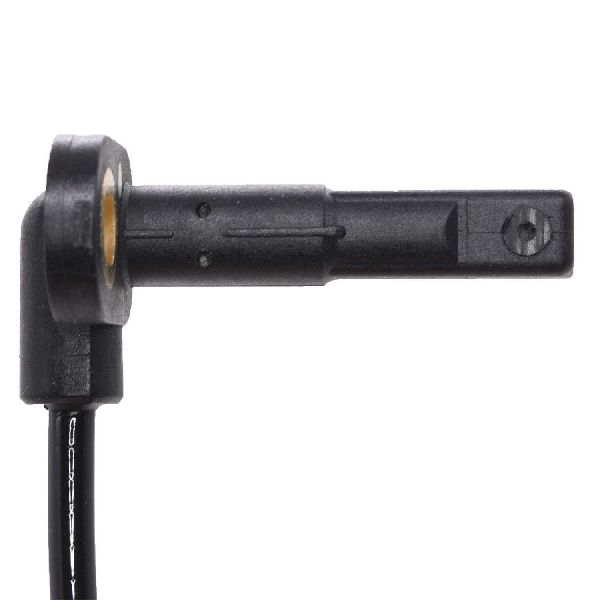
- Failed Left Rear Wheel Speed Sensor 🔴 High Probability → Shop ABS Wheel Speed Sensor The sensor is exposed to road debris, water, and salt, leading to corrosion and internal failure over time. It is the most common point of failure for this code.
How to confirm: Use a scan tool with live data to observe wheel speed signals. If the left rear sensor reads 0 mph or shows an erratic signal while the other three wheels report speed accurately 🎬 Watch: A step-by-step guide to diagnosing wheel speed sensor faults., the sensor is faulty. As it is an active sensor, confirm it is receiving ~12V from the ABS module with the key on.
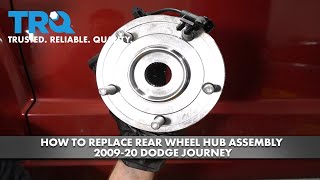
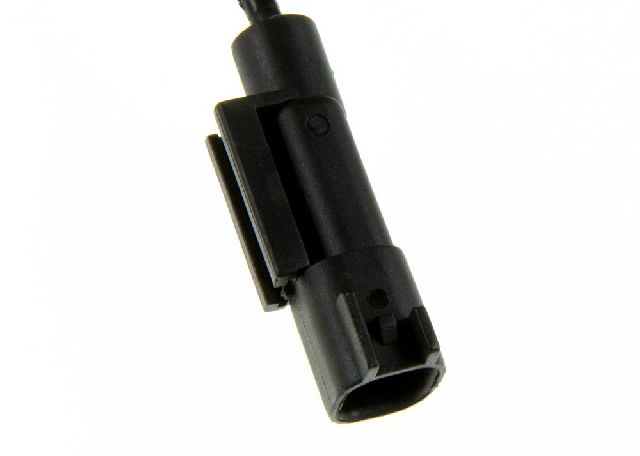
Typical fix: Replace the left rear wheel speed sensor. It is typically held in by a single 10mm bolt 🎬 See this walkthrough for replacing the rear wheel speed sensor. and has an electrical connector.
Est. part cost: $25-$60 - Damaged Wiring or Connector 🟡 Medium Probability The wiring harness runs down to the wheel hub and can be damaged by road debris, improper routing after previous repairs, or corrosion at the connector pins. Wires can also break internally near the connector from repeated suspension movement.
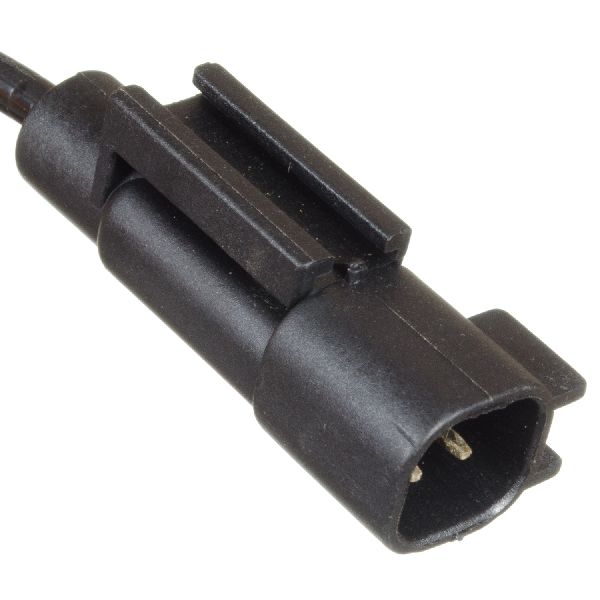
How to confirm: Visually inspect the entire length of the wiring from the sensor to where it enters the main body harness. Check for chafing, breaks, or green corrosion inside the connector. Perform a continuity test on the wires from the sensor plug to the ABS module plug. The wires for the rear sensors are often Green/Blue stripe and Green/Black stripe.
Typical fix: Repair the broken section of wire or replace the sensor pigtail/connector if corroded. In severe cases, a new harness section may be needed.
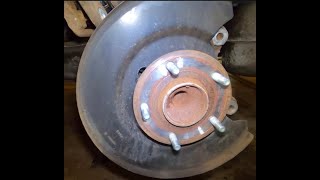
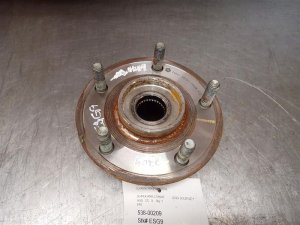
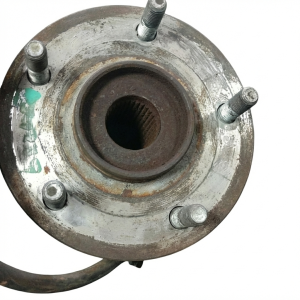
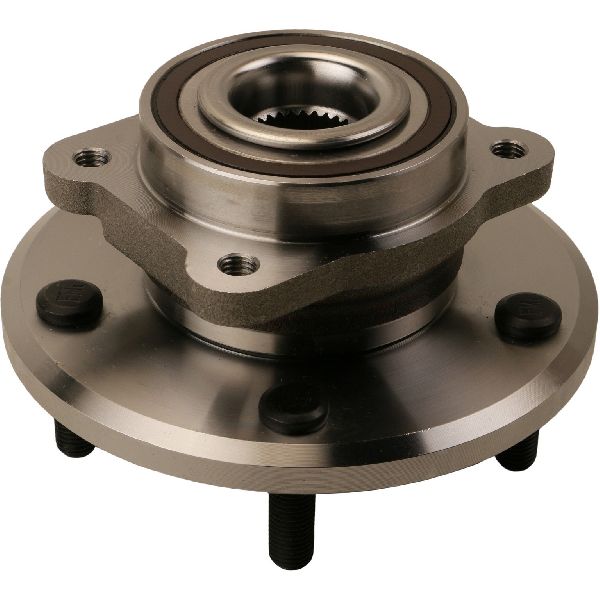
Est. part cost: $15-$50 for a pigtail - Damaged Wheel Hub Bearing Assembly (Magnetic Encoder Ring) ⚪ Low Probability → Shop Hub Assembly The magnetic ring (tone ring) that the sensor reads is integrated into the wheel hub. In rust-prone areas, rust can build up under the ring, causing it to crack, delaminate, or break apart entirely, resulting in a lost or erratic signal. This is a visually confirmed failure mode on Dodge Journeys.
How to confirm: After confirming the sensor and wiring are good, remove the sensor and visually inspect the magnetic encoder ring on the hub for rust, cracks, or missing pieces. A broken or missing ring is a definitive failure.
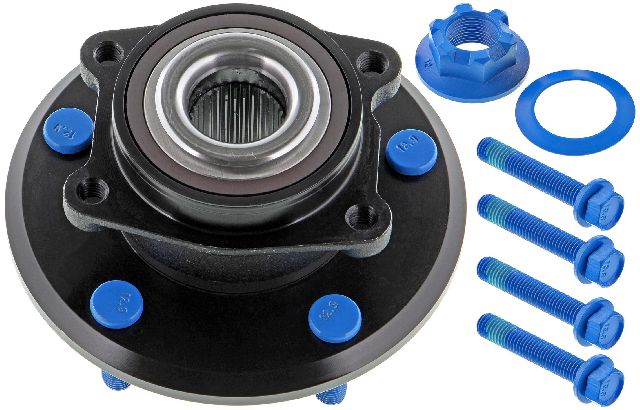
Typical fix: Replace the entire rear wheel hub and bearing assembly.
Est. part cost: $80-$150
Rare But Worth Checking
- Faulty ABS Control Module: → Shop ABS Control Module This is rare unless the vehicle is a 2012-2015 model affected by the water intrusion recall (NHTSA 15V-675). If the sensor, wiring, and hub are confirmed good, the module itself may be the issue. The recall fix involves sealing a wiring harness ground to prevent water from wicking into the module.
- Software Errors: In some automotive platforms, as noted in NHTSA ODI #10382746, multiple ABS codes including C0045 can appear simultaneously, sometimes requiring a software re-program rather than hardware replacement.
Diagnosis Steps
- Connect an OBD-II scanner capable of reading ABS codes to confirm C0045 is present.
- Access the live data stream for the ABS system. Observe the wheel speed readings for all four wheels while driving or with the wheels spinning. Confirm that the Left Rear (LR) wheel speed sensor is reading incorrectly (e.g., 0 mph) compared to the others.
- Raise and safely support the vehicle. Remove the left rear wheel.
- Visually inspect the wheel speed sensor and its wiring harness for any obvious signs of damage, such as cut wires, chafing, or melting.
- Unplug the sensor and inspect the electrical connector for corrosion, moisture, or bent pins.
- If visual inspection is inconclusive, test the circuit. The Dodge Journey uses active sensors. With the key on, backprobe the harness-side connector to check for a ~12V power supply from the ABS module. If voltage is missing, the problem is in the wiring or the module, not the sensor.
- If power is present and the sensor is suspected, replace it. It is usually held by a single 10mm bolt.
- If the sensor and wiring appear good, remove the sensor and inspect the magnetic encoder ring on the face of the wheel hub assembly. Look for cracks, rust jacking, or debris that could interfere with the signal. A broken or missing ring is a common failure point.
- If the encoder ring is damaged, the entire wheel hub assembly must be replaced.
- If all other components check out, the final step is to test the wiring continuity from the sensor connector all the way back to the ABS module and check for a fault in the module itself. For 2012-2015 models, investigate the status of recall 15V-675, as water intrusion into the module is a known issue.
- After any repair, clear the codes and perform a test drive to ensure the ABS and traction control lights stay off.
Parts You'll Likely Need
- Left Rear Wheel Speed Sensor
(OEM #68569550AA (replaces 5154230AA, 5154230AB, 5154230AC, 5154230AD, 5154230AE, 5154230AF). Note: This part is often listed for both left and right rear positions.)— This is the most common failure point for code C0045, as the sensor is exposed to the elements and fails electronically over time.
Trusted brands: Mopar, Dorman, NTK, Delphi, Holstein, Autopart Premium
OEM price range: $50-$90
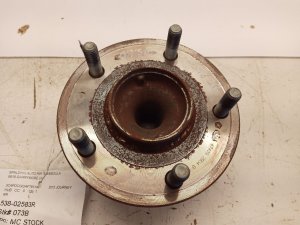
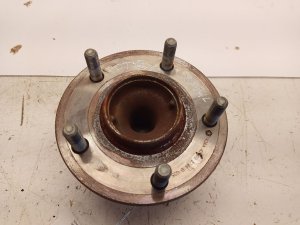
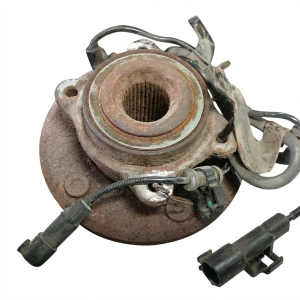
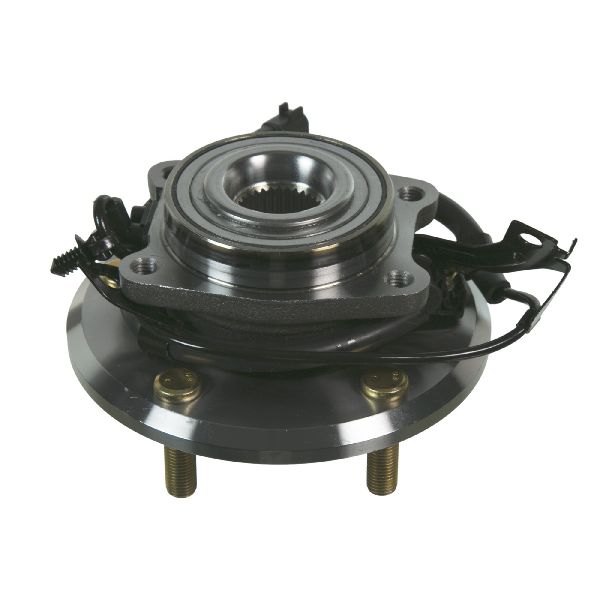
Aftermarket price range: $25-$60 - Rear Wheel Hub and Bearing Assembly — Required if the integrated magnetic encoder ring is damaged, which is the second most likely hardware failure after the sensor itself.
Trusted brands: Mopar, Timken, MOOG, SKF
OEM price range: $180-$250
Aftermarket price range: $80-$150
Technical Service Bulletins (TSBs) & Recalls
- NHTSA ID 15V-675 / FCA Campaign R61: Recall for potential water intrusion into the ABS module wiring harness on 2012-2015 models.
Platform-Specific Known Issues
- Recall 15V-675 (FCA Campaign R61): On 2012-2015 Dodge Journey models, water can enter the ABS wiring harness and damage the ABS control module, leading to various ABS faults, including wheel speed circuit codes. The fix involves dealers sealing the ABS wiring harness ground eyelets, repairing the headlamp/dash harness as needed, and replacing the ABS module if moisture or corrosion is found.
Mechanic-Grade Diagnostic Values
- Wheel Speed Sensor Type — expected: Active (magnetoresistive) sensor.. Failure: Testing with methods for passive sensors (like simple resistance checks) will yield incorrect results. Active sensors must be tested for power supply and signal output.
- Sensor Supply Voltage at Harness Connector — expected: ~12 Volts DC (with ignition on).. Failure: No voltage indicates an open/short in the wiring harness leading back to the ABS module or a fault within the module itself.
Scan Tool Commands That Help
- wiTECH: Reprogram ABS Module — Used to update the ABS module with the latest software to fix known bugs or performance issues, as instructed by a Technical Service Bulletin (TSB).
- wiTECH: Proxi Alignment Procedure — This procedure is required after replacing or reprogramming certain modules (like the ABS/BSM) to ensure all vehicle modules recognize each other on the CAN bus network.
- wiTECH: Brake Pedal Calibration — This routine may be required after an ABS module flash or replacement to calibrate the brake pedal position sensor data used by the system.
- wiTECH / Advanced Aftermarket (e.g., Autel): Initialize ABS Module / VIN Programming — When a new or used ABS module is installed, it must be programmed with the vehicle's VIN to function correctly and communicate with other control units.
Wiring & Ground Locations
- Left Rear WSS Wires — Runs from the left rear wheel hub, along the suspension, and into the main body harness, terminating at the ABS module connector.. These are the specific wires carrying the signal for the C0045 code. A continuity test should be performed on them if the sensor and hub are good. Wire colors are reportedly Green with a Blue stripe and Green with a Black stripe.
- ABS Module — On the driver's side of the engine bay, below the master cylinder, often requiring removal of the air intake box for access.. This is the termination point for the wheel speed sensor circuit. The connector here must be inspected for corrosion and is the location for testing continuity from the sensor.
- Main Chassis Grounds — Key ground points are located on the driver's and passenger's side strut towers in the engine bay. Another important ground, G305, is located under the front passenger's seat.. The Dodge Journey is noted by owners for having a weak grounding system with undersized (4-gauge) cables. Poor grounds can cause intermittent and difficult-to-diagnose voltage issues for sensitive electronics like the ABS module, potentially triggering fault codes.
Real Owner Repair Stories
- YouTube channel 'East Coast Auto' (Dodge Journey (year not specified, but within the 2009-2020 generation)) — ABS light, Traction Control light, and 'Service AWD' light were on.
❌ Tried (didn't work) The customer had already replaced the wheel speed sensor themselves, but the lights remained on.
✅ What actually fixed it The mechanic used a Launch scan tool to view live data and saw the right front wheel speed signal was erratic. Upon inspection, the magnetic dust shield on the back of the wheel hub assembly had blown apart. Replacing the entire wheel hub and bearing assembly fixed the problem. The lights cleared automatically after driving. - Dodge Journey Forum user '2late4u' (2014 Dodge Journey) — Traction control light on, but no ABS codes stored after replacing the left front wheel speed sensor.
❌ Tried (didn't work) Replacing the wheel speed sensor., Replacing the CV axle, thinking the tone ring was on it.
✅ What actually fixed it The user discovered the magnetic encoder was not on the CV axle, but was part of the wheel hub/bearing assembly. The rubber dust shield/magnetic ring on the back of the hub was 'all rusted and falling apart.' The final fix was to replace the wheel hub assembly. - Reddit user in r/AskMechanics (2011 Chevy Equinox (similar design principle)) — C0045 code returned several months after replacing the left rear wheel speed sensor.
❌ Tried (didn't work) Replacing the wheel speed sensor provided only a temporary fix.
✅ What actually fixed it The confirmed fix was not posted, but the top-voted advice from a mechanic was to inspect the magnetic ring on the wheel bearing for metallic debris. The mechanic noted that on GM vehicles, debris clinging to the ring can interfere with the sensor reading, causing the code to appear even with a good sensor. The advice was to clean the ring before replacing more parts. - NHTSA ODI #11219167 — An owner reported a C0045 code where the left rear wheel speed sensor encoder ring was broken. The repair required replacing both the speed sensor and the rear hub assembly.
- NHTSA ODI #11165895 — A report describes a service center recommending the replacement of the left rear hub bearing assembly for code C0045, noting that the duration of warning messages varied from seconds to minutes before lights would extinguish.
- NHTSA ODI #11399819 — In some instances, C0045 has been documented alongside fuel system codes like P0463 and P069E, where multiple sensor replacements failed to keep the check engine light from returning.
When the Usual Fixes Don't Work
- In multiple documented cases, replacing the wheel speed sensor for code C0045 did not resolve the issue. The recurring problem was ultimately traced to a failure of the magnetic encoder ring integrated into the wheel hub and bearing assembly. Rust causes the ring to crack, swell, or delaminate, creating an erratic signal that the ABS module interprets as a sensor circuit fault. Technicians and owners who stopped diagnosis after replacing the sensor were forced to revisit the repair, with the final solution being the replacement of the entire wheel hub assembly.
OEM Part Supersession History
5154230AA, 5154230AB, 5154230AC, 5154230AD, 5154230AE, 5154230AF→68569550AA— Standard part revision and consolidation by the manufacturer.
Heads up: The final part number 68569550AA is the correct service replacement for all previous versions and is specified for both rear positions.
Model Year Variations Within This Range
- 2009-2020: The vehicle uses active magnetoresistive wheel speed sensors, which differ from older passive (variable reluctance) sensors. This requires a different testing procedure (checking for ~12V power supply) rather than a simple resistance check.
- 2012-2015: These model years are subject to NHTSA recall 15V-675 for water intrusion into the ABS wiring harness, which can damage the ABS module and cause codes like C0045. This requires a specific inspection and repair procedure not applicable to other years.
Diagnostic Flowchart
Other Known Issues on This Vehicle
Issues unrelated to this code that are worth knowing about as an owner of this generation:
- Premature Brake and Rotor Wear 🔴 High — Extremely common on early models (2009-2012), with owners reporting the need for new pads and rotors in as little as 12,000 miles. The issue is caused by undersized brake components for the vehicle's weight. (Ref: Dodge issued TSBs extending the brake warranty to 3 years/36,000 miles for some early models but never issued a full recall.)
- 3.6L Pentastar V6 Rocker Arm Failure ('Pentastar Tick') 🔴 High — A widely known issue across many Chrysler/Dodge/Jeep vehicles with this engine. A distinct ticking or tapping noise develops from the valvetrain, often due to premature failure of the rocker arm roller bearings. If left unaddressed, it can lead to camshaft damage and significant engine repair costs. (Ref: A class-action lawsuit was filed regarding this defect. Repair often involves replacing rocker arms and potentially lifters and camshafts.)
- 2.4L 'Tigershark' Engine Oil Consumption 🟠 Medium — Some owners of Journeys with the 2.4L 4-cylinder engine report excessive oil consumption, sometimes as much as a quart every few hundred miles. This can lead to low oil pressure and, in severe cases, engine damage if not monitored closely. (Ref: FCA issued Customer Satisfaction Notification S18 for some 2015 models to address oil consumption issues, which could involve replacing the engine long block.)
- Uconnect Infotainment System Malfunctions 🟡 Low — Common complaints include the system freezing, failing to pair with phones via Bluetooth, dropping calls, or getting stuck on a loading screen. The issue is often intermittent. A temporary fix reported by many owners is to disconnect and reconnect the vehicle's battery.
- Throttle Body Failure 🟠 Medium — Failure of the electronic throttle body is a known issue, particularly on the 2.4L engine. Symptoms include a rough or high idle, stalling, and the illumination of the Electronic Throttle Control (ETC) warning light, often with codes like P2110 or P2112.
Used vs. New Parts: Buying Guide for This Vehicle
When a used part is the smart pick: For this code, a used part is a reasonable option for the wheel hub/bearing assembly, provided it comes from a low-mileage, rust-free donor vehicle. A used ABS module can also be a cost-effective choice, but ONLY if you have a confirmed plan for reprogramming it to your vehicle's VIN. Sending your original module out for repair is often a safer and simpler alternative to a used module.
Donor-vehicle mileage cap: roughly under 75000 miles for the part to have meaningful remaining life.
What to inspect on the donor part:
- For a used wheel hub: Manually spin the bearing to feel for any roughness or grinding.
- Check for any side-to-side play in the bearing, which indicates wear.
- Critically inspect the magnetic encoder ring on the back of the hub. It must be perfectly intact, with no cracks, swelling from rust, or missing sections.
- For a used ABS module: Visually inspect the connector pins for any signs of corrosion (green or white powder), which could indicate internal water damage.
OEM-only on this vehicle (don't cheap out):
- ABS Control Module: While aftermarket modules exist, using a new OEM Mopar unit or having your original OEM unit repaired is strongly recommended to avoid compatibility and programming issues.
Aftermarket brands forum-validated for this vehicle:
- Wheel Hub/Bearing Assembly: Timken, MOOG, SKF are consistently cited as high-quality, reliable brands by professionals.
- Wheel Speed Sensor: NTK, Delphi, Dorman, and Holstein are reputable aftermarket sensor brands.
Brands owners have reported issues with on this vehicle:
- Unbranded, 'white-box' wheel speed sensors and hub assemblies from online marketplaces. These often have higher failure rates, incorrect sensor head lengths, or weak magnetic rings, leading to the code returning shortly after repair.
Real Owner Stories
Aggregated from forums and TSBs cited above. Mileages and costs reflect what owners reported in those sources.
2012-2015 Dodge Journey
Symptoms: Water entering the ABS wiring harness leading to various ABS faults and circuit codes.
What fixed it: Dealers sealing the ABS wiring harness ground eyelets, repairing the headlamp/dash harness, and replacing the ABS module.
Source hint: NHTSA ID 15V-675 / FCA Campaign R61
Dodge Journey (Year Unspecified)
Symptoms: C0045 code persisted even after changing the wheel speed sensor.
What fixed it: The actual fault was identified as the wiring or the wheel hub itself rather than just the sensor.
Source hint: Reddit r/AskMechanics thread 'C0045 code after changing speed sensor already?'
2009 Dodge Journey — 61000 miles
Symptoms: Premature failure of the wheel bearing assembly.
What fixed it: Replacement of the wheel bearing/hub assembly.
Cost: $500-$500
Source hint: DodgeJourneyForum.com thread 'Front Wheel Bearing Replacement!'
NHTSA ODI #11219167
Symptoms: ABS Stability code C0045 at 96,020 miles.
What fixed it: The owner found the left rear wheel speed sensor encoder ring was broken and replaced both the speed sensor and the rear hub assembly.
NHTSA ODI #11165895
Symptoms: Service center reported code C0045 with warning lights that would extinguish after a few seconds or minutes.
What fixed it: The recommended solution was to replace the left rear hub bearing assembly.
Related OBD-II Codes
Frequently Asked Questions
My 2013 Dodge Journey has an ABS light; is there a recall for this?
I replaced the left rear sensor on my Journey but the C0045 code came back. What else could it be?
Why is my 'SERVICE AWD' light on along with the ABS light?
Can I just replace the magnetic ring on the rear hub if it's rusted?
What color are the wires I should check for the rear wheel speed sensors?
Is the Fiat Freemont prone to this same C0045 sensor failure?
Helpful Videos
Used OEM Parts in Stock
New Aftermarket Parts Available

The information in this article is provided for general reference and educational purposes only. Vehicle specifications, procedures, and part compatibility can vary by production date, trim level, and region. Always consult your vehicle's factory service manual and verify part numbers before purchasing or performing repairs. Safety-critical components such as airbags, seat belts, and braking systems should be installed by a qualified professional.
- Dodge Journey:
- 🧭 Diagnostic Flowchart
- 🎬 Helpful Videos
- 🛍️ Shop This Part
- What's Unique About the 2009-2020 Dodge Journey
- Symptoms You May Notice
- Most Likely Causes
- Rare But Worth Checking
- Diagnosis Steps
- Parts You'll Likely Need
- Technical Service Bulletins (TSBs) & Recalls
- Platform-Specific Known Issues
- Mechanic-Grade Diagnostic Values
- Scan Tool Commands That Help
- Wiring & Ground Locations
- Real Owner Repair Stories
- When the Usual Fixes Don't Work
- OEM Part Supersession History
- Model Year Variations Within This Range
- Other Known Issues on This Vehicle
- Used vs. New Parts: Buying Guide for This Vehicle
- Real Owner Stories
- 2012-2015 Dodge Journey
- Dodge Journey (Year Unspecified)
- 2009 Dodge Journey — 61000 miles
- NHTSA ODI #11219167
- NHTSA ODI #11165895
- Related OBD-II Codes
- Frequently Asked Questions
- 🎟️ Get 5% Off