

C0045 on 2015-2020 Ford F-150: Left Rear Wheel Speed Sensor Circuit Causes and Fixes
This code means there's a fault in the left rear wheel speed sensor circuit. The most common fix is replacing the faulty sensor or repairing its wiring harness. A wiring harness inspection for chafing against the frame is critical. Expect to pay $35-$70 for a new sensor and it's a DIY-friendly repair for many.
- C0045 means the ABS module isn't getting a proper signal from the left rear wheel.
- Your ABS and traction control will be disabled, so drive with extra caution, especially in poor weather.
- The most likely cause is a bad wheel speed sensor, which is relatively inexpensive and simple to replace.
- Always inspect the wiring and connector for damage or corrosion before buying a new sensor.
- Use a scan tool that can read ABS live data to confirm the fault is with the left rear wheel before starting repairs.
What's Unique About the 2015-2020 Ford F-150
For the 2015-2020 F-150, the C0045 code almost always points to a standard failure of the sensor or its wiring. While the previous F-150 generation (2009-2014) was known for a specific wiring harness issue near the spare tire that could cause both rear sensor codes (C0045 & C0050) to appear, this specific widespread issue is not as commonly documented for the 2015-2020 models. However, this newer generation is known for the ABS wiring harness chafing against the frame rail, which can lead to an open or shorted circuit. Diagnosis for this generation typically focuses on the individual sensor, its connector, and a careful inspection of the harness path.
Symptoms You May Notice
- ABS warning light is on
- Traction control or stability control warning light is on
- AdvanceTrac or 'Service AdvanceTrac' message may appear
- ABS and traction control systems are disabled
- Multiple other warnings may appear simultaneously, such as 'Hill Start Assist N/A', 'Park Aid N/A', or 'Pre-Collision Assist N/A'
- Replacing the wheel bearing/hub assembly when only the sensor or wiring is faulty.
- Replacing the sensor without first checking the connector and wiring for damage or corrosion, especially chafing on the frame.
Most Likely Causes
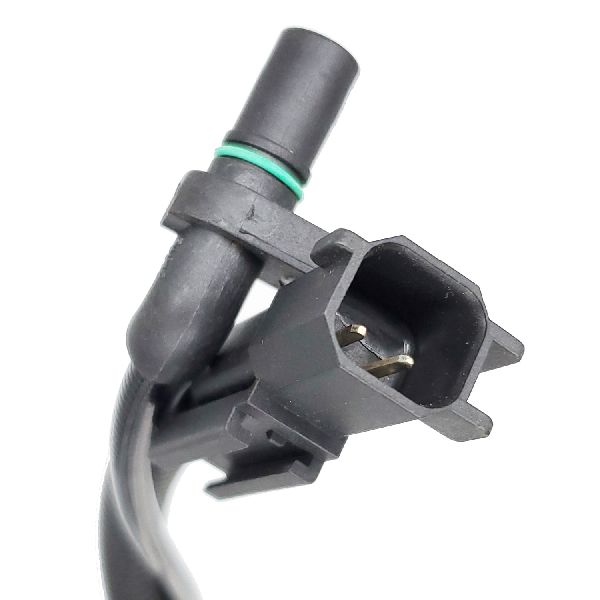
- Faulty Left Rear Wheel Speed Sensor 🔴 High Probability → Shop ABS Wheel Speed Sensor The sensor is exposed to harsh conditions like water, road salt, and debris, which can lead to internal failure or corrosion over time. They are plastic sensors fitted into a metal housing, and corrosion can cause them to seize, making removal difficult without breaking them.
How to confirm: Use a scan tool with live data to observe the wheel speed signals from all four wheels while driving. The left rear sensor will likely show 0 MPH or an erratic reading compared to the others. You can also test the sensor's internal resistance with a multimeter (a common range is 850-1350 ohms, though spec should be verified) and compare it to the manufacturer's specification.
Typical fix: Replace the left rear wheel speed sensor. This involves removing one 10mm bolt, disconnecting the electrical connector (which has a red locking tab), and carefully prying the old sensor out. The sensor's location must be cleaned thoroughly before installing the new one.
Est. part cost: $35-$70 - Damaged Wiring or Corroded Connector 🟡 Medium Probability The wiring harness runs along the frame and axle, where it is susceptible to damage. A known issue on this F-150 generation is the harness chafing against the frame rail, wearing through the insulation and causing a short or open circuit. The soy-based wiring insulation can also attract rodents, leading to chewed wires.
How to confirm: Visually inspect the entire length of the wiring from the sensor to its main connection point for any breaks, chafing, or signs of melting. Pay close attention to where the harness runs along the frame. Disconnect the connector and check for green or white corrosion on the pins. A continuity test with a multimeter can confirm if the wire is broken internally.
Typical fix: If the connector is corroded, clean the pins and apply dielectric grease. If the wire is broken or chafed, it must be repaired with a weatherproof splice. In some cases, a connector pigtail or harness section must be replaced.
Est. part cost: $20-$100 - Damaged Tone Ring / Wheel Bearing Assembly ⚪ Low Probability The tone ring (or reluctor ring), which the sensor reads, is integrated into the rear wheel hub/bearing assembly. While durable, severe corrosion from road salt can cause the magnetic encoder ring to crack, delaminate, or allow debris to get lodged between it and the sensor, causing an erratic signal.
How to confirm: After removing the sensor, visually inspect the tone ring through the sensor mounting hole. Look for missing teeth, cracks, or heavy rust buildup. Excessive play in the wheel bearing (rocking the wheel at the 12 and 6 o'clock positions) can also cause an erratic signal.
Typical fix: If the tone ring is damaged, the entire wheel bearing and hub assembly must be replaced. The tone ring is not serviced separately.
Est. part cost: $150-$300
Rare But Worth Checking
- Faulty ABS Control Module: → Shop ABS Control Module This is the least likely cause. Before condemning the module, all other possibilities (sensor, wiring, hub) must be exhaustively ruled out. A faulty module will often set multiple wheel speed sensor codes or communication codes (U-codes). In some cross-manufacturer cases, such as NHTSA ODI #10382746, dealers have been instructed to erase codes and re-program software when C0045 appears alongside multiple other communication faults.
Diagnosis Steps
- Connect an OBD-II scanner capable of reading ABS codes to confirm C0045 is present.
- Use the scanner's live data function to monitor the speed of all four wheels while driving slowly in a straight line. Confirm that the Left Rear (LR) wheel speed reads 0 MPH or is erratic compared to the other three.
- Safely raise and support the rear of the vehicle. Remove the left rear wheel.
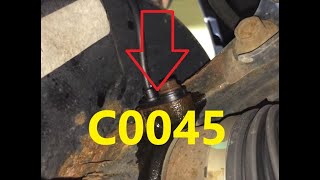
- Thoroughly inspect the wheel speed sensor (located on the rear axle housing, held by a 10mm bolt) and its wiring harness. Trace the harness up along the frame rail, looking for any signs of chafing, rubbing, or rodent damage.
- Disconnect the sensor's electrical connector. Push the red locking tab to release it. Inspect the pins on both the sensor and the harness side for corrosion, moisture, or damage.
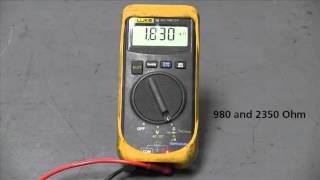
- If the wiring looks good, test the sensor. You can measure its resistance with a multimeter. An open circuit (infinite resistance) or a dead short (zero resistance) indicates a bad sensor. Compare to factory specification if available.
- If the sensor tests good, the problem is likely in the wiring harness. Perform a continuity test on the two wires between the sensor connector and the ABS module connector to find any breaks. Wiggle the harness during the test to expose intermittent faults.
- If both the sensor and wiring are confirmed to be good, remove the sensor and inspect the tone ring inside the hub for cracks, damage, or heavy rust. If the tone ring is damaged, the hub assembly needs replacement.
Parts You'll Likely Need
- Rear Wheel Speed Sensor
(OEM #JL3Z-2C190-D)— This is the most common failure point for code C0045. The sensor is a sensitive electronic component that fails over time due to heat and environmental exposure. The current part number JL3Z-2C190-D supersedes the older FL3Z-2C190-B.
Trusted brands: Motorcraft, Bosch, Standard Motor Products (SMP), Delphi
OEM price range: $50-$70
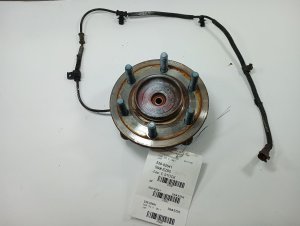
Aftermarket price range: $35-$60 - Rear Wheel Bearing and Hub Assembly — This part is only needed if the integrated tone ring is found to be cracked, damaged, or if the bearing itself has failed, causing excessive play. Part numbers vary based on axle type (e.g., 8.8-inch vs 9.75-inch) and 2WD/4WD configuration.
Trusted brands: Motorcraft, Timken, SKF, MOOG
OEM price range: $250-$350
Aftermarket price range: $150-$250 - ABS Sensor Connector Pigtail
(OEM #WPT-1148 (Motorcraft))— Needed if the connector itself is damaged or corroded beyond cleaning. Allows for splicing a new, clean connector onto the existing harness.
Trusted brands: Motorcraft, Dorman
OEM price range: $30-$50
Aftermarket price range: $15-$30
Related Codes That Often Appear With This One
- C0050 — This is the code for the Right Rear Wheel Speed Sensor. If both C0045 and C0050 appear together, it strongly suggests a problem with a shared component, like the main wiring harness that serves both rear sensors, rather than two sensors failing at once.
- U0415 — This code means 'Invalid Data Received From ABS Control Module'. It can sometimes appear alongside a C-code if the module is struggling to interpret the faulty signal from the wheel speed sensor, or if the wiring fault is intermittent.
Platform-Specific Known Issues
- A common point of failure is the wiring harness chafing against the driver's side frame rail, which can expose the copper wire and cause a short or open circuit, triggering the C0045 code.
- Owners report that a single wheel speed sensor failure can cause a cascade of seemingly unrelated warning lights on the dashboard, including 'Hill Start Assist Not Available' and 'Service AdvanceTrac'.
Mechanic-Grade Diagnostic Values
- Rear Wheel Speed Sensor Resistance — expected: 4,800 kOhms to 7,800 kOhms (4.8 to 7.8 MOhms). Note: These are active sensors (Hall effect), and resistance is not the primary test method. A large discrepancy or open/short is still a failure indicator.. Failure: An open circuit (infinite resistance), a short circuit (near zero ohms), or a value significantly outside the expected range compared to the working sensor on the other side.
- Wheel Speed Sensor AC Voltage Output (Passive Sensors - for general knowledge, F-150 uses Active) — expected: At least 200mV AC when spinning the wheel at about one revolution every 2 seconds. Voltage should increase with speed.. Failure: No voltage or voltage significantly lower than 200mV AC during rotation indicates a failed sensor or tone ring issue.
Scan Tool Commands That Help
- Ford IDS (Integrated Diagnostic Software): Self Test — This function allows the technician to command the ABS module to perform a comprehensive self-test to read and clear fault codes (DTCs).
- Ford IDS (Integrated Diagnostic Software): Data Logger — Used to view live data streams from the ABS module, including individual wheel speeds. This is the primary method for confirming that the left rear sensor is not reporting speed correctly compared to the other three wheels.
Wiring & Ground Locations
- Main Battery Ground — On the body structure just in front of the windshield washer fluid reservoir in the engine bay.. A poor main battery ground can cause a host of floating ground issues and unpredictable electrical problems across various modules, including the ABS module.
- PCM Ground — Located on the firewall in the engine bay. There may be one or two ground studs depending on model year and engine.. The Powertrain Control Module (PCM) communicates with the ABS module. A bad ground here can disrupt network communication, potentially leading to U-codes or other faults.
- BCM Ground — Located in the passenger-side cabin, to the right of the Body Control Module (BCM) itself, which is integrated with the fuse box.. The BCM is a central communication hub. A poor ground here can cause a cascade of communication errors and warning messages on the dash, similar to those seen with an ABS fault.
- ABS Module Connector (C135) — The main electrical connector at the ABS module itself.. This is the termination point for the wheel speed sensor circuits. Testing for continuity, shorts, and voltage should be done between this connector and the sensor connector to isolate a wiring fault.
Real Owner Repair Stories
- Ford F150 Forum user 'Eclipsalon' (2015-2020 Ford F-150) — ABS light on, FORscan reported the Right Front sensor was open circuit.
❌ Tried (didn't work) Replaced the faulty sensor with an aftermarket part from AutoZone.
✅ What actually fixed it The aftermarket sensor caused a new code indicating 'wrong part'. The fix required ordering the correct Motorcraft OEM sensor. The user noted that resistance readings are of secondary importance on these active sensors and that the system primarily checks for a valid signal during wheel rotation.
OEM Part Supersession History
FL3Z-2C190-B→JL3Z-2C190-D— Standard part revision/update by Ford.
Heads up: The new part number (JL3Z-2C190-D) is the correct and current replacement for the entire 2015-2020 generation. Using the older part number if found as new-old-stock is acceptable, but JL3Z-2C190-D is the standard service part.
Diagnostic Flowchart
Other Known Issues on This Vehicle
Issues unrelated to this code that are worth knowing about as an owner of this generation:
- Harsh/Erratic Shifting (10R80 Transmission) 🔴 High — Widespread on 2017-2020 models. Can occur at any mileage. Issues include hard shifts, delayed engagement, and clunking. (Ref: Multiple TSBs issued, including 22-2428 and 24-2254, addressing software updates, valve body issues, and internal CDF clutch drum problems.)
- Excessive Oil Consumption (5.0L V8) 🔴 High — Common in 2018-2020 models. Some owners report consuming over 1 quart per 3,000 miles. (Ref: TSB 19-2365 was issued to reprogram the PCM to reduce high engine vacuum on deceleration and install a new dipstick. Some owners report this does not fully solve the issue.)
- Frozen Door Latches 🟠 Medium — Common in cold climates for 2015-2018 models. Doors may not open from the outside or may not latch closed when shut. (Ref: Multiple recalls issued, including NHTSA campaign 20V337000, to install water shields and replace faulty latch mechanisms.)
- Warped Dashboard 🟡 Low — Affects many 2015-2020 models, particularly in hot climates. The dash panel lifts and separates around the defrost vents.
- Infotainment System (SYNC 3) Glitches 🟡 Low — Intermittent issues like black screens, freezing, and unresponsiveness are common across many model years. (Ref: Software updates are periodically released by Ford to address bugs, but some hardware issues may persist.)
Used vs. New Parts: Buying Guide for This Vehicle
When a used part is the smart pick: A used wiring harness pigtail or a section of the main ABS harness from a junkyard can be a cost-effective repair if the damage to your original harness is extensive and not easily repaired with a simple splice. A used wheel bearing/hub assembly can also be an option if the donor vehicle has low mileage and is from a salt-free region.
Donor-vehicle mileage cap: roughly under 50000 miles for the part to have meaningful remaining life.
What to inspect on the donor part:
- For a wiring harness: Check for any signs of prior repairs, rodent damage, or chafing. Ensure the connector locking tabs are intact.
- For a wheel bearing/hub: Spin the hub by hand to feel for any roughness or grinding. Check for any visible signs of heavy corrosion or damage to the hub flange and sensor mounting area.
- Verify the donor vehicle was not involved in a collision that could have impacted the axle or suspension components.
OEM-only on this vehicle (don't cheap out):
- Wheel Speed Sensor: While some aftermarket sensors work, forums report instances where non-OEM sensors are rejected by the ABS module, causing a 'wrong part' error. To avoid diagnostic headaches and repeat work, using an OEM Motorcraft sensor is highly recommended.
Aftermarket brands forum-validated for this vehicle:
- For Wheel Bearing/Hub Assembly: Timken, SKF, MOOG are reputable brands often cited as high-quality alternatives to OEM.
Brands owners have reported issues with on this vehicle:
- Unbranded or 'white-box' wheel speed sensors from general parts stores can be problematic and may not be recognized by the vehicle's ABS module.
Real Owner Stories
Aggregated from forums and TSBs cited above. Mileages and costs reflect what owners reported in those sources.
2020 Ford F-150
Symptoms: Multiple dashboard warnings appeared simultaneously. Upon inspection, the owner found wires at the rear sensor connector had been chewed by rodents.
What fixed it: The owner planned to repair the circuit by splicing in a new pigtail connector rather than paying the dealer for a full harness replacement.
Cost: $20-$600
Source hint: f150forum.com thread titled 'I need to repair Broken ABS Wheel Sensor wiring'
Documented NHTSA Reports
Cross-Manufacturer Diagnostic Context
While C0045 is standard for the left rear sensor, diagnostic records from other manufacturers highlight common failure modes. NHTSA ODI #11219167 describes a case where the left rear wheel speed sensor encoder ring was broken, requiring replacement of both the sensor and the hub assembly. Similarly, NHTSA ODI #11165895 reports a service center recommendation to replace the left rear hub bearing assembly to resolve the C0045 code after intermittent warning messages. In some instances, such as NHTSA ODI #11399819, the code has been found to appear alongside fuel system codes, though this is less common on the F-150 platform.
Related OBD-II Codes
Frequently Asked Questions
Why is my 2015-2020 F-150 showing 'Hill Start Assist N/A' and 'Service AdvanceTrac' alongside the ABS light?
Is there a specific wiring issue on the F-150 that causes the C0045 code?
I heard Ford uses soy-based wiring; does this affect the ABS system?
Can I just replace the tone ring on my 2015-2020 F-150 if it's damaged?
What is the typical resistance for a Ford F-150 rear wheel speed sensor?
Does the 10R80 transmission issue relate to the C0045 code?
Helpful Videos
Used OEM Parts in Stock
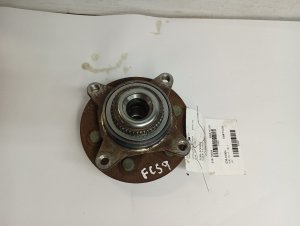
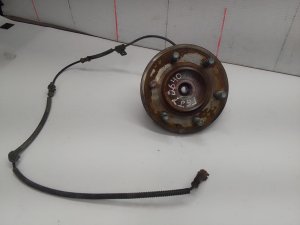
New Aftermarket Parts Available

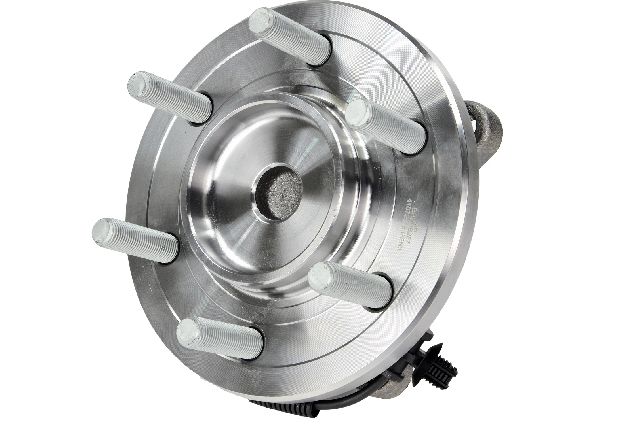
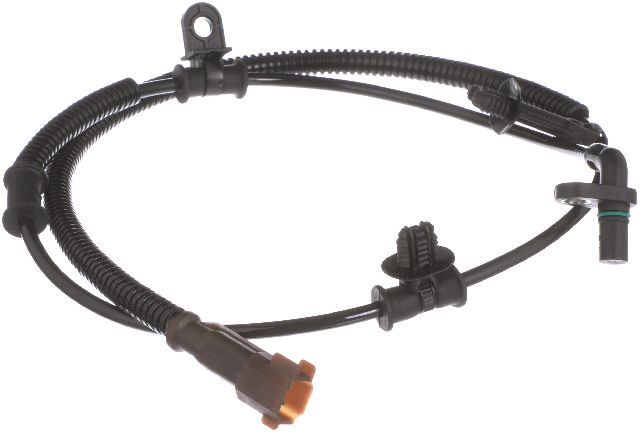

The information in this article is provided for general reference and educational purposes only. Vehicle specifications, procedures, and part compatibility can vary by production date, trim level, and region. Always consult your vehicle's factory service manual and verify part numbers before purchasing or performing repairs. Safety-critical components such as airbags, seat belts, and braking systems should be installed by a qualified professional.
- Ford F-150:
- 🧭 Diagnostic Flowchart
- 🎬 Helpful Videos
- 🛍️ Shop This Part
- What's Unique About the 2015-2020 Ford F-150
- Symptoms You May Notice
- Most Likely Causes
- Rare But Worth Checking
- Diagnosis Steps
- Parts You'll Likely Need
- Related Codes That Often Appear With This One
- Platform-Specific Known Issues
- Mechanic-Grade Diagnostic Values
- Scan Tool Commands That Help
- Wiring & Ground Locations
- Real Owner Repair Stories
- OEM Part Supersession History
- Other Known Issues on This Vehicle
- Used vs. New Parts: Buying Guide for This Vehicle
- Real Owner Stories
- 2020 Ford F-150
- Documented NHTSA Reports
- Cross-Manufacturer Diagnostic Context
- Related OBD-II Codes
- Frequently Asked Questions
- 🎟️ Get 5% Off