

C0045 on 2011-2019 Ford Fiesta: Left Rear Wheel Speed Sensor Circuit Fixes
This code means the Anti-lock Brake System (ABS) module has lost its signal from the left rear wheel speed sensor. The most common fix is replacing the sensor itself, but the wiring harness and connector should be inspected first for damage or corrosion, as chafing is a known issue.
- Code C0045 on a 2011-2019 Ford Fiesta indicates a fault in the left rear wheel speed sensor circuit, which will disable your ABS and traction control.
- The most likely cause is a failed wheel speed sensor, followed by damaged wiring or a corroded connector.
- Before buying parts, use a scan tool to confirm the left rear sensor is not reporting speed and visually inspect the wiring for damage.
- This is a safety-critical repair. While DIY is possible for those with some experience, the loss of ABS functionality means the issue should be addressed promptly.
What's Unique About the 2011-2019 Ford Fiesta
For the 2011-2019 Ford Fiesta, the C0045 code is a straightforward sensor circuit fault. Unlike some other vehicles where this code can point to complex module communication issues, on the Fiesta it almost always relates directly to the left rear wheel speed sensor, its wiring, or the magnetic ring it reads from. The North American Fiesta (2011-2019) is a single generation (B299 platform), so diagnostics are consistent across these years. The wiring harness is a known weak point, susceptible to chafing and corrosion.
Symptoms You May Notice
- ABS warning light is on
- Traction control or Electronic Stability Control (ESC) light is on
- Traction control and ABS are disabled
- "Service AdvanceTrac" or similar message on the instrument cluster. 🎬 Watch: What 'Service AdvanceTrac' means and how to fix it
- Replacing the wheel hub/bearing when only the sensor is bad.
- Replacing the ABS module before checking the wiring and sensor.
- Replacing the sensor when the actual fault is a break or chafe in the wiring harness further up the line.
Most Likely Causes
- Failed Left Rear Wheel Speed Sensor 🔴 High Probability → Shop ABS Wheel Speed Sensor Wheel speed sensors are exposed to harsh conditions like water, road salt, and debris, which can lead to internal failure or corrosion over time. They are a common failure item on many vehicles.
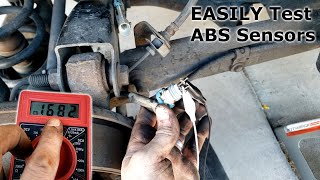
How to confirm: Use a scan tool with live data to monitor all four wheel speeds. While driving slowly, confirm the left rear sensor reads 0 MPH or an erratic speed while the others report correctly. You can also test the sensor's internal resistance with a multimeter (expect ~500-1500 Ω, but check service manual) and compare it to the manufacturer's specification.
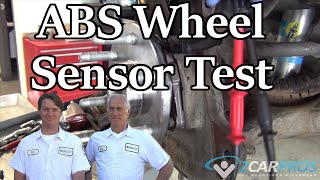
Typical fix: Replace the left rear wheel speed sensor. This usually involves removing a single 8mm bolt, unplugging the electrical connector, and installing the new part. 🎬 See this walkthrough on replacing the Fiesta wheel speed sensor
Est. part cost: $30-$80 - Damaged Wiring or Corroded Connector 🟡 Medium Probability The wiring harness runs along the chassis and suspension, making it vulnerable to damage from road debris, improper jacking, or chafing against moving parts. This is a known weak point on Fords of this era.
How to confirm: Visually inspect the entire length of the wiring from the wheel speed sensor back to the main harness. Look for breaks, chafing, or melted sections. Unplug the connector and check for green or white corrosion on the pins. A wiggle test on the harness while monitoring live data can reveal intermittent faults.
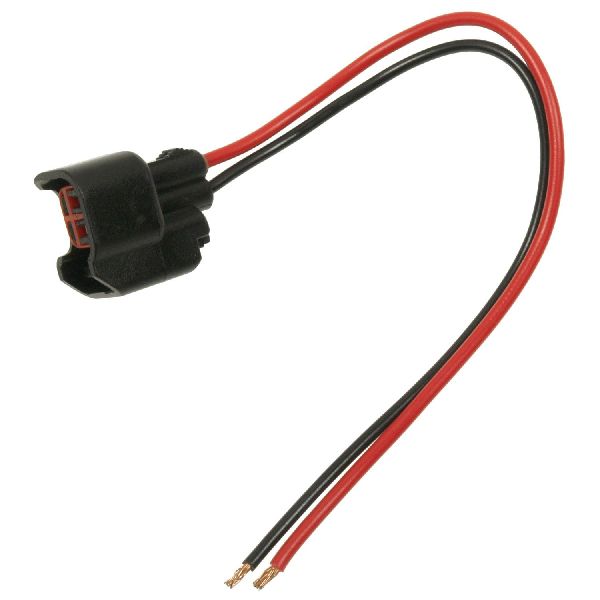
Typical fix: Repair the damaged section of wire or replace the connector pigtail. If corrosion is found, clean the connector pins and apply dielectric grease. Ensure the repaired harness is properly secured away from moving parts.
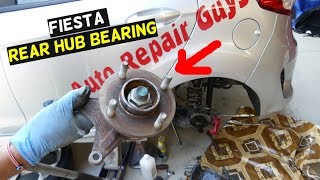
Est. part cost: $15-$40 - Damaged or Contaminated Tone Ring ⚪ Low Probability The tone ring is integrated into the rear wheel hub/bearing assembly. While durable, severe corrosion can cause it to crack, or metallic debris can stick to it, disrupting the sensor's reading. Rust jacking can also push the sensor away from the ring, weakening the signal.
How to confirm: Visually inspect the tone ring for cracks, missing teeth, or a heavy buildup of rust or metallic shavings. This may require removing the brake rotor for a clear view. Ensure the sensor is seated properly and the air gap is correct.
Typical fix: If the tone ring is dirty, cleaning it may resolve the issue. If it is damaged, the entire wheel hub and bearing assembly must be replaced as the ring is integrated.
Est. part cost: $70-$150
Rare But Worth Checking
- Faulty ABS Control Module: → Shop ABS Control Module This is the least likely cause and should only be considered after thoroughly ruling out the sensor, wiring, and tone ring. A failure of the module's input channel for the left rear sensor can trigger this code. Before replacing, all other possibilities must be exhausted.
Diagnosis Steps
- Connect a scan tool capable of reading ABS codes and live data.
- Confirm C0045 is the active code. Check for any other related codes.
- View the live data stream for all four wheel speed sensors.
- Safely raise the vehicle and spin the left rear wheel by hand, or drive the vehicle slowly (<10 mph).
- Observe the left rear wheel speed reading on the scan tool. If it reads 0 or is erratic while the other wheels show a speed, the fault is confirmed for that corner.
- Perform a thorough visual inspection of the left rear wheel speed sensor, its connector, and the wiring harness for any obvious damage, corrosion, or looseness. Pay close attention to where the harness is clipped to the body and suspension.
- If the visual inspection is clear, disconnect the sensor and test its resistance with a multimeter, comparing the reading to the vehicle's service manual specifications. An open circuit (infinite resistance) or short circuit (zero resistance) indicates a failed sensor.
- Inspect the tone ring on the wheel hub for damage, debris, or excessive rust.
- If the sensor and tone ring are good, test the wiring harness for continuity and shorts between the sensor connector and the ABS module connector. A 'wiggle test' on the harness while monitoring continuity can help find intermittent breaks.
- If all wiring and components test good, the fault may lie with the ABS control module, which is a rare occurrence.
Parts You'll Likely Need
- Rear Wheel Speed Sensor
(OEM #BE8Z-2C190-A (superseded by AE8Z-2C190-A))— This is the most common failure point for a C0045 code, as the sensor is an exposed electronic component that wears out over time.
Trusted brands: Motorcraft, Bosch, Delphi, Standard Motor Products
OEM price range: $50-$85
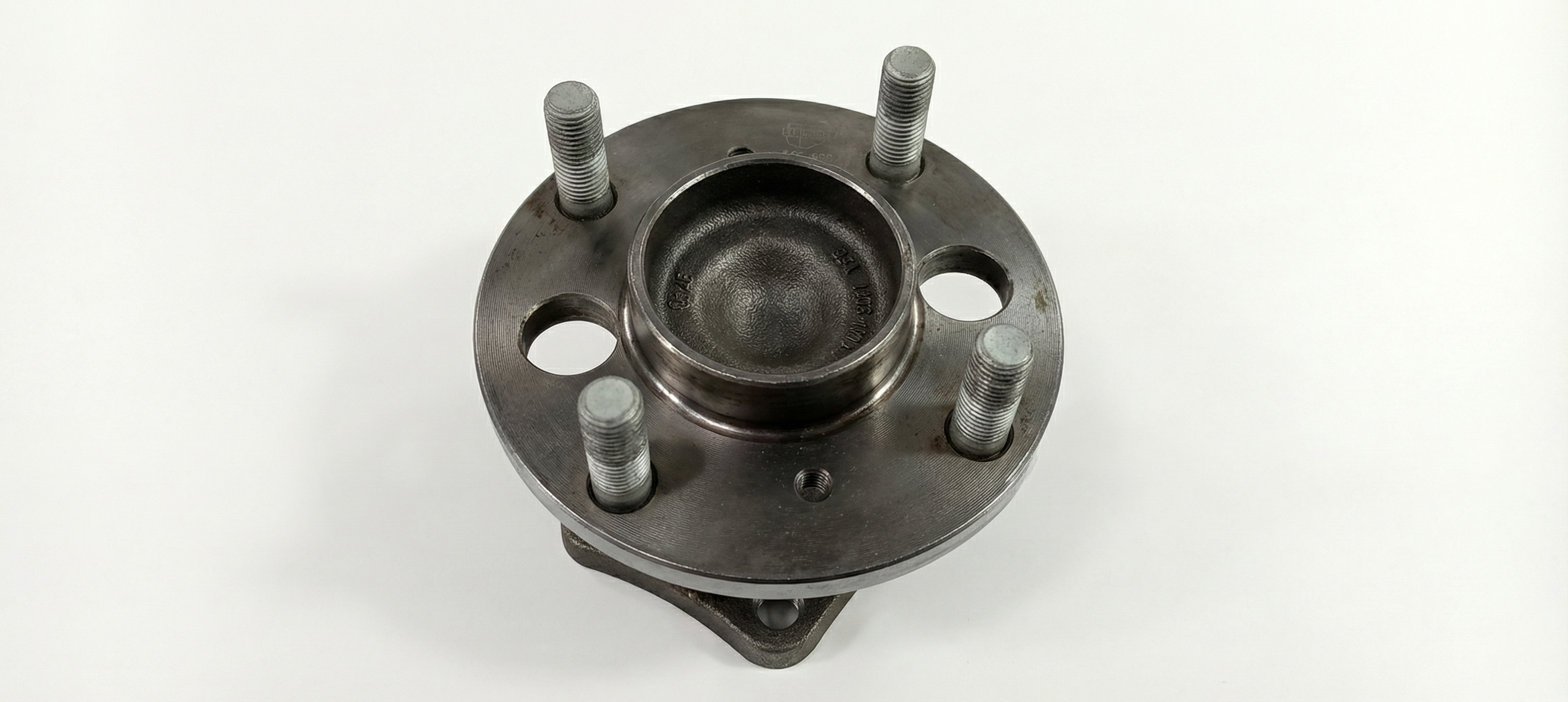
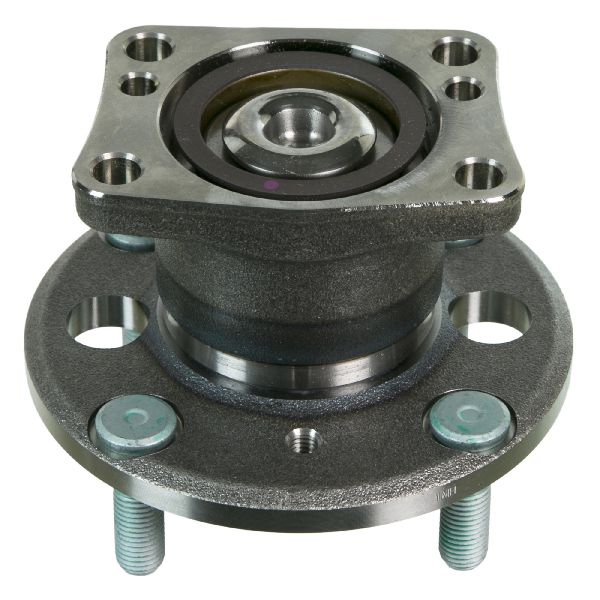
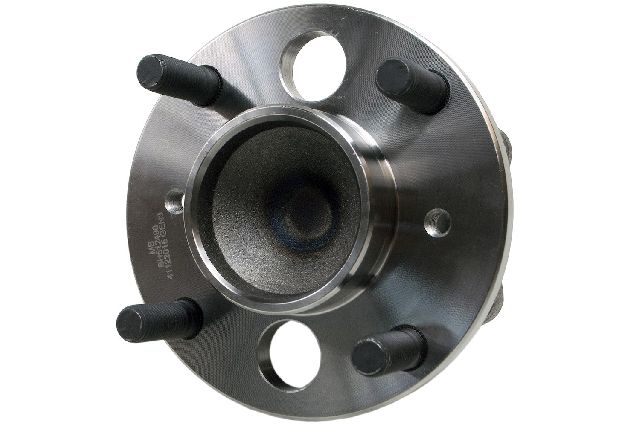
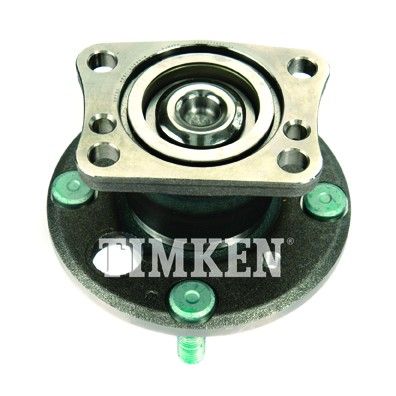
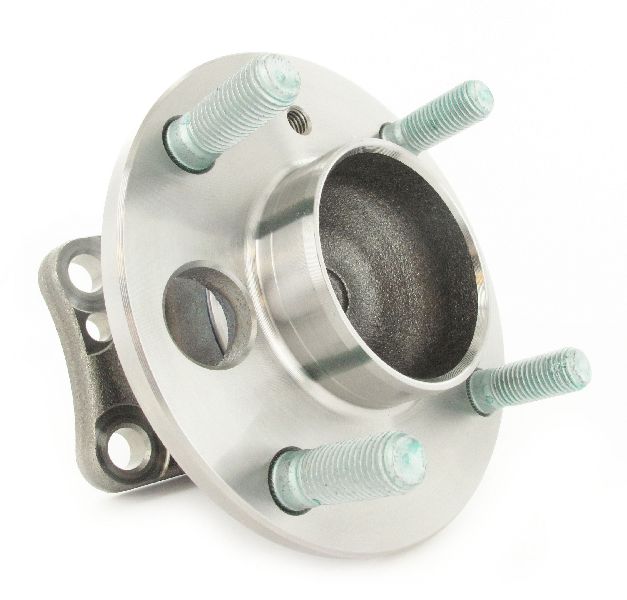
Aftermarket price range: $30-$80 - Rear Wheel Hub and Bearing Assembly — Needed if the magnetic tone ring, which is integrated into the hub, is cracked, damaged, or excessively corroded.
Trusted brands: Motorcraft, Timken, SKF, MOOG
OEM price range: $120-$200
Aftermarket price range: $70-$150
Platform-Specific Known Issues
- Owner Experience: Sensor Replacement Fix: A user on fiestastforum.com with a 2015 Fiesta ST reported the ABS and traction control lights illuminating. After scanning and finding code C0045, they replaced the left rear wheel speed sensor (a 10-minute job with an 8mm socket) which resolved the issue completely. This is a typical repair story for this code.
- Owner Experience: Wiring Harness Failure: On a Corvette forum, a user with a C0045 code replaced the hub assembly (which includes the sensor) but the code returned. The ultimate cause was found to be a faulty wire in the harness between the sensor and the main vehicle connector, requiring a continuity test to locate the break. This highlights the importance of testing the wiring before assuming the new part is faulty.
Mechanic-Grade Diagnostic Values
- Passive (2-wire) Sensor Resistance — expected: 800-2000 Ω (check service manual for exact spec). Failure: Open circuit (infinite resistance) or short circuit (near zero resistance).
- Active (3-wire) Sensor Voltage Supply — expected: 5-12V at the connector with key on.. Failure: No voltage indicates a wiring or ABS module supply problem.
- ABS Module Connector (C1CA01-A) - Left Rear Sensor Circuit — expected: Continuity between sensor connector and these pins. Pin 37 (VCA04) is BU/OG wire. Pin 38 (VCA06) is WH/OG wire.. Failure: No continuity on either wire indicates a break in the harness.
Hidden / Shadow Codes Worth Checking
- Symptom Byte (e.g., '06', '0F'): Advanced scanners may show a sub-code or symptom byte. '06' typically indicates an Open/Low Voltage circuit, pointing to a broken wire or dead sensor. '0F' indicates an Erratic Signal, often pointing to a damaged tone ring or debris. (see via Ford IDS, or other professional-grade scan tools capable of reading manufacturer-specific fault details.)
Scan Tool Commands That Help
- Ford IDS or equivalent: ABS Module Replacement/Configuration — This function is ONLY required if the entire ABS control module is replaced. It is not needed for replacing just the wheel speed sensor. After sensor replacement, simply clearing the fault codes is sufficient.
Wiring & Ground Locations
- C1CA01-A — The main electrical connector at the ABS control module.. The left rear wheel speed sensor circuit terminates here. Pin 37 (Blue/Orange wire) and Pin 38 (White/Orange wire) are for the left rear sensor. These are the points to test for continuity from the sensor end.
- G301 / G302 / G303 / G304 — Various points in the rear passenger compartment and underbody of the vehicle.. These are the main chassis ground points in the rear of the car. A loose or corroded ground at one of these locations can cause intermittent and difficult-to-diagnose electrical issues for rear components, including the ABS sensors.
- Rear ABS Harness Connector — On the rear crossbeam/axle area, where the sensor pigtail connects to the main body harness.. This connector is highly exposed to road debris and moisture. It is a common point for corrosion or wire damage, which can directly cause a C0045 code.
Real Owner Repair Stories
- YouTube channel 'Car Repairs' (Ford Fiesta (approx. 2007, Mk6, but demonstrates a universally applicable issue)) — ABS light was on. Scan tool showed a code for the left rear wheel speed sensor signal missing (C1236, a related code).
❌ Tried (didn't work) Replacing the ABS sensor on both rear sides did not fix the problem.
✅ What actually fixed it After replacing the sensor didn't work, the technician inspected the hub. The magnetic tone ring, integrated into the drum/hub, was found to be severely worn and damaged ('mullered'). Replacing the rear drum/hub assembly, which contained a new tone ring, finally resolved the issue and the ABS light went off.
Documented NHTSA Reports
- Cross-Manufacturer Observation (NHTSA ODI #11219167): An owner reported the C0045 code was caused by a broken left rear wheel speed sensor encoder ring, requiring replacement of both the sensor and the rear hub assembly.
- Cross-Manufacturer Observation (NHTSA ODI #11165895): A service center reported that a C0045 code required replacing the left rear hub bearing assembly, although the owner noted that documented solutions for this code can vary significantly.
- Cross-Manufacturer Observation (NHTSA ODI #11399819): In some vehicle platforms, C0045 has been documented appearing alongside fuel system codes such as P0463 and P069E.
- Cross-Manufacturer Observation (NHTSA ODI #10382746): A manufacturer recommended a software re-program after a vehicle triggered multiple codes including C0045, C0057, and C0231.
OEM Part Supersession History
BE8Z-2C190-A→AE8Z-2C190-A— Standard part revision by the manufacturer.
Heads up: No incompatibility is noted; AE8Z-2C190-A is the correct service replacement for the original part on specified models.
Model Year Variations Within This Range
- 2011-2019: The rear wheel speed sensor part number (AE8Z-2C190-A) is specified for models with rear DRUM brakes. Fiesta ST and other models equipped with rear DISC brakes use a different sensor and hub assembly. It is critical to order the part based on the vehicle's specific brake setup, not just the year.
Diagnostic Flowchart
Other Known Issues on This Vehicle
Issues unrelated to this code that are worth knowing about as an owner of this generation:
- DPS6 PowerShift Automatic Transmission Failure 🔴 High → Shop Transmission Assembly — Extremely common on 2011-2016 models. Causes shuddering, hesitation, jerking, and eventual loss of drive. (Ref: Multiple TSBs (e.g., 15-0120) and a warranty extension to 7 years/100,000 miles were issued.)
- Faulty Door Latches 🔴 High — Common on 2011-2014 models, leading to doors that won't latch or may unlatch while driving. (Ref: Ford Safety Recall 15S16 was issued to replace all four door latches.)
- HVAC Blend Door Actuator Failure 🟡 Low — Very common across all years. Results in a repetitive clicking or ticking sound from behind the dashboard upon starting the car.
- Cooling System/Water Pump Leaks 🟠 Medium — Reported as a common issue, can lead to coolant loss and engine overheating if not addressed.
- Electronic Throttle Body Failure 🟠 Medium — Can cause stalling, weak acceleration, and high idle. More prevalent on earlier models in the generation.
Used vs. New Parts: Buying Guide for This Vehicle
When a used part is the smart pick: A used wiring harness pigtail from a junkyard is a smart choice if only the connector is damaged, as it's an OEM part for a low cost. A complete wheel hub assembly could be sourced used, but it is a wear item.
Donor-vehicle mileage cap: roughly under 60000 miles for the part to have meaningful remaining life.
What to inspect on the donor part:
- For a wiring pigtail: check that the plastic is not brittle, the locking tab is intact, and the pins are clean and free of corrosion.
- For a hub assembly: Spin the bearing by hand; it should be completely silent and smooth with zero side-to-side play. Visually inspect the magnetic tone ring to ensure it is clean, free of cracks, and not delaminating.
OEM-only on this vehicle (don't cheap out):
- ABS Control Module: Due to complex programming and vehicle safety integration, it's recommended to use an OEM new part or a professionally rebuilt unit from a specialist like ECU Testing, not a standard junkyard part.
Aftermarket brands forum-validated for this vehicle:
- Sensors: Bosch, Delphi, Standard Motor Products (SMP), Dorman.
- Hub/Bearing Assembly: Timken, SKF, MOOG, Motorcraft.
Brands owners have reported issues with on this vehicle:
- No-name, unbranded sensors from online marketplaces can have high failure rates and are best avoided for critical safety components.
Real Owner Stories
Aggregated from forums and TSBs cited above. Mileages and costs reflect what owners reported in those sources.
2015 Ford Fiesta ST
Symptoms: ABS and traction control lights illuminated on the dashboard.
What fixed it: Replaced the left rear wheel speed sensor using an 8mm socket; the repair took approximately 10 minutes.
Source hint: fiestastforum.com thread titled 'ABS and traction control light on'
Chevrolet Corvette (C6)
Symptoms: The C0045 code returned even after the hub assembly (including the sensor) was replaced.
What fixed it: A continuity test revealed a faulty wire in the harness between the sensor and the main vehicle connector; repairing the wire resolved the issue.
Source hint: corvetteforum.com thread 'replaced wheel speed sensor and still getting c0045 code'
Related OBD-II Codes
Frequently Asked Questions
My 2011 Ford Fiesta has a door that won't stay shut; is there a recall for this while I'm fixing my C0045 code?
I'm hearing a clicking sound behind the dash of my Fiesta along with the ABS light. Are they related?
Is there a TSB for the transmission shuddering I'm feeling on my 2014 Fiesta?
Can I use a used wheel hub from a donor car to fix the C0045 tone ring issue?
What size tools do I need to replace the left rear wheel speed sensor on my Fiesta ST?
Why does my instrument cluster say 'Service AdvanceTrac'?
Helpful Videos
Used OEM Parts in Stock
New Aftermarket Parts Available


The information in this article is provided for general reference and educational purposes only. Vehicle specifications, procedures, and part compatibility can vary by production date, trim level, and region. Always consult your vehicle's factory service manual and verify part numbers before purchasing or performing repairs. Safety-critical components such as airbags, seat belts, and braking systems should be installed by a qualified professional.
- Ford Fiesta:
- 🧭 Diagnostic Flowchart
- 🎬 Helpful Videos
- 🛍️ Shop This Part
- What's Unique About the 2011-2019 Ford Fiesta
- Symptoms You May Notice
- Most Likely Causes
- Rare But Worth Checking
- Diagnosis Steps
- Parts You'll Likely Need
- Platform-Specific Known Issues
- Mechanic-Grade Diagnostic Values
- Hidden / Shadow Codes Worth Checking
- Scan Tool Commands That Help
- Wiring & Ground Locations
- Real Owner Repair Stories
- Documented NHTSA Reports
- OEM Part Supersession History
- Model Year Variations Within This Range
- Other Known Issues on This Vehicle
- Used vs. New Parts: Buying Guide for This Vehicle
- Real Owner Stories
- 2015 Ford Fiesta ST
- Chevrolet Corvette (C6)
- Related OBD-II Codes
- Frequently Asked Questions
- 🎟️ Get 5% Off