

C0045 on 2007-2010 Saturn Aura: Left Rear Wheel Speed Sensor Circuit Causes and Fixes
Code C0045 on a Saturn Aura almost always means the left rear wheel hub assembly has failed. The wheel speed sensor and its magnetic encoder ring are integrated into the hub. The most common failure is the magnetic ring cracking or becoming contaminated, or the internal sensor failing. The entire hub assembly must be replaced as a unit. Before replacement, a visual check of the exposed wiring harness for damage is recommended.
- C0045 points to a problem in the left rear wheel speed sensor circuit.
- On the Saturn Aura, the sensor is part of the wheel hub assembly and cannot be replaced separately.
- The most likely fix is replacing the entire left rear wheel hub assembly due to a failed internal sensor or a damaged external magnetic ring.
- Before replacing the hub, always perform a thorough visual inspection of the exposed wiring and the magnetic ring for any obvious damage.
- Driving with this code is possible, but your ABS and stability control will not work, so exercise caution, especially in poor weather.
What's Unique About the 2007-2010 Saturn Aura
The Saturn Aura is based on the GM Epsilon platform, shared with vehicles like the Chevrolet Malibu and Pontiac G6. On these cars, the wheel speed sensor and the magnetic 'encoder ring' it reads are not separate parts. Instead, they are integrated directly into the sealed wheel hub and bearing assembly. This design has two common failure points: the internal sensor can fail electrically, or the external magnetic ring can crack, delaminate from rust, or collect metallic debris, which corrupts the signal. In either case, the entire hub assembly must be replaced, which is the most frequent and accepted repair for this code.
Symptoms You May Notice
- ABS warning light is on
- StabiliTrak or Traction Control (TC) warning light is on
- "Service StabiliTrak" or "Service Traction Control" message on the driver information center
- ABS may not function during hard braking, leading to skidding
- A humming, roaring, or growling noise from the rear of the car that changes with speed, indicating a worn wheel bearing in addition to the sensor failure.
- A vibration felt in the steering wheel or floor of the car.
- Hard shifting or shuddering from the transmission, as the Transmission Control Module (TCM) may use wheel speed data for its shift logic.
- Replacing only the wheel speed sensor. On this vehicle, the sensor is not sold separately; it is part of the hub assembly. Attempting to replace just a sensor is not possible.
- Replacing the hub assembly when the actual fault is a simple wiring break. A thorough visual and electrical inspection of the harness is crucial before spending money on a new hub.
Most Likely Causes
- Failed Wheel Hub and Bearing Assembly 🔴 High Probability → Shop Hub Assembly The integrated design is the primary weakness. The external magnetic encoder ring is exposed to the elements and can crack, get covered in rust, or attract metallic road debris, leading to an erratic signal (often code C0045 0F). Alternatively, the sensor sealed inside the hub can fail electrically, causing a complete signal loss. Bearing wear itself can also cause excessive play, altering the sensor-to-ring air gap and disrupting the signal.
How to confirm: Use a scan tool to view live data; the left rear wheel speed will read 0 MPH or be erratic compared to the other three wheels. Safely raise the vehicle, remove the wheel, and visually inspect the magnetic ring on the back of the hub for cracks, missing chunks, or a coating of metallic 'fuzz'. Also check for wheel play by rocking the tire at the 12 and 6 o'clock positions.
Typical fix: Replace the entire left rear wheel hub and bearing assembly as a single unit.
Est. part cost: $100-$250 - Damaged Wiring Harness or Connector 🟡 Medium Probability The wiring harness leading to the wheel hub is exposed to road debris, water, and ice. Wires can break, chafe against suspension components, or corrode. The connector pins are particularly susceptible to water intrusion and fretting corrosion, which can cause an open or shorted circuit.
How to confirm: Visually inspect the wiring from the wheel hub up into the wheel well for any signs of damage, chafing, or green/white corrosion in the connector pins. Wiggle the harness while watching live data on a scan tool to see if the signal returns. Use a multimeter to check for continuity between the sensor connector and the EBCM connector to rule out a broken wire.
Typical fix: Repair the damaged section of wire or replace the pigtail connector. In some cases, the entire rear harness may need replacement.
Est. part cost: $20-$50 for a pigtail, $100+ for a harness
Rare But Worth Checking
- Failed Electronic Brake Control Module (EBCM): → Shop ABS Control Module This is rare. The EBCM is the computer that controls the ABS. It should only be suspected after confirming the hub assembly and wiring are good. An EBCM failure usually triggers multiple wheel speed sensor codes or communication codes, not just a single one.
- Fretting Corrosion at EBCM or BCM Connector: GM has issued TSBs regarding fretting corrosion on the main EBCM and Body Control Module (BCM) connectors on this platform. This can cause a wide range of electrical issues, including intermittent wheel speed sensor codes. The fix involves disconnecting the connector, cleaning the pins, and applying dielectric grease.
Diagnosis Steps
- Connect an ABS-capable scan tool and confirm the presence of code C0045. Check for any specific symptom bytes (e.g., 0F, 18, 5A) for more diagnostic clues.
- Access the live data stream for the wheel speed sensors.
- Drive the vehicle slowly (or spin the wheel by hand with the vehicle safely raised) and observe the readings for all four wheels. Confirm that the Left Rear (LR) wheel speed sensor reads 0 MPH, is erratic, or is significantly different from the other three.
- Safely raise and support the vehicle. Thoroughly inspect the wiring harness going to the left rear wheel hub. Look for cuts, chafing near suspension parts, heat damage from the exhaust, or signs of corrosion at the connector.
- Disconnect the sensor and inspect the connector pins for corrosion or damage. If corrosion is present, clean it and apply dielectric grease.
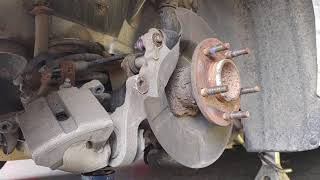
- Remove the wheel. Visually inspect the magnetic encoder ring on the inboard side of the hub assembly. Look for cracks, swelling from rust underneath, missing sections, or a build-up of metallic debris.
- Check for mechanical play in the bearing. Grab the hub (or tire if still on) at the 12 and 6 o'clock positions and attempt to rock it. Any noticeable play indicates a worn bearing requiring hub replacement.
- If wiring and the magnetic ring look perfect, and there's no bearing play, the internal sensor within the hub assembly has most likely failed electrically.
- If the wiring is visibly damaged, repair or replace the harness pigtail first. Clear codes and re-test before condemning the hub.
- After the repair (hub or wiring), clear the codes with the scan tool and perform a test drive to ensure the ABS and StabiliTrak warning lights do not return.
Parts You'll Likely Need
- Rear Wheel Hub and Bearing Assembly
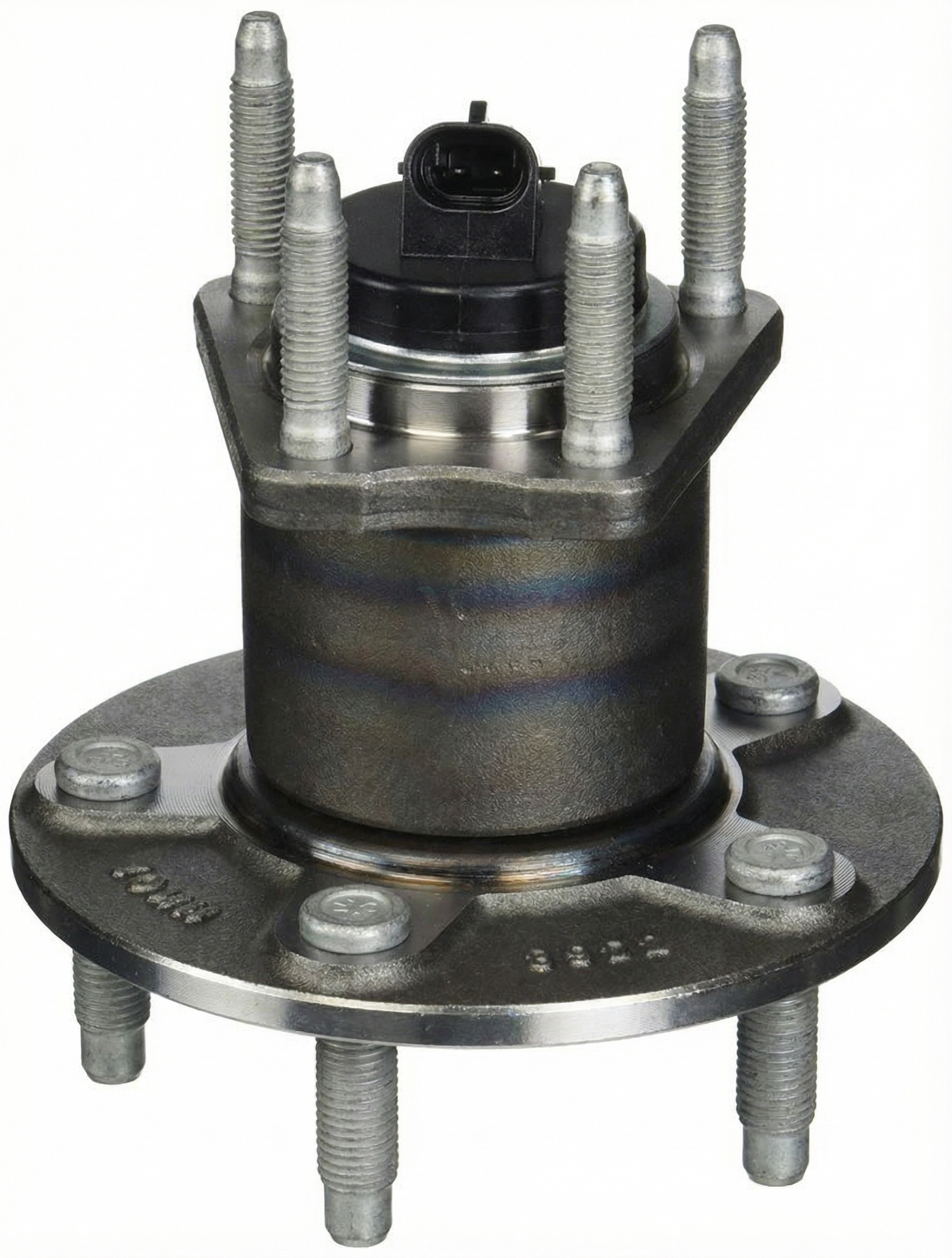
(OEM #25954415 (Note: This part number may be superseded, always verify with VIN))— This is the most common failure. The wheel speed sensor and magnetic tone ring are integrated into this single, non-serviceable unit.
Trusted brands: ACDelco, MOOG, Timken, SKF, Driveworks
OEM price range: $200-$300
Aftermarket price range: $100-$220 - Rear ABS Wheel Speed Sensor Wiring Harness Pigtail
(OEM #ACDelco PT2298 (or equivalent))— If a visual inspection reveals corrosion or damage right at the connector, replacing this pigtail is a cost-effective repair.
Trusted brands: Dorman (e.g., 645-506), Standard Motor Products (SMP), ACDelco
OEM price range: $40-$70
Aftermarket price range: $20-$40
Related Codes That Often Appear With This One
- C0050 — This is the code for the Right Rear Wheel Speed Sensor. If both C0045 and C0050 appear, it strongly suggests a wiring harness issue common to both sides (like damage near the rear axle) or a problem with the EBCM.
- C0045 0F — This is a more specific 'symptom byte' version of the code meaning 'Signal Erratic'. It strongly points to a physically damaged or contaminated magnetic encoder ring on the hub, rather than a purely electrical failure.
- C0045 18 — This symptom byte means 'Low Signal Amplitude' and often indicates a missing signal from a completely failed sensor or a total break in the wiring.
Technical Service Bulletins (TSBs) & Recalls
- TSB 08-05-25-005: Not directly for C0045, but discusses reprogramming the EBCM for intermittent StabiliTrak activation issues on related platforms, showing the sensitivity of the system.
- TSB 08-05-22-009C: Discusses applying dielectric grease to the BCM connector to prevent fretting corrosion which can cause various electrical issues, including brake system faults on the Saturn Aura and its platform mates.
Platform-Specific Known Issues
- The wiring harness for the rear wheel speed sensors on the Epsilon platform is known to be susceptible to chafing and water intrusion, particularly where it is clipped to the subframe or passes near suspension components. A thorough inspection is critical.
- GM TSBs have been issued for Epsilon platform vehicles regarding fretting corrosion at the Body Control Module (BCM) and Electronic Brake Control Module (EBCM) connectors, which can cause this and other electrical faults. Applying dielectric grease is the recommended fix.
Mechanic-Grade Diagnostic Values
- Wheel Speed Sensor Internal Resistance — expected: 850-1350 Ohms. Failure: A reading outside this range (open or shorted) indicates a failed sensor.
- Wheel Speed Sensor AC Voltage Output — expected: Rises from ~100mV AC with slow wheel spin. Failure: No AC voltage produced while spinning the wheel indicates a dead sensor or damaged tone ring.
- Torque for Rear Hub Assembly Mounting Nuts — expected: 47 ft-lbs. Failure: Improper torque can lead to premature bearing failure or unsafe conditions.
Hidden / Shadow Codes Worth Checking
- C0045 5A: Signal Plausibility Failure. This means the EBCM is receiving a signal, but it's illogical compared to the other wheel speed sensors (e.g., three wheels at 30 MPH, one at 0 MPH). This often points to a complete electrical failure or a major mechanical issue. (see via GM Tech2, GDS2, or other high-end professional scan tool capable of reading manufacturer-specific symptom bytes.)
- C0045 06: Low Voltage / Open Circuit. This byte specifically points to an open wire, a bad connection in the harness, or a short to ground. (see via GM Tech2, GDS2, or other high-end professional scan tool.)
- C0045 00: No Additional Information / Circuit Malfunction. This is a general fault that often indicates a complete loss of signal from a dead sensor or a total wire break. (see via GM Tech2, GDS2, or other high-end professional scan tool.)
Scan Tool Commands That Help
- GM Tech2 / GDS2: Automated Test / Special Functions — After a repair or during diagnosis of a suspected EBCM issue, the scan tool can command the EBCM to cycle its internal solenoids and pump motor. This can help verify EBCM functionality or bleed the system after component replacement. It is typically found under the 'Special Functions' or 'Active Tests' menu.
Wiring & Ground Locations
- EBCM (Electronic Brake Control Module) — Located in the left rear of the engine compartment, next to the driver's side strut tower.. This is the control unit that receives the signal from the left rear wheel speed sensor. The wiring harness from the sensor terminates at this module, and it's a key location for checking for corrosion or performing pin-out testing.
- G105 / G106 — Engine block grounds. G105 is on the rear of the cylinder head (3.5L) or center rear of the engine (3.6L). G106 is near the oil filter (3.5L) or PNP switch (2.4L).. The EBCM relies on clean engine and chassis grounds to function correctly. A poor ground at one of these primary locations can cause a variety of difficult-to-diagnose electrical issues, including phantom ABS codes.
- EBCM Connector Pins (LR WSS) — At the main 38-pin connector for the EBCM. The Left Rear WSS Signal and Low Reference wires connect here. Specific pin numbers vary by year/engine but can be found in service manuals.. This is the final destination for the sensor's signal. Testing for voltage, ground, and continuity at these specific pins can definitively rule out a wiring issue between the sensor and the module.
Real Owner Repair Stories
- Camaro5 Forum User (Chevrolet Camaro 3.6L (Epsilon platform relative)) — Service Stabilitrak message with code C0045. No unusual driving symptoms or noises.
❌ Tried (didn't work) Replaced the left rear wheel hub assembly., Cleared codes with a scan tool, but the code immediately returned.
✅ What actually fixed it A thorough inspection of the wiring harness revealed a cut wire in the harness leading to the left rear wheel speed sensor connector. Repairing the broken wire resolved the code. - NHTSA ODI #11165895 (Chevrolet Equinox) — An owner reported the "Service Stabilitrak" message duration varied from seconds to minutes before lights extinguished. The service center reported code C0045 and recommended replacing the L/R hub bearing assembly.
- NHTSA ODI #11219167 (Cadillac SRX) — An owner reported an ABS stability code C0045 where the left rear wheel speed sensor encoder ring was broken, requiring replacement of the rear hub assembly.
OEM Part Supersession History
25954415→19421348— Standard part number update by GM. The new part is a direct replacement.
Heads up: While this part number is listed for the Aura's platform mates (Camaro, CTS), it is critical to verify the correct hub part number using the vehicle's VIN, as variations exist.
Diagnostic Flowchart
Used vs. New Parts: Buying Guide for This Vehicle
When a used part is the smart pick: A used wiring harness pigtail is a viable option if the connector is in good condition with no corrosion. A used EBCM can be a cost-effective choice, but it MUST be from an identical vehicle (same year, engine, and options) and may require programming. Buying a used wheel hub assembly is NOT recommended.
Donor-vehicle mileage cap: roughly under 60000 miles for the part to have meaningful remaining life.
What to inspect on the donor part:
- For wiring: Check for any brittleness, previous repairs (splices), or corrosion inside the connector pins.
- For EBCM: Ensure the part number matches exactly and there is no physical damage or corrosion on the housing or pins.
- For Hub Assembly (if unavoidable): Spin the bearing by hand; it must be perfectly smooth with zero noise or roughness. Check the magnetic encoder ring for any cracks, chips, or rust swelling. Any imperfection makes it a bad part.
Aftermarket brands forum-validated for this vehicle:
- For Hub Assembly: Timken, SKF, MOOG, and FAG are consistently cited as high-quality, reliable aftermarket brands that often meet or exceed OEM specifications.
Brands owners have reported issues with on this vehicle:
- Unbranded, 'white box' hub assemblies from online marketplaces are a significant risk. They often use lower-quality bearings and encoder rings that can fail prematurely, sometimes within a few months, forcing you to do the repair again.
Real Owner Stories
Aggregated from forums and TSBs cited above. Mileages and costs reflect what owners reported in those sources.
2009 Saturn Aura
Symptoms: The owner experienced the classic symptoms for code C0045, including the StabiliTrak and ABS warning lights illuminating on the dashboard.
What fixed it: Discussion among other owners confirmed that replacing the entire wheel hub assembly is the common and correct fix for the issue.
Source hint: Saturnfans.com Forum: Stabilitrak problem
2010 Chevrolet Malibu
Symptoms: ABS and StabiliTrak warning lights were on due to a C0045 code, caused by a failure of the magnetic encoder ring on the hub.
What fixed it: The problem was resolved by replacing the entire wheel hub and bearing assembly, as the magnetic ring is an integral part of it.
Source hint: Chevy Malibu Forum: C0045 & C0050 (Chevy/GMC/Buick/Dodge) - THIS IS WHY! (YouTube video)
GM Vehicle
Symptoms: A persistent C0045 code remained even after replacing the wheel speed sensor hub assembly.
What fixed it: The issue was traced to a break in the wiring. The fix involved testing for and finding a lack of continuity in the harness between the sensor connector and the Electronic Brake Control Module (EBCM), followed by a wiring repair.
Source hint: CorvetteForum: Replaced Wheel Speed sensor and Still Getting C0045 code
Documented NHTSA Reports
- An owner reported that after having fuel level sensors installed, codes P0463, P069E, and C0045 returned (NHTSA ODI #11399819).
- A report regarding a vehicle that experienced a loss of power noted that a number of codes came up including C0057, C0045, C0231, C0232, and C0282, which the dealer was instructed to erase and re-program the software (NHTSA ODI #10382746).
Related OBD-II Codes
Frequently Asked Questions
My ABS and StabiliTrak lights are on. Is it safe to drive my 2008 Saturn Aura?
For a C0045 code, can I just replace the left rear wheel speed sensor, or do I need the whole hub?
I replaced the left rear hub on my Aura, but the C0045 code returned. What should I check next?
I hear a humming or roaring noise from the back of my car that gets louder with speed. Is this related to the C0045 code?
My transmission seems to be shifting hard ever since the 'Service StabiliTrak' message appeared. Are these issues connected?
My mechanic said the magnetic ring on the back of the hub is cracked. Is that the problem?
Does TSB 08-05-22-009C apply to this wheel speed sensor problem?
Helpful Videos
We Have This Part in Stock

The information in this article is provided for general reference and educational purposes only. Vehicle specifications, procedures, and part compatibility can vary by production date, trim level, and region. Always consult your vehicle's factory service manual and verify part numbers before purchasing or performing repairs. Safety-critical components such as airbags, seat belts, and braking systems should be installed by a qualified professional.
- Saturn Aura:
- 🧭 Diagnostic Flowchart
- 🎬 Helpful Videos
- 🛍️ Shop This Part
- What's Unique About the 2007-2010 Saturn Aura
- Symptoms You May Notice
- Most Likely Causes
- Rare But Worth Checking
- Diagnosis Steps
- Parts You'll Likely Need
- Related Codes That Often Appear With This One
- Technical Service Bulletins (TSBs) & Recalls
- Platform-Specific Known Issues
- Mechanic-Grade Diagnostic Values
- Hidden / Shadow Codes Worth Checking
- Scan Tool Commands That Help
- Wiring & Ground Locations
- Real Owner Repair Stories
- OEM Part Supersession History
- Used vs. New Parts: Buying Guide for This Vehicle
- Real Owner Stories
- 2009 Saturn Aura
- 2010 Chevrolet Malibu
- GM Vehicle
- Documented NHTSA Reports
- Related OBD-II Codes
- Frequently Asked Questions
- 🎟️ Get 5% Off