

C0050 on 2011-2017 BMW X3: Right Rear Wheel Speed Sensor Circuit Fault Causes and Fixes
On a 2011-2017 BMW X3 (F25), code C0050 almost always points to a failed right rear wheel speed sensor. This triggers a 'trifecta' of ABS, DSC, and 4x4 warning lights. A new sensor from a reputable brand like ATE or Bosch costs around $50-$90, and it's a common DIY fix for those with basic tools, typically requiring a 5mm Allen key.
- C0050 on a 2011-2017 X3 means there's a problem with the right rear wheel speed sensor circuit.
- The most likely cause is a bad sensor, which is a relatively inexpensive part and a manageable DIY replacement.
- Before buying parts, use a scanner to watch live data from all four wheels to confirm the right rear sensor is the one malfunctioning.
- Always inspect the wiring and the magnetic ring on the wheel bearing before replacing the sensor.
- Use a reputable OE-equivalent brand like ATE or Bosch for the replacement sensor to ensure reliability.
What's Unique About the 2011-2017 BMW X3
For the F25 generation X3, this code is a straightforward indicator of a problem at the right rear wheel. Unlike some vehicles where this code can be ambiguous, on the X3 it almost always leads to the wheel speed sensor, its wiring, or the magnetic ring on the wheel bearing. The xDrive all-wheel-drive system relies heavily on accurate data from all four wheels, so a single sensor failure will immediately trigger the characteristic 'trifecta' of warning lights for the 4x4, ABS, and DSC systems as a failsafe.
Symptoms You May Notice
- ABS warning light is on
- DSC or Traction Control warning light is on
- Brake warning light is on (often yellow/amber)
- "4x4" or "Driving stabilization" warning light is on
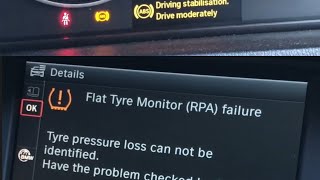
- Tire Pressure Monitor (TPM) failed message may appear 🎬 See how a faulty sensor triggers these specific dashboard warnings.
- Loss of anti-lock brake function during hard braking (wheels may lock up and skid)
- Vehicle may feel hesitant or judder, especially when turning at low speeds
- Replacing the DSC/ABS module when the actual fault is a simple sensor or wiring issue.
- Replacing the wheel bearing when the magnetic ring only needed to be cleaned of debris.
- Replacing the wrong wheel's sensor due to not confirming with live data first.
Most Likely Causes
- Failed Right Rear Wheel Speed Sensor 🔴 High Probability → Shop ABS Wheel Speed Sensor The sensor is exposed to water, road salt, and debris, which can lead to internal electronic failure over time. It's a common wear-and-tear item on many BMW models.
How to confirm: Use a scanner capable of reading BMW-specific live data (like ISTA, Autel, or Foxwell). Compare the speed readings from all four wheels while driving. The right rear sensor will likely read 0 MPH or show erratic, jumpy signals compared to the others.
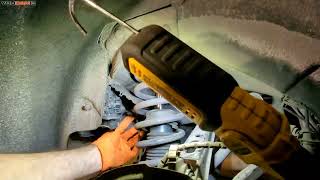
Typical fix: Replace the right rear wheel speed sensor. The sensor is held in the wheel hub by a single 5mm Allen bolt 🎬 Watch: Step-by-step guide to troubleshooting and replacing the rear sensor. and its connector is located in a plastic box in the wheel arch.
Est. part cost: $40-$150 - Damaged or Corroded Wiring/Connector 🟡 Medium Probability The wiring harness runs along the suspension and can be damaged by road debris, improper jacking, or corrosion from the elements. The connector pins inside the wheel arch housing can also corrode.
How to confirm: Visually inspect the wiring harness from the sensor up into the wheel well. Check the connector, which is located behind a plastic cover held by 8mm bolts in the wheel arch, for corrosion or bent pins. Use a multimeter to check for continuity and shorts in the wiring between the sensor connector and the DSC module.
Typical fix: Repair the damaged section of wire or replace the pigtail connector. In some cases, cleaning corroded pins with electrical contact cleaner is sufficient.
Est. part cost: $10-$40 - Contaminated or Damaged Magnetic Encoder Ring ⚪ Low Probability The magnetic ring is integrated into the wheel bearing's seal. Ferrous metallic debris (like brake dust or rust particles) can stick to it and disrupt the sensor's reading. This is more common in areas with heavy road salt usage.
How to confirm: After removing the wheel speed sensor, visually inspect the magnetic ring on the wheel bearing hub through the sensor hole. Look for a build-up of metallic 'sludge' or any physical damage like cracks. A small camera scope can be helpful.
Typical fix: Carefully clean the debris from the magnetic ring with a soft brush, cloth, or compressed air. If the ring is cracked or damaged, the entire wheel bearing/hub assembly must be replaced.
Est. part cost: $0 for cleaning, $150-$300 for a new wheel bearing assembly.
Rare But Worth Checking
- Failed DSC/ABS Control Module: → Shop ABS Control Module This is the least likely cause. All other possibilities, especially the sensor and its wiring, should be exhaustively ruled out before considering the replacement of this expensive module.
Diagnosis Steps
- Connect a BMW-compatible OBD-II scanner and confirm the C0050 and/or 48071B code is present. Note any other related codes.
- Access the live data stream for the DSC module. Graph the outputs for all four wheel speed sensors.
- Drive the vehicle slowly (above 5 mph) in a straight line. Observe the graph. The right rear sensor reading should be erratic or flatlined at zero compared to the other three sensors.
- Safely lift and support the rear of the vehicle. Remove the right rear wheel.
- Locate the wheel speed sensor on the rear hub assembly. It is held by a 5mm Allen bolt.
- Visually inspect the sensor and its wiring for any obvious signs of damage, fraying, or melting.
- Follow the wire into the wheel well. Remove the plastic splash shield (typically held by 8mm and 10mm fasteners) to access the connector housing. Disconnect the sensor (usually a blue or black connector) and inspect the pins for corrosion or damage.
- If no visual damage is found, the most common failure is the sensor itself. You can confirm by swapping the right rear sensor with the left rear sensor (they are the same part number). Clear the codes and drive again. If the code changes to C0045 (Left Rear Wheel Speed Sensor Circuit), the sensor is confirmed bad.
- If the code C0050 returns after the swap, the problem is in the wiring or the hub's magnetic ring. Test the wiring harness for continuity from the connector to the DSC module.
- With the sensor removed, inspect the magnetic encoder ring on the wheel bearing. Clean any metallic debris and re-test. If the ring is damaged, the wheel bearing needs replacement.
Parts You'll Likely Need
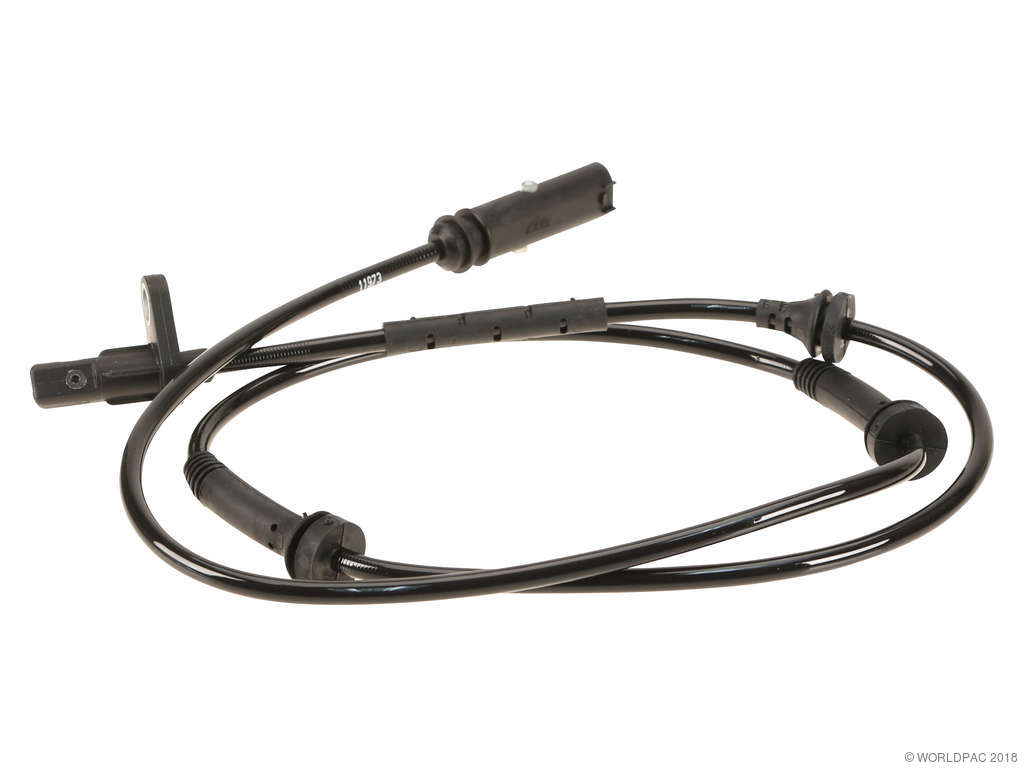
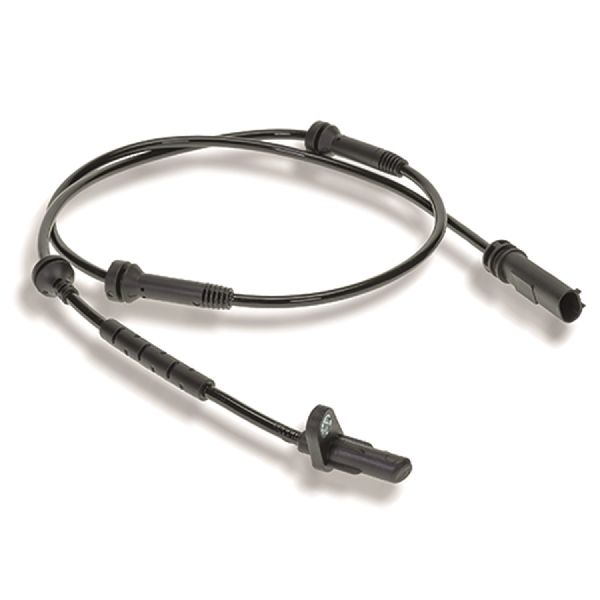
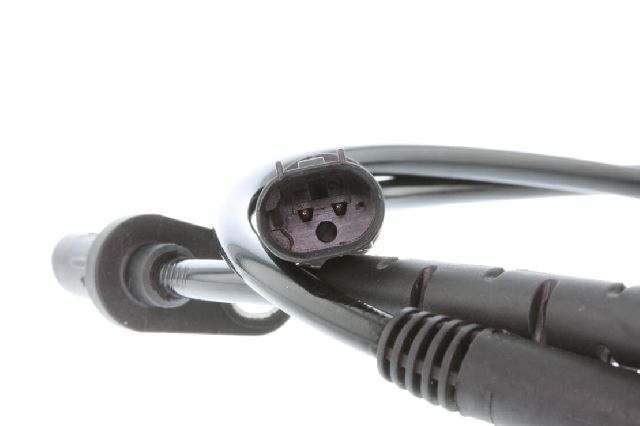
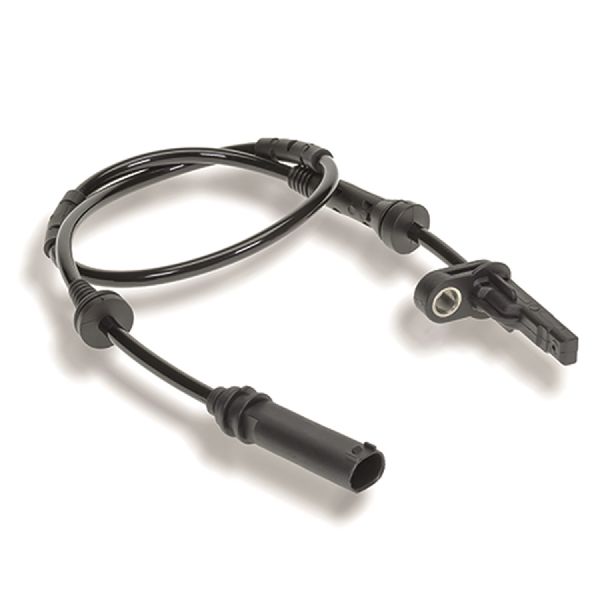
- Rear Wheel Speed Sensor
(OEM #34526869293)— This is the most common failure point for code C0050. The rear sensors are interchangeable between the left and right sides on the F25 X3. This part number supersedes previous numbers 34526855050 and 34526788645.
Trusted brands: Genuine BMW, ATE (often the OE supplier), Bosch
OEM price range: $120-$150
Aftermarket price range: $40-$90
Related Codes That Often Appear With This One
- 48071B — This is a BMW-specific code that often accompanies C0050, explicitly stating 'Wheel speed sensor voltage supply: short circuit, right rear'. It strongly points to an electrical fault in the sensor or its wiring.
- U0415 — This code indicates invalid data was received from the ABS/DSC control module. It can be set by other modules (like power steering or the transfer case) when the wheel speed signal is lost, as this data is shared across the vehicle's network. NHTSA ODI #11228687 notes this code appearing alongside C0050 in multi-fault scenarios on other vehicle platforms.
Technical Service Bulletins (TSBs) & Recalls
- SI B34 10 13: Issued in February 2014 for F25 models, this bulletin addresses faults for wheel speed sensors. If specific fault codes are present, the recommended procedure is to replace all four wheel speed sensors. While this TSB covers the issue, most owners and independent shops find success by only replacing the single faulty sensor identified via live data.
Platform-Specific Known Issues
- Owner Experiences with Aftermarket Sensors: Forum discussions on communities like Bimmerpost and Reddit indicate that while many aftermarket sensors work well, sticking to reputable OE-supplier brands like ATE or Bosch is recommended for longevity. Some cheaper, unbranded sensors have been reported to fail prematurely or provide inaccurate readings.
- Cross-Manufacturer Interpretations: While C0050 on a BMW typically indicates a wheel speed sensor, it is important to note that on other makes, this code can have different meanings. For instance, NHTSA ODI #10763888 describes C0050 as identifying a faulty power steering control module (PSCM) on certain Chevrolet models, while NHTSA ODI #11649367 and NHTSA ODI #11693418 report it in relation to rear brake pad, rotor, and caliper service on Jeep vehicles. Always verify the manufacturer-specific definition for your F25 X3.
Mechanic-Grade Diagnostic Values
- Sensor Type and Basic Test — expected: The sensor is an 'active' 2-wire Hall-effect or magneto-resistive type. It is powered by the DSC module and produces a digital signal. A simple resistance (ohms) test is not a valid diagnostic method for the sensor itself.. Failure: Attempting to measure resistance will yield inconclusive results. The sensor must be tested for voltage supply and signal output.
- Sensor Supply Voltage (at sensor connector, key on) — expected: Approximately 11-12 VDC from the DSC module to power the sensor's internal electronics. Some systems may use a lower voltage like 5V or 8V.. Failure: No voltage indicates a wiring problem (open/short) or a fault in the DSC module's power supply circuit.
- Sensor Signal Output (using an oscilloscope) — expected: A digital square wave that changes in frequency as the wheel is spun. The voltage will toggle between a high and low state (e.g., switching between ~12V and ~11.7V).. Failure: A flat line (no signal), an erratic/noisy waveform, or a signal that does not change with wheel rotation indicates a failed sensor or a problem with the magnetic encoder ring.
Hidden / Shadow Codes Worth Checking
- 48071B: Wheel speed sensor: Voltage supply, short circuit, rear right. This is a highly specific BMW fault code that directly accompanies the generic C0050 and pinpoints an electrical issue with the right rear sensor circuit. (see via BMW-specific diagnostic software like ISTA or a high-end scanner (Autel, Foxwell, etc.) capable of reading manufacturer codes.)
- 480686: Wheel speed sensor: Drive-off recognition, rear right. This fault is set when the DSC module detects an implausible signal from the right rear sensor as the vehicle begins to move. (see via BMW-specific diagnostic software like ISTA or a high-end scanner.)
Scan Tool Commands That Help
- ISTA (Rheingold): Calculate Test Plan / Call Up ECU Functions — After reading the initial fault memory, ISTA's 'Calculate Test Plan' function will create a guided diagnostic procedure specifically for the stored wheel speed sensor faults. This plan walks the technician through checking live data, inspecting components, and verifying the repair, ensuring a systematic diagnosis. You can also go directly to the DSC module functions to view live data streams for all four wheels simultaneously.
Wiring & Ground Locations
- Rear Wheel Speed Sensor Connector — Located in a small black plastic box in the rear right wheel arch, behind the fender liner. The box is typically held on by 10mm plastic nuts and may also require removing 8mm screws for the liner. The sensor connector is the bottom one in the box.. This is the primary point to disconnect the sensor for testing and replacement. It is exposed to the elements and can be a source of corrosion or damage.
- DSC Control Module / Hydraulic Unit — Located in the engine bay, typically on the driver's side. It is a single unit combining the electronic control module and the hydraulic pump assembly.. This is the termination point for the wheel speed sensor wiring. Advanced diagnostics, such as checking for continuity or shorts in the harness, would require testing the wires between the sensor connector and the main connector at this module.
Real Owner Repair Stories
- Various forum and YouTube comments (2011-2017 BMW X3 (F25), common in rust-belt regions) — ABS, DSC, 4x4 warning light 'trifecta'.
❌ Tried (didn't work) Attempting to remove the 5mm Allen bolt with a standard Allen key.
✅ What actually fixed it The 5mm Allen head bolt holding the sensor was seized with rust and either stripped or broke off. The final fix required drilling out the broken bolt and sometimes re-tapping the hole. In other cases, the sensor itself was rusted into the hub and had to be broken apart and removed in pieces with pliers and screwdrivers. Applying penetrating oil and heat beforehand was recommended. - Forum discussions (2014 BMW X3 xDrive28i) — C0050 code returned immediately after replacing the right rear wheel speed sensor.
❌ Tried (didn't work) Replacing the right rear wheel speed sensor with a new one., Swapping the left and right rear sensors (fault stayed on the right side).
✅ What actually fixed it The owner had recently replaced the right rear wheel bearing with a cheap, unbranded part. The magnetic encoder ring integrated into the new bearing's seal was either of poor quality or damaged, providing an unreadable signal to the new sensor. The problem was resolved by replacing the cheap wheel bearing with a high-quality OEM or OE-supplier (e.g., FAG, SKF) wheel bearing assembly.
OEM Part Supersession History
34526788645→34526855050, then 34526869293— Standard part evolution and improvement by the manufacturer.
Heads up: All part numbers are interchangeable. The latest number, 34526869293, is the correct service replacement for all 2011-2017 F25 X3 rear wheel speed sensors.
Model Year Variations Within This Range
- 2011-2017: No significant variations have been noted regarding the cause or repair of code C0050 within the F25 generation. The Life Cycle Impulse (LCI) refresh for the 2015 model year introduced cosmetic and infotainment changes but did not alter the fundamental DSC system, sensors, or wheel bearings related to this fault.
Diagnostic Flowchart
Other Known Issues on This Vehicle
Issues unrelated to this code that are worth knowing about as an owner of this generation:
- N20 Engine Timing Chain Guide Failure 🔴 High — Common on pre-2015 models, typically between 60,000-100,000 miles. A whining noise from the front of the engine is the primary warning sign. (Ref: BMW addressed this with updated parts in later production years but no widespread recall was issued. A class-action lawsuit did exist.)
- N55/N52 Oil Filter Housing Gasket (OFHG) Leak 🟠 Medium — Very common after 60,000-80,000 miles. The gasket hardens and leaks oil onto the serpentine belt, which can cause the belt to slip off and be ingested by the main crank seal, leading to catastrophic engine damage.
- Panoramic Sunroof Drain Clogging / Water Leaks 🟠 Medium — Commonly reported issue where front or rear sunroof drains get clogged with debris, causing water to overflow the drain channels and leak into the cabin, typically into the passenger footwell or A-pillar area.
- Electric Water Pump and Thermostat Failure (N55 Engine) 🟠 Medium — The electric water pump can fail without warning, typically between 60,000 and 100,000 miles, leading to rapid engine overheating. It's often replaced preventatively along with the thermostat.
- Starter Motor Failure 🟡 Low — Some owners report premature starter failure. Replacement is labor-intensive as it requires removing the intake manifold for access.
Used vs. New Parts: Buying Guide for This Vehicle
When a used part is the smart pick: A used wiring harness pigtail from a junkyard is a viable option if your original connector is damaged or corroded. A used wheel bearing/hub assembly can be considered if it's from a very low-mileage donor and shows no signs of corrosion or play.
Donor-vehicle mileage cap: roughly under 50000 miles for the part to have meaningful remaining life.
What to inspect on the donor part:
- For wiring: Check for intact insulation, no brittleness, and clean, un-corroded connector pins.
- For a hub/bearing: Spin the bearing by hand to feel for smoothness (no grinding or roughness). Ensure the magnetic encoder ring is clean and free of physical damage or heavy rust.
- Check the donor vehicle's history if possible to avoid parts from flood or collision-damaged cars.
OEM-only on this vehicle (don't cheap out):
- DSC/ABS Control Module: Due to complex programming and VIN-locking, this part should be purchased new or from a reputable specialist that can handle the coding.
Aftermarket brands forum-validated for this vehicle:
- ATE (often the Original Equipment supplier for BMW brake components)
- Bosch
- VDO / Continental
Brands owners have reported issues with on this vehicle:
- Unbranded, low-cost sensors from online marketplaces like eBay or Amazon. Forum users frequently report premature failure or incorrect readings from these parts, leading to the fault returning quickly.
Real Owner Stories
Aggregated from forums and TSBs cited above. Mileages and costs reflect what owners reported in those sources.
2011-2017 BMW X3 F25
Symptoms: The scan did not initially specify which speed sensor was bad, but the vehicle displayed a 'trifecta' of warning lights including ABS and DSC.
What fixed it: Replacement of the rear ABS speed sensor using a 5mm Allen bolt to remove the old unit and accessing the connector box in the wheel well.
Source hint: YouTube - '2011-2017 BMW X3 F25 Troubleshooting and Replacement of Rear ABS Speed Sensor DIY'
2011-2017 BMW X3 F25
Symptoms: ABS warning light, DSC/Traction Control light, and a yellow/amber Brake warning light appeared simultaneously.
What fixed it: Replacing the faulty wheel speed sensor identified via live data, rather than replacing all four as suggested by the TSB.
Source hint: Bimmerpost - F25 X3 Forum
Related OBD-II Codes
Frequently Asked Questions
Does BMW Technical Service Bulletin SI B34 10 13 apply to my F25 X3?
What is the specific part number for the rear wheel speed sensor on my 2011-2017 X3?
Can I use an aftermarket sensor to fix the C0050 code on my X3?
Why is my Tire Pressure Monitor (TPM) showing a failure message along with the ABS light?
How can I confirm if the sensor or the wiring is the problem without buying parts?
Where is the connector for the right rear wheel speed sensor located?
Helpful Videos
We Have This Part in Stock


The information in this article is provided for general reference and educational purposes only. Vehicle specifications, procedures, and part compatibility can vary by production date, trim level, and region. Always consult your vehicle's factory service manual and verify part numbers before purchasing or performing repairs. Safety-critical components such as airbags, seat belts, and braking systems should be installed by a qualified professional.
- BMW X3:
- 🧭 Diagnostic Flowchart
- 🎬 Helpful Videos
- 🛍️ Shop This Part
- What's Unique About the 2011-2017 BMW X3
- Symptoms You May Notice
- Most Likely Causes
- Rare But Worth Checking
- Diagnosis Steps
- Parts You'll Likely Need
- Related Codes That Often Appear With This One
- Technical Service Bulletins (TSBs) & Recalls
- Platform-Specific Known Issues
- Mechanic-Grade Diagnostic Values
- Hidden / Shadow Codes Worth Checking
- Scan Tool Commands That Help
- Wiring & Ground Locations
- Real Owner Repair Stories
- OEM Part Supersession History
- Model Year Variations Within This Range
- Other Known Issues on This Vehicle
- Used vs. New Parts: Buying Guide for This Vehicle
- Real Owner Stories
- 2011-2017 BMW X3 F25
- 2011-2017 BMW X3 F25
- Related OBD-II Codes
- Frequently Asked Questions
- 🎟️ Get 5% Off