

C0050 on 2007-2012 Dodge Caliber: Right Rear Wheel Speed Sensor Fixes
Code C0050 on a Dodge Caliber means there's a problem with the right rear wheel speed sensor circuit. This usually turns on the ABS and traction control lights. The most common fix is replacing the faulty sensor itself, which costs about $20-$70 for an aftermarket part (OEM part number 05105064AB) and is a straightforward DIY job. Sometimes, the issue is just debris on the tone ring or a broken wire.
- Code C0050 on a Dodge Caliber almost always points to an issue with the right rear wheel speed sensor or its circuit.
- The most likely fix is replacing the sensor itself, which is an affordable part and a manageable DIY repair.
- Before buying parts, use a scan tool to watch live data from all four wheels to confirm the fault is at the right rear corner.
- Always perform a visual inspection of the wiring and the magnetic ring on the hub before replacing parts, as a broken wire or simple debris can also cause the code.
What's Unique About the 2007-2012 Dodge Caliber
On the Dodge Caliber and its platform-mates (Jeep Compass/Patriot), the C0050 code is a very common and straightforward fault. The rear wheel speed sensor's wiring is routed from the wheel well through a grommet and connects behind the trim panel inside the trunk/hatch area, which can sometimes protect the connection from the elements. However, the sensor and its pigtail at the wheel hub are exposed and remain the most likely failure points. While no specific TSBs for the Caliber are noted for this code, a common issue on many Chrysler/Dodge/Jeep products from this era is the failure of the magnetic tone ring integrated into the wheel bearing, which can also trigger this code.
Symptoms You May Notice
- ABS warning light is on
- Traction Control (ESP/BAS) warning light is on
- On 4WD models, the '4WD!' warning light may also illuminate
- Cruise control may not work
- ABS system does not activate during hard braking (wheels may lock up)
- In some cases, the vehicle may enter a temporary 'limp mode' with reduced acceleration when the sensor first fails
- Replacing the wheel hub/bearing assembly when only the inexpensive sensor has failed.
- Replacing the ABS module when the actual fault is a simple broken wire or debris on the tone ring.
- Replacing the wrong wheel speed sensor due to not using a proper ABS scanner to confirm the location of the fault. 🎬 Watch: A step-by-step guide to diagnosing ABS sensor problems.
Most Likely Causes
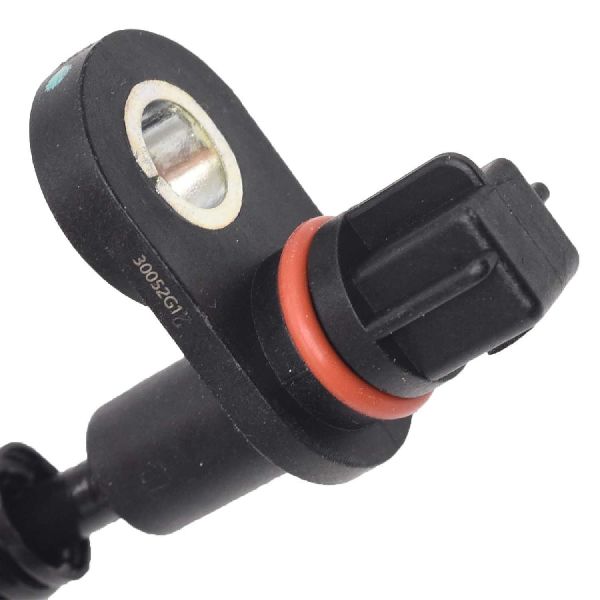
- Failed Right Rear Wheel Speed Sensor 🔴 High Probability → Shop ABS Wheel Speed Sensor The sensor is located in a harsh environment behind the wheel, constantly exposed to water, road salt, and vibrations, which leads to eventual electronic failure. The plastic sensor can also become brittle and the retaining clip can rust away, allowing for excessive movement.
How to confirm: Use a scan tool with live data to monitor all four wheel speeds while driving. If the right rear sensor reads 0 MPH or shows an erratic signal while the others read correctly, the sensor is likely bad. Alternatively, test the sensor's resistance with a multimeter; a reading between 800 and 2,000 ohms is generally considered good for a passive sensor, while an open or shorted circuit indicates a bad sensor. You can also test for AC voltage output by spinning the wheel; a healthy passive sensor should generate over 100mV that increases with speed.
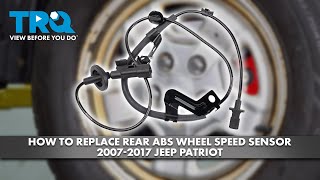
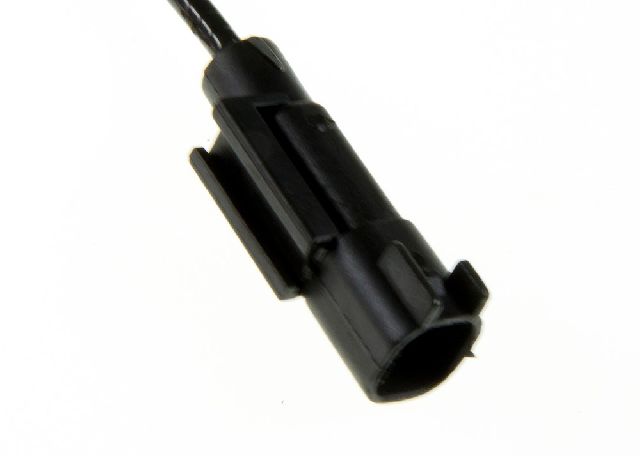
Typical fix: Replace the right rear wheel speed sensor. This involves removing the wheel, unbolting the sensor (usually one 10mm bolt), and disconnecting the electrical plug inside the trunk. 🎬 See this walkthrough for replacing the rear wheel speed sensor.
Est. part cost: $20 - $70 - Damaged Wiring or Connector 🟡 Medium Probability The wiring harness leading to the sensor can become frayed, broken, or corroded from suspension movement and road debris, often within a few inches of the sensor connector.
How to confirm: Visually inspect the wiring harness from the sensor to the grommet leading into the trunk. Check the connector in the trunk for corrosion or pushed-out pins. Use a multimeter to perform a continuity test on the wires between the sensor plug and the ABS module plug to check for opens or shorts.
Typical fix: Repair the broken section of wire with solder and heat-shrink tubing. If the connector is damaged, replace it with a new pigtail connector.
Est. part cost: $15 - $30 - Damaged or Debris-Covered Tone Ring ⚪ Low Probability The magnetic tone ring is integrated into the wheel hub assembly. Metallic debris from brakes or road grime can stick to it, disrupting the signal. The ring can also crack or flake with age and corrosion. A GM TSB for similar vehicles, PIC5428G, specifically calls out cleaning debris from the magnetic encoder as a first step.
How to confirm: Remove the wheel speed sensor and use a light to visually inspect the tone ring inside the hub. Look for heavy rust, metallic debris, or visible cracks/missing sections on the ring.
Typical fix: Often, the ring can be carefully cleaned with a non-magnetic brush and brake cleaner. If the ring is physically damaged (cracked or broken), the entire wheel hub bearing assembly must be replaced. 🎬 Watch: How to replace the press-in bearing and sensor together.
Est. part cost: $0 (cleaning) or $80 - $200 (for hub replacement)
Rare But Worth Checking
- Failed ABS Control Module: → Shop ABS Control Module This is an uncommon cause. Before condemning the expensive ABS module, all other possibilities (sensor, wiring, hub) must be thoroughly ruled out. A module failure might be suspected if you are getting multiple, seemingly unrelated wheel speed sensor codes and have verified the wiring is good.
Diagnosis Steps
- Connect an ABS-capable scan tool to the vehicle. Confirm the presence of code C0050 and check for any other related codes. Note any sub-codes like 'Signal Plausibility Failure' or 'Low Signal Amplitude' which can help pinpoint the issue.
- Use the scan tool's live data feature to view the wheel speed readings from all four sensors while driving the vehicle slowly (above 5-10 mph).
- Observe the reading for the 'Right Rear Wheel Speed Sensor'. If it reads 0, is erratic, or differs significantly from the other three, the issue is confirmed to be in that circuit.
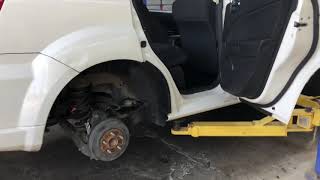
- Safely raise and support the rear of the vehicle. Remove the right rear wheel.
- Locate the wheel speed sensor mounted on the rear knuckle (held by a 10mm bolt). Visually inspect the sensor and its wiring for any obvious signs of damage, fraying, or melting.
- Follow the wire to the grommet entering the trunk. Open the trunk and remove the right-side trim panel to access the electrical connector. Disconnect it and inspect for corrosion or damage.
- If visual inspection is clear, disconnect the sensor and test its internal resistance using a multimeter set to Ohms. A typical good reading for this type of passive sensor is between 800-2000 Ohms. An open loop (infinite resistance) or short (near zero resistance) indicates a failed sensor.
- Remove the sensor from the knuckle. Inspect the magnetic tone ring inside the hub for heavy debris, rust, or physical damage like cracks. Clean it with brake cleaner and a soft, non-magnetic brush if it's just dirty.
- If the sensor and tone ring are good, test the wiring. Check for continuity on both wires from the connector in the trunk to the main ABS module connector. Also check for a short to ground on each wire.
- If wiring, sensor, and tone ring are all confirmed good, the fault may lie with the ABS control module, but this is rare and should be the last consideration.
Parts You'll Likely Need
- Rear Wheel Speed Sensor
(OEM #05105064AB)— This is the most common component to fail for a C0050 code due to its exposed location and electronic nature.
Trusted brands: Mopar, Dorman, NTK, Delphi
OEM price range: $80-$150
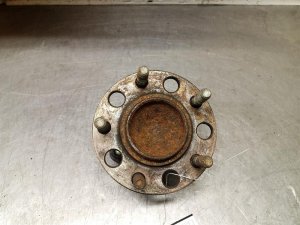
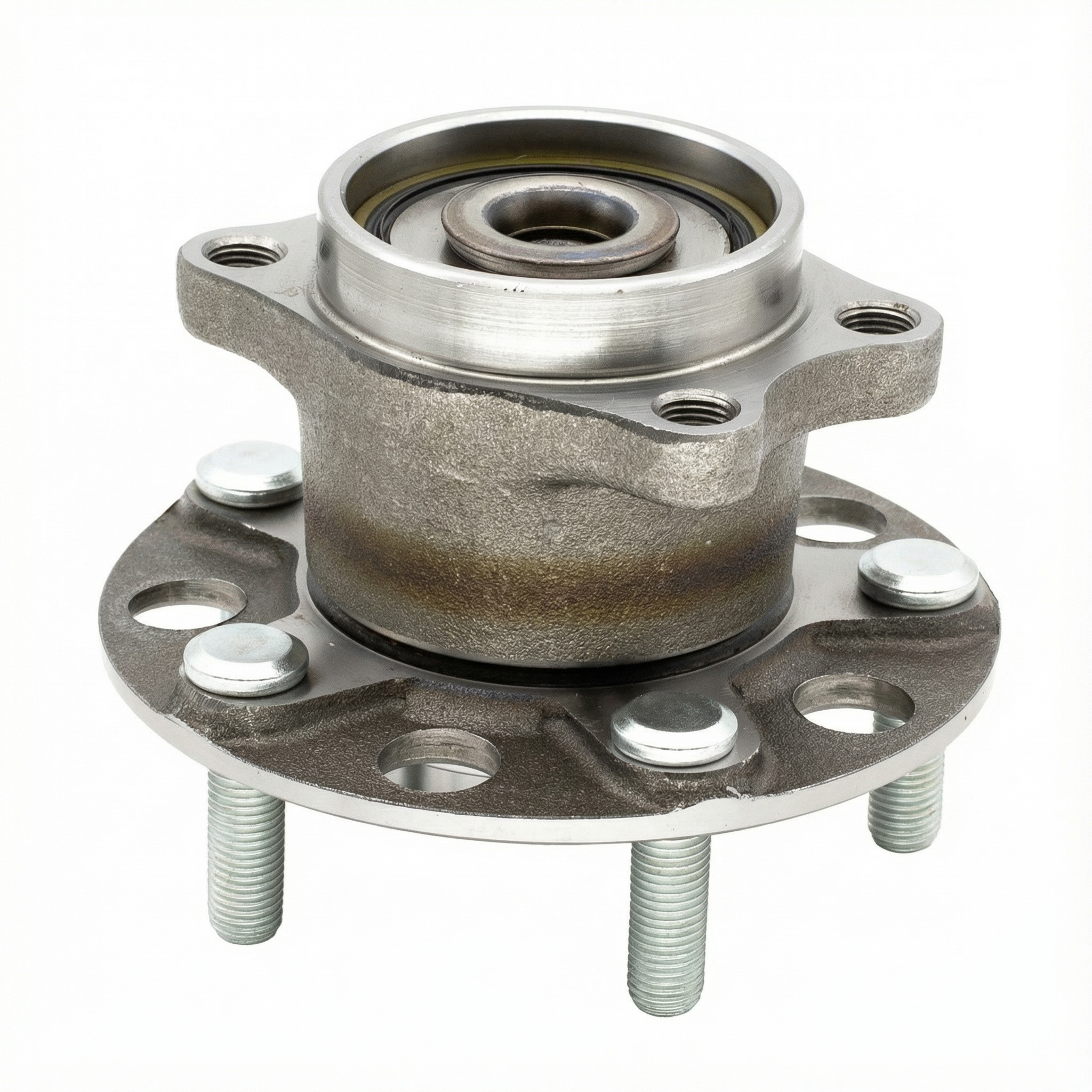
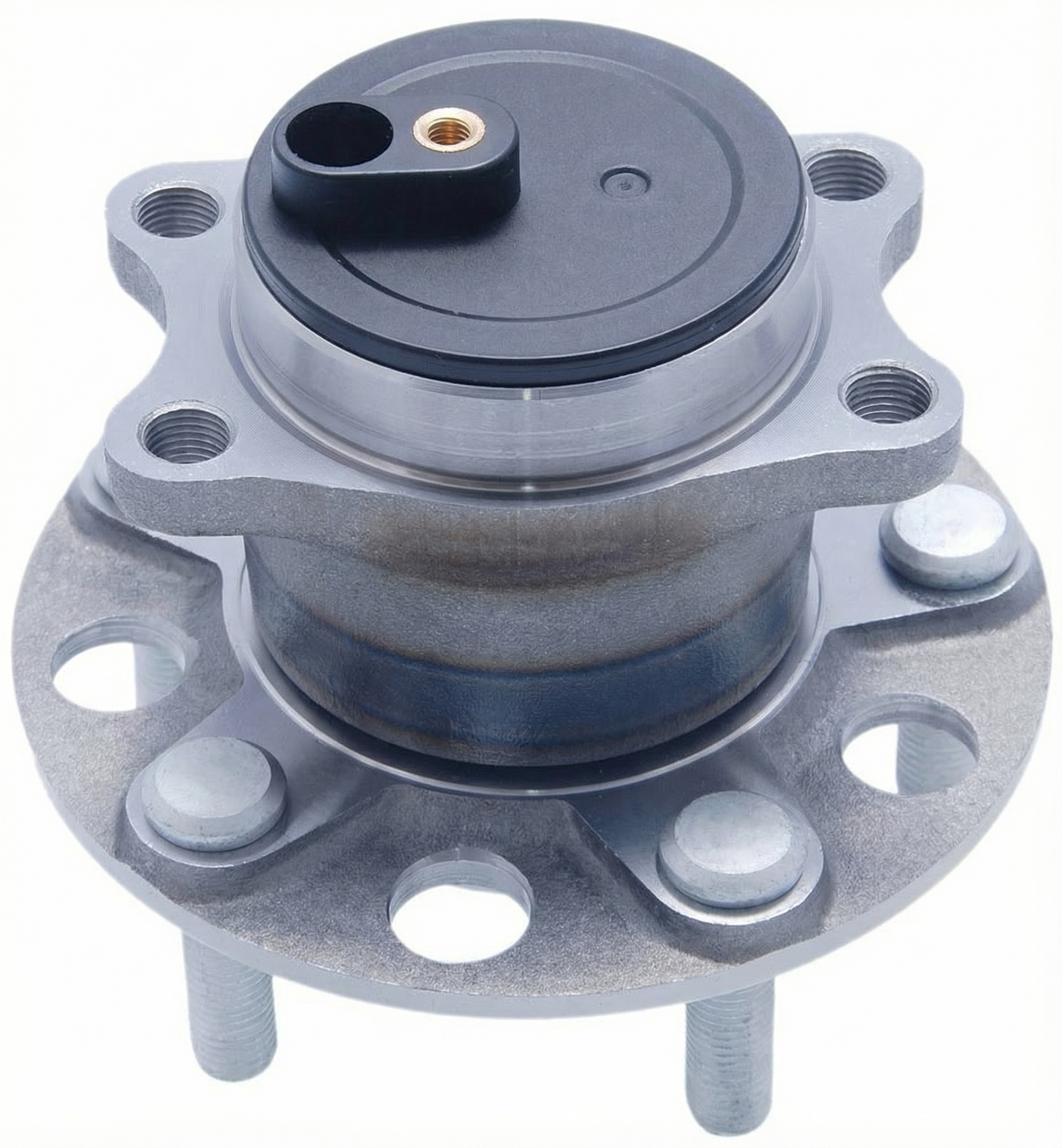
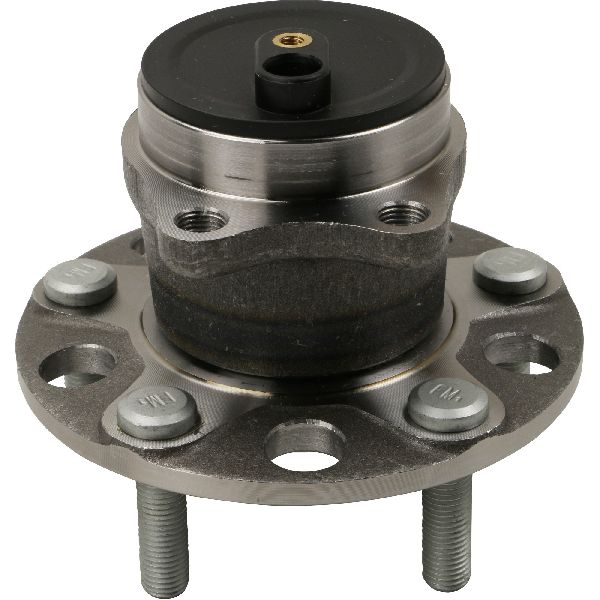
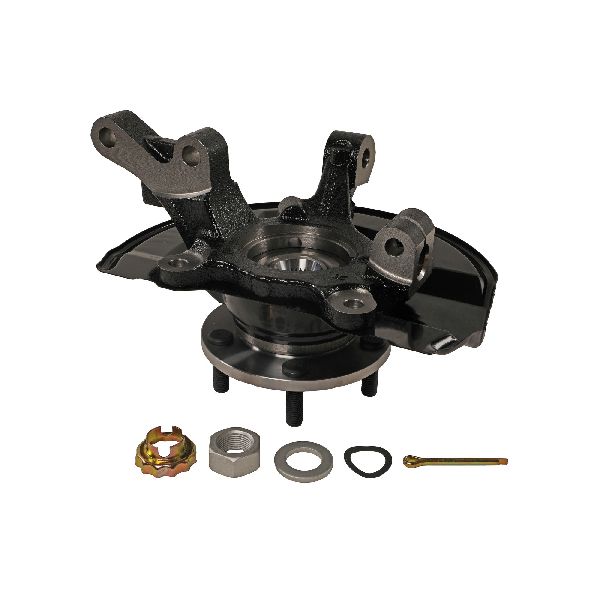
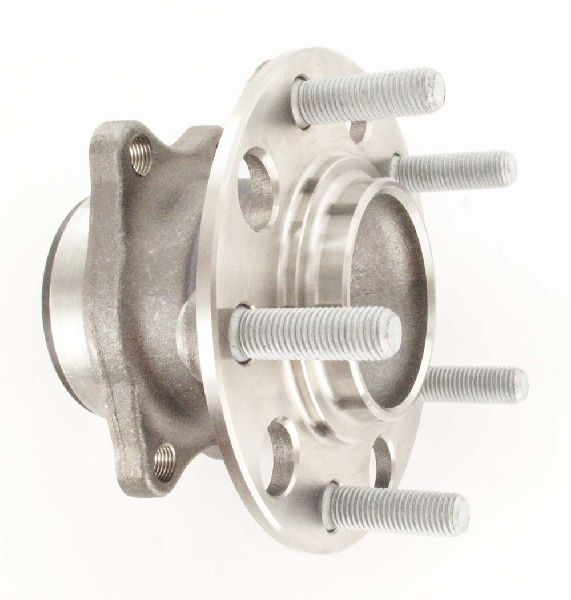
Aftermarket price range: $20-$70 - Rear Wheel Hub Bearing Assembly — Required if the integrated magnetic tone ring is found to be cracked, broken, or if the wheel bearing itself has failed, causing excessive play.
Trusted brands: Timken, SKF, MOOG
OEM price range: $200-$300
Aftermarket price range: $80-$200
Related Codes That Often Appear With This One
- U0415 — This code for 'Invalid Data Received From ABS Control Module' can be set in other modules (like the power steering or powertrain control module) as a secondary fault because the ABS module is broadcasting unreliable wheel speed data. NHTSA ODI #11228687 describes a case where C0050 appeared alongside U0415 and several other communication codes.
- C0045 — This is the code for the Left Rear Wheel Speed Sensor. If both rear sensor codes appear together, it could point to a wiring harness issue common to both sides or a problem with the ABS module itself.
Technical Service Bulletins (TSBs) & Recalls
- While no TSB is specific to C0050 on the Caliber, TSB PIC5428G for GM vehicles with similar systems advises cleaning metallic debris from the magnetic encoder ring on the hub before replacing parts, which is a relevant diagnostic step.
Mechanic-Grade Diagnostic Values
- Passive Wheel Speed Sensor Resistance — expected: 800 - 2,000 Ohms. Failure: An open circuit (infinite resistance) or a short (near-zero resistance) indicates a failed sensor.
- Passive Wheel Speed Sensor AC Voltage Output — expected: >100 millivolts (0.1V) AC, increasing with wheel speed. Failure: No AC voltage generated when spinning the wheel indicates a dead sensor.
- Sensor Signal Wire Voltage (Key On, Sensor Connected) — expected: Approximately 0.14 Volts DC (on a similar Dodge/Chrysler product). Failure: Voltage that does not pulse up towards 12V when metal passes in front of the sensor suggests a fault.
Hidden / Shadow Codes Worth Checking
- C0050-00: General circuit malfunction (open, short to ground, high resistance). NHTSA ODI #11693418 notes this specific sub-code appearing in conjunction with required service for rear brake pads, rotors, and adapter plates. (see via A professional-level scan tool (like WITECH) with manufacturer-specific code reading capabilities.)
- C0050-18: Low signal amplitude, indicating a weak or erratic signal from a failing sensor or damaged tone ring. (see via A professional-level scan tool with manufacturer-specific code reading capabilities.)
- C0050-5A: Signal Plausibility Failure, set when the sensor's reading is illogical compared to other wheel speeds. (see via A professional-level scan tool with manufacturer-specific code reading capabilities.)
Wiring & Ground Locations
- ABS Module Connector — Located on the ABS hydraulic unit, typically at the left front corner of the engine compartment.. This is the termination point for the wheel speed sensor wiring. Testing for continuity and voltage here can confirm if the wiring harness is intact from the wheel to the module. Based on general Mopar wiring diagrams, the Right Rear sensor wires are often Light Green/Dark Blue (Signal) and Light Green/Orange (Sensor Ground).
- G301 — Behind the left kick panel (for non-SRT models).. This is a major body ground point. While not the direct ground for the sensor itself (which grounds through the module), a poor connection at G301 could potentially cause issues with the ABS module or other related interior electronics, though it's an unlikely cause for a single sensor code.
- Right Rear WSS Connector — Behind the right-side trim panel in the trunk/hatch area.. This is the primary disconnection point for the rear sensor. It's a common spot for intermittent faults. Testing can be done here to isolate whether the fault is in the sensor pigtail or the main body harness going forward to the ABS module.
Real Owner Repair Stories
- YouTube channel 'JasmineFatherGarage4k' (2007-2012 Dodge Caliber/Jeep Compass/Patriot platform) — ABS warning light on, code for a wheel speed sensor circuit.
❌ Tried (didn't work) Replacing the wheel speed sensor did not fix the problem.
✅ What actually fixed it A continuity test revealed a broken wire in the harness between the sensor connector and the ABS control module. The technician demonstrated how to trace the harness, find the break (in this case, along the rad support), and repair the wire to restore function.
Documented NHTSA Reports
- An owner report (NHTSA ODI #11649367) describes a situation where the vehicle disabled the ABS and supporting systems, setting codes C0050 and C2227; the technician noted that extra brake fluid was required to return caliper piston contact to the brake pad after service.
- In a report involving a different manufacturer (NHTSA ODI #10763888), the code C0050 was associated with a faulty power steering control module (PSCM) that required the replacement of the entire steering column, though this is specific to that vehicle's architecture.
OEM Part Supersession History
05105064AA→05105064AB— Standard part revision by the manufacturer for improvements or supplier change.
Heads up: The parts are interchangeable. 05105064AB is the correct current part number for service.
Diagnostic Flowchart
Other Known Issues on This Vehicle
Issues unrelated to this code that are worth knowing about as an owner of this generation:
- Front and Rear Subframe Corrosion 🔴 High — Very common in salt-belt states. Can lead to structural failure. A warranty extension (X69) was issued for some model years. (Ref: TSB 23-012-14, 23-007-17 REV. B)
- CVT Transmission Overheating / Failure 🔴 High — Common, especially at higher mileage or under heavy load. Symptoms include whining, loss of power (limp mode), and a transmission temperature warning light.
- Electronic Throttle Body Malfunction 🟠 Medium — Can cause the vehicle to stall, have no acceleration, or enter limp mode, often triggering the Electronic Throttle Control (ETC) warning light. (Ref: Recall for 2007 models for sticking accelerator pedal (related).)
- Water Leaks from Sunroof 🟡 Low — Commonly caused by clogged or failed sunroof drain tubes, leading to water inside the cabin, potentially damaging electronics.
- Premature Front Strut and Suspension Component Wear 🟠 Medium — Owners frequently report clunking sounds over bumps and poor ride quality due to worn struts, ball joints, and control arm bushings.
Used vs. New Parts: Buying Guide for This Vehicle
When a used part is the smart pick: A used wheel speed sensor is generally not recommended. It's an electronic part exposed to harsh conditions, and its remaining lifespan is unknown. The low cost of a new aftermarket sensor ($20-$40) makes buying new a much safer and more logical choice. A used wheel hub assembly can be a viable option if it comes from a low-mileage, non-corroded donor vehicle, but the risk of premature bearing failure remains.
Donor-vehicle mileage cap: roughly under 60000 miles for the part to have meaningful remaining life.
What to inspect on the donor part:
- For a hub assembly, spin the bearing by hand; it should be perfectly smooth with no noise or roughness.
- Check the donor vehicle's location history if possible; avoid parts from the 'salt belt' where corrosion is high.
- Inspect the magnetic tone ring inside the hub for any cracks, chips, or heavy rust.
- Ensure the electrical connector on the sensor pigtail is free of corrosion and the locking tab is intact.
Aftermarket brands forum-validated for this vehicle:
- Sensors: NTK, Delphi, Dorman, Standard Motor Products (SMP).
- Hub Assemblies: Timken, SKF, MOOG, FAG.
Brands owners have reported issues with on this vehicle:
- Unnamed, 'white-box' or ultra-low-cost sensors from online marketplaces have a higher reported failure rate and may not have the correct resistance, leading to immediate or premature failure.
Real Owner Stories
Aggregated from forums and TSBs cited above. Mileages and costs reflect what owners reported in those sources.
2007-2017 Jeep Patriot (MK)
Symptoms: ABS, ESP, and 4WD! lights all illuminated simultaneously.
What fixed it: Replacement of the wheel speed sensor.
Source hint: Reddit r/JeepPatriot
2007-2012 Dodge Caliber
Symptoms: ABS/ESP light issues frequently reported by multiple owners.
What fixed it: Wheel speed sensor replacement.
Source hint: DodgeForum.com
2007-2012 Dodge Caliber
Symptoms: ABS warning light on; sensor found mounted on the knuckle with the wire leading into the trunk.
What fixed it: Replacing the rear wheel speed sensor by unbolting the 10mm bolt and disconnecting the plug inside the trunk.
Source hint: YouTube (Brian Balatbat)
Related OBD-II Codes
Frequently Asked Questions
Why is my '4WD!' light on along with the ABS light on my Dodge Caliber?
Is there a TSB for the magnetic tone ring issue on the 2007-2012 Dodge Caliber?
Where is the electrical connector for the right rear wheel speed sensor located?
Can I just clean the sensor, or do I need to replace the whole hub?
Could my Caliber's subframe rust be related to this ABS code?
Will a bad wheel speed sensor cause my Caliber to lose power?
Helpful Videos
Used OEM Parts in Stock
New Aftermarket Parts Available


The information in this article is provided for general reference and educational purposes only. Vehicle specifications, procedures, and part compatibility can vary by production date, trim level, and region. Always consult your vehicle's factory service manual and verify part numbers before purchasing or performing repairs. Safety-critical components such as airbags, seat belts, and braking systems should be installed by a qualified professional.
- Dodge Caliber:
- 🧭 Diagnostic Flowchart
- 🎬 Helpful Videos
- 🛍️ Shop This Part
- What's Unique About the 2007-2012 Dodge Caliber
- Symptoms You May Notice
- Most Likely Causes
- Rare But Worth Checking
- Diagnosis Steps
- Parts You'll Likely Need
- Related Codes That Often Appear With This One
- Technical Service Bulletins (TSBs) & Recalls
- Mechanic-Grade Diagnostic Values
- Hidden / Shadow Codes Worth Checking
- Wiring & Ground Locations
- Real Owner Repair Stories
- Documented NHTSA Reports
- OEM Part Supersession History
- Other Known Issues on This Vehicle
- Used vs. New Parts: Buying Guide for This Vehicle
- Real Owner Stories
- 2007-2017 Jeep Patriot (MK)
- 2007-2012 Dodge Caliber
- 2007-2012 Dodge Caliber
- Related OBD-II Codes
- Frequently Asked Questions
- 🎟️ Get 5% Off