

C0050 on 2011-2019 Ford Explorer: Right Rear Wheel Speed Sensor Circuit Fault Guide
Code C0050 on a 2011-2019 Ford Explorer almost always points to a failed right rear wheel hub bearing assembly. The magnetic encoder ring integrated into the hub fails, not the sensor itself. Expect to pay $200-$375 for a new OEM hub assembly and another $160-$250 for labor.
- C0050 on a 2011-2019 Explorer means there's a problem with the right rear wheel speed signal, which disables ABS and stability control.
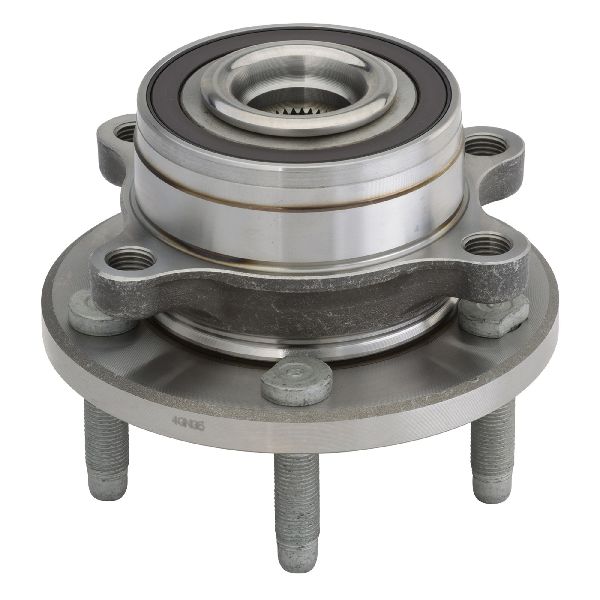
- The most likely cause is a failed wheel hub bearing assembly (OEM Part # HB5Z-1104-C) due to a cracked or damaged magnetic ring, not a bad sensor.
- Before buying parts, use a scanner to watch live wheel speed data. Then, visually inspect the wiring and the magnetic ring on the hub through the sensor hole.
- Replacing the wheel hub assembly is a moderately difficult DIY job that requires specific tools (like a 32mm axle nut socket), but it is the most probable fix for this code.
- Do not ignore this code. The loss of ABS and stability control significantly reduces vehicle safety in emergency maneuvers or slippery conditions.
What's Unique About the 2011-2019 Ford Explorer
On the fifth-generation Ford Explorer (2011-2019), this code is very frequently caused by a failure of the wheel hub bearing assembly, not the wheel speed sensor itself. The magnetic encoder ring (or tone ring) that the sensor reads is integrated into the hub assembly. This ring is prone to cracking, swelling from corrosion, or collecting metallic debris, which disrupts the magnetic signal and triggers the C0050 code. This failure can occur even when the bearing is not making any noise or showing signs of mechanical play.
Symptoms You May Notice
- ABS warning light is on
- AdvanceTrac or stability control warning light is on
- Traction control warning light is on
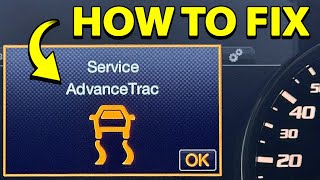
- "Service AdvanceTrac" message on the instrument cluster 🎬 Watch: Common causes for the Service AdvanceTrac warning light.
- Cruise control may be inoperative
- Parking assist and hill descent control fault messages may appear
- "Check Brake System" message on instrument cluster
- Replacing only the wheel speed sensor without first inspecting the magnetic ring on the wheel hub assembly. On this vehicle, the hub is the most common point of failure for this code.
- Assuming the wheel bearing must be noisy or have play to be bad. The failure is often purely electronic due to the damaged magnetic ring.
Most Likely Causes
- Failed Right Rear Wheel Hub Bearing Assembly 🔴 High Probability → Shop Hub Assembly The magnetic encoder ring integrated into the hub assembly is a known weak point on this platform. It can crack, corrode, or break apart from exposure to the elements (especially in rust-belt regions), causing a signal loss even if the mechanical bearing is fine.
How to confirm: After verifying the wiring is intact, remove the wheel speed sensor. Shine a light into the mounting hole and slowly rotate the hub. Visually inspect the magnetic ring for cracks, missing segments, or significant rust buildup. Any visible damage confirms the hub has failed. A cracked ring may also be loose enough to move by hand.
Typical fix: Replace the entire right rear wheel hub bearing assembly. The OEM part number for the rear hub is commonly HB5Z-1104-C.
Est. part cost: $200-$375 for OEM, $120-$200 for aftermarket - Damaged Wiring or Connector 🟡 Medium Probability The wiring harness leading to the wheel speed sensor is exposed to road debris, water, and salt, which can cause corrosion, chafing, or broken wires over time, especially at the connector pigtail. Chafing can occur where the harness contacts suspension components or the subframe.
How to confirm: Visually inspect the wiring harness from the sensor connector back as far as possible. Check for chafed insulation, green corrosion inside the connector, or broken wires. Use a multimeter to check for continuity and proper voltage at the connector per the service manual.
Typical fix: Repair the damaged section of wire with solder and heat-shrink tubing or replace the connector pigtail if it is corroded.
Est. part cost: $15-$40 - Failed Right Rear Wheel Speed Sensor ⚪ Low Probability → Shop ABS Wheel Speed Sensor While the sensor itself can fail, it is far less common than the hub assembly on this specific platform. Owners often replace the sensor first, only to find the problem persists, pointing to the hub or wiring.
How to confirm: If the wiring and hub's magnetic ring are confirmed to be in good condition, the sensor is the next likely culprit. It can be tested with a multimeter for resistance (if applicable) or by swapping it with the sensor from the other side to see if the fault code follows. A scan tool showing erratic live data from only this wheel also points to the sensor/hub assembly.
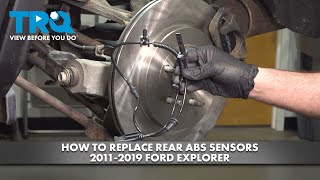
Typical fix: Replace the wheel speed sensor. It is typically held in by a single small bolt. 🎬 See how to properly remove and replace the ABS sensor. The OEM part number is often LV6Z-2C190-A or similar.
Est. part cost: $60-$90
Rare But Worth Checking
- Failed ABS Control Module: → Shop ABS Control Module This is a rare cause and should only be considered after all other possibilities (hub, sensor, and wiring) have been definitively ruled out. A failed module will typically set multiple wheel speed sensor codes or a specific internal module fault code like U3000:49.
Diagnosis Steps
- Connect a scan tool capable of reading Ford-specific ABS codes (like FORScan) to confirm C0050 is present and check for any related sub-codes, such as C0050:01.
- Use the scanner's live data function to monitor all four wheel speed sensors while driving at a slow, steady speed (>10 mph). Confirm that the right rear sensor reads 0 MPH or shows an erratic/implausible signal compared to the other three.
- Raise and safely support the vehicle. Remove the right rear wheel.
- Thoroughly inspect the wheel speed sensor wiring and connector for any signs of damage, corrosion, or loose connections. Pay close attention to where the harness may rub against the frame or suspension.
- Remove the single bolt (usually 8mm) holding the wheel speed sensor and carefully pull the sensor out of the knuckle.
- Inspect the magnetic encoder ring on the wheel hub assembly through the sensor mounting hole. Rotate the hub slowly and look for cracks, breaks, heavy rust, or metallic debris on the ring's surface. A cracked ring is definitive proof the hub has failed.
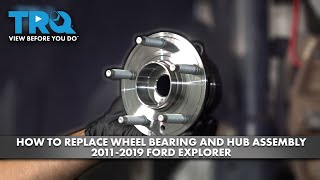
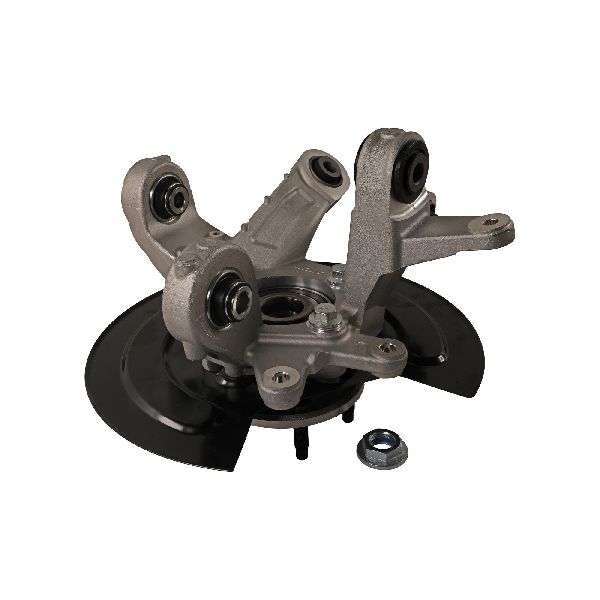
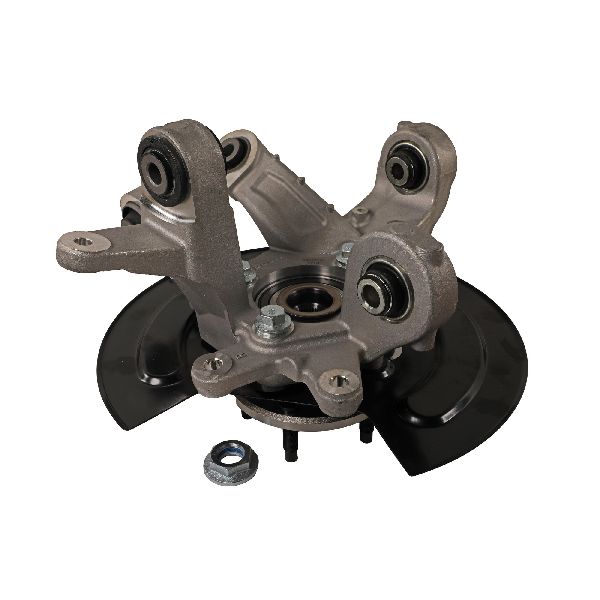
- If the ring is damaged, the wheel hub assembly must be replaced. This is the most likely repair. This requires removing the brake caliper, rotor, and the large 32mm axle nut. 🎬 Watch: Step-by-step guide to replacing the wheel hub assembly.
- If the ring appears intact and clean, test the circuit. Probe the ABS module connector (C135) at Pin 17 (White/Orange wire) and Pin 29 (Brown wire) to check for continuity back to the sensor connector. Check for shorts to power or ground.
- With an oscilloscope, backprobe the sensor connector and spin the wheel. A good active sensor will produce a clean digital square wave signal. The absence or corruption of this signal points to a bad sensor or wiring.
- After the repair, clear the code with the scan tool and perform a test drive to ensure the warning lights do not return. An ABS KOEO (Key On, Engine Off) Self-Test may be available in your scan tool to verify the repair.
Parts You'll Likely Need
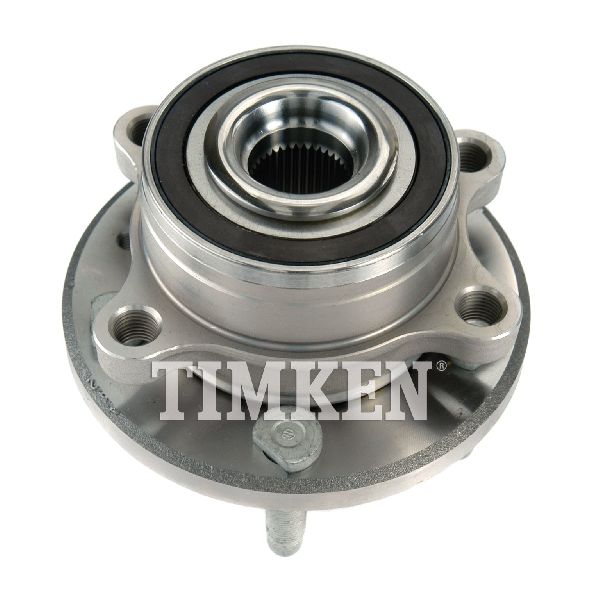
- Rear Wheel Hub Bearing Assembly
(OEM #HB5Z-1104-C (replaces HB5Z-1104-A, HB5Z-1104-B))— This is the most common failure for code C0050 on this vehicle, as the integrated magnetic tone ring fails, causing a loss of signal.
Trusted brands: Motorcraft, Timken, SKF, MOOG
OEM price range: $220-$375
Aftermarket price range: $120-$200 - Rear ABS Wheel Speed Sensor
(OEM #LV6Z-2C190-A (or BB5Z-2C190-A depending on specific options))— While less common than a hub failure, the sensor itself can fail from heat and environmental exposure. It's sometimes damaged during hub replacement if not removed carefully.
Trusted brands: Motorcraft, Bosch, Delphi, NTK
OEM price range: $60-$90
Aftermarket price range: $30-$60
Related Codes That Often Appear With This One
- U0415 - Invalid Data Received from ABS Control Module
- U0121 - Lost Communication With Anti-Lock Brake System Control Module
Technical Service Bulletins (TSBs) & Recalls
- TSB 21-2270: While this TSB applies to the next-generation 2020 Explorer, it highlights the platform's ongoing sensitivity to wheel speed signal issues. It addresses DTCs C0633/C00A6 caused by an oil-contaminated front halfshaft speed sensor, showing a pattern of sensor-related faults, albeit with a different cause than the 2011-2019 models.
Platform-Specific Known Issues
- Rust Belt Corrosion: Vehicles operated in regions that use road salt in winter (the 'Rust Belt') experience a much higher failure rate of the rear hub's magnetic encoder ring. Salt and moisture accelerate corrosion between the hub and the ring, causing it to swell, crack, and fail.
- Aftermarket Sensor Incompatibility: Some owners on forums have reported issues with cheap aftermarket ABS sensors being faulty out of the box or incompatible with the ABS module, causing codes to return immediately after installation. It is often recommended to use OEM Motorcraft sensors to avoid this variable.
Documented NHTSA Reports
While C0050 is a standard code for the right rear wheel speed sensor on Ford vehicles, other manufacturers use this identifier differently. For example, NHTSA ODI #10763888 describes a case where a Chevrolet HHR was diagnosed with C0050, identifying a faulty power steering control module (PSCM) requiring a steering column replacement. Additionally, NHTSA ODI #11228687 notes C0050 appearing alongside multiple communication codes like U0126 and U0415 on a Chevrolet Silverado.
In braking system contexts, an owner reported in NHTSA ODI #11649367 that the vehicle disabled ABS and supporting systems, setting codes C0050 and C2227 after service required extra brake fluid to return caliper piston contact. Similarly, NHTSA ODI #11693418 notes C0050-00 appearing when rotors, rear pads, and adapter plates required replacement.
Mechanic-Grade Diagnostic Values
- Right Rear Wheel Speed Sensor Signal (Active Sensor) — expected: A clean digital square wave signal when viewing the sensor's output on an oscilloscope with the wheel spinning. The frequency of the wave should increase with wheel speed, while the amplitude remains constant.. Failure: A missing, erratic, or distorted square wave signal indicates a failure of the sensor or the magnetic encoder ring on the hub.
- ABS Module Ground Circuit Resistance — expected: Less than 2.0 ohms between the ABS module connector C135 ground pins (13 and 38) and the chassis ground point G121.. Failure: High resistance (OL) indicates an open in the ground circuit, which can cause various ABS faults.
Hidden / Shadow Codes Worth Checking
- C0050:01: Ford uses two-digit symptom bytes after the main DTC. While the exact definition for ':01' isn't publicly documented, it indicates a specific failure type beyond the general circuit fault, such as 'General Electrical Failure'. A Ford-specific scan tool like IDS or FORScan is needed to read these. (see via Ford IDS (Integrated Diagnostic System), FORScan with an extended license, or other high-end professional scan tools.)
Scan Tool Commands That Help
- Ford IDS / FORScan: ABS KOEO (Key On, Engine Off) Self-Test — After a repair, this command initiates an internal diagnostic of the ABS module and its circuits to confirm the fault has been resolved before a test drive.
- Ford IDS / FORScan: PMI (Programmable Module Installation) — This is a required procedure when replacing the ABS control module. It copies the as-built configuration data from the old module and writes it to the new one to ensure proper function and VIN matching.
- Ford IDS / FORScan: IVD Initialization — This procedure calibrates the yaw rate and longitudinal acceleration sensors. It may be required after certain ABS system repairs or module replacement to ensure the stability control system functions correctly.
Wiring & Ground Locations
- ABS Module Connector C135 — The main electrical connector on the ABS control module, typically located on the ABS hydraulic unit in the engine bay.. This is the termination point for the wheel speed sensor circuits. Testing here can differentiate between a sensor/wiring problem and an ABS module problem.
- C135 - Pin 17 — On the ABS module connector C135.. This is the signal wire for the Right Rear Wheel Speed Sensor. The wire color is White with an Orange stripe (WH-OG).
- C135 - Pin 29 — On the ABS module connector C135.. This is the control/return wire for the Right Rear Wheel Speed Sensor. The wire color is Brown (BN).
- G121 (Ground Point) — A primary ground point for the ABS module, located on the front left fender.. The ABS module grounds via pins 13 and 38 (Black/Yellow wires) at connector C135 to this point. A poor ground here can cause erratic module behavior and multiple fault codes.
Real Owner Repair Stories
- ScannerDanner Forum user (2013 Ford Explorer 3.5L Ti-VCT) — Dashboard lit up with 'Check Brake System' and 'Service Advance Trac' messages, plus ABS and wrench lights.
❌ Tried (didn't work) Initial code scan showed multiple wheel speed sensor codes (C0034, C0037) and ABS module communication codes (U0121, U3000). A visual inspection of the ABS module connector showed no corrosion.
✅ What actually fixed it The user performed a live data test drive and confirmed the Right Front and Left Rear sensors were flat-lining (reading 0 mph). The final fix was not posted in the thread, but the diagnostic path confirmed a hard failure of two sensor circuits, pointing towards either wiring breaks or a failed ABS module, as a simple hub failure would typically only affect one wheel. The technician advised a full battery disconnect/reset and running the ABS KOEO self-test as the next steps.
OEM Part Supersession History
HB5Z-1104-A, HB5Z-1104-B→HB5Z-1104-C— Standard part revision and consolidation.
Heads up: A safety recall was issued for HB5Z-1104-C as it was incorrectly listed for use on the rear of 2011-2017 FWD Explorers. It is only for drive axles (AWD rear or any front). Installing it on a FWD rear axle can lead to wheel separation.bv6z2c190a, cv6z2c190b, cv6z2c190d, jv6z2c190a→LV6Z-2C190-A— Part revisions for improved durability or manufacturing changes. This part number is shared across multiple Ford platforms like Escape, Focus, and Transit Connect.
Model Year Variations Within This Range
- 2011-2019: The 2016 model year received a significant facelift with revised styling and engine options. However, the core ABS components, including the rear hub assemblies and sensors that cause code C0050, remained largely unchanged throughout the 2011-2019 generation. The high failure rate of the hub's magnetic ring is common to all years in this range.
Diagnostic Flowchart
Used vs. New Parts: Buying Guide for This Vehicle
When a used part is the smart pick: For this repair, a used part is only advisable for the ABS sensor itself or the wiring connector pigtail. These components are not subject to mechanical wear and can be a cost-effective solution if sourced from a low-mileage donor vehicle from a dry climate.
Donor-vehicle mileage cap: roughly under 80000 miles for the part to have meaningful remaining life.
What to inspect on the donor part:
- For a used sensor: Ensure the plastic housing is free of cracks and the mounting tab is intact.
- For a wiring pigtail: Check for flexible, uncracked wire insulation and clean, corrosion-free connector pins. Avoid any parts with signs of heat damage or previous repairs.
- Verify the donor vehicle is from a non-salt-belt region to minimize the risk of corrosion.
OEM-only on this vehicle (don't cheap out):
- Wheel Hub Bearing Assembly: This is the most critical part and the most common failure. Due to the high failure rate of the integrated magnetic ring and the wear-and-tear nature of bearings, installing a used hub is extremely risky and not recommended. The labor cost to replace it again outweighs any initial savings.
Aftermarket brands forum-validated for this vehicle:
- Timken: Generally considered a top-tier choice for bearings and hubs, often meeting or exceeding OEM quality.
- SKF: Another premium brand with a strong reputation for quality bearings and hub assemblies.
- Motorcraft (OEM): The original factory part is always a safe bet for fit and function.
Brands owners have reported issues with on this vehicle:
- No-name/White-box brands: Hubs from unknown manufacturers or those sold at a very deep discount often have lower quality bearings and encoder rings that may fail prematurely.
- Store-branded budget lines (e.g., Duralast basic tier): While they may come with a warranty, some users report shorter service life, leading to repeat repairs.
Real Owner Stories
Aggregated from forums and TSBs cited above. Mileages and costs reflect what owners reported in those sources.
2011 Explorer Limited
Symptoms: The owner experienced ABS and traction control issues, which persisted and evolved into multiple sensor codes and an ABS module code after initial repair attempts.
What fixed it: The owner's diagnostic path involved first replacing the sensor and then cleaning the tone ring, neither of which solved the problem. This illustrates the common frustration and misdiagnosis before identifying the hub assembly as the likely root cause.
Source hint: FordForums.com - '2011 Explorer Limited ABS/TRACTION CONTROL issues' (2025-11-04)
Related OBD-II Codes
Frequently Asked Questions
My 2011-2019 Explorer is from the rust belt. Am I more likely to get a C0050 code?
I replaced the right rear wheel speed sensor, but the C0050 code and ABS light came right back. What's wrong?
Is it safe to drive my Explorer with the ABS and AdvanceTrac lights on from this code?
Should I use an aftermarket sensor or hub for this repair?
What other Ford or Lincoln vehicles have the same problem that causes code C0050?
What's the first thing I should do to diagnose code C0050?
Helpful Videos

We Have This Part in Stock



The information in this article is provided for general reference and educational purposes only. Vehicle specifications, procedures, and part compatibility can vary by production date, trim level, and region. Always consult your vehicle's factory service manual and verify part numbers before purchasing or performing repairs. Safety-critical components such as airbags, seat belts, and braking systems should be installed by a qualified professional.
- Ford Explorer:
- 🧭 Diagnostic Flowchart
- 🎬 Helpful Videos
- 🛍️ Shop This Part
- What's Unique About the 2011-2019 Ford Explorer
- Symptoms You May Notice
- Most Likely Causes
- Rare But Worth Checking
- Diagnosis Steps
- Parts You'll Likely Need
- Related Codes That Often Appear With This One
- Technical Service Bulletins (TSBs) & Recalls
- Platform-Specific Known Issues
- Documented NHTSA Reports
- Mechanic-Grade Diagnostic Values
- Hidden / Shadow Codes Worth Checking
- Scan Tool Commands That Help
- Wiring & Ground Locations
- Real Owner Repair Stories
- OEM Part Supersession History
- Model Year Variations Within This Range
- Used vs. New Parts: Buying Guide for This Vehicle
- Real Owner Stories
- 2011 Explorer Limited
- Related OBD-II Codes
- Frequently Asked Questions
- 🎟️ Get 5% Off