

P0018 on 2007-2011 Toyota Camry 3.5L V6: Causes and Fixes for Cam-Crank Correlation
On a 2007-2011 Camry with the 3.5L V6, code P0018 is most often caused by a failing Oil Control Valve (VVT solenoid) on Bank 2 or low/dirty engine oil. Bank 2 is the cylinder bank closer to the radiator. An OCV is relatively inexpensive (~$50-$100) and easy to replace, making it a common first step after checking the oil.
- First, check your engine oil. Low or dirty oil is a very common cause for P0018 on this engine.
- The most likely failed part is the Bank 2 (front/radiator side) intake Oil Control Valve (VVT solenoid).
- A simple and effective diagnostic is to swap the front intake OCV with the rear intake OCV. If the code changes to P0016, you've found the bad part.
- If the oil and OCV are good, investigate the camshaft position sensor next.
- While less common, a stretched timing chain or faulty VVT gear are possible, but these are more complex and expensive repairs that should be diagnosed last.
What's Unique About the 2007-2011 Toyota Camry
The Toyota 2GR-FE engine's VVT-i (Variable Valve Timing with intelligence) system is highly dependent on oil pressure and cleanliness to function correctly. While P0018 can occur on many vehicles, this engine is particularly sensitive to oil-related issues. Early versions of the 2GR-FE (affecting models up to 2009) were also subject to a Technical Service Bulletin (T-SB-0094-09) for a ticking noise and VVT-related codes (including P0018, P0017, etc.), which in some cases required replacing the VVT gears themselves. Furthermore, a widespread issue with a rubber VVT-i oil supply line prone to rupture on early 2GR-FE engines underscores the critical nature of the oil system, as a leak could lead to catastrophic failure.
Symptoms You May Notice
- Check Engine Light is on
- Rough or uneven idle
- Hesitation or poor acceleration
- Reduced engine power
- Decreased fuel economy
- Engine is hard to start
- Engine stalling, especially when coming to a stop
- Rattling or ticking noise from the engine bay
- Replacing the crankshaft position sensor. While technically possible for it to fail, it's a very rare cause for this specific code, as a failing crank sensor usually causes more global issues, different codes (like P0335), and often a no-start condition.
- Replacing the ECM. This is almost never the cause and should only be considered after every other mechanical and electrical possibility has been exhaustively tested.
Most Likely Causes
- Low or Dirty Engine Oil 🔴 High Probability The VVT-i system uses pressurized engine oil to adjust cam timing. Sludge, incorrect viscosity, or low oil levels directly impact its ability to function, making this a primary suspect for any VVT-related code.
How to confirm: Check the engine oil dipstick for proper level and inspect the oil's condition. If it's low, dark, or sludgy, it needs to be changed. This is often the first and easiest check.
Typical fix: Top off or change the engine oil and replace the oil filter. Use the manufacturer-recommended viscosity (SAE 5W-30). Clearing the code and driving is necessary to see if the fix was successful.
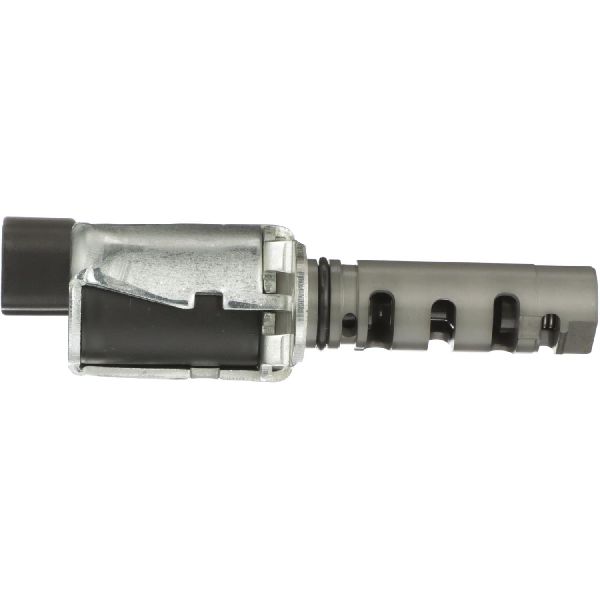
Est. part cost: $30-$70 - Failed Oil Control Valve (VVT Solenoid) - Bank 2 Intake 🔴 High Probability → Shop Engine Variable Valve Timing (VVT) Solenoid These solenoids control oil flow to the VVT gears. They can become clogged with sludge or fail electronically, which is a very common failure point on Toyota V6 engines.
How to confirm: Swap the Bank 2 intake OCV (front bank, by the radiator) with the Bank 1 intake OCV (rear bank). Clear the codes and drive. If the code changes to P0016 (the Bank 1 equivalent), the OCV is confirmed bad. You can also test its resistance with a multimeter (should be 6.9-7.9 Ohms at 68°F/20°C) or by applying 12V to check for plunger movement.
Typical fix: Replace the Bank 2 intake Oil Control Valve. It is secured by a single 10mm bolt.
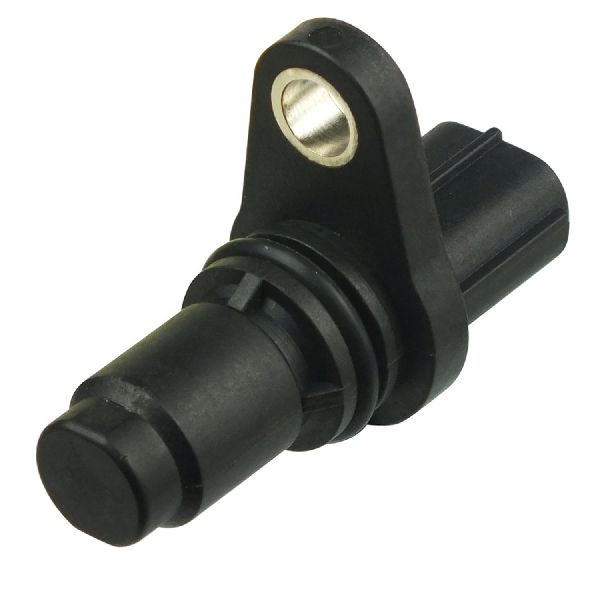
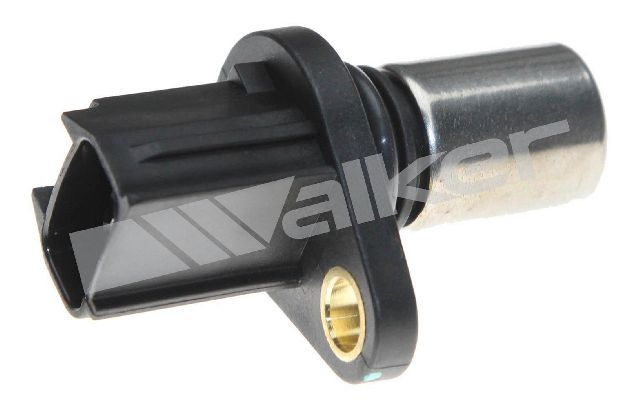
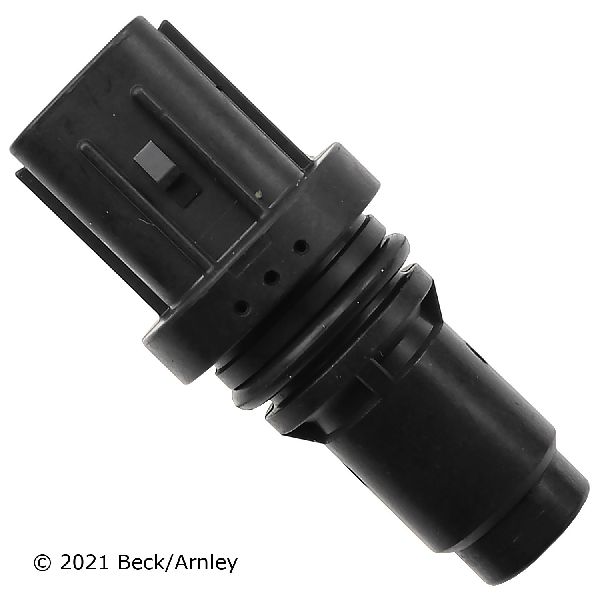
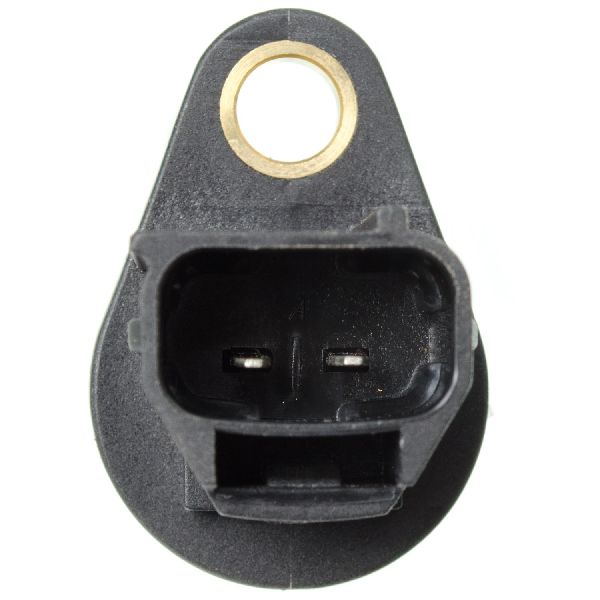
Est. part cost: $50-$140 - Failed Camshaft Position Sensor - Bank 2 Intake 🟡 Medium Probability → Shop Engine Camshaft Position Sensor The sensor that reads the camshaft's position can fail, sending incorrect data to the ECM and tricking it into thinking there's a correlation problem.
How to confirm: After confirming the OCV is good, you can test the sensor. A scan tool can monitor its live data. Swapping it with the Bank 1 sensor is another diagnostic option, though access may be more difficult than the OCV.
Typical fix: Replace the Bank 2 intake camshaft position sensor.
Est. part cost: $40-$90 - Stretched Timing Chain ⚪ Low Probability → Shop Engine Timing Chain While the 2GR-FE uses a durable chain, significant mileage (typically over 150,000 miles) can cause it to stretch. This creates a permanent deviation in cam/crank correlation that affects all camshafts but may trigger a code on one bank first.
How to confirm: This is a complex diagnosis. It requires removing the valve cover and/or timing cover to physically inspect the timing marks and chain tensioner extension. This is typically diagnosed after all other simpler causes are ruled out.
Typical fix: Replace the timing chain, tensioners, and guides. This is a labor-intensive job, often requiring 8+ hours.
Est. part cost: $200-$500
Rare But Worth Checking
- Failed VVT Cam Gear (Phaser): The gear itself can fail internally, getting stuck in one position. Early 2GR-FE engines had a TSB (T-SB-0094-09) related to faulty VVT gears causing a ticking noise and setting codes like P0018. This is an expensive, labor-intensive repair often costing over $1500 at a shop.
- Clogged VVT Oil Filter Screen: There are small mesh filter screens in the oil passages leading to the VVT solenoids. On the 2GR-FE, these are located under the valve covers. If they become clogged with sludge, they can restrict oil flow and cause timing issues. Cleaning or replacing these can sometimes resolve the problem.
- Damaged Wiring or Connectors: A frayed wire or corroded connector for either the camshaft sensor or the oil control valve can disrupt the signal and trigger the code. A visual inspection is always a good idea.
- Faulty ECM: An internal failure of the Engine Control Module is extremely rare but possible. This should only be considered after every other possibility is exhausted. Codes like P0606 or P0607 would more directly point to an ECM failure.
Diagnosis Steps
- Check engine oil level and condition. Top off or change if necessary. Clear the code and see if it returns.
- Scan for any other pending or stored trouble codes to get a complete picture.
- Visually inspect the wiring and connectors for the Bank 2 intake camshaft position sensor and oil control valve (OCV). Bank 2 is the cylinder bank closer to the radiator.
- Perform an OCV swap test. Swap the Bank 2 intake OCV with the Bank 1 intake OCV (on the rear bank). Clear codes and drive. If the code changes to P0016, the OCV is faulty and must be replaced. This is a highly effective diagnostic step.
- If the OCV is good, test the Bank 2 intake camshaft position sensor. You can check its signal with a scan tool or swap it with the sensor from Bank 1.
- If sensors and solenoids are confirmed good, inspect the small VVT oil filter screens for blockages. They are located under the valve covers.
- If all else fails, the issue is likely mechanical. A more in-depth diagnosis of the timing chain and VVT phasers is required. This involves checking timing marks and is best left to a professional.
Parts You'll Likely Need
- Engine Variable Valve Timing (VVT) Solenoid / Oil Control Valve
(OEM #15340-0P020 (supersedes 15340-31020))— This is the most frequent point of failure for code P0018 on this engine, often due to sludge or electronic failure.
Trusted brands: Denso, Aisin
OEM price range: $90-$140
Aftermarket price range: $40-$80 - Camshaft Position Sensor
(OEM #90919-A5004)— A faulty sensor can send incorrect data, leading to a false correlation code. It's the next most likely part to fail after the OCV.
Trusted brands: Denso
OEM price range: $70-$110
Aftermarket price range: $30-$60
Related Codes That Often Appear With This One
- P0016 — Crank/Cam Correlation for Bank 1. If you swap a faulty Bank 2 OCV or Cam Sensor to Bank 1 for diagnosis, P0018 will disappear and P0016 will appear, confirming the faulty part.
- P0017 — Crank/Cam Correlation for Bank 1 Exhaust. If multiple timing components are failing or the timing chain is stretched, you may see correlation codes for other camshafts as well.
- P0019 — Crank/Cam Correlation for Bank 2 Exhaust. If seen with P0018, it points more strongly to a base timing issue on Bank 2 (like a jumped tooth or stretched chain) rather than a single component failure.
Technical Service Bulletins (TSBs) & Recalls
- T-SB-0094-09 Rev1: Addresses a ticking noise from the cylinder head area and/or various VVT-related DTCs (including P0018) on some 2007-2009 Camry models with the 2GR-FE engine.
Platform-Specific Known Issues
- VVT Gear Ticking Noise (T-SB-0094-09 Rev1): A Technical Service Bulletin was issued for 2007-2009 Camry models (among others with the 2GR-FE) for a ticking noise that could be accompanied by VVT codes P0014, P0015, P0017, P0018, P0024, or P0025. The fix involved inspecting and potentially replacing the VVT gear assembly (phaser), a repair covered under the 60k-mile powertrain warranty.
- Rupturing VVT-i Oil Supply Line (LSC 90K): Early 2GR-FE engines (2007-early 2010 for Camry) used a VVT-i oil supply line for Bank 1 (rear bank) that contained a rubber section prone to rupturing. This could cause rapid, catastrophic oil loss and engine seizure. Toyota issued a Limited Service Campaign (LSC 90K), not a recall, to replace the rubber hose with an all-metal line (Part No. 15772-31030) free of charge until March 31, 2013. Owners should verify if their vehicle has the updated all-metal line.
Mechanic-Grade Diagnostic Values
- Camshaft Timing Oil Control Valve (VVT Solenoid) Resistance — expected: 6.9 to 7.9 Ω at 20°C (68°F). Failure: A reading outside this range indicates a faulty solenoid.
- Camshaft Position Sensor Supply Voltage (Key On, Engine Off) — expected: 4.5 to 5.0 V. Failure: Voltage outside this range points to a wiring or ECM issue, not necessarily a bad sensor.
- Camshaft Position Sensor Signal Voltage (while cranking or running) — expected: Pulsing digital signal (square wave), typically switching between near 0V and 5V. A multimeter on DC volts may show an average voltage.. Failure: No signal, a constant voltage, or a weak/erratic signal indicates a failed sensor or wiring issue.
- Techstream VVT Learning Value (at idle) — expected: Between 18.5° and 43.5° Crankshaft Angle (CA). Failure: A value outside this range for more than 18 seconds will set the DTC, indicating a base timing issue (e.g., jumped tooth).
Hidden / Shadow Codes Worth Checking
- Mode 6 Data: Mode 6 provides raw data from the ECM's self-tests. For VVT, it can show test values for phaser response time and position. For example, a test ID might monitor how many seconds it takes for the phaser to move to a commanded position. A failing value here can precede a full-blown DTC. (see via A professional scan tool like Toyota Techstream or an advanced generic scanner that supports Mode 6.)
Scan Tool Commands That Help
- Toyota Techstream: Active Test: Control the VVT Linear (Bank 2) — This allows a technician to command the Bank 2 intake VVT solenoid to operate. While monitoring engine RPM, activating the solenoid should cause the engine to stumble or run rough. If there is no change in engine operation, it confirms a problem in the circuit, the solenoid itself, or the oil passages.
- Toyota Techstream: Data List: VVT Change Angle (Bank 2) — This allows for monitoring the real-time angle of the camshaft compared to the target angle commanded by the ECM. A significant, persistent deviation between the target and actual angle under various engine loads points directly to a correlation problem.
Wiring & Ground Locations
- Bank 2 Camshaft Position Sensor Connector — On the front of the engine (closer to the radiator), on the cylinder head cover, for the intake camshaft.. This is the primary sensor for this code. The 3-wire connector provides power, ground, and signal. Check for 4.5-5.0V on the VC2 (power) pin with key-on. Damage to this connector or harness is a possible cause.
- Bank 2 Oil Control Valve Connector — On the front of the engine (closer to the radiator), on the cylinder head, typically near the camshaft sensor.. This 2-wire connector powers the solenoid. One pin receives 12V power from the main relay, and the other is a duty-cycle controlled ground from the ECM. A break in this wiring will cause the solenoid to fail and can set codes.
- ECM Connectors (e.g., B54, B40) — Typically located in the engine bay or behind the glove box, depending on the specific vehicle build.. All sensor and actuator signals route back to the ECM. If wiring tests at the component are inconclusive, the next step is to check for continuity and correct voltage at the corresponding ECM pins (e.g., VC2 for sensor power). This can rule out a wiring break in the middle of the harness.
Real Owner Repair Stories
- YouTube user comment on a 2GR-FE repair video (2006 Toyota Avalon (2GR-FE), 125k miles) — Check engine light came on after replacing valve cover gaskets, spark plugs, and coils. OBD2 code indicated a crank/cam timing correlation issue on Bank 1.
❌ Tried (didn't work) Extensive diagnosis (20-30 hours) trying to find the source of the timing code., Took vehicle to a Toyota dealer, who after three days, recommended a new engine.
✅ What actually fixed it The owner suspected the dealer was wrong. The actual cause was the center section of the exhaust cam phaser/actuator had 'walked out', relieving spring pressure and preventing it from finding its home position at shutdown. The owner replaced the faulty cam phaser assembly himself in about 6 hours, which resolved the code.
OEM Part Supersession History
15340-31020→15340-0P020— Standard part number evolution and potential minor design/manufacturing improvements.
Heads up: The parts are generally interchangeable for this application. Both part numbers refer to the Bank 2 (Left Hand) Oil Control Valve.VVT-i Oil Supply Hose (Rubber/Metal construction)→15772-31030 (All-metal line)— The original rubber section of the hose was found to degrade over time, leading to a risk of sudden and catastrophic oil leaks.
Model Year Variations Within This Range
- 2007 - early 2010: These model years were originally equipped with a VVT-i oil supply line for Bank 1 (the rear bank) that contained a rubber section. This part was prone to rupture. Later models and vehicles serviced under the LSC 90K campaign have an updated, all-metal line (PN 15772-31030), which eliminates this failure point. While this line is on Bank 1, a catastrophic oil loss from it would affect the entire engine and could trigger codes on either bank.
- 2007 - 2009: These earlier model years were specifically mentioned in TSB T-SB-0094-09 Rev1 regarding ticking noises and VVT-related DTCs (including P0018) potentially caused by faulty VVT gear assemblies. This suggests a higher likelihood of VVT gear failure on the earlier end of this vehicle's generation.
Diagnostic Flowchart
Other Known Issues on This Vehicle
Issues unrelated to this code that are worth knowing about as an owner of this generation:
- VVT-i Oil Line Rupture 🔴 High — Common on 2007-early 2010 V6 models that did not have the LSC performed. Failure can happen suddenly at any mileage. (Ref: Limited Service Campaign (LSC) 90K)
- Melting / Sticky Dashboard 🟡 Low — Very common across this generation, especially in warmer climates. The dashboard surface becomes shiny, sticky, and can melt. (Ref: A warranty enhancement program (ZE6) existed but has since expired.)
- Water Pump Leak 🟠 Medium → Shop Engine Water Pump — A relatively common failure item on the 2GR-FE engine. Often starts as a slow seep, visible as dried pink/red coolant residue near the pump pulley.
- Transmission Hesitation/Shudder 🟠 Medium — Some owners of 2007-2009 models report a hesitation or shudder from the 6-speed automatic transmission. Sometimes a fluid flush helps, other times it indicates internal wear.
- Excessive Oil Consumption (4-Cylinder) 🔴 High — Primarily affects the 2.4L 2AZ-FE four-cylinder engine, not the 3.5L V6. Caused by defective piston rings. (Ref: T-SB-0094-11)
Used vs. New Parts: Buying Guide for This Vehicle
When a used part is the smart pick: Given the low cost of new aftermarket parts, buying used is generally not recommended for the primary failure components like sensors or solenoids. A used part may have a limited remaining lifespan and could fail shortly after installation. The only exception might be for larger, more expensive mechanical components like a VVT phaser if sourced from a very low-mileage donor vehicle, but the risk is still significant.
Donor-vehicle mileage cap: roughly under 60000 miles for the part to have meaningful remaining life.
What to inspect on the donor part:
- Verify the donor vehicle had no front-end damage.
- Check for signs of oil sludge in the engine through the oil filler cap.
- If possible, get the service history of the donor vehicle to ensure regular oil changes.
OEM-only on this vehicle (don't cheap out):
- VVT Cam Gear (Phaser): Aftermarket phasers have a poor reputation for reliability across many makes and models. Given the high labor cost to replace this part, using a genuine OEM Toyota part is the only recommended path to ensure the repair is done only once.
- Timing Chain Kit: Similar to the phaser, the timing chain is a high-labor, critical component. Using an OEM or a top-tier OEM supplier like Aisin is crucial for longevity.
Aftermarket brands forum-validated for this vehicle:
- Denso: Denso is an OEM supplier for Toyota for many electronic components, including VVT solenoids and camshaft sensors. Their aftermarket parts are often identical to the genuine Toyota part without the dealer markup.
- Aisin: Aisin is another major OEM supplier for Toyota, particularly for mechanical and drivetrain components. Their VVT solenoids and timing components are considered top-tier.
Brands owners have reported issues with on this vehicle:
- Unbranded, 'white-box' parts from online marketplaces. While the price is tempting, these parts have a very high failure rate for critical electronic sensors and solenoids. The potential for needing to do the labor twice outweighs any initial cost savings.
Real Owner Stories
Aggregated from forums and TSBs cited above. Mileages and costs reflect what owners reported in those sources.
2008 Toyota Camry V6 3.5L
Symptoms: The owner performed an oil change, but the P0018 code returned shortly after.
What fixed it: The discussion focused on diagnosing the Oil Control Valves (OCVs) and checking for timing chain stretch.
Source hint: https://www.toyotanation.com/threads/p0018-code-on-my-08-camry-v6.1692330/
2007-2011 Toyota Camry 2GR-FE 3.5L V6 — ~165000 miles
Symptoms: The owner found no oil on the dipstick, which eventually led to the P0018 code appearing.
What fixed it: A costly timing chain repair was required to resolve the correlation issue.
Source hint: Reddit r/MechanicAdvice thread 'What does engine code P0018 mean and can I keep...'
Related OBD-II Codes
Frequently Asked Questions
Does T-SB-0094-09 Rev1 apply to my 2008 Toyota Camry V6?
I heard about a VVT-i oil line that can rupture on the 2GR-FE. Is this related to my P0018 code?
Can I swap parts between Bank 1 and Bank 2 to diagnose the P0018 code on my Camry?
What is the correct oil viscosity I should use to prevent VVT-i issues on my 3.5L V6?
Where is the Bank 2 Oil Control Valve located on my Camry V6?
Are there filters I should check before replacing expensive timing components?
Helpful Videos
We Have This Part in Stock

The information in this article is provided for general reference and educational purposes only. Vehicle specifications, procedures, and part compatibility can vary by production date, trim level, and region. Always consult your vehicle's factory service manual and verify part numbers before purchasing or performing repairs. Safety-critical components such as airbags, seat belts, and braking systems should be installed by a qualified professional.
- Toyota Camry:
- 🧭 Diagnostic Flowchart
- 🎬 Helpful Videos
- 🛍️ Shop This Part
- What's Unique About the 2007-2011 Toyota Camry
- Symptoms You May Notice
- Most Likely Causes
- Rare But Worth Checking
- Diagnosis Steps
- Parts You'll Likely Need
- Related Codes That Often Appear With This One
- Technical Service Bulletins (TSBs) & Recalls
- Platform-Specific Known Issues
- Mechanic-Grade Diagnostic Values
- Hidden / Shadow Codes Worth Checking
- Scan Tool Commands That Help
- Wiring & Ground Locations
- Real Owner Repair Stories
- OEM Part Supersession History
- Model Year Variations Within This Range
- Other Known Issues on This Vehicle
- Used vs. New Parts: Buying Guide for This Vehicle
- Real Owner Stories
- 2008 Toyota Camry V6 3.5L
- 2007-2011 Toyota Camry 2GR-FE 3.5L V6 — ~165000 miles
- Related OBD-II Codes
- Frequently Asked Questions
- 🎟️ Get 5% Off