

P0068 on 2008-2013 Chevrolet Corvette: MAP/MAF Throttle Position Correlation Fixes
On a 2008-2013 C6 Corvette, code P0068 is most often caused by a dirty throttle body, which triggers the 'Reduced Engine Power' mode. The fix is often as simple as cleaning the throttle body and MAF sensor, which costs under $20 in materials. A professional scan tool is then needed to perform an 'idle learn reset' for a complete fix.
- Start with the cheapest and most likely fix: thoroughly clean the throttle body and MAF sensor.
- This code will almost certainly put the car in 'Reduced Engine Power' mode, making it a high-priority repair.
- After cleaning the throttle body, you MUST perform an 'Idle Learn Reset' with a proper scan tool for the fix to be effective, as per GM TSB PIP4578B.
- Do not replace expensive sensors unless you have ruled out a dirty throttle body and vacuum leaks first.
- If you have an aftermarket air intake, this code may indicate that a custom ECU tune is required.
What's Unique About the 2008-2013 Chevrolet Corvette
On the C6 Corvette with the LS3 engine, this code is notorious for immediately triggering the 'Reduced Engine Power' message on the driver information center, which severely limits speed and can be a safety risk. 🎬 Watch: Why your C6 enters Reduced Engine Power mode. A GM Technical Service Bulletin (TSB #PIP4578B) directly links P0068 to carbon buildup in the throttle body on high-mileage V8 engines, a very common issue for this platform. Corvette owner forums frequently confirm that a simple but thorough throttle body cleaning, followed by an idle relearn procedure, is the most common solution, 🎬 See this walkthrough on fixing the P0068 correlation code. often more so than actual sensor failure.
Symptoms You May Notice
- Check Engine Light illuminated
- 'Reduced Engine Power' message displayed
- Rough or unstable idle.
- Hesitation or poor acceleration.
- Engine surging during deceleration or at low speeds.
- Increased fuel consumption.
- Engine may stall when coming to a stop.
- Replacing the MAP or MAF sensor before thoroughly cleaning the throttle body and performing an idle relearn.
- Replacing the throttle body assembly when only a cleaning was needed.
- Assuming a new sensor is needed when an aftermarket part is the true cause, requiring a tune adjustment instead of a part replacement.
Most Likely Causes
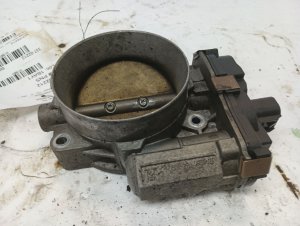
- Dirty Throttle Body 🔴 High Probability → Shop Fuel Injection Throttle Body As documented in GM TSB PIP4578B, carbon builds up in the throttle body over time. As it builds, the ECM learns to open the throttle plate more to maintain idle. If the throttle is cleaned (or the ECM is reset) without an idle relearn, the ECM's learned compensation is now incorrect for the clean throttle body, causing idle issues and setting the code.
How to confirm: Visually inspect the throttle body bore and plate for a layer of black carbon buildup.
Typical fix: Thoroughly clean the throttle body plate and bore with a dedicated throttle body cleaner and a soft cloth. After cleaning, an 'Idle Learn Reset' must be performed using a compatible scan tool (like a Tech 2) to force the ECM to relearn the new, clean idle position.
Est. part cost: $10-$20 - Vacuum Leak 🟡 Medium Probability Intake manifold gaskets can degrade over time, and PCV hoses can become cracked or disconnected, allowing unmetered air to enter the engine. A loose oil filler cap is another simple but common cause. On the LS3, intake manifold bolts can sometimes loosen and may just need to be re-torqued to specification, which is a known fix discussed by owners.
How to confirm: Perform a smoke test to see where smoke escapes the intake system. Alternatively, listen for hissing sounds or carefully spray carb cleaner around gasket areas with the engine running; a change in engine RPM indicates a leak. 🎬 Watch: How to test your LS engine for vacuum leaks.
Typical fix: Replace the leaking gasket or hose. If intake manifold bolts are loose, re-torque them to the factory specification.
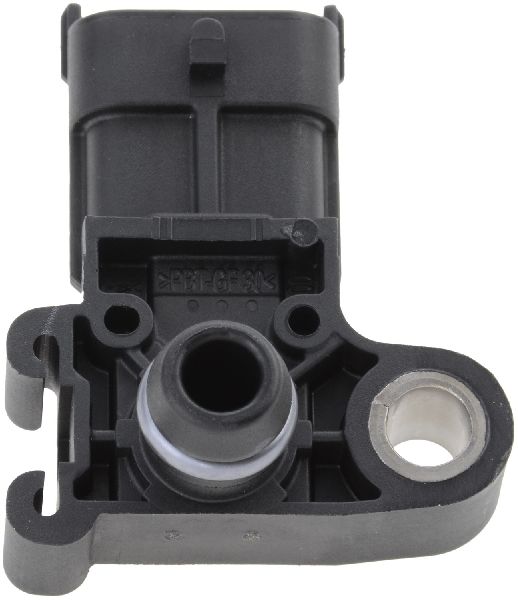
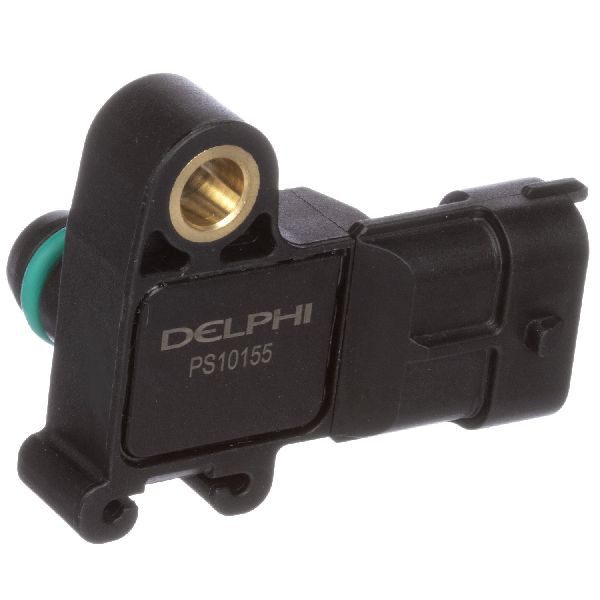
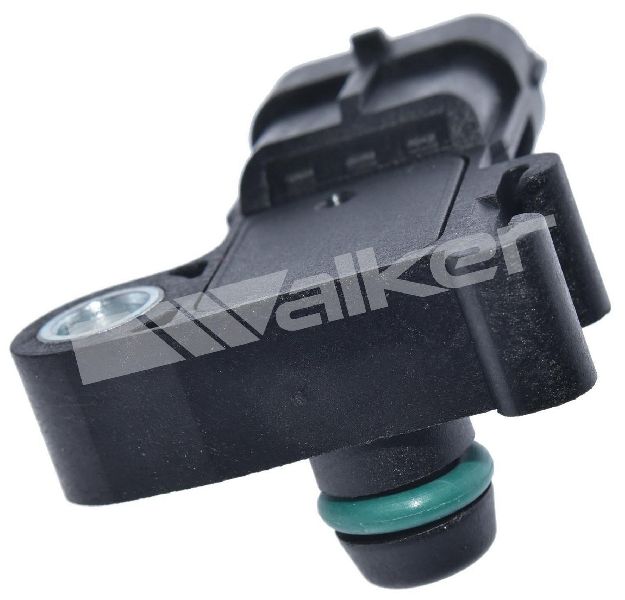
Est. part cost: $20-$100 - Faulty Manifold Absolute Pressure (MAP) Sensor ⚪ Low Probability → Shop Manifold Absolute Pressure Sensor While durable, the MAP sensor can fail electronically, providing incorrect pressure readings to the ECM. It is located on the top front of the LS3 intake manifold, making it relatively easy to access.
How to confirm: Use a scan tool to monitor the MAP sensor voltage with the key on, engine off. The reading should correspond to your local barometric pressure. With the engine running at idle, the reading should drop significantly (to around 1-1.5 volts). The reading should change smoothly with throttle input.
Typical fix: Replace the MAP sensor. It is secured by a single bolt on the intake manifold.
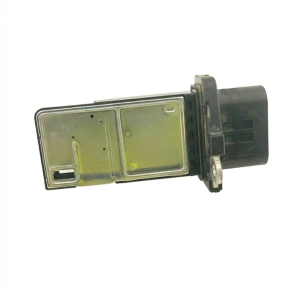
Est. part cost: $30-$80 - Dirty or Faulty Mass Air Flow (MAF) Sensor ⚪ Low Probability → Shop Fuel Injection Air Flow Meter
How to confirm: First, try cleaning the sensor's delicate wires with a dedicated MAF sensor cleaner. If cleaning doesn't work, use a scan tool to monitor the g/s reading at idle (should be around 6-8 g/s for a stock LS3) and ensure it increases smoothly with RPM without glitches.
Typical fix: Clean the sensor first. If the problem persists or readings are erratic, replace the MAF sensor.
Est. part cost: $15 (cleaner) or $80-$180 (sensor)
Rare But Worth Checking
- Aftermarket Air Intake, Ported Throttle Body, or Camshaft: → Shop Fuel Injection Throttle Body If you have recently installed a cold air intake, a ported/larger throttle body, or an aftermarket camshaft, the change in airflow characteristics can confuse the factory ECM tune and set P0068. A custom engine tune is often required to adjust the expected airflow tables in the ECM to resolve this.
- Loose or Corroded Electrical Ground: Poor ground connections, particularly the main ECM grounds located under the battery tray on the frame rail, can cause erratic sensor readings and trigger this code. It's a worthwhile and simple check to clean these ground points.
Diagnosis Steps
- Check for other stored trouble codes. Address any specific sensor codes first.
- Perform a full visual inspection of the air intake system. Check for loose clamps, cracked hoses (especially PCV lines), and ensure the oil filler cap is tight.
- Remove the intake duct and inspect the throttle body bore and plate for carbon buildup.
- If dirty, clean the throttle body thoroughly using a dedicated cleaner. Also clean the MAF sensor wires with MAF sensor cleaner.
- CRITICAL: After cleaning, perform an 'Idle Learn Reset' using a GM-compatible scan tool (Tech 2 or similar) as specified in TSB PIP4578B. Failure to do this is a very common reason for the code to return immediately.
- If the code persists, perform a smoke test to find any vacuum leaks, paying close attention to the intake manifold gaskets and PCV system.
- Using a scan tool, monitor live data from the MAP, MAF, and Throttle Position sensors to see if any readings are erratic or illogical during idle and light throttle application.
- Inspect the wiring and connectors for the MAP, MAF, and throttle body for any damage or corrosion. Check main engine and ECM ground points.
- If a sensor is confirmed to be faulty through data analysis, replace the component.
Parts You'll Likely Need
- Throttle Body Cleaner — This is the most common and least expensive first step, as a dirty throttle body is the primary cause of P0068 on this vehicle.
Trusted brands: CRC, ACDelco
OEM price range: $10-$15
Aftermarket price range: $8-$12 - Manifold Absolute Pressure (MAP) Sensor
(OEM #12644228 (superseded by 12711681))— If cleaning the throttle body doesn't resolve the issue, a failing MAP sensor is the next most likely hardware failure.
Trusted brands: ACDelco, Bosch
OEM price range: $40-$80
Aftermarket price range: $25-$50 - Mass Air Flow (MAF) Sensor
(OEM #15865791)— This sensor can become dirty or fail, providing incorrect airflow data. It often gets replaced when a cleaning would suffice.
Trusted brands: ACDelco, Denso
OEM price range: $150-$200
Aftermarket price range: $70-$120
Related Codes That Often Appear With This One
- P0121 — Throttle Position Sensor (TPS) Performance. This code is often set with P0068 as both relate to throttle body function and are mentioned in the same TSB.
- P1516 — Throttle Actuator Control (TAC) Module Performance. This is a GM-specific code indicating a problem with the electronic throttle system, often triggered alongside P0068 when entering Reduced Engine Power mode.
- P2101 — Throttle Actuator Control Motor Circuit Range/Performance. This code also points to an issue with the electronic throttle body and is cited in TSB PIP4578B.
- P0171/P0174 — System Too Lean. These codes indicate unmetered air is entering the engine, which is a primary symptom of a vacuum leak, a common cause of P0068.
Technical Service Bulletins (TSBs) & Recalls
- PIP4578B: SES Light, Idle Surge, and/or Reduced Engine Power Mode with DTCs P0068, P0121, P0506, P0507, P1516, P2101, P2119, and/or P2176 - Clean Throttle Body and Perform Idle Learn Reset.
Platform-Specific Known Issues
- TSB PIP4578B specifically calls out that on high-mileage V8 engines, cleaning the throttle body without performing an electronic 'Idle Learn Reset' can cause the code and idle issues to return.
- Owners on CorvetteForum report that loose intake manifold bolts can be a source of a vacuum leak causing P0068, and simply re-torquing them to spec can resolve the issue without replacing parts.
Mechanic-Grade Diagnostic Values
- Mass Air Flow (MAF) Sensor Reading at Idle — expected: Approximately 6.2 g/s on a warm, stock 6.2L LS3 engine. The general rule is g/s should roughly match engine displacement in liters.. Failure: Readings significantly higher or lower than the engine's displacement (e.g., >10 g/s or <4 g/s at idle) can indicate a dirty sensor, a vacuum leak, or an issue with an aftermarket intake.
- Manifold Absolute Pressure (MAP) Sensor Voltage (KOEO) — expected: Approximately 4.8 - 4.9 volts with Key On, Engine Off (KOEO), corresponding to atmospheric pressure.. Failure: A voltage reading significantly lower than ~4.8V (e.g., 4.0V) with the engine off points to a faulty sensor.
- Manifold Absolute Pressure (MAP) Sensor Reading at Idle — expected: Around 27-35 kPa (or 1-1.5 volts) with the engine idling and fully warm.. Failure: A reading that doesn't drop significantly from the KOEO value or is erratic when the engine is running indicates a bad sensor or a major vacuum leak.
Scan Tool Commands That Help
- GM Tech 2 / GDS2: Idle Learn Reset — This function is critical after cleaning or replacing the throttle body. It resets the learned airflow compensation values in the ECM. Failure to perform this reset is a primary reason for P0068 to return after service, as noted in TSB PIP4578B.
- HP Tuners / EFI Live: P0068 Max Airflow vs. RPM Table Adjustment — This is used when an aftermarket ported throttle body, camshaft, or supercharger is installed. The factory airflow limits are too low for the modified setup, causing the code at high RPM. The table must be adjusted to allow for the higher measured airflow.
Wiring & Ground Locations
- ECM Connector C1 (Blue) - Pin 46 — On the Engine Control Module (ECM), which is typically located in the passenger side front fender well area.. This pin is the MAP Sensor Signal input to the ECM. A poor connection here can cause incorrect MAP readings.
- ECM Connector C3 (Gray) - Pin 11 — On the Engine Control Module (ECM).. This pin is the MAF Sensor Signal input to the ECM. Verifying a solid connection is a key step in diagnosing MAF-related issues.
- ECM Connector C3 (Gray) - Pin 34 — On the Engine Control Module (ECM).. This is the Intake Air Temperature (IAT) Sensor Signal pin. The IAT is often integrated with the MAF sensor, and its reading is part of the airflow calculation.
Real Owner Repair Stories
- LS1Tech forum user (2005 GTO (similar LS-platform)) — P0068 and P0121 codes, entering 'Safe Mode' only at Wide Open Throttle (WOT) in 1st gear near 6,000 RPM.
❌ Tried (didn't work) Checking MAF wiring, Fixing a loose battery terminal
✅ What actually fixed it The user confirmed the issue was caused by a ported stock throttle body flowing more air than the ECM expected. Swapping back to a stock, un-ported throttle body resolved the issue. The final fix for using the ported part would be to use HP Tuners to adjust the 'Max Airflow vs. RPM' table to prevent the code. - CorvetteForum user 'Mike04' (2004 Corvette with a new 427 engine and YSi supercharger) — P0068, P0102, P0103 codes and going into 'Reduced Power' mode at full throttle.
❌ Tried (didn't work) Adjusting the P0068 error table limits in the tune.
✅ What actually fixed it The issue was resolved by a tuning adjustment. Specifically, the Volumetric Efficiency (VE) and injector flow tables were lowered by 30% to correctly calibrate the engine for the massive increase in airflow from the supercharger.
OEM Part Supersession History
12644228→12711681— Standard part number update by GM/ACDelco.
Model Year Variations Within This Range
- 2010-2013: Grand Sport coupes equipped with a manual transmission received a dry-sump oiling system. These LS3 engines were hand-built and feature a forged crankshaft, a different oil pan, and a larger oil capacity (10.5 qts vs ~5.5 qts). While not a direct cause of P0068, it's a significant engine variation to be aware of during service.
- 2008-2013: The LS3 engine replaced the 6.0L LS2 starting in the 2008 model year. This brought an increase in displacement to 6.2L and a power increase to 430 hp. The manual transmission was also upgraded from the T-56 to the stronger TR-6060.
- 2012-2013: All Corvettes received an additional set of secondary catalytic converters on the x-pipe starting in 2012.
Diagnostic Flowchart
Other Known Issues on This Vehicle
Issues unrelated to this code that are worth knowing about as an owner of this generation:
- Harmonic Balancer Wobble 🔴 High — Very common across all C6 models, including LS3. Often appears as a 'chirp' from the serpentine belt. The rubber bonding fails, causing the outer ring to wobble, which can damage the crank, oil pump, and other accessories if it fails completely. (Ref: An early TSB (05-06-01-001) existed for 2005 LS2 models due to a loose bolt, but the delamination issue is prevalent in later years as well.)
- Fuel Level Sending Unit Failure 🟠 Medium — Extremely common. Sulfur in gasoline can build up on the sensor contacts, causing the fuel gauge to read empty or fluctuate wildly, often triggering a 'Service Fuel System' message and codes like P2068. The fix requires dropping the fuel tanks, which is labor-intensive. (Ref: GM issued a special coverage campaign (#15682) for some model years due to cracked fuel tank fittings, but the sending unit issue itself is often a separate out-of-pocket repair.)
- Removable Roof Panel Delamination 🟠 Medium — Primarily affected 2005-2007 models, but later models can still experience it. The adhesive bonding the roof skin to the frame fails, causing cracking noises and, in worst-case scenarios, the roof panel can fly off while driving. (Ref: Multiple recalls and service campaigns were issued. The fix was to replace the roof with a newer SMC-material panel.)
- Cracked Lower Radiator Support 🟡 Low — Common due to the car's low ground clearance. The aluminum support is fragile and can easily be damaged by speed bumps or steep driveways. It's not structurally critical but can cause bumper alignment issues.
Used vs. New Parts: Buying Guide for This Vehicle
When a used part is the smart pick: For this repair, obtaining a used OEM throttle body or MAF sensor from a reputable salvage yard is a reasonable choice, especially if trying to avoid the high cost of a new OEM part. These components are generally reliable and not high-wear items.
Donor-vehicle mileage cap: roughly under 80000 miles for the part to have meaningful remaining life.
What to inspect on the donor part:
- For a throttle body, inspect the electrical connector for corrosion or bent pins. Ensure the throttle plate moves smoothly by hand (if applicable) without binding.
- For a MAF sensor, ensure the delicate sensor wires inside are intact and not physically damaged or coated in oil.
- Check the vehicle history of the donor car if possible to avoid parts from flood-damaged or high-impact collision vehicles.
OEM-only on this vehicle (don't cheap out):
- While not a direct cause, if tuning is required due to modifications, it's critical to use proven tuning software (HP Tuners, EFI Live) and not generic handheld programmers which may not have the parameters to fix a P0068 correlation issue.
Aftermarket brands forum-validated for this vehicle:
- ACDelco (OEM)
- Bosch (for sensors)
- Denso (for sensors)
Brands owners have reported issues with on this vehicle:
- Unbranded, no-name sensors from online marketplaces. These are frequently cited on forums for being dead-on-arrival or having incorrect calibration, causing the same or new codes to appear.
Real Owner Stories
Aggregated from forums and TSBs cited above. Mileages and costs reflect what owners reported in those sources.
2008-2013 Chevrolet Corvette 6.2L LS3
Symptoms: Car running rough and surging suddenly.
What fixed it: Cleaning the grounds and the battery connection provided a temporary resolution.
Source hint: CorvetteForum: P0068 Car running rough and surging.
2008-2013 Chevrolet Corvette 6.2L LS3 — ~100000 miles
Symptoms: SES Light, Idle Surge, and/or Reduced Engine Power Mode.
What fixed it: Thoroughly cleaned the throttle body plate and bore followed by an 'Idle Learn Reset' using a scan tool.
Source hint: TSB PIP4578B
2008-2013 Chevrolet Corvette 6.2L LS3
Symptoms: Vacuum leak causing P0068.
What fixed it: Re-torquing the intake manifold bolts to factory specifications.
Source hint: vehicle_specific_issues citing CorvetteForum
Related OBD-II Codes
Frequently Asked Questions
Does TSB PIP4578B apply to my 2008-2013 Corvette with the LS3 engine?
I cleaned my LS3 throttle body but the P0068 code came back immediately. What did I miss?
Can a loose oil filler cap really cause a P0068 on my Corvette?
Are there any common mechanical issues on the LS3 that mimic a vacuum leak?
What should the MAF sensor readings look like for a stock 6.2L LS3 at idle?
Is the 'Reduced Engine Power' message on my dash related to P0068?
Helpful Videos

Used OEM Parts in Stock
New Aftermarket Parts Available


The information in this article is provided for general reference and educational purposes only. Vehicle specifications, procedures, and part compatibility can vary by production date, trim level, and region. Always consult your vehicle's factory service manual and verify part numbers before purchasing or performing repairs. Safety-critical components such as airbags, seat belts, and braking systems should be installed by a qualified professional.
- Chevrolet Corvette:
- 🧭 Diagnostic Flowchart
- 🎬 Helpful Videos
- 🛍️ Shop This Part
- What's Unique About the 2008-2013 Chevrolet Corvette
- Symptoms You May Notice
- Most Likely Causes
- Rare But Worth Checking
- Diagnosis Steps
- Parts You'll Likely Need
- Related Codes That Often Appear With This One
- Technical Service Bulletins (TSBs) & Recalls
- Platform-Specific Known Issues
- Mechanic-Grade Diagnostic Values
- Scan Tool Commands That Help
- Wiring & Ground Locations
- Real Owner Repair Stories
- OEM Part Supersession History
- Model Year Variations Within This Range
- Other Known Issues on This Vehicle
- Used vs. New Parts: Buying Guide for This Vehicle
- Real Owner Stories
- 2008-2013 Chevrolet Corvette 6.2L LS3
- 2008-2013 Chevrolet Corvette 6.2L LS3 — ~100000 miles
- 2008-2013 Chevrolet Corvette 6.2L LS3
- Related OBD-II Codes
- Frequently Asked Questions
- 🎟️ Get 5% Off