

P0068 on 2012-2019 Porsche 911: MAP/Throttle Correlation Causes and Fixes
On a 2012-2019 Porsche 911, code P0068 is most often caused by a vacuum leak, a dirty throttle body, or a faulty Manifold Absolute Pressure (MAP) sensor. Start by checking for intake leaks with a smoke test, then clean the throttle body before replacing the MAP sensor.
- P0068 on a 991-generation 911 points to a mismatch between expected and measured airflow.
- Do not assume a sensor is bad. A vacuum leak is the most probable cause; perform a smoke test before replacing parts.
- Common vacuum leak sources include the Air-Oil Separator (AOS), intake gaskets, and even a loose oil cap.
- Cleaning the throttle body is a low-cost diagnostic step that can often resolve the issue.
- Accessing the MAP sensor or AOS can be labor-intensive and may require partially lowering the engine.
What's Unique About the 2012-2019 Porsche 911
The 2012-2019 Porsche 911 (991 generation) uses a MAP sensor-based engine management system (a speed-density system) and does not have a Mass Airflow (MAF) sensor. This can confuse generic OBD-II code readers and technicians unfamiliar with Porsche, who may incorrectly look for a MAF sensor issue. The causes for P0068 on this platform are almost always related to unmetered air entering the engine (vacuum leaks) or incorrect sensor readings from the MAP sensor or throttle body. Some scan tools may incorrectly label the code as a MAF issue, but on the 991, the diagnosis should focus on the MAP sensor and related systems.
Generation note: The 2012-2019 year range covers the entire Porsche 911 991 generation, which is broken into two phases: the 991.1 (2012-2016) with naturally aspirated 3.4L and 3.8L engines, and the 991.2 (2017-2019) with a twin-turbocharged 3.0L engine for Carrera models. The fundamental causes of P0068 are similar across both, as they both rely on a MAP-based system. However, component locations and specific part numbers may vary slightly due to the different intake and turbocharging systems.
Symptoms You May Notice
- Check Engine Light is on
- Rough or unstable idle
- Hesitation or stumbling during acceleration
- Reduced engine power
- Increased fuel consumption
- Engine may stall at low speeds or when stopped
- Surging idle, sometimes varying between 1500 and 2000 RPM as reported by one owner.
- Replacing the throttle body when only a cleaning is needed.
- Replacing the MAP sensor before performing a smoke test to rule out vacuum leaks.
- Searching for a Mass Airflow (MAF) sensor fault, as the 991 platform does not use one for engine management.
Most Likely Causes
- Vacuum Leak 🔴 High Probability Over time, rubber and plastic components in the intake and crankcase ventilation systems can become brittle and crack due to engine heat cycles. A common failure point is the Air-Oil Separator (AOS) diaphragm, which can tear and create a significant vacuum leak. Other potential leak sources include intake manifold gaskets, a loose or faulty oil filler cap, or cracked vacuum hoses. A Rennlist user with a related 981 model found a pinched resonance tube gasket was the source of their P0068 code.
How to confirm: The most effective way to confirm a vacuum leak is to perform a smoke test. This involves injecting smoke into the intake system with the engine off and looking for where the smoke escapes. A hissing sound near the engine at idle can also indicate a leak. A loose oil filler cap or a cap with a missing gasket is a simple but common cause.
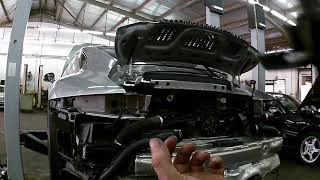
Typical fix: Replace the failed gasket, hose, or component. If the Air-Oil Separator (AOS) has failed, it must be replaced. It is also recommended to replace related breather hoses at the same time as they often become brittle. 🎬 Watch: How to replace the Air-Oil Separator
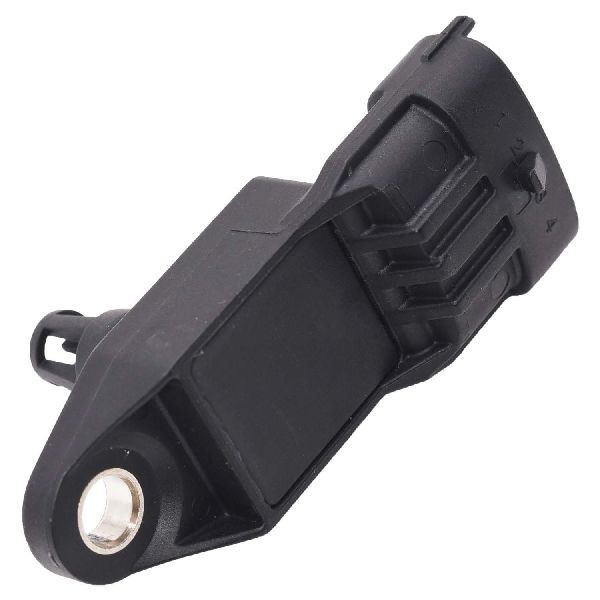
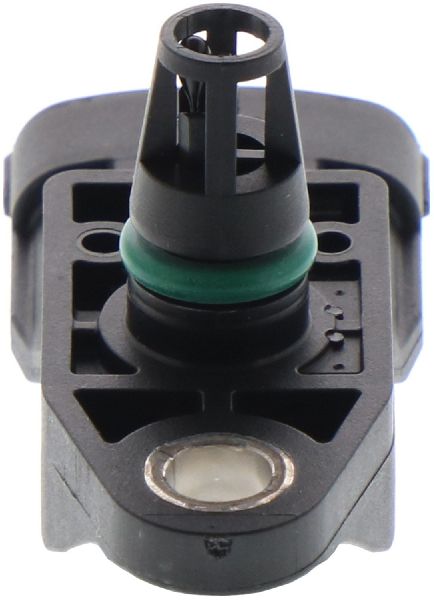
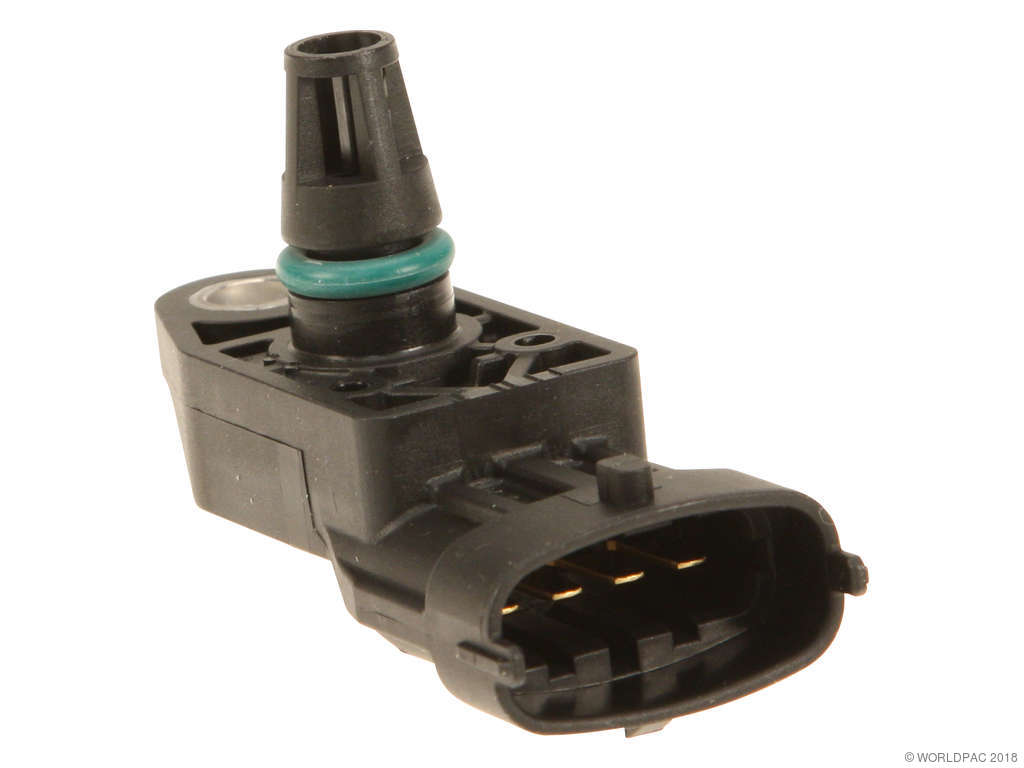
Est. part cost: $20 - $250 - Faulty Manifold Absolute Pressure (MAP) Sensor 🟡 Medium Probability → Shop Manifold Absolute Pressure Sensor
How to confirm: With the engine off, use a scan tool to check if the MAP sensor reading matches the current barometric pressure (around 996 hPa at sea level, for example). With the engine idling, the reading should drop significantly (e.g., into the 330-380 hPa range). A Rennlist user reported confirming a bad sensor by observing its readings with a scan tool; the reading should be steady at idle and rise and fall smoothly with throttle input. One user fixed the code by simply removing, cleaning, and reinstalling the sensor, though they ordered a new one to be safe.
Typical fix: Replace the MAP sensor. It is located on the intake manifold/plenum, often near the throttle body, and can be difficult to access. On some models, it sits right on top of the throttle body with very little clearance, making removal of the retaining screw challenging. One owner successfully used a 4mm Allen key to remove the Torx screw by feel. Lowering the engine a few inches may be recommended for better access.
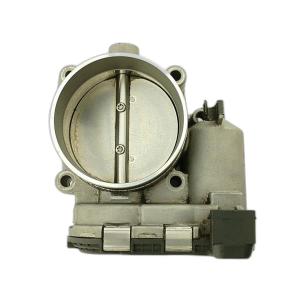
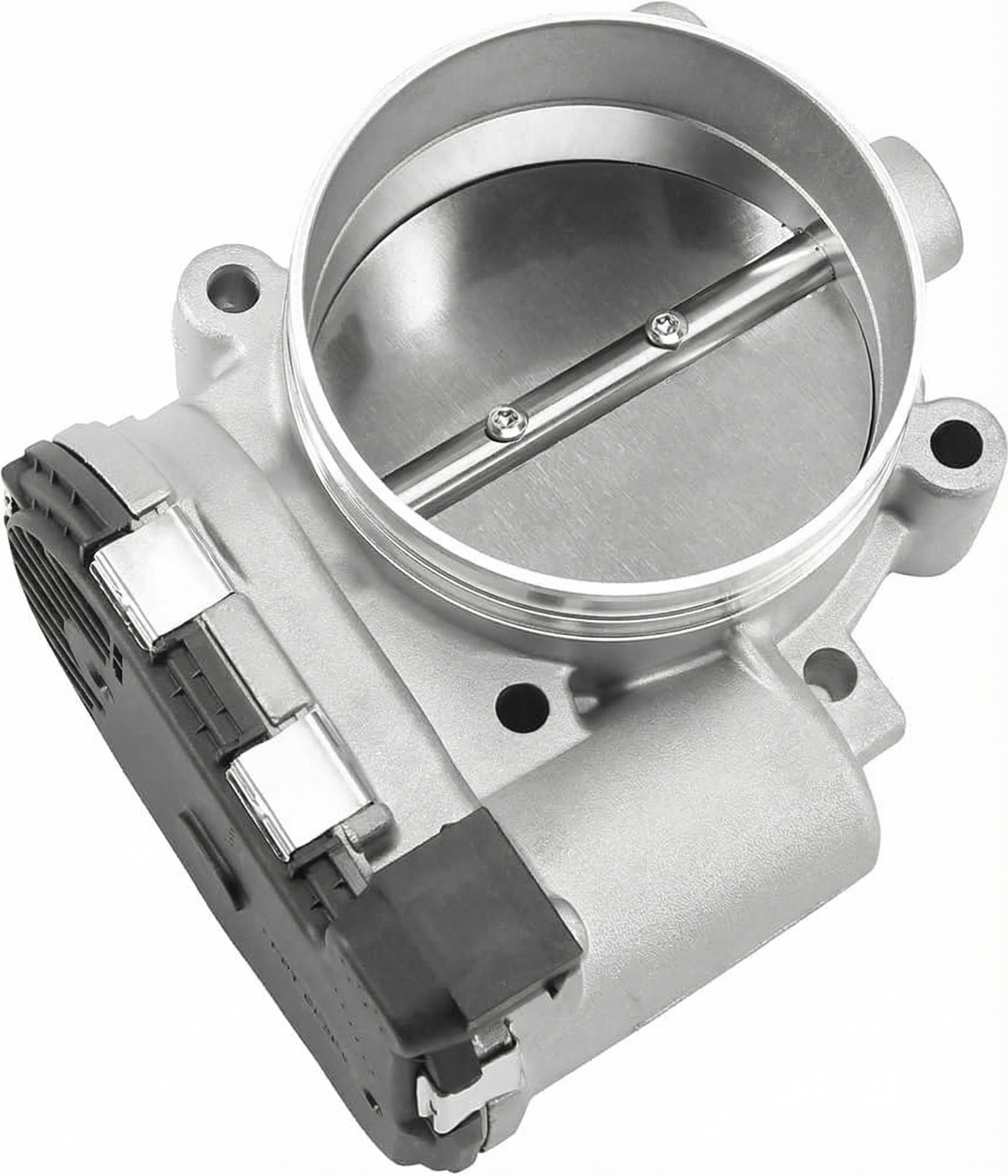
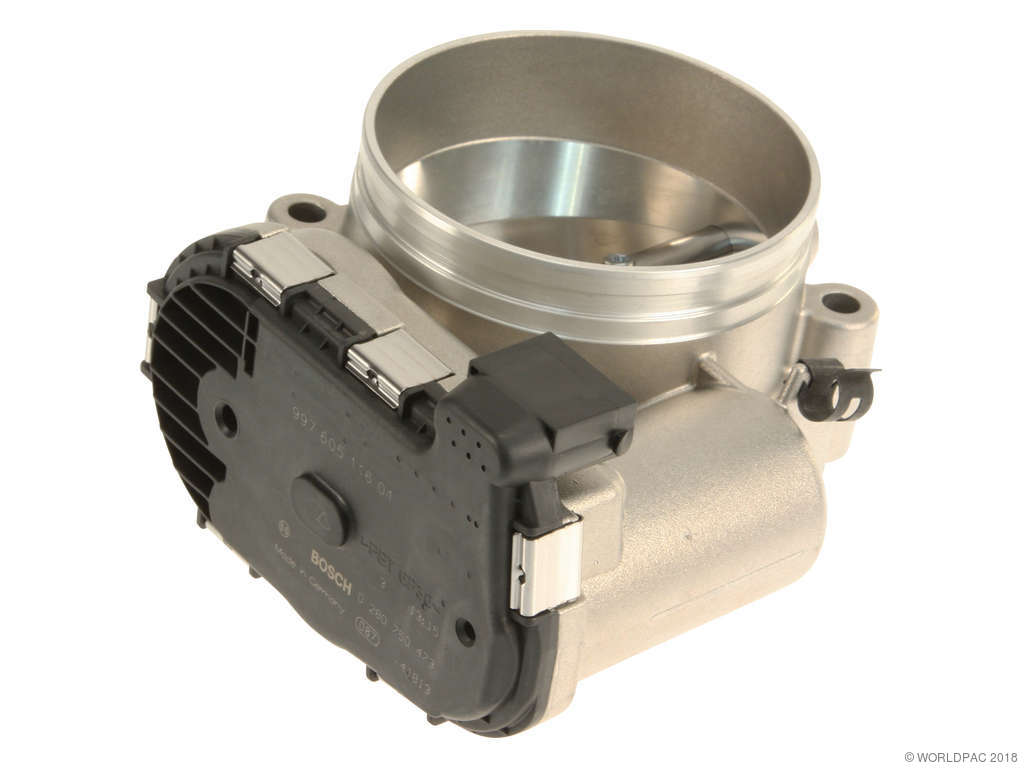
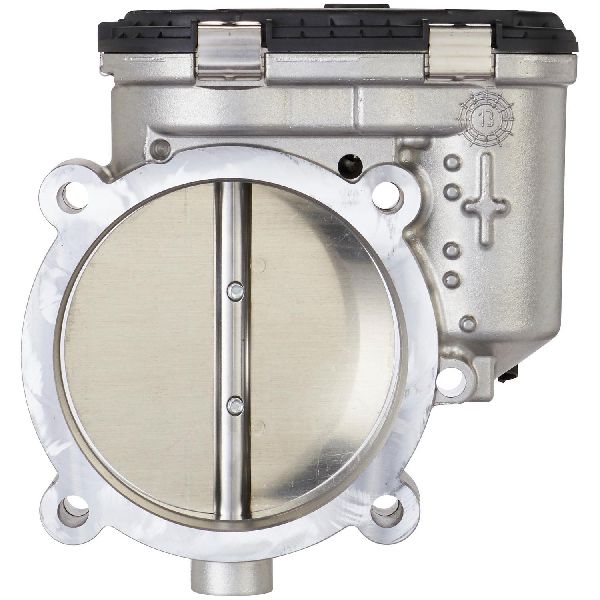
Est. part cost: $30 - $100 - Dirty Throttle Body 🟡 Medium Probability → Shop Fuel Injection Throttle Body The crankcase ventilation system can deposit oil vapor and carbon onto the back of the throttle plate and inside the throttle body bore. This buildup can restrict airflow or cause the throttle plate to stick, leading to an incorrect correlation between throttle position and actual airflow.
How to confirm: Remove the air intake boot connected to the throttle body and visually inspect the throttle plate and bore for black, gummy deposits.
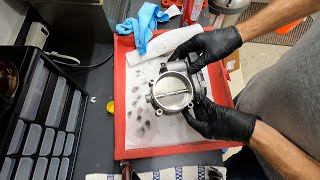
Typical fix: Remove the throttle body from the intake manifold and clean it thoroughly with a dedicated throttle body cleaner and a soft cloth or brush. Do not use harsh cleaners like brake or carb cleaner. 🎬 See how to clean your 991.1 throttle body After cleaning and reinstalling, a throttle body relearn procedure may be necessary.
Est. part cost: $10 - $20 - Clogged or Dirty Engine Air Filters ⚪ Low Probability
How to confirm: Visually inspect the engine air filters. If they are heavily soiled or clogged with debris, they can restrict airflow enough to cause a correlation fault. Over-oiling reusable aftermarket filters (like K&N or BMC) can also lead to this code.
Typical fix: Replace the engine air filters.
Est. part cost: $40 - $100
Rare But Worth Checking
- Wiring Issue: Damage or corrosion to the wiring or connectors for the MAP sensor or throttle body can cause intermittent or incorrect signals, leading to a P0068 code.
- PCM/DME Issue: In very rare cases, the Powertrain Control Module (or DME in Porsche terminology) itself could be faulty, causing it to misinterpret sensor data. This should only be considered after all other possibilities have been exhausted.
Diagnosis Steps
- Read the codes: Use an OBD-II scanner to confirm P0068 and check for any other stored codes.
- Visual Inspection: Inspect the air intake system for any obvious issues like disconnected hoses, cracked intake boots, or a loose oil cap. A missing oil cap gasket is a known cause.
- Check Air Filters: Inspect and replace the engine air filters if they are dirty or clogged.
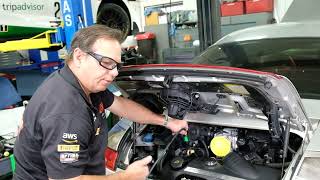
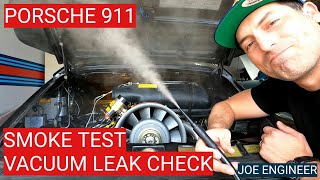
- Perform a Smoke Test: This is the most reliable way to find vacuum leaks. Inject smoke into the intake manifold and look for leaks from gaskets, hoses, or the Air-Oil Separator (AOS). A Rennlist user found a pinched resonance tube gasket this way.
- Inspect and Clean Throttle Body: Remove the intake boot and inspect the throttle body. If significant carbon buildup is present, remove and clean it thoroughly.
- Test the MAP Sensor: Use a scan tool to monitor the MAP sensor data. With Key On, Engine Off (KOEO), the reading should match barometric pressure. At idle, it should drop significantly and change smoothly with throttle input.
- Inspect Wiring: Check the connectors and wiring for the MAP sensor and throttle body for any signs of damage, corrosion, or loose connections.
- Replace Parts: Based on the diagnostic findings, replace the faulty component. If a vacuum leak was found, replace the leaking part. If the MAP sensor is faulty, replace it. If cleaning the throttle body doesn't resolve the issue and it's suspected to be faulty, replace it.
Parts You'll Likely Need
- Manifold Absolute Pressure (MAP) Sensor
(OEM #94860618000)— This sensor provides a primary input for calculating engine load. If it provides inaccurate readings, it will directly cause a P0068 code. The Bosch equivalent is a common replacement.
Trusted brands: Bosch (0261230247), Genuine Porsche
OEM price range: $70-$100
Aftermarket price range: $30-$60 - Air-Oil Separator (AOS)
(OEM #9A110704002)— The diaphragm inside the AOS is a common failure point on many Porsche models, including the 991, leading to a significant vacuum leak.
Trusted brands: Genuine Porsche
OEM price range: $180-$220
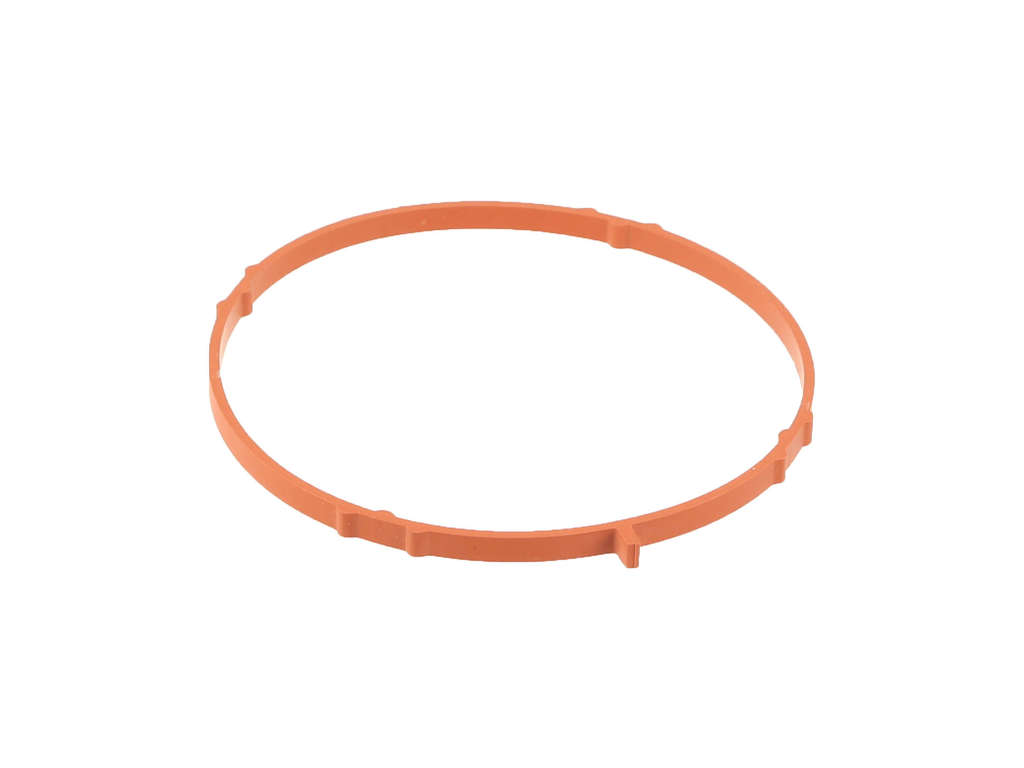
Aftermarket price range: $100-$150 - Throttle Body Gasket — This gasket should always be replaced whenever the throttle body is removed for cleaning or replacement to prevent vacuum leaks.
Trusted brands: Genuine Porsche, Victor Reinz
OEM price range: $15-$25
Aftermarket price range: $5-$15
Related Codes That Often Appear With This One
- P1071 — This Porsche-specific code for 'Mass Air Flow at idle speed implausibly high' can appear with P0068, often pointing towards a vacuum leak that is causing unmetered air to enter the engine.
- P0171 / P0174 — These codes indicate a lean fuel condition (too much air, not enough fuel) on Bank 1 and Bank 2, respectively. A vacuum leak is a primary cause of both P0068 and these lean codes.
- P1072 — This Porsche-specific code for 'Mass air flow sensor 1 - signal implausibly low' was seen alongside P0068 on a 991 Turbo S, pointing to a sensor or wiring issue.
- P1552 — This Porsche-specific code can appear with P0068 and may indicate an issue with the battery or charging system, which can cause spurious electronic faults on sensitive modules.
Platform-Specific Known Issues
- MAP Sensor Accessibility: → Shop Manifold Absolute Pressure Sensor The MAP sensor is located on the back of the intake manifold near the firewall, and access is extremely tight. A Rennlist user noted that lowering the engine a few inches is recommended to gain clearance, and that the retaining screw could be removed blindly with a 4mm Allen key in place of a Torx bit.
Mechanic-Grade Diagnostic Values
- Throttle Position Sensor (TPS) Voltage — expected: Approximately 0.5V at closed throttle to 4.5V at wide-open throttle.. Failure: Voltage that is stuck, erratic, or does not sweep smoothly through the range as the throttle is opened.
- Manifold Absolute Pressure (MAP) Sensor Voltage (KOEO) — expected: Approximately 0.5V to 1.0V at atmospheric pressure (Key On, Engine Off), depending on altitude.. Failure: A reading that is significantly different from the expected range or does not match barometric pressure.
Hidden / Shadow Codes Worth Checking
- P1070: Mass air flow at idle speed implausibility. This Porsche-specific code points to the DME detecting illogical airflow readings at idle, often caused by the same vacuum leaks that trigger P0068. (see via Porsche-specific scan tool like PIWIS or an advanced professional scanner.)
- P1074: Mass air flow partial load implausibly high. Another Porsche-specific code that can be seen with P0068 when the DME detects manifold pressure deviations under load. (see via Porsche-specific scan tool like PIWIS or an advanced professional scanner.)
Scan Tool Commands That Help
- Porsche PIWIS Tester: Throttle valve adaptation — This function is required after cleaning or replacing the throttle body, or after certain DME software updates. It allows the DME to relearn the closed, open, and partial-opening positions of the throttle plate. The procedure is typically found under DME -> Maintenance/repairs -> Adaptations.
- Manual Procedure (No Tool): Throttle Adaptation / Reset — As a DIY attempt before using a scan tool, some owners report success with a manual reset. The procedure is to turn the ignition to the 'On' position (engine off) for at least 60 seconds without touching the accelerator pedal, then turn the ignition off for 5-10 seconds, and then start the engine normally. This may allow the DME to recalibrate the throttle limits.
Real Owner Repair Stories
- Rennlist Forum User (2012 Porsche 911 Carrera S (991.1)) — Engine idle varying between 1500 and 2000 RPM, P0068 and P1552 codes stored.
❌ Tried (didn't work) Replacing the MAP sensor with a new Bosch unit., Replacing the oil filler cap., Installing new engine air filters.
✅ What actually fixed it The issue was suspected to be a weak or failing battery. Code P1552 is related to the battery/charging system, and on modern Porsches, a faulty battery can cause a wide range of seemingly unrelated electronic fault codes. Replacing the battery was the recommended final solution. - Rennlist Forum User (Porsche 991) — Check Engine Light with P0068 code.
❌ Tried (didn't work) Visual inspection of vacuum lines, which revealed no obvious disconnections or breaks.
✅ What actually fixed it The owner decided to clean the MAP sensor as a first step. Due to extremely tight access, the Torx screw holding the sensor was removed 'by feel' using a 4mm Allen key, which was able to grip the screw head. After removing, cleaning, and reinstalling the sensor, the code was resolved. This story confirms the difficult access and provides a practical tip for removal.
OEM Part Supersession History
9A110704000, 9A110704001→9A110704002 (also cross-references to 0PB115099B)— Standard part revision and improvement by the manufacturer.
Heads up: The newest version (9A110704002) should be used for all replacements.Bosch 0261230248, 026123200J→Bosch 0261230247 (Porsche PN 94860618000)— Standard part revision by the OEM supplier.
Heads up: Bosch 0261230247 is the current, correct replacement for the Porsche OEM part.
Model Year Variations Within This Range
- 2017-2019 (991.2 Carrera Models): The introduction of the 3.0L twin-turbocharged engine adds multiple potential failure points for P0068 not present on the 991.1 naturally aspirated engines. In addition to standard vacuum leaks, a leak in the pressurized intake tract (charge pipes, intercooler connections, diverter/blow-off valves) after the turbos but before the throttle body can cause this code. A smoke test on a 991.2 should include pressurizing the entire intake system from the turbo inlets to the throttle body.
Diagnostic Flowchart
Other Known Issues on This Vehicle
Issues unrelated to this code that are worth knowing about as an owner of this generation:
- High-Pressure Fuel Pump (HPFP) Failure 🔴 High — Can occur at various mileages, with failures reported from 28k to over 135k miles. It is a known weak point across many direct-injection Porsche models of this era.
- Water Pump & Cooling System Leaks 🟠 Medium — Water pump failure is a relatively common issue, particularly on the 991.2 models. Leaks can also develop from plastic coolant pipes, the coolant reservoir, and various seals and hose connections due to heat cycles. (Ref: Porsche North America reportedly issued an extended 10-year warranty for the water pump and valve block on some vehicles.)
- Change-Over Valve (COV) Failure 🟡 Low — These electro-pneumatic vacuum solenoids control various functions like the sport exhaust (PSE), intake flaps, and cooling system valves. They are a common failure item, especially on 2011-2015 models, and can cause a range of symptoms from a non-functioning sport exhaust to cooling faults. (Ref: A recall campaign (WC-43) was reportedly issued for early 2012 builds to replace several of these valves.)
- PDK Transmission Sensor Failures 🔴 High — While the PDK gearbox is mechanically robust, failures of internal electronic sensors (distance sensor, speed sensor, temperature sensor) are the most common major issue. This can lead to fault codes (e.g., P1731-P1734), limp mode, and loss of reverse gear, often requiring expensive specialist repair.
Used vs. New Parts: Buying Guide for This Vehicle
When a used part is the smart pick: For this vehicle, used parts are generally not recommended for the common causes of P0068. However, a major mechanical component like a throttle body assembly or an intake plenum could be sourced used from a reputable dismantler if the original is physically damaged, as these are less prone to wear than sensors or rubber parts.
Donor-vehicle mileage cap: roughly under 40000 miles for the part to have meaningful remaining life.
What to inspect on the donor part:
- For a throttle body, ensure the throttle plate moves freely and is not scored.
- Check for any cracks or damage to plastic housings and electrical connectors.
- Verify the part number exactly matches the one being replaced.
OEM-only on this vehicle (don't cheap out):
- Air-Oil Separator (AOS): This part fails due to a rubber diaphragm tearing from heat and age. A used part has unknown remaining life and is not worth the significant labor to install.
- Manifold Absolute Pressure (MAP) Sensor: This is a sensitive electronic component. The risk of getting a faulty or near-failure used sensor is high. Always buy new from a reputable brand.
Aftermarket brands forum-validated for this vehicle:
- Bosch: As the OEM supplier for the MAP sensor, Bosch is a reliable and often more affordable alternative to Genuine Porsche parts.
Brands owners have reported issues with on this vehicle:
- No-name, unbranded electronic sensors from online marketplaces should be avoided due to high rates of DOA (Dead on Arrival) parts and poor calibration.
Real Owner Stories
Aggregated from forums and TSBs cited above. Mileages and costs reflect what owners reported in those sources.
2013-2016 Porsche Boxster / Cayman (981) 3.4L
Symptoms: P0068 code present on a platform-mate sharing the same 9A1 engine architecture.
What fixed it: Found and repaired a pinched resonance tube gasket using a smoke test.
Source hint: Rennlist.com
Porsche 911 (991)
Symptoms: Check Engine Light (CEL) and some slight, not too noticeable hesitation; scan tool showed only the MAP/MAF code by itself.
What fixed it: The owner confirmed a bad sensor by observing readings with a scan tool; they also noted the sensor could be cleaned, though they ordered a new one to be safe.
Source hint: Rennlist.com
Related OBD-II Codes
Frequently Asked Questions
Is there a recall for the vacuum solenoids that might cause issues on my 2012 Porsche 911?
I'm seeing P0068 on my 991.1; could this be related to the Air-Oil Separator?
How difficult is it to replace the MAP sensor on a 911 (991) given the tight engine bay?
Can a loose oil filler cap really cause a P0068 code on this car?
Does Porsche offer any extended warranty for components that might be failing alongside my P0068 code?
Should I clean or replace my throttle body to fix the P0068 hesitation?
Helpful Videos

Used OEM Parts in Stock
New Aftermarket Parts Available

The information in this article is provided for general reference and educational purposes only. Vehicle specifications, procedures, and part compatibility can vary by production date, trim level, and region. Always consult your vehicle's factory service manual and verify part numbers before purchasing or performing repairs. Safety-critical components such as airbags, seat belts, and braking systems should be installed by a qualified professional.
- Porsche 911:
- 🧭 Diagnostic Flowchart
- 🎬 Helpful Videos
- 🛍️ Shop This Part
- What's Unique About the 2012-2019 Porsche 911
- Symptoms You May Notice
- Most Likely Causes
- Rare But Worth Checking
- Diagnosis Steps
- Parts You'll Likely Need
- Related Codes That Often Appear With This One
- Platform-Specific Known Issues
- Mechanic-Grade Diagnostic Values
- Hidden / Shadow Codes Worth Checking
- Scan Tool Commands That Help
- Real Owner Repair Stories
- OEM Part Supersession History
- Model Year Variations Within This Range
- Other Known Issues on This Vehicle
- Used vs. New Parts: Buying Guide for This Vehicle
- Real Owner Stories
- 2013-2016 Porsche Boxster / Cayman (981) 3.4L
- Porsche 911 (991)
- Related OBD-II Codes
- Frequently Asked Questions
- 🎟️ Get 5% Off