

P0116 on 2013-2016 Dodge Dart 1.4L Turbo: ECT Sensor and Thermostat Guide
On a 2013-2016 Dart with the 1.4L Turbo, code P0116 is almost always caused by a faulty thermostat or a bad Engine Coolant Temperature (ECT) sensor. The most reliable fix is replacing the entire thermostat housing assembly, which includes both parts, for around $65-$95 in OEM parts. This is a very common failure point on this engine.
- For a 2013-2016 Dodge Dart with the 1.4L Turbo, P0116 almost always points to the thermostat or ECT sensor.
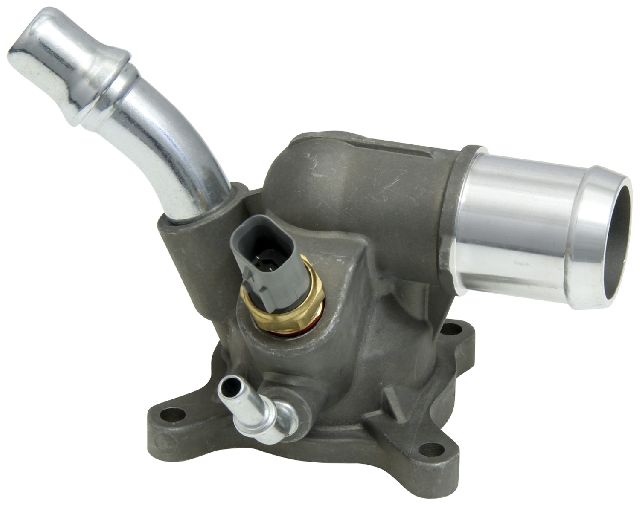
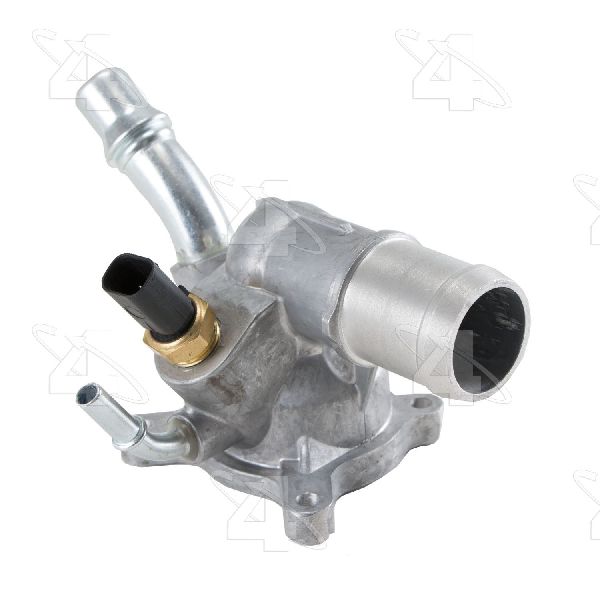
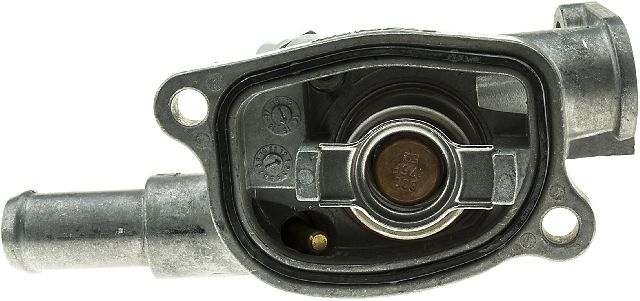
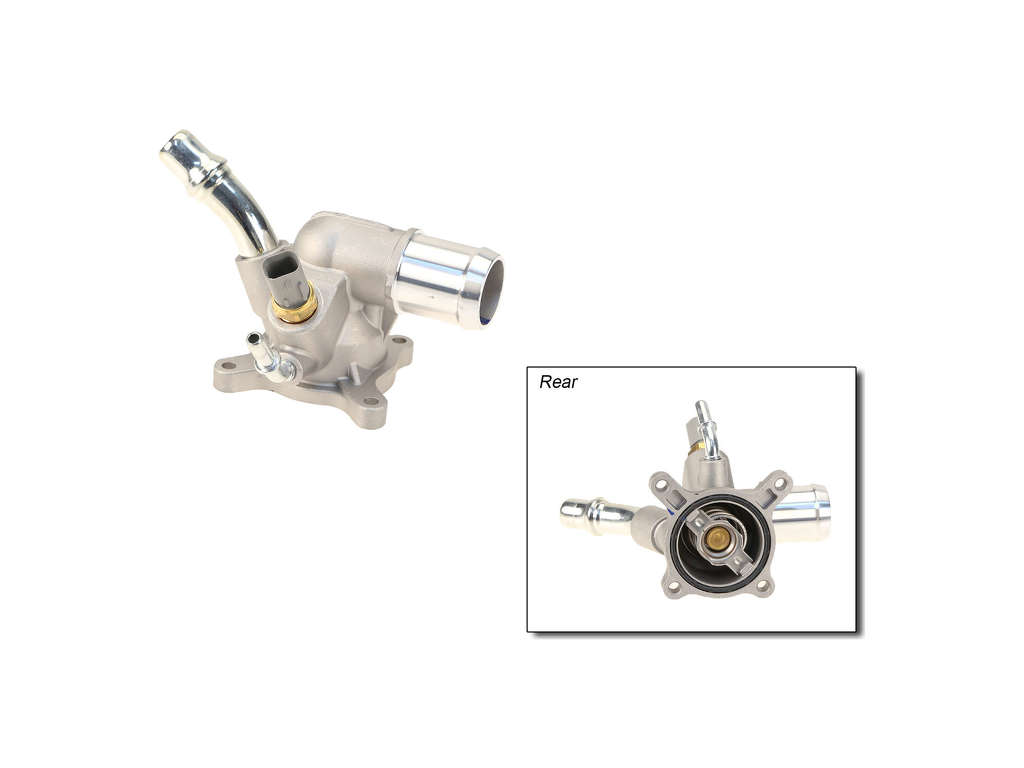
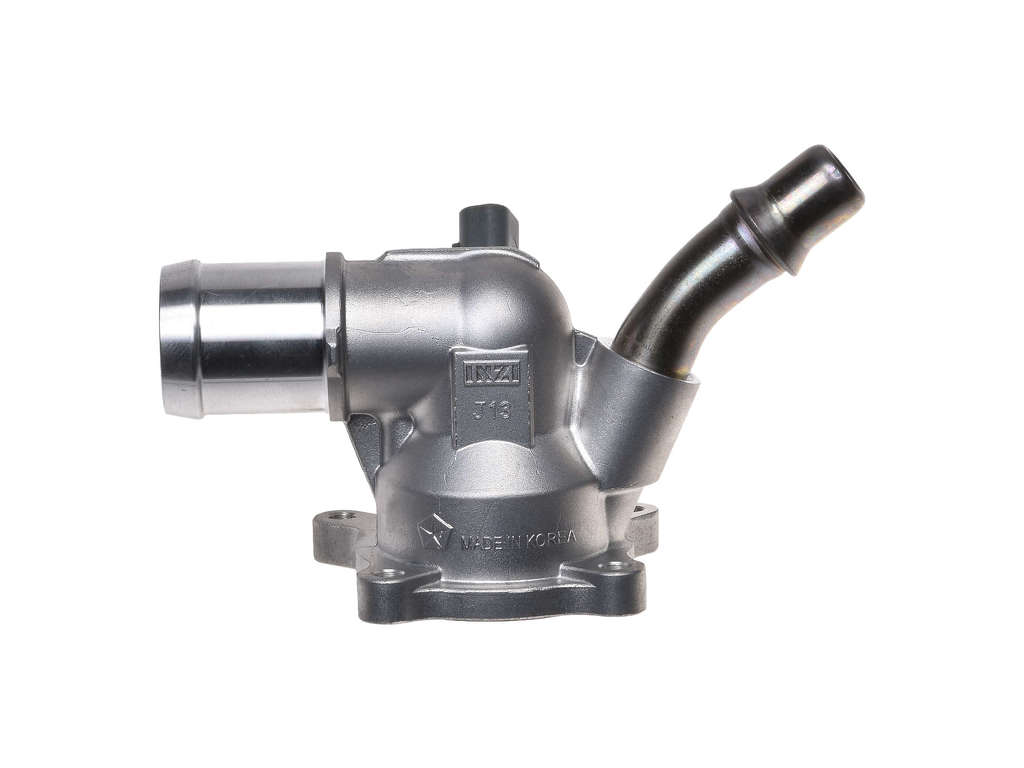
- The most reliable and time-saving repair is to replace the entire thermostat housing assembly (Mopar P/N 4892642AD), which includes the thermostat, sensor, and housing.
- Before buying parts, always check your coolant level first to rule out a simple top-off or a leak from the known-to-fail plastic housing.
- Do not confuse this issue with the 2.4L Dart engine, which had a software-related TSB for the same code; this does not typically apply to the 1.4L engine.
What's Unique About the 2013-2016 Dodge Dart
For the 1.4L MultiAir Turbo engine in the Dodge Dart, the P0116 code is a very common and straightforward issue. Unlike the 2.4L Dart engine which had a software bug requiring a TSB (18-022-17 REV. A) to fix overly sensitive diagnostics, the 1.4L's issue is almost always mechanical. The problem typically lies with the integrated thermostat and sensor assembly. The entire unit, made of plastic, is a known weak point, making replacement of the complete assembly the go-to repair. This part is shared with other Fiat-Chrysler vehicles with the same engine, which exhibit the same failure pattern.
Symptoms You May Notice
- Check Engine Light is illuminated
- Engine temperature gauge on the dashboard is stuck on cold, reads erratically, or drops to zero while driving.
- "Engine Too Hot" warning message on the dash, even on a cold start, often accompanied by an impossible temperature reading like -41°F.
- Heater may not blow warm air
- Cooling fans run continuously at high speed, even when the engine is cold.
- Reduced fuel economy due to the engine running in a rich, open-loop state.
- Engine may hesitate or run rough, especially when cold
- Replacing only the ECT sensor. While the sensor itself can fail, the thermostat is just as likely to be the cause, and the plastic housing is a known weak point. The most effective repair is to replace the entire assembly to avoid future problems and a second repair job.
- Assuming a PCM software issue. Unlike the 2.4L Dart engine which had a TSB for a software reflash to fix this code, the 1.4L engine's issue is almost always a hardware failure of the thermostat assembly.
Most Likely Causes
- Faulty Thermostat (Stuck Open) 🔴 High Probability → Shop Integrated Thermostat Housing Assembly The thermostat is integrated into a plastic housing that is a common failure point. It often fails in the open position, preventing the engine from reaching operating temperature.
How to confirm: Use a scan tool to monitor live coolant temperature data while driving. If the temperature struggles to reach and maintain the normal operating range (approx. 195-205°F or 90°C) after 10-15 minutes of driving, the thermostat is likely stuck open. This condition frequently triggers code P0128 at the same time.
Typical fix: Replace the entire thermostat housing assembly, which includes a new thermostat, sensor, and housing.
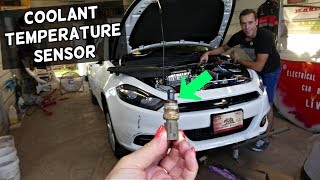
Est. part cost: $65-$120 - Faulty Engine Coolant Temperature (ECT) Sensor 🔴 High Probability → Shop Engine Coolant Temperature Sensor The ECT sensor is part of the same plastic housing as the thermostat and is subjected to the same heat cycles and potential for failure. Its failure can be electrical within the sensor itself.
How to confirm: With a scan tool, watch for temperature readings that are erratic, jump to extreme highs or lows (e.g., -40°F), or don't change at all as the engine warms up. This points to a bad sensor. On a cold engine, the ECT reading should be nearly identical to the Intake Air Temperature (IAT) reading.
Typical fix: Replace the entire thermostat housing assembly, which includes a new sensor. While the sensor can be bought separately, it's not the recommended repair because the housing itself is a failure point.
Est. part cost: $20-$40 - Low Engine Coolant Level 🟡 Medium Probability → Shop Engine Coolant / Antifreeze The plastic thermostat housing is known to develop cracks and leaks, leading to a loss of coolant. Other plastic components in the Dart's cooling system can also become brittle and leak.
How to confirm: Visually inspect the coolant reservoir to see if the level is below the 'MIN' line. Check for puddles of coolant under the car and look for signs of leaks (white or colored crusty residue) around the thermostat housing and radiator hoses.
Typical fix: Find and repair the leak (often requiring a new thermostat housing), then top off and bleed the cooling system.
Est. part cost: $20-$30 for coolant, plus parts for the leak
Rare But Worth Checking
- Wiring or Connector Issue: Check the wiring harness and connector going to the ECT sensor for any visible damage, corrosion, or loose pins. A poor connection can cause the same symptoms as a failed sensor. On related Fiat platforms, a bad engine-to-chassis ground wire has also been reported to cause erratic sensor readings.
- Air in the Cooling System: If the cooling system was recently serviced (e.g., coolant flush, part replacement) and not properly bled, air pockets can get trapped near the ECT sensor, causing incorrect readings. The system would need to be properly bled to remove the air.
Diagnosis Steps
- Check the coolant level in the reservoir. If it's low, top it off and check for visible leaks, paying close attention to the thermostat housing and all hose connections.
- Connect an OBD-II scanner. On a completely cold engine, verify that the Engine Coolant Temperature (ECT) reading is within a few degrees of the Intake Air Temperature (IAT) reading.
- Start the engine and monitor the live ECT data on the scanner.
- Watch for the temperature to climb steadily. If it fluctuates wildly or shows an impossible value (e.g., -40°F or 280°F), the sensor or its wiring is likely bad.
- If the temperature rises very slowly and never reaches the normal operating range of ~195-205°F, especially during a test drive, the thermostat is almost certainly stuck open.
- If the temperature climbs normally and stabilizes, but the code persists, inspect the wiring and connector to the ECT sensor for damage or corrosion. Also check the main engine ground strap for integrity.
Parts You'll Likely Need
- Thermostat Housing Assembly
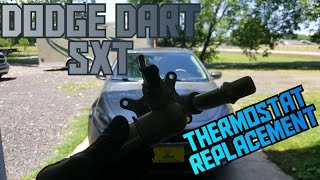
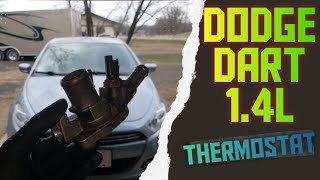
(OEM #4892642AD)— This is the most common and recommended fix. It replaces the thermostat, the ECT sensor, and the failure-prone plastic housing all at once, resolving the most likely causes of P0116 on this engine. This part number supersedes previous versions 4892642AA, 4892642AB, and 4892642AC.
Trusted brands: Mopar, Dorman, Gates
OEM price range: $65-$95
Aftermarket price range: $50-$80
Related Codes That Often Appear With This One
- P0128 — Stands for 'Coolant Temperature Below Thermostat Regulating Temperature'. This code is very commonly seen with P0116 because both are often triggered by a thermostat that is stuck open, preventing the engine from reaching its proper operating temperature within a specified time.
Platform-Specific Known Issues
- The integrated plastic thermostat housing on the 1.4L MultiAir Turbo engine is a known failure point, prone to cracking and leaking over time, which can lead to low coolant levels and trigger this code.
- Owners on forums frequently report that replacing the entire thermostat assembly is the only permanent fix after trying to replace just the sensor or clearing codes.
Mechanic-Grade Diagnostic Values
- ECT Sensor Resistance (Cold Engine) — expected: 2,000 - 3,000 Ω at 20°C (68°F).. Failure: A reading significantly outside this range, or an open/infinite resistance, indicates a faulty sensor.
- ECT Sensor Resistance (Hot Engine) — expected: 200 - 300 Ω at 90°C (194°F).. Failure: Resistance fails to drop into this range as the engine warms up.
- ECT Sensor Signal Voltage (Key On, Engine Off, Cold) — expected: 2.0V to 3.0V.. Failure: Voltage is near 5V (open circuit) or 0V (short circuit), suggesting a wiring or sensor fault.
- ECT Sensor Signal Voltage (Engine at Operating Temp) — expected: ~0.5V.. Failure: Voltage does not drop to this level as the engine warms, or it fluctuates erratically.
- ECT Sensor Reference Voltage (at connector, unplugged) — expected: 5V DC from the PCM on the signal wire.. Failure: No voltage or low voltage points to a wiring or PCM problem.
Scan Tool Commands That Help
- wiTECH (OEM Dealer Tool): Powertrain Verification Test — This is a standard procedure run after a repair to confirm that the diagnostic monitor for the fault (like P0116) runs and passes, ensuring the fix was successful and the Check Engine Light will stay off.
Wiring & Ground Locations
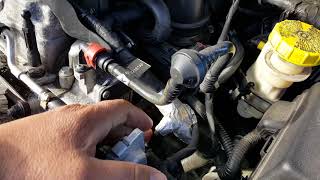
- ECT Sensor Connector — On the thermostat housing assembly, which is on the driver's side of the 1.4L engine. It is a 2-terminal oval-shaped connector.. This is the primary point for testing voltage and resistance. Pin 1 is the ECT Signal (DK BLU/RED wire) and Pin 2 is the Sensor Ground (BRN/VIO wire).
- G108 Ground — For the 1.4L engine, this ground is located at the rear center of the top of the engine.. A poor engine ground can cause floating or incorrect readings on various engine sensors, including the ECT sensor, that use the engine block as a ground path.
- Powertrain Control Module (PCM) — On the 1.4L engine, the PCM is located at the right rear corner of the engine compartment.. The PCM supplies the 5V reference and ground to the ECT sensor and interprets its signal. All wiring for the sensor ultimately terminates here.
Real Owner Repair Stories
- YouTube user @WrenchingonDarts (Dodge Dart, mileage 110,000) — Check Engine Light with codes for coolant thermostat.
❌ Tried (didn't work) The owner had replaced the thermostat housing assembly four years prior with a part from Rock Auto.
✅ What actually fixed it The owner replaced the thermostat housing assembly for a second time to resolve the recurring code, suggesting that even replacement parts can fail over time.
OEM Part Supersession History
4892642AA, 4892642AB, 4892642AC→4892642AD— Likely material or design improvements to address the high failure rate of the plastic housing and/or internal thermostat mechanism.
Diagnostic Flowchart
Other Known Issues on This Vehicle
Issues unrelated to this code that are worth knowing about as an owner of this generation:
- MultiAir Actuator ('Brick') Failure 🔴 High — A well-known and expensive failure. Can occur at various mileages, often signaled by misfire codes (e.g., P030X) or specific MultiAir solenoid codes (e.g., P1067, P1048).
- Clutch Master/Slave Cylinder Failure (Manual Transmission) 🔴 High — Very common issue on manual transmission models, leading to a clutch pedal that sticks to the floor and inability to shift gears. A class-action lawsuit was filed regarding this issue. (Ref: Multiple TSBs were issued, including one in Nov 2012 for the Dart.)
- Uconnect 8.4" Screen Delamination 🟠 Medium — Widespread problem where the screen's adhesive fails, causing bubbles, peeling, and 'ghost touches' that can make the radio and climate controls unusable. (Ref: NHTSA TSB S2108000130 acknowledges the issue.)
- Premature Battery/Electrical Issues 🟠 Medium → Shop Vehicle Battery — Many owners report frequent battery replacements and strange electrical behavior, such as flickering lights or random warning messages, sometimes caused by a weak battery.
- Turbocharger Failure 🔴 High — The turbo on the 1.4L engine can fail, often requiring a costly replacement. This was reported by some owners under the powertrain warranty.
Used vs. New Parts: Buying Guide for This Vehicle
When a used part is the smart pick: For this specific repair, a used part is almost never a smart choice. The thermostat housing is a known high-failure item made of plastic that becomes brittle with heat cycles. A used part from a junkyard has already been subjected to years of heat and is likely near the end of its life, if not already failed.
What to inspect on the donor part:
- Not applicable, as buying a used plastic thermostat housing is strongly discouraged.
OEM-only on this vehicle (don't cheap out):
- While not strictly 'OEM-only', using a new, quality part is critical. The OEM Mopar part (4892642AD) is the safest bet due to its known compatibility and latest revisions.
Aftermarket brands forum-validated for this vehicle:
- Dorman (Part #902-3101 or 902-3041) is a widely available aftermarket alternative that is frequently used.
- Gates is another reputable brand in cooling system components.
Brands owners have reported issues with on this vehicle:
- Unbranded, extremely low-cost parts from online marketplaces should be avoided. As one owner experienced, even known aftermarket parts can fail within a few years, so using a part of dubious quality is a significant risk for a repeat repair.
Real Owner Stories
Aggregated from forums and TSBs cited above. Mileages and costs reflect what owners reported in those sources.
2013 Dodge Dart 1.4L Turbo
Symptoms: Check engine light came on and the temperature gauge on the dashboard would not rise at all.
What fixed it: Replacing the entire thermostat housing assembly with an OEM Mopar part because the old thermostat was found stuck open.
Source hint: dodgedart.org - 'P0128 and P0116 codes'
2013-2016 Dodge Dart 1.4L Turbo
Symptoms: Received an 'engine over heating' message with a temperature reading of -41°F and the cooling fans were running constantly.
What fixed it: Replacing the entire thermostat housing assembly as the standard fix for a failed ECT sensor or thermostat.
Source hint: reddit.com/r/dodgedart - 'Coolant Thermostat Issue'
Fiat with 1.4L MultiAir Turbo engine
Symptoms: The temperature gauge would drop to zero intermittently while driving, triggering code P0116.
What fixed it: Investigation of the sensor, thermostat, and potential faulty ground wires.
Source hint: thefiatforum.com - 'Temperature gauge drops to zero and P0116'
Related OBD-II Codes
Frequently Asked Questions
Why is my 2013 Dodge Dart 1.4L Turbo showing -41°F on the dash when it's warm outside?
Can I just replace the sensor to fix the P0116 code on my Dart?
Why are my cooling fans running at high speed even though I just started my car?
Is there a TSB for the clutch pedal sticking on my 2013 Dart while I'm fixing this coolant code?
What is the normal operating temperature for the 1.4L MultiAir Turbo engine?
Could a low coolant level cause the P0116 code on my Dart?
Helpful Videos
We Have This Part in Stock


The information in this article is provided for general reference and educational purposes only. Vehicle specifications, procedures, and part compatibility can vary by production date, trim level, and region. Always consult your vehicle's factory service manual and verify part numbers before purchasing or performing repairs. Safety-critical components such as airbags, seat belts, and braking systems should be installed by a qualified professional.
- Dodge Dart:
- 🧭 Diagnostic Flowchart
- 🎬 Helpful Videos
- 🛍️ Shop This Part
- What's Unique About the 2013-2016 Dodge Dart
- Symptoms You May Notice
- Most Likely Causes
- Rare But Worth Checking
- Diagnosis Steps
- Parts You'll Likely Need
- Related Codes That Often Appear With This One
- Platform-Specific Known Issues
- Mechanic-Grade Diagnostic Values
- Scan Tool Commands That Help
- Wiring & Ground Locations
- Real Owner Repair Stories
- OEM Part Supersession History
- Other Known Issues on This Vehicle
- Used vs. New Parts: Buying Guide for This Vehicle
- Real Owner Stories
- 2013 Dodge Dart 1.4L Turbo
- 2013-2016 Dodge Dart 1.4L Turbo
- Fiat with 1.4L MultiAir Turbo engine
- Related OBD-II Codes
- Frequently Asked Questions
- 🎟️ Get 5% Off