

P0117 on 2005-2013 Chevrolet Corvette: ECT Sensor Circuit Low Causes & Fixes
On a C6 Corvette, P0117 almost always points to a failed Engine Coolant Temperature (ECT) sensor or its wiring connector. This causes symptoms like the cooling fans running constantly and incorrect temperature gauge readings. A new OEM-grade sensor costs about $20-$40, and it's a common DIY fix.
- P0117 on a C6 Corvette is an electrical fault, not a sign of actual engine overheating.
- The most common symptom is the cooling fans running constantly, even when the engine is cold.
- The fix is almost always replacing the Engine Coolant Temperature (ECT) sensor, which is a cheap and accessible part.
- Carefully inspect the wiring connector for brittleness or damage, as it is also a frequent point of failure, especially after working near the #1 spark plug.
- This is a straightforward DIY repair for most owners.
What's Unique About the 2005-2013 Chevrolet Corvette
The 2005-2013 Corvette (C6 generation) uses LS-family V8 engines (LS2, LS3, LS7) where the ECT sensor is a very common and well-documented failure point. The sensor is located on the driver's side cylinder head, tucked near the #1 spark plug and alternator, making it susceptible to heat and vibration. Over time, the sensor can fail internally by shorting to ground, or the plastic connector pigtail can become brittle from heat cycles and break, leading to the P0117 code. This is one of the most frequent electronic issues C6 owners encounter, often happening after related work like changing spark plugs.
Symptoms You May Notice
- Check Engine Light is on
- Cooling fans run constantly, even when the engine is cold.
- Temperature gauge reads incorrectly (either stuck at cold/zero or maxed out at hot).
- "ENGINE HOT / AC OFF" message on the Driver Information Center (DIC), even on a cold start.
- Hard starting, especially when the engine is cold
- Poor fuel economy
- Engine may run rough or hesitate
- Reduced Engine Power mode may be activated.
- Replacing the thermostat. A bad thermostat typically causes actual overheating or a P0128 code (Coolant Temp Below Thermostat Regulating Temperature), not a P0117 electrical circuit code.
- Adding coolant. While low coolant can cause overheating, it will not cause a 'circuit low' fault code. The P0117 code is an electrical fault, not a reading of actual high temperature.
Most Likely Causes
- Failed Engine Coolant Temperature (ECT) Sensor 🔴 High Probability → Shop Engine Coolant Temperature Sensor The sensor is a known high-failure item on LS engines due to its location and constant exposure to high engine temperatures. It can short internally, causing the low voltage signal that triggers the P0117 code.
How to confirm: Using a scan tool, check the live ECT data. If it shows an impossibly high temperature (e.g., 284°F or 140°C) on a cold engine, the sensor is the prime suspect. You can also test the sensor's resistance with a multimeter; at room temperature (~68°F), it should be between 2,000 and 3,000 ohms. 🎬 Watch: How to test and replace an ECT sensor A reading of zero or very low ohms indicates a dead short.
Typical fix: Replace the ECT sensor. It's located on the driver's side cylinder head. Some coolant will be lost, so have a catch pan ready. The new sensor should be installed with thread sealant. After replacement, the code may need to be cleared with a scan tool or by disconnecting the battery for about 10 minutes.
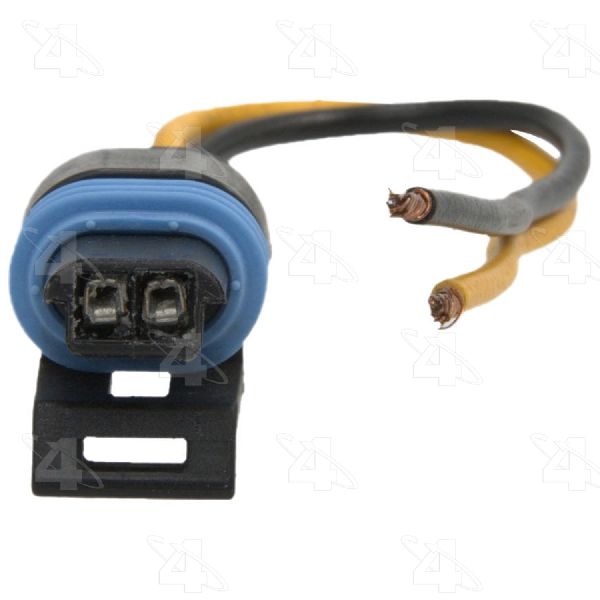
Est. part cost: $15-$40 - Damaged ECT Sensor Wiring or Connector 🟡 Medium Probability → Shop Engine Coolant Temperature Sensor The wiring and plastic connector are located in a high-heat area near the exhaust manifold and alternator. Over time, the plastic can become brittle and crack, and wires can fray or have their insulation melt, causing a short to ground. This often occurs during other maintenance, like spark plug changes.
How to confirm: Visually inspect the connector and the two wires (typically a yellow 5-volt reference wire and a tan low-reference/ground wire) for any signs of cracking, melting, or exposed copper. Wiggle the harness with the engine running to see if the temperature reading on a scan tool fluctuates wildly. If unplugging the sensor causes the scan tool reading to drop to -40°F, the wiring is likely okay and the sensor is bad.
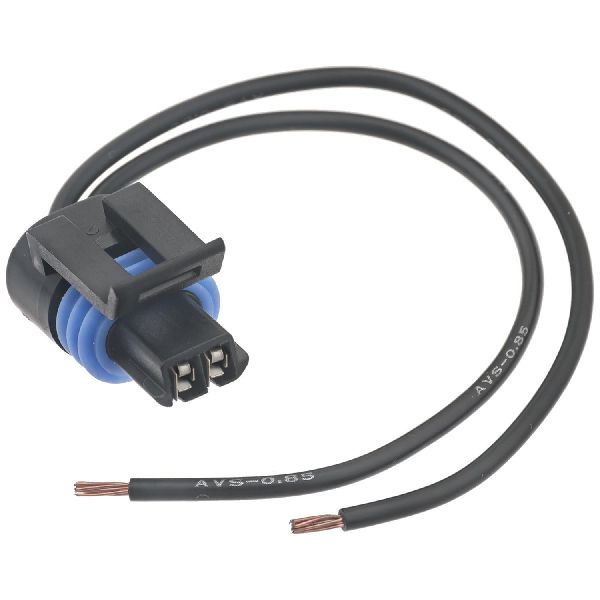
Typical fix: Replace the connector pigtail. This involves cutting the old connector off, soldering or crimping the new one on, and using heat-shrink tubing to protect the connections. Common pigtail part numbers include ACDelco PT2182.
Est. part cost: $10-$25
Rare But Worth Checking
- Faulty Powertrain Control Module (PCM): → Shop Engine Control Module (ECM) This is extremely rare. The PCM should only be considered if a new sensor, new pigtail, and verified wiring do not resolve the code. A PCM failure can cause a variety of sensor circuit codes.
Diagnosis Steps
- Connect an OBD-II scanner and confirm P0117 is the active code.
- View live data on the scanner. Check the Engine Coolant Temperature reading. If it's pegged at a very high number (e.g., 284°F or 140°C) even when the engine is cold, this confirms the fault.
- Turn the engine off. Locate the ECT sensor on the driver's side cylinder head, between the #1 and #3 spark plugs, near the alternator.
- Inspect the sensor's two-wire connector and harness for any visible damage, corrosion, or loose connection. Pay close attention to brittle plastic or frayed wires.
- Disconnect the ECT sensor connector. Turn the ignition to 'ON' (engine off). The temperature reading on the scan tool should now drop to its lowest possible value (e.g., -40°F).
- If the reading drops to -40°F, the wiring from the PCM is likely good, and the sensor itself has failed. Replace the ECT sensor.
- If the reading stays high after unplugging the sensor, the signal wire (typically yellow) is likely shorted to ground somewhere between the connector and the PCM. 🎬 Watch: Quick DIY methods to fix a P0117 code Inspect the harness carefully for damage.
- To be certain of the wiring, you can use a multimeter to check for 5 volts on the reference wire (usually yellow) at the connector with the key on. Then check the resistance of the sensor itself; it should not be zero ohms.
Parts You'll Likely Need
- Engine Coolant Temperature (ECT) Sensor
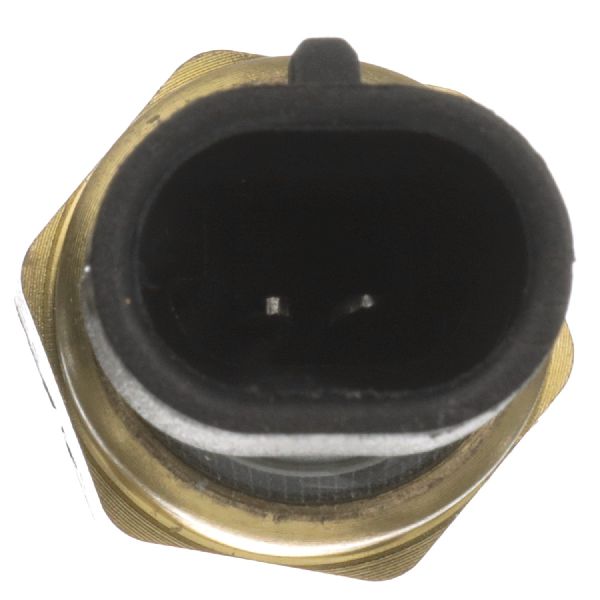
(OEM #19236568)— This is the most common failure point for a P0117 code. The internal thermistor shorts out, causing the low voltage reading.
Trusted brands: ACDelco (OEM Part #19236568, Professional/Gold Part #213-4514)
OEM price range: $20-$40
Aftermarket price range: $15-$30 - ECT Sensor Connector Pigtail
(OEM #ACDelco PT2182)— The original connector often becomes brittle from engine heat and can break during sensor replacement or from vibration, causing a poor connection or short.
Trusted brands: ACDelco, Dorman
OEM price range: $15-$30
Aftermarket price range: $10-$20
Related Codes That Often Appear With This One
- P0118 — P0118 is 'ECT Circuit High'. If the wiring is damaged and intermittently shorting and opening, you might see both codes logged over time. A P0118 is often caused by the sensor being disconnected.
Platform-Specific Known Issues
- Damage during Spark Plug Change: Many owners report triggering the P0117 code immediately after changing spark plugs. The ECT sensor and its wiring are located very close to the #1 spark plug on the driver's side, and it's easy to accidentally damage the brittle connector or wiring during that job.
- Real Owner Experience: A user on CorvetteForum.com experienced the classic P0117 symptoms (ENGINE HOT message, temp gauge at zero) after a plug and wire change. The fix was to replace the damaged pigtail connector by soldering in a new one and protecting it with heat shrink and wire loom. After disconnecting the battery to clear the codes, the issue was resolved.
Technical Service Bulletins (TSBs) & Recalls
- Manufacturer TSB Bulletin #PIT5713A: While issued for other GM models like the Silverado, this bulletin notes that P0117 can appear in combination with various communication codes (U0073, U0100) and other sensor faults (P0107, P0119), indicating potential shared electrical architecture issues across the manufacturer's lineup.
Mechanic-Grade Diagnostic Values
- ECT Sensor Resistance vs. Temperature — expected: Resistance should decrease as temperature increases. At 20°C (68°F), expect ~2,800-2,900Ω. At 80°C (176°F), expect ~300Ω. At 100°C (212°F), expect ~180-210Ω.. Failure: A reading near zero ohms indicates a shorted sensor. An infinitely high (open circuit) reading is also a failure, though it would typically set a P0118 code.
- ECT Signal Wire Voltage (Key On, Engine Off) — expected: With the sensor connected, voltage varies with temperature (e.g., ~3.8V at 20°C). With the sensor disconnected, the signal wire should read a steady 5 volts from the ECM.. Failure: A voltage reading below 0.14V with the sensor connected triggers the P0117 code. If the voltage is 0V with the sensor disconnected, the signal wire is shorted to ground.
- Scan Tool Live Data (Sensor Disconnected) — expected: When the ECT sensor connector is unplugged, the temperature reading on a scan tool should immediately drop to the lowest possible value, typically -40°F or -40°C.. Failure: If the temperature remains pegged high (e.g., 284°F) after unplugging the sensor, the signal wire is shorted to ground between the connector and the ECM.
- Scan Tool Live Data (Connector Jumpered) — expected: If a jumper wire is used to connect the two terminals (Yellow and Tan wires) in the sensor connector, the scan tool temperature reading should go to the maximum possible value, around 284-302°F (140-150°C).. Failure: If the reading does not max out, it may indicate an issue with the 5V reference supply or the low-reference circuit.
Scan Tool Commands That Help
- Tech2 / GDS2 or equivalent: Live Data Monitoring (ECT Parameter) — This is not a bidirectional command but the primary function used for this diagnosis. It allows the technician to observe the temperature the ECM is seeing in real-time to verify the fault and confirm the fix. It is used to watch for the change to -40°F when unplugging the sensor and the change to max temp when jumpering the connector.
Wiring & Ground Locations
- ECT Sensor Wires — At the two-pin connector on the driver's side cylinder head, near the #1 spark plug.. These are the two wires that must be tested. The Yellow wire is the 5-volt reference/signal, and the Tan wire is the low reference (sensor ground) provided by the ECM. A short between the yellow wire and any ground will cause P0117.
- ECM (Engine Control Module) — Located inside the front passenger-side wheel well. The inner fender liner must be removed for access.. This is the source of the 5V reference and the destination for the signal. In rare cases, a faulty ECM or a bad pin connection at the ECM is the cause of P0117.
- ECM Connector C2, Pin 59 (ECT Signal) — This is the specific pin for the ECT sensor signal (Yellow wire) on the middle connector (C2) of the LS3/LS7 E38 ECM. (Note: Pinouts can vary slightly by year/ECM type, always verify with a vehicle-specific diagram).. If a short to ground is suspected, continuity testing is performed between this pin and the sensor connector. This pin is also where a pin drag test would be performed if an intermittent connection is suspected.
- ECM Connector C2, Pin 27 (Low Reference) — This is the specific pin for the ECT sensor low reference (Tan wire) on the middle connector (C2) of the LS3/LS7 E38 ECM. (Note: Pinouts can vary slightly by year/ECM type, always verify with a vehicle-specific diagram).. This provides the 'ground' for the sensor. A break in this wire would cause a P0118 (high circuit), not a P0117, but it's critical for circuit integrity.
- Engine Block Grounds — Key ground straps are located on the rear of the driver's side cylinder head and from the engine block to the frame.. While the ECT sensor has a dedicated low-reference from the ECM, the ECM itself relies on clean, tight engine and chassis grounds. A poor main ground can cause floating voltages and erratic behavior across multiple sensors, potentially contributing to sensor circuit codes.
Real Owner Repair Stories
- CorvetteForum user 'BIGMAC', diagnosed by 'C5 Diag' (2012 Corvette Grand Sport (LS3)) — P0117 code, "HOT ENGINE AIR CONDITIONING OFF" message on DIC, and temperature gauge stuck at zero immediately after performing a spark plug and wire change.
❌ Tried (didn't work) The owner immediately suspected damage during the plug change and sought diagnostic confirmation before replacing parts.
✅ What actually fixed it The confirmed diagnostic path was to inspect the wiring and connector near the #1 spark plug that was likely damaged during the previous job. The expert advice given was to test the sensor and wiring by checking resistance and voltage, with the explicit fix being the replacement of either the shorted sensor or the damaged pigtail connector. - NHTSA ODI #10980210: An owner of another Chevrolet model reported that the dealership identified the need to replace the coolant thermostat sensor and housing after the vehicle displayed error codes P0118 and P0117, noting that this problem could cause the engine to overheat.
OEM Part Supersession History
15326388, 12191170→12608814 (also sold as ACDelco 213-4333)— Part consolidation and potential design updates by GM over the years.
Heads up: These parts are generally cross-compatible for LS-family engines, as they share the same M12x1.5 thread and 2-pin connector design.19236568 (GM Genuine)→213-4514 (ACDelco Professional/Gold)— This is not a supersession but a branding distinction. 19236568 is the GM OEM part number, while 213-4514 is the corresponding ACDelco aftermarket part number, often identical in construction.
Model Year Variations Within This Range
- 2005-2013: The Engine Control Module (ECM) model changed during the C6 generation (e.g., E40, E67 for LS2; E38 for LS3/LS7). However, the ECT sensor's operating principle, 2-wire design (5V reference, low reference), and physical location on the cylinder head remain consistent, making the diagnosis for P0117 identical across all years and engines in this range.
Diagnostic Flowchart
Other Known Issues on This Vehicle
Issues unrelated to this code that are worth knowing about as an owner of this generation:
- Harmonic Balancer Wobble 🔴 High — Common across all C6 model years. The rubber bonding degrades, causing the outer ring to wobble, which can throw the serpentine belt and damage other components. Often presents as a 'chirping' noise. (Ref: TSB #05-06-01-001A for early 2005 models with a loose bolt, but the delamination issue is more widespread.)
- Fuel Level Sending Unit Failure 🟠 Medium — Very common issue where the fuel gauge becomes erratic or reads empty, often when the tank is less than half full. Triggers codes like P2066/P2068. Requires dropping the fuel tanks to replace the sender. (Ref: TSB #02-06-04-010 suggests fuel additives may help with sulfur contamination, but often the sender's contacts are physically worn out.)
- Removable Roof Panel Delamination ('Flying Roof') 🔴 High — Widespread on early C6 models (2005-2007), where the adhesive bonding the roof panel to its frame fails, causing noise or complete separation. (Ref: NHTSA Recall #09V493000 (GM Recall #090230) was issued to replace the roof panel.)
- LS7 Engine Valve Guide Wear 🔴 High — Specific to the LS7 engine in the Z06. Caused by a factory machining error leading to excessive wear, which can result in a dropped valve and catastrophic engine failure. (Ref: No official recall, but GM acknowledged the issue and improved quality control in later production. Owners often perform a 'wiggle test' to check for wear.)
- Manual Transmission Clutch Master Cylinder Failure 🟠 Medium — Affects all manual transmission C6 models. The clutch pedal can fail to return after being depressed, potentially allowing the car to be started in gear. (Ref: Special Coverage Adjustment #14717 covers replacement of the clutch master cylinder for 10 years/120,000 miles.)
- Steering Column Lock / Active Handling Error 🟠 Medium — Common on 2005-2008 models. Movement of the telescoping steering column can damage the wiring for the steering wheel position sensor, causing an 'Active Handling System' error on the DIC. (Ref: TSB #06-02-35-002B addresses securing the connector to prevent the issue.)
Used vs. New Parts: Buying Guide for This Vehicle
When a used part is the smart pick: A used part is generally NOT recommended for this repair due to the low cost of new parts. The only exception is sourcing a used connector pigtail from a salvage yard harness if a new pigtail is not readily available. Inspect the used connector for any signs of brittleness, cracking, or corroded terminals before purchase.
Donor-vehicle mileage cap: roughly under 50000 miles for the part to have meaningful remaining life.
What to inspect on the donor part:
- For a pigtail: Connector plastic should be flexible, not brittle.
- Locking tab must be intact and functional.
- Wires should have at least 4-6 inches of length for splicing.
- No signs of melting, corrosion, or previous repair on the wires or terminals.
OEM-only on this vehicle (don't cheap out):
- No parts for this specific repair are strictly 'OEM-only', but using an OEM ACDelco sensor is strongly advised.
Aftermarket brands forum-validated for this vehicle:
- ACDelco (OEM and Professional/Gold lines are preferred).
- Standard Motor Products (SMP) is a reputable alternative.
- NTK is a known OEM supplier for many sensors and is a reliable choice.
Brands owners have reported issues with on this vehicle:
- Unnamed, low-cost 'white box' sensors from online marketplaces. Forum discussions frequently advise against the cheapest available options due to high rates of premature failure and inaccurate readings.
Real Owner Stories
Aggregated from forums and TSBs cited above. Mileages and costs reflect what owners reported in those sources.
2005-2013 Chevrolet Corvette C6
Symptoms: The user experienced 'ENGINE HOT' message on the DIC and the temperature gauge was stuck at zero immediately after performing a spark plug and wire change.
What fixed it: Replaced the damaged pigtail connector by soldering in a new one, protecting it with heat shrink and wire loom, and disconnecting the battery to clear the codes.
Source hint: CorvetteForum.com - "Code P0117 after installing plugs and wires"
NHTSA Report Analysis
Symptoms: A manufacturer service bulletin notes that P0117 can be part of a larger set of diagnostic trouble codes including P0107, P0119, and various communication errors (U0100, U0121).
What fixed it: While specific to the Silverado, Bulletin #PIT5713A highlights that these codes often appear together during electrical system malfunctions.
Source hint: Bulletin #PIT5713A
Related OBD-II Codes
Frequently Asked Questions
I just changed my spark plugs and now I have a P0117 code and an 'ENGINE HOT' message. Is this a coincidence?
My Corvette's DIC says 'ENGINE HOT / AC OFF' even though I just started it. Does this mean my engine is actually overheating?
Which specific ECT sensor part number should I use for my LS-based Corvette or CTS-V?
Is there a specific pigtail connector I should buy if my wiring is melted near the exhaust manifold?
Can I fix the P0117 code by just disconnecting the battery?
Does the LS7 engine in the Z06 have any specific issues I should watch for while diagnosing cooling codes?
Helpful Videos

![How to Fix P0117 Engine Code in 3 Minutes [2 DIY Methods / Only $7.43]](https://img.youtube.com/vi/0PE930ETa4Y/mqdefault.jpg)
We Have This Part in Stock


The information in this article is provided for general reference and educational purposes only. Vehicle specifications, procedures, and part compatibility can vary by production date, trim level, and region. Always consult your vehicle's factory service manual and verify part numbers before purchasing or performing repairs. Safety-critical components such as airbags, seat belts, and braking systems should be installed by a qualified professional.
- Chevrolet Corvette:
- 🧭 Diagnostic Flowchart
- 🎬 Helpful Videos
- 🛍️ Shop This Part
- What's Unique About the 2005-2013 Chevrolet Corvette
- Symptoms You May Notice
- Most Likely Causes
- Rare But Worth Checking
- Diagnosis Steps
- Parts You'll Likely Need
- Related Codes That Often Appear With This One
- Platform-Specific Known Issues
- Technical Service Bulletins (TSBs) & Recalls
- Mechanic-Grade Diagnostic Values
- Scan Tool Commands That Help
- Wiring & Ground Locations
- Real Owner Repair Stories
- OEM Part Supersession History
- Model Year Variations Within This Range
- Other Known Issues on This Vehicle
- Used vs. New Parts: Buying Guide for This Vehicle
- Real Owner Stories
- 2005-2013 Chevrolet Corvette C6
- NHTSA Report Analysis
- Related OBD-II Codes
- Frequently Asked Questions
- 🎟️ Get 5% Off