

P0118 on 2003-2007 Cadillac CTS 3.2L: Engine Coolant Temperature Sensor Circuit High Input Causes and Fixes
This code almost always points to a failed Engine Coolant Temperature (ECT) sensor or its wiring. On the 3.2L V6, the sensor is notoriously difficult to access at the rear of the engine, making replacement a labor-intensive job. Expect to pay around $25-$45 for an OEM sensor and 3-5 hours of labor if done by a shop due to the required disassembly of the cowl and intake.
- P0118 on a 2003-2004 CTS 3.2L means the computer thinks the engine is frozen (-40°) due to an open circuit.
- The most likely cause is a failed Engine Coolant Temperature (ECT) sensor.
- A damaged wire or connector is the second most likely cause.
- The biggest challenge is not the diagnosis but the repair itself, as the sensor is buried at the back of the engine, requiring several hours of labor to access.
- Due to the high labor involved, DIY is challenging (4/5 difficulty). If taking it to a shop, expect a bill of $300-$550, with most of the cost being labor.
What's Unique About the 2003-2007 Cadillac CTS
The 2003-2004 Cadillac CTS with the 3.2L V6 (an Opel-designed L81/LA3 engine) is infamous for having the ECT sensor in a very difficult-to-reach location. It is positioned on a water crossover pipe at the absolute rear of the engine, buried underneath the cowl's firewall overhang and the intake plenum. This makes what is an electrically simple diagnosis a mechanically challenging repair. Access requires removing the windshield wipers, the entire plastic and metal cowl assembly, and often the upper intake manifold, significantly increasing labor time from a 15-minute job on other cars to a 3+ hour job on this specific model.
Symptoms You May Notice
- Check Engine Light is on
- Engine cooling fans run constantly, even when the engine is cold
- Hard starting, especially when the engine is cold
- Rough idle or hesitation until the engine warms up
- Poor fuel economy due to the ECM commanding a rich fuel mixture
- Black smoke from the exhaust, particularly on startup
- Inaccurate or non-functional temperature gauge on the dashboard (may read '---' or stay on cold)
- A/C compressor may not engage
- Replacing the thermostat. A bad thermostat typically causes overheating or a P0128 code (engine not reaching operating temperature), not a P0118 circuit code.
Most Likely Causes
- Failed Engine Coolant Temperature (ECT) Sensor 🔴 High Probability → Shop Engine Coolant Temperature Sensor The sensor is a common failure item due to age and extreme heat cycles at the back of the engine. The internal thermistor can fail, creating an open circuit which results in the high voltage reading.
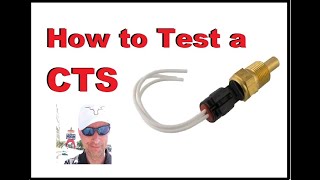
How to confirm: Using a scan tool, check the live data for the ECT sensor. If it reads a static -40°F or -40°C, the sensor or its circuit is open. You can also test the sensor's resistance with a multimeter; an open circuit (infinite resistance) confirms internal failure. 🎬 Watch: How to test a coolant sensor with a multimeter. A good sensor should have high resistance when cold and low resistance when hot.
Typical fix: Replace the ECT sensor.
Est. part cost: $20-$45 - Damaged Wiring or Connector 🟡 Medium Probability The wiring harness at the back of the engine is exposed to significant heat, which makes the wire insulation and connector plastic brittle over time. The locking tab on the connector is notorious for breaking, leading to a poor connection. Wires can also break internally near the connector.
How to confirm: Visually inspect the wiring and connector for any signs of damage, corrosion, or loose pins. The connector is often the first point of failure. Wiggling the harness while monitoring the live data on a scan tool can help identify an intermittent connection. If the temperature reading flickers, the wiring is suspect.
Typical fix: Repair the broken wire(s) or replace the pigtail connector. Common pigtail part numbers include ACDelco PT2386 and Standard Motor Products S-1024.
Est. part cost: $15-$35 for a pigtail connector
Rare But Worth Checking
- Faulty Engine Control Module (ECM): This is extremely rare. The ECM should only be considered after thoroughly testing and confirming the sensor and wiring are good. A P0118 code is almost never caused by a bad ECM. Before condemning the ECM, verify its ground connections are clean and tight.
Diagnosis Steps
- Connect an OBD-II scanner and confirm the P0118 code is present.
- View live data on the scanner. Look at the Engine Coolant Temperature reading. If it shows -40°F or a similarly low, fixed value, it confirms the ECM is seeing an open circuit.
- Locate the ECT sensor at the rear of the engine on the coolant crossover pipe. This will require patience and possibly a mirror and flashlight.
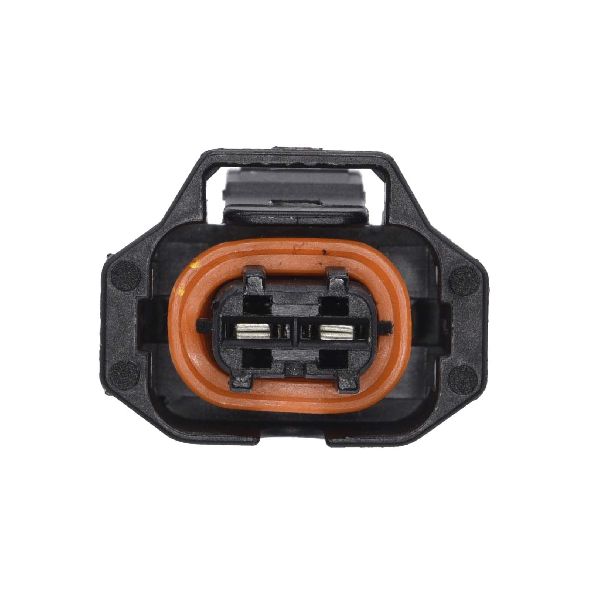
- Inspect the sensor's electrical connector and wiring. Check for a broken locking tab, corroded pins, or brittle/cracked wires leading to the connector.
- Disconnect the sensor. With the ignition on (engine off), use a multimeter to test the two terminals in the harness-side connector. You should find a 5-volt reference on one wire (often Yellow) and a good ground on the other (often Tan). The Tan wire is a low reference that goes to ECM C1 Pin 54, and the Yellow wire is the signal wire from ECM C1 Pin 61.
- If the 5V reference and ground are present, the wiring from the ECM is likely okay. To definitively condemn the sensor, use a fused jumper wire to briefly connect the two terminals of the harness connector. The temperature reading on your scan tool should jump to a very high value (e.g., 250°F+). If it does, the sensor has failed internally. Do not leave the jumper in place.
- If the 5V reference or ground is missing, there is a problem in the wiring between the connector and the ECM. Trace the specific wire (Yellow for signal, Tan for low reference) to find the break or short. The break is often within a few inches of the connector due to heat and vibration.
- If the sensor and wiring both check out perfectly, the final, though highly unlikely, possibility is a faulty ECM driver circuit.
Parts You'll Likely Need
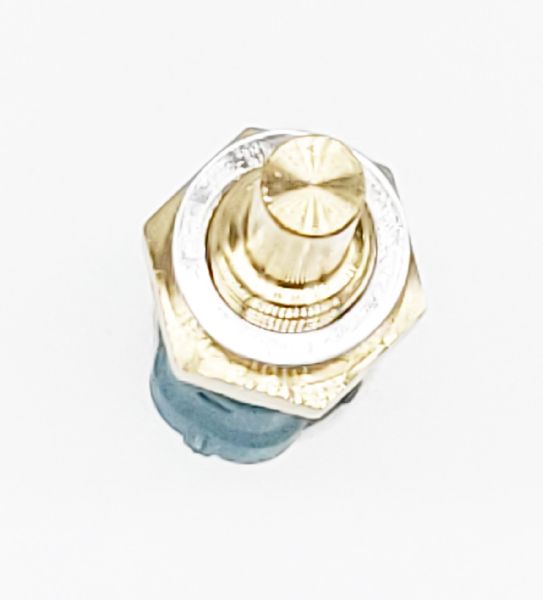
- Engine Coolant Temperature Sensor
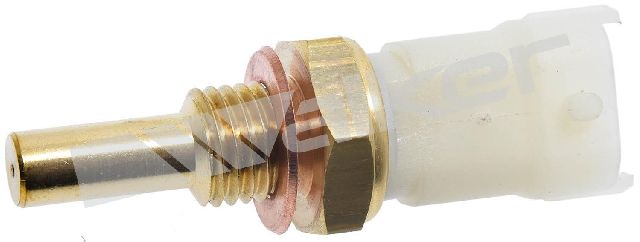
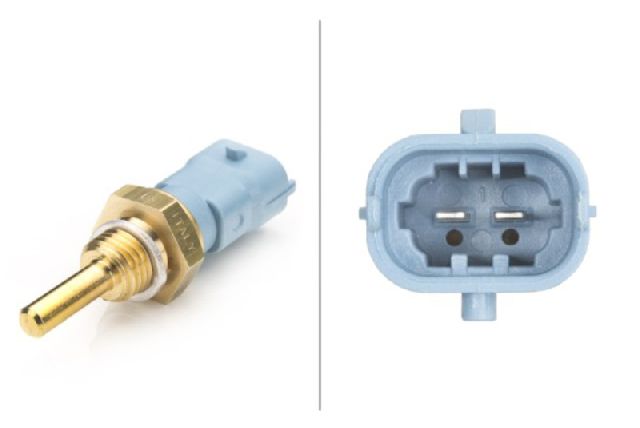
(OEM #90570185)— This is the most common failure point for a P0118 code. The internal thermistor fails, creating an open circuit.
Trusted brands: ACDelco (GM Original), Delphi, Bosch
OEM price range: $25-$45
Aftermarket price range: $15-$30 - ECT Sensor Pigtail Connector
(OEM #ACDelco PT2386)— The original connector becomes brittle from heat and age. The locking tab often breaks during removal, or the wires fail internally, necessitating replacement.
Trusted brands: ACDelco, Standard Motor Products (S-1024), Dorman (85137)
OEM price range: $25-$35
Aftermarket price range: $15-$25
Related Codes That Often Appear With This One
- P0117 — P0117 is 'ECT Circuit Low Input,' the opposite of P0118. Seeing them together or intermittently could indicate a wiring issue where a wire is frayed, causing it to be open sometimes (P0118) and shorted to ground at other times (P0117).
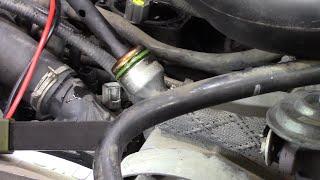
- P0343 — A P0343 (Camshaft Position Sensor 'A' Circuit High Input) can appear with P0118. On this engine, the ECT and Camshaft Position Sensor may share a low-reference (ground) wire that splices together in the harness. A fault in this shared circuit can cause both codes to set simultaneously, pointing towards a wiring issue rather than two separate sensor failures. 🎬 See how to diagnose a P0118 when a new sensor fails.
Platform-Specific Known Issues
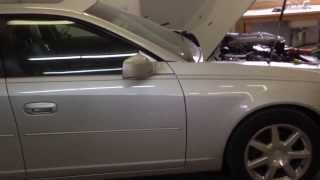
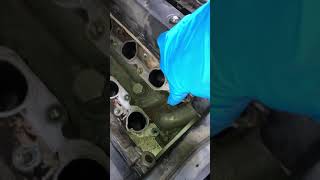
- The primary issue for this vehicle is the difficult location of the ECT sensor at the rear of the 3.2L V6 engine, which requires significant disassembly (cowl, wiper assembly, intake plenum) to access, turning a simple part swap into a labor-intensive job. 🎬 Watch this walkthrough of the difficult CTS sensor replacement process.
- A repair story on CadillacForums.com for a 2003 CTS 3.2L with P0118 confirms the difficulty. The owner had to remove the upper intake manifold for access and noted the job took several hours. The cause was a failed original sensor, and the repair successfully cleared the code.
Mechanic-Grade Diagnostic Values
- ECT Sensor Resistance (NTC Type) — expected: Approximately 2000-3000 Ω at 20°C (68°F), decreasing to 200-300 Ω at 90°C (194°F).. Failure: An open circuit (infinite resistance) or a value that does not change with temperature indicates a failed sensor.
- ECT Sensor Signal Voltage (Key On, Engine Off) — expected: Approximately 2.0V to 3.0V on a cold engine.. Failure: A reading near 5.0V indicates an open circuit (P0118). A reading near 0V indicates a short to ground (P0117).
- ECT Sensor Signal Voltage (Engine at Operating Temp) — expected: Approximately 0.5V.. Failure: A voltage that remains high (e.g., over 1.25V) when the engine is warm indicates a faulty sensor or circuit.
Scan Tool Commands That Help
- GM Tech2: Live Data Stream (ECT Sensor Voltage/Temperature) — The Tech2 is the GM dealer-level tool for this era. While there isn't a specific bidirectional test for the ECT sensor itself, the Tech2 provides the most accurate and detailed live data, status flags, and communication with all vehicle modules, which is critical for diagnosing complex wiring issues like a faulty shared reference circuit.
Wiring & Ground Locations
- ECM/PCM — The Engine Control Module is located in the engine bay. On the 3.2L V6, it is typically found on the driver's side, near the firewall or shock tower.. All sensor wiring terminates here. Verifying clean, tight connections at the ECM is a crucial step if a wiring fault is suspected between the sensor and the computer.
- G103 / G104 — On similar GM platforms, critical PCM grounds are located at the back of the cylinder heads, on the engine block just above the bellhousing. G103 is often on the passenger side and G104 on the driver's side.. The ECT sensor circuit relies on a clean 'low reference' signal, which is essentially a ground provided by the ECM. A corroded or loose main engine ground can introduce voltage offsets and cause sensor circuit codes like P0118.
Real Owner Repair Stories
- 2CarPros Forum (2003 Cadillac CTS 3.2L V6) — Cranks but no start, initially rough running. Scan tool showed pending codes P0118 and P0343, with live data showing -40° on the coolant sensor.
❌ Tried (didn't work) Replaced thermostat, Replaced camshaft position sensor
✅ What actually fixed it The issue was identified as a problem with the shared low-reference (ground) wire used by both the ECT sensor and the camshaft position sensor. The expert advised that the open circuit causing the -40° reading was likely in this shared 5-volt reference circuit, indicating a wiring problem, not a sensor failure.
OEM Part Supersession History
90570185→90570185 (current)— This part number remains the current OEM designation for this application.
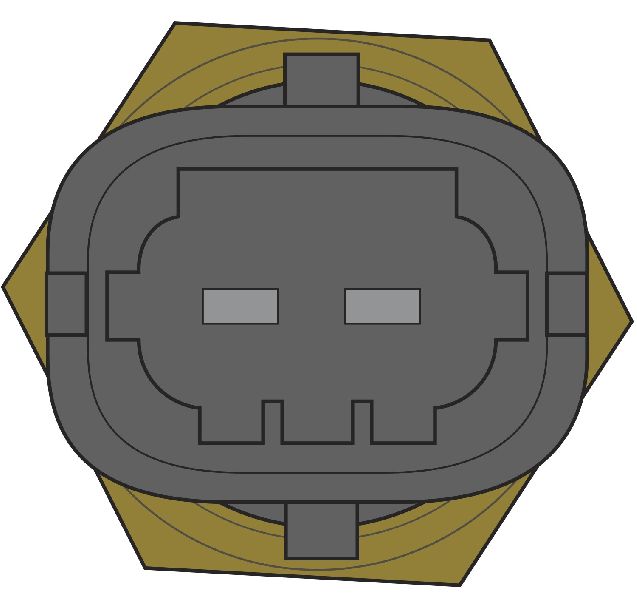
Heads up: ACDelco part 213-953 is also associated with this application and is a valid alternative. Ensure any replacement has a two-pin connector and the correct thread pitch.
Model Year Variations Within This Range
- 2004: For the 2004 model year, the 3.2L V6 (LA3) engine was primarily paired with the 5-speed manual transmission. Models with the 5-speed automatic transmission received the new, more powerful 3.6L V6 (LY7) engine. Therefore, a 2004 CTS with P0118 and a 3.2L engine is almost certainly a manual transmission model.
- 2003-2004: The ECM part number may differ between 2003 and 2004, even for the same 3.2L engine. For example, 12581155 is a common part number for 2003 models. Always verify the ECM part number on the original unit before ordering a replacement.
Diagnostic Flowchart
Other Known Issues on This Vehicle
Issues unrelated to this code that are worth knowing about as an owner of this generation:
- Timing Belt Replacement 🔴 High — This is a critical maintenance item. The manufacturer's recommended interval is every 100,000 miles or 96 months (8 years), whichever comes first. Failure is catastrophic as the 3.2L is an interference engine.
- PCV System Clogging and Oil Leaks 🟠 Medium — Common on high-mileage vehicles, especially those operated in cold climates. The PCV system can clog, leading to excessive crankcase pressure that forces oil past valve cover gaskets and other seals. This can cause oil to leak onto the exhaust (creating smoke/smell) or into spark plug tubes, causing misfires. (Ref: TSB 05-06-01-007A addresses oil leaks from the cam/valve covers due to a blocked crankcase ventilation system in cold weather.)
- Rear Differential Failure 🟠 Medium — While more prevalent on the high-performance CTS-V models, early first-generation CTS models are also noted to have rear differential issues, including whining noises and eventual failure. Fluid leaks from the pinion seal are a common precursor. (Ref: Recalls like N192279370 were issued for later models for fracturing roll pins, but the underlying weakness was present in earlier generations.)
- Electrical and Sensor Problems 🟡 Low — Owners report a variety of electrical issues, including unreliable sensor readings (crankshaft/camshaft position sensors), and intermittent check engine lights for various codes. These are often age-related and due to harness/connector degradation.
Used vs. New Parts: Buying Guide for This Vehicle
When a used part is the smart pick: For this repair, a used part is generally not recommended for the sensor itself due to its low cost and high failure rate. However, sourcing a used pigtail connector from a junkyard vehicle can be a smart choice if the original connector is broken and a new pigtail is unavailable or expensive. The wiring harness itself is also a viable used part.
Donor-vehicle mileage cap: roughly under 120000 miles for the part to have meaningful remaining life.
What to inspect on the donor part:
- For a pigtail connector: Inspect for any brittleness or cracking in the plastic.
- Ensure the locking tab is intact and functional.
- Check that the wires have at least 4-6 inches of flexible, undamaged insulation.
- Look for zero signs of corrosion (green or white powder) on the metal pins inside the connector.
OEM-only on this vehicle (don't cheap out):
- Engine Control Module (ECM) - While used ECMs are available, they require professional programming (flashing) with the vehicle's VIN and software. For guaranteed compatibility, a new or professionally refurbished and programmed OEM unit is the safest choice.
Aftermarket brands forum-validated for this vehicle:
- Delphi (often the original OE supplier for GM electronics)
- NTK
- Bosch
- Standard Motor Products (SMP)
Brands owners have reported issues with on this vehicle:
- No-name, unbranded sensors from online marketplaces should be avoided. While cheap, they have a high rate of premature failure and may not have the correct resistance curve, leading to persistent performance issues even if the code is cleared.
Real Owner Stories
Aggregated from forums and TSBs cited above. Mileages and costs reflect what owners reported in those sources.
2003 Cadillac CTS 3.2L
Symptoms: Owner experienced a Check Engine Light, constantly running cooling fans, and hard starting issues.
What fixed it: Replacing the original, failed Engine Coolant Temperature (ECT) sensor resolved all symptoms and cleared the P0118 code. The owner noted the need to remove the intake plenum for access.
Source hint: CadillacForums.com - 'P0118 code on 03 CTS'
Related OBD-II Codes
Frequently Asked Questions
Where is the Engine Coolant Temperature (ECT) sensor located on my 2003-2007 CTS 3.2L?
Why is replacing the ECT sensor on this car such a labor-intensive job?
My scan tool is showing a fixed -40°F coolant temperature. What does this mean?
Besides a bad sensor, what else commonly causes a P0118 code on this Cadillac?
I need to replace the sensor's pigtail connector. Are there any specific part numbers I can use?
My engine fans are running constantly, even right after a cold start. Is this related to the P0118 code?
Helpful Videos
We Have This Part in Stock


The information in this article is provided for general reference and educational purposes only. Vehicle specifications, procedures, and part compatibility can vary by production date, trim level, and region. Always consult your vehicle's factory service manual and verify part numbers before purchasing or performing repairs. Safety-critical components such as airbags, seat belts, and braking systems should be installed by a qualified professional.
- Cadillac CTS:
- 🧭 Diagnostic Flowchart
- 🎬 Helpful Videos
- 🛍️ Shop This Part
- What's Unique About the 2003-2007 Cadillac CTS
- Symptoms You May Notice
- Most Likely Causes
- Rare But Worth Checking
- Diagnosis Steps
- Parts You'll Likely Need
- Related Codes That Often Appear With This One
- Platform-Specific Known Issues
- Mechanic-Grade Diagnostic Values
- Scan Tool Commands That Help
- Wiring & Ground Locations
- Real Owner Repair Stories
- OEM Part Supersession History
- Model Year Variations Within This Range
- Other Known Issues on This Vehicle
- Used vs. New Parts: Buying Guide for This Vehicle
- Real Owner Stories
- 2003 Cadillac CTS 3.2L
- Related OBD-II Codes
- Frequently Asked Questions
- 🎟️ Get 5% Off