

P0141 on 2001-2005 Toyota RAV4: O2 Sensor Heater Circuit Causes and Fixes
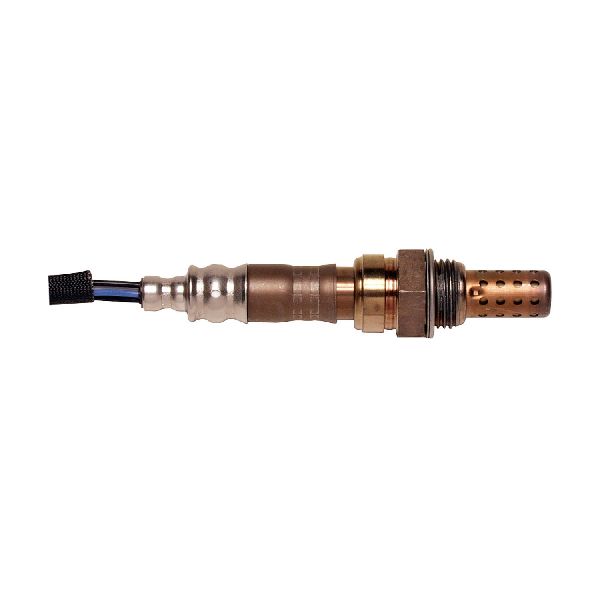
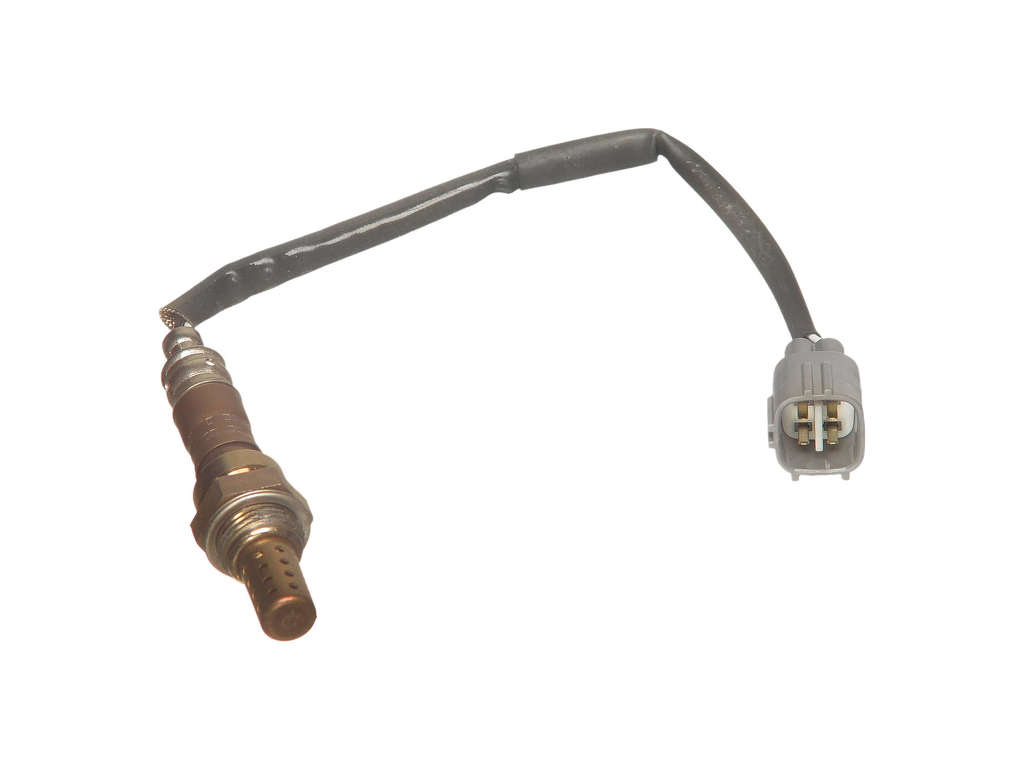
For a 2001-2005 Toyota RAV4, code P0141 almost always means the downstream oxygen sensor (Bank 1, Sensor 2) has failed. This is a common wear item. Replacing it is a straightforward DIY job, with the part costing around $65-$95 for a recommended Denso OEM-quality sensor. Before buying, verify your engine size, as the 2.0L (2001-03) and 2.4L (2004-05) use different parts.
- P0141 on a 2001-2005 RAV4 points to a bad heater in the downstream O2 sensor.
What's Unique About the 2001-2005 Toyota RAV4
The 2001-2005 RAV4 (generation XA20) is very reliable, and this code is typically a simple wear-and-tear issue. The most important thing to know is that the engine changed during this period. The 2001-2003 models use a 2.0L (1AZ-FE) engine, while 2004-2005 models have a 2.4L (2AZ-FE) engine. This change affects the part number for the correct downstream O2 sensor, so verifying your vehicle's year is critical before buying parts. For the 2001-2003 models specifically, it's worth noting they are prone to ECM failures that can cause transmission shifting problems, though this is unrelated to the P0141 code.
Symptoms You May Notice
- Check Engine Light is on.
- Failure to pass an emissions/smog test.
- Slightly reduced fuel economy (in some cases).
- Replacing the upstream Air/Fuel Ratio Sensor (Bank 1, Sensor 1). P0141 is specific to the downstream sensor (Sensor 2).
- Replacing the catalytic converter. A bad converter typically triggers a P0420 efficiency code, not a P0141 heater circuit code.
Most Likely Causes
- Failed Downstream Oxygen Sensor 🔴 High Probability → Shop Oxygen Sensor The internal heater element is a common failure point on oxygen sensors as they age. It is a resistive element, much like a light bulb filament, that simply burns out over time and is considered a standard wear item.
How to confirm: Disconnect the sensor and use a multimeter to test the resistance between the two heater wires (typically the two wires of the same color, often black or white). 🎬 See how to diagnose a P0141 heater circuit malfunction A good sensor should read between 11-16 ohms at room temperature. An infinite reading (OL) means the heater is burned out and the sensor must be replaced.
Typical fix: Replace the Bank 1, Sensor 2 (downstream) oxygen sensor. Using an OEM-equivalent brand like Denso is highly recommended to ensure compatibility.
Est. part cost: $65-$95 - Blown Fuse ⚪ Low Probability
How to confirm: Check the fuse box in the engine compartment. Look for a 20A fuse, often labeled 'A/F HEATER' or similar. Visually inspect if the fuse is blown or test for continuity with a multimeter. On many Toyotas of this era, the A/F and O2 sensor heaters share power from the main EFI relay.
Typical fix: Replace the blown fuse. If the new fuse blows immediately, it indicates a short circuit in the wiring or the sensor itself that must be found and repaired.
Est. part cost: $1-$5 - Damaged Wiring or Connector ⚪ Low Probability
How to confirm: Visually inspect the wiring harness leading to the downstream O2 sensor. Look for any signs of melting, chafing, corrosion, or breaks from road debris. The connector is located inside the cabin, under the passenger seat carpet for some models, while on others it is accessible from underneath after removing the passenger-side front tire. Check the connector pins for corrosion or damage.
Typical fix: Repair the damaged section of wire or replace the connector pigtail. Catalytic converter theft is an increasingly common cause of this issue, as thieves often cut the sensor wires.
Est. part cost: $10-$30
Rare But Worth Checking
- Faulty Engine Control Module (ECM): → Shop Engine Control Module (ECM) This is extremely rare for a P0141 code. Before suspecting the ECM, all other possibilities (sensor, fuse, wiring) must be exhaustively ruled out. This is typically diagnosed by a professional after confirming the sensor and wiring are good but the ECM is not providing the switched ground to activate the heater circuit. Some owners of platform-mates (like the Camry with the same 2AZ-FE engine) have traced persistent P0141 codes to a faulty ECM driver.
Diagnosis Steps
- Scan the vehicle to confirm P0141 is the only code present. If other codes exist, address them first.
- Locate the downstream oxygen sensor (Bank 1, Sensor 2) on the exhaust pipe, after the catalytic converter.
- Inspect the wiring harness leading to the sensor for any obvious damage, melting on the exhaust, or corrosion.
- Locate the electrical connector for the sensor. On some RAV4 models, the harness passes through a grommet in the floor and connects under the passenger seat carpet. On others, it is located behind the passenger-side front wheel well. Inspect the connector for corrosion or damage.
- Check the fuse. In the engine bay fuse box, locate the 20A 'A/F HEATER' fuse and verify it is not blown.
- Test the sensor's heater element. Disconnect the sensor and use a multimeter set to Ohms (Ω). Measure the resistance between the two heater pins (usually the two wires of the same color). A reading between 11-16 Ohms is good. A reading of 'OL' or infinite resistance means the sensor is bad and must be replaced.
- If the sensor resistance is good, check for power at the harness connector (the side coming from the car). With the ignition key in the 'ON' position, you should have 12V between the heater power wire and a good ground.
- If there is 12V power, check the ground signal from the ECM. The ECM provides a switched ground to complete the circuit. A professional may need to verify this signal.
- If the sensor is bad, replace it. A specialized O2 sensor socket is recommended 🎬 Watch: Pro tips for replacing an O2 sensor on Toyota engines for removal. If the sensor and fuse are good but there is no power, trace the wiring back to the fuse box and EFI relay to find the break.
Parts You'll Likely Need
- Downstream Oxygen Sensor (2001-2003)
(OEM #89465-42100)— This is for the 2.0L 1AZ-FE engine. The internal heater element fails over time, which is the direct cause of the P0141 code.
Trusted brands: Denso (234-4048)
OEM price range: $120-$160
Aftermarket price range: $65-$90 - Downstream Oxygen Sensor (2004-2005)
(OEM #89465-42170)— This is for the 2.4L 2AZ-FE engine. 🎬 Watch: Step-by-step downstream O2 sensor replacement for 2.4L models The internal heater element fails over time, which is the direct cause of the P0141 code.
Trusted brands: Denso (234-4503)
OEM price range: $130-$170
Aftermarket price range: $70-$95
Platform-Specific Known Issues
- The primary vehicle-specific issue is the engine change during the 2003-2004 model years. The 2001-2003 RAV4 uses a 2.0L engine, while the 2004-2005 RAV4 uses a 2.4L engine. This requires different part numbers for the downstream oxygen sensor. Always verify the part fitment for your specific year.
- The location of the O2 sensor electrical connector can vary. Some owners report finding it under the passenger seat carpet, requiring interior trim removal, while others find it accessible from underneath the vehicle near the passenger front wheel.
Mechanic-Grade Diagnostic Values
- Downstream O2 Sensor (B1S2) Heater Resistance — expected: 11 - 16 Ω at 68°F (20°C). Failure: Infinite resistance (Open Loop) or a value significantly outside the specified range.
- Voltage at ECM terminal HT1B (Heater Ground Control) — expected: 9 - 14 V with ignition ON, engine OFF. Pulses to ground (near 0V) when heater is active (engine running).. Failure: Voltage stays high (at battery voltage) when the engine is running, indicating the ECM is not commanding the heater on.
- Current draw on O2 sensor heater circuit — expected: Between 0.3 A and 2.0 A.. Failure: Current above 2.0 A triggers a P0038 (High) code; current below 0.3 A triggers a P0037 (Low) code. P0141 is a general malfunction.
- Voltage at harness connector heater power wire — expected: Battery Voltage (approx. 12V) with ignition ON.. Failure: 0V indicates a blown fuse (A/F Heater), bad EFI relay, or a break in the power wire.
Hidden / Shadow Codes Worth Checking
- P0037: Oxygen Sensor Heater Control Circuit Low (Bank 1 Sensor 2). This indicates the ECM has detected heater current below the minimum threshold (less than 0.3 A), often due to an open circuit. (see via Standard OBD-II scanner. It may appear alongside or instead of P0141.)
- P0038: Oxygen Sensor Heater Control Circuit High (Bank 1 Sensor 2). This indicates the ECM has detected heater current above the maximum threshold (more than 2.0 A), pointing to a short circuit. (see via Standard OBD-II scanner. It may appear alongside or instead of P0141.)
Scan Tool Commands That Help
- Toyota Techstream: Active Test: "Control the Injection Volume for A/F Sensor" — While not a direct heater test, this function alters the fuel mixture and allows a technician to observe the reaction of both upstream and downstream O2 sensors on the live data graph. A lazy or non-responsive downstream sensor, even with a functional heater, can be identified this way, helping to rule out deeper issues before focusing solely on the heater circuit.
- Toyota Techstream: Active Test: O2 Heater (On/Off) — This allows a technician to manually command the heater circuit on and off while monitoring voltage at the ECM's control pin (HT1B). If the command is sent but the voltage doesn't change from ~12V to near 0V, it confirms a break in the control wire or a faulty ECM driver.
Wiring & Ground Locations
- ECM Connector B30, Pin 47 (HT1B) — This is the specific pin on the Engine Control Module (ECM) that provides the switched ground for the Bank 1 Sensor 2 heater.. If the sensor and power supply are good, a technician must test this pin for the ground signal. A lack of a pulsing ground from this pin when the engine is running points to a wiring break between here and the sensor, or a rare ECM failure.
- ECM Ground E1 (Pin B30-104) — This is a primary ground for the ECM. On a similar 2AZ-FE platform (Camry), a main engine ground point is located on the left side of the cylinder head (Point EG).. A corroded or loose main ECM ground can cause a variety of unpredictable issues, including faulty sensor readings and incorrect driver operation. Verifying this ground has less than 1 Ω of resistance to the chassis is a critical step in advanced diagnosis.
- A/F HEATER Fuse — Located in the under-hood fuse/relay box.. This fuse supplies the 12V power to the heater element. It's often shared with the upstream A/F sensor heater, so if both P0135 and P0141 are present, this fuse is the most likely culprit.
Real Owner Repair Stories
- Car Talk Community Forum (2001 Toyota RAV4) — Check Engine Light with code P0141.
❌ Tried (didn't work) Replaced the downstream O2 sensor (Bank 1, Sensor 2).
✅ What actually fixed it The user replaced the correct sensor, but the code returned after 6 miles. The forum discussion pointed toward a wiring or connector issue that was missed during the initial diagnosis, as replacing the most common failure part did not resolve the code, indicating a circuit problem rather than a component problem.
OEM Part Supersession History
89465-42170→89465-42170 (No supersession found)— N/A
Heads up: Part number appears to be stable for the 2004-2005 2.4L models. No supersession to a new number was found in catalog data.
Model Year Variations Within This Range
- 2001-2003 vs 2004-2005: The engine was changed from the 2.0L 1AZ-FE to the 2.4L 2AZ-FE. This requires a different downstream oxygen sensor. For 2001-2003, use OEM part 89465-42100 (Denso 234-4048). For 2004-2005, use OEM part 89465-42170 (Denso 234-4503).
Diagnostic Flowchart
Other Known Issues on This Vehicle
Issues unrelated to this code that are worth knowing about as an owner of this generation:
- ECM Failure Causing Harsh Transmission Shifting (2001-2003) 🔴 High — Very common for 2001-2003 models. Solder points inside the ECM fail, leading to erratic shifting, hesitation, and eventual transmission damage if not addressed. (Ref: Toyota issued a warranty extension/Customer Support Program for this issue, but it has since expired. Repair involves replacing or rebuilding the ECM.)
- Excessive Oil Consumption (2004-2005 2AZ-FE) 🔴 High — A notorious design flaw in the 2AZ-FE engine's piston rings causes significant oil burning, often starting around 70k-100k miles. (Ref: Toyota faced a class-action lawsuit and issued TSBs (e.g., T-SB-0094-11), extending warranty coverage for this issue. The only permanent fix is replacing the pistons and rings, which is an engine-out procedure.)
- Stripped Cylinder Head Bolt Threads (2004-2005 2AZ-FE) 🔴 High — The aluminum engine block threads for the steel head bolts can pull out over time, causing coolant leaks at the back of the engine, overheating, and head gasket failure. (Ref: Toyota issued TSB T-SB-0015-11 suggesting a repair using threaded inserts (like Time-Serts), which is a very labor-intensive job.)
Used vs. New Parts: Buying Guide for This Vehicle
When a used part is the smart pick: For this repair, a used part is almost never a smart choice for the oxygen sensor itself. However, sourcing a used connector pigtail from a junkyard is a perfectly acceptable and cost-effective repair if only the connector is damaged.
Donor-vehicle mileage cap: roughly under 30000 miles for the part to have meaningful remaining life.
What to inspect on the donor part:
- For a connector pigtail, ensure the plastic is not brittle or cracked.
- Check for any signs of green corrosion on the pins or melted plastic.
- Ensure there is at least 6-8 inches of wire attached to make splicing easy.
OEM-only on this vehicle (don't cheap out):
- While not strictly 'OEM-only', using a Denso or NTK branded oxygen sensor is highly recommended. These are the original equipment suppliers and guarantee correct heater resistance and voltage signaling that the Toyota ECM expects.
Aftermarket brands forum-validated for this vehicle:
- Denso
- NTK (NGK)
Brands owners have reported issues with on this vehicle:
- Generic, unbranded sensors from online marketplaces should be avoided. They are notorious for having incorrect heater resistances, leading to the same P0141 code returning shortly after installation.
Real Owner Stories
Aggregated from forums and TSBs cited above. Mileages and costs reflect what owners reported in those sources.
2001-2005 Toyota RAV4 2.4L
Symptoms: Check engine code P0141 (O2 Sensor Heater Circuit malfunction - Bank 1 Sensor 2) persisted even after replacing the sensor and swapping cords. Later, codes P1130 and P1135 appeared.
What fixed it: Replacing the Upstream sensor with a new Denso unit cleared P1130 and P1135, but P0141 remained, requiring further troubleshooting of the heater circuit and PCM.
Source hint: Reddit r/Rav4
2001-2005 Toyota RAV4 2.4L
Symptoms: Persistent P0141 chase that went beyond simple sensor replacement.
What fixed it: Extensive troubleshooting including checking the wiring harness and the PCM (ECM) to verify the heater circuit integrity.
Source hint: TacomaWorld - 'Well, im stumped on this never ending p0141 chase'
Related OBD-II Codes
Frequently Asked Questions
Where is the downstream O2 sensor connector located on a 2001-2005 RAV4?
Can I use the same sensor for a 2002 and a 2005 RAV4?
Which fuse should I check for a P0141 code on my RAV4?
What brand of oxygen sensor is recommended for the 2AZ-FE engine?
My RAV4 has P0141 and is shifting harshly; are these related?
Could catalytic converter theft cause a P0141 code?
Helpful Videos
We Have This Part in Stock



The information in this article is provided for general reference and educational purposes only. Vehicle specifications, procedures, and part compatibility can vary by production date, trim level, and region. Always consult your vehicle's factory service manual and verify part numbers before purchasing or performing repairs. Safety-critical components such as airbags, seat belts, and braking systems should be installed by a qualified professional.
- Toyota RAV4:
- 🧭 Diagnostic Flowchart
- 🎬 Helpful Videos
- 🛍️ Shop This Part
- What's Unique About the 2001-2005 Toyota RAV4
- Symptoms You May Notice
- Most Likely Causes
- Rare But Worth Checking
- Diagnosis Steps
- Parts You'll Likely Need
- Platform-Specific Known Issues
- Mechanic-Grade Diagnostic Values
- Hidden / Shadow Codes Worth Checking
- Scan Tool Commands That Help
- Wiring & Ground Locations
- Real Owner Repair Stories
- OEM Part Supersession History
- Model Year Variations Within This Range
- Other Known Issues on This Vehicle
- Used vs. New Parts: Buying Guide for This Vehicle
- Real Owner Stories
- 2001-2005 Toyota RAV4 2.4L
- 2001-2005 Toyota RAV4 2.4L
- Related OBD-II Codes
- Frequently Asked Questions
- 🎟️ Get 5% Off