

P0191 on 2009-2015 Dodge Challenger 5.7L: Fuel Rail Pressure Sensor Causes and Fixes
On a 2009-2015 Challenger 5.7L HEMI, code P0191 most often points to a faulty Fuel Rail Pressure Sensor. It's a relatively simple DIY replacement that can solve hesitation and stalling issues. Expect to pay $50-$100 for an aftermarket sensor or $150-$250 for an OEM part. Before replacing the more expensive fuel pump, always verify pressure with a mechanical gauge.
- P0191 means the fuel rail pressure sensor is sending a signal the computer finds illogical.
- The most likely cause on your Challenger is a faulty fuel rail pressure sensor itself.
- Before replacing any parts, use a mechanical gauge to confirm if the fuel pressure is actually low. This will tell you if the problem is the sensor or the fuel pump.
- Replacing the sensor is a simple DIY job that can be done in under an hour with basic tools.
- Ignoring this code can lead to stalling, poor performance, and eventually a no-start condition.
What's Unique About the 2009-2015 Dodge Challenger
On the 5.7L HEMI engine used in the Challenger, the fuel system is a straightforward returnless design, with some models using a dual-pump system to maintain pressure during aggressive driving. While the code can point to a weak fuel pump, the fuel rail pressure sensor itself is a very common point of failure. Owners often experience intermittent symptoms like stalling or hesitation before the sensor fails completely. Misdiagnosing this as a fuel pump issue can lead to a much more expensive and labor-intensive repair, so confirming with a mechanical gauge is critical.
Symptoms You May Notice
- Check Engine Light is on
- Engine hesitation or stumbling during acceleration
- Loss of engine power
- Engine stalling, especially at idle or when coming to a stop
- Rough idle
- Difficulty starting the engine or long crank times
- Decreased fuel economy
- Whining noise from the fuel tank area, indicating a struggling fuel pump
- Replacing the fuel pump when only the fuel rail pressure sensor is faulty. This is a common and expensive mistake because the symptoms are nearly identical. Always confirm actual fuel pressure with a mechanical gauge before replacing the expensive fuel pump assembly.
Most Likely Causes
- Faulty Fuel Rail Pressure Sensor 🔴 High Probability → Shop Fuel Pressure Sensor The sensor's internal electronics can degrade over time from constant heat cycles and engine vibration, causing it to send erratic or incorrect voltage signals to the PCM. This is the most common point of failure for this code on the 5.7L HEMI.
How to confirm: With the engine running, compare the fuel pressure reading from a scan tool's live data to the reading from a mechanical fuel pressure gauge connected to the rail's service port. If the mechanical gauge shows steady, correct pressure (typically around 58 psi at idle) but the scan tool reading is fluctuating wildly or is incorrect, the sensor is bad.
Typical fix: Replace the fuel rail pressure sensor. The sensor is located on the passenger side fuel rail and can be replaced in under an hour with basic tools.
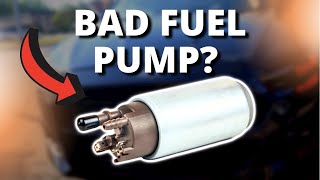
Est. part cost: $50-$250 - Failing Fuel Pump 🟡 Medium Probability → Shop Fuel Pump The in-tank electric fuel pump can weaken with age and mileage, failing to supply adequate pressure to the fuel rail, especially under load. This can be exacerbated by heat.
How to confirm: Perform a fuel pressure test as described above. If both the mechanical gauge and scan tool show fuel pressure below the specification (e.g., dropping to 42 psi when spec is 58 psi), the fuel pump is likely weak or failing. This drop is often most noticeable during acceleration.
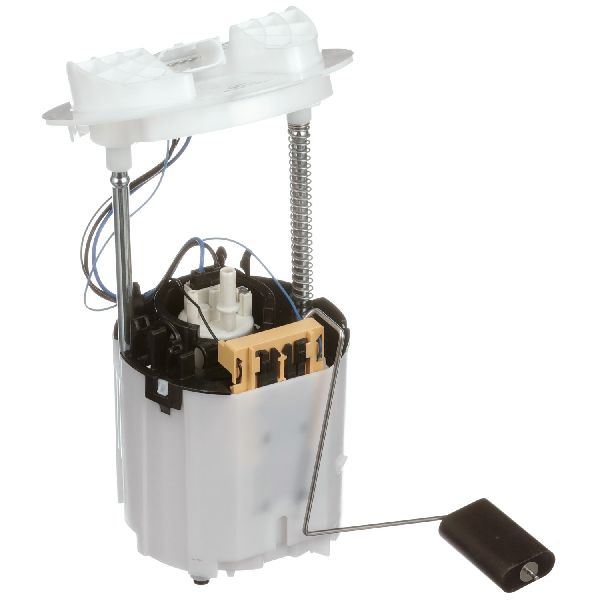
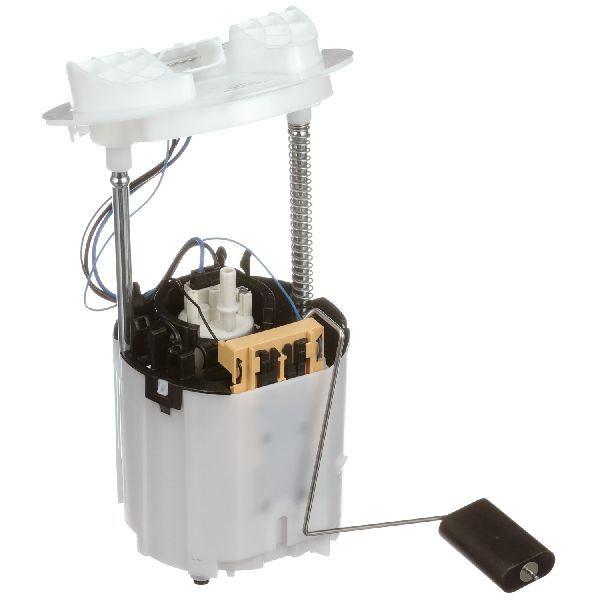
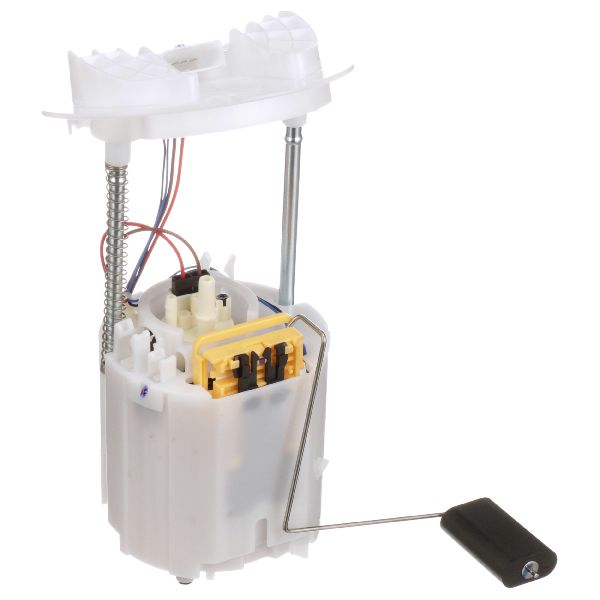
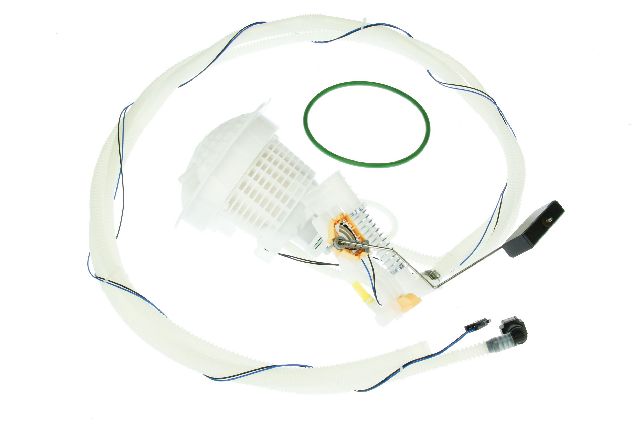
Typical fix: Replace the in-tank fuel pump module. The fuel filter is integrated into this module and is replaced at the same time. Access is typically under the rear seat.
Est. part cost: $200-$450 - Damaged Wiring or Connector ⚪ Low Probability The wiring harness to the sensor is exposed to high engine bay temperatures, which can make insulation brittle and prone to cracking over time. The connector pins can also become corroded or loose, causing an intermittent signal.
How to confirm: Visually inspect the sensor's electrical connector and wiring for any signs of corrosion, melted plastic, or frayed wires. Wiggle the connector with the engine running while monitoring scan tool data to see if the pressure reading changes. Use a multimeter to check for proper voltage (usually 5V reference), ground, and signal continuity between the sensor connector and the PCM.
Typical fix: Repair the damaged section of the wiring harness or replace the connector pigtail. In some cases, Mopar offers a wiring kit if the original connector is updated.
Est. part cost: $15-$50
Rare But Worth Checking
- Faulty Powertrain Control Module (PCM): → Shop Engine Control Module (ECM) This is very rare. Before condemning the PCM, all other possibilities, including the sensor, fuel pump, and wiring, must be exhaustively ruled out. A PCM reflash to address software glitches is a more likely, though still uncommon, fix.
- Clogged Fuel Filter: → Shop Fuel Filter On this platform, the fuel filter is integrated into the fuel pump module assembly. While a clog can cause low pressure, it is not serviced separately. The entire fuel pump module must be replaced.
Diagnosis Steps
- Connect an OBD-II scanner and confirm P0191 is the active code. Check for any other related fuel system codes like P0087, P0190, P0192, or P0193.
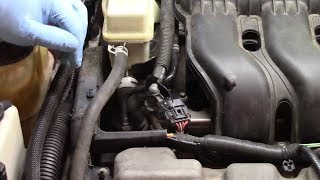
- Visually inspect the fuel rail pressure sensor, located on the passenger side fuel rail. Check its electrical connector for corrosion, damage, or loose pins.
- Connect a scan tool and monitor the live data for 'Fuel Rail Pressure'. Note the reading at Key On, Engine Off (KOEO), at idle, and during a brief, sharp rev of the engine.
- Safely relieve the fuel system pressure. Connect a mechanical fuel pressure gauge to the Schrader valve (test port) on the fuel rail.
- Start the engine and compare the mechanical gauge reading to the scan tool's live data. They should be within a few PSI of each other (spec is ~58 PSI at idle).
- If the mechanical gauge is steady and in spec, but the scan tool reading is erratic or incorrect, the fuel rail pressure sensor is the most likely culprit.
- If both the mechanical gauge and scan tool show low or fluctuating pressure (e.g., dropping below 45 psi under load), the problem is likely the fuel pump or a severely clogged fuel filter (which is part of the pump assembly).
- If a wiring issue is suspected, disconnect the sensor and PCM and check for continuity and shorts to ground/power on the signal, reference (5V), and ground wires.
- If the sensor and pump test good, check for a restricted fuel line or, in very rare cases, consider a PCM software update or failure.
Parts You'll Likely Need
- Fuel Rail Pressure Sensor
(OEM #05149171AA (often superseded by 5149171AB or 68190738AA))— This is the most frequent cause of P0191 on the 5.7L HEMI. The sensor's internal electronics fail, providing incorrect readings to the PCM.
Trusted brands: Mopar, Bosch, Delphi, Standard Motor Products
OEM price range: $75-$200
Aftermarket price range: $40-$90 - Fuel Pump Module Assembly
(OEM #5136023AC (or superseding numbers like 68103913AE))— If diagnostic tests confirm that actual fuel pressure is low, a weak or failing fuel pump is the cause. The filter is integrated into this assembly.
Trusted brands: Mopar, Delphi, Carter, Spectra Premium
OEM price range: $350-$450
Aftermarket price range: $200-$300
Related Codes That Often Appear With This One
- P0087 — This code means 'Fuel Rail/System Pressure - Too Low'. It frequently accompanies P0191 if the root cause is a genuinely failing fuel pump that is causing a sustained loss of pressure.
- P0190 — This code indicates a general malfunction in the fuel rail pressure sensor circuit, and can appear alongside P0191 if the sensor has an electrical fault rather than a performance range issue.
- P0192 — Indicates 'Fuel Rail Pressure Sensor Circuit Low Input', suggesting the sensor signal voltage is below the expected threshold, which could be caused by a short in the wiring or an internal sensor failure.
- P0193 — Indicates 'Fuel Rail Pressure Sensor Circuit High Input', suggesting the signal voltage is above the expected threshold, pointing to a wiring issue or internal sensor fault.
Technical Service Bulletins (TSBs) & Recalls
- TSB 18-031-08: While not directly for P0191, this TSB for older 5.7L HEMIs involves a PCM reflash to address false misfire codes, highlighting that software updates can sometimes resolve seemingly hardware-related issues.
Mechanic-Grade Diagnostic Values
- Fuel Rail Pressure Sensor Signal Voltage — expected: Approximately 0.5V at KOEO (0 PSI) and rises towards 4.5V at maximum pressure. Should be stable and correspond to mechanical gauge pressure.. Failure: Voltage that is erratic, stuck high (e.g., 5V), stuck low (e.g., 0V), or does not correlate with actual measured fuel pressure.
- Fuel Rail Pressure (Mechanical Gauge) — expected: Approximately 58 +/- 5 PSI at idle for a 5.7L HEMI.. Failure: Pressure that drops significantly under load (below 45 PSI), is slow to build, or is well below specification at idle, indicating a fuel delivery problem (pump/filter).
- Fuel Pump Module - Fuel Level Sender Resistance — expected: Approximately 990 Ohms when empty and 51 Ohms when full.. Failure: Readings that are open (infinite resistance) or far outside this range. While not directly related to P0191, these values are useful when replacing the entire fuel pump module, which contains the sender.
Wiring & Ground Locations
- Fuel Rail Pressure Sensor Connector — On the passenger side fuel rail, towards the rear of the engine.. This 3-pin connector is a common failure point. The pins are: 5V Reference from PCM, Signal Out to PCM, and Ground. Checking for 5V and good ground at this connector is a primary electrical diagnostic step. Detailed pinouts can be found in the Factory Service Manual, section 8W-30.
- PCM Connector C2 (or Green Connector on some models) — At the Powertrain Control Module (PCM), which is typically located in the engine bay.. The signal wire from the fuel rail pressure sensor terminates here. A damaged pin or wire at the PCM connector can mimic a failed sensor. Verifying signal continuity from the sensor connector to the correct pin on the PCM connector is the definitive wiring test.
Real Owner Repair Stories
- RamForum.com user experience (similar 5.7L platform) (2003 Dodge Ram 1500 4.7L (illustrates a common wiring failure mode)) — No-shift condition (limp mode) and a P0755 transmission code, caused by a wire ripped out of the PCM connector.
❌ Tried (didn't work) Replacing the transmission solenoid pack.
✅ What actually fixed it Identifying the single wire that was ripped out of the PCM connector by road debris (a blown tire). The wire powered a transmission solenoid. Repairing the wire and re-pinning it into the connector resolved the issue. This highlights how seemingly unrelated damage can cause electrical faults that set codes.
OEM Part Supersession History
05149171AA→05149171AB, then 68190738AA— Part revision and consolidation. The early part numbers are frequently confused with oxygen sensors in aftermarket catalogs.
Heads up: Be extremely cautious when ordering 05149171AA/AB, as you may receive an O2 sensor. Verify the part is explicitly for fuel pressure. 68190738AA appears to be the most current, reliable number for the fuel pressure sensor application.5136023AC→Multiple, including 68103913AE, 5136022AE, 5136021AG— Part revisions and updates to the fuel pump module assembly.
Heads up: Always verify the correct part number for your specific year and VIN. While many modules are physically similar, there can be differences in connectors or sender calibration.
Diagnostic Flowchart
Other Known Issues on This Vehicle
Issues unrelated to this code that are worth knowing about as an owner of this generation:
- HEMI Tick (Camshaft/Lifter Failure) 🔴 High — Common, especially on 2009+ models with MDS. Can occur at any mileage but becomes more prevalent with age. Often starts as a light tick at idle when warm and progresses to misfires (P0300).
- NAG1 (W5A580) Transmission Shudder/Shifting Problems 🟠 Medium — Fairly common as the vehicle ages. Issues include torque converter clutch shudder between 35-50 mph, rough shifts, or fluid contamination. Some owners report odd shifting behavior at low mileage.
- Active Exhaust Valve Actuator Failure/Rattle 🟡 Low — Very common on models equipped with active exhaust (typically 2015+ but relevant to the generation). The actuator motor fails or the butterfly valve inside the exhaust rattles, causing a persistent noise and sometimes a trouble code (U1140).
- Cracked Exhaust Manifold Bolts 🟠 Medium — A common issue on HEMI engines, particularly in the Ram 1500 but also seen on Challengers. The bolts break, causing an exhaust leak that can sound like a ticking noise, often mistaken for the 'HEMI tick'.
Used vs. New Parts: Buying Guide for This Vehicle
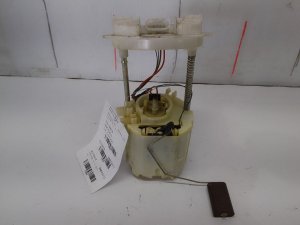
When a used part is the smart pick: For this repair, a used part is generally not recommended for the electronic sensor. However, a complete low-mileage fuel pump assembly from a reputable salvage yard could be a cost-effective alternative to a new OEM unit, as it includes the pump, housing, and sending unit.
Donor-vehicle mileage cap: roughly under 60000 miles for the part to have meaningful remaining life.
What to inspect on the donor part:
- Verify the donor vehicle's mileage.
- Inspect the electrical connector on the pump assembly for any signs of melting, corrosion, or heat damage.
- If possible, look inside the tank opening for excessive rust or debris, which could indicate the pump ingested contaminants.
- Ensure the plastic housing is free of cracks.
OEM-only on this vehicle (don't cheap out):
- While not strictly OEM-only, the Fuel Rail Pressure Sensor is a critical sensor where an OEM Mopar or high-quality OEM-supplier part (like Bosch) is strongly recommended over generic, no-name brands to avoid premature failure and incorrect readings.
Aftermarket brands forum-validated for this vehicle:
- Bosch (often the OEM supplier)
- Denso
- Delphi (though some user reports are mixed)
Brands owners have reported issues with on this vehicle:
- Airtex (multiple forum and user reports of premature failure and out-of-box issues)
- Carter (some reports of being a repackaged Airtex pump)
- Unbranded, 'white-box' parts from online marketplaces.
Real Owner Stories
Aggregated from forums and TSBs cited above. Mileages and costs reflect what owners reported in those sources.
2010 Dodge Challenger R/T 5.7L HEMI
Symptoms: Intermittent stalling and code P0191.
What fixed it: Replacement of the fuel pump after a mechanical test showed actual fuel pressure was only 42 psi compared to the 58 psi spec.
Source hint: AliExpress User/Mechanic Review
2009-2015 Dodge Challenger 5.7L HEMI
Symptoms: Stalling and hesitation issues associated with code P0191.
What fixed it: Replacing the fuel rail pressure sensor (Part # 05149171AA). The owner noted the job took less than 30 minutes.
Source hint: ChallengerTalk Forum - Thread: 'P0191 Fuel Rail Pressure Sensor'
2012 Dodge Charger 6.4L HEMI
Symptoms: P0191 fuel rail pressure sensor circuit issues.
What fixed it: Professional diagnosis of the fuel rail pressure sensor circuit, confirming the issue is common across the HEMI engine family.
Source hint: ScannerDanner Forum - Thread: '2012 Dodge Charger with 6.4l... P0191 fuel rail pressure sensor circuit'
2008 Chrysler 300C 5.7L HEMI
Symptoms: P0191 code returned even after the sensor was replaced.
What fixed it: Checking for a PCM reflash, as the fix can sometimes be software-related when hardware replacements fail.
Source hint: iATN Member Discussion - '2008 Chrysler 300 C 5.7L... p0191 code'
Related OBD-II Codes
Frequently Asked Questions
Where is the fuel rail pressure sensor located on my 5.7L HEMI Challenger?
What is the specific Mopar part number for the fuel rail pressure sensor for this code?
Does TSB 18-031-08 apply to my P0191 code?
What should the fuel pressure reading be on a mechanical gauge for a 2009-2015 Challenger 5.7L?
Can I just replace the fuel filter to fix P0191 on my Challenger?
Is there a wiring kit available if my sensor connector is damaged?
Helpful Videos
Used OEM Parts in Stock
New Aftermarket Parts Available


The information in this article is provided for general reference and educational purposes only. Vehicle specifications, procedures, and part compatibility can vary by production date, trim level, and region. Always consult your vehicle's factory service manual and verify part numbers before purchasing or performing repairs. Safety-critical components such as airbags, seat belts, and braking systems should be installed by a qualified professional.
- Dodge Challenger:
- 🧭 Diagnostic Flowchart
- 🎬 Helpful Videos
- 🛍️ Shop This Part
- What's Unique About the 2009-2015 Dodge Challenger
- Symptoms You May Notice
- Most Likely Causes
- Rare But Worth Checking
- Diagnosis Steps
- Parts You'll Likely Need
- Related Codes That Often Appear With This One
- Technical Service Bulletins (TSBs) & Recalls
- Mechanic-Grade Diagnostic Values
- Wiring & Ground Locations
- Real Owner Repair Stories
- OEM Part Supersession History
- Other Known Issues on This Vehicle
- Used vs. New Parts: Buying Guide for This Vehicle
- Real Owner Stories
- 2010 Dodge Challenger R/T 5.7L HEMI
- 2009-2015 Dodge Challenger 5.7L HEMI
- 2012 Dodge Charger 6.4L HEMI
- 2008 Chrysler 300C 5.7L HEMI
- Related OBD-II Codes
- Frequently Asked Questions
- 🎟️ Get 5% Off