

P0191 on 2005-2006 Ford Expedition 5.4L: Causes for Fuel Pressure Faults and Fixes
On a 2005-2006 Expedition, P0191 is most often caused by a corroded Fuel Pump Driver Module (FPDM) located near the spare tire. This module's aluminum body corrodes against the steel frame, causing failure. Inspecting and replacing this ~$75 part, often with an improved aftermarket version that includes spacers, is the first step before suspecting the fuel pump or sensor.
- For a P0191 code on a 2005-2006 Expedition, ALWAYS inspect the Fuel Pump Driver Module (FPDM) first. It's located above the spare tire and is highly prone to corrosion and failure.
- Do not immediately assume the fuel pump is bad. A faulty FPDM is a much more common, cheaper, and easier fix that produces identical symptoms.
- This vehicle does not have a fuel pressure test port, so you must use a scan tool to monitor fuel pressure data (FRP PID) for diagnosis.
- Symptoms like stalling, no-start, and hesitation are serious safety concerns. The vehicle should be repaired promptly.
What's Unique About the 2005-2006 Ford Expedition
The 2005-2006 Expedition uses a modern 'returnless' fuel system where the computer controls the fuel pump's speed via a Fuel Pump Driver Module (FPDM) to regulate pressure. This system has two well-known, frequent failure points: the Fuel Rail Pressure (FRP) sensor on the engine and, most notably, the FPDM mounted on the frame. A major design flaw where the FPDM's bare aluminum housing is mounted directly to the steel frame leads to severe galvanic corrosion, destroying the module and exposing its electronics to moisture. This is the most common cause of fuel delivery issues and is often misdiagnosed as a bad fuel pump. Furthermore, this truck lacks a fuel pressure test port (Schrader valve) on the engine, making it impossible to verify pressure with a standard mechanical gauge and forcing reliance on scan tool data from the potentially faulty sensor.
Symptoms You May Notice
- Engine cranks but does not start, or has long crank times
- Hard starting, especially when the engine is warm
- Engine stalls unexpectedly, either at idle or while driving
- Hesitation, stumbling, or significant loss of power during acceleration
- Rough or erratic idle
- Check Engine Light is on
- Increased fuel consumption
- Replacing the entire fuel pump assembly when the actual problem is the much cheaper and easier-to-access Fuel Pump Driver Module (FPDM). This is a very common mistake.
- Replacing the Fuel Rail Pressure Sensor (FRPS) when the FPDM or a weak fuel pump is the true cause of the low pressure reading. It's crucial to verify other components first.
Most Likely Causes
- Corroded/Failed Fuel Pump Driver Module (FPDM) 🔴 High Probability → Shop Fuel Pump The FPDM has an aluminum housing mounted directly to the steel frame near the spare tire. Galvanic corrosion occurs between the dissimilar metals, destroying the module's case, cracking the circuit board, and exposing the electronics to moisture.
How to confirm: Visually inspect the module, located on a crossmember above the spare tire. Look for a cracked, corroded, or powder-like aluminum casing. A hole in the back is a definitive sign of failure. The truck may also have a P1233 code (FPDM Offline).
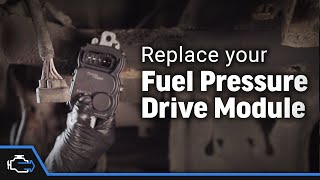
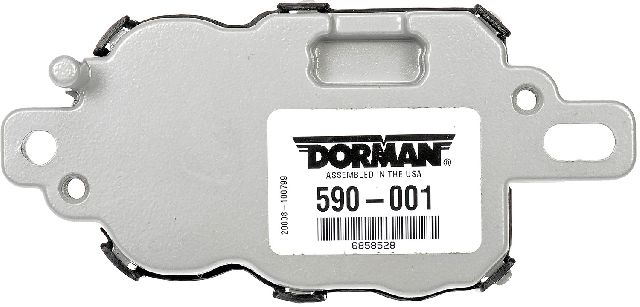
Typical fix: Replace the FPDM. Aftermarket kits (like Dorman OE FIX 590-001) often include rubber spacers or bushings to mount the new module off the frame, preventing future corrosion. 🎬 Watch: How to replace and relocate your FPDM
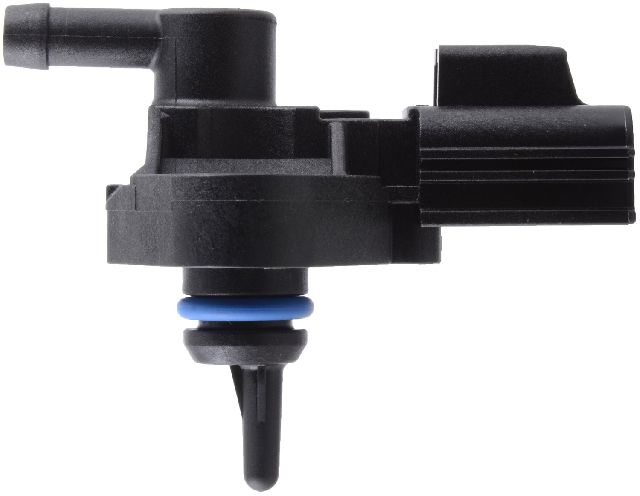
Est. part cost: $50-$100 - Failed Fuel Rail Pressure Sensor (FRPS) 🟡 Medium Probability → Shop Fuel Pressure Sensor The sensor is an electronic component that can fail with age and heat cycles, sending incorrect voltage readings to the PCM. It can also develop internal leaks, allowing fuel to enter the vacuum line. As noted in NHTSA ODI #10446792, some owners have replaced this sensor for a P0191 code only to find it did not resolve the underlying issue, highlighting the need for thorough diagnosis.
How to confirm: Using a scan tool, monitor the Fuel Rail Pressure (FRP) PID. At idle, pressure should be around 38-40 PSI. If the reading is erratic, stuck at a specific value, or reads near 0 PSI with the key on, the sensor is a likely culprit. Also, disconnect the vacuum line to the sensor and check for the presence or smell of fuel, which indicates a ruptured diaphragm.
Typical fix: Replace the Fuel Rail Pressure Sensor. Relieve fuel system pressure before removal and use only hand tools to avoid sparks.
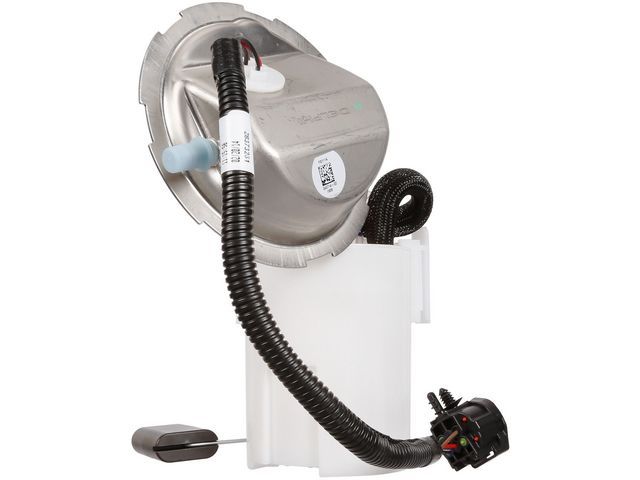
Est. part cost: $70-$150 - Weak or Failing Fuel Pump 🟡 Medium Probability → Shop Fuel Pump The fuel pump is a wear item. After many miles (typically over 100k), it may no longer be able to generate the pressure commanded by the FPDM, especially under high demand (acceleration, towing).
How to confirm: This is often diagnosed by exclusion. If the FPDM and FRPS are confirmed good, but scan tool data shows fuel pressure dropping significantly under load, the pump is the likely cause.
Typical fix: Replace the in-tank fuel pump assembly. This requires dropping the fuel tank.
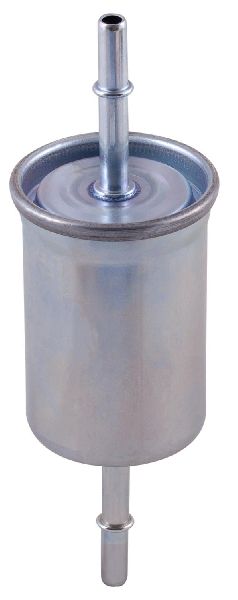
Est. part cost: $250-$500 - Clogged Fuel Filter ⚪ Low Probability → Shop Fuel Filter If not changed at regular service intervals (typically every 30,000 miles), the inline fuel filter can become restricted, impeding fuel flow and causing a drop in pressure under load.
How to confirm: If the filter's service history is unknown or overdue, it's a good preventative and diagnostic step. A pressure drop under load that is not severe may point to a filter over a failing pump.
Typical fix: Replace the inline fuel filter, located on the driver's side frame rail.
Est. part cost: $15-$40
Rare But Worth Checking
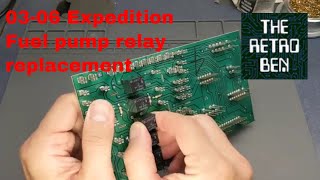
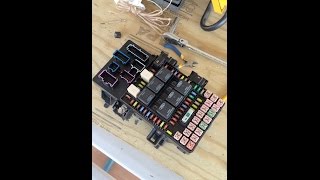
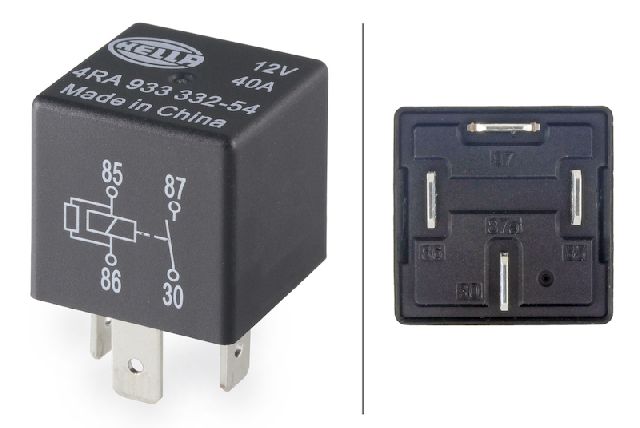
- Failed Fuel Pump Relay (in Central Junction Box): → Shop Fuel Pump On 2003-2006 Expedition models, the primary fuel pump relay (often labeled R303) is soldered directly onto the main fuse box (Central Junction Box) circuit board, located in the passenger-side kick panel. A failing relay can cause intermittent stalling and no-start conditions identical to other fuel system issues. When it fails, it can show burn marks. Repair requires either replacing the entire expensive fuse box or sending it to a specialist service that can de-solder and replace the relay. 🎬 Watch: How to fix the internal fuel pump relay
- Damaged Wiring or Connectors: Check the wiring harnesses and connectors for the FPDM (near the spare tire) and the FRPS (on the engine) for any signs of corrosion, chafing, or loose pins. Manufacturer Bulletin #TSB 19-2231 notes that P0191 can be caused by an engine harness chafe on the powertrain control module (PCM) bracket on similar Ford platforms.
Diagnosis Steps
- Check for other codes: Scan the PCM for any other codes. Pay close attention to P1233, which strongly indicates a faulty FPDM. Manufacturer Bulletin #TSB 18-2326 indicates that P0191 can also appear alongside various other codes like P06EA or P0106, requiring a specific service procedure to correct.
- Inspect the Fuel Pump Driver Module (FPDM): Lower the spare tire and locate the FPDM on the frame crossmember. Visually inspect it for heavy corrosion, cracks, or a hole in the aluminum casing. This is the most likely point of failure and often provides a clear visual diagnosis.
- Monitor Fuel Rail Pressure with a Scan Tool: Connect a scan tool and observe the 'FRP' (Fuel Rail Pressure) PID. With the Key On, Engine Off (KOEO), you should see pressure build. At idle, it should be steady around 38-40 PSI. Watch for erratic readings, dropouts, or pressure falling drastically under acceleration.
- Test Drive and Monitor: If the vehicle runs, perform a test drive while monitoring the FRP PID. Under heavy acceleration, the pressure should increase and remain steady. If it drops significantly (e.g., below 25-30 PSI), it indicates a fuel delivery problem (FPDM, filter, or pump).
- Check the Fuel Filter: If the FPDM looks good but pressure is low, and the service history is unknown, replace the fuel filter as a low-cost, high-impact maintenance item.
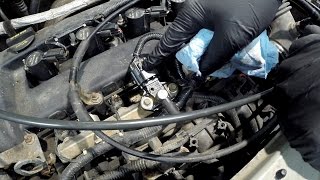
- Diagnose the FRPS: If the scan tool shows 0 PSI, a fixed value, or the reading doesn't change when you unplug it, the sensor is suspect. Disconnect the vacuum line and check for the smell of fuel, which confirms a ruptured internal diaphragm. 🎬 See this walkthrough on replacing the fuel rail pressure sensor
- Evaluate the Fuel Pump: If the FPDM, filter, and sensor are ruled out, and fuel pressure is still low under load, the fuel pump is the most likely remaining cause.
- Inspect the Central Junction Box (Fuse Box): If the issue is intermittent stalling and all other components test good, inspect the fuse box in the passenger kick panel for signs of overheating or burnt smells around the internal fuel pump relay (R303).
Parts You'll Likely Need
- Fuel Pump Driver Module (FPDM)
(OEM #5L8Z-9D370-A, 6C2Z-9D372-A (superseded))— This is the most common failure point for P0191 on this platform due to a design flaw causing corrosion.
Trusted brands: Motorcraft, Dorman OE FIX (P/N: 590-001), Standard Motor Products
OEM price range: $90-$120
Aftermarket price range: $50-$80 - Fuel Rail Pressure Sensor (FRPS)
(OEM #3F2Z-9G756-AC, FPS505)— The second most likely cause after the FPDM. It can fail electronically or leak internally.
Trusted brands: Motorcraft, Bosch, Standard Motor Products
OEM price range: $100-$160
Aftermarket price range: $70-$120 - Fuel Filter
(OEM #FG-1083)— A common maintenance item that can cause low fuel pressure under load when clogged.
Related Codes That Often Appear With This One
- P1233 — This code means 'Fuel Pump Driver Module Offline' and directly points to a problem with the FPDM or its wiring, which is the most common cause of P0191 on this truck.
- P0190 — This code indicates a circuit malfunction for the fuel rail pressure sensor, pointing more toward an electrical failure (wiring, sensor) rather than a performance issue.
- P0192 — Indicates 'Fuel Rail Pressure Sensor Circuit Low Input', meaning the PCM is seeing a voltage signal lower than expected, suggesting low pressure or a sensor/wiring fault.
- P0193 — Indicates 'Fuel Rail Pressure Sensor Circuit High Input', meaning the PCM is seeing a voltage signal higher than expected, suggesting high pressure or a sensor/wiring fault.
Technical Service Bulletins (TSBs) & Recalls
- TSB 07-5-4 - This TSB is often mentioned in forums regarding the FPDM, but a public copy is not readily available. It likely details the FPDM corrosion issue and replacement procedure.
- TSB 11-1-3 - A calibration update for the PCM that addresses various issues, which could potentially be related to fuel system parameters, though not a direct fix for a hardware failure.
- Bulletin #TSB 18-2326 - Addresses an illuminated MIL with P0191 and other DTCs stored in the PCM, providing specific service procedure steps for Ford vehicles.
- Bulletin #TSB 19-2231 - Notes that P0191 may be triggered by an engine harness chafe on the PCM bracket, which can lead to electrical interference or signal loss.
Platform-Specific Known Issues
- {'title': 'The FPDM Corrosion Saga', 'description': 'The single most defining issue for this code on this truck is the FPDM corrosion. Owners consistently report dropping the spare tire to find the module crumbled into white powder. A user on the F150Forum noted, "there was a hole in the back of the old one." Replacing it with a Dorman kit that includes standoffs is the community-accepted permanent fix.'}
- {'title': 'The Soldered Relay Nightmare', 'description': 'For owners who have a good FPDM and FRPS, intermittent stalling often leads to a dead end. As documented on the Expedition Forum, the cause can be the non-serviceable fuel pump relay inside the fuse box. One owner spent six months and had Ford misdiagnose the issue three times before discovering burn marks on the internal relay, finally fixing it with a new fuse box.'}
Mechanic-Grade Diagnostic Values
- Fuel Rail Pressure (FRP) at Idle — expected: 38-45 PSI. Failure: Pressure below 30 PSI or dropping significantly under load.
- Fuel Pump Maximum Pressure (FPDM Bypass Test) — expected: 70+ PSI. Failure: Pressure below 70 PSI indicates a weak fuel pump.
- FRPS Signal Voltage — expected: Varies between ~0.5V and 4.5V with changing pressure.. Failure: Voltage is stuck at 0V, 5V, or does not change with engine load. A reading of 4.8V or higher with the engine running is a strong indicator of a failed sensor.
- FRPS 5V Reference Wire (Brown/White) — expected: Steady 5V with key on.. Failure: Voltage is low, fluctuating, or absent, indicating a PCM or wiring issue.
- FPDM Command Signal from PCM (Pin 6, White/Yellow wire) — expected: Duty cycle between 5% and 51% during normal operation. A 75% duty cycle command from the PCM is a command to turn the pump OFF.. Failure: Signal is absent or out of the expected range.
- FPDM Diagnostic Feedback to PCM (Pin 1, Light Blue/Orange wire) — expected: 50% duty cycle indicates normal FPDM function.. Failure: 0% or 100% duty cycle indicates the FPDM is offline (sets P1233). 25% indicates control signal out of range (sets P1235). 75% indicates a fuel pump circuit fault (sets P1237).
Hidden / Shadow Codes Worth Checking
- P1235: Fuel Pump Control Out of Range. This code is set by the PCM when the FPDM sends back a 25% duty cycle feedback signal, indicating it did not receive a valid control signal from the PCM. (see via Standard OBD-II scanner. This code points to a communication issue between the PCM and FPDM, or an internal FPDM fault.)
- P1237: Fuel Pump Secondary Circuit Fault. This code is set by the PCM when the FPDM sends back a 75% duty cycle feedback signal, indicating it has detected an open or short in the wiring to the fuel pump itself. (see via Standard OBD-II scanner. This points specifically to the wiring between the FPDM and the fuel pump, or the pump motor itself.)
Scan Tool Commands That Help
- Ford IDS (or equivalent high-end scanner): Datalogger / Live Data — To monitor critical PIDs simultaneously, such as 'FRP' (Fuel Rail Pressure), 'FP_DUTY' (PCM commanded Fuel Pump Duty Cycle), and 'FPM_DUTY' (FPDM feedback duty cycle). This allows a technician to see if the commanded pressure matches the actual pressure and what the FPDM is reporting back.
- Ford IDS (or equivalent high-end scanner): Output State Control / Active Commands — To manually command the fuel pump duty cycle up and down while monitoring fuel rail pressure. This can isolate whether a failure is with the PCM's command, the FPDM's execution, or the fuel pump's ability to deliver pressure.
Wiring & Ground Locations
- FPDM Connector — On the frame crossmember, above the spare tire.. This is the central connection point for power in, PCM command, and power out to the fuel pump. Probing wires here is the most effective way to diagnose the system. Pin 2 (Brown/White) can be manually grounded to bypass the module and test the pump directly.
- G400 — A primary chassis ground located under the rear of the vehicle.. This is a likely grounding point for the fuel system components at the rear of the truck, including the FPDM (Pin 3, Black/Yellow wire). Corrosion at this ground can cause intermittent issues.
- S135 (Splice) — In the wiring harness, exact location varies but it bundles several sensor grounds.. The Fuel Rail Pressure Sensor (FRPS) and the Power Steering Pressure (PSP) sensor share a ground at this splice. A problem with the PSP sensor or its wiring could potentially affect the FRPS ground reference, causing erratic readings and a P0191 code.
- Frame-to-Body Ground Strap — Passenger side of the vehicle, connecting the main body to the frame.. A broken or corroded main ground strap can create a floating ground, causing modules to malfunction. This has been identified as a root cause for P0191 after all primary fuel system components were replaced, making it a critical check in a difficult diagnosis.
Real Owner Repair Stories
- Reddit user on r/MechanicAdvice (2006 Ford Econoline E350 with 5.4L engine) — Cranks, sometimes starts for a few seconds and dies. P0191 code present.
❌ Tried (didn't work) Replaced fuel pump, Replaced fuel filter, Replaced Fuel Rail Pressure Sensor (FRPS), Replaced Fuel Pump Driver Module (FPDM), Checked fuses and fuel pump relay
✅ What actually fixed it Found and repaired a broken ground wire from the frame to the body on the passenger side. The van started and ran perfectly afterward. - User on Ford Expedition Forum (2006 Expedition Limited 5.4L) — Progressively worse starting, frequent stalling, intermittent no-start. P0191 code.
❌ Tried (didn't work) Replaced fuel pump three times (twice with aftermarket, once with Motorcraft), Replaced fuel filter, Replaced FPDM
✅ What actually fixed it The internal, non-serviceable fuel pump relay (R303) on the Central Junction Box (fuse panel) had visible burn marks. Replacing the entire fuse panel resolved all issues. - NHTSA ODI #10780588 — An owner reported stalling at 45mph without warning. A shop found code P0191 and swapped the relay, but eventually discovered broken bolts holding the internal fuel pump.
- NHTSA ODI #11478786 — An owner reported multiple failures of fuel system equipment with codes P0191 occurring two to three times per day on a vehicle with only 22,000 miles.
"I Checked Everything" — The Actual Cause
- The diagnostic equivalent for this code is 'replaced FPDM, FRPS, and fuel pump, but the code remains'. In one confirmed case, the root cause was a broken main ground strap between the vehicle's body and frame on the passenger side. This created an unstable ground for the control modules, leading to the fuel pressure fault code even though all fuel system components were new.
When the Usual Fixes Don't Work
- While the FPDM is the most common cause, numerous owners have replaced it only to have the P0191 code persist. In these cases, the next most likely culprits are not always the FRPS or fuel pump. A significant number of forum threads conclude with the problem being a failed internal relay on the Central Junction Box (fuse panel), requiring replacement of the entire box. Another documented fix, after replacing all major fuel components, was a broken main body-to-frame ground strap, which is completely outside the fuel system wiring diagram but critical for module stability. These cases prove that if the top 2-3 common causes don't fix the issue, diagnosis must expand to the supporting electrical system, including relays and main grounds.
OEM Part Supersession History
Multiple, including 4L2Z-9D372-A, 5L3Z-9D370-A, 6L2Z-9D372-A→5L8Z-9D370-A (common replacement), 6C2Z-9D372-A— The original FPDM design was prone to galvanic corrosion due to direct contact between its aluminum body and the steel frame. Superseded parts and aftermarket versions often have improved coatings or include rubber spacers/standoffs to prevent this contact.
Diagnostic Flowchart
Real Owner Stories
Aggregated from forums and TSBs cited above. Mileages and costs reflect what owners reported in those sources.
Ford Expedition 5.4L V8
Symptoms: Random, frequent stalling and a no-start condition.
What fixed it: Replaced the Central Junction Box (fuse box) after discovering burn marks on the faulty internal fuel pump relay (R303).
Source hint: Ford Expedition Forum: P-0191 Code and Random frequent Stall/no start
2005 Ford Expedition 5.4L
Symptoms: Intermittent stopping while driving, accompanied by codes P0191, P1000, and P1233.
What fixed it: Replaced the FPDM and cleaned injectors, but the problem persisted until the shop diagnosed a failing fuse block/PCM (internal relay issue).
Source hint: Reddit r/MechanicAdvice: Intermittent stopping with return code P0191, P1000, and P1233 2005 Ford Expedition 5.4
Ford F-150 5.4L V8
Symptoms: Triggered a P0191 code. Initially replaced the FRPS, but the code returned.
What fixed it: Replaced the Fuel Pump Driver Module (FPDM), which had a hole corroded in the back of it. Used washers to space the new module off the frame to prevent future corrosion.
Source hint: Ford F150 Forum: P0191 dtc
Related OBD-II Codes
Frequently Asked Questions
Why is the Fuel Pump Driver Module (FPDM) so prone to failure on my 2005-2006 Expedition?
Is there a permanent fix to stop the FPDM from corroding again?
I replaced my FPDM and FRPS, but my Expedition still stalls randomly. What else could it be?
Does TSB 07-5-4 apply to my P0191 code?
How can I quickly check if my Fuel Rail Pressure Sensor (FRPS) is bad?
What should the fuel rail pressure read at idle on the 5.4L V8?
Helpful Videos
We Have This Part in Stock


The information in this article is provided for general reference and educational purposes only. Vehicle specifications, procedures, and part compatibility can vary by production date, trim level, and region. Always consult your vehicle's factory service manual and verify part numbers before purchasing or performing repairs. Safety-critical components such as airbags, seat belts, and braking systems should be installed by a qualified professional.
- Ford Expedition:
- 🧭 Diagnostic Flowchart
- 🎬 Helpful Videos
- 🛍️ Shop This Part
- What's Unique About the 2005-2006 Ford Expedition
- Symptoms You May Notice
- Most Likely Causes
- Rare But Worth Checking
- Diagnosis Steps
- Parts You'll Likely Need
- Related Codes That Often Appear With This One
- Technical Service Bulletins (TSBs) & Recalls
- Platform-Specific Known Issues
- Mechanic-Grade Diagnostic Values
- Hidden / Shadow Codes Worth Checking
- Scan Tool Commands That Help
- Wiring & Ground Locations
- Real Owner Repair Stories
- "I Checked Everything" — The Actual Cause
- When the Usual Fixes Don't Work
- OEM Part Supersession History
- Real Owner Stories
- Ford Expedition 5.4L V8
- 2005 Ford Expedition 5.4L
- Ford F-150 5.4L V8
- Related OBD-II Codes
- Frequently Asked Questions
- 🎟️ Get 5% Off