

P0201 on 2010-2019 Ford Flex 3.5L EcoBoost: Injector Circuit Causes and Fixes
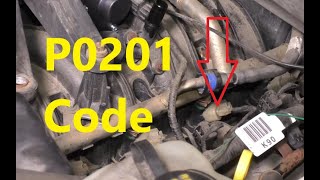
P0201 on a Ford Flex with the 3.5L EcoBoost engine indicates an electrical fault with the cylinder 1 fuel injector. The most common causes are a failed fuel injector or a damaged wiring harness, sometimes chafing against other engine components. This is a difficult DIY repair as the intake manifold must be removed to access the injectors on the rear bank.
- P0201 is an electrical fault code for the cylinder 1 injector circuit, most often caused by a failed injector or damaged wiring.
- Diagnosis requires testing for electrical signals and resistance; simply replacing parts without testing can be costly and ineffective.
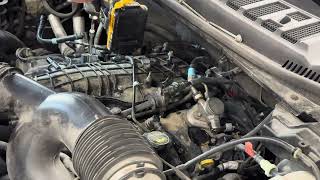
- Repair is labor-intensive due to the injector's location under the intake manifold on the firewall side of the engine.
- It is highly recommended to replace all injectors on the rear bank, if not all six, at the same time to prevent repeat repairs.
What's Unique About the 2010-2019 Ford Flex
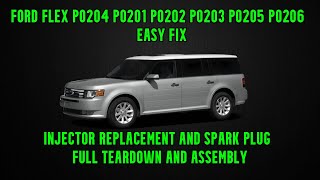
The 3.5L EcoBoost V6 in the Ford Flex is a Gasoline Direct Injection (GDI) engine, meaning the fuel injectors are located under the intake manifold. This makes accessing them for testing or replacement a labor-intensive job. 🎬 Watch: A complete Ford Flex fuel injector replacement guide. On this transversely mounted engine, cylinder 1 is on the rear bank (against the firewall), making it particularly difficult to reach. Furthermore, as a GDI engine, the intake valves are prone to carbon buildup over time, which can cause misfires and performance issues that might be confused with injector problems. While no specific TSBs for the Flex with P0201 were found, a highly relevant TSB for F-150s with the same engine (TSB 22-2223) points to the engine wiring harness chafing against an A/C line stud, a failure pattern that should be inspected on the Flex as well. Additionally, TSB Bulletin #TSB 25-2569 notes that similar Ford models may exhibit P0201 due to the engine harness contacting a hose crimp end or spring clamp tan, leading to an illuminated MIL.
Symptoms You May Notice
- Check Engine Light is on (may be flashing)
- Rough idle and engine vibration
- Engine misfire (stuttering or hesitation)
- Reduced engine power and poor acceleration
- Decreased fuel economy
- Engine may enter 'limp mode'
- Replacing the spark plug or ignition coil. While these parts can cause a misfire (P0301), the P0201 code specifically points to an electrical fault in the injector circuit, not the ignition system. 🎬 See this breakdown of P0201 circuit causes and fixes. The misfire is a symptom of the injector circuit failure.
Most Likely Causes
- Failed Cylinder 1 Fuel Injector 🔴 High Probability → Shop Fuel Injector The internal electronic coil of the GDI injector can fail from heat cycles and high mileage, creating an open circuit. This is a common failure on the 3.5L EcoBoost across multiple vehicle platforms.
How to confirm: After gaining access, disconnect the injector and measure its resistance with a multimeter; an 'OL' (Over Limit) reading indicates an open circuit and a bad injector. The most definitive test is to swap the cylinder 1 injector with another cylinder (e.g., cylinder 2). Clear the codes and run the engine. If the code changes to P0202, the injector is confirmed bad.
Typical fix: Replace the faulty fuel injector. It is highly recommended to replace all six injectors at once (or at least the three on the same bank) as the labor to remove the intake manifold is significant and the other original injectors may fail soon.
Est. part cost: $80-$150 per injector (OEM) - Damaged Wiring Harness or Connector 🟡 Medium Probability Engine vibrations and heat can cause wires to chafe against engine components, brackets, or other hoses, leading to a short or open circuit. A known issue on other 3.5L EcoBoost platforms is the harness rubbing on an A/C line stud near the passenger side valve cover, which is a prime location to inspect. The injector connector itself can also become brittle and fail. Manufacturer documentation in TSB Bulletin #TSB 16-0163 highlights that various Ford models may experience intermittent MIL illumination and P0201 due to wiring-related drivability issues.
How to confirm: Visually inspect the entire length of the wiring harness to the cylinder 1 injector for any signs of rubbing, melting, or breaks. Check the connector for corrosion or backed-out pins. Use a noid light to verify if the PCM is sending a pulse signal to the connector; a rhythmic flash is a good sign. Wiggling the harness while the engine is running may cause the idle to change, indicating an intermittent connection.
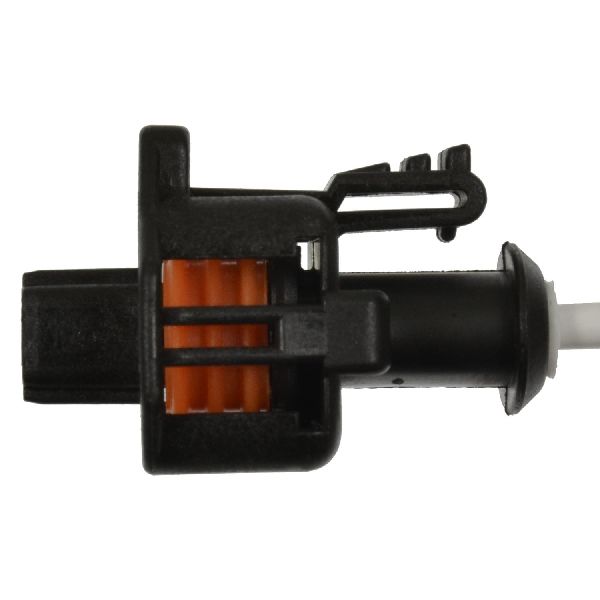
Typical fix: If the damage is at the connector, replace it with a new pigtail connector (Motorcraft WPT-1175 is a common part number). If the damage is elsewhere in the harness, repair the broken wire(s) and protect the harness from future damage using loom or re-routing.
Est. part cost: $15-$50 for a connector pigtail
Rare But Worth Checking
- Powertrain Control Module (PCM) Failure: → Shop Engine Control Module (ECM) This is very rare. The internal driver circuit for the injector can fail. This should only be considered after definitively ruling out the injector and wiring as the cause.
Diagnosis Steps
- Confirm the presence of the P0201 code using an OBD-II scanner. Note if P0301 is also present.
- Identify Cylinder 1: On the 3.5L EcoBoost Flex, the cylinders are numbered 1-2-3 on the rear bank (by the firewall) and 4-5-6 on the front bank (by the radiator). Cylinder 1 is on the rear bank, passenger side.
- Inspect the Wiring: Visually inspect the wiring harness leading to the cylinder 1 injector. Look for any signs of chafing, melting, or rodent damage, paying close attention to where the harness may rub against brackets or A/C lines near the passenger-side valve cover.
- Check for Signal with a Noid Light: Disconnect the injector connector and plug in a noid light. Start the engine. A rhythmic flashing light indicates the PCM is sending the signal to fire the injector, suggesting the wiring to the connector is likely okay.
- Test the Injector Resistance: Turn the engine off and disconnect the injector. Use a multimeter set to Ohms to measure the resistance across the two pins on the injector itself. Compare this reading to the manufacturer's specification (typically 1-2 ohms for GDI injectors). An 'OL' (Over Limit) reading indicates an open circuit and a bad injector.
- Swap the Injector: This is the most definitive test but requires significant labor. Once the intake is removed, swap the cylinder 1 injector with the cylinder 2 injector. Reassemble, clear the codes, and run the engine. If the code returns as P0202, the injector is faulty. If P0201 returns, the problem is in the wiring or PCM.
- Check for Power and Ground: Use a multimeter to check for battery voltage at one pin of the injector connector (with key on, engine off). Then, check for continuity on the signal wire back to the PCM connector to rule out a wire break.
Parts You'll Likely Need
- Gasoline Direct Injector (GDI)
(OEM #BL3Z-9F593-B)— This is the most common part to fail internally, causing the P0201 electrical fault code. This part number supersedes the older BL3Z-9F593-A.
Trusted brands: Motorcraft, Bosch, Standard Motor Products
OEM price range: $80-$150
Aftermarket price range: $50-$110 - Upper Intake Manifold Gasket Set
(OEM #Motorcraft CG-921)— These are single-use gaskets that must be replaced anytime the intake manifold is removed to access the fuel injectors to prevent vacuum leaks. 🎬 Watch: How to replace the intake manifold gaskets properly.
Trusted brands: Fel-Pro, Mahle, Motorcraft
OEM price range: $40-$70
Aftermarket price range: $20-$40 - Fuel Injector Connector Pigtail
(OEM #Motorcraft WPT-1175)— If the wiring harness is damaged right at the connector, or the connector's locking tab is broken, replacing the pigtail is the standard repair.
Trusted brands: Motorcraft, Dorman
OEM price range: $30-$50
Aftermarket price range: $15-$30
Related Codes That Often Appear With This One
- P0301 — This code means 'Cylinder 1 Misfire'. A P0201 fault directly causes a misfire because cylinder 1 is not receiving fuel, so these codes almost always appear together.
- P0300 — This indicates a 'Random Misfire'. It can appear if the electrical fault in the P0201 code is intermittent, causing an inconsistent misfire that the PCM doesn't immediately isolate to a single cylinder.
- P0202, P0203, etc. — If you see other injector circuit codes simultaneously, it strongly suggests a wiring harness issue common to multiple cylinders (like a chafe point) or a shared power/ground fault, rather than multiple individual injector failures.
Technical Service Bulletins (TSBs) & Recalls
- TSB 22-2223 (for F-150): While not written for the Flex, this TSB is highly relevant. It describes how the 3.5L EcoBoost engine harness can rub against an A/C line stud on the passenger side, causing wires to chafe and trigger injector circuit codes like P0201. This is a known failure pattern that should be investigated.
- TSB Bulletin #TSB 25-2569: This bulletin notes that vehicles may exhibit P0201 and P0301 due to the engine harness contacting the hose crimp end or spring clamp tan.
- TSB Bulletin #TSB 16-0163: Describes intermittent MIL illumination with various drivability issues and DTCs P0201-P0204 and P0301-P0304.
Platform-Specific Known Issues
- A common real-world scenario involves a P0201 code appearing with a P0301 misfire. After completing the difficult job of removing the intake manifold, a technician swaps the #1 and #2 injectors. Upon reassembly, the code changes to P0202, confirming the original injector was the culprit. Many owners report that after one injector fails, others from the same original set tend to fail within the next year, reinforcing the recommendation to replace them as a set to avoid repeating the labor-intensive repair.
Mechanic-Grade Diagnostic Values
- GDI Fuel Injector Coil Resistance — expected: 1.0 to 2.0 Ohms. Failure: A reading of 'OL' (infinite resistance) indicates an open coil. A reading near zero indicates a shorted coil.
- Injector Power Wire Voltage (Key On, Engine Off) — expected: ~12.5V (Battery Voltage). Failure: Voltage below 12V or no voltage indicates a problem in the power supply wire, fuse, or relay.
- Injector Pulse Width at Idle (Scan Tool Live Data) — expected: ~1-5 milliseconds (ms). Failure: A value of zero or erratic readings for cylinder 1 suggests a problem with the control circuit or the PCM driver.
- High-Pressure Fuel Rail Pressure (WOT) — expected: 1,500 to 2,150 PSI. Failure: While not a direct cause of P0201, low high-side pressure can indicate broader fuel system issues that may coincide with injector problems.
Scan Tool Commands That Help
- Ford IDS (or equivalent high-end scanner): Power Balance Test — This bidirectional test disables one cylinder at a time and graphically displays the RPM drop. If disabling cylinder 1 causes little or no change in RPM, it confirms that the cylinder is not contributing, which is the expected result of a P0201 fault.
- Ford IDS (or equivalent high-end scanner): Injector Buzz Test / Actuator State Control — This command allows the technician to manually fire the cylinder 1 injector. Listening with a mechanic's stethoscope, a healthy injector will produce an audible click. No click points to a dead injector or an open in the wiring circuit.
Wiring & Ground Locations
- Cylinder 1 Injector Control Wire — For 2010-2012 models, this is typically a specific pin on the main PCM engine connector (C175B or similar). For 2013+ models with revised electronics, the pin location may differ. A wiring diagram is essential for confirmation.. This is the specific wire the PCM uses to ground-pulse the injector. A continuity test from this pin to the injector connector pin is the definitive way to rule out a broken wire in the harness.
- G102 — Typically located on the firewall, to the right (passenger side) of the PCM.. This is a primary engine compartment ground. A loose or corroded connection here can cause intermittent and difficult-to-diagnose electrical issues across multiple systems, including the injector circuits.
- G104 — Typically found on the right (passenger side) fender apron, often behind the battery.. Another major chassis and engine bay ground point. A poor ground here can create a floating ground, causing incorrect voltage readings for sensors and actuators, potentially contributing to circuit fault codes.
- Injector Power Supply Wire — This wire provides 12V+ to the bank of injectors and is often a shared color (e.g., all red wires) for cylinders 1, 2, and 3.. A break or short in this power feed wire before it splices to the cylinder 1 injector will cause P0201. If the fault is before the splice, multiple injector codes (P0201, P0202, P0203) will likely be present.
OEM Part Supersession History
BL3Z-9F593-A→BL3Z-9F593-B (Motorcraft CM-5188)— Standard revision and update by the manufacturer for improved reliability or manufacturing process changes.GN1G-9F593-BA→GN1G-9F593-BB— Revision for 2010-2014 era 3.5L EcoBoost engines. These part numbers are generally interchangeable for this period.
Heads up: Do not confuse with injectors for 2015+ models which use a different connector style and may have different flow rates.
Model Year Variations Within This Range
- 2010-2012: These early models used a GDI-only fuel system. The P0201 code refers definitively to the high-pressure direct injector.
- 2013-2016 (approx.): Ford introduced updates to the Gen 1 EcoBoost, including a new Bosch direct fuel-injection system. While still GDI-only, part numbers and PCM software may differ from the earliest models.
- 2017-2019: While many F-150s received the Gen 2 EcoBoost with dual port and direct injection (PFDI) starting in 2017, the Ford Flex likely retained the first-generation 3.5L EcoBoost through its final model year in 2019. This is a critical distinction, as on a PFDI engine, P0201 would refer to the *port* injector, which has a much higher resistance (11-15 ohms). For the Flex, it is safe to assume P0201 refers to the GDI injector across all years.
Diagnostic Flowchart
Other Known Issues on This Vehicle
Issues unrelated to this code that are worth knowing about as an owner of this generation:
- Internal Timing-Chain-Driven Water Pump Failure 🔴 High — Commonly occurs between 80,000 and 150,000 miles. Failure can be catastrophic.
- Power Transfer Unit (PTU) Overheating and Failure (AWD Models) 🔴 High — Can occur as early as 60,000 miles. Ford considers the fluid 'lifetime,' but it often breaks down from heat.
- Intake Valve Carbon Buildup 🟠 Medium — A gradual issue inherent to all Gen 1 3.5L EcoBoost engines. Performance degradation is noticeable by 60,000-80,000 miles.
- Intercooler Condensation 'Shudder' 🟡 Low — Occurs under specific conditions (humid weather, hard acceleration) and was more common on earlier 2010-2012 models. (Ref: TSB 14-0017 (for F-150, but concept applies))
- Fuel Pump Control Module Failure 🟠 Medium — Affects 2013-2015 models specifically. (Ref: Recall 16S31)
Used vs. New Parts: Buying Guide for This Vehicle
When a used part is the smart pick: A complete engine wiring harness from a low-mileage donor vehicle can be a cost-effective solution if a complex or hard-to-find short is diagnosed. Individual pigtail connectors are also good used candidates.
Donor-vehicle mileage cap: roughly under 75000 miles for the part to have meaningful remaining life.
What to inspect on the donor part:
- For a wiring harness, inspect for any signs of brittleness, cracking, or previous repairs (e.g., mismatched electrical tape, butt connectors).
- Ensure all connector locking tabs are intact and not broken.
- Check for rodent damage (chewed wires) or melting near exhaust components.
- Avoid parts from vehicles in salt-belt regions, as corrosion on connectors and grounds can be a hidden issue.
OEM-only on this vehicle (don't cheap out):
- Gasoline Direct Injectors (GDI): OEM (Motorcraft or the original manufacturer, Bosch) is very strongly recommended. Aftermarket GDI injectors have a poor reputation for reliability and consistent flow rates, which is critical for a direct-injected, turbocharged engine.
Aftermarket brands forum-validated for this vehicle:
- Standard Motor Products (SMP) is generally considered a reliable Tier 1 aftermarket supplier for injectors and sensors.
- Fel-Pro and Mahle are trusted brands for intake manifold gaskets.
Brands owners have reported issues with on this vehicle:
- Avoid unbranded, 'white-box' fuel injectors from online marketplaces. The failure rate is high, and incorrect flow rates can lead to engine damage.
Real Owner Stories
Aggregated from forums and TSBs cited above. Mileages and costs reflect what owners reported in those sources.
2010-2019 Ford Flex 3.5L EcoBoost V6
Symptoms: The P0201 code appeared alongside a P0301 misfire. The technician performed the labor-intensive task of removing the intake manifold to swap the #1 and #2 injectors.
What fixed it: Swapping the injectors caused the code to change to P0202, confirming the injector was bad. Replacing the faulty fuel injector resolved the issue.
Source hint: vehicle_specific_issues
2010-2019 Ford Taurus SHO 3.5L EcoBoost V6
Symptoms: Owners reported P0201 and related injector circuit codes caused by injector failure and wiring chafe.
What fixed it: Identical causes to the Flex (injector replacement or wiring repair) due to the shared engine and wiring harness layout.
Source hint: platform_mates - 2010-2019 Ford Taurus SHO
Documented NHTSA Reports
NHTSA ODI #10944544
Symptoms: An owner reported that while on the shoulder of the road, the vehicle would turn over but not start. The check engine light was on with codes P0201, P0202, and a code indicating an open circuit for every injector.
What fixed it: The vehicle required towing for diagnostic repair of the injector circuit fault.
NHTSA ODI #10405277
Symptoms: A driver was forced to pull over to the side of the highway when the vehicle threw codes P0010, P0201, P0202, P0203, and P0204.
What fixed it: The dealer checked electrical connections and reassembled the components, though the issue recurred shortly after.
NHTSA ODI #11551180
Symptoms: An owner reported a P0301 misfire and a P0201 fuel injector fault, which they associated with a loss of vehicle control.
What fixed it: The report emphasizes the severity of the injector and misfire codes in real-world driving conditions.
Related OBD-II Codes
Frequently Asked Questions
Where is Cylinder 1 located on my 2010-2019 Ford Flex 3.5L EcoBoost?
Does TSB 22-2223 apply to my Ford Flex P0201 code?
Should I replace just the one faulty injector or all of them?
What specific replacement connector pigtail do I need for the injector wiring?
Can I use a noid light to test the injector circuit on this engine?
What is the correct resistance for a 3.5L EcoBoost GDI fuel injector?
Helpful Videos
We Have This Part in Stock



The information in this article is provided for general reference and educational purposes only. Vehicle specifications, procedures, and part compatibility can vary by production date, trim level, and region. Always consult your vehicle's factory service manual and verify part numbers before purchasing or performing repairs. Safety-critical components such as airbags, seat belts, and braking systems should be installed by a qualified professional.
- Ford Flex:
- 🧭 Diagnostic Flowchart
- 🎬 Helpful Videos
- 🛍️ Shop This Part
- What's Unique About the 2010-2019 Ford Flex
- Symptoms You May Notice
- Most Likely Causes
- Rare But Worth Checking
- Diagnosis Steps
- Parts You'll Likely Need
- Related Codes That Often Appear With This One
- Technical Service Bulletins (TSBs) & Recalls
- Platform-Specific Known Issues
- Mechanic-Grade Diagnostic Values
- Scan Tool Commands That Help
- Wiring & Ground Locations
- OEM Part Supersession History
- Model Year Variations Within This Range
- Other Known Issues on This Vehicle
- Used vs. New Parts: Buying Guide for This Vehicle
- Real Owner Stories
- 2010-2019 Ford Flex 3.5L EcoBoost V6
- 2010-2019 Ford Taurus SHO 3.5L EcoBoost V6
- Documented NHTSA Reports
- NHTSA ODI #10944544
- NHTSA ODI #10405277
- NHTSA ODI #11551180
- Related OBD-II Codes
- Frequently Asked Questions
- 🎟️ Get 5% Off