

P0201 on 2003-2010 Porsche Cayenne 3.2L VR6: Injector Circuit Malfunction Fixes
Code P0201 on a Porsche Cayenne with the 3.2L VR6 engine indicates an electrical fault in the cylinder 1 fuel injector circuit. The most common cause is a failed fuel injector. A replacement injector costs between $50 for an aftermarket part and $120 for an OEM Bosch part. Less common causes include wiring harness damage or a blown fuse.
- P0201 specifically points to an electrical problem in the cylinder 1 injector circuit, not a general misfire.
- The most likely culprit on the Cayenne 3.2L VR6 is the fuel injector itself failing.
- A simple way to confirm a bad injector is to swap it with an adjacent one and see if the fault code follows the injector.
- Cylinder 1 is the cylinder at the very front of the engine, closest to the radiator.
- While you can drive with this code, it's best to address it quickly to prevent damage to the catalytic converter.
What's Unique About the 2003-2010 Porsche Cayenne
The 3.2L engine in the first-generation Porsche Cayenne (model years 2004-2006) is a narrow-angle VR6 sourced from Volkswagen, known for its general reliability. However, like many vehicles of this era, its fuel and ignition system components are susceptible to failure from prolonged under-hood heat and age. While P0201 is an electrical code, it's often the injector itself that fails internally rather than a wiring issue on this specific platform. Because these components age at a similar rate, it's not uncommon for owners to experience issues with ignition coils or other injectors around the same time. This engine is also shared with the Volkswagen Touareg and Audi TT, which can exhibit similar failures. A common and often overlooked issue on Cayennes is water intrusion in the cabin, which can corrode main wiring harness splices located under the carpet, leading to a host of bizarre electrical faults, including injector circuit problems.
Generation note: The 2003-2010 range covers the entire first generation of the Cayenne (Type 955/957). However, the 3.2L VR6 engine was only offered in the 2004-2006 model years (Type 955). The facelifted 2008-2010 models (Type 957) used a larger 3.6L VR6 engine, which may have similar diagnostic principles but different specific parts.
Symptoms You May Notice
- Check Engine Light is on
- Rough idle or engine stumbling
- Engine misfire, which may be more noticeable under load
- Hesitation or lack of power during acceleration
- Reduced fuel economy
- Noticeable smell of unburned fuel from the exhaust
- Replacing the spark plug or ignition coil for cylinder 1. While these can cause a misfire (P0301), they will not cause an injector circuit code like P0201, which is specifically an electrical fault.
Most Likely Causes
- Failed Cylinder 1 Fuel Injector 🔴 High Probability → Shop Fuel Injector The internal coil windings of the injector can fail over time due to heat cycles and vibration, creating an open or shorted circuit. This is a very common failure point on many vehicles of this era, including the VR6.
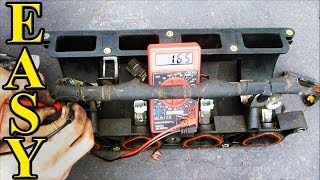
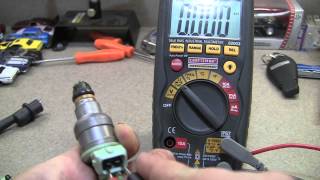
How to confirm: Swap the fuel injector from cylinder 1 with another cylinder (e.g., cylinder 2). Clear the codes and drive the car. If the code changes to P0202, the injector is faulty. Alternatively, measure the resistance of the injector with a multimeter; a typical resistance for these injectors is between 10-18 Ohms. A reading of infinity (OL) indicates an open circuit, while a reading near zero indicates a short. 🎬 Watch: How to check fuel injector resistance with a multimeter. Both confirm a bad injector.
Typical fix: Replace the failed fuel injector. It is often recommended to replace all six injectors at the same time, as they have aged together and others may fail soon.
Est. part cost: $50 - $120 - Wiring Harness or Connector Issue 🟡 Medium Probability The engine bay is compact, and wiring insulation can become brittle and crack from heat and age, especially at the connector. The connector pins can also corrode or become loose, leading to an intermittent or permanent open circuit. The main engine harness runs near the oil fill cap, and spilled oil can degrade the loom over time, exposing wires to chafing on the valve cover.
How to confirm: Visually inspect the wiring harness leading to the cylinder 1 injector for any signs of chafing, melting, or breaks. Wiggle the connector and wiring with the engine running to see if it affects the idle. Check the electrical connector for corrosion, bent pins, or a loose fit. Use a noid light to confirm that the ECM is sending a pulse signal to the injector connector. If the noid light flashes, the wiring and ECM are likely good, pointing back to the injector.
Typical fix: Repair the damaged section of wire or replace the faulty connector pigtail. In some cases, the entire injector harness may need replacement if damage is widespread.
Est. part cost: $10 - $30 - Blown Fuel Injector Fuse ⚪ Low Probability → Shop Fuel Injector
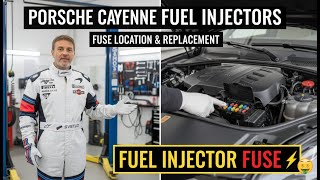
How to confirm: Check the fuse box in the engine compartment, located on the left side. For the 3.2L V6 engine, fuse #7 (20A) powers injectors 1, 2, and 3. 🎬 See how to find and replace the fuel injector fuse. If this fuse is blown, none of those cylinders would be firing, and you would likely have codes for all three (P0201, P0202, P0203).
Typical fix: Replace the blown fuse. If the fuse blows again immediately, it indicates a short circuit in the wiring for one of the injectors on that bank, which must be traced and repaired.
Est. part cost: $1 - $5
Rare But Worth Checking
- Failed Powertrain Control Module (PCM/DME): → Shop Engine Control Module (ECM) This is very rare. The internal driver circuit in the PCM that controls the injector can fail. This is usually the last thing to suspect after all other possibilities (injector, wiring) have been ruled out. A failed PCM often causes multiple other codes and more severe running issues. Forum discussions show instances where, after exhausting all other options, a replacement DME was the ultimate fix for a persistent injector fault code.
- Corroded Main Harness Ground Splices: A known issue on the 955/957 Cayenne platform is water intrusion from clogged cowl or sunroof drains, which pools under the front carpets. This water corrodes several critical wire splices in the main harness located in the wiring channel. This can cause a huge variety of electrical problems that seem unrelated, including injector circuit faults. If you have other strange electrical gremlins, this is a likely culprit.
Diagnosis Steps
- Read the fault codes with an OBD-II scanner to confirm P0201 is present and note any other codes, such as P0301.
- Identify Cylinder 1. On the 3.2L VR6, the cylinders are arranged in a single line. Cylinder 1 is the cylinder closest to the front of the car (radiator side), and cylinder 6 is closest to the firewall.
- Inspect the wiring and connector for cylinder 1's fuel injector. Look for any visible damage, corrosion, or loose connections. Gently wiggle the connector with the engine idling to see if the misfire changes.
- Perform a noid light test. Disconnect the injector and plug a noid light into the connector. Crank or start the engine. The light should flash rhythmically, indicating the ECM is sending a signal. If it doesn't flash, the problem is in the wiring or the ECM. If it flashes, the wiring and ECM are likely okay.
- Test the injector resistance. Disconnect the injector and use a multimeter set to Ohms to measure the resistance between its two electrical pins. A good injector should read between 10-18 Ohms. An infinite reading (OL) means an open circuit, and a near-zero reading indicates a short. Both mean the injector is bad.
- Swap the injector. This is the most definitive test. Swap the injector from cylinder 1 with the injector from cylinder 2. Clear the codes and run the engine. If the fault code moves to P0202, you have confirmed the injector is the problem. If P0201 returns, the issue is in the wiring or ECM.
- Check the fuel injector fuse. Locate the fuse box in the engine bay and check fuse #7 (20A), which powers injectors 1-3.
Parts You'll Likely Need
- Fuel Injector
(OEM #022906031J)— This is the most common cause for a P0201 code, where the injector fails internally.
Trusted brands: Bosch
OEM price range: $100 - $140
Aftermarket price range: $50 - $80
Related Codes That Often Appear With This One
- P0301 — If the injector circuit fault prevents fuel from being delivered to cylinder 1, it will cause a misfire, logging a P0301 (Cylinder 1 Misfire Detected).
- P0300 — If the underlying electrical issue is intermittent or affects the power supply to multiple injectors, a P0300 (Random/Multiple Cylinder Misfire Detected) code might also be stored.
- P0202, P0203 — If the shared fuse (#7) for injectors 1, 2, and 3 blows, it's possible to see circuit codes for all three cylinders simultaneously.
Platform-Specific Known Issues
- Real World Diagnosis on Rennlist: A Rennlist forum member documented a baffling case of intermittent P0201 and P0205 codes. After swapping injectors, checking the wiring harness for resistance, and even swapping the DME (ECU), the problem persisted but moved to a different cylinder with a different DME. This highlights the rare but possible scenario of a failing DME driver, which should only be considered after all other components are verified as good. The issue was ultimately traced back to the DME itself.
Mechanic-Grade Diagnostic Values
- Fuel Injector Resistance — expected: 12.5 Ohms is a specific value reported by an owner for all six injectors. The general range is 10-18 Ohms.. Failure: A reading of infinity (OL) indicates an open circuit, while a reading near zero indicates a shorted injector.
- Injector Connector Voltage (DME side) — expected: One pin should have constant +12V with the key on. The other pin is the ground, which is pulsed by the DME. A user reported seeing 8.5V on one pin and 3.5V on the other relative to chassis ground, indicating a potential floating ground issue.. Failure: Absence of +12V on the power pin, or constant voltage on the ground pin with no pulsing (checked with a noid light).
- Wiring continuity from Injector to DME — expected: Less than 2.0 Ohms of resistance between the injector connector pin and the corresponding DME connector pin.. Failure: High resistance or an open circuit (OL) indicates a break in the wire.
Scan Tool Commands That Help
- VCDS (VAG-COM): Engine -> Output Tests -> Fuel Injector Nxx — This allows a technician to command a specific injector to fire, confirming if the DME driver and wiring are capable of activating it. The engine must be off. You may need to press the accelerator pedal to initiate the test. This can help isolate a wiring/DME issue from a mechanical injector problem.
- PIWIS (Porsche Dealer Tool): Drive link check -> Injector test — The Porsche-specific tool offers guided fault finding and can perform similar bidirectional tests on the fuel injectors to verify circuit integrity and DME function. This is the most comprehensive tool for diagnosis.
Wiring & Ground Locations
- DME Injector 1 Ground Pin — For a similar Bosch Motronic ME7.1.1 system, the injector ground signals are on the 52-pin connector (Connector III). Injector 1 is often on a specific pin that can be checked for continuity. For example, on some VAG systems, it's pin 17 of the 55-pin DME connector.. The DME provides a pulsed ground to fire the injector. Testing continuity from the injector connector's ground pin back to the correct DME pin definitively confirms the wire is intact. An open here means a broken wire.
- Main Engine to Chassis Ground Straps — There are two primary engine ground straps. One is in the engine bay, from the engine to the passenger side strut tower. The other is underneath the vehicle, connecting the bottom of the engine to the frame in the front right corner.. A corroded or loose main ground strap can cause a floating ground for the entire engine management system, leading to erratic sensor readings and incorrect voltage references for components like injectors, potentially triggering circuit codes.
- DME Ground Points — The DME has several ground points. One critical multipoint ground is located under the dash, above the relay and fuse panel. Another is under the hood on top of the fender near the diagnostic test port.. If the DME itself has a poor ground connection, its internal drivers for the injectors may not function correctly, leading to circuit fault codes even if the injector and wiring are good.
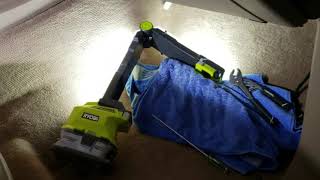
- Under-Carpet Wiring Splices — In the wiring channels under the driver and passenger side carpets. Access requires removing the door sill plates and lifting the carpet.. Water intrusion from clogged drains corrodes factory splices for power and communication wires. A corroded splice on a power feed shared by the DME or injector relay can cause low voltage and trigger a P0201 code.
Real Owner Repair Stories
- Rennlist Forum User (Porsche Cayenne S (955)) — Rough idle, misfiring, and multiple injector circuit codes (P0202, P0205, P0206).
❌ Tried (didn't work) Ohm testing injectors (all tested good at ~13 ohms), voltage testing at the connector (showed strange voltages, suggesting a floating ground).
✅ What actually fixed it The user identified that the wiring insulation near the injector connectors had become extremely brittle and cracked. The final fix required repairing these broken wires by splicing in new pigtails for the affected injectors. - YouTube video by 'Repairs and Rides' (Porsche Cayenne (unspecified year, likely 955/957)) — Ignition fault message on the dash, no-start condition, multiple electrical issues.
❌ Tried (didn't work) Initial diagnosis pointed towards a major component failure.
✅ What actually fixed it The root cause was water intrusion under the carpets, which had completely corroded about a dozen factory wire splices in the main harness. The fix involved cutting out the corroded sections, soldering the wires back together, and sealing them with heat shrink tubing. This restored power and communication, resolving the ignition fault and other electrical problems.
When the Usual Fixes Don't Work
- While a failed injector is the most common cause, do not immediately assume the injector is bad. The wiring harness on the VR6 engine is known to become brittle with age, especially the insulation right at the injector connectors. A user on Rennlist found multiple injector codes were caused by cracked wires just inches from the plug, even though the injectors themselves tested with correct resistance. Another major possibility unique to the Cayenne platform is water ingress corroding splices under the carpet, which can manifest as an injector circuit fault among other electrical issues. Always inspect the wiring harness thoroughly and check for damp carpets before replacing expensive components.
OEM Part Supersession History
022906031H→022906031J— Part revision by VW/Audi for the shared VR6 engine platform.
Heads up: The Bosch equivalent 0280157012 is a direct cross-reference for the 022906031J part number and is the correct OEM supplier part.
Model Year Variations Within This Range
- 2004-2006: The 3.2L VR6 engine and its associated Motronic ME7.1.1 engine management system were only used in these model years for the Cayenne. Later base models (2008-2010) switched to a 3.6L VR6 with direct injection, which uses completely different injectors and diagnostic procedures.
Diagnostic Flowchart
Other Known Issues on This Vehicle
Issues unrelated to this code that are worth knowing about as an owner of this generation:
- Driveshaft Center Support Bearing Failure 🔴 High — Extremely common; considered a 'when, not if' failure item. Often occurs between 80,000-140,000 miles. Symptoms start as a vibration under acceleration and progress to a loud thumping/banging from under the center console.
- Plastic Coolant Pipe Failure (V8 Models) 🔴 High — This is a notorious and guaranteed failure on the V8 models (Cayenne S/Turbo) from 2003-2006, where plastic pipes in the engine valley become brittle and crack. While the V6 has a different, more robust cooling system, it's a major issue for the 955 platform overall. The V6 has its own plastic coolant pipe (the "crack pipe") that can fail, but it's a less catastrophic and less frequent issue than on the V8s.
- Ignition Coil Failure 🟠 Medium — Common across all first-generation Cayenne engines, including the VR6. Heat and age cause the coils to crack or fail internally, leading to misfires (P030x codes). Many owners replace all six coils at once when one fails.
- In-Tank Fuel Pump Failure 🟠 Medium — The low-pressure fuel pumps located inside the fuel tank can fail, leading to starting issues, stalling, and hesitation. This is a common issue on higher-mileage examples.
- Stretched Timing Chains 🔴 High — While the VR6 is generally robust, timing chain and guide wear can occur at higher mileage (typically over 150,000 miles), leading to rattling noises and timing-related fault codes. This is an engine-out repair and is very expensive.
Used vs. New Parts: Buying Guide for This Vehicle
When a used part is the smart pick: Used parts like a complete engine wiring harness can be a cost-effective choice if the original is extensively damaged, as a new harness from Porsche can be prohibitively expensive. A used DME can also be an option, but it will require professional programming to match the vehicle's immobilizer.
Donor-vehicle mileage cap: roughly under 80000 miles for the part to have meaningful remaining life.
What to inspect on the donor part:
- For a wiring harness, inspect for any signs of brittleness, cracking at connectors, or previous repairs.
- For a fuel injector, ask if it came from a running engine with no misfire codes. Avoid injectors from engines with known issues or high mileage, as their performance is uncertain.
- Check for physical damage, corrosion on electrical pins, and intact O-rings.
OEM-only on this vehicle (don't cheap out):
- Powertrain Control Module (DME): While a used DME can be purchased, it must be from an identical part number and requires specialized programming (cloning) to work with your vehicle's security system. This is not a plug-and-play part.
Aftermarket brands forum-validated for this vehicle:
- Bosch: As the Original Equipment Manufacturer (OEM), Bosch injectors (part no. 0280157012) are the most reliable replacement.
- Fuel Injector Clinic (FIC): Known in the VW/Audi community for providing high-quality, flow-matched performance injector sets that are compatible with the VR6 engine.
- Grams Performance: Another reputable brand offering performance injectors for the VR6 platform.
Brands owners have reported issues with on this vehicle:
- Unbranded, no-name injectors from online marketplaces should be avoided. Forum discussions frequently warn that these parts can have inconsistent flow rates, poor spray patterns, and high failure rates, leading to persistent running issues even after 'fixing' the initial code.
Real Owner Stories
Aggregated from forums and TSBs cited above. Mileages and costs reflect what owners reported in those sources.
2003-2010 Porsche Cayenne 3.2L VR6
Symptoms: Baffling case of intermittent P0201 and P0205 codes. The owner attempted swapping injectors, checking wiring harness resistance, and even swapping the DME.
What fixed it: The issue was ultimately traced back to a failing DME (ECU) driver.
Source hint: Rennlist: "Baffling Fuel Injector Faults and Misfires: need help!"
Related OBD-II Codes
Frequently Asked Questions
Where is cylinder 1 located on the 3.2L VR6 engine in my Cayenne?
Which fuse should I check if I have a P0201 code on my 3.2L V6 Cayenne?
What is the correct resistance range for a fuel injector on the 2003-2010 Cayenne 3.2L?
Is it common for the wiring to fail on the 3.2L VR6 engine?
If I find a bad injector on cylinder 1, should I only replace that one?
Can a faulty engine computer (DME) cause the P0201 code on a Cayenne?
Helpful Videos





The information in this article is provided for general reference and educational purposes only. Vehicle specifications, procedures, and part compatibility can vary by production date, trim level, and region. Always consult your vehicle's factory service manual and verify part numbers before purchasing or performing repairs. Safety-critical components such as airbags, seat belts, and braking systems should be installed by a qualified professional.
- Porsche Cayenne:
- 🧭 Diagnostic Flowchart
- 🎬 Helpful Videos
- What's Unique About the 2003-2010 Porsche Cayenne
- Symptoms You May Notice
- Most Likely Causes
- Rare But Worth Checking
- Diagnosis Steps
- Parts You'll Likely Need
- Related Codes That Often Appear With This One
- Platform-Specific Known Issues
- Mechanic-Grade Diagnostic Values
- Scan Tool Commands That Help
- Wiring & Ground Locations
- Real Owner Repair Stories
- When the Usual Fixes Don't Work
- OEM Part Supersession History
- Model Year Variations Within This Range
- Other Known Issues on This Vehicle
- Used vs. New Parts: Buying Guide for This Vehicle
- Real Owner Stories
- 2003-2010 Porsche Cayenne 3.2L VR6
- Related OBD-II Codes
- Frequently Asked Questions
- 🎟️ Get 5% Off