

P0202 on 2003-2011 Saab 9-3 2.0T: Injector Circuit Malfunction Fixes
On a 2003-2011 Saab 9-3 2.0T, code P0202 is very often caused by a failing Engine Control Module (ECM), not the fuel injector itself. Heat and vibration cause internal solder joints in the ECM to crack, disrupting the signal to injector #2. A professional ECM repair or rebuild, which involves re-soldering the main processor chips, is the most common fix, costing around $200-$500.
- For a 2003-2011 Saab 9-3 2.0T, P0202 is most often a symptom of a failing Engine Control Module (ECM), not a bad injector.
- The ECM fails because its location on the engine causes heat and vibration to damage internal solder joints over time.
- Do not replace the fuel injector without first confirming it's the problem. A simple injector swap between cylinders can save you from buying an unnecessary part.
- The most reliable and cost-effective fix is to have your original ECM professionally repaired by a specialist who can fix the known internal faults. This avoids costly programming of a new unit.
- Driving with this code can cause engine damage, particularly to the catalytic converter, so it should be addressed promptly.
What's Unique About the 2003-2011 Saab 9-3
On this specific Saab 9-3 with the 2.0L GM Ecotec engine, the ECM (a Bosch unit running Saab's Trionic 8 software) is notoriously prone to failure due to its mounting location on the engine block. It's subjected to intense heat and vibration, which over time causes the tiny solder balls connecting the two main processor chips to the circuit board to crack. This failure of the Ball Grid Array (BGA) is the root cause. As a result, P0202 (and related codes like P0201, P0203, P0204) is more frequently caused by a faulty ECM than a bad fuel injector, a key distinction from many other vehicles where the injector is the primary suspect.
Symptoms You May Notice
- Check Engine Light is on
- Rough, unstable idle
- Engine misfiring, shaking, or vibrating
- Noticeable loss of power and poor acceleration
- Engine enters 'Limp Home Mode' with reduced performance
- Difficulty starting the engine, or engine stalls and fails to restart until it cools down
- Increased fuel consumption
- Excessive white or black smoke and strong fuel smell from the exhaust if the injector is stuck open
- Replacing the fuel injector when the ECM is the actual cause. Due to the high failure rate of the ECM on these cars, it's crucial to rule it out before spending money on injectors. Many forum users report replacing injectors and spark plugs with no success before correctly identifying the ECM as the fault.
Most Likely Causes
- Faulty Engine Control Module (ECM) 🔴 High Probability → Shop Engine Control Module (ECM) The Trionic 8 ECM is mounted directly to the hot, vibrating engine block, leading to cracked internal solder joints for the main processor chips over time. This is a widely documented failure point for this platform, causing an open or short in the injector driver circuit.
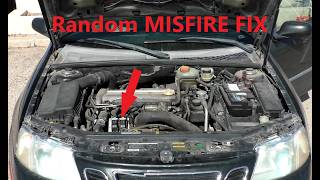
How to confirm: After confirming the injector and wiring are good (see steps below), the ECM is the culprit. Often, multiple injector codes (P0201, P0202, P0203, P0204) will appear together, sometimes with P0245 (wastegate) or P0606 (processor fault), strengthening the diagnosis of a faulty ECM. 🎬 Watch: Why misfire codes often point to the ECM The problem is often intermittent and worse when the engine is hot.
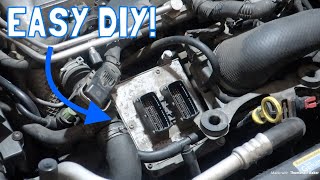
Typical fix: The ECM must be removed and sent to a specialist for repair. The repair involves a 're-balling' process where the processor chips are removed, and the old, cracked solder balls are replaced with new ones. This is often more cost-effective than buying and programming a new or used unit. Some owners opt to clone their original ECM's data to a donor unit.
Est. part cost: $200-$500 for a professional repair or cloning service. - Faulty Cylinder 2 Fuel Injector 🟡 Medium Probability → Shop Fuel Injector
How to confirm: Swap the fuel injector from cylinder 2 with another cylinder (e.g., cylinder 3). Clear the codes and drive the car. If the code changes to P0203, the injector is faulty. You can also check the injector's resistance with a multimeter; SAAB documentation specifies a value of 0.2-0.7 Ω is normal, though many owners report seeing around 12-14 ohms on healthy injectors. The key is consistency between all four injectors.
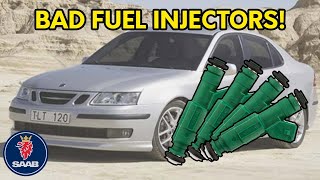
Typical fix: Replace the faulty fuel injector. It is often recommended to replace all four injectors at the same time, especially on a high-mileage vehicle, to ensure balanced performance.
Est. part cost: $40-$100 for a single aftermarket injector, $150-$325 for a single OEM injector. - Wiring Harness or Connector Issue ⚪ Low Probability
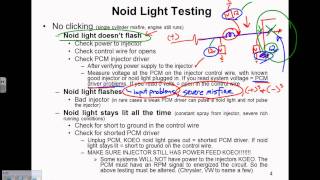
How to confirm: Visually inspect the wiring harness going to the cylinder 2 injector for any signs of chafing, melting, or corrosion. Use a noid light to test for a pulse signal at the injector connector. 🎬 Watch: How to test a fuel injector circuit with a noid light If the light doesn't flash, check for continuity between the ECM connector and the injector connector. Wiggling the harness while testing can reveal intermittent breaks.
Typical fix: Repair the damaged section of the wire or replace the injector connector pigtail. The connector is a common 'Junior Power Timer' or EV1 style connector.
Est. part cost: $10-$30 for a connector pigtail.
Rare But Worth Checking
- Water Damage to ECM:
Diagnosis Steps
- Scan for Codes: Read all stored DTCs. Note if P0202 appears alone or with other codes like P0302 or other P020x codes, which points more strongly to the ECM.
- Test the Injector Signal: Unplug the connector from the cylinder 2 fuel injector. Connect a 'noid light' to the connector. Start the engine. The light should flash steadily. If it flashes, the ECM and wiring are likely sending a signal. If it's off or stays on solid, suspect a wiring or ECM issue.
- Swap Injectors: If the noid light flashes, swap the fuel injector from cylinder 2 with one from another cylinder (e.g., cylinder 1). Clear the codes and run the engine. If the code changes to P0201, the fuel injector is the problem. This is the most definitive test to isolate a bad injector.
- Check Injector Resistance: With the injector unplugged, use a multimeter to measure the resistance across its two pins. A healthy injector should read between 0.2-0.7 ohms according to SAAB WIS, though some sources suggest 12-14 ohms is more typical for this part. Compare the reading to the other injectors; a significant deviation indicates a faulty injector.
- Inspect Wiring: If the code remains P0202 after the swap, carefully inspect the wiring harness from the ECM to injector 2 for any visible damage, melting, or corrosion.
- Check Wiring Continuity: Use a multimeter to check for continuity on the two wires from the ECM connector to the injector 2 connector. Also check for any shorts to ground or power. According to SAAB WIS, with the ignition ON, you should measure 5.8-7.8 V between the low control circuit terminal and ground.
- Diagnose the ECM: If the injector and wiring have been confirmed as good, the fault lies within the Engine Control Module (ECM). This is the most common failure on the 2003-2011 Saab 9-3 for this code.
Parts You'll Likely Need
- Engine Control Module (ECM) Repair Service
(OEM #55353231, 55352571, 55565020, 55574377, 55567225)— This is the most probable cause of P0202 on this specific vehicle due to a known design flaw where heat and vibration damage internal components.
Trusted brands: XeMODeX, Your Parts Source (YPS-USA), Nicks Electronics Repair
OEM price range: $1000+ for new/programmed
Aftermarket price range: $200-$500 for a repair service - Fuel Injector
(OEM #55559397)— If the injector itself has failed (confirmed by swapping cylinders), it will need to be replaced.
Trusted brands: Bosch, Genuine Saab, GB Remanufacturing
OEM price range: $160-$325
Aftermarket price range: $30-$105 - Fuel Injector Connector Pigtail
(OEM #Standard Motor Products HP3945, AC Delco PT2160)— If the connector or wiring leading to the injector is corroded, melted, or broken, the pigtail needs to be spliced in.
Related Codes That Often Appear With This One
- P0302 — P0302 means 'Cylinder 2 Misfire Detected'. Since P0202 indicates a problem with fuel delivery to cylinder 2, a misfire in that same cylinder is a direct consequence.
- P0201, P0203, P0204 — When multiple injector circuit codes appear simultaneously, it strongly points to a failure of the injector driver circuits within the common ECM, rather than multiple separate injector or wiring failures.
- P0245 — This code relates to the 'Turbocharger Wastegate Solenoid A Circuit Low'. Like the injector circuits, this solenoid is also controlled by a driver in the ECM. A failing ECM can cause this code to appear alongside the P020x codes.
- P0606 — This code for 'Internal Control Module Processor Fault' is a strong indicator of the specific ECM failure common to this platform, often appearing with the injector circuit codes as the internal solder joints degrade.
Technical Service Bulletins (TSBs) & Recalls
- While not a formal TSB for this specific issue, the SAAB Workshop Information System (WIS) provides detailed diagnostic procedures for P0202, including specific voltage and resistance checks for the injector circuit, which are crucial for accurate diagnosis.
Platform-Specific Known Issues
- The Trionic 8 (T8) ECM used in the 2003-2011 9-3 2.0T is highly susceptible to failure of the injector driver circuits. This is caused by its location on the engine, where it endures constant thermal stress and vibration, leading to cracked solder joints on the main processor chips. Many owners and shops report that injector circuit codes (P0201-P0204) almost always point to a needed ECM repair rather than a bad injector.
Mechanic-Grade Diagnostic Values
- Injector Circuit Voltage (ECM Output) — expected: Below 5.5V when injector is inactive, above 5.5V when active.. Failure: Voltage is above 5.5V when inactive or below 5.5V when active.
- Fuel Pressure (at fuel rail) — expected: 345-414 kPa (50-60 psi) with the fuel pump commanded ON.. Failure: Pressure is outside the specified range.
- Injector Balance Test (Pressure Drop) — expected: The pressure drop for each injector should be within 20 kPa (3 psi) of the average pressure drop across all injectors.. Failure: A specific injector's pressure drop value is significantly different from the others, indicating a flow issue.
Scan Tool Commands That Help
- Saab Tech 2: Fuel Injector Balance Test — To quantitatively compare the performance of each fuel injector. The test measures the fuel pressure drop caused by pulsing each injector, allowing a technician to identify an injector that is flowing more or less fuel than the others. This is useful after confirming the electrical circuit is intact but a misfire or fuel trim issue persists.
- Saab Tech 2: Activation of output for injector 2 — To manually command the injector to fire, helping to confirm if the ECM driver and wiring are capable of activating the injector solenoid. This is a direct way to test the control side of the circuit.
Wiring & Ground Locations
- ECM Connector B, Pin 49 — On the main connector block of the Trionic 8 ECM, which is mounted on the front of the engine.. This is the specific pin that the ECM uses to ground and control the fuel injector for cylinder 2. Any test for continuity or voltage signal for the injector 2 control circuit must be traced back to this pin.
- Injector Connector, Pin 1 — The connector on top of the fuel injector for cylinder 2.. This pin receives B+ (battery voltage) power from the main relay. A lack of voltage here indicates a power supply issue, not a control circuit fault from the ECM.
- G2 — On the side of the left-hand structural member/strut tower in the engine bay, by the connector bracket.. This is a primary chassis ground point for the battery and various electrical systems in the engine bay. A corroded or loose G2 ground can cause a host of intermittent and difficult-to-diagnose electrical issues, including erratic sensor readings and ECM behavior.
- G7 — On the engine control module's top right attachment lug.. This is the direct ground for the ECM itself. A poor connection at this specific point can directly impact the ECM's operation and its ability to properly ground the injector circuits, potentially causing a P0202 code.
Real Owner Repair Stories
- YouTube user Kennedy's garage (Saab 9-3 1.9 Diesel (Note: Diesel, but diagnostic logic is similar)) — P0202 and P0203 injector circuit malfunction codes.
❌ Tried (didn't work) Swapped wiring between injectors (e.g., connected injector 2 wiring to injector 1). The fault codes for cylinders 2 and 3 remained, proving the injectors themselves were not the issue., Performed a visual and integrity check on the wiring harness, which showed no damage.
✅ What actually fixed it The Engine Control Unit (ECU) was replaced. Upon inspection, the old ECU showed signs of water damage, which was the root cause of the injector circuit faults.
OEM Part Supersession History
55353231→N/A, but often used interchangeably with other Trionic 8 part numbers like 55565020, 55574377, etc., when cloning.— Part numbers may vary by year and original software, but the hardware is largely compatible.
Heads up: For a plug-and-play replacement, the key is not matching the part number, but cloning the software from the original ECM to a donor ECM. Most Trionic 8 ECMs from 2003-2011 2.0L FWD models can be used as donors for each other. However, ECMs for XWD (All-Wheel Drive) models (2008-2011) are specific and must be replaced with a compatible XWD unit.
Model Year Variations Within This Range
- 2007-2011: A new instrument panel was introduced, integrating the Saab Information Display (SID) functions, which are controlled via steering wheel buttons. This does not affect the P0202 fault itself but changes the driver interface.
- 2008-2011: The XWD (all-wheel-drive) system was introduced as an option. Vehicles with XWD have a different ECM and programming compared to FWD models, which is a critical consideration when sourcing a replacement ECM.
- 2003-2004: Early Trionic 8 systems used an analogue Ionization Detection Module (CDM) for knock and misfire detection, which was later replaced by a digital unit. While not directly related to the injector circuit, it represents a change in the engine management system electronics within the model range.
Diagnostic Flowchart
Used vs. New Parts: Buying Guide for This Vehicle
When a used part is the smart pick: For the Engine Control Module (ECM), obtaining a used unit from a donor vehicle and having your original ECM's data cloned to it is the standard, most cost-effective repair. This avoids expensive dealership programming and makes the replacement plug-and-play.
Donor-vehicle mileage cap: roughly under 150000 miles for the part to have meaningful remaining life.
What to inspect on the donor part:
- Verify the donor vehicle was not involved in a flood or front-end collision.
- Check the ECM casing for any signs of being previously opened, which might indicate a failed repair attempt.
- Obtain the VIN of the donor car to confirm it's a 2.0L Turbo model and matches the drivetrain (FWD vs. XWD).
- If possible, choose a donor from a later model year, as they may have had minor revisions, though the core heat-soak issue remains.
OEM-only on this vehicle (don't cheap out):
- Engine Control Module (ECM): While a used OEM unit is the go-to, it must be an original Saab/Bosch Trionic 8 unit. There are no aftermarket 'new' ECMs for this application; only remanufactured OEM units.
Aftermarket brands forum-validated for this vehicle:
- eSaabParts (Cloned ECM Service)
- Nicks Electronics Repair (ECM Repair/Cloning)
- XeMODeX (ECM Repair)
- Bosch (Fuel Injectors)
Brands owners have reported issues with on this vehicle:
- Unbranded, no-name fuel injectors from online marketplaces are a gamble and may have poor flow characteristics, leading to performance issues even if they resolve the electrical code.
Real Owner Stories
Aggregated from forums and TSBs cited above. Mileages and costs reflect what owners reported in those sources.
2007 Saab 9-3 2.0T
Symptoms: A host of codes appeared, including all four injector circuits (P0201, P0202, P0203, P0204), a misfire code (P0300), and a wastegate code (P0245).
What fixed it: After attempts to fix it by replacing spark plugs and ignition coils failed, sending the ECM to a specialist to be rebuilt completely solved all the problems.
Source hint: SaabCentral Forums - 'P0201, P0202, P0203, P0204, P0300, P0101, P0245'
Related OBD-II Codes
Frequently Asked Questions
Why is my 2003-2011 Saab 9-3 so prone to getting the P0202 code?
I have codes P0201, P0202, P0203, and P0204 all at once. Does this mean all four of my fuel injectors failed?
Is it better to repair my original ECM or buy a new one?
I swapped the injector from cylinder 2 to cylinder 3, and now I have a P0203 code. What does this confirm?
What resistance value should I expect when testing a fuel injector on my 9-3?
Does the Cadillac BLS have the same P0202 ECM problem as my Saab 9-3?
Helpful Videos
We Have This Part in Stock


The information in this article is provided for general reference and educational purposes only. Vehicle specifications, procedures, and part compatibility can vary by production date, trim level, and region. Always consult your vehicle's factory service manual and verify part numbers before purchasing or performing repairs. Safety-critical components such as airbags, seat belts, and braking systems should be installed by a qualified professional.
- Saab 9-3:
- 🧭 Diagnostic Flowchart
- 🎬 Helpful Videos
- 🛍️ Shop This Part
- What's Unique About the 2003-2011 Saab 9-3
- Symptoms You May Notice
- Most Likely Causes
- Rare But Worth Checking
- Diagnosis Steps
- Parts You'll Likely Need
- Related Codes That Often Appear With This One
- Technical Service Bulletins (TSBs) & Recalls
- Platform-Specific Known Issues
- Mechanic-Grade Diagnostic Values
- Scan Tool Commands That Help
- Wiring & Ground Locations
- Real Owner Repair Stories
- OEM Part Supersession History
- Model Year Variations Within This Range
- Used vs. New Parts: Buying Guide for This Vehicle
- Real Owner Stories
- 2007 Saab 9-3 2.0T
- Related OBD-II Codes
- Frequently Asked Questions
- 🎟️ Get 5% Off