

P0206 on 2010-2016 Cadillac SRX: Injector Circuit Fault Causes and Fixes
On the 2010-2016 SRX, P0206 is an electrical fault for the cylinder 6 fuel injector. The most common causes are a failed fuel injector or a chafed wiring harness, a known issue documented in GM TSB PIP4924D. The repair is labor-intensive and expensive because cylinder 6 is on the rear of the engine against the firewall, requiring intake manifold removal for access.
- P0206 on a Cadillac SRX is an electrical fault for the cylinder 6 injector, not an ignition problem.
- The two most likely causes are a failed injector or a chafed wiring harness, as noted in GM TSB PIP4924D.
- Cylinder 6 is on the rear bank against the firewall, making the repair very labor-intensive and costly.
- Due to the high labor cost, it is highly recommended to replace all three rear injectors (2, 4, 6) and the intake gaskets during the repair.
- Always verify which engine your SRX has (3.0L for 2010-11, 3.6L for 2012-16) before ordering parts, as the injectors are different.
What's Unique About the 2010-2016 Cadillac SRX
On the second-generation Cadillac SRX, this code is particularly challenging due to the engine's transverse mounting. Cylinder 6 is located on the rear cylinder bank, tucked against the firewall, making access extremely difficult. Furthermore, GM issued a Technical Service Bulletin (TSB PIP4924D) for these engines (3.0L LF1 and 3.6L LFX) that highlights a known issue where the fuel injector wiring harness can rub against engine components like the intake plenum, valve cover bolts, or fuel lines and wear through, causing this exact code. This makes a wiring fault just as likely as a failed injector, and the high labor cost of the repair makes a correct initial diagnosis crucial before removing the intake manifold.
Symptoms You May Notice
- Check Engine Light is on
- Engine running rough or shaking, especially at idle
- Noticeable loss of power and poor acceleration
- Engine misfiring (often accompanied by code P0306)
- Reduced fuel economy
- Vehicle may enter a reduced-power 'limp mode'
- Black smoke from exhaust under certain conditions
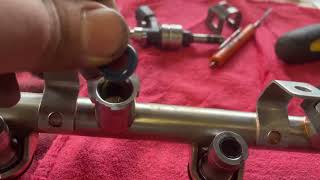
- Replacing the spark plug or ignition coil for cylinder 6. While these parts can cause a misfire (P0306), they will not cause the P0206 code, which is specific to the injector's electrical circuit. 🎬 See this video for common causes of the P0206 code.
Most Likely Causes
- Failed Cylinder 6 Fuel Injector 🔴 High Probability → Shop Fuel Injector The internal electrical coil of the injector can fail over time due to heat and vibration, creating an open or short circuit. This is a common failure part on many modern engines.
How to confirm: Measure the resistance of the fuel injector with a multimeter. For the 3.0L LF1, it should be ~11-15 Ohms; for the 3.6L LFX, it should be 1.2-1.8 Ohms. A reading of infinity (OL) or zero indicates a failed injector. The most definitive test is swapping the injector with another, but this is impractical due to its location.
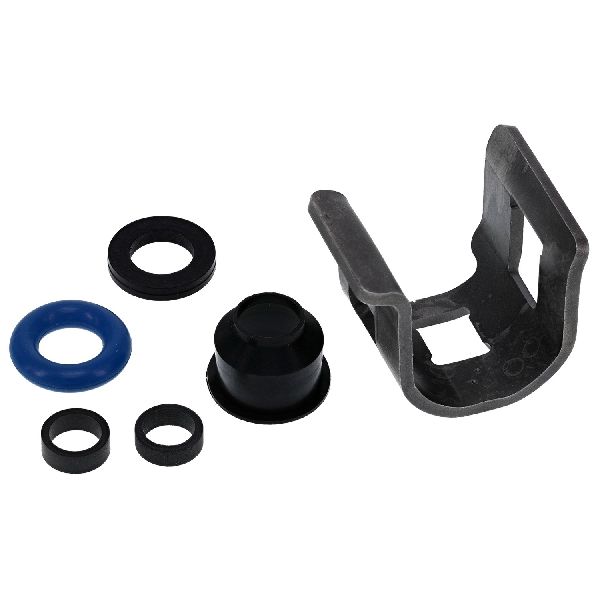
Typical fix: Replace the fuel injector. Due to the high labor cost to access the rear bank, it is strongly recommended to replace all three rear injectors (cylinders 2, 4, and 6) and their seals at the same time.
Est. part cost: $50-$180 per injector - Chafed or Damaged Fuel Injector Wiring Harness 🔴 High Probability → Shop Engine Wiring Harness As documented in GM TSB PIP4924D, the engine wiring harness is known to rub against the intake plenum, valve cover bolts, or fuel lines, causing wires to short out or break. This is a very common issue on this platform and its relatives.
How to confirm: Perform a close visual inspection of the wiring harness leading to the rear bank of injectors. This is difficult and may require an inspection mirror and flashlight. Check for continuity and shorts to ground on the two wires running to the injector connector between the injector and the ECM.
Typical fix: Repair the damaged section of wire using solder and heat-shrink tubing. Secure the harness away from sharp edges with zip ties or protective conduit to prevent a repeat failure.
Est. part cost: $5-$25 for repair supplies - Damaged or Corroded Injector Connector 🟡 Medium Probability The connector is exposed to constant engine heat and vibration which can cause the plastic to become brittle or the pins to lose tension or corrode, leading to an intermittent connection.
How to confirm: Visually inspect the connector for broken locking tabs, corrosion on the pins, or loose-fitting wires. Wiggle the connector (if accessible) while the engine is running to see if it affects the misfire.
Typical fix: Replace the connector pigtail, splicing it into the existing harness. Ensure splices are sealed against moisture.
Est. part cost: $15-$40
Rare But Worth Checking
- Faulty Powertrain Control Module (PCM): → Shop Engine Control Module (ECM) This is very rare. The internal driver circuit for the injector can fail. This should only be considered after the injector, wiring, and connectors have been proven to be good through rigorous testing.
Diagnosis Steps
- Read all stored fault codes with an OBD-II scanner.
- Identify cylinder 6. On both the 3.0L and 3.6L V6, it is the rearmost cylinder on the driver's side (firewall side).
- Using a flashlight and mirror, perform a detailed visual inspection of the injector wiring harness, looking for chafing against the intake, fuel lines, or cylinder head, as described in TSB PIP4924D. This is the most critical first step.
- If access allows, disconnect the cylinder 6 injector connector. Use a noid light to test for a pulse signal from the PCM while cranking the engine. If the light flashes, the PCM and wiring are likely okay. If it's off or stays on solid, there is a wiring or PCM issue.
- With the injector disconnected, use a multimeter to measure the resistance across the two pins of the injector itself. Compare the reading to the specification for your engine (3.0L LF1: ~11-15 Ohms; 3.6L LFX: 1.2-1.8 Ohms). An out-of-spec reading confirms a bad injector.
- If the injector resistance is out of spec, the injector is faulty and must be replaced. This requires removing the upper intake manifold.
- If the injector resistance is good but the noid light test failed, the problem is in the wiring or PCM. Test the wiring harness for continuity on both wires between the injector connector and the PCM connector. Also check both wires for a short to ground or a short to voltage.
- If the injector and wiring are confirmed to be good, the fault may lie with the PCM, but this is extremely unlikely and should be the last consideration.
Parts You'll Likely Need
- Fuel Injector (3.6L LFX)
(OEM #12634126)— This is the correct injector for the 2012-2016 SRX. It is a common failure item that causes an open or short in the injector circuit. This part number may be superseded by 12669384 or 12642128.
Trusted brands: ACDelco, Bosch, Standard Motor Products, Hitachi
OEM price range: $90-$120
Aftermarket price range: $50-$100 - Fuel Injector (3.0L LF1)
(OEM #12638530)— This is the correct injector for the 2010-2011 SRX. It is a common failure item that causes an open or short in the injector circuit.
Trusted brands: ACDelco, GB Remanufacturing
OEM price range: $120-$180
Aftermarket price range: $60-$110 - Upper Intake Manifold Gasket Set
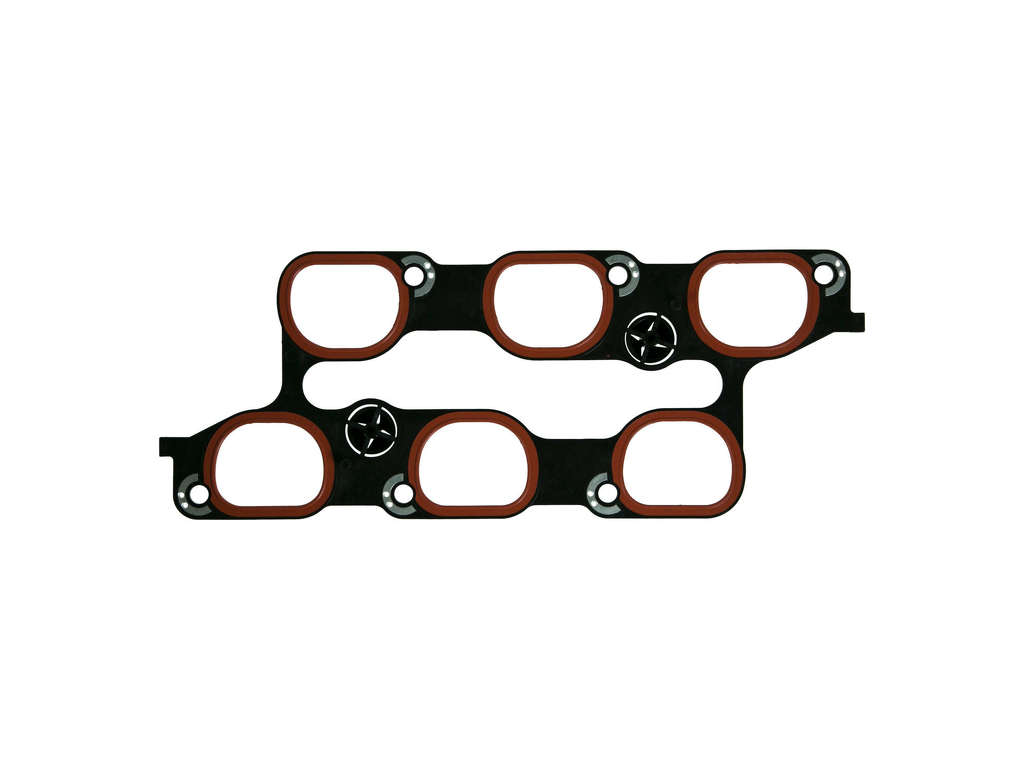
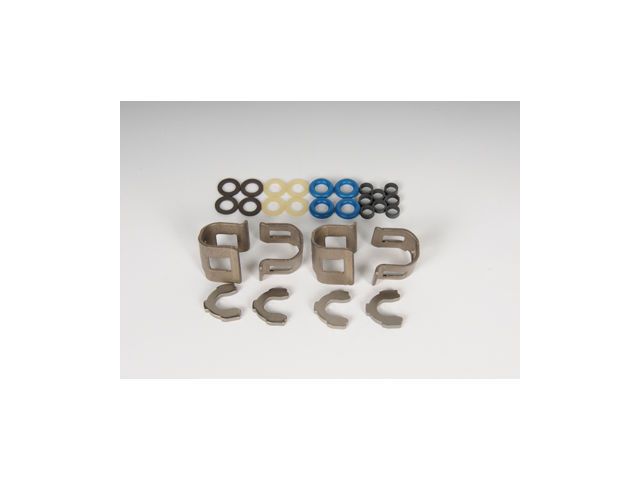
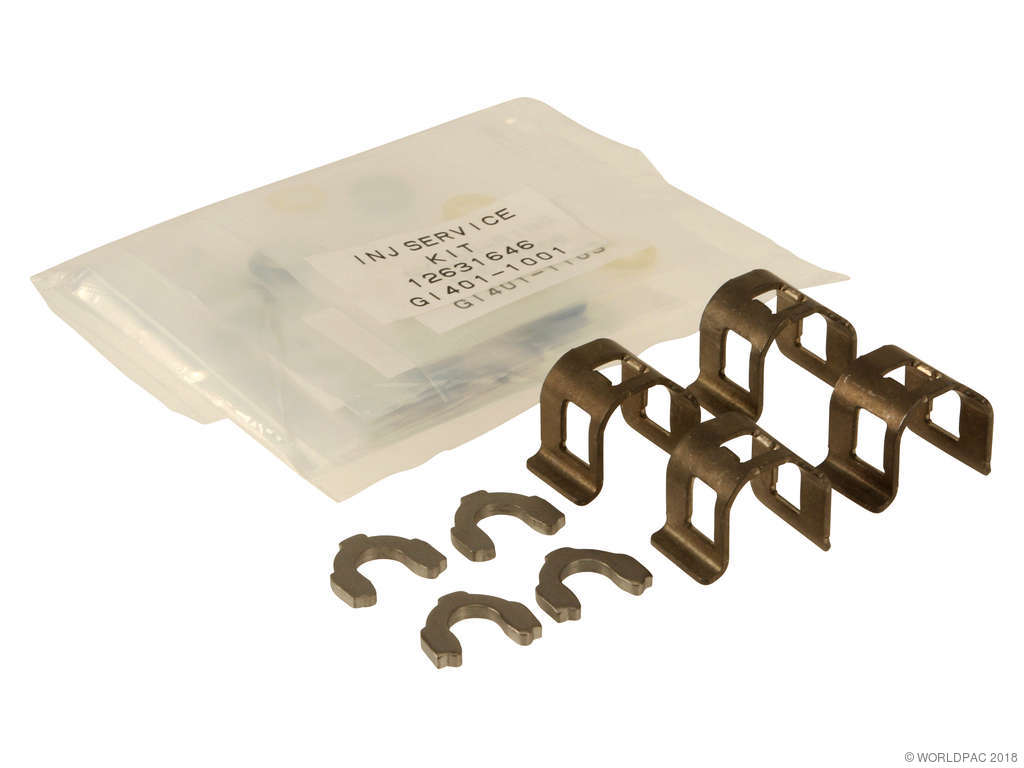
(OEM #ACDelco 12679529 / Fel-Pro MS 97204)— This MUST be replaced anytime the intake manifold is removed to access the rear fuel injectors. The Fel-Pro MS 97204 is a widely available and trusted aftermarket option.
Trusted brands: ACDelco, Fel-Pro, Mahle
OEM price range: $40-$70
Aftermarket price range: $20-$50
Related Codes That Often Appear With This One
- P0306 — P0306 means "Cylinder 6 Misfire Detected." Since a P0206 fault prevents proper fueling of cylinder 6, a misfire is an immediate and direct result. These two codes almost always appear together.
- P0300 — This code for a random/multiple cylinder misfire may appear if the wiring issue is intermittent or if the resulting imbalance causes instability across other cylinders.
Technical Service Bulletins (TSBs) & Recalls
- Bulletin #PIP4924D: This manufacturer bulletin notes that technicians may find the Service Engine Soon lamp on with a misfire and codes such as P0206, P0201, or P0204. It advises careful inspection of the fuel injector wiring harness for rub-through against the intake plenum, valve cover bolts, and fuel lines.
Platform-Specific Known Issues
- TSB PIP4924D: GM issued this bulletin specifically to address injector circuit codes (including P0206) caused by the wiring harness rubbing through against engine components. This is a well-documented and common problem on this platform.
- Difficult Access: The location of cylinder 6 on the rear bank against the firewall makes this a very labor-intensive repair, significantly increasing the cost at a repair shop. Owners and technicians report 4-5 hours of labor just to access the rear injectors.
Mechanic-Grade Diagnostic Values
- Fuel Injector Resistance (3.6L LFX Engine) — expected: 1.2 - 1.8 Ohms. Failure: A reading of infinity (OL) indicates an open circuit; a reading near zero indicates a shorted injector.
- Fuel Injector Resistance (3.0L LF1 Engine) — expected: 11 - 15 Ohms. Failure: A reading significantly outside this range, especially OL or near zero, points to a failed injector.
- Injector Power Supply Voltage at Connector — expected: ~12V (Battery Voltage) with key on. Failure: Low or no voltage indicates a problem in the power supply circuit from the fuse block, not the PCM control side.
- Injector Balance Test Pressure Drop (Max variance) — expected: All injectors should be within 20 kPa (3 psi) of the average pressure drop.. Failure: An injector with a pressure drop significantly less than others is clogged or not opening fully. An excessive drop could indicate a leak.
Scan Tool Commands That Help
- GM GDS2 / Tech 2: Injector Balance Test — This active test commands the PCM to fire each injector for a precise duration while monitoring the drop in fuel rail pressure. It can definitively identify a clogged or weak injector that might still pass a resistance test. It's a crucial step before replacing an injector when the electrical tests (noid light, resistance) are inconclusive.
- High-end bidirectional scanner (e.g., Autel, XTOOL): Cylinder Power Balance / Active Test — This function allows the user to disable one cylinder at a time. When cylinder 6 is disabled, there should be a noticeable drop in RPM. If disabling cylinder 6 causes little or no change in RPM, it confirms that the cylinder was not contributing power, which is the expected result with a P0206 code.
Wiring & Ground Locations
- ECM Connector X1 — This is one of the main connectors on the Engine Control Module (ECM).. The control wire for the cylinder 6 injector originates at a specific pin on this connector. Technicians test for continuity and shorts from this pin to the injector connector to isolate wiring faults from a faulty ECM.
- Harness Connectors X116 / X117 — Located at the rear of the intake manifold, serving as a pass-through for the engine harness.. These are junction connectors between the main engine harness and the injector sub-harness. A fault can be isolated to either side of these connectors by testing the circuits independently, which helps narrow down the location of a break or short.
- Grounds G103 / G108 — Typically found on the cowl at the rear of the engine compartment, near the brake booster.. These are primary ground points for the ECM. A loose or corroded ground here can cause unstable voltage and erratic behavior from the ECM's injector drivers, potentially triggering false circuit codes.
- TSB Chafing Points — The wiring harness area where it passes the intake plenum, valve cover bolts, and fuel lines.. This is the specific area highlighted in TSB PIP4924D where the harness is known to rub through, causing a direct short or open in the injector circuit for the rear bank of cylinders, including cylinder 6.
Real Owner Repair Stories
- Go-Parts Repair Database / Service Manual Case Study (2010-2014 Cadillac SRX (engine not specified, but logic applies to both)) — Check Engine Light with P0206 and associated misfire (P0306).
❌ Tried (didn't work) Swapping the fuel injector with an adjacent cylinder (code remained on cylinder 6)., Testing the wiring harness for continuity and shorts between the ECM and injector connector (all wiring tested good).
✅ What actually fixed it The problem was isolated to a failed injector driver (transistor) inside the Engine Control Module (ECM). The ECM required replacement to resolve the P0206 code. - YouTube user 'Auto Repair Guys' (General GM vehicle, but principle applies to SRX.) — Engine light with injector codes (P0201-P0208).
❌ Tried (didn't work) Assuming the fuel injector itself is bad without checking connections first.
✅ What actually fixed it In one documented case on a similar GM vehicle, the issue was a loose or poorly seated ignition coil connector. While not directly causing P0206, it highlights the importance of checking all related harness connections in the area before beginning major disassembly.
"I Checked Everything" — The Actual Cause
- A smoke test is not a relevant diagnostic procedure for an electrical circuit code like P0206. This code points specifically to an electrical fault (open, short, or out-of-spec resistance) in the injector's control circuit. Technicians have reported cases where after confirming the injector resistance is good and the wiring has continuity, the final cause was a failed injector driver inside the ECM, which requires no smoke test to find.
OEM Part Supersession History
12634126 (For 3.6L LFX)→12642128, and some catalogs show 12669384— Standard part evolution for manufacturing improvements or reliability updates.
Heads up: It is critical to verify the part number by VIN. While some numbers supersede others, there can be confusion in catalogs. The 3.6L LFX injector (~1.2-1.8 ohms) is NOT interchangeable with the 3.0L LF1 injector (~11-15 ohms).12638530 (For 3.0L LF1)→12669384 (per some sources)— Part consolidation or update.
Heads up: Extreme caution is needed here. Some databases show 12669384 superseding both the high and low impedance injectors, which is highly unlikely. Always confirm the correct part for the LF1 engine via VIN, as installing a low-impedance LFX injector on an LF1 will damage the ECM driver circuit.
Model Year Variations Within This Range
- 2010-2011 vs 2012-2016: The primary engine changed from the 3.0L LF1 V6 in 2010-2011 to the 3.6L LFX V6 in 2012-2016. These engines use fundamentally different fuel injectors with different electrical resistance values (LF1 is high-impedance, LFX is low-impedance). Using the wrong injector will cause repeat failures and can damage the PCM.
Diagnostic Flowchart
Other Known Issues on This Vehicle
Issues unrelated to this code that are worth knowing about as an owner of this generation:
- Premature Timing Chain Stretch (LF1/LFX) 🔴 High — Common, especially on earlier models or vehicles with extended oil change intervals. Often presents as a rattle on startup or codes like P0008, P0017 around 70k-120k miles. (Ref: Multiple TSBs exist for diagnosis, but no widespread recall. Repair is very expensive.)
- Cadillac CUE Infotainment System Failure 🟠 Medium — Extremely common. The touchscreen becomes unresponsive ('spiderwebs' or delaminates) or the system freezes entirely. (Ref: TSB PI1243A addresses screen delamination. No recall; typically an expensive out-of-warranty repair.)
- Loose/Failed Rear Suspension Toe Links 🔴 High — Widespread enough to trigger multiple recalls across all model years. (Ref: Recalls 14V571000 and 21V473000. A loose toe link can cause loss of vehicle control.)
- Water Leaks (Sunroof/Liftgate) 🟠 Medium — Commonly reported. Sunroof drains clog, causing water to enter the cabin and potentially damage electronics. Liftgate seals can also fail.
- Condensation in Headlight Assemblies 🟡 Low — Frequently reported by owners. Seals on the headlight assemblies fail, allowing moisture inside, which can lead to bulb failure or a foggy appearance.
- Excessive Oil Consumption (LF1) 🟠 Medium — Reported on the 3.0L LF1 engine, often linked to PCV system issues or piston rings. Can contribute to accelerated timing chain wear if oil levels are not monitored.
Used vs. New Parts: Buying Guide for This Vehicle
When a used part is the smart pick: For this repair, a used wiring harness from a low-mileage, collision-damaged vehicle can be a smart choice, especially if your original harness has confirmed damage from chafing. A used ECM is also a viable option if yours has a confirmed failed driver, but it will require programming to the vehicle's VIN.
Donor-vehicle mileage cap: roughly under 60000 miles for the part to have meaningful remaining life.
What to inspect on the donor part:
- For a wiring harness, inspect the exact areas mentioned in TSB PIP4924D (near intake, valve covers) on the donor harness to ensure it is not also chafed.
- Check all connector plastics for brittleness or broken locking tabs.
- Verify the donor vehicle was not a flood vehicle, as this can cause hidden corrosion in wiring.
- For an ECM, ensure the part number is an exact match.
OEM-only on this vehicle (don't cheap out):
- Fuel Injector: Due to the extreme heat and pressure of direct injection, and the high labor cost to access them, using new OEM (ACDelco/Bosch) or top-tier remanufactured injectors is strongly recommended. The risk of a cheap aftermarket or used injector failing prematurely is too high.
Aftermarket brands forum-validated for this vehicle:
- Fel-Pro (for intake manifold gaskets)
- Bosch (often the OEM manufacturer for the injectors)
- Standard Motor Products (SMP)
- Hitachi
Brands owners have reported issues with on this vehicle:
- Unnamed, no-brand injectors from online marketplaces. The quality control for direct injectors is critical, and cheap knock-offs are known to fail quickly or perform poorly.
Real Owner Stories
Aggregated from forums and TSBs cited above. Mileages and costs reflect what owners reported in those sources.
2013 Cadillac SRX LFX 3.6L V6 — ~95000 miles
Symptoms: The Check Engine Light came on and the engine was running very rough and shaking, especially at idle. There was a definite loss of power.
What fixed it: The mechanic found the engine wiring harness had rubbed through on a valve cover bolt, causing the wire for the cylinder 6 injector to short out. The wire was repaired with solder and heat-shrink, and the harness was secured with zip ties to prevent it from happening again.
Source hint: TSB PIP4924D: SES light and misfire with injector related codes
2012 Chevrolet Camaro LFX 3.6L V6 — ~110000 miles
Symptoms: Car threw a P0206 code and was misfiring. The engine felt shaky and acceleration was poor.
What fixed it: The issue was confirmed to be an injector circuit problem. The wiring harness was inspected per TSB PIP4924D and a damaged wire was found and repaired.
Source hint: camaro5.com forum thread on P0206 for the LFX engine
Related OBD-II Codes
Frequently Asked Questions
Where is cylinder 6 located on my 2014 Cadillac SRX V6?
What does GM Technical Service Bulletin PIP4924D say about the P0206 code?
If my cylinder 6 injector is bad, should I replace just that one?
How can I test the fuel injector on my 3.6L LFX engine to confirm it's bad?
Why is the repair for a P0206 code so labor-intensive on the SRX?
My 2015 Chevy Equinox has a P0206 code. Is the problem the same as on the SRX?
Helpful Videos
We Have This Part in Stock



The information in this article is provided for general reference and educational purposes only. Vehicle specifications, procedures, and part compatibility can vary by production date, trim level, and region. Always consult your vehicle's factory service manual and verify part numbers before purchasing or performing repairs. Safety-critical components such as airbags, seat belts, and braking systems should be installed by a qualified professional.
- Cadillac SRX:
- 🧭 Diagnostic Flowchart
- 🎬 Helpful Videos
- 🛍️ Shop This Part
- What's Unique About the 2010-2016 Cadillac SRX
- Symptoms You May Notice
- Most Likely Causes
- Rare But Worth Checking
- Diagnosis Steps
- Parts You'll Likely Need
- Related Codes That Often Appear With This One
- Technical Service Bulletins (TSBs) & Recalls
- Platform-Specific Known Issues
- Mechanic-Grade Diagnostic Values
- Scan Tool Commands That Help
- Wiring & Ground Locations
- Real Owner Repair Stories
- "I Checked Everything" — The Actual Cause
- OEM Part Supersession History
- Model Year Variations Within This Range
- Other Known Issues on This Vehicle
- Used vs. New Parts: Buying Guide for This Vehicle
- Real Owner Stories
- 2013 Cadillac SRX LFX 3.6L V6 — ~95000 miles
- 2012 Chevrolet Camaro LFX 3.6L V6 — ~110000 miles
- Related OBD-II Codes
- Frequently Asked Questions
- 🎟️ Get 5% Off