

P0234 on 2013-2019 Ford Escape 1.6L: Turbo Overboost Causes and Fixes
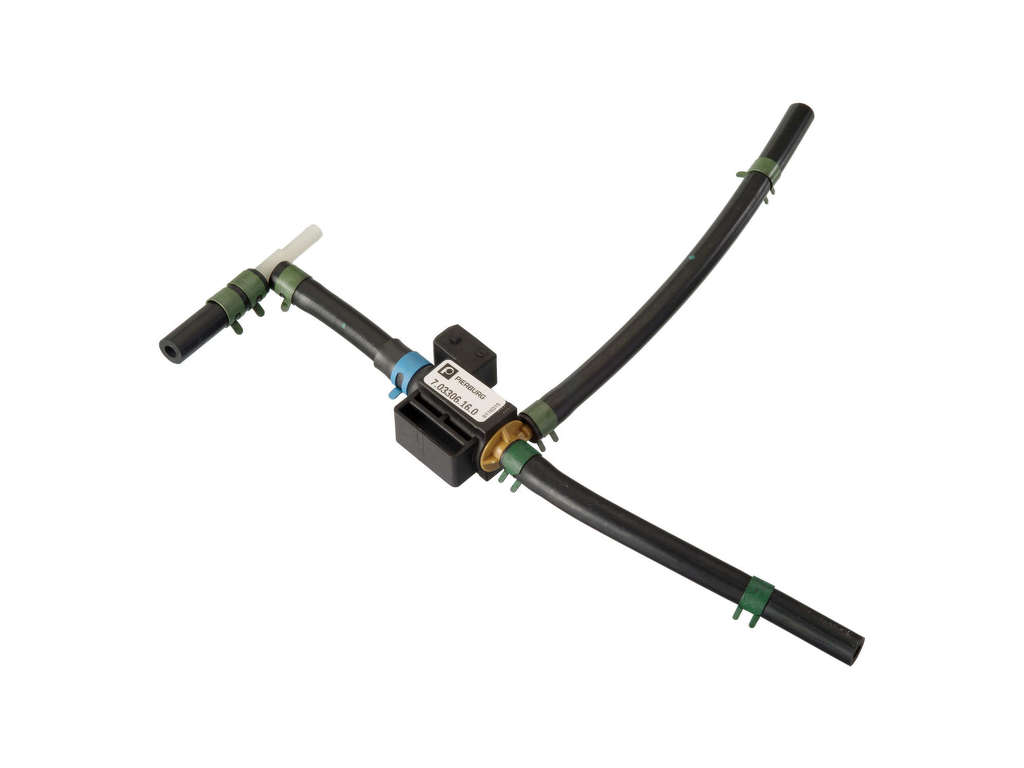
On a 2013-2016 Ford Escape with the 1.6L EcoBoost engine, code P0234 is almost always caused by a faulty turbocharger wastegate regulating solenoid. This is a well-documented issue covered by Ford TSB 15-0162. Replacing the solenoid is a common DIY fix, with the part costing around $50-$100. The OEM part number is CJ5Z-9K378-B, which supersedes the original CJ5Z-9K378-A.
- For a 2013-2016 Ford Escape 1.6L, P0234 is most likely a failed turbo wastegate regulating solenoid (Part No. CJ5Z-9K378-B).
- This is a known issue confirmed by Ford TSB 15-0162.
- Do not immediately assume the expensive turbocharger has failed; the solenoid is a much more common and cheaper fix.
- The repair is accessible to a DIYer by removing the passenger-side front wheel and wheel well liner.
- Always inspect vacuum hoses for cracks or leaks as part of the diagnosis.
What's Unique About the 2013-2019 Ford Escape
The 1.6L EcoBoost engine in the third-generation Ford Escape is particularly known for this P0234 code. The issue is so common that Ford issued a specific Technical Service Bulletin (TSB 15-0162) that points directly to the turbocharger wastegate regulating solenoid as the primary culprit for this code, as well as P0299, P0245, and P0246. Unlike other vehicles where P0234 might lead to a complex turbo replacement, on the 1.6L Escape, the fix is most often a simple and accessible solenoid swap. The same issue and TSB apply to other Ford models using the same 1.6L engine, such as the 2014-2016 Fiesta ST and 2013-2014 Fusion.
Symptoms You May Notice
- Check Engine Light is on
- Significant loss of engine power or sluggish acceleration (limp mode)
- Vehicle may run rough or misfire
- Audible whistling or hissing sounds from the engine bay
- Harsh or abrupt transmission shifting
- Symptoms may be intermittent, appearing only under heavy acceleration or when the engine is cold
- In some cases, no noticeable symptoms other than the Check Engine Light
- Replacing the entire turbocharger assembly before diagnosing the wastegate solenoid and vacuum lines. The solenoid is a much cheaper and far more common failure point, as specified in TSB 15-0162.
Most Likely Causes
- Faulty Turbocharger Wastegate Regulating Solenoid 🔴 High Probability → Shop Turbocharger This is a well-documented high-failure part, as confirmed by Ford TSB 15-0162. Constant exposure to engine heat and vibration causes the solenoid to fail internally. Numerous owner forums and DIY videos confirm this is the most common failure point.
How to confirm: After confirming no vacuum leaks per TSB 15-0162, this is the next logical step. The solenoid can be tested with a multimeter for resistance; the expected value is 12.4 Ω ± 0.5 Ω at 77°F (25°C). An open circuit (infinite resistance) or a direct short confirms failure. However, given the high failure rate and low cost, many owners and shops replace it as the primary diagnostic step.
Typical fix: Replace the turbocharger wastegate regulating solenoid. The part is accessed by jacking up the vehicle, removing the passenger-side front wheel and wheel well liner. The solenoid is held by a single tab and has three vacuum hoses and one electrical connector. Many DIYers report the hose clamps are difficult to reach, but the hoses can often be pulled off the old solenoid with firm pressure.
Est. part cost: $50-$100 - Cracked, Leaking, or Plugged Vacuum Hoses 🟡 Medium Probability → Shop Vacuum Hose The rubber hoses that control the wastegate become brittle and crack over time due to constant exposure to engine heat cycles.
How to confirm: Visually inspect all vacuum lines connected to the wastegate solenoid and turbo actuator for cracks, kinks, or disconnections. A smoke test can help find leaks that are not visible. TSB 15-0162 instructs technicians to perform this inspection before replacing the solenoid.
Typical fix: Replace the damaged sections of vacuum hose. It is often recommended to replace the hoses when replacing the solenoid, as they can be disturbed during the repair.
Est. part cost: $10-$30 - Sticking or Damaged Turbocharger Wastegate ⚪ Low Probability → Shop Turbocharger The mechanical wastegate flap inside the turbocharger can stick due to carbon buildup or wear, preventing it from opening to release excess pressure.
How to confirm: Use a hand vacuum pump to test the wastegate actuator diaphragm. Apply vacuum and watch the actuator rod for smooth movement. If it doesn't move or doesn't hold vacuum, the actuator is faulty. If the actuator holds vacuum but the rod doesn't move, the internal wastegate flap is likely seized.
Typical fix: In most cases, this requires replacement of the entire turbocharger assembly, as the wastegate actuator is often integrated and not sold separately by Ford.
Est. part cost: $800-$1600
Rare But Worth Checking
- Faulty Boost Pressure Sensor (MAP Sensor): → Shop Manifold Absolute Pressure Sensor A faulty sensor can send incorrect pressure readings to the PCM, causing it to miscalculate boost levels and falsely trigger P0234. This is less common than the solenoid failure but has been reported by owners as a potential fix after other parts were replaced.
- Blown Fuse: On related platforms like the Fusion, a blown fuse (specifically a 15A double fuse for positions 11 and 12 in the under-hood fuse box) has been found to cause boost control issues. While not the primary documented cause for the Escape 1.6L, it is a simple and important check.
Diagnosis Steps
- Scan for DTCs to confirm P0234 and check for other related codes like P0299, P0245, or P0246.
- Follow the procedure in TSB 15-0162: First, perform a thorough visual inspection of all charge air cooler pipes and vacuum hoses for cracks, leaks, or loose connections.
- If vacuum lines appear intact, the TSB directs the replacement of the turbocharger wastegate regulating solenoid.
- To access the solenoid, jack up the front passenger side of the vehicle and secure it on a jack stand. Remove the front passenger wheel and the plastic wheel well liner.
- Locate the solenoid mounted on a metal tab. It has three vacuum hoses and one electrical connector. It may be helpful to take a picture of the hose routing before disassembly.
- Disconnect the electrical connector. Carefully disconnect the three hoses. Long-reach pliers can be helpful, but some owners report success by simply pulling the hoses off with firm pressure.
- Slide the old solenoid off its mounting tab and install the new one. Reconnect the hoses and electrical connector.
- If a new solenoid does not resolve the issue, test the wastegate actuator on the turbocharger itself using a hand vacuum pump to ensure it moves freely and holds vacuum.
- If the actuator is faulty, the turbocharger assembly will likely need to be replaced.
Parts You'll Likely Need
- Turbocharger Wastegate Regulating Solenoid
(OEM #CJ5Z-9K378-B)— This is the most common failure part for P0234 on the 1.6L EcoBoost, as documented by Ford TSB 15-0162. The part number CJ5Z-9K378-B supersedes the previous version, CJ5Z-9K378-A.
Trusted brands: Motorcraft, Pierburg, Dorman
OEM price range: $70-$160
Aftermarket price range: $40-$80
Related Codes That Often Appear With This One
- P0299 — Turbo/Supercharger Underboost. TSB 15-0162 lists both P0234 and P0299 as being caused by the same faulty solenoid, which can cause erratic boost control leading to both overboost and underboost conditions.
- P0245 — Turbo/Supercharger Wastegate Solenoid 'A' Low. This code points to an electrical fault in the solenoid's circuit and is also listed in TSB 15-0162 as being related to a failed solenoid.
- P0246 — Turbo/Supercharger Wastegate Solenoid 'A' High. Similar to P0245, this indicates an electrical fault in the solenoid circuit and is also covered under TSB 15-0162.
Technical Service Bulletins (TSBs) & Recalls
- TSB 15-0162: 1.6L GTDI - Lack of power with MIL Illuminated - DTCS P0234, P0245, P0246 And/Or P0299. Affects 2013-2016 Escape, 2014-2016 Fiesta ST, and 2013-2014 Fusion.
- TSB 16-0116: While this TSB is for the 2.0L engine, it addresses a lack of power with DTC P0234 on Escapes built on or before Aug 20, 2016, and may involve a PCM reprogram. It confirms P0234 is a known issue across Escape engine platforms.
Platform-Specific Known Issues
- Ford Technical Service Bulletin TSB 15-0162 directly addresses P0234, P0299, P0245, and P0246 on 2013-2016 Escapes with the 1.6L engine. It instructs technicians to inspect vacuum lines and, if they are intact, replace the turbocharger wastegate regulating valve solenoid. Ford allocates 0.6 labor hours for this repair under warranty.
Mechanic-Grade Diagnostic Values
- Turbocharger Wastegate Regulating Solenoid Resistance — expected: 12.4 Ω ± 0.5 Ω at 25°C (77°F). Failure: A reading of OL (open circuit) or near 0 Ω (short circuit), or a value significantly outside the expected range.
- MAP Sensor Signal Voltage (Key On, Engine Off) — expected: ~4.75V - 4.85V (at sea level). Failure: Voltage is stuck high or low, or does not match the Barometric Pressure (BARO) sensor reading on a scan tool.
- MAP Sensor Signal Voltage (Engine at Idle) — expected: 1V - 2V. Failure: Voltage does not drop significantly after starting the engine or is erratic.
- Wastegate Actuator Mechanical Test — expected: Actuator rod moves smoothly and holds vacuum without leaking down.. Failure: Actuator rod does not move, moves erratically, or the diaphragm does not hold vacuum.
Scan Tool Commands That Help
- Ford IDS (or advanced bidirectional scanner): Wastegate Control Solenoid (WCS) Duty Cycle Command — Use this test at idle to command the solenoid's duty cycle from 0% to 100%. You should hear the solenoid clicking and see a corresponding change in vacuum/pressure at its output port. This directly tests the solenoid's electrical and mechanical function without removing it from the vehicle.
Wiring & Ground Locations
- C1581 — The 2-pin electrical connector on the wastegate regulating solenoid itself, accessed through the passenger side front wheel well.. This is the primary point for electrical testing (resistance, voltage). The connector or its pigtail can become brittle from heat and cause an open or short circuit.
- G104 — A major ground point located on the top rear of the transmission housing.. This is a primary ground for the powertrain control module and its sensors. A poor connection here can cause erratic sensor readings and false codes.
- G111 (1.6L specific) — A ground point located on the left rear of the engine.. This is an engine-specific ground. Verifying it is clean and tight is a crucial step when diagnosing any electronic engine control issue.
Real Owner Repair Stories
- Reddit user on r/fordescape (2015 Ford Escape SE 1.6L 4WD) — Intermittent Check Engine Light with code P0234, occurring during acceleration around 3000 RPM, primarily in winter. No noticeable lack of power.
✅ What actually fixed it Replacing the turbocharger wastegate solenoid resolved the issue permanently. The user confirmed, 'It was the faulty wastegate solenoid. Never came up after replacing it.' - Reddit user on r/fordescape (2014 Ford Escape 1.6L) — Check Engine Light with P0245 (related solenoid circuit code).
❌ Tried (didn't work) Replacing the wastegate solenoid with a Dorman aftermarket part., Replacing the Dorman part a second time under warranty., Replacing the Dorman part a third time.
✅ What actually fixed it The issue was only resolved after replacing the failing aftermarket parts with a single OEM Motorcraft solenoid (CJ5Z-9K378-B). This highlights a potential quality issue with certain aftermarket brands for this specific part. - YouTube channel J Tay187 (2014 Ford Escape 1.6L EcoBoost) — P0234 check engine light, car runs slow 'like it doesn't have a turbo.' The issue was an overboost code that would then cause the car to go into a limp mode with no boost.
✅ What actually fixed it The problem was fixed by replacing the turbocharger boost solenoid (wastegate solenoid), part number CJ5Z-9K378-B.
When the Usual Fixes Don't Work
- While the wastegate solenoid is the most common cause, some owners have had the code return after replacement. In one documented case, an owner went through three separate aftermarket (Dorman brand) solenoids that each failed within weeks. The problem was only resolved by installing a genuine OEM Motorcraft part, suggesting a significant quality difference for this component. Therefore, if a replacement solenoid fails quickly, the issue may be the quality of the part rather than a different underlying cause.
OEM Part Supersession History
CJ5Z-9K378-A→CJ5Z-9K378-B— The original part was prone to failure; the 'B' revision is the updated, more reliable version specified by Ford for service.
Heads up: The 'A' version should no longer be used; always install the 'B' revision.
Model Year Variations Within This Range
- 2013-2016: The 1.6L EcoBoost engine, which is highly prone to this specific P0234 failure mode due to the wastegate solenoid, was only installed in Ford Escapes from model year 2013 to 2016. Later models in this generation used 1.5L or 2.0L engines with different common failure points.
Diagnostic Flowchart
Other Known Issues on This Vehicle
Issues unrelated to this code that are worth knowing about as an owner of this generation:
- Engine Overheating / Coolant Intrusion 🔴 High — Very common, subject of multiple recalls (e.g., 13S12, 17S09) and TSBs. Can lead to cracked cylinder heads and complete engine failure. (Ref: Recall 17S09, Recall 13S12, TSB 19-2375 (for related 1.5L))
- 6F35 Transmission Failure 🔴 High — Widespread complaints of shuddering, slipping, harsh shifting, and complete failure, often occurring between 80,000-120,000 miles.
- Engine Stalling While Driving 🔴 High — Numerous owner complaints filed with NHTSA for the engine stalling unexpectedly, often linked to the overheating issues or other engine faults.
- Faulty Door Latches 🟠 Medium — Subject of a major recall where the door latch could fail, potentially allowing a door to open while the vehicle is in motion. (Ref: Recall 15S16, 20V177)
Used vs. New Parts: Buying Guide for This Vehicle
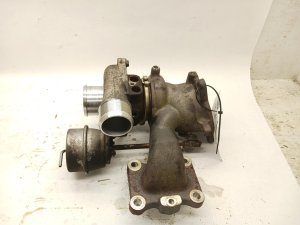
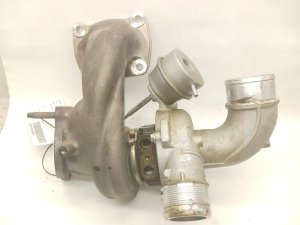
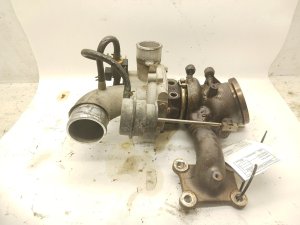
When a used part is the smart pick: For a complete turbocharger assembly if the original has a seized internal wastegate. A low-mileage used turbo can be significantly cheaper than a new unit. For the solenoid itself, buying new is strongly recommended due to the low part cost and high failure rate.
Donor-vehicle mileage cap: roughly under 60000 miles for the part to have meaningful remaining life.
What to inspect on the donor part:
- For a turbocharger: check for minimal shaft play (both in-and-out and side-to-side), ensure compressor and turbine wheels spin freely with no blade damage, and look for any signs of oil leaking from the seals.
- Verify the donor vehicle's VIN to ensure all engine-related recalls (especially for 2013-2014 models) were performed.
OEM-only on this vehicle (don't cheap out):
- Turbocharger Wastegate Regulating Solenoid: Multiple owner reports indicate a high premature failure rate for aftermarket solenoids (specifically Dorman brand) in this application. Using an OEM Motorcraft part (CJ5Z-9K378-B) is strongly advised to avoid repeat repairs.
Aftermarket brands forum-validated for this vehicle:
- Pierburg: Listed as an OEM-equivalent brand for the solenoid and may be a safe alternative to Motorcraft.
Brands owners have reported issues with on this vehicle:
- Dorman: For the wastegate solenoid on this specific application, due to documented repeat failures.
Real Owner Stories
Aggregated from forums and TSBs cited above. Mileages and costs reflect what owners reported in those sources.
2015 Ford Escape 1.6L
Symptoms: Intermittent P0234 code appearing during winter, specifically when accelerating around 3000 RPM.
What fixed it: Replacing the wastegate solenoid.
Source hint: r/fordescape on Reddit (u/CharlesBrowski)
2013 Ford Escape 1.6L
Symptoms: Check Engine Light with code P0234 (Turbocharger Overboost Condition).
What fixed it: Replacement of the wastegate solenoid (also referred to as the bypass solenoid in the discussion).
Source hint: r/fordescape on Reddit (u/MschfMngd)
Related OBD-II Codes
Frequently Asked Questions
Does TSB 15-0162 apply to my 2013-2016 Ford Escape with the 1.6L engine?
Is the wastegate solenoid the same thing as the bypass solenoid on the 1.6L EcoBoost?
How much labor time does Ford suggest for fixing the P0234 code under TSB 15-0162?
Can I test the wastegate solenoid myself before buying a new one?
My Escape is a 2.0L, not a 1.6L; is P0234 still a known issue?
What is the specific part number for the solenoid used in the 1.6L EcoBoost?
Helpful Videos
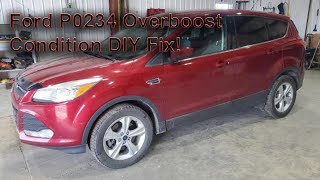
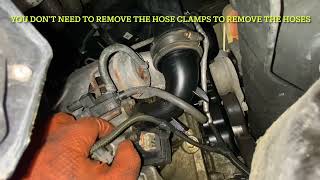

Used OEM Parts in Stock
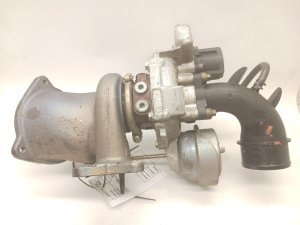
New Aftermarket Parts Available



The information in this article is provided for general reference and educational purposes only. Vehicle specifications, procedures, and part compatibility can vary by production date, trim level, and region. Always consult your vehicle's factory service manual and verify part numbers before purchasing or performing repairs. Safety-critical components such as airbags, seat belts, and braking systems should be installed by a qualified professional.
- Ford Escape:
- 🧭 Diagnostic Flowchart
- 🎬 Helpful Videos
- 🛍️ Shop This Part
- What's Unique About the 2013-2019 Ford Escape
- Symptoms You May Notice
- Most Likely Causes
- Rare But Worth Checking
- Diagnosis Steps
- Parts You'll Likely Need
- Related Codes That Often Appear With This One
- Technical Service Bulletins (TSBs) & Recalls
- Platform-Specific Known Issues
- Mechanic-Grade Diagnostic Values
- Scan Tool Commands That Help
- Wiring & Ground Locations
- Real Owner Repair Stories
- When the Usual Fixes Don't Work
- OEM Part Supersession History
- Model Year Variations Within This Range
- Other Known Issues on This Vehicle
- Used vs. New Parts: Buying Guide for This Vehicle
- Real Owner Stories
- 2015 Ford Escape 1.6L
- 2013 Ford Escape 1.6L
- Related OBD-II Codes
- Frequently Asked Questions
- 🎟️ Get 5% Off