

P0245 on 2020-2024 Ford Explorer: Turbo Wastegate Solenoid 'A' Low Circuit Fixes
P0245 on a 2020-2024 Ford Explorer indicates a low voltage problem in the turbocharger wastegate solenoid circuit, causing a significant loss of power. The most likely causes are a faulty wastegate solenoid, a damaged wiring harness, or simply a blown fuse. Always check the fuse first before replacing parts. Expect to pay $40-$100 for a new solenoid.
- P0245 means there's a low voltage electrical problem with the turbo wastegate solenoid, which will cause a major loss of power.
- Do not immediately assume the turbocharger is bad; this is almost always an electrical issue.
- The three most likely causes are a blown fuse, a failed wastegate solenoid, or a damaged/chafed wiring harness causing a short circuit.
- Always check the related fuse with a multimeter or test light before replacing any parts. A blown fuse strongly points to a wiring problem.
- The repair is generally affordable and accessible for a DIY mechanic with basic tools.
What's Unique About the 2020-2024 Ford Explorer
While there are no specific TSBs for the 2020-2024 Explorer for this code, the 2.3L and 3.0L EcoBoost engines are part of a family known for certain patterns. Across other Ford EcoBoost platforms, like the Escape and Fusion, the P0245 code is commonly caused by either the wastegate control solenoid failing due to heat and vibration, or the engine wiring harness chafing against other components, leading to a short circuit which blows the controlling fuse. Diagnosis on the Explorer should focus on these three high-probability areas: fuse, wiring, and solenoid.
Symptoms You May Notice
- Check Engine Light is on
- Significant loss of engine power and sluggish acceleration
- Vehicle may enter 'limp mode'
- Noticeable lack of turbo boost
- Erratic turbo boost or engine performance
- Replacing the entire turbocharger assembly. P0245 is an electrical circuit fault code, not a mechanical turbo failure.
- Replacing the wastegate solenoid without first checking for a blown fuse or inspecting the wiring harness for damage.
Most Likely Causes
- Blown Fuse 🔴 High Probability A short circuit in the wiring harness is a common cause for this code, and the first component to fail in that scenario is the fuse protecting the circuit. This is often overlooked, leading to unnecessary parts replacement.
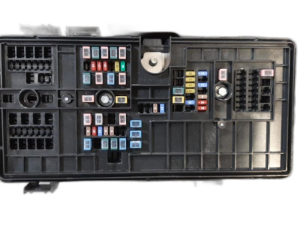
How to confirm: Check the fuse for the wastegate solenoid circuit in the under-hood fuse box. Use a test light or multimeter to confirm continuity, as a visual inspection can be misleading. A blown fuse indicates a short to ground in the harness.
Typical fix: Replace the blown fuse after repairing the underlying short circuit in the wiring harness.
Est. part cost: $1-$5 for a fuse. - Failed Turbocharger Wastegate Solenoid 🔴 High Probability → Shop Turbocharger Solenoids on EcoBoost engines are often exposed to significant heat and vibration, which can lead to internal failure (short or open circuit) over time. This is a common failure point across the Ford EcoBoost engine family.
How to confirm: Test the solenoid's resistance with a multimeter; an out-of-spec reading (typically should be 10-40 Ω) or a short/open circuit indicates failure. You can also apply 12V power to see if the solenoid actuates.
Typical fix: Replace the turbocharger wastegate solenoid.
Est. part cost: $40-$100 - Wiring Harness Damage (Short to Ground) 🟡 Medium Probability Other Ford EcoBoost platforms have known issues with wiring harnesses rubbing against engine components, cylinder heads, or brackets, causing wires to chafe and short to ground. This blows the control circuit fuse and triggers the code.
How to confirm: Visually inspect the entire length of the wiring harness between the PCM and the wastegate solenoid for any signs of rubbing, melting, or bare wires. Perform a 'wiggle test' on the harness while monitoring voltage to pinpoint intermittent shorts.
Typical fix: Repair the damaged section of the wiring harness and secure it away from any sharp edges or heat sources. Replace the blown fuse.
Est. part cost: $5-$30 for wiring repair supplies and a fuse. - Corroded or Loose Electrical Connector ⚪ Low Probability Exposure to moisture and road salt can lead to corrosion within the electrical connector for the solenoid, causing high resistance or a short.
How to confirm: Disconnect the connector at the wastegate solenoid and inspect the pins for corrosion, moisture, or damage. Ensure it makes a secure connection when plugged back in.
Typical fix: Clean the connector pins with electrical contact cleaner or replace the connector pigtail if it's damaged.
Est. part cost: $15-$40 for a new pigtail connector.
Rare But Worth Checking
- Faulty Powertrain Control Module (PCM): → Shop Engine Control Module (ECM) This is extremely rare and should only be considered after all other possibilities (fuse, solenoid, wiring, connectors) have been exhaustively ruled out.
Diagnosis Steps
- Scan for any other accompanying trouble codes to get a broader picture of the issue.
- CRITICAL FIRST STEP: Check the fuse for the wastegate solenoid circuit in the under-hood fuse box. Use a multimeter, not just a visual check. If it's blown, suspect a short circuit in the wiring harness.
- If the fuse is intact, locate the wastegate solenoid. Visually inspect its electrical connector and the nearby wiring for any obvious signs of damage, melting, or corrosion.
- Disconnect the solenoid and test its internal resistance with a multimeter. Compare the reading to the manufacturer's specification (typically 10-40 Ohms). A reading of infinity (open) or near-zero (short) confirms a bad solenoid.
- With the key on and engine off, check for battery voltage at the power supply wire in the solenoid's connector. A reading below 11V indicates a problem in the power supply circuit.
- If voltage is present and the solenoid tests good, check for continuity and shorts on the control wire running from the solenoid connector back to the PCM.
- Perform a 'wiggle test' by manipulating the harness while monitoring voltage/continuity to identify any intermittent breaks or shorts.
- If the wiring and solenoid are confirmed to be good, the issue may lie with the PCM, but this is highly unlikely and requires professional diagnosis.
Parts You'll Likely Need
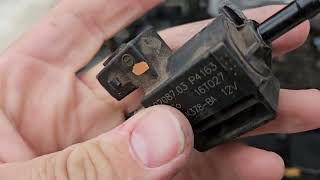
- Turbocharger Wastegate Control Solenoid
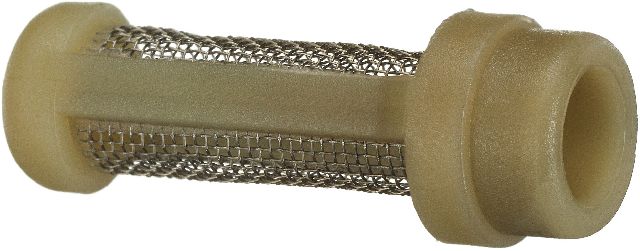
(OEM #Note: On many modern EcoBoost engines, the electronic wastegate actuator/solenoid is serviced as part of the turbocharger assembly. However, some aftermarket solutions may be available. A related part is the Turbocharger Boost Pressure Solenoid Filter, Ford part # JT4Z-6C683-A.)— This is the most common component to fail for this code due to its constant operation and exposure to engine bay heat and vibration.
Trusted brands: Motorcraft, Bosch, Dorman, Standard Motor Products
OEM price range: $70-$100
Aftermarket price range: $40-$70 - Solenoid Connector Pigtail — Needed if the original connector is melted, corroded, or the locking tab is broken, preventing a secure connection.
Trusted brands: Motorcraft, Dorman
OEM price range: $25-$40
Aftermarket price range: $15-$25 - Automotive Fuse — A blown fuse is a very common and often overlooked cause, usually resulting from a shorted wire in the harness.
Trusted brands: Bussmann, Littlefuse
OEM price range: $3-$5
Aftermarket price range: $1-$3
Related Codes That Often Appear With This One
- P0246 — This code for 'Turbocharger Wastegate Solenoid 'A' Circuit High' is the opposite of P0245. Seeing them together or intermittently could point to an erratic wiring short or a failing solenoid.
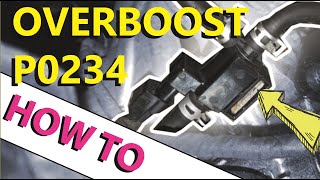
- P0299 — This 'Turbocharger Underboost Condition' code can occur if the solenoid circuit fault causes the wastegate to remain partially open, preventing the turbo from building proper boost. 🎬 Watch: How to replace the wastegate solenoid to fix P0234
- P0234 — This 'Turbocharger Overboost Condition' code can be triggered if the solenoid circuit fault prevents the wastegate from opening, causing boost pressure to exceed safe limits.
Technical Service Bulletins (TSBs) & Recalls
- TSB 15-0162: While for other models (1.6L GTDI), it shows a pattern of Ford replacing the wastegate regulating valve solenoid to fix P0245 on EcoBoost engines, establishing a history for this type of failure.
Mechanic-Grade Diagnostic Values
- Turbocharger Wastegate Solenoid Internal Resistance — expected: 10 - 40 Ω. Failure: A reading near 0 Ω (short circuit) or infinite/OL (open circuit) indicates a failed solenoid.
- Solenoid Connector Power Pin Voltage (Key On, Engine Off) — expected: 12V (Battery Voltage) ± 0.5V. Failure: A reading below 11V points to a problem in the power supply circuit, such as a blown fuse or wiring fault.
- Solenoid Control Wire to Chassis Ground Continuity (Solenoid and PCM disconnected) — expected: Infinite resistance / Open circuit (OL). Failure: Any low resistance reading indicates a short to ground in the control wire harness, a common cause for blowing the circuit fuse.
Scan Tool Commands That Help
- Ford IDS / FORScan: Output State Control / Actuator Self-Test (e.g., for PID TURBO_WGATE) — After confirming the fuse and wiring are good, use this command to directly activate the wastegate solenoid. An audible click should be heard. If there is no click despite having good power at the connector, the solenoid itself has failed internally.
- Ford IDS / High-End Scanners: PCM Reset / Turbocharger Learn — After replacing a turbocharger or wastegate actuator, a PCM reset may be required for the system to learn the new component's position and travel limits to ensure proper boost control.
Wiring & Ground Locations
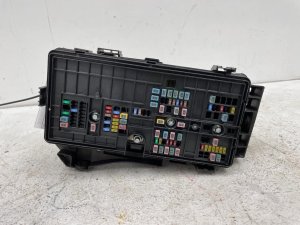
- Under-hood Fuse Box (Battery Junction Box) — Located in the engine compartment, typically on the driver's side.. This box contains the fuse that protects the wastegate solenoid circuit. On similar platforms like the Ford Ranger 2.3L, this may be Fuse 27 (10A), which protects the 'Turbo bypass'. On the Mustang 2.3L, it's Fuse F32 (10A). On Escapes, it's F34. This fuse is the most critical first check.
- Engine Harness Chafe Points — Inspect harness routing carefully under the air filter box, near the brake vacuum pump, and around the corners of the cylinder head or transmission case.. On multiple Ford EcoBoost platforms, the engine harness is known to rub against these components, causing a short to ground that blows the control fuse and triggers P0245.
- G104 (or similar chassis ground) — Likely located on the lower driver's side (LH) front of the engine compartment, on top of the frame rail.. This is a major ground point for the engine harness. A loose or corroded ground can cause intermittent and difficult-to-diagnose low voltage codes for various components, including the wastegate solenoid.
- Connector C1672 — The electrical connector at the wastegate control solenoid itself.. This is the specific connector where voltage and resistance tests should be performed to diagnose the solenoid and its immediate wiring.
Real Owner Repair Stories
- focusst.org user 'Fallingdown' (2013-2018 Ford Focus ST 2.0L EcoBoost (Similar EcoBoost failure pattern)) — Limp mode, P0245, and no boost.
❌ Tried (didn't work) Initial diagnosis pointed towards replacing the solenoid.
✅ What actually fixed it Found fuse #34 (15A) in the under-hood fuse box was blown. The root cause was the wiring harness rubbing on the corner of the transmission case directly below the intake tube. The fix was to tape the harness, secure it with a zip tie, and replace the fuse.
When the Usual Fixes Don't Work
- While the wastegate solenoid is a high-probability cause, multiple documented cases across the EcoBoost engine family show that replacing the solenoid does not fix the P0245 code if the underlying issue is a blown fuse caused by a chafed wiring harness. The forum story of the Focus ST owner is a prime example where the ultimate fix was a $1 fuse and some electrical tape after initially suspecting the more expensive solenoid. This strongly reinforces that the fuse and wiring MUST be checked thoroughly before replacing any parts.
OEM Part Supersession History
AA5Z-9K378-A→BL3Z-9K378-A— Part has been updated by the manufacturer.
Heads up: The new part number is the correct replacement for service.
Diagnostic Flowchart
Other Known Issues on This Vehicle
Issues unrelated to this code that are worth knowing about as an owner of this generation:
- Rear Axle Bolt Fracture 🔴 High — Widespread enough to trigger multiple recalls (22V255, 23V199, 23V675) affecting 2020-2022 models across all powertrains. (Ref: Recall 23V675)
- Harsh/Delayed Shifting (10R60 Transmission) 🟠 Medium — A very common complaint among owners, often related to software calibration, valve body/solenoid issues, or low transmission fluid from the factory. (Ref: TSB 23-2176 (Delayed Reverse Engagement))
- Rearview Camera Failure 🟡 Low — Extremely common, affecting hundreds of thousands of 2020-2024 Explorers and platform mates, leading to numerous recalls. (Ref: Recall 26V123000)
- Timing Chain Rattle / Cam Phaser Issues (3.0L EcoBoost) 🔴 High — A known issue in the EcoBoost V6 family. Symptoms include a rattling noise on cold starts. Repair is labor-intensive, often requiring engine removal.
- Cracked Flex Plate 🔴 High — Some owners have reported a cracked flex plate, which can cause a knocking or rattling sound. This is a significant repair.
Used vs. New Parts: Buying Guide for This Vehicle
When a used part is the smart pick: For this specific repair, buying a used wastegate solenoid is generally not recommended. It is a relatively low-cost electronic part exposed to significant engine bay heat and vibration, making its remaining lifespan unpredictable. A used part should only be considered if it comes from a very low-mileage donor vehicle and is significantly cheaper than a new aftermarket part.
Donor-vehicle mileage cap: roughly under 30000 miles for the part to have meaningful remaining life.
What to inspect on the donor part:
- Inspect the plastic body for any signs of cracking, melting, or heat stress.
- Check the electrical connector pins for any corrosion, bending, or damage.
- Ensure any vacuum nipples (if applicable to the specific design) are not cracked or broken.
- If possible, test the resistance with a multimeter before purchase to ensure it's within the 10-40 ohm range.
OEM-only on this vehicle (don't cheap out):
- Powertrain Control Module (PCM) - Due to programming and security requirements, a PCM must be a new OEM part or a professionally refurbished unit programmed specifically for the vehicle's VIN.
Aftermarket brands forum-validated for this vehicle:
- Dorman
- Standard Motor Products (SMP)
- Bosch
Brands owners have reported issues with on this vehicle:
- No-name, unbranded parts from online marketplaces should be avoided, as their quality control and durability are often questionable for critical engine management components.
Real Owner Stories
Aggregated from forums and TSBs cited above. Mileages and costs reflect what owners reported in those sources.
2014 Ford Fusion Titanium (EcoBoost)
Symptoms: P0245 code present; owner replaced the solenoid but the code remained.
What fixed it: Replacing a blown fuse that appeared visually intact but failed a test light check.
Source hint: Reddit r/fordfusion - '14 Titanium - P0245 code'
2021-2024 Ford Bronco 2.3L EcoBoost
Symptoms: P0243 failure (related wastegate control code).
What fixed it: Replacing the electronic wastegate actuator.
Source hint: Platform Mates section - 2021-2024 Ford Bronco 2.3L EcoBoost
Related OBD-II Codes
Frequently Asked Questions
Does TSB 15-0162 apply to my 2020-2024 Ford Explorer for the P0245 code?
I have a 2020 Explorer with a P0245; could this be related to the rear axle bolt recalls?
Could a blown fuse cause my Explorer to enter 'limp mode' with a P0245 code?
Is the P0245 code on my 3.0L EcoBoost Explorer related to the cam phaser rattle?
Should I buy a used wastegate solenoid for my 2.3L EcoBoost engine to save money?
Can road salt cause a P0245 code on my Ford Explorer?
Helpful Videos
Used OEM Parts in Stock

New Aftermarket Parts Available

The information in this article is provided for general reference and educational purposes only. Vehicle specifications, procedures, and part compatibility can vary by production date, trim level, and region. Always consult your vehicle's factory service manual and verify part numbers before purchasing or performing repairs. Safety-critical components such as airbags, seat belts, and braking systems should be installed by a qualified professional.
- Ford Explorer:
- 🧭 Diagnostic Flowchart
- 🎬 Helpful Videos
- 🛍️ Shop This Part
- What's Unique About the 2020-2024 Ford Explorer
- Symptoms You May Notice
- Most Likely Causes
- Rare But Worth Checking
- Diagnosis Steps
- Parts You'll Likely Need
- Related Codes That Often Appear With This One
- Technical Service Bulletins (TSBs) & Recalls
- Mechanic-Grade Diagnostic Values
- Scan Tool Commands That Help
- Wiring & Ground Locations
- Real Owner Repair Stories
- When the Usual Fixes Don't Work
- OEM Part Supersession History
- Other Known Issues on This Vehicle
- Used vs. New Parts: Buying Guide for This Vehicle
- Real Owner Stories
- 2014 Ford Fusion Titanium (EcoBoost)
- 2021-2024 Ford Bronco 2.3L EcoBoost
- Related OBD-II Codes
- Frequently Asked Questions
- 🎟️ Get 5% Off