

P0245 on 2011-2024 Ford F-150 EcoBoost: Wastegate Solenoid 'A' Low Circuit Causes and Fixes
On a Ford F-150 EcoBoost, code P0245 is most often caused by a failed turbocharger wastegate solenoid or a wiring issue. The PCM detects a low voltage condition in the solenoid's control circuit. Expect to pay $40-$100 for a new solenoid and spend about an hour on the replacement, which is a common DIY fix.
- P0245 on an EcoBoost F-150 almost always points to an electrical issue with the turbo wastegate solenoid or its wiring.
- The most likely fix is replacing the wastegate solenoid, which is an affordable part and a manageable DIY job for most.
- Before replacing parts, always check the fuse first and perform a thorough visual inspection of the wiring and connector for heat damage or chafing.
- Do not confuse this code with a failed turbocharger; this is a control circuit fault that is much cheaper and easier to fix.
- The vehicle is safe to drive in the short term, but performance will be poor and the issue should be addressed promptly to avoid stress on the turbo system.
What's Unique About the 2011-2024 Ford F-150
On the F-150 EcoBoost engines (2.7L and 3.5L), the turbochargers are mounted directly to the hot exhaust manifolds, exposing all related components to extreme heat and vibration. This environment makes the wastegate control solenoid, its connector, and its vacuum lines particularly prone to failure over time from heat degradation. While the code is for a generic electrical fault, on this platform it's very frequently the solenoid itself that has failed internally or its connector has become corroded. The physical location of the solenoid varies slightly between the 2.7L and 3.5L engines and across different F-150 generations, but the failure mode is consistent. A known issue is the engine wiring harness chafing on components like the corner of the cylinder head or various brackets, which can cause a short to ground and trigger a P0245 code.
Generation note: The 2011-2024 year range covers the 12th (2011-2014), 13th (2015-2020), and 14th (2021-2024) generations of the F-150. While the P0245 code applies to all, the exact location of the wastegate solenoid and part numbers may differ. For example, on many 3.5L EcoBoost engines in the 12th gen, the solenoid is mounted on the passenger side frame rail, 🎬 See this walkthrough for replacing the solenoid on 12th gen models accessible from the wheel well. On some 2.7L engines in the 13th gen, it's mounted on the engine itself near the top. 🎬 Watch: How to replace the solenoid on a 2.7L EcoBoost The diagnostic principles remain the same across all generations. A key difference is that Gen 1 (2011-2016) 3.5L engines use a pneumatic wastegate actuator controlled by the solenoid, while Gen 2 (2017-2020) and later engines moved to an electronic stepper-motor wastegate, which integrates the control logic differently.
Symptoms You May Notice
- Check Engine Light is on
- Noticeable loss of engine power and acceleration
- Vehicle may enter 'limp mode' with reduced performance
- Sluggish throttle response
- Abnormal whistling or whining sounds from the turbo area
- Engine turbo boost is erratic or non-functional.
- Intermittent power dips, especially over rough roads.
- In some cases, related systems like the A/C compressor may be disabled by the PCM.
- Replacing the entire turbocharger assembly. The P0245 code specifically points to an electrical control circuit issue, not a mechanical failure of the turbo itself.
- Replacing boost pressure sensors. While boost issues can be related to sensors, P0245 is very specific to the wastegate solenoid circuit.
Most Likely Causes
- Faulty Turbocharger Wastegate Solenoid 🔴 High Probability → Shop Turbocharger The solenoid is exposed to constant heat and vibration in the engine bay, leading to internal electrical failure (short circuit) or mechanical sticking over time. This is the most common point of failure for this code on EcoBoost engines.
How to confirm: After checking wiring, test the solenoid's internal resistance with a multimeter. Compare the reading to the manufacturer's specification (a general spec is 10-30 Ohms). An out-of-spec reading, an open circuit (infinite resistance), or a direct short (near-zero resistance) 🎬 Watch: A quick guide to diagnosing the P0245 fault code indicates a failed solenoid. You can also try to activate it with a bidirectional scan tool to listen for a click.
Typical fix: Replace the wastegate solenoid. It's typically held by one or two bolts and has three vacuum lines and one electrical connector. Many owners recommend replacing the vacuum lines at the same time as they can become brittle.
Est. part cost: $40-$100 - Wiring or Connector Issue 🟡 Medium Probability The wiring harness is subject to engine bay heat, which can make wires brittle. Proximity to the engine block, cylinder heads, or brackets can cause chafing, leading to a short circuit to ground.
How to confirm: Visually inspect the wiring harness leading to the solenoid for any signs of melting, chafing, or breaks. Pay close attention to where the harness bends or is secured near metal components. Unplug the connector and check for corrosion, moisture, or bent pins. Use a multimeter to check for continuity and voltage from the PCM with the key on. A reading below 11V on the power pin points to a supply issue. A low voltage reading on the control wire (e.g., under 1V when ~12V is expected) points directly to a circuit issue upstream of the solenoid.
Typical fix: Repair the damaged section of wire or replace the connector pigtail. Ensure the harness is properly secured away from heat sources and sharp edges using new clips or high-temperature wire loom.
Est. part cost: $10-$30 - Blown Fuse ⚪ Low Probability A short circuit in the solenoid or its wiring can cause the corresponding fuse to blow as a protective measure.
How to confirm: Consult the owner's manual for your specific model year to locate the fuse for the powertrain control module (PCM) or turbocharger circuits in the under-hood fuse box. For example, on some Ford Escapes with similar engine architecture, fuse F34 was identified as the culprit. Visually inspect the fuse to see if it is blown.
Typical fix: Replace the blown fuse. If the new fuse blows immediately, it indicates a persistent short circuit that must be found and repaired before replacing the fuse again.
Est. part cost: $1-$5 - Cracked or Leaking Vacuum Lines ⚪ Low Probability The vacuum lines attached to the solenoid are made of plastic or rubber and are exposed to the same intense engine heat. Over time, they can become brittle, crack, and leak, affecting the solenoid's ability to control the wastegate actuator.
How to confirm: Visually inspect the three vacuum lines connected to the solenoid for any visible cracks, splits, or mushy spots. With the engine running, you may be able to hear a faint hissing sound near a leak. A vacuum pump can be used to test the integrity of the lines. Also check the one-way valve in the vacuum line from the pump to the solenoid, as it can collapse.
Typical fix: Replace the affected vacuum lines. It is often recommended to replace all lines connected to the solenoid at once as a preventative measure.
Est. part cost: $15-$40
Rare But Worth Checking
- Faulty Powertrain Control Module (PCM): → Shop Engine Control Module (ECM) This is extremely rare. The PCM should only be suspected after all other possibilities, including the solenoid, the entire circuit wiring, and all related fuses have been thoroughly tested and confirmed to be good. A failure of the internal driver circuit for the solenoid can cause a P0245 code. One owner of a Ford Escape reported finding 3.44V on the control wire directly at the PCM connector when it should have been 0V, indicating an internal PCM short.
Diagnosis Steps
- Retrieve the code with an OBD-II scanner and note any other codes present. Freeze frame data can help identify conditions when the fault occurred.
- Check the fuse for the wastegate solenoid circuit/PCM in the under-hood fuse box. Consult your owner's manual for the specific fuse number and location for your year and engine.
- Locate the wastegate solenoid. On many 12th gen 3.5L models, it's on the frame rail behind the passenger wheel well. On others, it may be on top of the engine. Visually inspect its electrical connector for corrosion, damage, or a loose connection.
- Trace the wiring harness from the solenoid back towards the PCM, looking for any signs of chafing, melting, or physical damage, especially where it routes near the engine block or metal brackets.
- If the visual inspection is clear, use a multimeter to check for proper voltage at the solenoid connector with the key on, engine off. You should see battery voltage (approx. 12V) on the power pin. A reading below 11V indicates a power supply problem. A user on F150Forum.com found only 0.71V, pointing to a circuit issue.
- Test the resistance of the solenoid itself using a multimeter. Disconnect the solenoid and measure across its two pins. Compare the reading to the factory specification (a general spec is 10-30 ohms). An open circuit (infinite resistance) or a direct short (zero resistance) indicates a failed solenoid.
- Inspect the three vacuum lines attached to the solenoid for cracks, brittleness, or loose connections.
- If available, use a bidirectional scan tool like Ford's IDS or FORScan to command the solenoid on and off (e.g., using the TURBO_WGATE PID) while listening for an audible click, which confirms mechanical operation.
- If the wiring, fuse, and solenoid test good, the issue may be with the PCM, but this is highly unlikely and should be the last resort.
Parts You'll Likely Need
- Turbocharger Wastegate Solenoid
(OEM #JT4Z-9E882-A (Motorcraft))— This is the most common failure point for the P0245 code due to heat and vibration in the engine bay.
Trusted brands: Motorcraft, Dorman (p/n 667-534), BorgWarner, Standard Motor Products (p/n TBS1002)
OEM price range: $70-$100
Aftermarket price range: $40-$70 - Solenoid Connector Pigtail — If the original connector is corroded, melted, or has broken locking tabs, a new pigtail is needed to ensure a solid electrical connection.
Trusted brands: Motorcraft, Dorman
OEM price range: $20-$40
Aftermarket price range: $10-$25
Related Codes That Often Appear With This One
- P0243 (Turbocharger/Supercharger Wastegate Solenoid 'A' Malfunction)
- P0246 (Turbocharger/Supercharger Wastegate Solenoid 'A' Circuit High)
- P0299 (Turbo/Supercharger 'A' Underboost Condition)
Technical Service Bulletins (TSBs) & Recalls
- TSB 15-0162: While for the 1.6L GTDI engine in the Escape/Fiesta/Fusion, this TSB directly addresses P0245 (among others) and identifies the cause as a failed turbocharger wastegate regulating valve solenoid. This shows a pattern of this specific part failing across the Ford EcoBoost family.
- Bulletin #TSB150162: This manufacturer bulletin notes that some vehicles equipped with a 1.6L Gasoline Turbocharged Direct Injection engine may exhibit a lack of power with the MIL illuminated and DTC P0245 present.
- Bulletin #SSM 48895: A manufacturer service bulletin notes that vehicles equipped with 1.5L or 2.0L engines may exhibit fuse F34 open with an illuminated MIL and diagnostic trouble code P0245 in the powertrain control module.
- Bulletin #SSM 47575: Manufacturer records indicate that certain vehicles may exhibit an open fuse F34 and an illuminated MIL with DTC P0245, which may also be accompanied by an all-wheel drive fault.
- Bulletin #SSM 47086: A manufacturer bulletin describes a condition where vehicles built on or before 24-Jan-2018 may exhibit fuse F34 open and an illuminated MIL with DTC P0245 in the PCM.
- Related TSB 13-7-5: For the 2013 Escape 1.6L/2.0L, this TSB addresses DTCs P0106 and P0236 (boost sensor codes) caused by corrosion in sensor connectors or wiring splices. This corroborates the high likelihood of wiring and connector issues in the hot EcoBoost engine bay being a root cause for electrical faults.
Platform-Specific Known Issues
- Heat Degradation of Solenoid and Vacuum Lines: The placement of the turbochargers on EcoBoost engines creates a high-heat environment. The wastegate solenoid and its associated rubber/plastic vacuum lines are highly susceptible to becoming brittle and cracking over time, leading to electrical faults or vacuum leaks.
- Wiring Harness Chafing: A known issue involves the engine wiring harness rubbing against the front corner of the left-hand cylinder head or other brackets in the engine bay. This can wear through the insulation and cause a short to ground on the solenoid control circuit, triggering code P0245.
Mechanic-Grade Diagnostic Values
- Wastegate Solenoid Internal Resistance — expected: 10 - 30 Ohms (General Specification). Failure: Near 0 Ohms (short circuit) or infinite resistance (open circuit).
- Solenoid Connector Power Pin Voltage (Key On, Engine Off) — expected: 12V (Battery Voltage) ± 0.5V. Failure: A reading below 11V indicates a problem in the power supply circuit (fuse, wiring).
- Solenoid Connector Control Wire Voltage (Key On, Engine Off) — expected: 0 Volts (for pneumatic systems). Failure: Any significant voltage reading (e.g., 3.44V) suggests a short to voltage, possibly within the PCM.
- Electronic Wastegate Actuator Voltage (Gen 2+) — expected: Operating range between 1.2V and 4.1V. Failure: Voltage outside this range can trigger a range/performance code.
Scan Tool Commands That Help
- Ford IDS / FORScan: Active Command: Control TURBO_WGATE (PER) PID — To command the wastegate solenoid duty cycle between 0% and 100% while monitoring boost pressure (TCBP PID). This directly tests if the solenoid and actuator are mechanically responding to PCM commands.
- Ford IDS / FORScan: Monitor PID: TWGATE_STAT (MODE) — To monitor the status of the turbocharger wastegate regulating valve solenoid circuit. This can help identify intermittent faults during a 'wiggle test' of the wiring harness.
- FORScan: Output Control / Actuator Test — To directly trigger various solenoids and actuators, including the wastegate solenoid, to verify electrical and mechanical function without running the engine. This helps isolate a bad component from a wiring or PCM issue.
Wiring & Ground Locations
- Engine Wiring Harness Chafe Point — Commonly chafes on the front corner of the left-hand (driver's side) cylinder head, the drive belt idler pulley bracket, or the oil dipstick bracket.. This is a known issue where the harness can rub through, causing the wastegate solenoid control wire to short to ground, directly causing a P0245 'Circuit Low' fault.
Real Owner Repair Stories
- F150Forum.com user 'Steeler85048' (2015 Ford F-150 3.5L EcoBoost) — P0245 code appeared, and the A/C compressor stopped working.
❌ Tried (didn't work) Resetting the code (it came back immediately), Swapping the A/C compressor relay, Checking fuses, Replacing the turbo wastegate control solenoid
✅ What actually fixed it The user performed a voltage test at the solenoid connector and found only 0.71 volts where battery voltage (~12V) was expected. This confirmed the problem was a wiring issue between the PCM and the solenoid, not the solenoid itself.
OEM Part Supersession History
FL3Z-9E882-B→JT4Z-9E882-A— Part revision or supplier change. The new part number is the current OEM replacement.
Model Year Variations Within This Range
- 2011-2016 (Gen 1 3.5L): Uses a pneumatic wastegate system controlled by the solenoid. Diagnosis focuses on the solenoid, vacuum lines, and wiring.
- 2017-2020 (Gen 2 3.5L): Switched to electronic stepper-motor wastegates. While a control solenoid is still involved, the system is more integrated. The P0245 code may relate to the control circuit for this electronic actuator.
- 2021+ (Gen 3 3.5L): Features further revised electronic wastegates and control systems. The fundamental 'circuit low' diagnostic principle remains, but component locations and specific test values may differ from prior generations.
Diagnostic Flowchart
Used vs. New Parts: Buying Guide for This Vehicle
When a used part is the smart pick: A used part is generally not recommended for the solenoid itself. Because failure is often due to heat and electrical breakdown, a used part has an unknown remaining lifespan and offers minimal cost savings compared to a new aftermarket part. A used wiring harness connector (pigtail) from a junkyard is a viable option if the connector is in excellent condition with no corrosion or brittleness.
Donor-vehicle mileage cap: roughly under 50000 miles for the part to have meaningful remaining life.
What to inspect on the donor part:
- For a connector pigtail, inspect for any signs of melting, cracking, or discoloration from heat.
- Ensure the locking tab is intact and functional.
- Check that the internal pins are straight and free of any green or white corrosion.
- The attached wires should be flexible, not stiff or brittle.
OEM-only on this vehicle (don't cheap out):
- Powertrain Control Module (PCM) - Aftermarket or improperly programmed used PCMs can cause a host of other issues.
Aftermarket brands forum-validated for this vehicle:
- Dorman
- Standard Motor Products (SMP)
- BorgWarner
Brands owners have reported issues with on this vehicle:
- No-name, unbranded parts from online marketplaces should be avoided, as quality control is often poor for sensitive electronic components.
Real Owner Stories
Aggregated from forums and TSBs cited above. Mileages and costs reflect what owners reported in those sources.
2015 Ford F-150
Symptoms: The check engine light was on with code P0245, and the A/C compressor would not engage after a remote start.
What fixed it: After replacing the solenoid didn't fix the issue, testing the wiring revealed only 0.71 volts at the connector. Repairing the wiring circuit to restore proper voltage resolved the code.
Source hint: f150forum.com: A thread titled 'P0245 code and no AC compressor after remote start'
Related OBD-II Codes
Frequently Asked Questions
Where is the P0245 wastegate solenoid located on my 2011-2024 F-150 EcoBoost?
I replaced the wastegate solenoid, but the P0245 code came back. What's the next step?
My A/C stopped working at the same time the Check Engine Light for P0245 came on. Are these related?
What is the most common reason for a P0245 code on these trucks?
Should I replace the vacuum lines when I'm replacing the wastegate solenoid?
Is there a TSB from Ford that directly addresses P0245 on the F-150?
What voltage should I expect at the solenoid connector when testing for P0245?
Helpful Videos

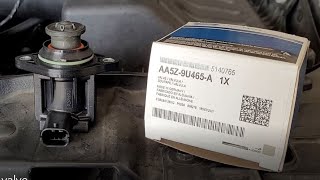
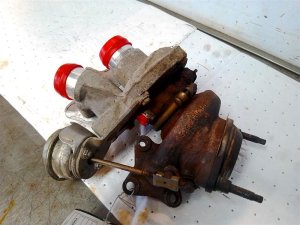
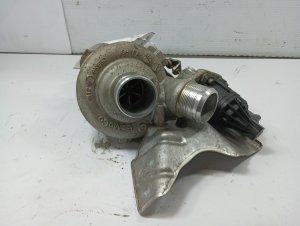
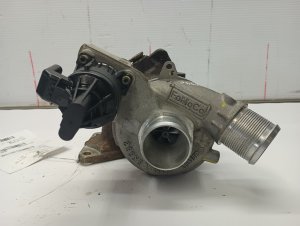
We Have This Part in Stock
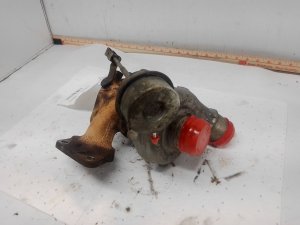

The information in this article is provided for general reference and educational purposes only. Vehicle specifications, procedures, and part compatibility can vary by production date, trim level, and region. Always consult your vehicle's factory service manual and verify part numbers before purchasing or performing repairs. Safety-critical components such as airbags, seat belts, and braking systems should be installed by a qualified professional.
- Ford F-150:
- 🧭 Diagnostic Flowchart
- 🎬 Helpful Videos
- 🛍️ Shop This Part
- What's Unique About the 2011-2024 Ford F-150
- Symptoms You May Notice
- Most Likely Causes
- Rare But Worth Checking
- Diagnosis Steps
- Parts You'll Likely Need
- Related Codes That Often Appear With This One
- Technical Service Bulletins (TSBs) & Recalls
- Platform-Specific Known Issues
- Mechanic-Grade Diagnostic Values
- Scan Tool Commands That Help
- Wiring & Ground Locations
- Real Owner Repair Stories
- OEM Part Supersession History
- Model Year Variations Within This Range
- Used vs. New Parts: Buying Guide for This Vehicle
- Real Owner Stories
- 2015 Ford F-150
- Related OBD-II Codes
- Frequently Asked Questions
- 🎟️ Get 5% Off